-0.6 C
New York
Home Blog Page 42

RWE and North Star sign long-term agreements for next-generation service operation vessels

0

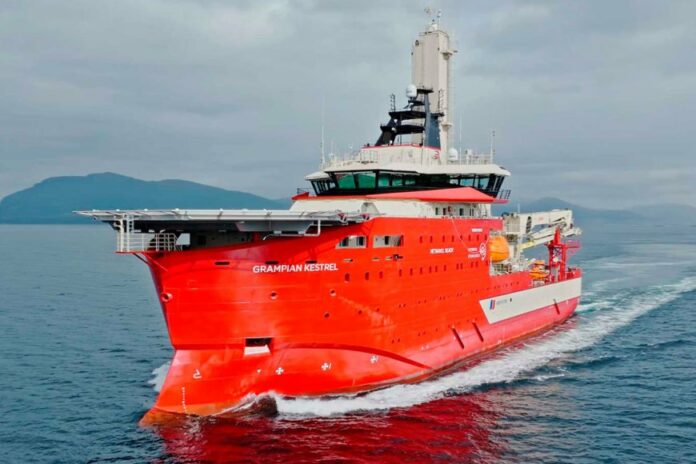
RWE has entered into a long-term partnership with North Star, the UK’s largest shipowner-operator, backed by global private markets firm Partners Group, acting on behalf of its clients. 

The companies have agreed that RWE will charter two next-generation service operation vessels (SOVs), the Grampian Eagle and the Grampian Kestrel, from North Star – both capable of using alternative low-emission fuels. Full marine services will be delivered by North Star as part of the charters. RWE and North Star have also signed reservation agreements for two newbuild vessels delivered by the Norwegian Vard Group. This partnership will pave the way for the efficient and low-emission operation of RWE’s existing and further growing offshore wind portfolio in Europe.

Thomas Michel, COO of RWE Offshore Wind: “Through this long-term partnership, RWE is taking a strategic step by securing next generation service operations vessels against the backdrop of a tight market. Those service operations vessels are an important enabler for RWE to deliver best-in-class performance across our existing operational fleet, as well as for future projects.”

The specialised vessels provide accommodation for service technicians and can remain at the wind farms for several days. Integrated walk-to-work gangway systems make access to the wind turbines much easier, even in rough seas, while also increasing safety. These vessels are therefore an ideal solution, especially for the maintenance of offshore wind farms that are located further offshore.

Gitte Gard Talmo, CEO of North Star: “This landmark deal is the beginning of a strategic partnership between two industry leaders, built on early engagement, mutual trust and shared ambitions. We are proud to secure agreements for four state-of-the-art vessels and grateful for the trust put in us by RWE. Our focus is delivering world class operational performance, utilising all of North Star’s expertise and capabilities in SOV services.”

The Grampian Eagle is chartered for at least 12 years. This vessel is planned to support the operations and maintenance activities at Triton Knoll offshore wind farm off the British coast. For a minimum of 10 years the Grampian Kestrel will support the maintenance of RWE’s German offshore wind farms, located north of the island of Heligoland. Both vessels were built this year and offer the possibility to use alternative fuels to minimise CO2 emissions.

For Germany, the charter contract starts this winter and for the UK in summer 2026. RWE has the option to extend both contracts by up to additional three years.

Until the North Star vessels Grampian Eagle and Grampian Kestrel are available two state-off-the art vessels will be supplied by Windward Offshore until the end of 2026 – a role-model for cross-industry collaboration.

Furthermore, as part of the reservation agreements RWE has signed with North Star, two newbuild service operation vessels are planned to support the maintenance of RWE’s growing offshore wind fleet from 2028 and 2029 onwards. North Star already has selected the global shipbuilding company VARD to construct these vessels.

Bollinger Shipyards applauds full funding of polar security cutter program

0

With the recent enactment of the “One Big Beautiful Bill Act,” the U.S. Coast Guard’s Polar Security Cutter (PSC) program is now funded through completion of all three vessels – a historic milestone for American shipbuilding and a strong affirmation of the federal government’s full confidence in Bollinger’s ability to deliver this critical national asset.

“This is more than a funding milestone—it’s a vote of confidence in American industrial capability and in Bollinger’s proven ability to deliver,” said Ben Bordelon, President and CEO of Bollinger Shipyards. “We took on a troubled program knowing the stakes were high. Since day one, our team has been laser-focused on restoring momentum, rebuilding trust, and delivering results. Today’s announcement is a testament to that effort.”

The recently enacted “One Big Beautiful Bill Act” included $4.3 billion for the advanced procurement and construction of vessels two and three of the PSC program, fully funding the program through completion.

Bollinger acquired the PSC program from Singapore-based ST Engineering in 2022 through its acquisition of VT Halter Marine. At the time, the program faced significant challenges, including schedule delays, cost overruns, and an incomplete concept design. Since then, Bollinger has worked in close partnership with the U.S. Coast Guard and Navy to stabilize and restructure the program, bringing it back on track through disciplined project management, strategic investment, and a revitalized workforce.

Earlier this year, Bollinger received a $951.6 million contract modification to advance the construction of the first PSC. With the new funding secured for vessels two and three, the program is now fully resourced to deliver a modern fleet of heavy icebreakers capable of operating in the most extreme polar environments.

The PSC program is the cornerstone of the Coast Guard’s Arctic and Antarctic strategy, enabling year-round access to polar regions for national defense, scientific research, and maritime sovereignty. The new cutters will be the first American-built heavy icebreakers in nearly 50 years.

“Bollinger is proud to be building the most advanced icebreaking vessels in U.S. history,” Bordelon added. “We’re not just building ships—we’re building capability, security, and opportunity for generations to come.”

As Bollinger continues to enhance its operations in Mississippi into world-class shipyards, the company remains committed to making strategic investments to modernize and expand its capabilities. Since acquiring VT Halter, Bollinger has made a significant economic impact in the state through targeted investments and workforce expansion. To date, Bollinger has invested $76 million across its Mississippi facilities, including Bollinger Mississippi Shipbuilding (BMS), Bollinger Mississippi Repair (BMR), Bollinger Gulfport Shipyard (BGS), and CHAND Gulf Coast.

“Mississippi shipbuilders are the best in the nation and this is further proof of that,” said Mississippi Governor Tate Reeves. “Our state has what it takes to deliver results and keep our country safe. Congratulations to the entire Bollinger team on this incredible win for Mississippi.”

Since the acquisition in 2022, Bollinger has increased its Mississippi workforce by over 61%, with production roles at BMS alone increasing by more than 178%. These numbers are expected to rise as the program reaches full production over the coming years. A key driver of this growth has been Bollinger’s innovative Bootcamp workforce development programs, which continue to strengthen the skilled labor pipeline.

“Our investment in developing the next generation of skilled American workers not only strengthens our competitive edge in the shipbuilding industry but also underscores our commitment to fostering economic growth and American innovation,” added Bordelon. “We are committed to providing high-quality careers that positively impact the families and communities we support along Mississippi’s Gulf coast.”

This contract modification primarily supports operations at Bollinger Mississippi Shipbuilding, with additional project contributions from facilities located in Massachusetts, Illinois, Virginia, Georgia, Louisiana, and other regions. Completion of the first Polar Security Cutter is anticipated by May 2030.

The Polar Security Cutter will provide the United States with enhanced operational capability in polar regions, playing a critical role in safeguarding national security, economic stability, and supporting vital maritime and commercial interests.

Med Marine launches a state-of-the-art tugboat for Remolcanosa

0

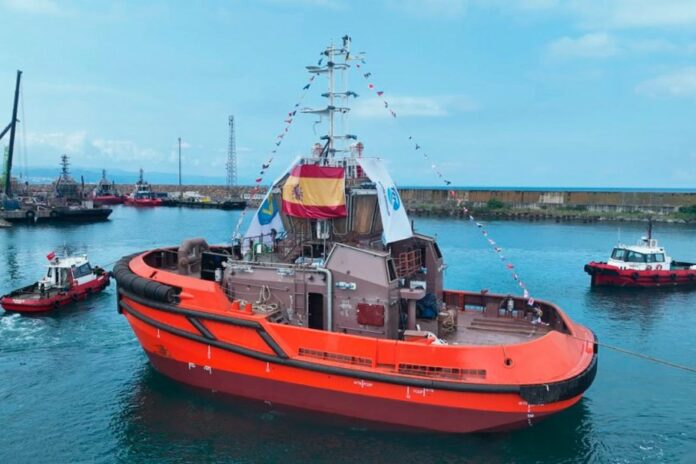
MED MARINE launched a new RAmparts 2300-W series tugboat for REMOLCANOSA at its EREĞLİ SHIPYARD on July 18th. MED MARINE contributes to REMOLCANOSA’s fleet with a high-performance, 23-meter harbour tug, equipped to deliver 50 tonnes of bollard pull and meet the demands of modern port operations.

The newly launched 23-meter harbour tug is expertly engineered to deliver a powerful bollard pull of 50 tonnes, fully meeting Class FIFI-1 standards. Built as a true multi-purpose vessel, it seamlessly blends strength and versatility, ready to tackle ship handling, towing, pushing, mooring, and firefighting with confidence. Equipped with both forward and aft winches and an aft towing hook, this tugboat stands prepared for whatever challenges the sea may bring.

Its propulsion system centers on an azimuth stern drive powered by two robust diesel engines linked to drive shafts and Z-drive units. The combination of fixed pitch propellers and high-efficiency nozzles not only guarantees outstanding bollard pull but also precise manoeuvrability, essential for demanding harbour operations. The welded steel hull is reinforced with watertight bulkheads, thoughtfully dividing the vessel into key compartments such as the fore peak, accommodation, engine room, diesel oil tanks, Z-drive area, and aft peak tanks, ensuring safety, durability, and structural integrity in every wave.

This launch reflects MED MARINE’s ongoing commitment to understanding its clients’ unique operational needs and delivering tailored, high-performance solutions that meet them, built not just with technical precision, but with genuine collaboration at every stage.

Technical specifications of the tugboat:

  • Length: 23,40 m
  • Beam: 11,90 m
  • Depth: 4,60 m
  • Draft: 5,10 m
  • Bollard Pull, ahead: 50 tons
  • Speed: 11,4 knots
  • Crew: 7 persons

TGS supports Equinor’s Empire Wind Project with data management solution

0

TGS continues its collaboration with Equinor by providing the Prediktor Data Gateway solution for the Empire Wind offshore wind project. This contract underscores TGS’ commitment to delivering strong digital solutions that enhance operational efficiency and data security in renewable energy.  

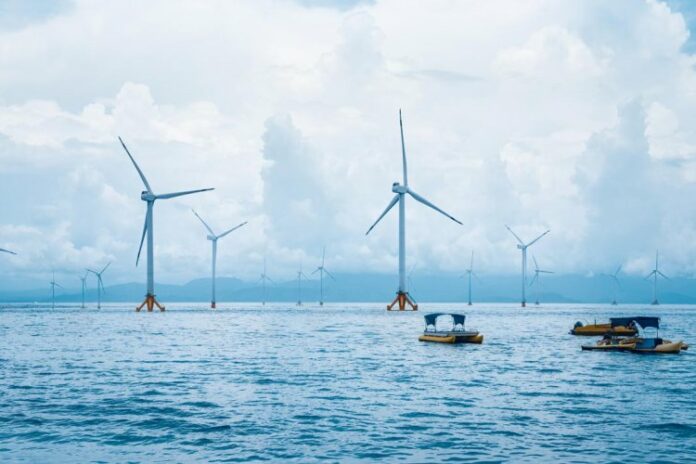
Empire Wind 1, located off the coast of New York, in the U.S., will have a total installed capacity of 810 MW, providing clean energy to approximately 500,000 homes. To support this large-scale development, Prediktor Data Gateway will deliver data management services to support standardisation, security and efficient handling of data.

Already deployed in major offshore wind projects such as Dogger Bank, Prediktor Data Gateway enables seamless data integration across assets, streamlining operations and maintenance (O&M) applications while allowing operators to scale their digital infrastructure efficiently. 

Will Ashby, Executive Vice President of New Energy Solutions at TGS, stated:

“Our continued deliveries to Equinor highlights the growing importance of digital solutions in optimizing offshore wind operations. As the offshore wind sector continues to expand, reliable and secure data management remains essential for optimizing performance and maximizing asset and production value. Through cutting-edge digitalization solutions, TGS is at the forefront of supporting the global energy needs.” 

Euroatlas and Rheinmetall to develop Greyshark underwater drone

0

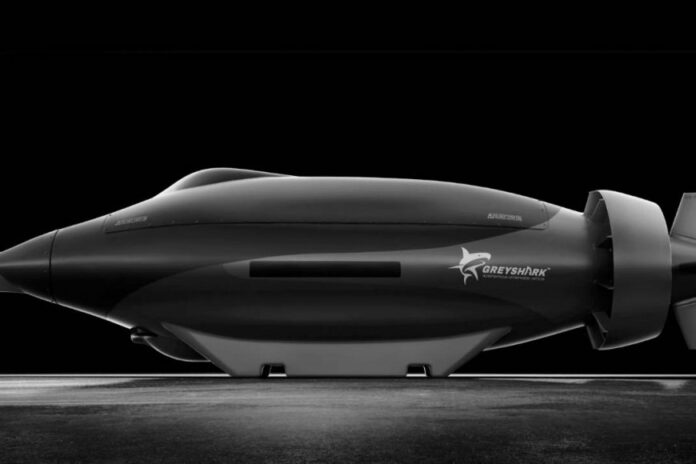
German company Euroatlas has joined efforrs with Rheinmetall to develop the Greyshark autonomous underwater vehicle.

As part of the cooperation, the advanced Greyshark autonomous underwater vehicle will be integrated into the Rheinmetall Battlesuite, a modular digital command platform based on artificial intelligence, Naval News reports.

The goal of the partnership is to strengthen the security infrastructure of the European coast with the help of new technologies.

Greyshark underwater drones are equipped with an integrated set of 17 sensors that collect and transmit data during underwater operations. In particular, the device is able to monitor the condition and integrity of subsea cables.

The drone operates in a fully autonomous mode, has a range of up to 1,150 miles, can dive to a depth of 650 meters, and is equipped with a high-precision navigation system that ensures stable course keeping at all dive depths.

The Greyshark is equipped with a silent electric propulsion system, a non-metallic hull resistant to high pressure, and is characterized by a very low level of hydroacoustic and echo sounder visibility.

According to Euroatlas, the vehicle is capable of patrolling and securing critical maritime areas. It can stay passively on the seabed and be activated at a certain time or by a signal from the control center in a critical situation.

Greyshark transmits information about detected targets via encrypted underwater communications to other drones, warships, or directly to the control center.

The drone can also use active sensors to deter enemy reconnaissance assets and target specific classes of vessels, transmitting data in real time and tracking them.

Greyshark can be easily integrated into standard situational awareness systems. Operating at a cruising speed of 10 knots and with a range of 1,000 nautical miles, the vehicle is capable of performing underwater missions from start to finish, maintaining navigation accuracy throughout the entire route.

Source: Militarnyi

Johan Castberg officially opened

0

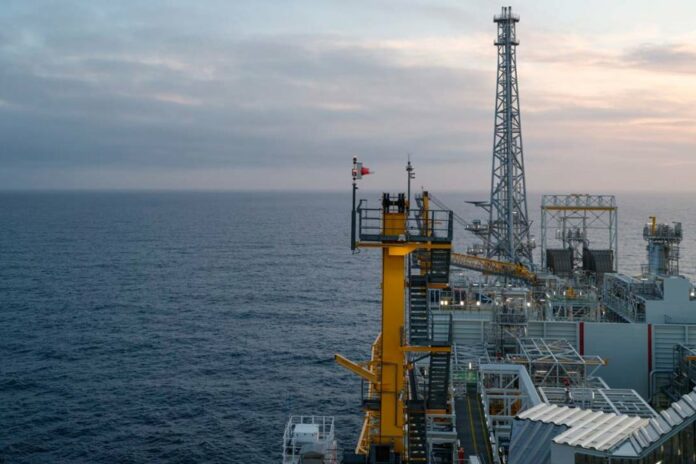
The Johan Castberg oil field came on stream in March, and was officially opened on 8 August.

A total of 13 discoveries have been made in the production licence; two of which were made this year. On 30 June 2025, an oil discovery was reported in the Johan Castberg area And a gas discovery was made on 10 July.

Discoveries have also been made in nearby production licences, and future tie-backs may be relevant.

This generates substantial values for society and helps strengthen Norway as a reliable and long-term energy supplier.

«Johan Castberg is important for further development of the Barents Sea and to contribute toward slowing the expected production decline from the Norwegian continental shelf,» says Hege Susanne Blåsternes, Director of Offshore development and technology in the Norwegian Offshore Directorate.

The Barents Sea is the ocean area on the shelf which holds the greatest expectations for undiscovered resources. A lack of export solutions – particularly for gas deposits – can affect the companies’ interest in exploration.

«With infrastructure in place, for example a pipeline solution for gas export, the Barents Sea will remain attractive for exploration.»

Phasing in discoveries to existing fields helps extend the host field’s lifetime and profitability. This yields good value creation for society.

The Norwegian Offshore Directorate estimates that about 67 per cent of the remaining resources in opened areas in the Barents Sea have yet to be discovered. These resources can form the basis for producing oil and gas for many years to come. However, this development will not simply materialise on its own:

«In order for the Norwegian continental shelf to maintain production at a high level, the companies will need to explore more, drill more wells and continue developing technology. The Norwegian Offshore Directorate wants to ensure that the decisions made contribute to good area solutions for the best possible resource management,» Blåsternes says.

New Russian military tugboat Kapitan Ushakov sank in St. Petersburg

0

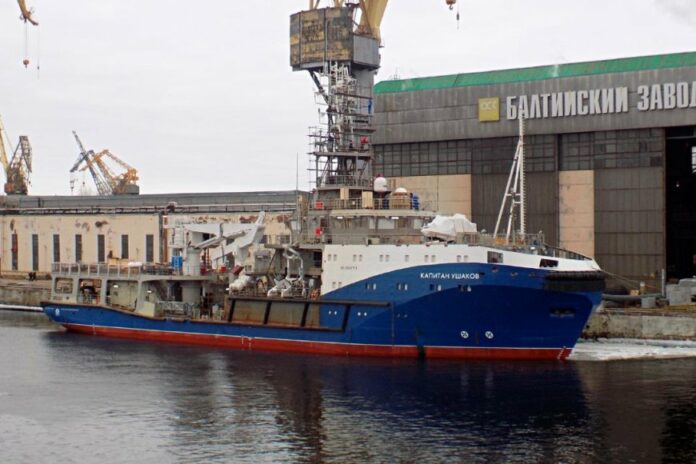
A new Russian naval tugboat, the Kapitan Ushakov, project 23470, sank near the quay wall In St. Petersburg.

The local media outlet Fontanka reported on the issue.

The incident occurred at the Baltic Shipyard, whose production facilities are leased by the Yaroslavl Shipyard.

On the evening of August 8, the tug tilted, and the city’s special services and the company’s emergency services were on site.

An investigative team is working at the site to establish the circumstances under which the Russian Navy tugboat sank.

According to available information, the auxiliary machinery room flooded, after which the ship tilted and subsequently sank.

Marine tugs of the 23470 project are designed to tow ships, floating objects and structures in the seas and oceans without limiting the areas of navigation.

They can operate in ice conditions according to the Arc4 class. They are also designed to perform search and rescue functions, extinguish fires, etc.

Brief technical specifications:

  • Displacement : 3200 tons
  • Length : 69.75 meters
  • Beam : 15 meters
  • Carrying capacity : 200 tons
  • Crew : 33 people
  • Autonomy : 30 days
  • There is a helicopter landing site.

Two of the tugs, Sergey Balk and Kapitan Nayden, are part of the Black Sea Fleet of the Russian Navy, although the former was in the Baltic Sea, according to VesselFinder, after which the AIS system was turned off.

The other of the three tugs, Andrey Stepanov, is part of the Russian Navy’s Pacific Fleet.

The fifth tugboat of Project 23470, under the serial number 414, named Kapitan Ushakov, was laid down at the Yaroslavl Shipyard in 2017.

It was launched on June 14, 2022. In October-November 2023, it was transported via Russia’s inland waterways to the Baltic Shipyard in St. Petersburg for completion.

It was expected to be completed by the end of 2024, and then it would become part of the 566th detachment of support vessels of the Northern Fleet of the Russian Navy based in Murmansk.

Source: Militarnyi

Fugro secures a major geotechnical site investigation contract for offshore wind farm in Taiwan

0

Fugro has been awarded a significant contract for the 700 MW Youde offshore wind farm by Shinfox Energy in Taiwan’s Round 3.2 offshore wind tender. Under this contract, Fugro will deliver comprehensive geotechnical services to support the development of the Youde project, located off the west coast of Taiwan.

The Youde offshore wind farm project is a cornerstone of Taiwan’s strategy to reach 13.1 GW of installed offshore wind capacity by 2030.

“We are honoured to be selected by Shinfox Energy for this landmark project in Taiwan and to be part of the development of the Youde offshore wind farm. This award showcases the trust that Shinfox has placed in our track record of delivering high-value Geo-data solutions to offshore wind clients in Taiwan since 2016”, said Shalu Shajahan, Regional Business Line Director Asia Pacific at Fugro.

“By leveraging our ISO-accredited local laboratory, we will deliver integrated high-quality services. This milestone reinforces Fugro IOVTEC’s commitment to strengthening domestic offshore wind capabilities and building long-term partnerships that support Taiwan’s energy transition”, said Vincent Tsai, Chairman of Fugro IOVTEC.

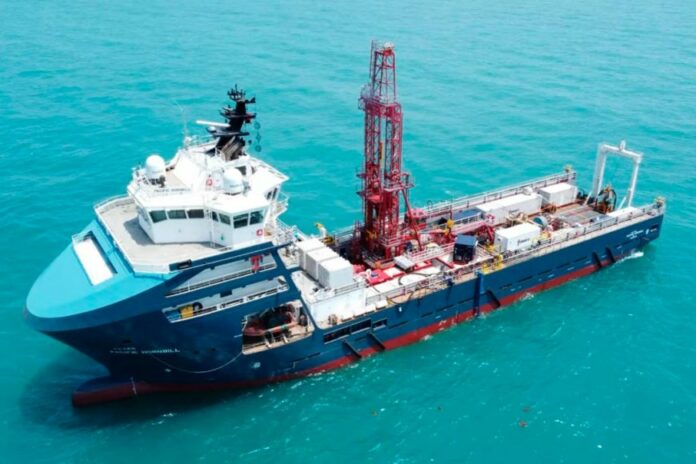
Fugro’s Taiwan-flagged vessel, Pacific Hornbill, an IOVTEC-managed DP2 vessel, is equipped with an advanced C30 marine geotechnical drilling rig and Fugro’s proprietary specialist WISON®MkV EcoDrive downhole in situ testing and sampling system. It also features specialised seabed geotechnical equipment, including the SEACALF® MkV Deep Drive®, enabling the acquisition of high-quality geotechnical data in both seabed and downhole mode throughout the project. The geotechnical fieldwork campaign has started and is expected to be completed in the fourth quarter of 2025.

FPSO ONE GUYANA producing and on hire

0

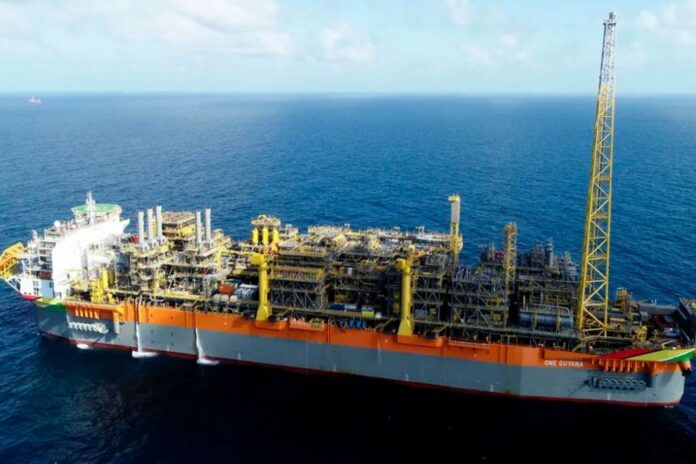
FPSO ONE GUYANA is based on SBM Offshore’s industry leading Fast4Ward® program that incorporates a new build, multi-purpose hull combined with standardized topside modules. FPSO ONE GUYANA is the fourth and largest FPSO that SBM Offshore operates in Guyana and builds on the excellent operational performance of FPSOs Liza Destiny, Liza Unity and Prosperity.

The FPSO is designed to initially produce an annual average of 250,000 barrels of oil per day, with associated gas treatment capacity of 450 million cubic feet per day and water injection capacity of 300,000 barrels per day. The FPSO is spread moored in water depth of about 1,800 meters and can store 2 million barrels of crude oil.

The FPSO is part of the Yellowtail development which is the fourth development within the Stabroek block, circa 200 kilometers offshore Guyana. ExxonMobil Guyana Limited, an affiliate of Exxon Mobil Corporation, is the operator and holds a 45 percent interest in the Stabroek block, while Hess Guyana Exploration Ltd and CNOOC Petroleum Guyana Limited, a wholly owned subsidiary of CNOOC Limited, hold a 30 percent interest and a 25 percent interest, respectively.

FPSO ONE GUYANA is the Company’s third major unit brought into operation in 2025, following the first oil of FPSO Almirante Tamandaré, which is on hire since February 16, 2025 and FPSO Alexandre de Gusmão, which is on hire since May 24, 2025. Collectively, these three Fast4Ward® FPSOs increase installed capacity by 655,000 barrels of oil per day.
 

Belfast Harbour leads as first net zero port operator in Ireland

0

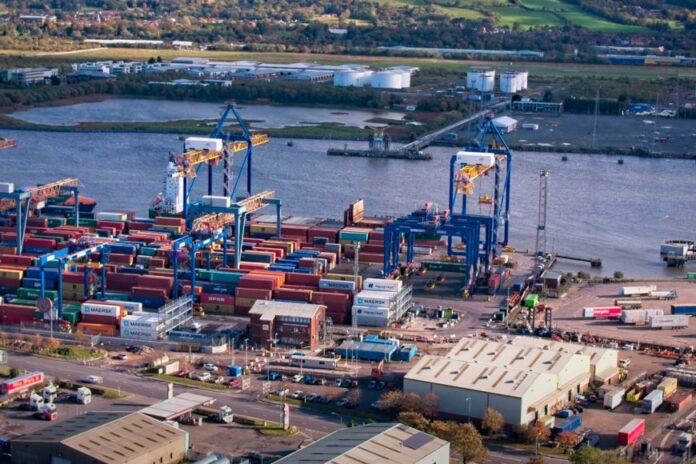
Belfast Harbour has made significant strides as it advances on its journey to becoming the first net zero port in UK and on the island, and one of the first net zero ports in Europe.

Launching its annual Environmental Social & Governance (ESG) Report 2024, the pioneering Port has reported an impressive 71% reduction in its scope 1 and 2 emissions against its baseline year in 2015, a figure made all the more noteworthy by the doubling of business turnover in that period.

This emissions reduction included a 35% decrease from 2023, with Belfast Harbour on course to achieve a remarkable 93% reduction by 2027.

As a Trust Port, Belfast Harbour is funded solely by the profits it makes and does not receive public funding. It invests all post-tax profits back into improvements to the port and estate for the benefit of customers and the community.

Sustained investment in decarbonisation has included the switch to low-emission fuels including Hydrotreated Vegetable Oil (HVO) and the transition of 30% of the organisation’s fleet to electric vehicles. All the electricity, supplied to tenants across Belfast Harbour Estate now comes from REGO certified renewable sources.

The Report, which tracks the organisation’s sustainability activities against international best practice, highlights the successes achieved during a year of action, accountability and impact, reporting progress in many environmental and social projects.

Belfast Harbour continues to provide significant leadership in the ESG space including awarding £315,000 in community grants during 2024, expanding its LGBTQIA+ and neurodiversity forums and extending its oyster nurseries to improve water quality.

In addition, the Report highlights that Belfast Harbour maintained its Platinum status in the Business in the Community Environmental Benchmarking Survey, and Platinum CORE Accreditation for Responsible Business as well achieving the Silver Diversity Mark.

Commenting on the achievements outlined in the report, Dr Theresa Donaldson, Chair of Belfast Harbour Commissioners said:

“This report marks another year of strong progress across ESG and DEI initiatives and the Board is determined that Belfast Harbour continues its transformative leadership in this space.

“As one of only five organisations in Northern Ireland with BITC Responsible Business Platinum standard, we are delighted that our efforts continue to be recognised. Together with the Silver Diversity Mark Award, these achievements underpin our unwavering commitment to doing the right thing for the city, region and all our stakeholders.”

Speaking on the launch of the Report, Joe O’Neill, Chief Executive, Belfast Harbour said:

“ESG is fundamental to our long-term planning and operational decision-making. It shapes our partnerships, informs our investments, and supports the delivery of our wider ambitions as a Trust Port. 2024 has seen our ESG journey step to another level especially in terms of our emissions reductions.  We remain on track to be the first net zero port operator in the UK and on island of Ireland.

“We are proud of the significant progress we continue to make and the strategic investments that are transforming us into a more sustainable business, while doubling our business turnover since our baseline year. For the third year running we have reduced our carbon footprint, expanded our electric vehicle fleet and invested in lower emission plant and machinery.

“As we implement our new five-year strategy and shape our 25-year masterplan, ESG will continue to guide our thinking.”