1.6 C
New York
Home Blog Page 428

Equinor transfers operatorship for Gulf of Mexico field to Shell

0

Equinor will retain 49% interest in the project, and Shell will become the new operator of the field.

To reflect this change, Equinor and Shell have agreed to rename the North Platte development to the Sparta development.

Sparta straddles four blocks of the Garden Banks area, 275 kilometers (171 miles) off the coast of Louisiana in approximately 1,300 meters (4265 feet) of water depth. Front-end engineering and design (FEED) has been matured for the project. Equinor and Shell will now work closely to review the work that has been completed and to update the development plan.

Since 2005 Equinor has built up a sizable position in the Gulf of Mexico, which offers some of the highest value, lowest carbon intensity oil and gas production in the company’s portfolio.

Chris Golden, Senior Vice President, U.S. Upstream, Exploration and Production International, says:

“Equinor has long-term view of Sparta as a high-quality project with a clear strategic fit for the company. Sparta will strengthen our position in the Gulf of Mexico as well as our overall role as a reliable energy supplier to the US. This is a development opportunity that is expected to add significant value with lower carbon emissions intensity. We are pleased to welcome Shell and look forward to sharing our experience and technology to move this valuable project forward.”

The transaction is subject to customary conditions and authority approval.

ABB to power Japan’s first electric tugboat for efficient operations

0

The electric tugboat Taiga is the result of a collaboration between Tokyo Kisen Co., Ltd. and e5 Lab Inc., a Japanese consortium with the purpose of planning and developing fully electric vessels.

Constructed at the Kanagawa Dockyard Co., Ltd. at Kobe, the tug is due for delivery by end of December 2022, becoming the first vessel of its kind to operate in Japanese waters. It is equipped with ABB’s Onboard DC Grid™, complete with a high battery capacity. Designed to enable zero-emission operations in harborside environments, the tug delivers superior performance while supporting Japan’s ambition of achieving net-zero GHG emissions from international shipping by 2050.

Tokyo Kisen’s harbor tug will be used to maneuver other vessels by pushing or towing them with 2.5-megawatt-hour battery systems supplied and integrated by ABB, reducing greenhouse gas emissions on a day-to-day basis, and acting as spinning reserve back-up power to prevent prolonged outages. The tug’s future-proof configuration also enables it to achieve emission-free operations by integrating alternative energy sources as technologies mature.

Munekazu Tanikawa, Local Division Manager, ABB Marine & Ports, said:

“ABB is honored to be involved in such a prominent project to power the first electric tugboat for Japan. Our hybrid and electric solutions have established a strong reputation in the short-distance shipping segment, now further strengthened by this prestigious opportunity in a highly competitive market.”

In addition to the energy storage solution, ABB supplies the tug with its award-winning power system platform Onboard DC Grid™, which enables simple, flexible, and functional integration of energy sources and loads. Leveraging Onboard DC Grid™, the tug’s engines will be able to run at variable speeds for optimized energy economy at each load level. This helps cut fuel consumption, reducing the environmental impact as a result. The batteries will be able to provide power to the tug’s propulsion system almost instantaneously, where ABB’s Power and Energy Management System (PEMS™) will control the overall power distribution, increase fault tolerance and provide a high degree of reliability.

Woodside Energy welcomes progress on NWS Project extension

0

This includes recommending key environmental conditions for the ongoing operations of the NWS in the decades ahead.

The Woodside-operated NWS Project pioneered the LNG industry in Australia and has delivered a significant portion of the competitively priced local gas supply that has long underpinned businesses and jobs in Western Australia. Since commencing operations in 1984, the NWS Project has supplied more than 5,970 PJ of domestic gas, which is equal to 15 times the total anticipated demand for natural gas in Western Australia in 2022.

The continued operation of this critical infrastructure can unlock new gas supply for Western Australian and global customers, supporting the delivery of affordable and reliable energy for years to come. Additionally, the NWS continues to be a significant contributor to Australian GDP and a major employer, providing jobs and investment in the Pilbara region and the state of Western Australia.

Woodside Energy Executive Vice President Australian Operations Fiona Hick said the NWS Joint Venture would carefully consider the conditions outlined by the EPA:

“After extended engagement with the EPA and relevant stakeholders over more than three years, the release of the EPA Report and recommended conditions marks an important step towards securing the future of the NWS Project and ongoing benefits for our community.

“At a time of heightened concern around energy security, the NWS Project has an important role to play in delivering natural gas to local and international customers, providing energy that can support their decarbonisation commitments.”

The continued development of natural gas through the North West Shelf aligns with Woodside’s climate strategy. The climate strategy has two key elements: reducing our net equity Scope 1 and 2 greenhouse gas emissions towards an aspiration of net zero by 2050 or sooner, and investing in the products and services that our customers need as they reduce their emissions.

Woodside, as operator of the NWS Project, spent more than A$1 billion with Western Australia-based businesses in 2021 and continues to invest millions of dollars in education and training initiatives that benefit hundreds of young people in Karratha and Roebourne each year. Processing additional resources through the NWS Project can sustain and stimulate the growth of Karratha and surrounding regions, underpinning Western Australia’s ongoing economic strength.

New paper shows potential for safe storage of CO2 offshore

0

A world-first study led by the National Oceanography Centre (NOC) following research off the coast of Scotland suggests that storing carbon dioxide (CO2) under the sea in a process known as carbon capture and storage (CCS) is both viable and safe. 

In the unlikely event of unintended CO2 emissions from a storage reservoir, the work demonstrated that these are detectable and quantifiable through new technologies. 

Scientists conducted an experiment in the North Sea 130km northeast of Aberdeen where they simulated a release of CO2 over a period of 12 days at a depth of 120 metres and three metres below the seabed, to test whether new technologies were able to detect even small releases of CO2. The new methodology also allowed the project scientists to measure how much was released and where it was being released from. 

Carbon capture and storage is regarded as one of the more effective tools in the fight against climate change. The process involves separating the CO2 generated during the industrial process such as power plants, hydrogen and ammonia production and steel plants, then transporting the gas through pipes, in tankers via roads or ships and finally injecting the CO2 directly into rock formations or depleted oil and gas reservoirs deep underground. 

The ground-breaking pilot study will help inform the direction of technology development for the long-term monitoring of offshore CO2 storage reservoirs and is a huge step forward in assuring regulators that this process is safe by being able to monitor any potential leaks as well as assess any potential damage to marine life. The work is already being used to inform the operators of two proposed storage projects, one in Denmark and another in the UK.

Professor Douglas Connelly, Lead Author and Associate Director, Science and Technology at the National Oceanography Centre, said:

“Carbon capture and storage is a key mitigation strategy for keeping the global temperature rise below 1.5 C and offshore storage can provide up to 13% of the global CO2 reduction target. The artificial CO2 release in our study enabled us to detect any emissions to the marine environment using acoustic, chemical and physical approaches as well as identifying the location of any leaks – something not previously achieved.

“Showing that carbon capture and storage is safe, as well as being able to monitor any unintended emissions of CO2, is a crucial step towards much larger implementation of this technology. We have combined existing off-the-shelf technology with the NOC’s new sensors, methodological approaches and state-of-the-art modelling work, taking a major step forward in assuring that offshore CO2 storage is safe. This report will help inform both the public and the regulators that this is a safe process and in doing so, providing regulators and governments the tools they need to effectively regulate the conformity of future storage facilities.”

Professor Jonathan Bull at the University of Southampton, and acoustics lead in the project said “we have demonstrated that very small quantities of CO2 can be detected and quantified using passive and active acoustic techniques, including systems mounted on autonomous underwater vehicles”.

Jerry Blackford, Head of Marine Systems Modelling at Plymouth Marine Laboratory and a work package leader in the project said:

“The observations and sensor development, coupled with our state-of-the-art digital modelling capabilities now allow us to develop demonstrably effective and cost -efficient monitoring strategies for offshore CCS.”

The paper, Assuring the integrity of offshore carbon dioxide storage, has been published on ScienceDirect
 

Ørsted and DSV to test cargo drones at Anholt Offshore Wind Farm

0

Offshore wind farms are usually located far from shore, and the service technicians and necessary spare parts are usually transported by ship. Technicians bring their tools and the components most often needed for the wind turbines, but if special spare parts are needed, they must go back onshore to get them. This is both costly and time-consuming, and the repairs are therefore often delayed until the next day.

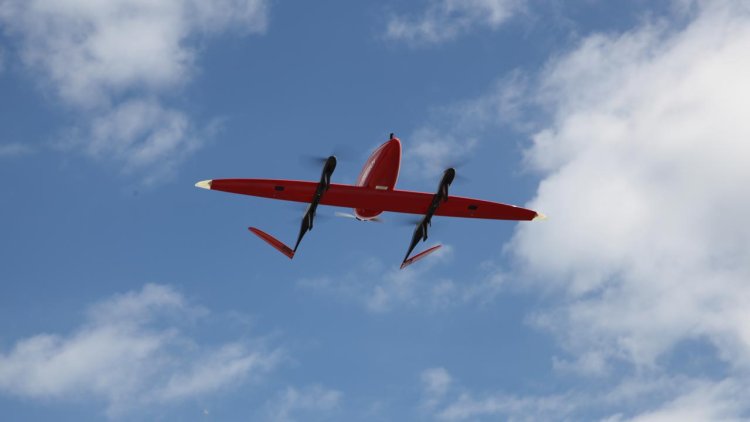
As an alternative, cargo drones can offer logistics support, especially for small spare parts, contributing to a much faster wind turbine restart.

Klaus Baggesen Hilger, Head of Operations Digital & Innovation at Ørsted, said:

“At Ørsted, we’re constantly exploring new opportunities to minimise downtime for wind turbines and increase renewable power production. Together with DSV, Ørsted has launched an initiativeto bring the spare parts warehouse closer to the service technicians, thereby ensuring that the wind turbines get back online more quickly. The drones are powered by renewable electricity and will fly autonomously to the offshore substation, but we’re hoping to test the drones on flights to the wind turbines at a later stage. By being able to quickly and efficiently deliver the spare parts needed for repairs, wind turbine downtime can be reduced, thereby increasing the production of clean energy. At the same time, the need for transport by ship is reducedas well as the carbon emissions from operating offshore wind farms.” 

DSV is a transport and logistics leader in Denmark and the world’s third-largest player in the area. Therefore, it was natural for DSV to take part in the trial, as the company is dedicated to innovation and automation focused on developing their logistics services. DSV is already using drones in its own logistics centres and sees potential opportunities in using drone technology in new contexts.

Peter Matthiesen, Head of Innovation & Digital Products at DSV, said:

“At DSV, we’re constantly working to create optimal supply chains for our customers, so it was a good opportunity for us to collaborate with Ørsted on optimising their supply chain from the shore to offshore wind farms. It’s fast, cost-effective, and renewable, so we’re looking forward to performing the test flights.”

The oversea trials from Grenaa to Anholt are the first of their kind, and the partnership between Ørsted and DSV will explore opportunities for using drone technology at sea.

Sembcorp Marine delivers world’s first eighth-generation drillship

0

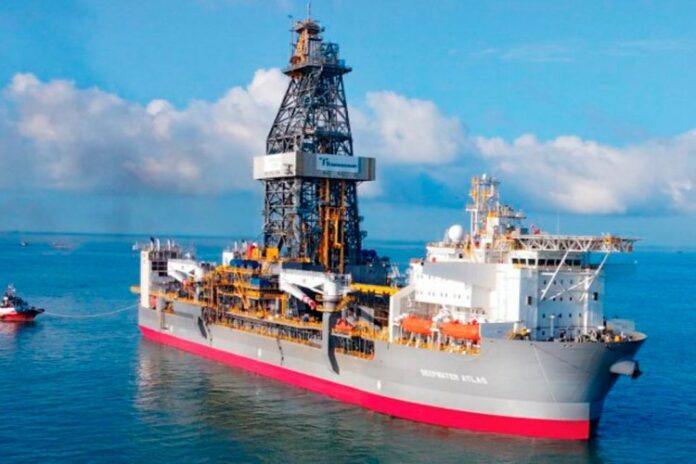
Deepwater Atlas is the first of two ultra-deepwater drillships based on the Group’s proprietary Jurong Espadon 3T design. The completed drillship features three-millionpound hook-load hoisting capacity and sets a new frontier for next generation drillships with its ability to accommodate well control systems for 20,000 psi (pounds per square inch) drilling and completion operations.

Capable of operating at 12,000 feet water depth and drilling to depths of 40,000 feet, Deepwater Atlas represents a breakthrough in the industry with leading-edge capabilities for enhanced operational safety, efficiency and performance. With capacity to accommodate a crew of 220, the drillship is designed and equipped to optimise fuel consumption and lower emissions to support the industry’s commitment to a reduction in carbon footprint.

Sembcorp Marine Head of Rigs and Floaters Mr William Gu said:

“We are very pleased to achieve the delivery of Deepwater Atlas and to set many record firsts in the process. It gives us great pride to have designed and built for Transocean, the world’s first eighth-generation drillship of the highest industry specification, complete with a threemillion-pound hook-load and breakthrough capabilities for 20,000 psi drilling operations.”

Mr Wong Weng Sun, Sembcorp Marine President & CEO, said:

“Sembcorp Marine’s continuous investments in innovation and technology development over the years have enabled the Group to move up the value chain to develop industry-leading designs and solutions. We are very pleased to partner Transocean to raise the bar for the design and build of the next generation ultra-deepwater drillships.”

EU moves one step closer to protecting deep-sea ecosystems from bottom fishing

0

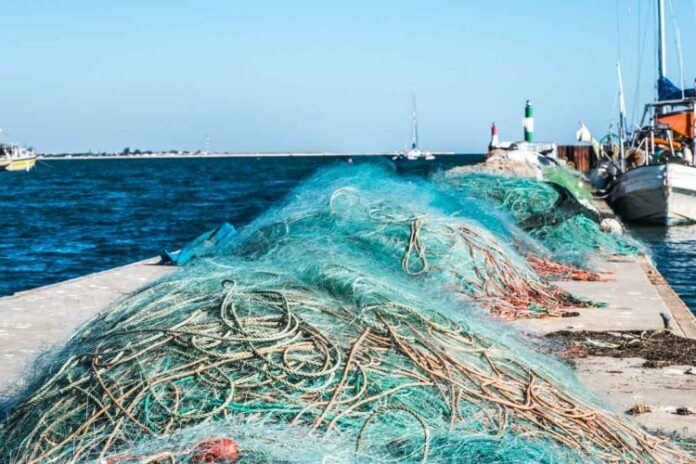
This proposal aims to protect vulnerable marine ecosystems (VMEs) in deep waters and the Member States’ support brings it step closer to becoming law.

Virginius Sinkevičius, Commissioner for the Environement, Oceans and Fisheries, said:

“The aim of this measure is to protect vulnerable ecosystems from the impact of bottom gears. As I have previously announced, this measure is a concrete step under the EU Biodiversity Strategy to limit the use of fishing gears most harmful to biodiversity in EU waters. It shows the European Commission’s commitment to protecting deep-sea species and their fragile habitats, prone to deterioration, but essential to a healthy marine life. I know this decision requires a great deal of effort from our fisheries sector and I would like to acknowledge its essential role in preserving our ocean and our future.”

In line with the Deep-sea Access Regulation, the conservation measure closes certain zones of the EU deep waters to all bottom gears, ranging from deep-sea long lining to bottom trawling. The measure establishes the closure of 57 vulnerable habitats in the North-East Atlantic, where VMEs, such as sea pens, corals or anemones, are present or where their presence is likely, according to the International Council for the Exploration of the Sea (ICES) scientists. 

This is an important step towards the sustainable management of the seas and oceans, in line with theEuropean Green Deal. Furthermore, the Commission adopted the Nature Restoration Law last week, where it committed to restoring marine habitats such as seagrasses or sediment bottoms.

The deep-sea world remains relatively difficult to explore. Scientists have developed a method of evaluating the presence of VMEs according to a high, medium or low index. The act includes all levels of the index, applying the precautionary principle with a minimised disruption of fishing activities.

The measure also fixes a fishing “corridor”, a so-called footprint, which all vessels fishing for deep-sea stocks will have to respect by fishing inside it. The corridor protects pristine areas, as fishing vessels will not be able to operate there to fish for deep-sea species. 

The measure was drafted after consultations with Member States and stakeholders, including the fishing industry and NGOs over the past two years. As pointed out in the 2021 evaluation of the Deep-sea Access Regulation, this conservation measure is much anticipated with 90% of the respondents agreeing that “an EU regulatory framework is essential to ensure consistency in the protection of the deep-sea environment by different Member States”.

The Commission proposal had been submitted to the agreement of the Committee for Fisheries and Aquaculture, composed of the representatives of each EU Member State. After the committee vote, the Commission is allowed to conclude the procedure and adopt the measure. 

The UK will receive formal notification of the pending adoption of the measure and will have two months  to provide comments or seek clarification before the Regulation’s entry into force.

Maersk Drilling awarded one-well contract with Shell in the UK North Sea

0

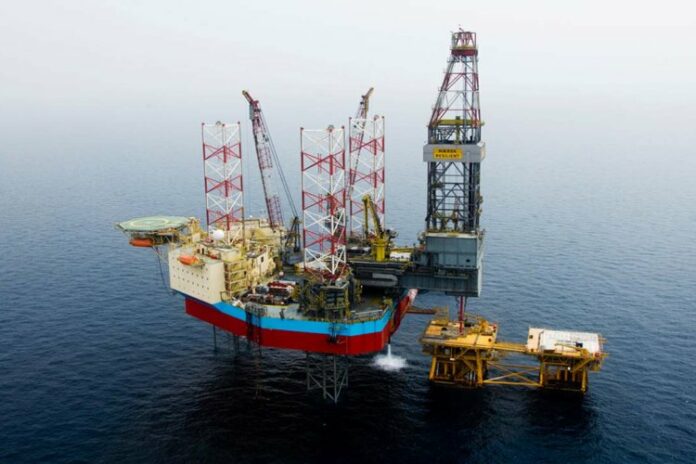
Maersk Drilling has secured a contract from Shell UK Ltd for the provision of the harsh-environment jack-up rig Maersk Resilient for the drilling of the Pensacola well in the UK sector of the North Sea.

The contract is expected to commence in the second half of 2022, in direct continuation of the rig’s previous work scope with Nederlandse Aardolie Maatschappij (NAM), with an estimated duration of approximately two months.

COO Morten Kelstrup of Maersk Drilling says:

“We’re delighted to announce this contract which firms up Maersk Resilient’s drilling programme for most of 2022 and will allow the Resilient team to build even further on the excellent collaboration that was established with NAM and the Shell organisation during last year’s campaign at Galleon.” 

Maersk Resilient is a 350 ft., Gusto-engineered MSC CJ 50 high-efficiency jack-up rig which was delivered in 2008. It is currently operating for NAM in the Dutch sector of the North Sea.

Polarstern Expedition to the Arctic Ice

0

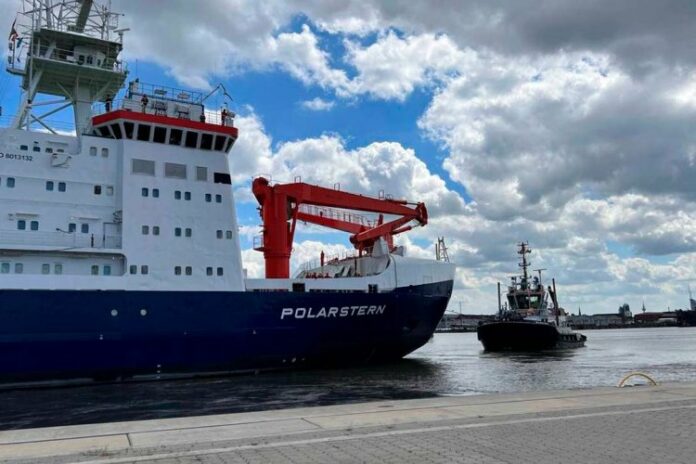
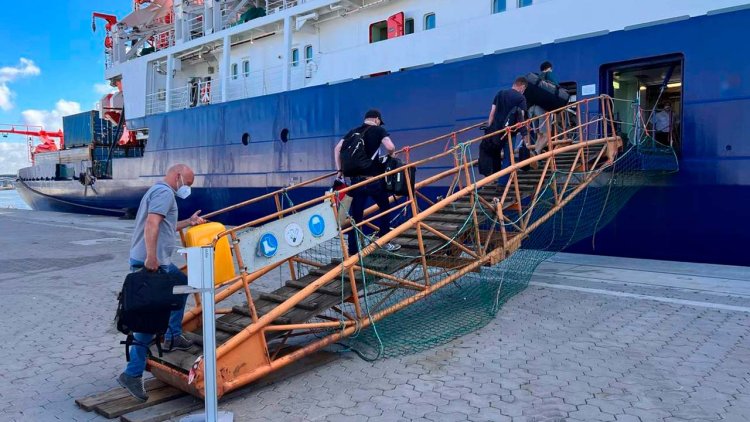
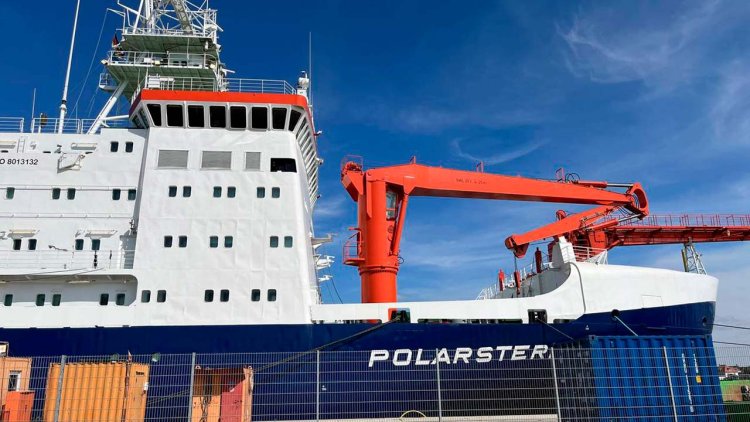
The research vessel Polarstern has departed on a seven-week-long voyage to the Arctic, where the onset of summer also marks the beginning of the annual sea-ice melting. 

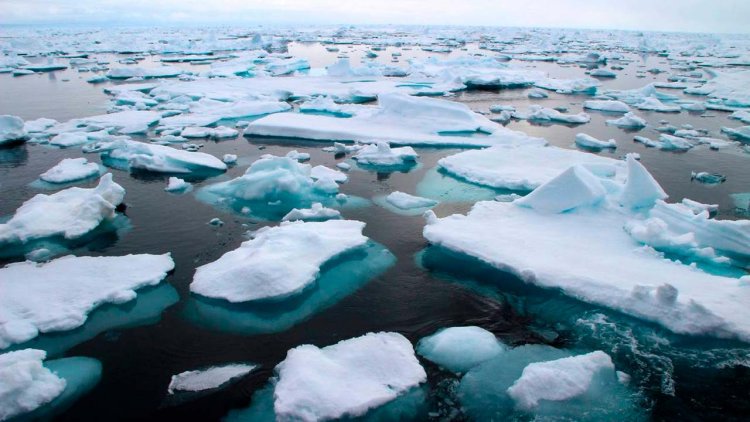
Over the past 40 years, the summer sea-ice extent has decreased by 40 percent – making it one of the most visible impacts of climate change. In a process study to be conducted in the marginal ice zone, the team of researchers on board will investigate how heat fluxes and water layering in the ocean, as well as the characteristics of the ice, interact and influence melting. A further focus of the expedition will be on the warming produced by Atlantic Water circulation and its effects on marine glaciers in northeast Greenland.

From her home port in Bremerhaven, the Polarstern will set course for Fram Strait and the marginal ice zone north of Svalbard, where warm, nutrient-rich Atlantic Water flows into the Arctic Ocean. Closely monitoring energy and material flows in the marginal ice zone from the ship and from on ice floes is the goal of the team led by Prof Torsten Kanzow, expedition leader and a physical oceanographer at the Alfred Wegener Institute, Helmholtz Centre for Polar and Marine Research (AWI). 

Kanzow explains:

“We will make transects from the open water into the dense sea ice and back. Along the way, we will gather a variety of physical, chemical and biological measurements in the marginal ice zone, which is especially productive and therefore especially interesting. The team will also venture onto the ice to take a closer look at the thickness and characteristics of the sea ice and measure ocean currents and eddies away from the ship. We’ll also deploy so-called gliders in the ocean, buoys on the ice and moorings on the seafloor, all of which will record valuable data for the next several years. Lastly, we’ll extend our research radius with helicopter flights, during which we’ll observe, for instance, the melt ponds on the ice.”

The study will be supplemented with atmospheric research, in which the characteristics and flows of aerosols and greenhouse gases in the atmospheric boundary layer, as well as the distribution of water vapour and clouds, will be evaluated. A further project is intended to show how oceanographic fronts, eddies and the ice edge itself, as well as sea-ice characteristics (melt ponds and light transmission), influence carbon export. In order to quantify the latter, the experts will assess the nutrient supply in the sunlit zone, as well as the distribution of phytoplankton and zooplankton (including jellyfish) and primary and net community production. This fieldwork in the marginal ice zone will help us to understand the impacts of climate change in the Arctic.

Another key target region for the expedition is northeast Greenland, where the team will investigate the ocean’s influences on marine glaciers. The two glaciers there (79 N Glacier and Zachariae Isstrom) are both characterised by ocean-driven ice loss and accelerated ice flows, making them contributors to sea-level rise. 

Kanzow, who’s been pursuing research in the region since 2016, says:

“We plan to install moorings in order to gauge the sensitivity of ocean-driven glacier melting to changing environmental conditions.” 

Accompanying geodetic-glaciological studies will be conducted on Greenland. On the one hand, they will assess how the solid ground is rising on extremely small scales, because it is still rebounding from the past weight of ice masses that melted after the last glacial maximum. On the other, they will explore temporal variations in supraglacial lakes; their drainage out to sea can have considerable effects on glacier flow speeds and glacier melting.

For the AWI’s time series dating back to 1997, the expedition team will also deploy measuring devices at the FRAM Observatory between Greenland and Svalbard. And farther to the north in the Arctic Ocean, new instruments will be deployed in the Aurora Vent Field, where they will continually record the seismic activity and physical characteristics of the local heated-water discharges (hydrothermal vents) for the next year. In mid-August, the Polarstern is slated to return to Bremerhaven, from where, following a nearly two-week break, she will depart again, this time bound for the Antarctic.

3D-printed reefs to help restore marine biodiversity in the Kattegat in Denmark

0

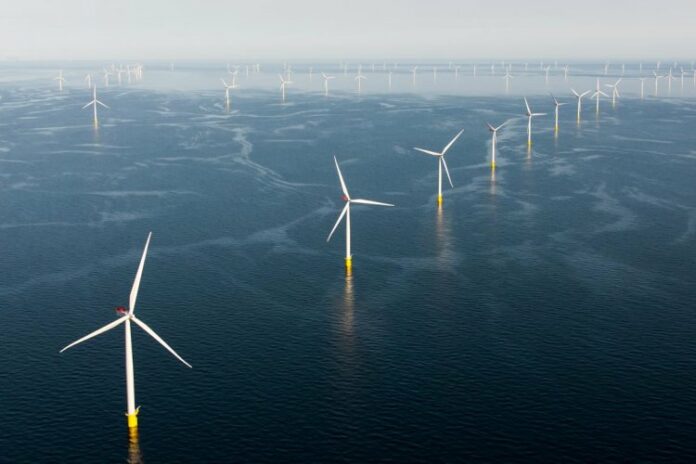
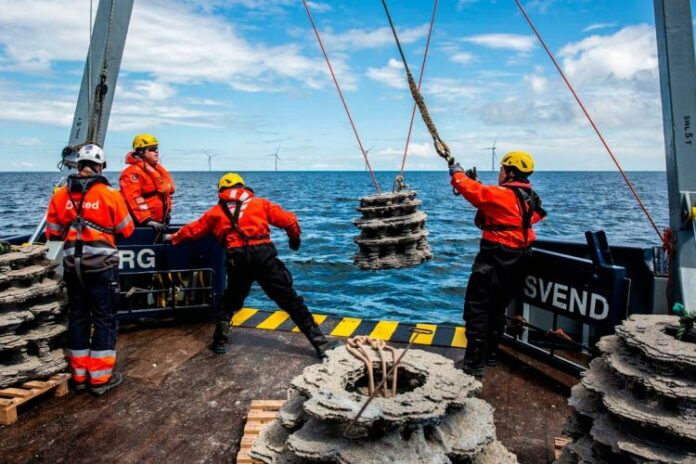
Ørsted and WWF have deployed 12 3D-printed reef structures on the seabed between the wind turbines at Anholt Offshore Wind Farm in the Kattegat, which is part of the Greater North Sea ecosystem. 

Among other things, overfishing, increasing oxygen depletion, and habitat loss have resulted in a decline of the cod stock in the Kattegat for the past 20 years. It is now alarmingly low. This creates a negative domino effect in the Kattegat ecosystem, impacting biodiversity and the marine ecosystem’s resilience against climate-driven changes.

The two partners behind the project hope that it will have positive effects on the Kattegat cod stock and in turn contribute to a healthier, more resilient marine ecosystem with improved biodiversity.

Filip Engel, Vice President of Sustainability at Ørsted, said:

”The ocean holds vast potential to help meet our climate goals. Improving ocean health and restoring marine biodiversity is fundamental to addressing biodiversity loss and the climate crisis. As governments around the world are ramping up ambitious plans to grow renewable energy capacity, offshore wind will take up more space.”  

Bo Øksnebjerg, Secretary General, WWF Denmark, said:

”Marine biodiversity in Denmark is under heavy pressure, and today there are 90 % fewer cod in the Kattegat than in 1990. Action is needed – and urgently. We must give nature and wildlife a hand, while trying to solve our climate crisis by expanding our renewable energy production at the same time. To solve the nature crisis, we must leave nature in better shape than before.”

In recent decades, attention has been drawn to the fact that the extensive overconsumption of marine resources has had enormous consequences. Globally, these consequences include dwindling fish stocks, oxygen depletion near the seabed, and a loss of habitats for marine life, such as massive reduction of eelgrass meadows.

Cod is an important top predator, meaning it preys on other marine species and thereby contributes greatly to maintaining the balance in the marine ecosystem. When cod gets greatly reduced in numbers, the abundance of their prey – such as the green crab – will grow. As a result, seagrasses decline because the crabs eat both the seeds of the eelgrass and many of the snails that themselves keep the eelgrass free from being overgrown with algae.

This is a problem, as eelgrass is itself of great importance for both biodiversity and the climate. It provides important habitats for marine life, such as juvenile fish, it produces oxygen, and it stabilises the seabed. Crucially, eelgrass also very effectively stores carbon in its root network, preventing it from ending up in the atmosphere and contributing to the global temperature rise. 

Last year, WWF Denmark and Ørsted installed biohuts at the piers in the port of Grenaa in collaboration with the Port of Grenaa and the Kattegat Centre. Together, the two projects offer new habitats for cod at key stages in their life cycle.

Biohuts can be described as fish kindergartens as they provide vital protection to small fish. Here, e.g. juvenile cod can seek shelter and food until they are large enough to swim out into deeper water.

The 3D-printed reefs look like a wedding cake consisting of several levels that are connected to each other by hollows where fish can swim in and out of hiding places. At the same time, the structures themselves will provide surfaces and crevices where other organisms can attach. The reefs are about one cubic meter big and vary in width and weight to best imitate natural habitats and weigh up to half a ton.

Ørsted has seen how the boulder reefs that the company established when constructing the Anholt Offshore Wind Farm have become attractive oases for other marine species on an otherwise barren seabed. The expectation is that the new 3D-printed reefs can complement the stone reefs and will quickly become inhabited with life. WWF already has experience with 3D-printed reefs from a project in the Dutch part of the North Sea.

The project at Anholt Offshore Wind Farm is supported by PensionDanmark and PKA A/S which have a 30 % and 20 % share in the wind farm, respectively.

Facts about 3D-printed reefs

  • The reefs are made from 70 % sand and 30 % pozzolanic cement made from volcanic ash and portland cement. These are natural materials and will not be harmful to the surrounding environment, even if parts of the reefs should erode over time.
  • The 3D-printed reefs are biocompatible due to the absence of synthetic or toxic substances of industrial origin and the moderately basic pH of the structures at around 8.5-9.
  • Each reef weighs between 200 and 550 kg.
  • They are 1 m3 in size with a height of 1 m.
  • The 3D-printed reefs are designed and developed based on a collaboration between WWF Netherlands and Reef Design Lab. The reef structures are produced by the Italian company D-Shape.