2.2 C
New York
Home Blog Page 427

Shell to participate in Qatar’s LNG expansion

0

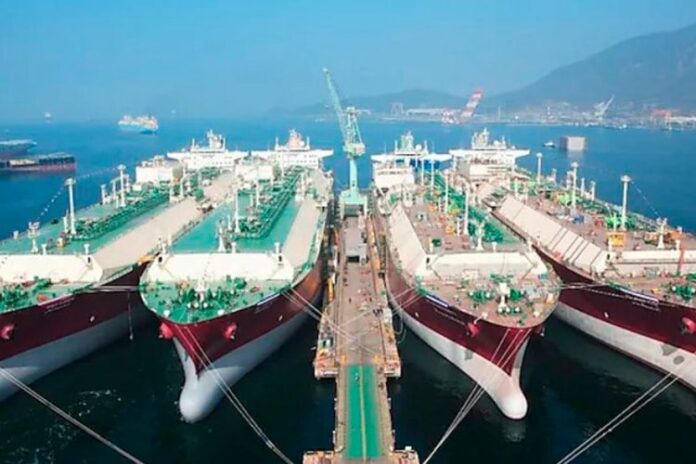
Shell has been selected by QatarEnergy as a partner in the North Field East expansion project in Qatar, the single largest project in the history of the liquefied natural gas (LNG) industry. 

Pursuant to the agreement, QatarEnergy and Shell will become partners in a new joint venture company (JV), in which QatarEnergy will hold a 75% interest while Shell will hold the remaining 25% interest. In turn, the JV will own 25% of the entire NFE project, which includes 4 mega LNG trains with a combined nameplate LNG capacity of 32 million tons per annum (MTPA).

Shell’s investment in this LNG expansion will support delivery of much-needed supplies of natural gas to markets around the world. The project will also be integrated with carbon capture and sequestration to reduce emissions.

In remarks at the signing ceremony, His Excellency Mr. Saad Sherida Al-Kaabi said:

“We are very pleased to have Shell join us as a partner in this mega project, to which we have committed ourselves. We have lived up to that commitment, as well as to our global reputation as a reliable and trustworthy energy provider. Today’s announcement marks the successful conclusion of the selection of our international energy company partners in the North Field East project, through which QatarEnergy and its partners reaffirm their commitment to the energy transition and to the safe and reliable supply of cleaner energy to the world.”

Shell Chief Executive Officer, Ben van Beurden said:

“Through its pioneering integration with carbon capture and storage, this landmark project will help provide LNG the world urgently needs with a lower carbon footprint. Lower carbon natural gas is a key pillar of our Powering Progress strategy and will also help us achieve our target of becoming a net-zero emissions business by 2050.

“This agreement deepens our strategic partnership with QatarEnergy which includes multiple international partnerships such as the world-class Pearl GTL asset. We are committed to maximize the value of the LNG expansion for the State of Qatar and continue to be a trusted, reliable and long-term partner in Qatar’s continued progress.”
Fugro expands its USV fleet with the development of Blue Prism

0

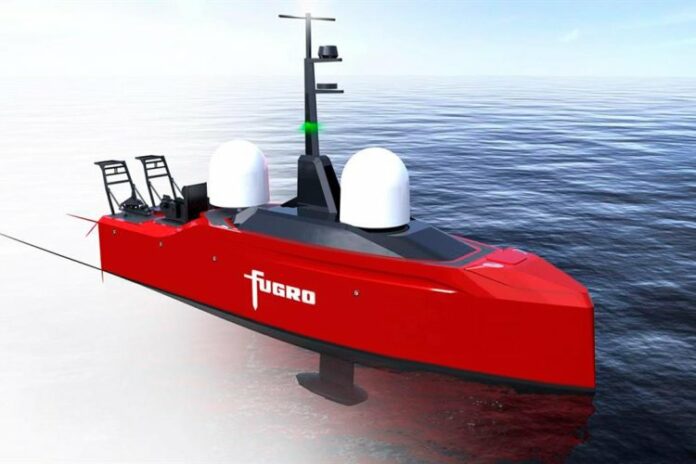
Specifically engineered for operations in both coastal and offshore environments, the Blue Prism ™ will combine an ultra-low carbon footprint with high quality data collection, weather resilience and endurance characteristics.

Available to clients in 2023, Fugro’s Blue Prism™ will acquire bathymetry and sub-bottom data of the highest accuracy using hull mounted sensors, whilst also having the ability to tow multiple geophysical sensors. Capable of beyond line of sight operations, it will be the first low carbon autonomous vessel to combine these advanced vessel characteristics and sensors. Together with Fugro’s smart data management software, the speed and endurance of the Blue Prism will reduce risk and accelerate project delivery in offshore wind, hydrographic charting and coastal resilience.

Perry van Oossanen, Managing Director and Naval Architect at Van Oossanen Naval Architects, said:

“We are thrilled to be part of this exciting project in which the best technics in Dutch ship building are combined in this new uncrewed ultra-efficient vessel. To re-think the design and lay-out of a vessel without a crew is a dream come true for a naval architect.”

Maarten Kooiman, Director of Kooiman Engineering, said:

“The collaboration between Kooiman and Van Oossanen has already led to innovative solutions, and we are pleased to be able to help Fugro take the next step in uncrewed vessels.”

Frank Koopman, Fugro’s Global Director Marine Site Characterisation, said:

“Autonomous vessels play an important role in the future of the maritime survey sector by improving safety, reducing carbon emissions, and delivering high quality data more efficiently. We chose to work with Kooiman Engineering and Van Oossanen Naval Architects because of their extensive track record in innovative ship design and hydrodynamics and we look forward to working with them on this exiting project as we are determined to grow our fleet of USVs for safer, more sustainable marine operations.”

Damen set to deliver CSD500 for mining operation

0

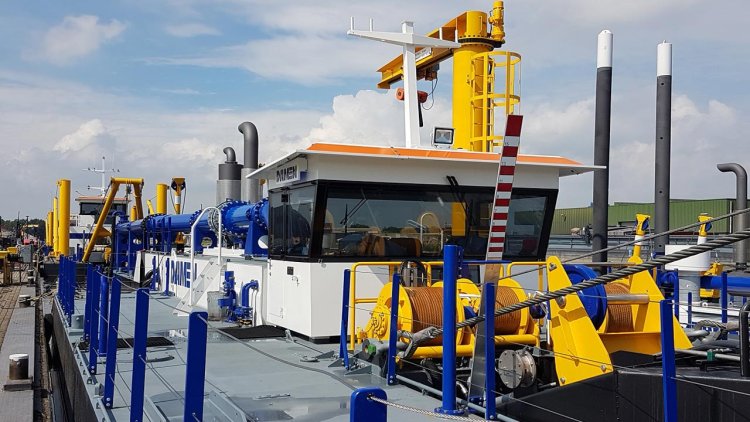
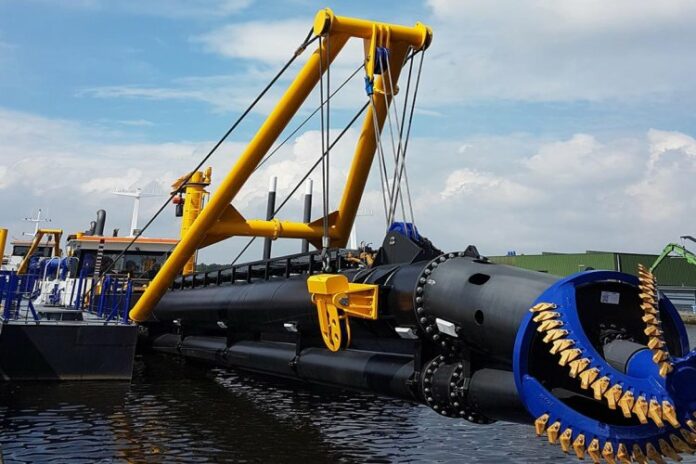
Outfitting is taking place at Damen Dredging Equipment in the Netherlands at this moment. The standard CSD500 will be customised to meet specific operational demands. 

The DDE expert team will increase the dredging depth, add a spud carriage installation and specific dredging instrumentation. This instrumentation includes standard items such as a production measurement system and customer specific additions. For example, dredge pump revolutions and depth indications are made available as digital signals for the customer’s operational software.

Mr Doorenbos adds:

“The additions to the standard CSD have been chosen carefully. The dredger is to mine ilmenite. We have carefully studied the mining operation to be able to provide our customer with an efficient and functional stationary dredger, which is perfectly adapted to the plant”.

With outfitting running smoothly, the dredger is expected to leave the yard in July.

Proman Stena Bulk takes delivery of second methanol-fuelled tanker

0

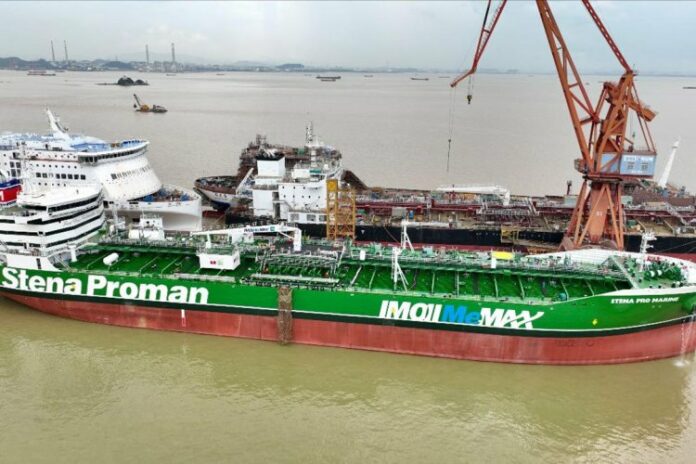
Proman Stena Bulk, a joint venture (JV) between a leading global methanol producer Proman and one of the world’s largest tanker shipping companies Stena Bulk, has today announced that its second methanol-powered newbuild tanker, Stena Pro Marine, has been delivered. 

The growing momentum behind methanol-powered vessels across the shipping industry in recent weeks highlights methanol’s key advantage as a globally available cleaner marine fuel: its proven net-zero pathway allows shipowners to invest in vessels that are already futureproofed.

As well as enabling immediate greenhouse gas emissions reductions, CO2 emissions can be steadily reduced by blending increasing quantities of low-carbon and renewable methanol in the coming years, without any changes to engines or wider infrastructure.

Both 49,990 DWT IMOIIMeMAX dual-fuel mid-range (MR) tankers were built at Guangzhou Shipyard International Co Ltd (GSI) in China. Stena Pro Marine, like Stena Pro Patria, is expected to consume 12,500 tonnes of methanol per annum. The use of methanol onboard virtually eliminates local pollutants including SOx and Particulate Matter (PM), cuts NOx emissions by 60% and reduces CO2 emissions by up to 15% on a tank to wake basis versus conventional marine fuels. 

Anita Gajadhar, MD of Proman Shipping, Marketing and Logistics, said:

“Vessels such as the Stena Pro Marine demonstrate to shipowners and policymakers that the industry can take proactive and immediate steps on the decarbonisation pathway. 

“Proman and other producers are ramping up investments in low-carbon methanol technologies and renewables projects to meet rapidly expanding customer demand. As regulators continue to propel much-needed maritime decarbonisation, including the EU’s ‘Fit for 55’ legislative package, these vessels underline the importance of a regulatory framework that relies on one certification methodology for alternative fuels and accurate emission measurements of all fuels, including reduced carbon-intensity fossil-origin products, which play an important early role in accelerating the switch to cleaner fuels and enabling the pathway to net-zero.”  

Strike affecting Equinor-operated fields on the Norwegian continental shelf

0

Equinor has initiated a safe shutdown of the Gudrun, Oseberg South and Oseberg East fields after members of the Norwegian Organisation of Managers and Executives (Lederne) trade union went on strike from midnight.

The background for the strike is that the members of Lederne in a referendum voted against the mediator’s proposal during the wage negotiations for offshore personnel between the labour organisations and the employers’ organisation, the Norwegian Oil and Gas Association (Norog).

Total production from Gudrun, Oseberg South and Oseberg East is around 89,000 barrels of oil equivalent (boe) per day, of which 27,500 boe per day is natural gas.

A further extension of the strike has been notified for the Heidrun, Kristin and Aasta Hansteen fields, taking effect from the night before Wednesday 6 July. To Equinor this means that the above-mentioned installations will perform a controlled shutdown of production, including the Tyrihans field, which is tied to the Kristin platform.

Total production from Heidrun, Kristin/Tyrihans and Aasta Hansteen is around 333,000 boe per day, of which 264,000 boe per day is natural gas.

A further escalation has been announced from 9 July at Sleipner, Gullfaks A and Gullfaks C. Consequences of this escalation is not yet clear.

Damen to build a second Combi Freighter 3850 for Reederei Gerdes

0

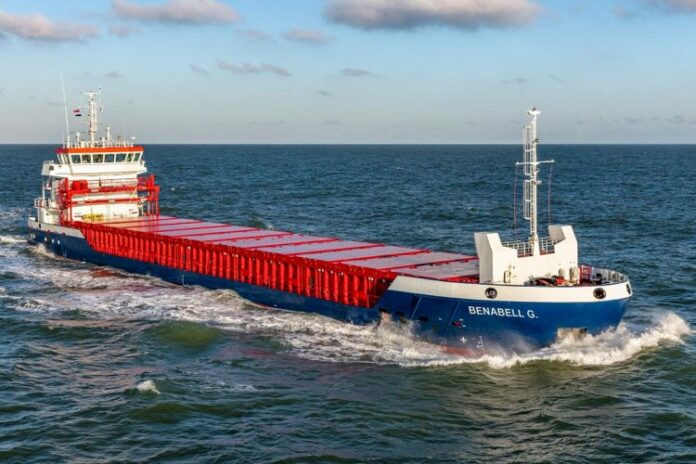
German short sea shipping specialist ship owner company Reederei Gerdes signed the order for Damen Cargo Vessels to build a second Combi Freighter 3850, following delivery of the Benabell G in September last year.

Impressive performance of the Damen CF 3850 that was taken into service end of 2021, convinced Reederei Gerdes to order the next vessel of this type. Now that European short sea shipping is experiencing a period of growing demand, fleet renewal is key to be prepared for future operations. Tightening environmental regulations require fleet upgrades. The CF 3850 performs well within the requirements from IMO and port states, making it a future proof vessel. Additional benefit for the ship operator is of course the low fuel consumption at high deadweight.

Nicole Gerdes, managing partner at the ship owner company, states:

“It is important for us to utilise the resources available in a responsible manner. We focus on longevity and sustainability to retain our competitive advantage in coming years.”

Kalli G can sail at over ten knots carrying full cargo load, with less installed propulsion power. Optimised design of the hull reduces water resistance and enables substantial fuel savings. The 89.70 meter length over all, 12.50 meter beam vessel has a 1104 kW main engine. The relatively small power source is enough to maintain her 11.8 knot design speed even in rough conditions. The vessel carries 3830 tonnes of load. Cargo hold tanktop strength is reinforced to carry 15 tonnes per square meter. The CF 3850 takes 172 containers: 108 in the hold and 64 on deck.

Gerdes, with its associated chartering company over-C GmbH & Co. intends to employ the ship in the European coastal trade. Dennis Clavier, Director at over-C states:

“The size, in combination with its ‘NAABSA notation’ make the CF3850 a good vessel for calling smaller tidal ports for example in the UK. The movable bulkheads which can be used as partial tween-decks offer flexibility to carry grain, animal feed, fertilizer, steel but also project cargoes from time-to-time.”

Kemi Shipping orders eight Konecranes E-VER electric forklifts

0

Kemi Shipping Oy, owned by Finnish Metsä Group, has ordered eight Konecranes E-VER fully electric forklifts including full service contracts for their operations in the Port of Kemi. 

Kemi Shipping provides a range of harbor services for customers in the region. With Metsä opening a new mill for bioproducts in the north, Kemi Shipping is taking the step to invest in new lift trucks for their new warehouse operations. The port facility is big and will benefit from the eight Konecranes E-VER electric forklifts that will serve the mill with their product handling as it reaches full production capacity.

Kari Lundell, CEO of Kemi Shipping, says:

“Sustainability is at the core of our business, so the first thing that attracted us to the Konecranes E-VER was the fact that it is fully electric. We had one Konecranes E-VER delivered earlier this year for paper board handling, and we could see its advantages immediately. Besides eliminating tailpipe emissions, it offers outstanding efficiency, and our drivers love it. Once all eight E-VER electric forklifts are on-site, they will mark another big step on our journey to greater productivity and lower emissions.”

The eight additional lift trucks are Konecranes E-VER 16-1200C forklifts, with a fully-electric driveline and a capacity of 16 tons. Lithium-ion batteries manufactured with clean energy power each truck, taking just 45 minutes to fully recharge and re-generating brake energy back to its battery. With less heat, oil and fewer moving parts, the electric forklift requires less maintenance, and produces less chemical waste. The trucks will be supplied with special bale clamps to securely handle wood pulp.

These Konecranes E-VER electric forklifts are also Smart Connected Lift Trucks, in which TRUCONNECT® Remote Monitoring follows each truck’s performance and maximizes battery life through analytics such as charge optimization and energy consumption.

Vår Energi enters strategic supplier partnership

0

Vår Energi ASA enters a strategic partnership with Aker Solutions AS, Havfram AS and Saipem S.A for SPS/SURF deliveries, in preparation for record high activity level on the Norwegian Continental Shelf (NCS).

Vår Energi CEO, Torger Rød, says:

“We are very pleased to have secured such a strong team supporting us to develop our projects, through priority, competence, and capacity. Broader, long-term, and more open collaboration between suppliers and operators drives value creation. It reduces cost and increase efficiency and predictability. Strong partnerships with key suppliers will develop the most sustainable solutions, and strengthen our competitiveness.”

The contract duration is five years plus two options of two years each – potentially up to nine years.

The strategic partnership model is built on a one-for-all and all-for-one principle and contrasts with the conventional model of separate contracts with split scope and responsibilities.

VP Contracts & Procurement in Vår Energi, Annethe Gjerde, explains:

“We always push for operational excellence through sustainable solutions, and with a collaboration model like this, we will see more efficient and improved end-solutions. Strategic partnering and early involvement of the suppliers secure more efficient planning and implementation of projects. A strong partnership will provide added value for all parties, which we also see as part of the standardized supply chain behavior guideline developed by a joint industry effort facilitated by the Norwegian Oil and Gas Association.”

Partnership to introduce hydrogen to Swedish port announced

0

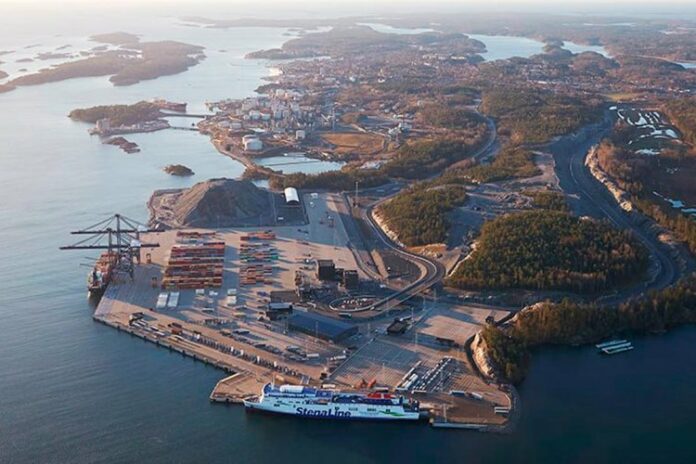
The investment in hydrogen will encompass port operations and will also expand service offerings to shipping companies and haulage firms, as well as other customers and collaboration partners. 

The goal is for Stockholm Norvik Port to be Sweden’s most climate-smart and sustainable port.

Ports of Stockholm and CMB.TECH have initiated a partnership for a unique major hydrogen collaboration at Stockholm Norvik Port. The investment means the start of being able to offer customers and collaboration partners the possibility to convert to hydrogen, by building a hydrogen fuelling station adjacent to the port. In the initial phase, port vehicles will be converted to run on green hydrogen. The first hydrogen-fuelled terminal truck is planned to be in operation at Stockholm Norvik Port in 2023.

Anna König Jerlmyr, Mayor of Stockholm, explains:

“Hydrogen will play a crucial role in converting to fossil fuel-free transport, both on land and at sea. We are therefore extremely pleased to announce this partnership with CMB.TECH and this drive for hydrogen. This is entirely aligned with the ambitious environmental goals of Ports of Stockholm for operations to be fossil fuel-free by 2030.” 

CMB.TECH is a key player in offering hydrogen solutions, and has extensive experience of the shipping and transport sectors.

Alexander Saverys, CEO of CMB.TECH, states:

“Being able to enter into this partnership with Ports of Stockholm at the new freight port, Stockholm Norvik, is a pleasure. This is the first port in Sweden we have worked with, and we hope to be able to contribute with our knowledge and experience in converting from diesel to hydrogen. This provides entirely new possibilities to further develop Stockholm Norvik Port as the climate-smart port it already is.” 

The hydrogen ambition is one stage in the development to use more climate-smart fuels for overland transport and shipping. Sweden’s most climate-smart and sustainable port will become even more sustainable.

Ports of Stockholm works actively, long-term and strategically to achieve sustainable port operations and shipping and has set high environmental targets. Ports of Stockholm has been awarded quality and environmental ISO 9001 and ISO 14001 certification. This means that the company works in a structured and systematic way to achieve continuous improvements and reduce environmental impacts. The company also reports sustainability according to Core level GRI Standards.

Van Oord sells share in Borssele V to Octopus Energy Generation

0

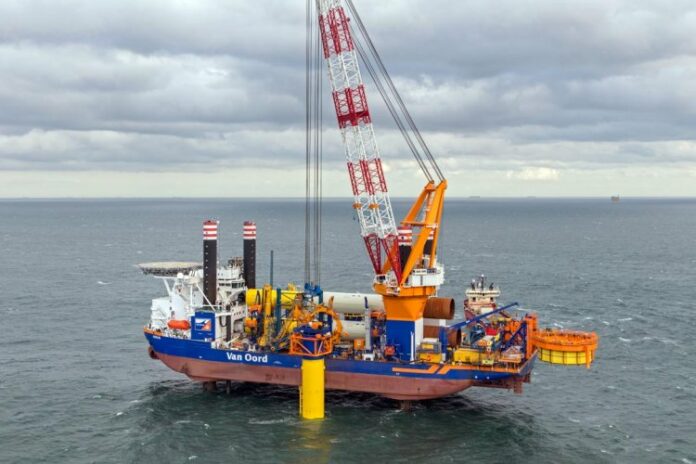
The sale confirms the success of innovations demonstrated in Borssele V, including the world’s first submerged slip joint, a new method for securing turbine foundations, and technologies that promote marine biodiversity around wind turbines.

The Borssele V offshore wind farm (19 MW) consists of two large Vestas wind turbines – each as tall as the Maastoren in Rotterdam – and is located in the 1.5 GW Borssele wind farm cluster in the North Sea. Borssele V has been operational since 2021 and is operated by Eneco. 

Dutch green energy company Vandebron is the offtaker, supplying the green power generated by the wind farm to customers in the Netherlands. The wind farm creates enough energy to power 25,000 homes a year, offsetting 16,000 tonnes of carbon emissions, equal to taking 10,000 petrol cars off the road. 

One of the innovations is the slip joint, a new way to secure turbine foundations. The development of the slip joint was supported by government funding and the innovation promises to change the future of the wind turbine installation industry by significantly reducing both installation costs and time.

The successful sale of Borssele V is the next step in Van Oord’s offshore wind strategy, as it will seek to offer the innovative slip joint solution on a larger scale in new tenders. Van Oord will monitor and analyse the behaviour of the slip joint for an additional six years as it continues to study and improve the technology.

Other innovations in Borssele V also proved successful, such as the tests on integrating biodiversity into future windfarms. This knowledge is valuable for nature conservation and will be applied in future projects.