-0.4 C
New York
Home Blog Page 423

WinGD and Chord X strike up partnership for CII insights

0

Among several areas of development, the partnership aims to bring ship operators component-level insights into carbon intensity indicator (CII) ratings.

The collaboration targets providing visibility into how engine performance affects overall vessel operational efficiency as reported under IMO’s incoming CII regulation. By linking WinGD’s engine diagnostics platform WiDE with Chord X’s vessel emissions analytics solution ecoMax, owners and operators can drill down into their current or projected CII ratings to see whether engine operation can be optimised to improve ratings.

The connection between the two systems shall allow operators to see how future voyages will affect CII ratings, as well as projecting ratings for future years as the regulation demands greater efficiency improvements. Combined with better understanding of engine performance, this offers a valuable tool to help plan fleet utilisation and manage priorities for maintenance.

Tin Wei Hong, Chord X Head of Business & Partnership, said:

“Partnering with WinGD will allow us to provide the very best machine-GHG integration, which WinGD and Chord X will design for the next generation of marine main engines. Together, we will unlock the full potential of data-driven marine main engine operation and enable our customers to take the best path for success in the new digital shipping landscape.”

WinGD Director of Operations Rudolf Holtbecker said:

“This collaboration comes at the exact time when our industry needs greater visibility of the effectiveness of GHG-reducing technologies. By combining WinGD’s advanced engine technology innovation and Chord X’s focus on the emissions profile of vessel operations, ship owners can directly connect the emissions calculations with enhanced machinery analysis.”
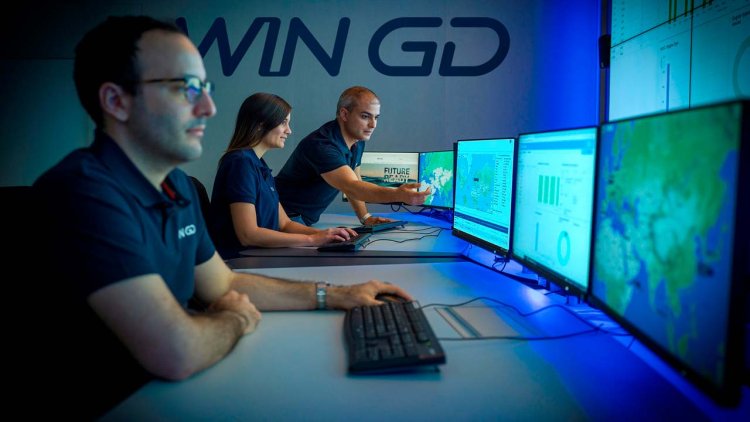
By integrating data from WiDE, ecoMax can deliver even more accurate engine emissions analysis. Conversely, WinGD users can connect their engine insights from WiDE to a well-established vessel emissions analytics platform that has already been approved by DNV as a means for reporting CII performance.

The strategic cooperation will extend beyond CII to other areas where improving the accuracy of emissions data – and linking the ability to optimise or troubleshoot engine performance – can benefit ship operators. For example, if operators are required to comply with emissions trading schemes or carbon pricing, just a fractional reduction in emissions can lead to big cost savings.

As part of the partnership, WinGD customers will be able to access both WiDE and ecoMax platforms. Users will be able to move between the two platforms with a single click, enabling simple and fast comparison of vessel- and engine-level emissions performance.
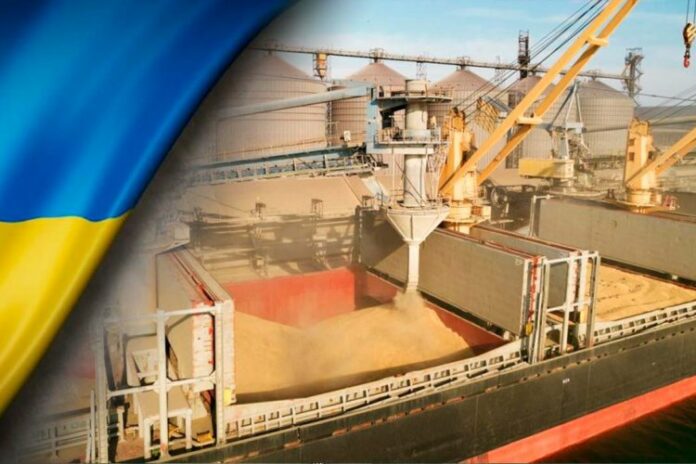
Ukraine says ships pass through Danube rivermouth, sparking hopes on grain exports

0

Ukraine sparked hopes Tuesday for an increase in grain exports despite Russia’s blockade of Black Sea ports, noting that ships had started to pass through an important mouth of the Danube river.

“In the last four days, 16 ships have passed through the Bystre rivermouth,” Deputy Infrastructure Minister Yuriy Vaskov was quoted as a saying in a ministry statement. “We plan to maintain this pace.”

The ministry said the 16 vessels were now waiting to be loaded with Ukrainian grain for export to foreign markets, while more than 90 more vessels were awaiting their turn in Romania’s Sulina canal.

Only four ships could be received per day along the Sulina route, he said, while a rate of eight per day was needed. But Ukraine was negotiating with Romanian colleagues and European Commission representatives about increasing the rate of crossings, he added.

If such conditions were met, and with the opening of the Bystre, he said Ukraine expected this ship congestion would end within a week and that monthly exports of grain would increase by 500,000 tonnes.

Before Russia’s invasion, the ministry said, sea ports accounted for about 80 percent of Ukraine’s export of agricultural products, but food exports are now restricted to Danube ports, railways and roadways to the west.

Source: Reuters

European port Antwerp-Bruges becomes foundation member of H2Global

0

Europe’s largest export port is now participating in the German H2Global Foundation with an endowment sum of EUR 100,000. The foundation has set itself the goal of making green hydrogen acceptable as an energy substitute in Europe – thereby advancing the energy transition and independence from Russian gas supplies. 

Flemish Minister Jo Brouns (CD&V):

“Flanders will need the import of sustainable hydrogen, in addition to local production.”

The H2Global Foundation has developed a competition-based double auction mechanism by which its subsidiary HINT.CO acts as an intermediary anx auctions green hydrogen and derivates at the lowest possible price. Afterwards they sell the green hydrogen in Germany and Europe to the highest bidder. The expected negative difference can be compensated by the 900 million euro subsidy from the German government, BMWK.

Markus Exenberger explains:

“As an energy and feedstock hub and a growing producer of green hydrogen, the port of Antwerp and Zeebrugge is a crucial factor for the logistics that enable the energy transition. Its decision to join the foundation is a sign that H2Global is a joint European and a global effort as well.” 

Flemish Minister Jo Brouns (CD&V) is pleased that the port can join with the support of the Flemish government, who co-finances the membership:

“We are going to need sustainable hydrogen for the sustainability of our industry and heavy transport. But Flanders and Belgium are too small to produce all our own hydrogen ourselves, so we always have to look at import. That’s why it’s important for the port, as a Flemish industrial cluster, to have a role in H2Global in order to participate with Flanders in this sustainable story.”

The clear message from Port of Antwerp-Bruges, as Europe’s largest port for vehicle handling, the home of Europe’s largest integrated chemical cluster and a leading container port, aligns well with the European and societal core of the H2Global idea.

CEO Jacques Vandermeiren, commenting on his company’s financial, political and practical commitment to the H2Global Foundation, says:

“Committing massive investments, we are striving to achieve climate neutrality by 2050. Together with our partners in the Hydrogen Import Coalition and the major players on our port platform, we are already supporting projects that pursue the production, transport and storage of hydrogen. Our involvement in H2Global is intended to provide an additional boost to the market ramp-up required for this. In this way we want to reconcile economy and climate.”

The current supply situation viewed against the backdrop of the war in Ukraine and the accompanying energy shortages underline the urgency. 

Vandermeiren, outlining the geopolitical and economic background, says:

“It is currently impossible for north-western Europe to obtain all the energy it needs from renewable energy sources. The plans for importing green hydrogen from countries with much more solar energy are becoming more and more concrete.” 

Green hydrogen – or its derivatives – will be arriving at major ports such as Antwerp-Bruges, among others. And this is where the foundation’s idea behind the H2Global funding programme comes in.

Annick De Ridder, president of Port of Antwerp-Bruges:

“It is the declared ambition of our port to become the ‘green port’ of the future and the energy gateway to Europe. As an active pioneer of the hydrogen economy we have taken major steps in the last two years, always embedded in fruitful collaborations both at home and abroad. Because the hydrogen chain is complex, we have, for example, joined forces in a Hydrogen Import Coalition with five major industrial players and public stakeholders and are focusing on concrete projects that will shape the production, transport and storage of hydrogen. In the coming years, hydrogen projects such as with Chile and Oman (port of Duqm) will be further developed and we will start the construction of the Hyoffwind hydrogen plant. As a founding member of H2Global, we are putting some more ‘power’ into our hydrogen ambitions.”

Today, Port of Antwerp-Bruges is already introducing alternative energy sources such as hydrogen and turning them into sustainable raw materials and fuel for the port’s chemical sector. The port is also expected to play a vital role in the import and local production of green hydrogen. Initial green hydrogen production will start in 2023 with a ramp-up through 2025-2027 for large volumes of green molecules coming in from overseas.

Berge Bulk vessels to receive Anemoi Rotor Sails

0

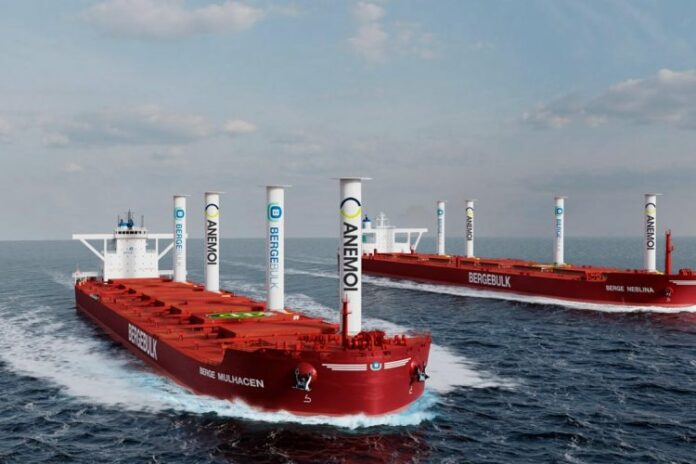
Singapore-based dry bulk owner Berge Bulk announces that it had signed agreements with Anemoi Marine Technologies Ltd – a global leader in wind-assisted propulsion for commercial vessels – to supply and fit two vessels in their dry bulk fleet with Anemoi Rotor Sails.

The first vessel, Berge Neblina, a 388k DWT Valemax ore carrier built in 2012, was made ‘wind-ready’ earlier this year. The structural integration required prior to installing the technology was carried out during a scheduled dry dock. Four of Anemoi’s large folding deployment Rotor Sails will be installed to improve vessel performance. Folding Rotor Sails can be lowered from the vertical to mitigate the impact on air draught and cargo handling operations.

This flexible “wind-ready” approach has been taken to align with vessel availability and Anemoi’s production slots. The same approach has been taken with the second vessel, Berge Mulhacen, a 2017-built 210k DWT Newcastlemax bulk carrier, which will also receive four folding Rotor Sails. Plan approval has been obtained for both ships from DNV.

Paolo Tonon, Technical Director, Berge Bulk, said: 

“We’re committed to continuous innovation and exploring cleaner, greener energy sources. Wind propulsion is an option we have explored previously in other formats, and we firmly believe it can help achieve our decarbonisation commitments. The partnership with Anemoi commenced with in-depth engineering simulations to find the best possible technical and commercial solution. Therefore, we are pleased to be rolling out their Rotor Sail technology on our vessels.”

Berge Bulk is committed to developing and deploying commercially viable deep-sea zero-emission vessels by 2030.

Kim Diederichsen, CEO, Anemoi Marine Technologies, said: 

“I’m delighted to be announcing this partnership with Berge Bulk. It is a further confirmation that forward-thinking shipowners are turning to wind-assisted propulsion to help them achieve their environmental objectives – and it proves, once again, that Rotor Sails are a realistic and workable solution that results in significant carbon savings.”

Rotor Sails are large mechanical sails that harness the renewable power of the wind to reduce emissions and fuel consumption on commercial ships when driven to spin.  Anemoi predicts that the four-rotor system will save Berge Bulk 1,200-1,500 metric tons of fuel per vessel each year.

XFuel lands €8.2m investment to accelerate roll-out of low carbon fuel technology

0

XFuel has secured €8.2 million in its latest round of investment, laying the foundation for the commercialisation of its next-generation synthetic diesel, marine and jet fuel technology.

XFuel’s patented technology efficiently converts biomass waste into low-cost, drop-in fuel that can be used in road, marine, and aviation applications. It uses feedstock from sustainable waste sources in manufacturing, construction, forestry, and agriculture. Its fuels comply with marine and road fossil fuel specifications, and can therefore be used in existing infrastructure and engines, either blended with conventional fuels or as a replacement. 

Using modular and scalable biorefineries, XFuel can produce high-grade fuels at a comparable or lower price point to fossil-based fuels on the market. Independent assessments have shown that XFuel’s technology can currently deliver fuel with GHG savings of 85%, with potential to deliver carbon-neutral and negative fuels in the future. The technology enables cost-efficient and transformative carbon emissions reductions today without requiring significant capital investment.

Investors in the oversubscribed financing round include Germany’s AENU led by Ferry Heilemann, New York-based Union Square Ventures (USV), and HAX/SOSV, alongside other backers. The investment will drive the commercialisation of XFuel’s technology and assist in deploying a pipeline of global projects across road, maritime, and aviation.  Feedstock for four projects has already been secured through a deal with a leading waste wood consolidator operating in the UK and Ireland. 

Nicholas Ball, CEO of XFuel, said:

“There is a clear global consensus to decarbonise, but our dependency on liquid fuels isn’t ending soon enough. For us to reach carbon neutrality and make an impact today, we need liquid fuel replacements that are net-zero, sustainable, drop-in and cost-effective.”

“Our mission is to decarbonise the transportation industry and meet this urgent need, and this is why we are thrilled to have received such a vote of confidence from our investors. Our low carbon drop-in fuels and low-cost, modular biorefining technologies will play a major role in global decarbonisation, across the automotive and haulage sectors as well as in hard-to-decarbonise industries like shipping and aviation. This investment will allow us to set the foundations for the commercialisation of our company and the rapid scaling of our technology.” 

Ferry Heilemann, Founder and Partner at AENU, said:

“The climate crisis demands a scalable response. XFuel’s sustainable biofuels meet this need, particularly in hard-to-abate sectors by using waste feedstock, leveraging existing infrastructure, and adopting a modular approach to production that enables rapid scale up. With almost abundant biomass feedstock around the globe and a low cost of production, XFuel is unlocking new possibilities for all kinds of industries to decarbonise.” 

DEME secures dredging contract for new container terminal in Gdańsk

0

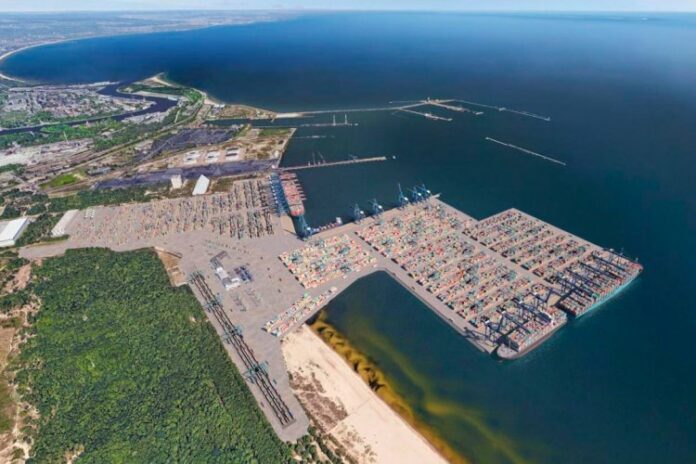
The new contract was signed with DCT Gdańsk, the operator of the largest container terminal on the Baltic Sea and owned by PSA International, the Polish Development Fund and IFM Global Infrastructure Fund. DEME will work in a consortium with the Polish construction group Budimex.

The new container terminal in Gdańsk includes a deep-water quay of 717 metres long and 17.5 metres deep and a yard area of 36.5 hectares. DEME will lead the dredging and reclamation works to create the 36-hectare platform that will form the base of the new terminal.  Dredging and reclamation works will start in September 2022 and will be followed in early 2023 by the construction of the northern and southern walls and the main berth.

Scheduled to open for commercial operations in 2024, the full completion of the terminal is planned for the second quarter of 2025. In its first phase, the new terminal will increase DCT Gdańsk’s handling capacity by 1.7 million TEU to a total of 4.5 million TEU (20-foot containers) per year.

Laurent Closset, Deputy Area Director Europe at DEME Group, commented:

“We are extremely pleased to secure this dredging and reclamation contract, which is the second major project for DEME in Poland in a few years’ time.This project award follows the successful modernisation we executed of the Świnoujście-Szczecin Fairway, which officially opened in May. Now we are helping to construct a new terminal, which is marking a new era for container handling in the Baltic region. We are particularly proud of this new success for a prestigious client in this very dynamic country.”

Equinor: Gas leaks on Sleipner field stopped – parts of the field are shut down

0

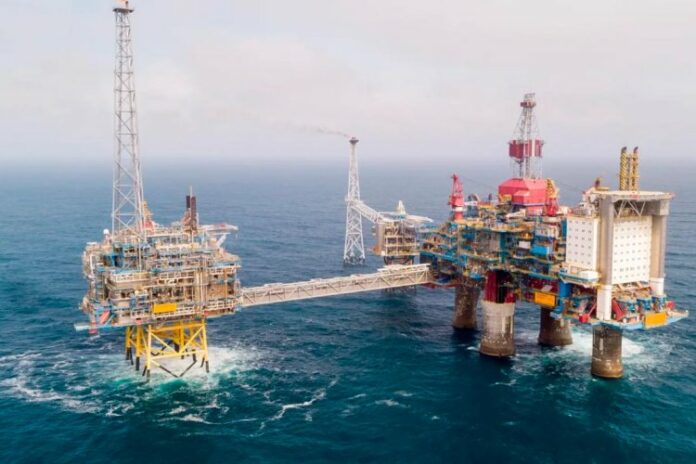
A gas leak in a contained area related to a turbine on Sleipner A was reported in the morning of 11 July. The incident was quickly clarified.

During the process of resuming production and depressurisation, an additional gas leak occurred on the Sleipner R riser platform late Monday night.

Personnel on board mustered according to procedure in both situations, but they were demobilised shortly afterwards. No personnel were injured in any of the incidents.

Work is ongoing to safely resume normal operation.

The authorities have been notified and the incidents will be further investigated to find the causal relation.

MOL Drybulk and Drax launch green shipping initiative

0

Leading renewable energy company Drax Group and Japanese shipping company MOL Drybulk Ltd. are working together to reduce the emissions and fuel costs associated with shipping biomass by deploying wind power technology on its vessels.

The companies plan to facilitate the development of wind-powered vessels to transport bulk cargoes of Drax’s wood pellets to its customers in Japan, where the biomass is used to generate reliable, renewable energy, which displaces fossil fuels.

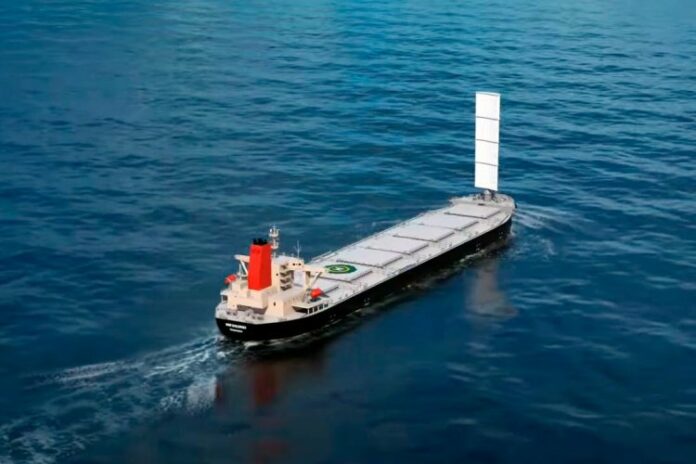
The newly built vessels will be fitted with MOL’s Wind Challenger hard sail technology, with the first ship expected to be on the water as soon as 2025.

The initiative is part of Drax’s plans to further reduce supply chain emissions in line with its world-leading ambition to be a carbon negative company by 2030, by using bioenergy with carbon capture and storage (BECCS).

Drax Group Chief Executive Will Gardiner said: 

“MOL Drybulk’s hard sail technology has the potential to transform the maritime industry, cutting emissions and fuel costs and supporting global efforts to address the climate crisis.”

“This partnership to advance this crucial new technology will support Drax’s commitment to reduce its own supply chain emissions and could also deliver far-reaching benefits across a number of different sectors that rely on ships to carry goods to customers around the world.”

Under the Memorandum of Understanding (MoU), the two companies will study the feasibility of deploying a first and second generation Environmentally Friendly Bulk Carrier (EFBC) to carry Drax’s biomass.

The first EFBC will use MOL’s automated telescopic hard sail technology – Wind Challenger, and will evaluate the application of other technologies including rotor sails.

The second EFBC aims to at least halve emissions with new vessel designs that use multiple Wind Challenger sails, other low-carbon technologies in development and the use of alternative fuels such as ammonia, liquefied natural gas and synthetic fuels.

Kazuhiko Kikuchi, President and Representative Director of MOL Drybulk said:

“MOL has been working with our partners to develop the Wind Challenger technology for over a decade, and it’s great to see this become a reality.”

“We are extremely excited to work together with an innovative company such as Drax. This partnership will help us have a positive impact on how wood pellets and other cargoes are transported across the world.”

MOL Drybulk’s work will include developing the technologies that will be used and liaising with the shipyard where the vessel will be built and fitted with the hard sail technology. Drax will work with the ports and terminals in the supply chain on the operational feasibility studies. 

Fugro and NMSA improve Papua New Guinea’s navigation safety

0

To accomplish the work, the Fugro LADS HD+ Airborne Lidar Bathymetry (ALB) system was deployed with a team of surveyors from both the NMSA and Fugro working in collaboration. 

Fugro’s ALB system meets International Hydrographic Organization (IHO) standards with the data now set to be used to update nautical charts.  The data was collected safely and with minimal environmental impact on the sensitive reef environment or local marine activity.

Through this Maritime and Waterways Safety Project, Fugro has successfully worked with the NMSA and ADB to help deliver both hydrographic data and training of NMSA staff. The project aims at improving the safety and efficiency of international and national shipping in coastal areas and waterways of Papua New Guinea by improving maritime safety information infrastructure and practices and capacity.  Safer maritime activities that improve trade and tourism, as well as information to help manage the environment, will bring direct benefit to PNG’s coastal communities.

Paul M. Unas, the CEO of NMSA was pleased with the successful outcome of the Star Reefs Passage Survey under the Asian Development Bank-funded Maritime and Waterways Safety Project and reaffirmed NMSA’s Commitment to ensuring the PNG navigable waterways are adequately surveyed to IHO specifications and nautical charts are updated for the safety of navigation. Mr Unas thanked Fugro for LADS HD & ALB systems performance and capability to meet NMSA expectations in time-demanding environments.

Ammonia-fueled tugboat obtains AiP from ClassNK

0

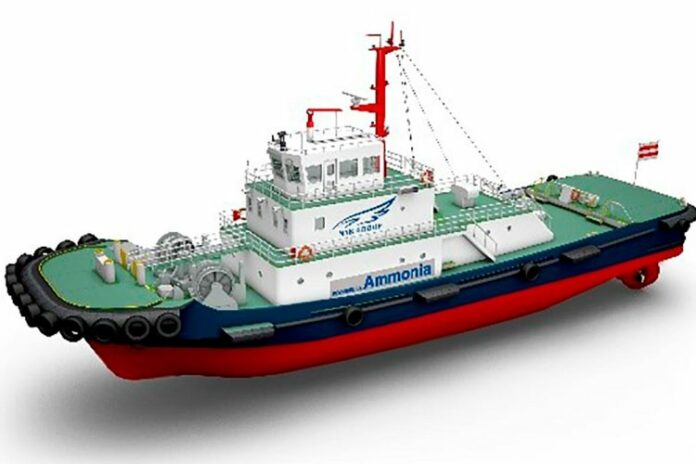
On July 11, NYK Line and IHI Power Systems obtained AiP (Approval in Principle) from Japanese classification society Nippon Kaiji Kyokai (ClassNK) for an ammonia-fueled tugboat currently being jointly researched and developed. This is the world’s first tugboat using ammonia as fuel has obtained AiP from ClassNK.

This R&D is part of the Green Innovation Fund project within Japan’s New Energy and Industrial Technology Development Organization (NEDO) for the development of vessels equipped with a domestically produced ammonia-fueled engine, adopted in October 2021 for NYK Line and IPS.

Since carbon dioxide (CO2) is not emitted when ammonia is combusted, ammonia is viewed to have promise as a next-generation fuel that could mitigate shipping’s impact on global warming. In addition, it is said that zero emissions can be realized considering even the fuel life cycle by utilizing CO2-free hydrogen as a raw material for ammonia.

By using ammonia as a fuel for ships, it will be possible to significantly reduce greenhouse gas (GHG) emissions during voyages. Therefore, the companies are proceeding with research and development aiming for early social implementation.

The main design issues when using ammonia as a fuel during development are as follows.

  1. It is necessary to combust ammonia stably and operate the engine while increasing the usage ratio of ammonia, which is flame-retardant and has low energy density.
  2. Since the combustion of ammonia generates nitrous oxide (N2O: about 300 times the warming potential of CO2) instead of CO2, it is necessary to control the combustion to prevent the generation of nitrous oxide and not to discharge it overboard.
  3. A design to prevent leakage of toxic ammonia and adequate safety measures in the event of leakage. Safety measures based on risk assessment are necessary to ensure the same level of safety as conventional vessels.

For this AiP, NYK Line and IPS attempted a design to safely and practically install ammonia fuel-related equipment in a limited space on board by developing an ammonia fuel engine, selecting equipment, and devising the equipment layout in the design. As a result, the companies have achieved the design of A-Tug, which overcomes the above challenges without changing the size of a conventional tugboat.

The parties obtained the AiP after a prescribed examination by ClassNK. In the future, the companies will work toward the realization of a demonstration operation at the port of Yokohama in fiscal 2024 through further studies for construction.