-0.4 C
New York
Home Blog Page 422

Port of Leith signs reservation agreement for Morven offshore wind project

0

Scotland’s largest offshore wind renewables hub, at the Port of Leith, has signed a reservation and collaboration agreement with bp and EnBW, as the marshalling port for the 2.9GW Morven offshore wind project.

Forth Ports’ £50 million investment will see the facility in operation by the end of 2023, providing a bespoke offshore wind berth and a significant land bank for laydown and marshalling of offshore wind farm components. With the capacity for local content manufacturing, as well as a base for SMEs in the offshore wind supply chain, the nation’s largest renewables hub will create employment of up to 1,000 high quality, long term direct jobs and around 2,000 indirect jobs.

Morven is a major offshore wind project located 60km off the east coast of Scotland, awarded to bp and EnBW during the ScotWind leasing round with results announced earlier this year. Once completed, the project is expected to have a generating capacity of 2.9 gigawatts (GW), sufficient to power more than 3 million homes.

The Port of Leith is a key part of the Forth Green Freeport bid, submitted to the UK and Scottish governments for assessment on 20th June 2022, which seeks to re-industrialise Scotland, create large scale economic development, boost local supply chain growth, skills development and create a world-class manufacturing cluster. The bid has the potential to generate 50,000 new green jobs and act as a catalyst for new green technologies and renewable energy manufacturing, unlocking £6 billion of private and public investment for Scotland.

Commenting on today’s announcement, Carole Cran, Chief Financial Officer at Forth Ports, said:

“This is significant news for our business and for Scotland, as we welcome bp and EnBW’s Morven project to Leith, the first of many for our new facility. We will be the largest offshore renewables hub in Scotland, bringing manufacturing opportunities and highly skilled, local, green jobs. This facility, and the Port of Dundee, will provide an integrated service offering to the offshore wind market, which will be instrumental in achieving the nation’s net zero targets over the next two decades.

“Our vision is to create a renewables centre of excellence for R&D, manufacturing and assembly that matches anything in northern Europe, with genuine export potential.”

Richard Haydock, Project Director, Offshore Wind, bp, said:

“bp and EnBW are delighted to have secured Port of Leith for our Morven project. This is the next step for us to be able to deliver 2.9GW of clean energy. The project’s investment will support the Port of Leith with its transformation into a renewables hub and help position Forth Ports for future Scottish offshore wind projects.”

Céline Combé, EnBW Project Director, said:

“Our journey with the Port of Leith started at a very early stage of our Morven project back in 2021. EnBW and bp are excited about taking the collaboration with Forth Ports to the next level with this agreement. It marks another important milestone in the development of our Morven project. We are looking forward to continuing working with the team at Forth Ports, and we are proud to keep contributing to the build out of renewable infrastructure in and for Scotland.”
Worley awarded contract by Shell to provide engineering services in the GOM

0

Worley will provide professional services in engineering, procurement, project services and support fabrication and construction. 

The Company is supporting Shell’s transition to a digitized and more efficient project delivery model for continued maintenance and improvements of its offshore assets. This aligns with Shell’s work to further reduce the carbon intensity of its GOM production, which is already among the lowest greenhouse gas intensive in the world.

Jim Lenton, Senior Vice President, said:

“We’ve worked with Shell for over 30 years. And our ongoing partnership is a real opportunity to create a positive impact on the offshore operations and the communities in the Gulf of Mexico at a time when making sustainable transformation a reality is more important than ever.” 

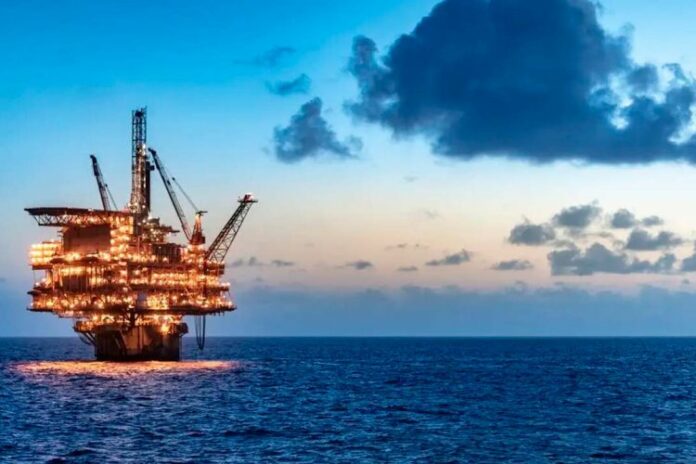
Shell currently operates eight offshore oil and gas facilities across the Gulf of Mexico Deepwater basin. The company be focusing on five of these assets: Appomattox, Perdido, Stones, Auger, and Enchilada-Salsa. This contract also allows for further support of the Shell Whale deepwater development, which Worley is delivering the greenfield engineering and procurement services works for. The contract also contemplates larger tendered scopes on Shell’s other deepwater assets.

Worley work will enable improvements with respect to safety, productivity, sustainability, and operating costs, via more simplified and digitized ways of working. The contract contemplates works of varying size and complexity, ranging from subsea tieback topsides modifications and large modular waterflood installations to asset-equipment upgrades and integrity modifications.

£3 million for new carbon capture project and pilot plant

0

The SeaCURE pilot plant will be built at the SEA LIFE centre in Weymouth, thanks to a £3 million grant from the UK government’s Department for Business, Energy & Industrial Strategy (BEIS) through its Net Zero Innovation Portfolio as part of the Direct Air Capture & Greenhouse Gas Removals Innovation Programme.

SeaCURE’s system – similar to capturing the CO₂ bubbles from a fizzy drink – makes use of renewable energy to remove carbon from seawater, then releases that seawater back to the ocean where it naturally replenishes the lost CO2 by sucking carbon from the atmosphere.

The project is led by the University of Exeter, in collaboration with Plymouth Marine Laboratory, Brunel University London and industrial partner Eliquo Hydrok.

Carbon dioxide is a key driver of climate change, and – while the SeaCURE team stress that the world must focus on reducing carbon emissions – capturing carbon gives the hard-to-decarbonise sectors a chance to develop zero carbon technologies without contributing further to the climate problem. Furthermore, carbon removal could dramatically improve the rate at which atmospheric CO2 can be stabilised and reduced toward pre-industrial levels.

Project leader Professor Paul Halloran, of the University of Exeter’s Global Systems Institute, said:

“The demonstration plant, which should begin operating in 2024, will process 3,000 litres of seawater per minute, removing an estimated 100 tonnes of CO₂ per year.

“The aim is to find out what barriers there might be to scaling this up, ultimately to a similar magnitude to current global carbon emissions.

“Because it uses seawater and could be positioned offshore, SeaCURE would not compete with other land uses, so there is the potential for it to operate at a scale that matches the size of the challenge climate change presents.

“However, we have a lot of work to do – and questions to address – before that.”

Professor Tom Bell, lead on Air-Sea Exchange research at Plymouth Marine Laboratory, said:

“SeaCURE is an incredibly exciting project to be a part of – our initial trials have shown that a substantial amount of carbon can be efficiently removed from seawater using relatively small amounts of renewable energy. This opens up an incredible opportunity to deliver a solution that can make a genuine positive impact. We are delighted to have received funding to assess the potential barriers to success of the SeaCURE system when operated at scale, and see this as a potential game-changer in how the climate crisis may be combatted.”

Tamsin Mutton-Mcknight, General Manager at SEA LIFE Weymouth, said:

“At SEA LIFE we are passionate about the marine environment and the wider health of our planet. SEA LIFE’s engaging and immersive experiences inspire people and are invaluable in raising awareness of, and support for, conservation and creating future ambassadors for preserving the world’s waters. We are therefore very excited to be involved in this important project, which has the potential to make an enormous positive difference on conservation for the future.”

Lewis O’Brien, Managing Director of Eliquo Hydrok said:

“Eliquo Hydrok are delighted to support this important project. Our technology and manufacturing capability, located in Cornwall, enables us to produce this innovative equipment, which we hope will set the benchmark for future carbon capture.”

Heerema awarded Hornsea 3 offshore converter stations installation contract

0

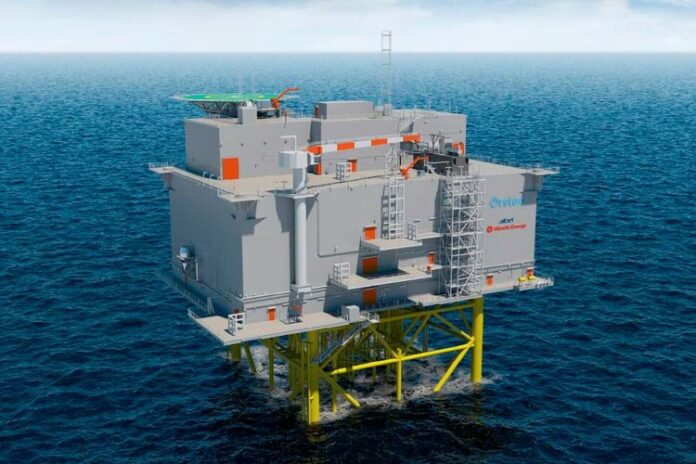
Aibel has contracted Heerema Marine Contractors to transport and install two offshore converter stations (OCS) for the Hornsea 3 offshore wind farm. 

The Hornsea 3 offshore wind farm will be capable of generating up to 2.852 GW of green energy, enough to meet the average daily needs of over 3 million UK homes. The contract was awarded following the Hornsea 3 wind farm developer Ørsted being allocated a Contract for Difference on July 7, 2022. Heerema previously completed the installation of Ørsted’s Hornsea 2 offshore substations in 2021.

The work will include transporting and installing the two OCS jackets, eight skirt piles, and the two OCS topsides. Heerema will perform offshore lifting of the jackets onto the seabed before installing the piles to ensure fixation to the seabed. After executing the jacket installation, the OCS will be completed by installing the topsides onto the jackets.

Heerema’s Chief Commercial Officer, Jeroen van Oosten, said:

‘We are very pleased to be awarded this contract by Aibel for the Hornsea 3 project. We have established a good working relationship throughout various successful projects together, which we will now extend to the transport and installation of these two substations.’

The Hornsea 3 project will include up to 231 offshore wind turbines and will be capable of generating up to 2.852 GW of green electricity.

Corvus Energy becomes the partner for Yaskawa Environmental Energy

0

Under the three-year memorandum of understanding (MoU), Corvus Energy becomes the preferred partner for Yaskawa Environmental Energy / The Switch in the ongoing development of its proprietary BSCL device. The agreement also includes the joint promotion of each party’s products.

Yaskawa Environmental Energy / The Switch Division President Miika Reinikka, said:

“We are very happy to be working with Corvus Energy as a world leader in marine ESS and look forward to constructive collaboration and teamwork.” 

Corvus Energy CEO Geir Bjørkeli said:

“We are pleased to join forces with Yaskawa Environmental Energy / The Switch. Their unique skill in thinking outside the box to solve complex challenges makes them a valuable partner on our journey to decarbonize shipping. Their innovative technology makes a big difference for the utilization, scalability and safety of marine battery systems.” 

Connecting high-energy-content batteries to one electrical system carries high risk of releasing a massive amount of short-term current that can result in system damage. Battery packs consequently have to be split between several DC-Hubs to handle the amount of energy. The more batteries you hook up, the more DC-Hubs would be required – theoretically up to eight for a 20 MWh ESS. The innovation BSCL brings is to limit short-term current from each set of batteries, immediately blocking the short-circuit system. This allows more batteries to be connected to the electrical system and fewer DC-Hubs, making the entire system more compact and representing a significant financial saving. The space saving in terms of cabinet length means less CAPEX while at the same time promoting safety, efficiency and reliability.

Teemu Heikkilä, Head of Product Line, Converters at Yaskawa Environmental Energy / The Switch, said:

“The BSCL is essentially an ultra-fast, semi-conductor-based protection device that operates based on actual system measurements with microsecond response. It opens the DC electrical circuit by disconnecting a battery set in the event of a fault anywhere in the system, preventing the battery set from discharging itself. Such a sudden release of energy could result in major damage and, in the worst case, an electrical fire. BSCL minimizes the risk by stopping the energy loss in microseconds.”

“From a technical perspective, the market hasn’t yet come to grips with this connectivity challenge. Class rules, which were primarily designed for AC/DC systems, are lagging behind the rapid pace of technology in DC power distribution. The BSCL is the first product fit for purpose with battery systems that are getting bigger almost by the day. Its key benefit, mirroring the electrification trend where the larger the ESS the better, is that you can increase the energy content of the ESS while minimizing the number of parallel systems required. In principle, implementing BSCL means you still only need two DC-Hubs for an ESS up to 40 MWh, so the savings grow in tandem with the size of the battery package.” 

While battery systems on board ships until now have been limited to below 10 MWh installations, future projects are increasing to many times this size. The device works for the entire Corvus ESS portfolio, including Corvus Orca, but is particularly suited to Corvus Energy’s Blue Whale ESS, which is designed to meet large operational energy demands at a cost-effective kWh price. The Blue Whale system has been specifically developed for large battery installations ranging from 10 MWh and upwards. Typical vessel applications include cruise ships as well as large ferries, yachts, merchant ships, inland vessels and workboats.

Damen builds seven Carbon Fibre Patrol Vessels for Swedish Coast Guard

0

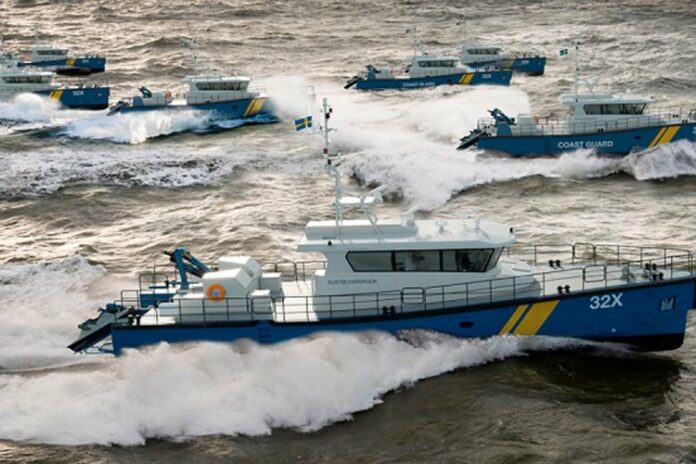
Kustbevakningen (KBV), the coastguard organisation of Sweden, has signed a contract for the construction and delivery of seven fast Patrol Vessels with Damen Shipyards. 

These vessels, also referred to as the KBV 320 series will be 26,75 meter in length, built in carbon fiber composite and will be able to reach cruising speeds of up to 25 knots. KBV will engage the new vessels in their rescue, environmental protection, salvage assistance and coastal waters patrolling operations.

The KBV 320 series that Damen proposed exceed the strict design criteria the coast guard had set. The Swedish government organization came with their initial design, reflecting the need for fuel efficiency, crew safety and comfort, as well as operational flexibility. The Damen team improved the design in terms of seakeeping, sailing comfort and sustainability by lengthening the water line forward and thus incorporating capabilities of the axe bow. A longer waterline allows vessels to maintain speed at lower resistance in the water, whereas the slim vertical bow seriously reduces slamming in the waves at high speed. The carbon fiber composite construction allows for a very light weight vessel, further reducing fuel consumption.

The slipway in the stern, allows for easy and quick launching and recovery of a RIB. Secondly a sliding platform is installed for a Jet ski. A deck crane is installed for handling of small cargo. Full carbon fiber construction includes the superstructure. This strong composite allows for narrow window frames at the bridge, providing uncluttered views from the helm station, increasing safety at high speed operations. All seven patrol vessels will be propelled by three Volvo D13’s and Volvo IPS 1050. including exhaust gas after treatment further reduces emissions.

Head of Engineering and Logistics Henrik Jonsson recalls the mission of KBV says:

“We participate in search and rescue missions to save human lives, prevent injuries, increase maritime safety and reduce the impact to property and the environment. Therefore, we want to operate the most environmentally sound vessels possible. We are convinced that Damen offers the best solution for this.”

Sales Manager, Martin Verstraaten, explains:

“We understood the wish for reliable vessels with proven equipment from KBV. Their wish to operate the most sustainable vessel possible, inspired our team to develop the KBV 320s, integrating all the experience of our yard accumulated with the Stan Patrol vessels, into this series that purposely fits the requirement from KBV. We are glad to see them as a returning customer, after we previously delivered the KBV 001, 002 and 003 Multi-Purpose Vessels.”

The seven vessels will be built at the specialized composite yard and are to be shipped to Damen Oskarshamnsvarvet in Sweden. After a familiarization training program, the vessels will be handed over to KBV. Oskarshamnsvarvet will also act as a service hub during the warranty period and will remain available for service activities during their operational lifespan at KBV.

New research to help scale up floating wind industry

0

The findings, released by the Floating Wind Joint Industry Programme (Floating Wind JIP), are part of the Stage 2 Phase 4 Summary Report, which provides a high-level overview of four key research projects delivered between 2020 and 2022. 

The Floating Wind JIP is the Carbon Trust’s collaborative R&D programme, dedicated to overcoming technological challenges and advancing commercialisation of floating offshore wind. 

With numerous commercial scale floating wind farms planned, but limited operational data due to the relative infancy of floating wind compared to its fixed bottom counterparts, the industry needs more information. The research covers:

  • Floating wind access and availability
  • An assessment of wind turbine generators for floating wind
  • Numerical modelling guidelines and standards for floating wind
  • An assessment of floating wind turbines’ impact on yield.

Research on floating wind access and availability analysed how different access methods and floating platform types affected turbine availability, and the effects of floating platform motions on technicians. For a hypothetical minor repair, it found floating wind strategies were likely to be similar to those for fixed-bottom far-shore sites and that floating turbine nacelle motions were not expected to be a significant problem with respect to motion-induced sea sickness. 

To-date floating wind projects have generally used wind turbine generators designed for fixed bottom applications. Greater understanding is needed regarding deployment and design adjustments to maximise yield and ensure turbines are optimised throughout the entire floating wind farm life cycle. The assessment of wind turbine generators for floating wind farms project focused on understanding the differences in the load/motion envelope when moving from a fixed-bottom monopile to a floating foundation and the feasibility of delivering cost-effective soft-stiff designs. 

This was followed by the numerical modelling guidelines project, which provided guidance for selecting and using numerical modelling tools for floating turbine design and detailed recommended load cases to reduce simulation efforts. For optimal integrated modelling, wind turbine and floater designers should clarify how they will work together to couple software at the start of a project. 

Finally, with limited operational performance data available, the impact of floating wind turbines on yield is not yet well understood or quantified. Through this project, key floating wind effects were taken into consideration to ultimately try to understand, quantify and bound the impact of floater motions on wake effects and energy yield. Through key stakeholder engagement, a number of recommended practices for developers, foundation suppliers, turbine OEMs and tool venders were established and included within this report.

Stage 1 of the programme, delivered in 2016 focused on initial feasibility of floating offshore wind. Stage 2, from 2017 to 2022, focused on overcoming technology challenges and identifying opportunities.  Stage 3 will continue to focus on overcoming technological challenges and developing solutions which support the deployment of floating wind at a global industrial scale.

Tender opportunities for projects delivered as part of Stage 3 Phase 1 will be announced later this year. Companies who would like to receive notifications can register their interest here.

Sam Strivens, Head of Floating Offshore Wind at the Carbon Trust said:

“The past twelve months have seen a vast increase in floating wind activity. National targets were set at 6GW for the west coast of the United States and raised to 5GW by 2030 in the UK. Meanwhile floating specific tenders were underway in France, and pipeline projects were increased across Asia, totalling at least 25GW by 2035. The next challenge facing the floating offshore wind sector will be meeting this industrial demand. Collaboration, between regulators, windfarm developers and supply chain will be crucial to accelerate the commercial deployment of floating offshore wind and achieve Net Zero targets.”

WinGD and Chord X strike up partnership for CII insights

0

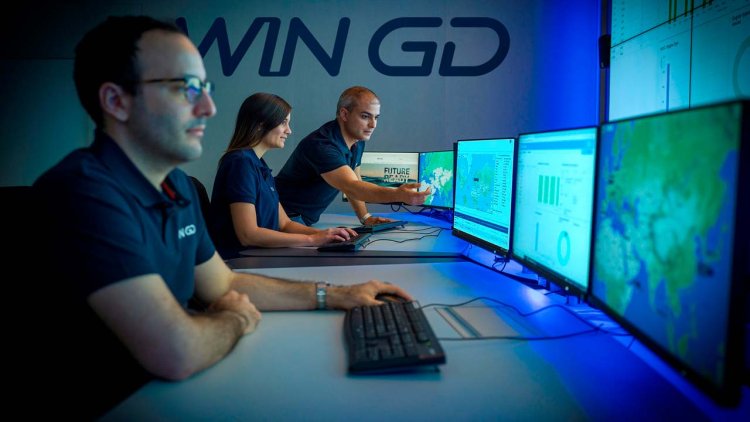
Among several areas of development, the partnership aims to bring ship operators component-level insights into carbon intensity indicator (CII) ratings.

The collaboration targets providing visibility into how engine performance affects overall vessel operational efficiency as reported under IMO’s incoming CII regulation. By linking WinGD’s engine diagnostics platform WiDE with Chord X’s vessel emissions analytics solution ecoMax, owners and operators can drill down into their current or projected CII ratings to see whether engine operation can be optimised to improve ratings.

The connection between the two systems shall allow operators to see how future voyages will affect CII ratings, as well as projecting ratings for future years as the regulation demands greater efficiency improvements. Combined with better understanding of engine performance, this offers a valuable tool to help plan fleet utilisation and manage priorities for maintenance.

Tin Wei Hong, Chord X Head of Business & Partnership, said:

“Partnering with WinGD will allow us to provide the very best machine-GHG integration, which WinGD and Chord X will design for the next generation of marine main engines. Together, we will unlock the full potential of data-driven marine main engine operation and enable our customers to take the best path for success in the new digital shipping landscape.”

WinGD Director of Operations Rudolf Holtbecker said:

“This collaboration comes at the exact time when our industry needs greater visibility of the effectiveness of GHG-reducing technologies. By combining WinGD’s advanced engine technology innovation and Chord X’s focus on the emissions profile of vessel operations, ship owners can directly connect the emissions calculations with enhanced machinery analysis.”

By integrating data from WiDE, ecoMax can deliver even more accurate engine emissions analysis. Conversely, WinGD users can connect their engine insights from WiDE to a well-established vessel emissions analytics platform that has already been approved by DNV as a means for reporting CII performance.

The strategic cooperation will extend beyond CII to other areas where improving the accuracy of emissions data – and linking the ability to optimise or troubleshoot engine performance – can benefit ship operators. For example, if operators are required to comply with emissions trading schemes or carbon pricing, just a fractional reduction in emissions can lead to big cost savings.

As part of the partnership, WinGD customers will be able to access both WiDE and ecoMax platforms. Users will be able to move between the two platforms with a single click, enabling simple and fast comparison of vessel- and engine-level emissions performance.

Ukraine says ships pass through Danube rivermouth, sparking hopes on grain exports

0

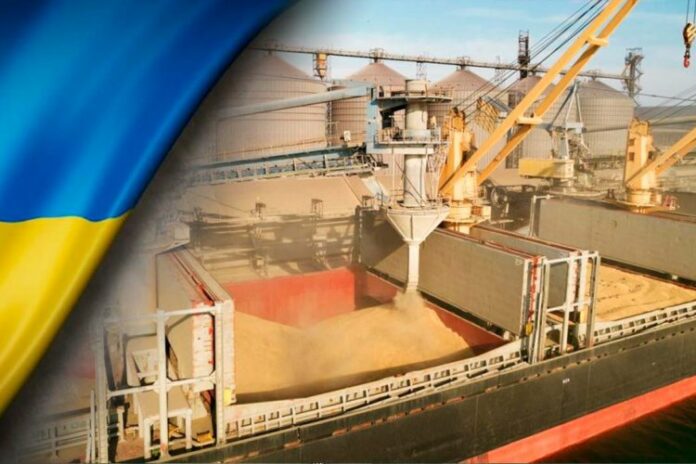
Ukraine sparked hopes Tuesday for an increase in grain exports despite Russia’s blockade of Black Sea ports, noting that ships had started to pass through an important mouth of the Danube river.

“In the last four days, 16 ships have passed through the Bystre rivermouth,” Deputy Infrastructure Minister Yuriy Vaskov was quoted as a saying in a ministry statement. “We plan to maintain this pace.”

The ministry said the 16 vessels were now waiting to be loaded with Ukrainian grain for export to foreign markets, while more than 90 more vessels were awaiting their turn in Romania’s Sulina canal.

Only four ships could be received per day along the Sulina route, he said, while a rate of eight per day was needed. But Ukraine was negotiating with Romanian colleagues and European Commission representatives about increasing the rate of crossings, he added.

If such conditions were met, and with the opening of the Bystre, he said Ukraine expected this ship congestion would end within a week and that monthly exports of grain would increase by 500,000 tonnes.

Before Russia’s invasion, the ministry said, sea ports accounted for about 80 percent of Ukraine’s export of agricultural products, but food exports are now restricted to Danube ports, railways and roadways to the west.

Source: Reuters

European port Antwerp-Bruges becomes foundation member of H2Global

0

Europe’s largest export port is now participating in the German H2Global Foundation with an endowment sum of EUR 100,000. The foundation has set itself the goal of making green hydrogen acceptable as an energy substitute in Europe – thereby advancing the energy transition and independence from Russian gas supplies. 

Flemish Minister Jo Brouns (CD&V):

“Flanders will need the import of sustainable hydrogen, in addition to local production.”

The H2Global Foundation has developed a competition-based double auction mechanism by which its subsidiary HINT.CO acts as an intermediary anx auctions green hydrogen and derivates at the lowest possible price. Afterwards they sell the green hydrogen in Germany and Europe to the highest bidder. The expected negative difference can be compensated by the 900 million euro subsidy from the German government, BMWK.

Markus Exenberger explains:

“As an energy and feedstock hub and a growing producer of green hydrogen, the port of Antwerp and Zeebrugge is a crucial factor for the logistics that enable the energy transition. Its decision to join the foundation is a sign that H2Global is a joint European and a global effort as well.” 

Flemish Minister Jo Brouns (CD&V) is pleased that the port can join with the support of the Flemish government, who co-finances the membership:

“We are going to need sustainable hydrogen for the sustainability of our industry and heavy transport. But Flanders and Belgium are too small to produce all our own hydrogen ourselves, so we always have to look at import. That’s why it’s important for the port, as a Flemish industrial cluster, to have a role in H2Global in order to participate with Flanders in this sustainable story.”

The clear message from Port of Antwerp-Bruges, as Europe’s largest port for vehicle handling, the home of Europe’s largest integrated chemical cluster and a leading container port, aligns well with the European and societal core of the H2Global idea.

CEO Jacques Vandermeiren, commenting on his company’s financial, political and practical commitment to the H2Global Foundation, says:

“Committing massive investments, we are striving to achieve climate neutrality by 2050. Together with our partners in the Hydrogen Import Coalition and the major players on our port platform, we are already supporting projects that pursue the production, transport and storage of hydrogen. Our involvement in H2Global is intended to provide an additional boost to the market ramp-up required for this. In this way we want to reconcile economy and climate.”

The current supply situation viewed against the backdrop of the war in Ukraine and the accompanying energy shortages underline the urgency. 

Vandermeiren, outlining the geopolitical and economic background, says:

“It is currently impossible for north-western Europe to obtain all the energy it needs from renewable energy sources. The plans for importing green hydrogen from countries with much more solar energy are becoming more and more concrete.” 

Green hydrogen – or its derivatives – will be arriving at major ports such as Antwerp-Bruges, among others. And this is where the foundation’s idea behind the H2Global funding programme comes in.

Annick De Ridder, president of Port of Antwerp-Bruges:

“It is the declared ambition of our port to become the ‘green port’ of the future and the energy gateway to Europe. As an active pioneer of the hydrogen economy we have taken major steps in the last two years, always embedded in fruitful collaborations both at home and abroad. Because the hydrogen chain is complex, we have, for example, joined forces in a Hydrogen Import Coalition with five major industrial players and public stakeholders and are focusing on concrete projects that will shape the production, transport and storage of hydrogen. In the coming years, hydrogen projects such as with Chile and Oman (port of Duqm) will be further developed and we will start the construction of the Hyoffwind hydrogen plant. As a founding member of H2Global, we are putting some more ‘power’ into our hydrogen ambitions.”

Today, Port of Antwerp-Bruges is already introducing alternative energy sources such as hydrogen and turning them into sustainable raw materials and fuel for the port’s chemical sector. The port is also expected to play a vital role in the import and local production of green hydrogen. Initial green hydrogen production will start in 2023 with a ramp-up through 2025-2027 for large volumes of green molecules coming in from overseas.