0.5 C
New York
Home Blog Page 420

Valenciaport activates the photovoltaic plant of the Port of Gandia

0

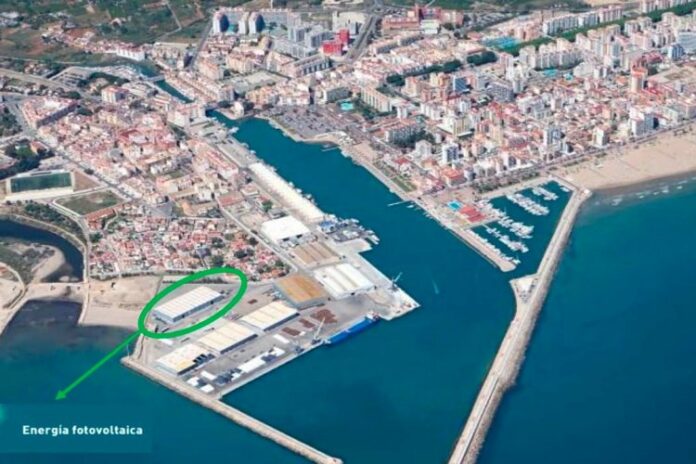
The Port Authority of Valencia (PAV) has put out to tender the installation and maintenance of a solar energy plant to be in shed 4 of the Port of Gandia with a power of 705 Kwp and which will make the Gandia site the first European port to be energy self-sufficient. 

The tender for the installation and maintenance project for the installation of a photovoltaic solar plant in the Port of Gandia was published yesterday with a base budget of 1,558,001.20 euros and a deadline for submission of tenders until 13.00 hours on 29th August.

The PAV is to install a photovoltaic energy plant for self-consumption, whose solar energy collectors will be located on the roof of shed 4 of the Port of Gandia, and electrical energy storage equipment will also be installed. Once awarded, the construction of the solar power plant will take 8 months and the maintenance period will be 52 months.

This project is financed by the Next Generation funds of the European Union and the Recovery, Transformation and Resilience Plan of the Spanish Government.

In addition to this photovoltaic plant in the Port of Gandia, Valenciaport is planning to install two other plants in the Port of Valencia, one of them in the Valencia Terminal Europa car silo, and the other between the Príncipe Felipe dock and the Club Náutico de València.

This initiative is part of the objective set by Valenciaport to achieve the goal of zero emissions by 2030, the reduction of dependence on fossil fuels and energy autonomy. To this end, investments will be made to promote renewable energies from hydrogen, photovoltaic (in Gandia and Valencia) and wind power, the installation of two electrical substations in the Port of Valencia, or the use of alternative fuels such as LNG, among other actions.

The president of the PAV, Aurelio Martínez, emphasised that “this is another step towards our Valenciaport 2030 objective, zero emissions. In Valenciaport we act with facts and concrete projects that show the commitment of the PAV and the port community to the fight against climate change and decarbonisation”. Martínez underlined that “the Port Authority is going to allocate 130 million euros, to which the effect of private investments will have to be added, in sustainability actions”.

Along these lines, the head of Valenciaport recalled other projects such as “the installation of the hydrogen plant within the framework of the H2Ports project which will position us as the first port in Europe in the use of hydrogen, the project for a wind farm in the Port of Valencia or the construction of two electrical substations in the Valencia area, one of which is already under construction, which will allow ships docking to connect to the port’s electrical network and switch off their engines”.

Researchers explore the impact of sea ice change in Bering Sea

0

The Bering Sea is the most productive ground fishery in the world, particularly for salmon, halibut and shellfish. About half of U.S. fish and shellfish come from that area and the fishing industry is the main driver of jobs in and around the Aleutian Islands. The freezing and melting of sea ice in the area heavily impacts the primary productivity, which is the bottom of the marine food chain.

Research Associate Professor Jaclyn Kinney, Research Professor Wieslaw Maslowski, and Research Assistant Professor Younjoo Lee—all in the Naval Postgraduate School (NPS) Department of Oceanography—looked at how sea ice variability in the Bering Sea over the last several decades might impact the cold pool and marine primary production. Their research was published in PLOS One in April 2022.

The Arctic region has become increasingly critical to U.S. security interests, and particularly to the U.S. Navy, over the past several years. Dual purpose research in predicting sea ice, and the impact of its fluctuations, is critical for navigation and understanding how systems operate.

On top of that, less sea ice also means more tourism and commercial activity in the area, potentially, which could also result in the need for more patrols, and searches and rescues. And how sea ice impacts the food supply and local jobs could dictate the economic and cultural stability of the region. All of these factors are recognized as potential challenges in the Department of the Navy’s Strategic Blueprint for the Arctic, released in 2021, underscoring the importance for oceanography team’s detailed study.

The NPS research team looked specifically at the very cold water near the sea floor (less than 2ºC) that forms on the shelf each winter, which is called a cold pool. It’s formed by the cooling and sinking of surface water. Vertical mixing caused by salt being expelled from water as it freezes into sea ice during the autumn and winter, a process called brine rejection, increases the density of the cold pool water. This cold, salty, dense water sinks down to the bottom, forming its own marine habitat unique from other parts of the Bering Sea by the summer.

Sea ice melt is usually the first cause of water stratification during spring, but when there is not as much sea ice, stratification is mainly caused by the sun warming up surface water later in the year. Stratification is necessary for primary productivity, in the form of phytoplankton, to bloom.

Kinney explains:

“If there’s a lot of primary production in the water early, then the zooplankton are still very small and they’re not able to consume much of it. So what happens is those phytoplankton cells will eventually settle out to the bottom, feeding the benthic community. That’s good for walruses and gray whales, which feed on the benthic community.”

But this means the pelagic community doesn’t get as much food, she says. If primary production starts later in the season, which is what happens when there’s less sea ice, it becomes a pelagic-dominated ecosystem because the zooplankton have the opportunity to get bigger. These fluctuations can heavily impact fish and shellfish populations from year to year.

Maintaining these habitat distinctions is important for maintaining the food chain for the region. Some marine species that live in the cold pool include the snow crab and Arctic cod.

Kinney recently came across a paper observing the cold pool shrinking northward. Kinney explains:

“The reduction of the cold pool means that we have a whole new potential for a brand new ecosystem moving in. If we have much warmer water, then we’re going to get these southerly fish species moving North, and that’s going to push the Arctic species even further to the north.”

How large and wide the cold pool is varies drastically from year to year, and the researchers wanted to figure out how this variability relates to sea ice variability. They used the Regional Arctic System Model (RASM), developed at NPS, to examine the variability of the cold pool’s extent and distribution to see how its size and shape is impacted by the sea ice cover. The researchers developed statistical calculations of past sea ice cover conditions in the Bering Sea from 1980 to 2018. RASM can simulate critical physical processes, feedbacks, and their impact on the Arctic climate system using several coupled models and components, including the atmosphere, ocean, sea ice, biogeochemistry, and land hydrology.

The RASM confirmed a direct correlation between the extent of sea ice and the cold pool, showing a smaller cold pool during times with less sea ice cover. In general, the researchers found that in July 2018, the cold pool was only 31 percent of what its mean was from 1980 to 2018. The researchers point to a lack of sea ice, caused by strong winds out of the south, restricting the typical southward expansion of sea ice towards the shelf break.

And as for how this impacts the food chain, the researchers found that years with low amounts of sea ice were followed by a later diatom bloom, and vice versa. These results follow the Oscillating Control Hypothesis, originally developed in 2002, which states that early ice retreat will lead to a late bloom, while late ice retreat leads to an early bloom.

Diatoms are a common type of phytoplankton that forms the base of the food chain. Diatom levels can be measured by looking at how much chlorophyll-a is found in an area, which can be done via satellite, as well as in models. A comparison of the chlorophyll-a trends in the northern Bering Sea between satellite data and RASM showed similar results, which forms the basis of another study Kinney coauthored, published in the journal Oceanography in May 2022. RASM results also provided insight into the mechanism responsible for the changes by showing the variability in nitrate concentration (a variable not measured by satellite).

The researchers were excited to see RASM’s results mirror real-life observations. But the cold pool retreat they observed in 2018 continued to be a problem in 2019 and 2020, which also saw unusually high temperatures, resulting in less sea ice. Then 2021 saw a major snow crab population collapse, likely due to a reduction of their preferred cold pool habitat. Without the cold pool, the snow crab’s predators are able to eat juvenile crabs more easily. This population collapse bankrupted communities that rely on snow crabs to make a living. The Central Bering Sea Fisherman’s Association expects to see about a 65% drop in revenue due to necessary crab quota cuts.

Kinney said:

“We want to know, as scientists, is this reduction of the cold pool the new normal? Are we going to see sea ice come back? And then how will the population reestablish to the south if we do see the sea ice come back to normal?”

She points out that this isn’t the first time the area has seen a diminished cold pool, the last one being in 2001. It did recover, with sea ice prevalence peaking in 2012. But sea ice extent has declined since then. Bering Sea sea ice is hard to predict because it starts from scratch each year, resigned to the whims of seasonal and interannual variability in addition to the larger climatic trends.

“There’s no straightforward linear relationship for ice retreating,” Maslowski explains. But the team is encouraged by how well RASM was able to predict the sea ice trends so far, and see it as a powerful tool to help the Navy glance into the future of the Bering Sea.

Wärtsilä completes Russian market exit

0

All adjustments and closures of Wärtsilä’s operations were completed in accordance with local regulations. Throughout the various processes, Wärtsilä’s priority has been ensuring the safety and wellbeing of employees.

Wärtsilä continues to strongly condemn Russia’s invasion of Ukraine. Human rights, safety and prosperity are very important for Wärtsilä. The company has fully committed to complying with all trade sanctions applicable to its operations from the beginning of the war, and it has now ceased all business operations in Russia across all business units.

As part of the exit, the Wärtsilä Digital Technologies (WDT) office in Saint Petersburg has been closed. In accordance with local regulations, a reduced team will conduct final procedures to complete the closure, however all operations have ceased. Wärtsilä has built new R&D capabilities outside of Russia to secure the uninterrupted delivery of customer commitments. 

In May/June, Wärtsilä signed agreements to sell the Transas Navigator business and Wärtsilä Vostok LLC to the local management of the companies. Transas Navigator will operate as an independent company and will continue to serve its local customers. Wärtsilä does not provide or deliver any services or parts to the Transas Navigator business following the divestment.

The team previously working for Wärtsilä Vostok LLC continues under a newly established company, V-Vostok LLC, which will continue to provide marine equipment maintenance services locally. Following the divestment, Wärtsilä does not provide maintenance services in Russia.

BASSnet centralises equipment data management for Oldendorff fleet

0

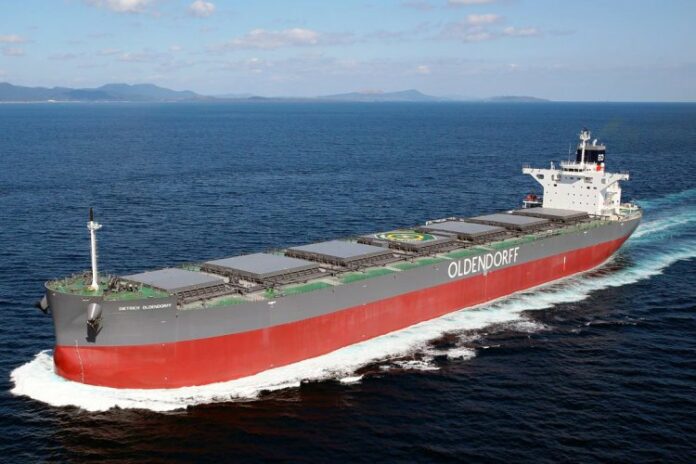
BASS Software has now set up a shareable machinery library for Oldendorff to centralise equipment data management. 

William Wallace, Managing Director (Fleet and Projects) at Oldendorff Carriers, says:

“BASSnet is an end-to-end process software that enables us to streamline fleet management and drive efficiency onboard and at the office. The Fleet Management Setup is a high value module of great benefit. We gain a comprehensive equipment library to streamline maintenance operations for better efficiency and cost savings. It’s extremely convenient to view, manage and distribute materials, documents and standard instructions from a single screen.”

The BASSnet Fleet Management Setup module centralises equipment data management, enabling customers to optimise operations and inventory management. They can also efficiently create new databases using existing data from the fleet.

Per Steinar Upsaker, CEO & Managing Director at BASS Software, says:

­“BASSnet is a complete ERP system for maritime fleet management. We offer tightly inter-connected modules for all major maritime areas, with extensive mobile apps and integrations. Ship owners and managers benefit from BASSnet’s bird’s eye view of business processes to streamline their fleet management. Our centralised equipment library is cost-saving and key to increase efficiency.”

Wong Nyuk Lan, VP of Service & Support at BASS Software, notes:

“Our experts review and analyse existing vessel planned maintenance system (PMS) data, and recommend the best approaches to standardise and organise machinery in the Fleet Management library,. Customers benefit from this streamlined, standardised and structured approach across the entire fleet to achieve efficiency and cost-savings.”

K LINE confirms three additional orders for Airseas’ Seawing

0

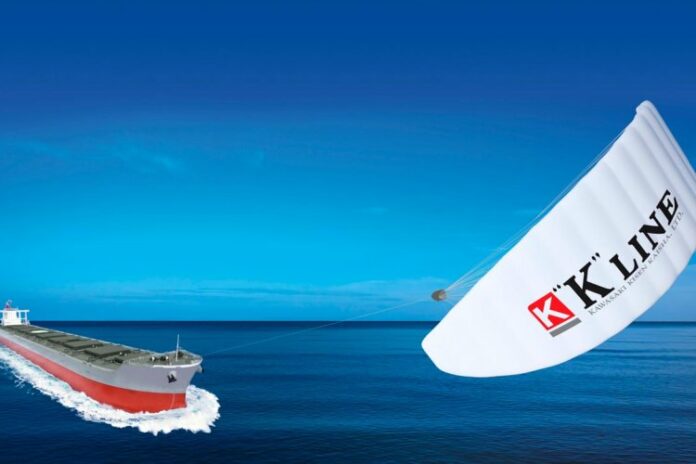
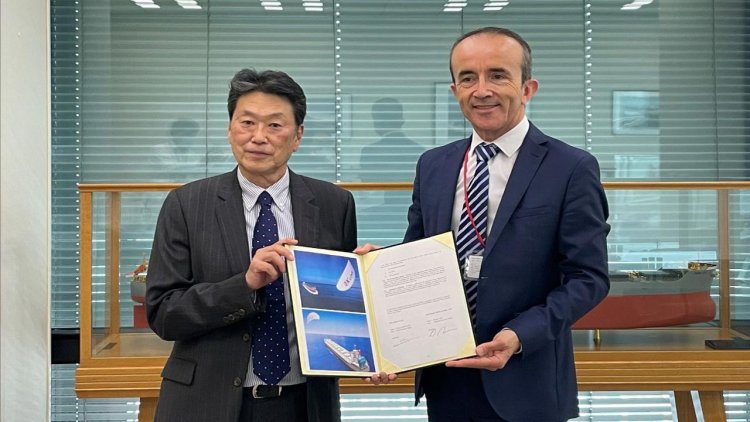
Kawasaki Kisen Kaisha (“K” LINE) has confirmed orders for three additional Seawing systems, bringing to a total of five​ the number of its vessels that will use Airseas’ innovative wind propulsion technology to reduce their emissions.

Under the agreement, the third, fourth and fifth Seawing systems delivered to “K” LINE will be installed on post panamax bulkers, following the two initial installations on capesize bulkers, which are scheduled to take place from the end of this year. These additional orders demonstrate the strength of the partnership between “K” LINE and Airseas, as well as “K” LINE’s commitment to use wind propulsion as a major pillar of its decarbonisation strategy.

The Seawing systems that will be installed on the “K” LINE vessels consist of parafoils that fly around 300 metres above the sea level, harnessing the power of the wind to propel the vessel and reduce the main engine load, aiming to save an average of 20% fuel and emissions. 

The systems will use digital twins and advanced automation systems, drawing on aerospace expertise, to ensure that the Seawing systems can be safely deployed, operated and stored at the push of a button with minimal input needed from crew. Furthermore, Airseas and “K” LINE signed a technological cooperation partnership to integrate Seawing and “K” LINE’s vessel data platform, named Kawasaki Integrated Maritime Solutions, to maximise the performance of the systems.

This will support “K” LINE’s ‘Environmental Vision 2050’, in which the company has committed to considerably and continuously reduce its GHG emissions, notably through the introduction of innovative technologies.

In addition to the three orders announced today, “K” LINE had previously confirmed that the first of its vessels to be fitted with a Seawing will be a​ 210,000-dwt capesize bulker, with the installation to take place in December 2022. The second “K” LINE vessel to feature a Seawing will be a newbuild LNG-fuelled 210,000 dwt bulk carrier, which is currently being built at Nihon Shipyard. Airseas has a 20-year agreement with “K” LINE, with options for the Seawing to be installed on up to 50 of its vessels in total.

Michitomo Iwashita, Managing Executive Officer of “K” LINE, said:

“At “K” LINE, we are committed to delivering the cargo needed by people and businesses around the world safely and efficiently, while minimising our environmental footprint. We have adopted an ambitious net-zero GHG emissions target by 2050, and deploying technologies such as wind propulsion which is a key component of our strategy. We are proud to be partnering with Airseas, a leader in the wind propulsion field, that has done so much to bring the technology into the next generation via the development of Seawing. We look forward to seeing it deployed on our fleets in the coming years.”

Vincent Bernatets, Co-Founder and CEO of Airseas, commented:

“We are proud that “K” LINE has selected us as a long-term partner in their journey towards a lower carbon future, and we are delighted to see our partnership going one step further with these new orders and additional technical cooperation activities announced today. A true market leader, “K” LINE recognises that ships being built now will need to meet the decarbonisation standards of the 2040’s and 2050’s, as regulators and customers step up pressure for the industry to decarbonise. Wind propulsion systems like the Seawing help lay the long-term foundations for the sustainable shipping of the future by reducing emissions right now, in addition to delivering a strong return on investment in the short term via fuel savings.”

Fincantieri: steel cutting of the second LSS unit for the Italian Navy

0

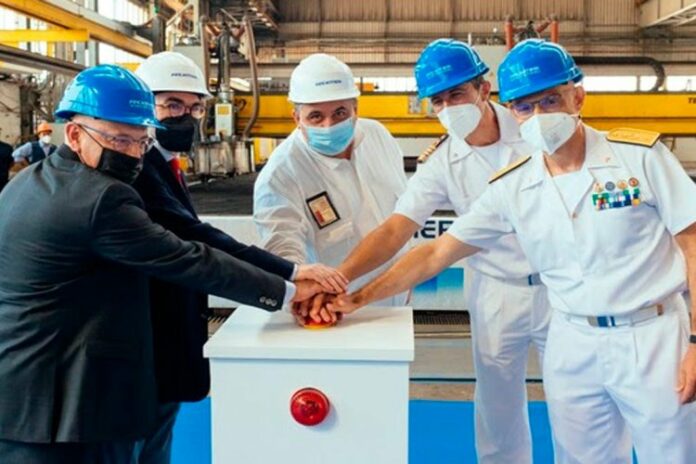
The steel cutting ceremony of the second Logistic Support Ship (LSS) for the Italian Navy, within a program including the option for a third ship, took place today at the Castellammare di Stabia shipyard, where the LSS will be entirely built and delivered in 2025.

The value of the contract is approx. 410 million euros including the combat system.

As part of the multi-year program aimed at safeguarding Italy’s Defence at-sea capacity (known as the “Naval Act”), Fincantieri is currently building seven multi-purpose offshore patrol vessels (PPA) – the first one, “Thaon di Revel”, was delivered in March – and the “Trieste” Landing Helicopter Dock (LHD). Last year the Group delivered the “Vulcano” LSS, a vessel launched at the Castellammare di Stabia shipyard. That project was also acquired by the French Navy for the definition of the Flotlog program, a series of units built in partnership with the same shipyard.

The basic characteristic common to all three classes of ships is their very high level of innovation, which makes them extremely flexible in their various profiles of use with a high degree of efficiency.

Most importantly, it will be possible to use these units in a complementary way even for non-military-related activities, such as, for example, supporting civil protection in humanitarian assistance and disaster relief. Moreover, their environmental impact is low, thanks to advanced low pollution emission generators and electric-drive propulsion motors and biological waste control systems.

ABS and SHI JDP to develop smart hull monitoring software

0

ABS and Samsung Heavy Industries Co., Ltd. (SHI) have signed a joint development project (JDP) to enhance hull safety with smart ship technology for Structural Health Monitoring (SHM) using a hull sensor package that will allow for more informed and targeted hull surveys.

SHI’s Hull Stress Monitoring System (HSMS) will be developed in accordance with the ABS Smart Functions Guide. The system will be installed on a new build container ship scheduled for delivery in 2024.

The HSMS software will be integrated into SHI’s proprietary SVESSEL Smart Platform, designed to expedite the transition from analog-based conventional ship systems into a digital-based lifecycle vessel management approach.

Upon successful completion of the JDP, SHI will be eligible to receive a Product Design Assessment (PDA) for SMART (SHM), Tier 3. The vessels will be eligible to receive the notation ABS SMART (SHM) Tier 3 upon installation of the HSMS system on board.

Patrick Ryan, ABS Senior Vice President, Global Engineering and Technology, said:

“Together with SHI, we are committed to advancing safety and efficiency with the application of smart software and digital techniques. As a leader in supporting the adoption of smart technologies at sea, we are proud to work with forward-looking companies such as SHI to continue to develop practical applications for the technology with a focus on safer operations.”

Hyun Joe Kim, PhD, SHI Vice President, Ship & Offshore Performance Research Center, said:

“Through this joint development with ABS, we expect to provide the enhanced hull structural health monitoring and prediction package in the SVESSEL Smart Platform. To reach the goal, the collaboration between ship builder and class society is quite essential, and we’re very pleased to work with ABS. This will be the one of the most beneficial solutions to our clients among the solutions provided in our SVESSEL platform in terms of safer operation and management.”  

DemoSATH launched into water

0

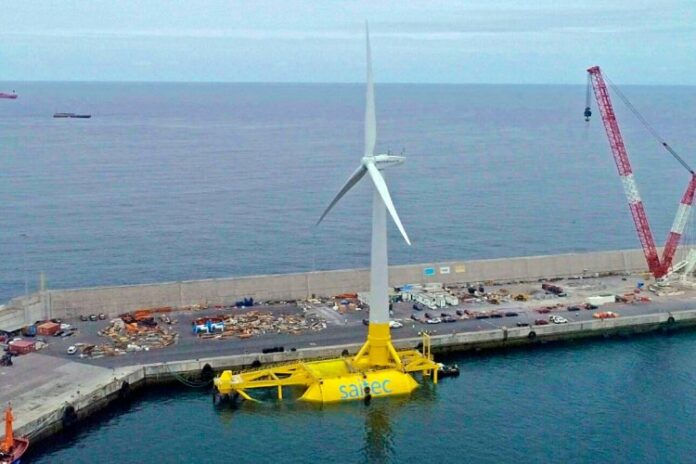
Together with the partner, RWE, Saitec Offshore Technologies has achieved another milestone in the DemoSATH project with the successful completion of the launching operation of the floating unit. The project moves forward at a fast pace for its installation later this summer.

During the next months the submarine dynamic cable will be deployed at the installation site and the floater will be towed out to be connected to it, as well as to the mooring lines that were previously installed in late April.

The load out and launching operations were performed at Punta Sollana quay, in the Port of Bilbao (Spain), where the prestressed concrete platform was previously constructed and assembled, and equipped with a 2 MW turbine.

Araceli Martínez, Chief of Engineering at Saitec Offshore Technologies, said:

 “This is a great step forward for the DemoSATH project. The load-out and float-off operations were an important milestone to fulfill as they were the first of their kind executed for the SATH floating offshore wind turbine. The operations were thoroughly planned between all the parties involved and the final performance was excellent. Once afloat, it took less than 45 minutes to safely berth the DemoSATH wind turbine at quay. After the successful completion of the launching in the Port of Bilbao, we are proud to announce that the demonstrator is ready to become the first floating wind turbine to be commissioned to the mainland Spanish Grid during the next months.”

Martin Dörnhöfer, Director of Floating Wind at RWE Renewables, said:

“We are glad to see DemoSATH has been launched safely and successfully. This is another important milestone towards the offshore commissioning of the floating turbine later this year. For us at RWE it is also another milestone on our way to unlock the great potential of floating wind globally, especially in countries with deeper coastal waters, like the US, France, UK, Norway and – certainly – Spain. We aim to have one gigawatt of floating wind capacity in construction or operation by 2030. Jointly with our other pilot projects, DemoSATH enables us to gain early experience for our future developments. Its innovative concrete-based platform further broadens our knowledge on innovative floating wind concepts.”

Inmarsat report offers guidance on cyber-risk management beyond IMO 2021 compliance

0

A new report published by Inmarsat, the world leader in global, mobile satellite communications, highlights the role of the International Maritime Organization’s (IMO) 2021 cyber risk management code in providing a framework for cyber resilience but warns that there is more to combating attacks than compliance alone. 

Compiled by maritime innovation consultancy Thetius, Beyond Compliance – Cyber Risk Management After IMO 2021 encourages proactivity in preventing and mitigating the impact of cyber-attacks.

Ben Palmer, President, Inmarsat Maritime, said:

“Assuring data resilience and cyber security are key preoccupations for the shipping industry. The IMO guidelines on maritime cyber risk management have helped stakeholders to address cyber threats, but the nature of digital attacks continues to evolve due to advances in computing technology and developing geopolitical conflicts. Over the 12 months between May 2020 and May 2021, cyberattacks targeting the maritime sector increased by 168% in the Asia-Pacific region alone.”

“To ensure the resilience of their digital infrastructure, shipping companies need to look beyond regulatory compliance and be more proactive in their approach to cyber-risk management.”

One cornerstone of this approach is Unified Threat Management (UTM). By combining solutions such as firewalls, antivirus programs, content filters, and intrusion and detection systems into a single hardware and software package, Inmarsat’s Fleet Secure UTM streamlines the installation, configuration, administration, and maintenance of network security infrastructure. It thereby helps shipping companies, like Denmark-based Evergas, to raise security standards beyond regulatory compliance.

Evergas IT Manager, Poul Rævdal, commented:

“Regulations provide a good starting point, but it is important from our perspective to go above and beyond the guidelines, and Inmarsat’s comprehensive Fleet Secure solution facilitates a proactive approach to network security. Being able to unify the separate parts of our network security into a single solution and deal primarily with one supplier allows our IT team to focus on optimising the day-to-day support given to our ships and systems.”

Continuous development in seafarer training represented another key bulwark in shipping’s cyber security defenses. Inmarsat’s Fleet Secure Cyber Awareness training programme contains everything the crew needs to know to be aware of vulnerabilities and suspicious online behaviour with best practice guidance this training module is offered free to all Fleet Secure Endpoint users.

Effective cyber risk management must consider multiple assailants and diverse lines of attack – targeted and random. Threat actors make continuous efforts to update strategies, by developing malicious coding, seeking out vulnerabilities in hardware and software, and by responding to human behaviour. Only by being proactive can shipping stay ahead of the cybercriminals.


RWE and SolarDuck agree to explore and develop offshore floating solar parks globally

0

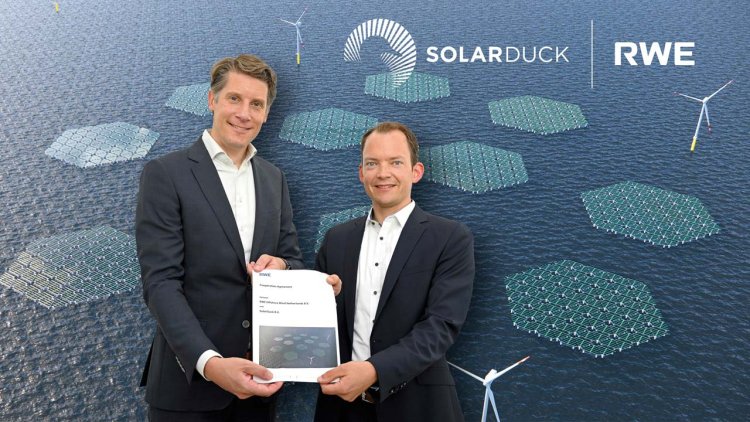
To accelerate the learnings on SolarDuck’s floating solar technology, RWE will invest in a first offshore pilot in the North Sea. The project is a first step in the collaboration and lays the foundation for a larger demonstration project at the Dutch offshore wind farm Hollandse Kust West (HKW). RWE is tendering for this project, and has included SolarDuck into its bid with a highly innovative combination of offshore floating solar with integrated storage solutions.

The offshore floating solar technology, as developed by SolarDuck, establishes a new frontier for solar energy and provides an answer to increasing land scarcity for the generation of renewable energy. The integration of offshore floating solar into an offshore wind farm is a more efficient use of ocean space for energy generation (using the space between the wind turbines) and allows for synergies with regards to the construction and maintenance of the multi-source renewable energy plant. The result is a more balanced production profile due to the complementary nature of wind and solar resources.

Taking solar farms offshore requires a technology which is able to withstand rough offshore conditions, including high waves, strong winds and a corrosive environment. SolarDuck´s unique, triangular-shaped platform, which has received the world´s first certification for offshore floating solar by Bureau Veritas, is designed to float several meters above the water, following the waves like a carpet. Therefore, keeping critical electrical components dry, clean and stable, as well as securing the integrity of the semi-submersible structure while enabling safe operations and minimal maintenance.

Sven Utermöhlen, CEO Wind Offshore of RWE Renewables states:

“RWE is constantly looking for innovative ways to further improve the production of renewable energy offshore. We are very keen to further explore the potential of offshore floating solar together with our partner SolarDuck. For countries with lower mean wind speeds but high solar irradiation, this opens up attractive opportunities. With the SolarDuck pilot we are gaining experience with a highly innovative offshore floating solar technology. We want to contribute to accelerate the energy transition, have a positive impact on marine ecology and help to integrate energy systems. Together we can make a real difference using tomorrow’s technology for today’s projects.”

SolarDuck’s CEO Koen Burgers states:

“The need for secure, sustainable and affordable energy demands new and immediate answers from the industry in Europe and also globally. SolarDuck is part of this answer, bringing solar energy into its next frontier, the oceans. Showcasing SolarDuck’s robust technology in rough North Sea conditions will enable us to deploy the technology practically anywhere in the world. We are very pleased that we found in RWE a strong partner who shares our vision of electrifying the world with offshore floating solar. I look forward to our organisations working together to achieve just that.”

To accelerate the development of the technology, RWE will invest in SolarDuck’s full-scale offshore pilot called ‘Merganser’ with a nameplate capacity of 0.5 MWp in 2023. ‘Merganser’ is expected to be installed off the coast of Ostend in the Belgian North Sea and will be SolarDuck’s first offshore pilot following the successful deployment of an inland pilot in the Netherlands last year. ‘Merganser’ will provide RWE and SolarDuck with important first-hand experience in one of the most challenging offshore environments in the world. These learnings will enable a faster commercialisation of the technology from 2023 onwards.

SolarDuck’s technology opens a new door for solar energy, also in the harsh North Sea environment. RWE has therefore selected SolarDuck in its bid for the Dutch tender for HKW VII (system integration). A winning bid will realize the integration of an offshore floating solar plant at pre-commercial scale with 5 MWp combined with innovative energy storage solutions into the offshore wind farm. 

Further building on the collaboration with project ‘Merganser’ and HKW, RWE and SolarDuck will explore new opportunities with the objective to develop commercial offshore floating solar parks, both stand-alone and hybrid. The combination of RWE´s leading global market position and SolarDuck´s technological and commercial ingenuity sets the perfect base for accelerating the deployment of this high-potential technology.  

RWE is a leading global player in renewable energy and number 2 worldwide in offshore wind. The company currently has 18 offshore wind farms in operation; it is constructing the Sofia (1.4 GW off the UK coast) and Kaskasi (342 MW off the German coast) wind farms, and has a total of more than 10 GW of offshore wind farms under development. For many years, RWE has been a partner of the Dutch government to advance the energy transition by investing in clean energy solutions. The Netherlands is one of the key markets where RWE aims to further expand its renewable energy portfolio. RWE currently operates seven onshore wind farms in the Netherlands with a total installed capacity of over 330 MW (RWE’s pro-rata share), with new ones under development and construction as well as solar farms including the floating PV project in Amer. RWE is also working on the expansion of CO2-free flexible production capacity and the development of onshore and offshore hydrogen projects, such as H2opZee, NortH2 and FUREC to help industry reduce CO2.

SolarDuck is a Dutch-Norwegian OFPV company with strong roots from the maritime industry. The company was established following a spin-off from Damen Shipyards (the largest shipbuilder in the Netherlands). Since then SolarDuck has worked relentlessly towards the vision to ‘Electrify the world with OFPV’. SolarDuck generates offshore solar energy using its unique, state-of-the-art technology, which is fully scalable to match specific local requirements, worldwide. The company offers a sustainable solution to meet the world’s rising demand for energy, especially where the need for decarbonization and limited land space means the solution lies in the ocean space. SolarDuck’s technology offers an attractive value proposition in a wide array of user cases, ranging from islands in the sunbelt to hybrid offshore parks in the North Sea, including the Netherlands.