1.8 C
New York
Home Blog Page 418

Austal USA awarded contract option for two rescue ships for the US navy

0

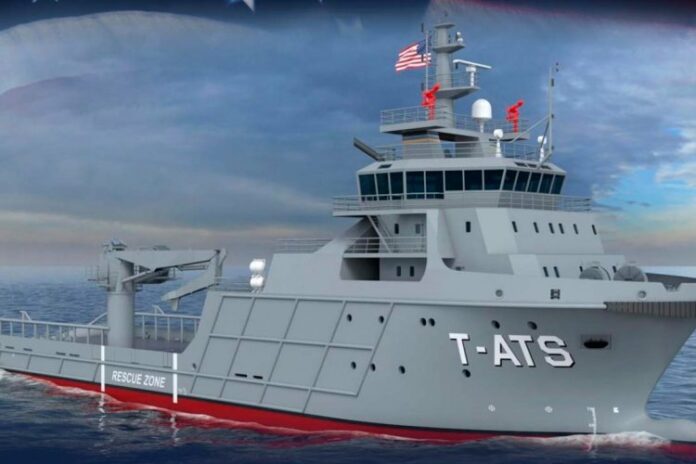
Austal USA has been awarded a US$156,171,650 (~A$225.5 million) fixed-price incentive contract option from the United States Navy for the construction of two Navajo-class Towing, Salvage, and Rescue Ships.

With the award, the company is now under contract for four T-ATS, having received awards for T-ATS 11 and 12 in October 2021.

Austal Limited Chief Executive Officer Paddy Gregg said the latest contract award re-affirmed the United States Navy’s great confidence in Austal USA’s capabilities as a steel shipbuilder, following the start of construction on T-ATS 11, earlier this month. 

“It’s a great sign of confidence by the Navy, in the Austal USA team’s ability to deliver both steel and aluminium ships simultaneously, that they have awarded a contract for another two vessels.

“Congratulations to the Austal USA team on yet another multiple steel vessel contract, which will go even further to demonstrate the company’s diverse capabilities, in aluminium and steel.”

T-ATS is an ocean-going tug, salvage, and rescue ship designed to support the United States Navy’s fleet operations, with a multi-mission common hull platform capable of towing heavy ships. The ships are capable of supporting a variety of missions, including oil spill response, humanitarian assistance, search and rescue and surveillance.

Austal USA will utilize its proven ship manufacturing processes and innovative methods that incorporate lean manufacturing principles, modular construction, and moving assembly lines, all housed under the company’s state-of-the-art enclosed steel production facility. This unique production capability positions Austal USA to meet the ongoing, growing demands of both the Navy and Coast Guard.

Construction on T-ATS 13 and 14 will commence in the second half of CY2023 and first half of CY2024; with delivery planned for the second half of CY2025 and first half of CY2026, respectively.

In addition to T-ATS, Austal USA is currently constructing the United States Navy’s Independence-variant Littoral Combat Ship and Spearhead-class Expeditionary Fast Transport and is under contract for the construction of a 211 metre steel Auxiliary Floating Drydock Medium. The company was also recently awarded a contract for up to 11 steel Offshore Patrol Cutters for the United States Coast Guard, worth up to US $3.3 billion.
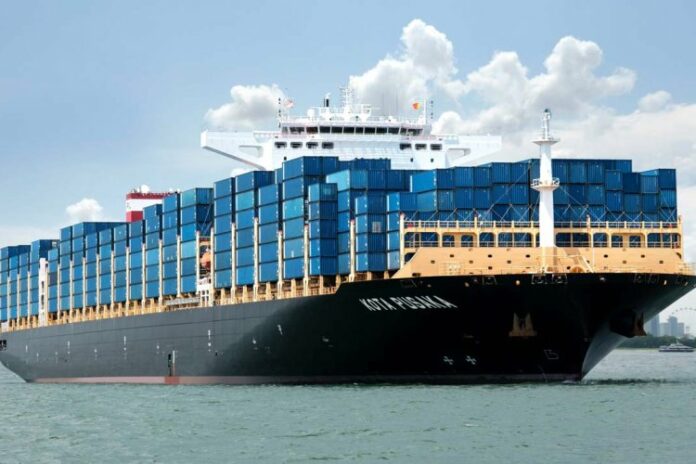

PIL to adopt Hazcheck Detect cargo screening tool

0

NCB Group, the New York based cargo inspection company and leading global provider of transportation software are pleased to announce that Singapore-based Pacific International Lines (PIL) is the fourth shipping line to sign an agreement to adopt Hazcheck Detect, a cargo screening tool that detects misdeclared and undeclared dangerous goods in containerised shipments.

Hazcheck Detect screens cargo booking details for keywords and includes an industry library to enable suspicious bookings to be identified that may be misdeclared or undeclared dangerous goods (DG) and other compliance cargo. Booking data is sent to Hazcheck Detect via API, screening all information against thousands of complex rules, allowing non-compliant cargo to be detected within seconds rather than days.  

Hazcheck Detect case management feature gives customer’s greater visibility and more control over the screening process, allowing cargo to be cancelled or re-booked with the correct declarations. Last minute changes to bookings, declarations, Bills of Lading and shipping instructions can be picked up in real time, stopping suspicious cargoes from being loaded onto ships.

Ian J Lennard, NCB President, commented:

“We are delighted that PIL has adopted Hazcheck Detect for their cargo screening. Our software division, Exis Technologies has over 35 years of dangerous goods knowledge and experience of high volume IT applications for large container lines. They are in the unique position to be able to develop and deliver this ground breaking solution that can benefit the whole of the shipping industry. As more lines begin using the tool, we can make further improvements like adding additional rules to the tool’s industry rules library from which all container lines can benefit.”

Bojarajoo Subramaniam, Assistant General Manager, Operations and Procurement, PIL, commented:

“We are pleased to adopt this important industry solution. We have already seen improvements in the amount of misdeclared/undeclared dangerous goods that we are picking up in the booking process using the case management function of the tool. The analytics provided gives our staff much greater visibility of what is happening in the screening process, raising standards across the whole company. In just a few weeks of using the tool, we have been able to prevent over 100 containers from being loaded onto our ships that should have been subject to IMDG Code checks.”

Verizon to build 5G network at Virginia International Terminals

0

Virginia International Terminals (VIT) is a privately held terminal operating company that is owned by the Virginia Port Authority, which is an agency of the state of Virginia.

VIT is one of the most technologically advanced container terminal operators in the world, and will use the network to explore the use of autonomous over-the-road trucks for accessing the terminal to drop-off and pick-up shipping containers. The On Site 5G private network deployment is scalable and also gives VIT the ability to replace WiFi with secure, private 5G connectivity across its Virginia International Gateway facility, a 275 acre marine terminal.

The deal is Verizon Business’ second with a major international port and its first with a U.S.-based terminal.

Sowmyanarayan Sampath, CEO of Verizon Business, said:

“Seaports provide some of the best possible examples of the power of private 5G, with uses spanning autonomous vehicles, connected heavy equipment, and secure, real-time tracking and logistics, among many others. That’s why On Site 5G is ideal for innovative partners like Virginia International Terminals. It puts a wide range of 5G capabilities on offer, from data-intensive, high-bandwidth industrial needs to secure, reliable broadband for everyday business.”

Rich Ceci, SVP of Technology and Projects, VIT, said:

“Verizon’s On Site 5G private network is right for us because it’s flexible, scalable, and powerful enough for both industrial outdoor use and office broadband. The development of autonomous vehicles technology applied to over-the-road trucks has significant environmental impacts, and addresses a major shortfall of truck drivers that is currently plaguing the transportation industry. We view Verizon as the premier 5G supplier in the market and are excited to be working with them.”

In the recently closed fiscal year, VIT handled 3.7M TEUs (2 million containers) and accounted for approximately $47 billion in gross product for the state. VIT recently received a U.S. Department of Transportation grant to create a proof of concept for autonomous over-the-road trucks, bringing together experts from industry and academia to devise a solution for this critical logistics chain need. Private 5G is a critical component to the solution being developed.

On Site 5G is a secure non-standalone private network that combines 5G Ultra Wideband small cells with an LTE packet core and supporting radios, providing compatibility with a wide range of both LTE and 5G devices. As 5G technology and capabilities advance and evolve, On Site 5G provides customers with a scalable, customizable platform to take advantage of developments in burgeoning technologies such as IoT, AI/ML, AR/VR, real-time edge compute, and much more.

Maersk creates a fast India-Bangladesh cross-border logistics solution

0

Maersk successfully completed the first India-Bangladesh cross-border logistics of containerised cargo using the inland waterways of the Indo-Bangladesh Protocol Route for Coca-Cola Bangladesh Beverages. 

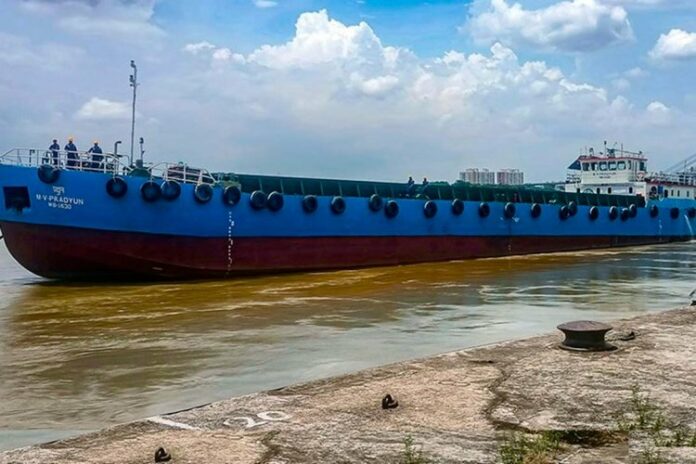
By transporting 50 containers from Kolkata in India to a river port near Dhaka in Bangladesh on a barge on the National Waterways 1 on the India side, Maersk has created a new opportunity for customers to use the faster, more reliable inland waterways solution that connects the two countries.

Vikash Agarwal, Managing Director, Maersk South Asia, said:

“The Indo-Bangladesh Protocol Route has created great trade opportunities for the two countries over the last decades. By advancing into containerised transport on this route, we are expanding the opportunities for importers and exporters from the two countries with a faster, more reliable and safer option for their cargo.”

The cargo movement on inland waterways or rivers is much more reliable, especially in monsoons, when the turbulent weather can cause delays while transporting goods over the ocean. Moreover, with the ocean network running under capacity pressure, the alternative inland waterways route that is quicker and more reliable has received a warm welcome from shippers. This solution also addresses the bottleneck at the land border between the two countries.

Soumyendu Sen Sarma, Director – Finance, Coca-Cola Bangladesh Beverages, said:

“The maiden barge voyage has been successfully executed where there has been a significant reduction of transit time. The delivery schedule of the cargo, which used to be routed through the transhipment hub and then arrive in Chittagong and further to the destination, used to be impacted severely with delays. The speed of delivery with the new solution offered by Maersk over inland waterways is going to be extremely beneficial for us.”

The Governments of both countries have encouraged trade on the Indo-Bangladesh Protocol Route for a long time and recently strengthened the customs processes further to enhance the ease of doing business.

Angshuman Mustafi, Head of Maersk Bangladesh, said:

“Our solution to move cargo across the Indo-Bangladesh border has a saving of over 60% in terms of transit time. In addition to the faster mode of transport, we are able to give end-to-end visibility to our customers through Daily Status Reports, which give a comparison between the estimated timelines against actual timelines. The negligible variations in these comparisons prove high reliability and have been thoroughly appreciated by our customers.”

The Indo-Bangladesh Protocol Route is not only a benefit for trade between India and Bangladesh but also extends the connection to landlocked Bhutan. With the option of providing an end-to-end integrated logistics solution, Maersk’s customers can move their cargo from origin to destination using first-mile and last-mile services, including landside transportation by road or rail, customs clearance, warehousing and distribution, supply chain management etc.

Shell invests in the Jackdaw gas field in the UK North Sea

0

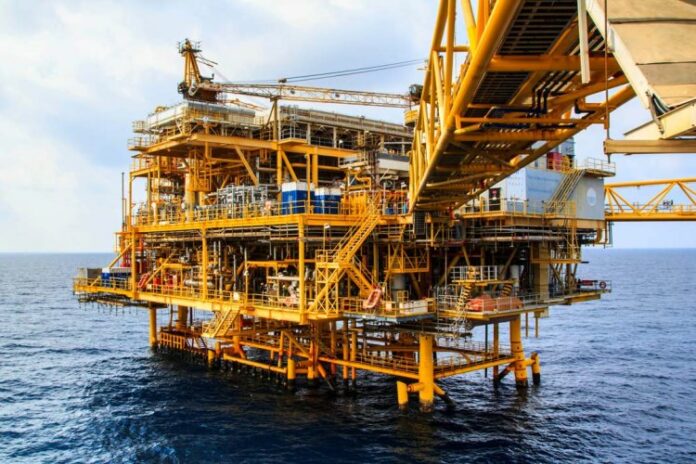
BG International Limited, an affiliate of Shell U.K. Limited, has taken the final investment decision (FID) to develop the Jackdaw gas field in the UK North Sea, following regulatory approval earlier this year. 

Jackdaw will comprise a wellhead platform that is not permanently attended, along with subsea infrastructure which will tie back to Shell’s existing Shearwater gas hub.

The project is expected to come online in the mid-2020s, and at peak production rates, could represent over 6% of projected UK North Sea gas production in the middle of this decade, with operational emissions of less than 1% of the whole UK basin. That is enough energy to heat 1.4 million homes.

Shell Upstream Director, Zoe Yujnovich, said:

“We are committed to providing our customers with secure and stable supplies of energy, and to do so responsibly, efficiently and economically. Investments like Jackdaw are consistent with the UK’s North Sea Transition Deal and Shell’s Powering Progress strategy, providing the energy people need today while serving as the foundation for investments in the low carbon energy system of the future.”

Jackdaw is part of Shell U.K.’s broader intent to invest £20 to £25 billion in the UK energy system in the next decade, subject to Board approval and stable fiscal policy, with the aim of investing 75% in the development of low and zero-carbon products and services. Hundreds of millions of pounds are expected to be spent in the UK supply chain during Jackdaw’s construction, which is a significant boost to companies, jobs and the prosperity of communities.

Projects like Jackdaw will help ensure the overall decline in UK North Sea production is gradual rather than too steep, matching a gradual drop in hydrocarbon demand as the energy transition takes place. Gas from the Jackdaw field will come ashore at St Fergus, where Shell is involved in the development of the Acorn Carbon Capture and Storage project, which could sequester carbon dioxide (CO₂) from industrial clusters in Scotland, the UK and northern Europe. The Acorn project could also reform natural gas into low-carbon hydrogen, by capturing and storing the CO₂.

Silverstream signs MOU with Mitsui and Orient Marine

0

Clean technology company Silverstream Technologies has signed a Memorandum of Understanding (MOU) with leading Japanese trading company Mitsui & Co. group and Orient Marine Company, the organisations have announced today.

The new partnership will see Silverstream, Mitsui & Co. Europe Plc. and Orient Marine – a wholly owned subsidiary of Mitsui & Co. which provides specialised services for ship-related businesses – work together. The companies will promote uptake of Silverstream’s market-leading air lubrication technology, the Silverstream® System, toward the Japanese market and support mainly Asian shipowners’ efforts to decarbonise. 

In recognition of the urgency of the climate emergency, and the necessity to decarbonise and future-proof its domestic shipping sector, Japan has set a target of net-zero greenhouse gas (GHG) emissions by 2050. Additionally, as part of its strategy to strengthen its presence in the international maritime industry, the country is encouraging its shipbuilding industry to design and supply greener vessels. As a result, there is growing recognition within Japan’s shipowning and shipbuilding segments that proven clean technologies such as air lubrication are one of the few immediately available solutions to help advance this goal.

The collaboration with Mitsui & Co. Europe Plc. and Orient Marine will also aim to strengthen Silverstream’s relationships with local Japanese owners, shipyards and design institutions, as well as advance the company’s commercial strategy in the region, by securing customer leads and driving opportunity generation. Additionally, the strategic agreement will allow for intelligence and local market knowledge sharing among the three organisations.

Deepening Silverstream’s ties into the unique Japanese shipping market, as a subset of the Asian market, will enable even greater momentum and uptake of air lubrication technologies as a decarbonisation solution for shipping.

Noah Silberschmidt, Founder & CEO, Silverstream Technologies, said:

“We are very happy to announce our strategic partnership with Mitsui & Co. Europe Plc. and Orient Marine at what is proving to be a critical moment for Japan’s shipping industry. In an important maritime market like Japan, being able to count on a local industry-leading player who endorses our technology and shares our vision of a more sustainable and efficient industry is extremely valuable.

“We see the Japanese-owned fleet and newbuild segments as an important market for our technology in the near future, and we are optimistic that our new partners at Mitsui & Co. Europe Plc. and Orient Marine will help to deepen our ties to the country and its key maritime players.” 

Naoki Shinohara, Executive Vice President Operating Officer, Orient Marine, said:

“Through the collaboration with Silverstream, we aim to contribute to the decarbonisation of the shipping industries.”

Baltic Pipe pipeline connected to the transmission systems of Poland and Denmark

0

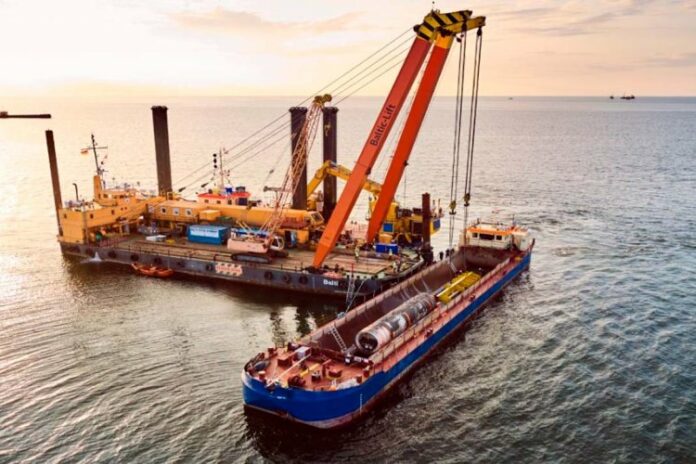
In July this year, the last welds connecting this gas pipeline to the Danish transmission network in Faxe, Denmark, and to the Polish transmission system in Pogorzelica were made.

Today we can say that the Baltic Pipe offshore gas pipeline is technically a part of the national transmission system. With this investment, we have integrated the gas networks of Poland and Denmark, creating a new natural gas supply corridor to the Central and Eastern European region. We still have some start-up and gasification works ahead of us, followed by the launch of transmission on the planned date i.e. on 1 October 2022 – said Tomasz Stępień, President of GAZ-SYSTEM.

The operations to connect the offshore pipeline with onshore pipelines in both countries, known as tie-in, were preceded by a series of preparatory activities, which included cleaning the offshore pipeline with cleaning pigs, performing a water pressure test, dewatering the pipeline with specialized pigs, and finally drying until the expected degree of pipeline drying was achieved.

On the Danish side, the tie-in operation, which was carried out by Energinet, involved welding an approximately 120-meter-long section connecting the onshore pipeline to the offshore pipeline in a previously prepared open trench. On the Polish side, the operation was carried out by GAZ-SYSTEM, conducting analogous activities involving the welding of a slightly shorter, i.e. 90-meter-long connector.  

Guaranteed welds, the so-called “golden welds ” made at both ends of the offshore pipeline on opposite sides of the Baltic Sea, resulted in the physical connection of this pipeline with the national transmission network of Poland and also the transmission infrastructure of the Kingdom of Denmark, providing the possibility of gas transmission between the two countries.
                                                                                                       
Once this work is completed, restoration activities will begin at both construction sites, as well as commissioning work for the entire Baltic Pipe offshore gas pipeline system. All activities are implemented according to the schedule.

The Baltic Pipe project is one of the largest infrastructure investments in Poland. The European Commission has granted the investment the “Project of Common Interest” status. The project has received financial support from the European Union under the Connecting Europe Facility (CEF).

AKOFS Offshore signs contract for Aker Wayfarer

0

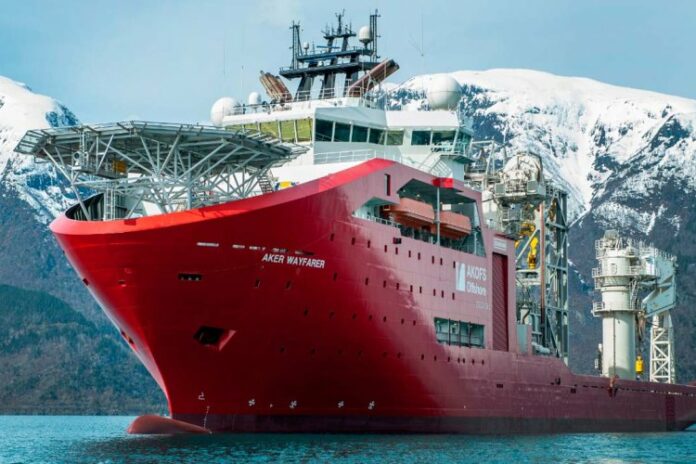
Akastor ASA’s 50% owned affiliate AKOFS Offshore AS (AKOFS Offshore) has now signed a firm contract for its vessel “Aker Wayfarer” that will continue to perform services as a subsea equipment support vessel (SESV) for Petróleo Brasileiro S.A. (Petrobras) as client in Brazil. 

The duration of the contract is 1,415 days, or almost 4 years, and the services will commence in first half of 2023. AKOFS Offshore will be performing the “Aker Wayfarer” operations jointly with its partners Bravante for marine services and Oceaneering for ROV services.

Total contract value is about USD 282 million, of which about USD 198 million will be revenue allocated to AKOFS Offshore and included in the company’s backlog.

Aker Wayfarer is a multipurpose offshore construction vessel capable of undertaking subsea installation, floater installations, topside floatovers and removal operations. The vessel is on a “hell and high water” bareboat charter with Akastor until 2027

Delivered in October 2010, she is a sister ship of Skandi Aker, the largest monohull subsea well intervention vessel ever built. The Skandi Aker was the first intervention vessels to be classed with IMO MODU (mobile offshore drilling unit) code, allowing them to carry oil onboard. The Aker Wayfarer is also prepared for the IMO MODU notation.

First-of-its-kind hybrid heavy transport vessel to be developed for OWF connectivity

0

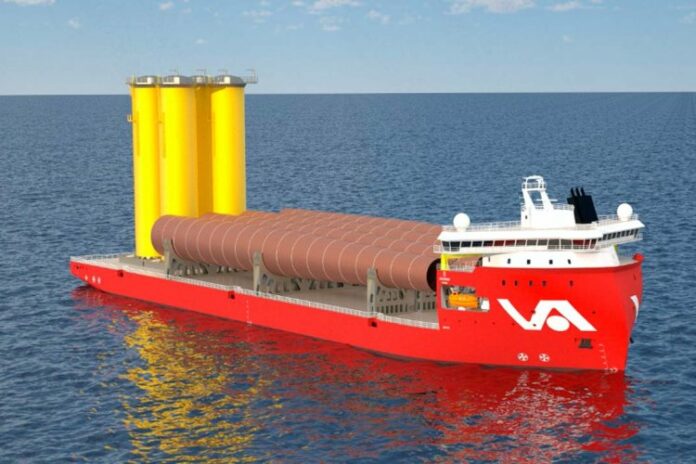
Vallianz Holdings Limited has joined forces with Ulstein Design & Solutions B.V., Shift Clean Energy and Bureau Veritas to collaborate on the design and construction of a heavy transport vessel that will be the first of its kind in the global offshore wind industry.

Designed for worldwide operations, the HTV will be deployed for transportation of structures such as monopiles, jackets, transition pieces and turbine blades to support offshore wind farm projects, as well as heavy structure modules for LNG and carry out floatover operations of offshore structures. 

Featuring zero emission capability, the DP-2 vessel will be the first of its kind, as it will be driven by a hybrid power system consisting of alternative dual fuelled engines and a fully-classed battery energy storage system. In addition, the HTV features the proven ULSTEIN X-BOW®, which contributes to reduced energy consumption and provides more comfortable and safer operations when sailing through waves.

Measuring an overall length of 173.6 meters, the customised ULSTEIN HX120 design will have a free deck length of 145 meters. With her large deck area of more than 6,000 square meters and deck strength of 25 tonnes per square meter, the new HTV can carry cargoes of up to 32,000 metric tonnes. This includes very large structures and modules, such as monopiles, transition pieces and jacket foundations.

The design of the HTV is developed by the Dutch design office of Ulstein Group which is headquartered in Norway. The HTV’s electric battery system is to be provided by Canadian-based Shift, while the vessel will be classed by Bureau Veritas.

Construction is expected to take up to 26 months with planned completion by the end of 2024, and is not expected to have any material impact on the net tangible assets or earnings per share of the Group for the current financial year ending 31 March 2023.

Measuring an overall length of 173.6 meters, the customised ULSTEIN HX120 design will have a free deck length of 145 meters. With her large deck area of more than 6,000 square meters and deck strength of 25 tonnes per square meter, the new HTV can carry cargoes of up to 32,000 metric tonnes. This includes very large structures and modules, such as monopiles, transition pieces and jacket foundations.

The design of the HTV is developed by the Dutch design office of Ulstein Group which is headquartered in Norway. The HTV’s electric battery system is to be provided by Canadian-based Shift, while the vessel will be classed by Bureau Veritas.

Construction is expected to take up to 26 months with planned completion by the end of 2024, and is not expected to have any material impact on the net tangible assets or earnings per share of the Group for the current financial year ending 31 March 2023.

Ms Cathrine Marti, CEO of Ulstein Group, said:

“Since 2010, offshore wind has been a focus market for Ulstein. With our track record in SOVs, heavy lift vessels and rock installation vessels, we have built up a strong position as a ship designer supporting offshore wind installation and maintenance. This agreement with Vallianz is an important step for us, as it is in line with our strategy to expand into vessels supporting offshore wind logistics.”

Said Mr Francis Tang, Commercial Director of Bureau Veritas Marine Singapore, said:

“Bureau Veritas is honoured to participate in this ground-breaking project and to support our close customer Vallianz and partners to further push the boundaries in maritime and offshore decarbonisation by tapping into our deep expertise in alternative fuels and hybrid technologies.”

Said Mr Brent Perry, CEO of Shift Clean Energy, said:

“Energy Storage is mature and ready to take on the challenge of decarbonisation, today. Collaboration with all parties is the key that will support Energy Storage System (ESS) in delivering on performance, cost and environmental benefits. On this project, we are working hand-in-hand with committed partners to enable the transition to a zero-carbon maritime industry. We are thrilled to be partnering with Vallianz on this important and exciting venture and we extend our congratulations to Vallianz, Ulstein and Bureau Veritas on this industry-leading design.”  

AIDA Cruises vessel bunkered with GoodFuels’ sustainable biofuels

0

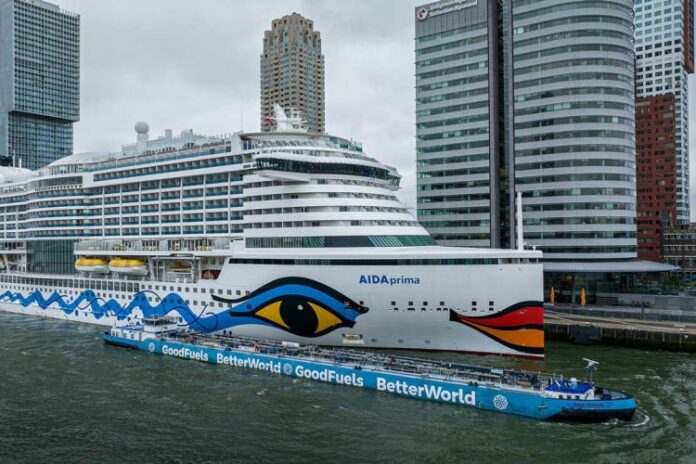
GoodFuels has successfully completed its first bio-bunkering for a large passenger ship in partnership with Carnival Corporation’s AIDA Cruises brand, marking an important step forward to achieving sustainability in the cruise industry.

AIDAprima, a Hyperion-class cruise ship, was refuelled with GoodFuels’ sustainable biofuels during a port visit to Rotterdam, in the Netherlands. The trial took place while the vessel was on a seven-day cruise, visiting Hamburg, Southampton, Le Havre, and Zeebrugge.

GoodFuels’ next-generation sustainable biofuel is derived from feedstocks that are certified as 100% waste or residue, with no land-use issues and no competition with food production or deforestation. It enables a well-to-exhaust CO2 reduction of 80 to 90 percent when compared to fossil fuels. Thanks to its “drop in” properties, AIDAprima was bunkered with biofuel without requiring any modifications to the engine or tanks.

The successful bio-bunkering demonstrates AIDA Cruises’ commitment to investing in new-low carbon emissions technologies as part of their long-term decarbonisation strategy. It also provides a blueprint for the wider cruise sector on how to accelerate the adoption of alternative fuels in large-scale passenger ships. Following the first bio-bunkering, follow-up deliveries are envisioned by AIDA Cruises, as well as a potential for expansion to other brands under the Carnival Corporation banner.

Commenting on the partnership, Dirk Kronemeijer, CEO of GoodFuels, said:

“This first bio-bunkering with AIDA Cruises marks an exciting step forward on the cruise industry’s decarbonisation pathway, demonstrating that our sustainable biofuels are a safe, technically viable and convenient option to drastically cut down emissions from passenger vessels. As the effects of climate change are felt acutely in several parts of the world, the time for action is now, and biofuels are one of the few options that can already make a difference today. We are delighted to have worked alongside the trail-blazers at AIDA Cruises in the past few months to make this milestone a reality, and we look forward to collaborating again in the future.”

Felix Eichhorn, President AIDA Cruises, emphasizes:

“We continue to actively explore all opportunities to decarbonize our fleet while advancing efficiency in line with international carbon intensity reduction targets. With the successful start of biofuel usage, we have proven that gradual decarbonization is possible even on ships already in service. An important prerequisite for us as a cruise line to be able to use it is that it becomes widely available on an industrial scale and at marketable prices.”