1.8 C
New York
Home Blog Page 417

Ukraine war: Officials say work at grain ports resumes after deal

0

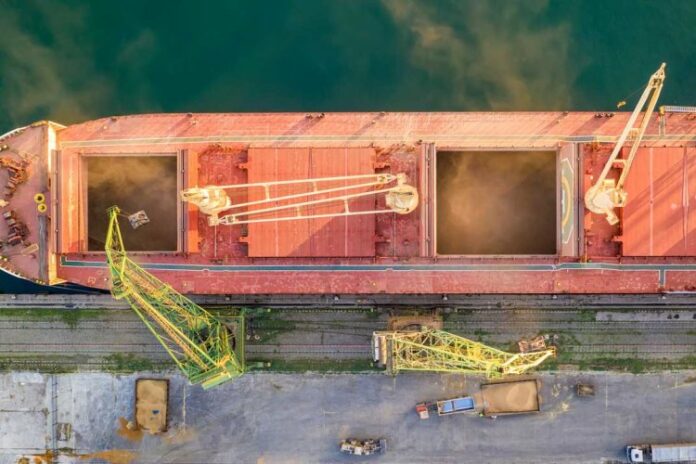
A spokesperson for the Odesa military administration said naval teams will build routes out of southern ports in Odesa, Chornomorsk and Pivdennyi.

Once the routes are established, “caravans” of ships led by Ukrainian naval vessels will sail through the Black Sea, Serhiy Bratchuk said.

Kyiv and Moscow struck a deal to allow the grain exports last week.

Under the deal, which was brokered by Turkey and the UN, Russia agreed not to target ports while grain was in transit, while Ukraine pledged to guide cargo ships through waters that have been mined.

However, the agreement was thrown into chaos less than 24 hours after the deal was signed, when two Russian missiles targeted a port in the city of Odesa.

Russia said the attack targeted a Ukrainian naval ship docked in the harbour.

Ukraine’s President Volodymyr Zelensky said the strike showed that Moscow cannot be trusted to stick to the deal and accused the country of “barbarism”.

And on Wednesday morning, Russian Deputy Foreign Minister Andrei Rudenko warned that the deal could collapse if obstacles to Russian agricultural exports are not removed, the Interfax news agency reported.

Despite the uncertainty, Mr Bratchuk said Ukraine intends to stick to the deal and pledged to carry out its obligations, despite the threat of Russian “aggression”.

He said that military and civilian specialists will “carefully search for underwater objects, install special means of navigation equipment that will help the safety of navigation”.

It comes as Turkey’s Defence Minister Hulusi Akar opened a joint grain co-ordination centre in Istanbul.

Staffed by Ukrainian and Russian officials, as well as Turkish and UN monitors, the centre will ensure the safe passage of Ukrainian vessels and inspect them for weapons as they enter and exit the Black Sea.

“The staff working at this centre are aware that the eyes of the world are upon them,” Mr Akar told reporters. “It is our hope that the centre will make the greatest contribution possible to humanitarian needs and peace.”

Mr Akar added that around one-third of the world’s wheat supply comes from Ukraine and Russia.

About 20m tonnes of grain meant for export are trapped in Ukraine, and Mr Zelensky has warned this could rise to 75m tonnes after this year’s harvest.

Source: BBC

BAE Systems’ new ARTISAN Radar contract for Brazil’s Flagship NAM Atlântico

0

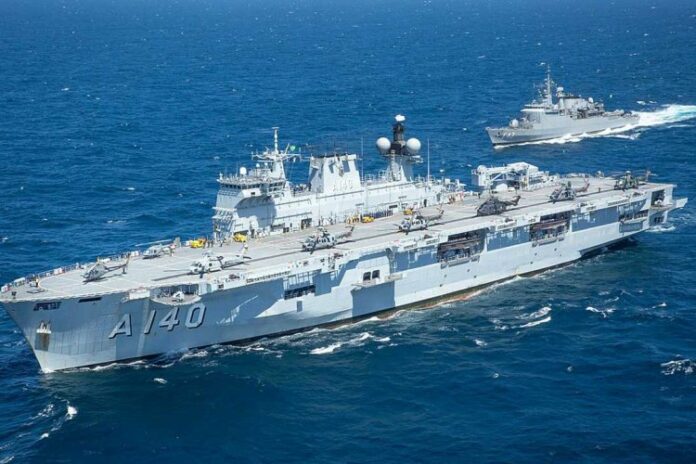
The new contract will provide through-life support for both the BAE Systems ARTISAN Radar and associated DNA2 Combat Management System (CMS) fitted to the NAM Atlântico, delivering class-leading operational availability to the flagship.

The ARTISAN Radar aspect of the contract will deliver corrective and preventative maintenance including the provision of spare parts, which will be manufactured by BAE Systems in the UK and held in Brazil. It will also provide a help-desk facility, which will be operated remotely from the UK to assist the team in Brazil.

A skills and knowledge transfer agreement will see the BAE Systems radar team provide hands-on training to the Brazilian Navy as part of regular, planned engineering visits to the Arsenal de Marinha do Rio de Janeiro (AMRJ) in Guanabara Bay, near Rio de Janeiro.

Admiral Cunha, Marinha do Brasil said:

“The signing of this contract represents a relevant step towards ensuring full availability of the combat system and ARTISAN radar on board NAM ATLÂNTICO.

“It is an important commitment assumed by BAE Systems with the Brazilian Navy not only in the maintenance of the operational capability of our flagship, but also in the transfer of knowledge to our personnel.”

Laurie Ellis, Head of Radar, Maritime sector at BAE Systems said:

“We’re delighted to have signed this support service contract with the Brazilian Navy. Our teams of engineers are looking forward to working with and providing support for the ARTISAN Radar and DNA2 Combat Management System to enable NAM Atlântico to continue its vital role as flagship.”

BAE Systems provides in-service support for ARTISAN radar which is currently in service with the Royal Navy on board the Queen Elizabeth Class aircraft carriers and Type 23 frigates and selected for the Royal Navy’s Type 26 Global Combat Ship.

ARTISAN naval surveillance radar will provide NAM Atlântico surface & air surveillance and air traffic management of both fixed wing and rotary wing aircraft.

Brazil became an operator of the radar with the purchase of LPH HMS Ocean from the United Kingdom in 2018. The DNA2 element of the contract will also deliver a planned modernisation package of the ship’s CMS in order to address obsolescence.

Subsea 7 and Van Oord consortium awarded contract offshore Guyana

0

Subsea 7 and Van Oord have announced the award of a substantial1 contract by ExxonMobil affiliate Esso Exploration and Production Guyana Limited (EEPGL) for the Gas to Energy project offshore Guyana, in water depths of up to 1,450 metres.

The scope covers the project management, engineering, and installation of approximately 190 kilometres of pipeline, with an associated shallow water portion and onshore approach making landfall to the west of the Demerara River, along the coast of Guyana.

Craig Broussard, Vice President for Subsea 7 US, said:

“We are honoured to have been selected for Guyana Gas to Energy. This is an important project to support the Guyanese people and we look forward to continuing our relationship with EEPGL in one of the most prolific and exciting development basins in the world.”

Hans van Gaalen, Commercial Director for Van Oord, adds:

“Van Oord is honoured to have been selected for the Guyana Gas to Energy project in cooperation with Subsea 7. Developing the coastal infrastructure for the project will allow our Subsea 7 and Van Oord consortium to positively contribute to the development of Guyana’s electricity supply which in turn will reduce Guyana’s dependence on imported fuels.” 

Natural clean-up: Bacteria can remove plastic pollution from lakes

0

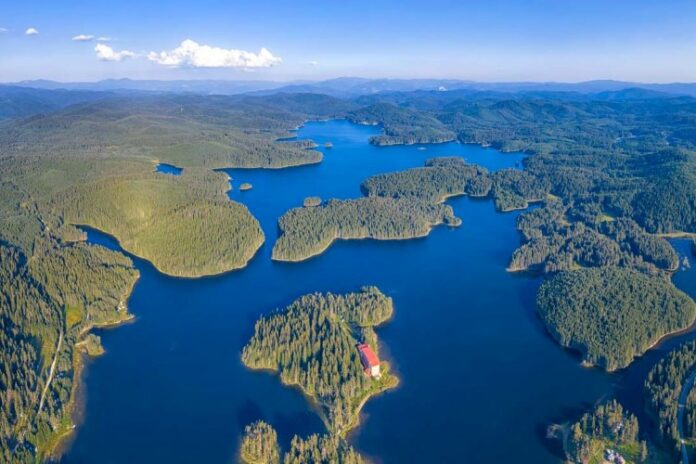
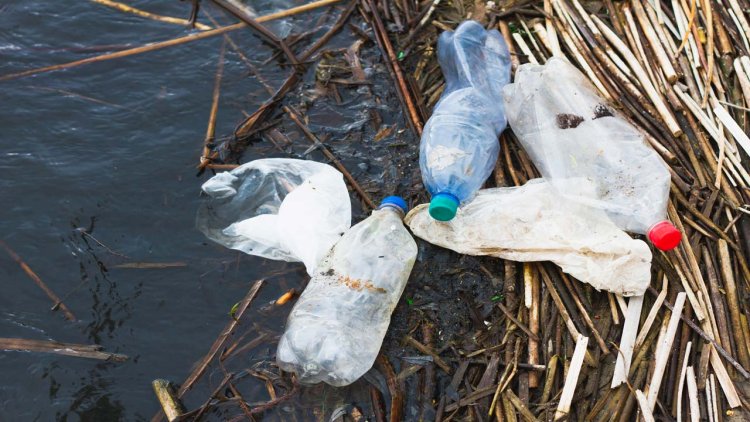
A study of 29 European lakes has found that some naturally-occurring lake bacteria grow faster and more efficiently on the remains of plastic bags than on natural matter like leaves and twigs.

The bacteria break down the carbon compounds in plastic to use as food for their growth.

The scientists say that enriching waters with particular species of bacteria could be a natural way to remove plastic pollution from the environment.

The effect is pronounced: the rate of bacterial growth more than doubled when plastic pollution raised the overall carbon level in lake water by just 4%.

The results suggest that the plastic pollution in lakes is ‘priming’ the bacteria for rapid growth— the bacteria are not only breaking down the plastic but are then more able to break down other natural carbon compounds in the lake.

Lake bacteria were found to favor plastic-derived carbon compounds over natural ones. The researchers think this is because the carbon compounds from plastics are easier for the bacteria to break down and use as food.

The scientists caution that this does not condone ongoing plastic pollution. Some of the compounds within plastics can have toxic effects on the environment, particularly at high concentrations.
The findings are published in the journal Nature Communications.

Dr. Andrew Tanentzap in the University of Cambridge’s Department of Plant Sciences, senior author of the paper, said:

“It’s almost like the plastic pollution is getting the bacteria’s appetite going. The bacteria use the plastic as food first, because it’s easy to break down, and then they’re more able to break down some of the more difficult food—the natural organic matter in the lake. This suggests that plastic pollution is stimulating the whole food web in lakes, because more bacteria means more food for the bigger organisms like ducks and fish.”

The effect varied depending on the diversity of bacterial species present in the lake water—lakes with more different species were better at breaking down plastic pollution.

A study published by the authors last year found that European lakes are potential hotspots of microplastic pollution.

When plastics break down they release simple carbon compounds. The researchers found that these are chemically distinct to the carbon compounds released as organic matter like leaves and twigs break down.

The carbon compounds from plastics were shown to be derived from additives unique to plastic products, including adhesives and softeners.

The new study also found that bacteria removed more plastic pollution in lakes that had fewer unique natural carbon compounds. This is because the bacteria in the lake water had fewer other food sources.
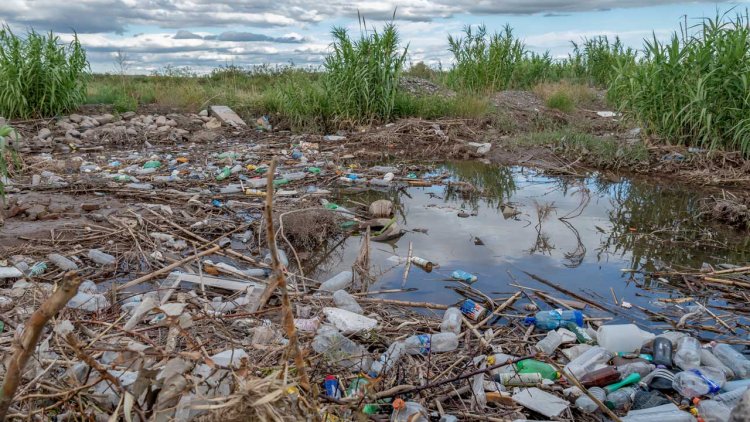
The results will help to prioritize lakes where pollution control is most urgent. If a lake has a lot of plastic pollution, but low bacterial diversity and a lot of different natural organic compounds, then its ecosystem will be more vulnerable to damage.

Professor David Aldridge in the University of Cambridge’s Department of Zoology, who was involved in the study, said:

“Unfortunately, plastics will pollute our environment for decades. On the positive side, our study helps to identify microbes that could be harnessed to help break down plastic waste and better manage environmental pollution.” 

The study involved sampling 29 lakes across Scandinavia between August and September 2019. To assess a range of conditions, these lakes differed in latitude, depth, area, average surface temperature and diversity of dissolved carbon-based molecules.

The scientists cut up plastic bags from four major UK shopping chains, and shook these in water until their carbon compounds were released.

At each lake, glass bottles were filled with lake water. A small amount of the ‘plastic water’ was added to half of these, to represent the amount of carbon leached from plastics into the environment, and the same amount of distilled water was added to the others. After 72 hours in the dark, bacterial activity was measured in each of the bottles.
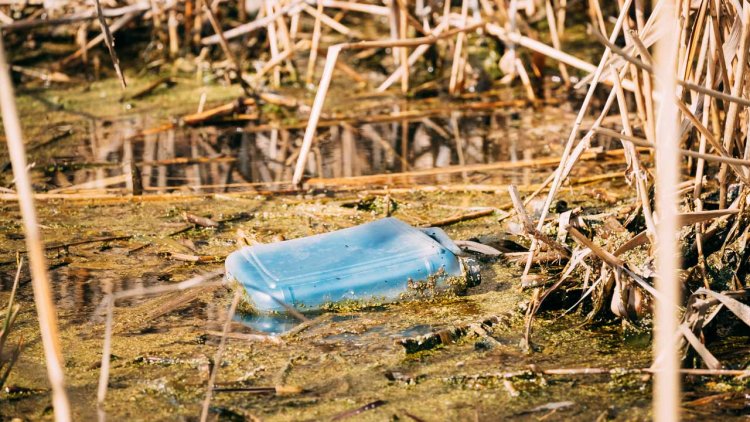
The study measured bacterial growth—by increase in mass, and the efficiency of bacterial growth—by the amount of carbon-dioxide released in the process of growing.

In the water with plastic-derived carbon compounds, the bacteria had doubled in mass very efficiently. Around 50% of this carbon was incorporated into the bacteria in 72 hours.

Eleanor Sheridan in the University of Cambridge’s Department of Plant Sciences, first author of the study who undertook the work as part of a final-year undergraduate project, said:

“Our study shows that when carrier bags enter lakes and rivers they can have dramatic and unexpected impacts on the entire ecosystem. Hopefully our results will encourage people to be even more careful about how they dispose of plastic waste.” 

ExxonMobil makes two more discoveries offshore Guyana

0

ExxonMobil has made two new discoveries offshore Guyana to the southeast of the Liza and Payara developments in the Stabroek block. The discoveries at Seabob and Kiru-Kiru are the sixth and seventh in Guyana this year, with the total number of discoveries in Guyana at more than 25.

The Seabob-1 well encountered approximately 131 feet (40 meters) of high-quality hydrocarbon-bearing sandstone and was drilled in 4,660 feet (1,421 meters) of water by the Stena Carron drill ship. The Kiru-Kiru-1 well encountered approximately 98 feet (30 meters) of high-quality hydrocarbon-bearing sandstone and was drilled by the Stena DrillMAX in 5,760 feet (1,756 meters) of water. Drilling operations at Kiru-Kiru are ongoing.

Liam Mallon, president of ExxonMobil Upstream Company, said:

“ExxonMobil and its partners continue to accelerate exploration, development and production activities for the benefit of all stakeholders, including the people of Guyana. The resources we are investing in and discovering offshore Guyana will provide safe, secure energy for global markets for decades to come.”

The company’s 2022 investment plans include further exploration drilling and resource development in Guyana, where it is already increasing production at an accelerated, industry-leading pace. Two floating production storage and offloading (FPSO) vessels operating offshore Guyana — Liza Destiny and Liza Unity — have exceeded their initial combined production target of 340,000 barrels of oil per day.

A third project, Payara, is expected to produce 220,000 barrels per day. Construction on its production vessel, the Prosperity FPSO, is approximately five months ahead of schedule with start-up likely before year-end 2023. The fourth project, Yellowtail, is expected to produce 250,000 barrels per day when the ONE GUYANA FPSO comes online in 2025.

Guyana’s Stabroek block is 6.6 million acres (26,800 square kilometers). ExxonMobil affiliate Esso Exploration and Production Guyana Limited is the operator and holds 45% interest in the block. Hess Guyana Exploration Ltd. holds 30% interest, and CNOOC Petroleum Guyana Limited holds 25% interest.

NYK and Shin-Nippon Kaiyosha start Japan’s first 100% biofuel supply trial for ships

0

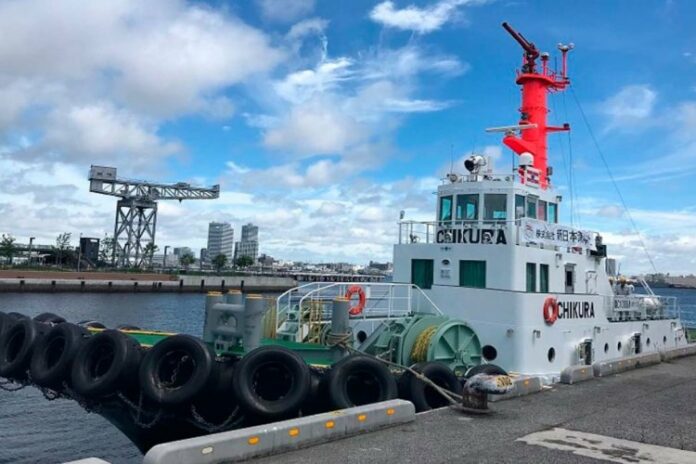
Nippon Yusen Kabushiki Kaisha (hereinafter, NYK) and NYK Group company Shin-Nippon Kaiyosha Corporation (hereinafter, Shin-Nippon Kaiyosha) have started a test navigation using Neste Renewable Diesel (hereinafter, NesteRD) supplied by Itochu Enex Co. Ltd. (hereinafter, Itochu Enex) in tugboats operated by Shin-Nippon Kaiyosha. This is the first case in Japan of a 100% concentration of biodiesel being used in a ship.

Biofuels are made from renewable biological organic resources (biomass). Burning biofuels results in virtually zero carbon dioxide (CO2) emissions. With increasing demand for reductions in greenhouse gases (“GHG”) emitted from ships by oceangoing shipping around the world, biofuels have attracted attention as a currently available alternative to heavy oil.

The biofuel being used in this trial is Neste RD, which is being imported to Japan through a contract that Itochu Corporation has signed with the Neste OYJ Group, one of the world’s largest renewable fuel manufacturers.

Neste RD is a 100% renewable fuel product that is manufactured from waste cooking oil and animal oil that would not be used by the food industry. It can reduce GHG emissions on a life cycle assessment* basis by about 90% compared to petroleum-derived diesel fuel and can be used as a so-called “drop-in fuel,” just like gasoline or diesel oil, without modifying the existing infrastructure. As a next-generation renewable fuel, NesteRD can greatly contribute to the reduction of GHG emissions by minimizing the introduction cost related to decarbonization measures, and its use in the shipping industry is expected to further expand in the future.

CMS carries out world’s first 36K maintenance on DF engine

0

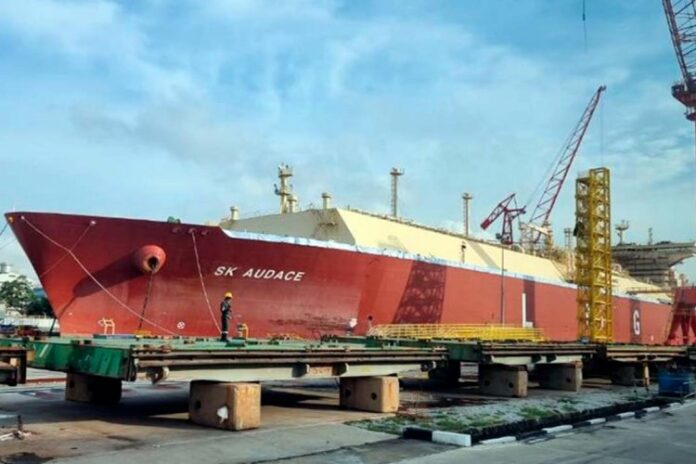
CSSC Marine Service Co (CMS), the worldwide equipment service subsidiary of China State Shipbuilding Corp (CSSC), has successfully completed the world’s first ever 36,000 running hours major maintenance on dual-fuel (DF) marine engines.

The vessel, SK Audace – an 11,700 gross tonnage LNG tanker owned by Total Gas & Power Chartering – operates with six WinGD X62DF twin engines. Having completed more than 36,000 operating hours, a major service was scheduled in accordance with class society and design specifications. The full package maintenance project included condition-based and post-completion consulting. CMS is WinGD’s authorized service partner.

Mr.Yan Wei, the Vice President of CMS, said:

“The extensive service capabilities of CMS have again been emphasised with the successful completion of this landmark maintenance project. Not only was it the first 36,000 hour overhaul of a DF engine, but the spare parts supply had to be carried out under challenging lockdown circumstances because of Covid-19. Most importantly, the overhaul confirmed the excellent condition of the WinGD engines.”

Superintendent of the SK Audace commented:

“For me, CMS always provides peace of mind. They work with great attention to detail, and I’m grateful for their meticulous and professional work. They support the customer from preparation of the project through to its completion. They are a business partner that I am happy to cooperate with, now and in the future.” 

The design qualities of the engines were demonstrated throughout the disassembly of the moving parts and overhauling work, both during the 36K project and the 18K project two years ago.

Worley joins 1.5 GW wind project offshore Australia

0

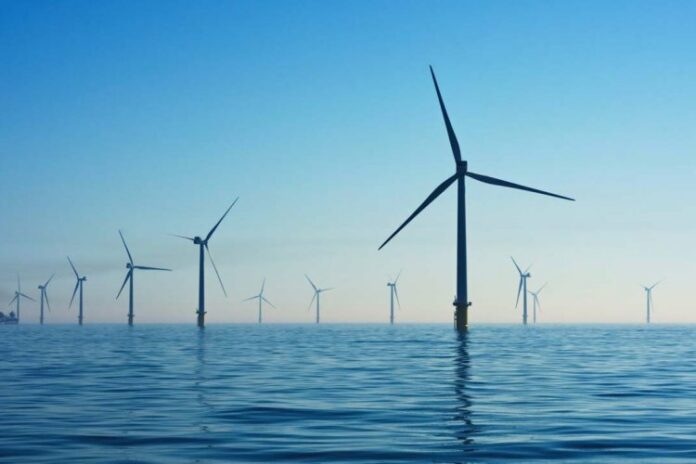
Worley is providing pre-feasibility study services to Flotation Energy’s Seadragon project, a 1,500 MW offshore wind farm off the coast of Gippsland.

The project sets out to be one of Australia’s first offshore wind sites. It will produce enough clean energy to power some one million homes and businesses across Victoria.

Backed by funding from the Victoria State Government, the project has the potential to create over 1,600 jobs, providing a significant investment boost for the local economy and workforce.

Christopher Cowland, Vice President Global Offshore Wind, said:

“Australia has a long-established history in conventional energy. The Seadragon project will act as an energy transition bridge between the oil and gas and wind industries, bringing opportunities to retrain and upskill local workforces into renewables-focused roles.” 

The proposed project site is located near older oil and gas platforms in the Bass Strait. This offers the potential for repurposing assets no longer needed for oil and gas production to house offshore infrastructure. It will also consider synergies for the construction, operations, and maintenance phases of the offshore wind farm.

The study will propose the concept design of the overall project and provide recommendations for efficient execution. 

Tim Sawyer, Director at Flotation Energy Plc., said:

“Flotation Energy is an early entrant into the emerging Australian offshore wind market, and we’re delighted to be working with Worley to support engineering studies for the next stage of the 1,500 MW Seadragon offshore wind farm. Worley combines its extensive in-house expertise across all aspects of offshore wind with local knowledge of Gippsland and Bass Strait, which will be critical to successfully delivering the project.”

Cowland says:

“Our work with Flotation Energy on this project is a crucial milestone in Australia’s energy transition journey. It’s aligned with our purpose of delivering a more sustainable world and is integral in paving the path for the offshore wind industry ahead.” 

The initial study is projected to take 12 weeks, with first power expected in 2030.

Neptune Energy completes final well campaign on Fenja field

0

This marks an important milestone in the development of Fenja, which is scheduled to come on stream in the first quarter of 2023 and will produce approximately 28,000 barrels of oil equivalent per day (boepd) at plateau.

Operated by Neptune Energy, the Fenja development consists of two subsea templates tied back to the Njord A platform via a production pipeline, water and gas injection pipelines and an umbilical. The wells consist of two oil producers, one water injector and a gas injector. The gas injector will be converted to a gas producer towards the end of field life.

Neptune Energy’s Director of Projects & Engineering in Norway, Erik Oppedal, said:

“The completion of the drilling campaign on the Fenja field represents the final step of the development project and we are now ready for production start-up. This region of the Norwegian Sea is a strategically-important growth area for Neptune, with high prospectivity.”

Earlier this summer, Equinor, on behalf of Neptune, successfully pulled in the Fenja risers and dynamic umbilical to the host platform, Njord A, which is now back on the field. Final tie-in activities will be completed shortly and all subsea facilities are ready. Fenja has been developed with an electrically trace-heated (ETH) pipe-in-pipe solution that will transport oil from the Fenja field to the Njord A platform. At 37 kilometres, it is the world’s longest ETH subsea production pipeline.

The Fenja oil and gas field is situated at a water depth of 325 metres, around 36 kilometres southwest of the Equinor-operated Njord A platform. Neptune holds a 22.5% owner share in Njord A which is located 120 kilometres north of Kristiansund.

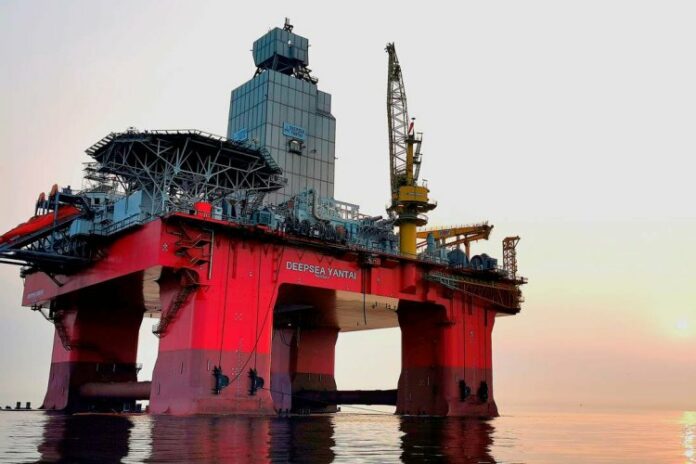
The wells were drilled by the Deepsea Yantai, a semi-submersible rig, operated by Odfjell Drilling.

SMST equips first ever Chinese SOV for W2W

0

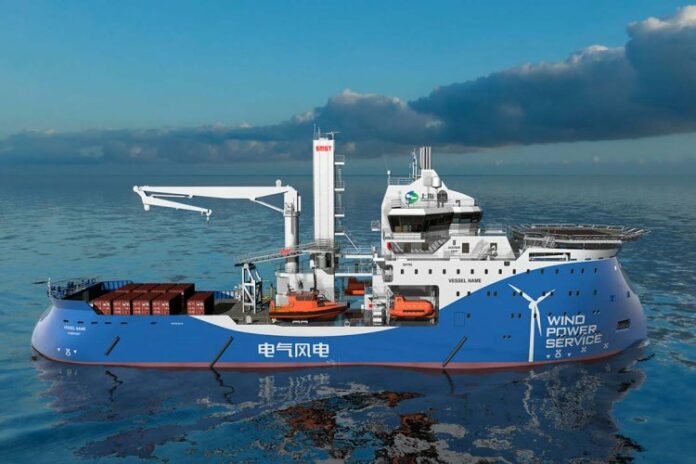
On board the newbuild vessel, the reliable SMST walk-to-work equipment will provide safe access to the wind turbines and ensure optimal logistics. 

Recently, shipyard ZPMC in China has awarded SMST the contract for the delivery of an Access & Cargo Tower with motion compensated gangway, the so-called Telescopic Access Bridge L-Series, for the new build SOV of Shanghai Electric Windpower Group, Ulstein design SX195 with accommodation for 100 POB. The Chinese shipowner, that is the largest offshore wind turbine supplier in the country, will contract the SOV for maintenance of wind turbines in China’s Jiangsu and Fujian province.  

Charlotte Hietkamp-Luo, Sales Manager at SMST, says:

“With our mission equipment we contribute to realizing a safe working environment for the people operating in the Chinese offshore wind farms, and at the same time improve the operational efficiency of the SOV.” 

The integrated setup of the Access & Cargo Tower with elevator and telescopic motion compensated gangway secures continuous and stepless transfer of crew and cargo from vessel to offshore structure, also in severe weather conditions.

Ni Feng, Project Manager at ZPMC comments:

“We have a strong confidence in the equipment of SMST, based on their proven track record and advanced technology applied to their gangway systems. Together we are committed to add extra value, to the vessel and the Chinese offshore wind industry.”