2.6 C
New York
Home Blog Page 415

Neptune Energy awards £10m vessel services contract to Sentinel Marine

0

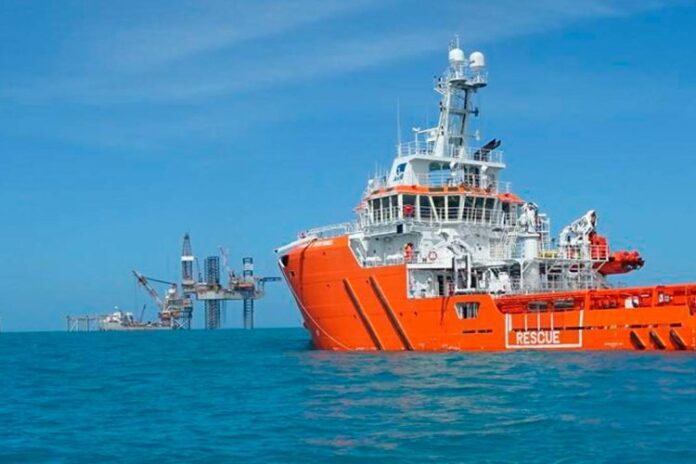
Neptune Energy today announced the award of a £10 million three-year vessel services contract to Sentinel Marine, to provide offshore support for its operated Cygnus gas field in the UK southern North Sea.

The contract, awarded following a competitive tendering process, will see Sentinel Marine continue to deploy its Multi Role, Emergency Response & Rescue  (MRERR) vessel, Cygnus Sentinel, on the gas field. The vessel will also support an upcoming drilling campaign on the Cygnus field.

The Cygnus Sentinel’s fuel-efficient, multi-role specification enables the vessel to provide both emergency response and platform supply services, thereby reducing costs and CO2 emissions, and maximising efficiency.

Neptune Energy’s UK Country Director, Alan Muirhead, said:

“The MRERRV has an essential role in supporting safe operations at Cygnus. Sentinel Marine has been supporting operations at Cygnus since 2014 and we are pleased to continue working together to maintain safe and efficient operations.”

The contract includes two one-year extensions.

Nova 1st oil: Wintershall Dea increases production volumes in Norway

0

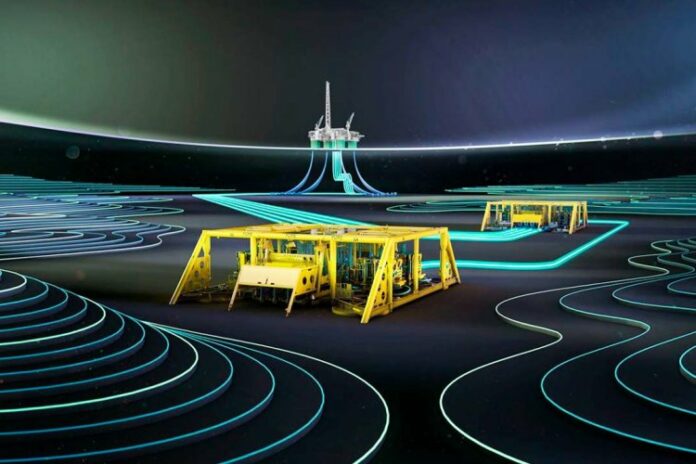
It comes on stream at a time where Europe needs every additional barrel it can get. The completion of Nova emphasizes Wintershall Dea’s strength as one of the largest subsea operators on the Norwegian Continental Shelf.

Hugo Dijkgraaf, Wintershall Dea Member of the Executive Board and Chief Technology Officer, said:

“With the start-up of the major project Nova, Wintershall Dea is now operating three subsea production fields in Norway. We are expanding our subsea technology expertise and meanwhile three further tieback-developments, including Dvalin, are in the planning. As a subsea operator we are committed to making the most of the infrastructure that Norway has spent decades developing, as well as maintaining a low-carbon intensity portfolio while producing the energy that Europe needs.” 

This new field is a prime example for energy deliveries using existing infrastructure in the area: Nova is a tieback to the nearby Gjøa platform, which is sustainably electrified with renewable power from shore. The Neptune Energy-operated host platform will provide gas lift and water injection to the field and receives the Nova hydrocarbons. The tieback solution further extends the economic lifetime and increases the profitability of the Gjøa field, in which Wintershall Dea has a 28% share.

When the Dvalin field and the partner-operated Njord Future-project, in which Wintershall Dea holds a 50% share, come on stream as currently planned later this year, Wintershall Dea will provide significant further gas and oil volumes to Europe. In addition, the company operates recent discoveries like Dvalin North, planned for PDO hand-in (Plan for Development and Operations) by the end of 2022, and several other discoveries which could be developed in the future. For instance, Wintershall Dea is a partner in the Aker BP-operated Storjo discovery in the Norwegian Sea.

Michael Zechner, Managing Director at Wintershall Dea Norge, said:

“By exploring for and developing new fields near existing infrastructure, we are not only delivering new barrels, we are also potentially extending the lifetime of surrounding assets. This secures the possibility for future tie-ins, and returns value to the partnership, suppliers, and the Norwegian society.”

Partners launch feasibility study on carbon capture and storage on ships

0

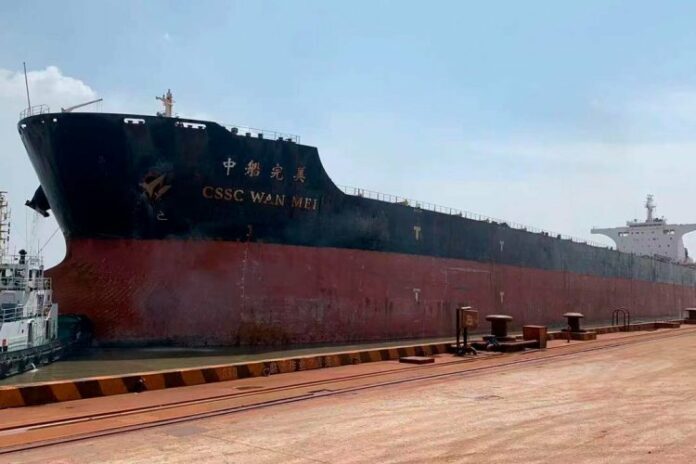
Bureau Veritas (BV), Wah Kwong and Shanghai Qiyao Environmental Technology Co. Ltd. have signed a cooperation agreement to study the feasibility of installing carbon capture and storage (CCS) units on existing ships to meet 2030 CII targets. 

The study will focus on two types of bulk carriers in operation in the Wah Kwong fleet. Based on the specific design parameters of the vessels, Qiyao Environmental Technology has developed a customized design of CCS units for the Wah Kwong fleet and submitted relevant drawings. BV reviewed the plans according to existing regulations and rules to ensure the safety of the vessels and equipment, and that the carbon emission reduction targets are effectively achieved during the operation of the vessels. Subsequent research work will be conducted for oil tankers.

The CCS concept developed by Qiyao Environmental Technology has completed laboratory testing, achieving a total carbon capture rate of over 85% so far and the system is in the process of continuous optimization. The CCS unit can be designed for different ship types and sizes. The design approval of the CCS unit is under review.

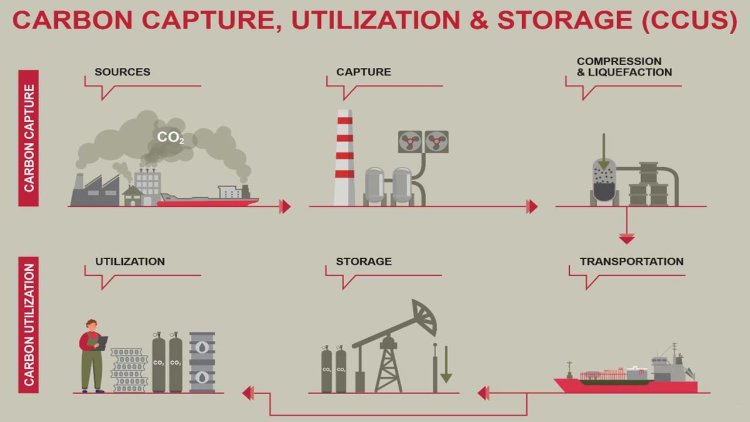
The CCS system mainly consists of an absorption unit, a separation unit, a compression unit, a refrigeration unit and a storage unit. The main principle is that the organic amine compound solution reacts with the carbon dioxide (CO2) in the absorption unit, separating it from the rest of the exhaust gas. The dissolved carbon dioxide compound solution is desorbed at high temperature in the separation tower, before the extracted carbon dioxide is compressed, purified and cooled into liquid carbon dioxide and stored in a low temperature storage tank.

Alex Gregg-Smith, Senior Vice President & Chief Executive, North Asia & China, Bureau Veritas Marine & Offshore, commented:

“The transition to a greener shipping industry is critical. Carbon capture, utilisation and storage (CCUS) technology captured a total of 40 million tonnes of CO2 in 2021 according to the International Energy Agency (IEA), notably in industrial projects on shore. This makes CCUS one of the options available today that could significantly contribute to achieve carbon neutrality, as well as a promising avenue for reducing emissions from shipping. We are very honoured to collaborate on this study. BV’s expertise in supporting CCUS projects, combined with Wah Kwong’ and QIYAO’s technical and strategic capabilities, will help to spur the implementation of CCUS technology in the shipping industry.”

Carbon capture technology has been used in the land-based industry for many years and the solutions are mature. However, as a marine application, the challenges that must be addressed are safety, layout, energy consumption, and the need to balance cost effectiveness.

Van Oord and Subsea 7 consortium awarded contract offshore Guyana

0

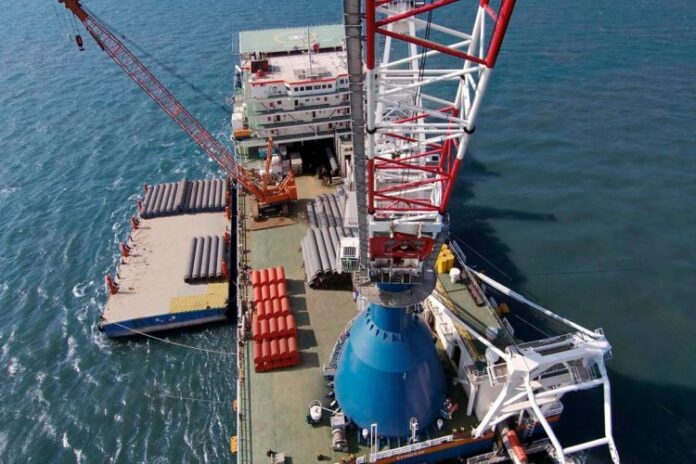
The consortium scope covers the project management, engineering, and installation of approximately 190 kilometres of natural gas pipeline in water depths up to 1,400 metres, including crossing the seawall onshore. The pipeline runs from the Liza field in Guyana’s offshore Stabroek Oil and Gas Block to an onshore natural gas fired powerplant west of the Demerara River, along the coast of Guyana.

Van Oord’s scope consists of the shore approach, utilising Horizontal Directional Drilling (HDD) methodology, and installation of 75 kilometres of pipeline nearshore. Van Oord will deploy its shallow water pipelay barge Stingray in water depths of up to 28 metres and start its operations in mid-2023.

Power demand in Guyana is forecast to significantly increase in the next five years along with a fast-growing economy. The project will support Guyana’s low carbon development strategy, which outlines a plan to replace heavy fuel oil with natural gas as the main energy source. The pipeline will transport 50 million standard cubic feet of gas per day. This has the ability to power a 300 megawatt powerplant. The project is designed to deliver significant benefits for Guyana, particularly in generating cleaner, affordable and more reliable electricity.

Hans van Gaalen, Commercial Director for Van Oord, said:

‘Van Oord is honoured to have been selected for the Guyana Gas to Energy project in cooperation with Subsea 7. Developing the coastal energy infrastructure for the project will allow our Subsea 7 and Van Oord consortium to positively contribute to the development of Guyana’s electricity supply which in turn will reduce Guyana’s dependence on imported fuels.’

Craig Broussard, Vice President Subsea 7 US, said:

‘We are honoured to have been selected for Guyana Gas to Energy. This is an important project to support the Guyanese people and we look forward to continuing our relationship with EEPGL in one of the most prolific and exciting development basins in the world.’

Lebanon seizes ship accused of carrying stolen Ukrainian grain

0

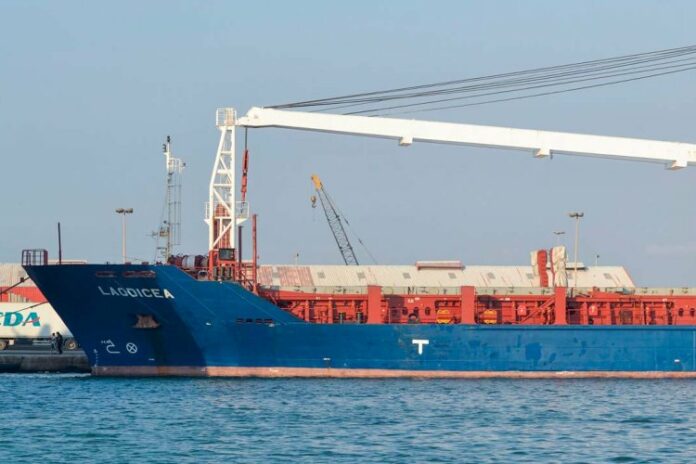
The Ukrainian embassy in Beirut said the vessel was loaded at Feodosia in the Russian-occupied peninsula of Crimea, and that the commodities originated from Zaporizhzhia, Mykolaiv and Kherson in southeastern Ukraine.

The embassy accused Russia of stealing more than 500,000 tons during its occupation of the three regions. While Russia denies stealing grain, it has publicly touted the resumption of grain shipments from occupied ports.

Grain shipments from Crimea have surged since Russia’s invasion of Ukraine in February, which analysts say indicates Ukrainian grain is being exported. Exports from Crimea are sanctioned by the European Union and the US.

The cargo ship Laodicea arrived at Tripoli in northern Lebanon on July 27, according to ship-tracking data monitored by Bloomberg. It will be held while Lebanon carries out an investigation into the cargo’s origin, Oueidat told Bloomberg.

The ship’s registered owner is Syria Mar Shipping Ltd., according to European database Equasis. Syria Mar Shipping Ltd. wasn’t immediately available to comment. Both the company and the ship were sanctioned by the US in 2015 for their association with the Syrian government of President Bashar Assad.

Source: Bloomberg

Fugro assists Vattenfall with the design of Norfolk offshore wind development

0

The 1.4 GW wind farm forms part of Vattenfall’s Norfolk Zone and will generate enough clean energy to power 1.5 million UK homes while offsetting 2.3 million tonnes of carbon emissions a year. This investigation follows on from a four-month marine site characterisation campaign in 2020.

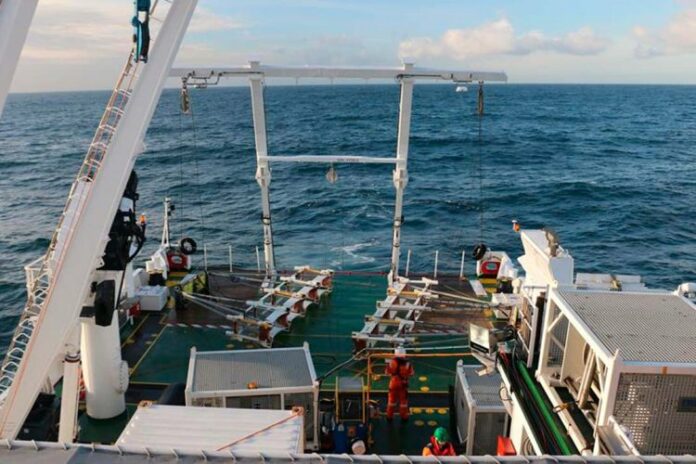
From August 2022, Fugro will mobilise multiple geophysical and geotechnical vessels from local ports to complete full coverage surveys across the Norfolk Boreas wind farm, inter-array cables and export cable routes. These operations will include the use of Fugro’s SEACALF® Mk V DeepDrive® system for seabed cone penetration tests (CPTs) and Fugro’s innovative Blue Snake™ geotechnical system. The Blue Snake™ integrates CPT and sampling technology to enable safe, efficient and high-quality data acquisition along the cable route. These assets will ensure high rates of operability while also meeting Fugro’s standards for safety and sustainability.

In the first phase of the project, geophysical surveys and unexploded ordnance (UXO) surveys will be completed followed by a 2D ultra high-resolution seismic (UHRS) survey to provide detailed seabed and shallow sub-surface information. The collected Geo-data will not only support the positioning of the inter-array cables, but also enhance the safety of future operations, facilitate route planning and improve project design.

Following the fieldwork, an extensive laboratory testing programme will be delivered by Fugro’s UK laboratories in Wallingford and Consett with support from their newly certified and accredited laboratory in Belgium.

The resulting Geo-data from Fugro’s investigations will feed into the ground model for the Norfolk Vanguard and Norfolk Boreas wind farms to optimise foundation and cable design. Fugro is also supporting Vattenfall on several other projects across Europe.

Rob Anderson, Project Director of Vattenfall’s Norfolk Zone, said:

“It’s fantastic to have Fugro onboard with us, providing their expertise as we deliver a major project that will provide millions of people around the country with low cost, low carbon power. It’s also great that we’ll be using local ports, delivering on our commitment to the local community and supply chain.”

John ten Hoope, Fugro’s Marine Site Characterisation Director for Europe and Africa, said:

“We’re proud to continue working with Vattenfall on their next generation of wind farms. Fugro is uniquely positioned to provide a range of resources – vessels, equipment and experienced engineers and geoconsultants – to support complex offshore infrastructure projects. Using innovative technologies, we will provide critical, high-quality Geo-data to help de-risk future developmental phases of the Norfolk wind farms, supporting the UK’s energy transition.”  

First Damen vessel to be delivered to the UK’s Royal Navy

0

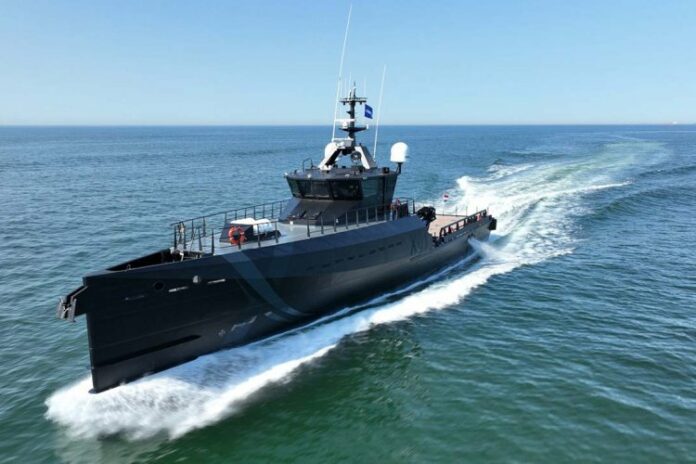
In a ceremony held at Her Majesty’s Naval Base (HMNB) Portsmouth on 29th July, the UK’s Royal Navy ‘NavyX’ innovation team took delivery of a modified Damen Fast Crew Supplier (FCS) 4008. Named XV Patrick Blackett after a distinguished naval officer and scientist, the 42-metre, high-speed vessel will have a crew of five and will be used as a trials ship, supporting  innovation and experimentation with novel technologies. 

NavyX, the Royal Navy’s innovation, autonomy and lethality accelerator which has been established to rapidly develop, test and trial cutting-edge equipment, ran an open tender process which resulted in an order being placed with Damen Shipyards in the Netherlands earlier this year for the delivery of an FCS 4008. 

The XV Patrick Blackett will be used as a platform for the assessment of a wide variety of equipment. Its 140 square meters of deck space provides a large, unobstructed area for UAVs, AUVs and other cutting edge technology. The extensive internal area that would normally have seating for up to 100 personnel is being converted into an operations centre and a meeting room. Four caterpillar engines will give it a top speed of more than 20 knots.

Other characteristics of the FCS 4008 that are important to NavyX include the stability and excellent seakeeping that comes with the Damen X-bow design , important when deploying equipment into the sea or air. Damen is also providing a comprehensive, three-year support package that will centre on the Service Hub that Damen set up recently in Portsmouth and which has proved to be a big success. Locally recruited personnel will maintain the vessel using local content where possible and knowledge will be transferred to ensure sustainability. 

Her introduction into the fleet will enable NavyX to experiment without the need to place demands on Royal Navy warships and, in the future, she will take part in Royal Navy and NATO exercises as well as increase opportunities to work more closely with industry and academia.

Frederik van der Linde, Damen’s sales manager for the UK and Ireland, says:

“This is the first Damen vessel to be directly supplied to the Royal Navy. We are very proud that they have Damen as their partner in such a special project. As a high tech, innovative vessel, the FCS 4008 will fit in very well with NavyX’s mission to push at the boundaries of what is possible using the very latest equipment. We will also be supporting the team of NaxyX intensively via our service hub in Portsmouth where our R&D department will support certain experiments. Damen is much more than just a designer and builder of ships. This project is a testimony to how we like to team up with our clients for the long term.”  

Colonel Tom Ryall, Head of NavyX, said:

“The arrival of this vessel is a pivotal moment for NavyX’s ability to deliver output, and is a step change for the Royal Navy. She will give us greater flexibility to experiment with novel military capabilities, iterate and accelerate new technology, kit and concepts for the benefit of both the Royal Navy and industry.”

Owner of Ukrainian shipping company dies under Russian shelling

0

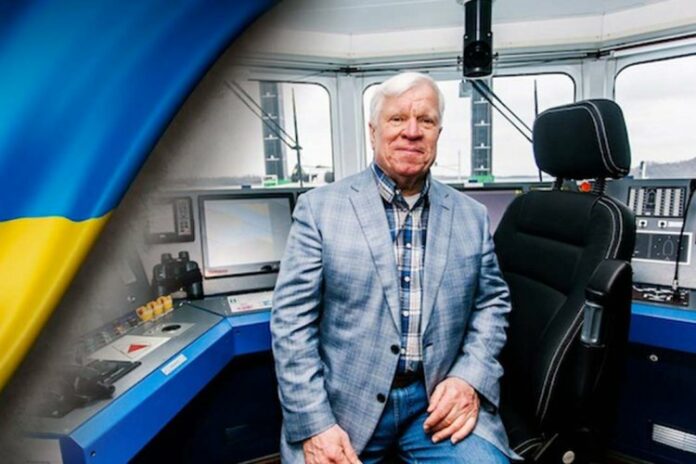
On the night of July 31, the Ukrainian port city of Mykolaiv was subjected to massive rocket fire from the Russians. One of the rockets hit the house of Ukrainian businessman Oleksiy Vadatursky. He and his wife died under the rubble of the house.

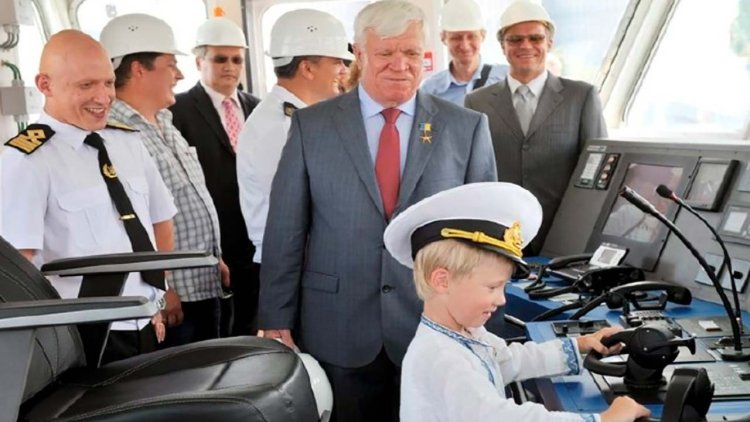
Oleksiy Vadatursky was the founder and permanent CEO of one of the largest Ukrainian agricultural enterprises “Nibulon”, founded in 1991.

The company has its own cargo fleet of 48 vessels, as well as a private marine terminal with a berth in Mykolaiv, where the company’s central office is located.

According to Forbes, the company’s turnover reaches $1.5 billion, Vadatursky is in the 24th position among the richest Ukrainians with a fortune of $430 million.

In 2021, Nibulon set an absolute record in the entire history of the company, shipping more than 5.64 million tons of agricultural products to 38 countries.

As Forbes clarifies, “Since the beginning of the war, Vadatursky has remained in Mykolaiv. He did not communicate with journalists, promising to talk after the victory. The company’s communication also stopped, and its last posts were dated February 23. During this time, the invaders plundered the Nibulon granaries in Kherson, knocked out the company’s tug and fired on the elevators.”

Information about the death of the businessman was confirmed by the head of the Mykolaiv Regional State Administration Vitaly Kim:

“At night, as a result of the shelling of the city, the Hero of Ukraine, the general director of the Nibulon company Oleksiy Vadatursky and his wife Raisa Vadaturskaya were tragically killed. Oleksiy Afanasyevich did a lot for the Mykolaiv region and a lot for Ukraine. His contribution to the development of the agricultural and shipbuilding industries, the development of the region is invaluable.”

The Vadaturskys have a son, Andrei, who is a co-owner of Nibulon and chairman of the company’s supervisory board.

Norwegian Cruise Line takes delivery of Norwegian Prima

0

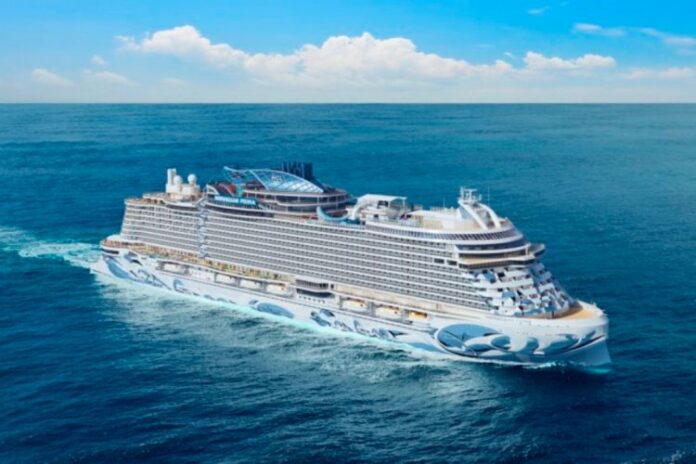
Norwegian Cruise Line (NCL) today took delivery of its newest ship, Norwegian Prima, in Marghera, Venice at the renowned Fincantieri shipyard.

This highly anticipated milestone marks the arrival of the first ship in NCL’s Prima Class that will see six new ships delivered through 2027.

Harry Sommer, president and CEO of Norwegian Cruise Line said:

“Today we usher in a thrilling new era in cruising as we celebrate the delivery of Norwegian Prima, the long-anticipated first ship in our extraordinary new Prima Class. She is a true testament to our Guest First philosophy as well as our commitment to deliver unforgettable experiences that exceed expectations. We thank our wonderful partners at Fincantieri, whose coveted craftsmanship, expertise, and dedication, helped bring Norwegian Prima to life. We cannot wait to welcome our guests on board.”

The Prima Class is based on a prototype project developed by Fincantieri, which enhances the consolidated features of NCL’s signature offering of freedom and flexibility, qualified by an innovative configuration for an elevated passenger experience. In addition, focus was set on energy efficiency, with the twofold aim of optimizing consumption at sea and reducing environmental impact, compliant with all the most recent regulations on this matter.

This company claims its boats can save Venice

0

Moto ondoso has been tipped by UNESCO as a “macro emergency” facing the fragile lagoon city. The organization says there is a need to “drastically reduce the effects produced by motor boats.”

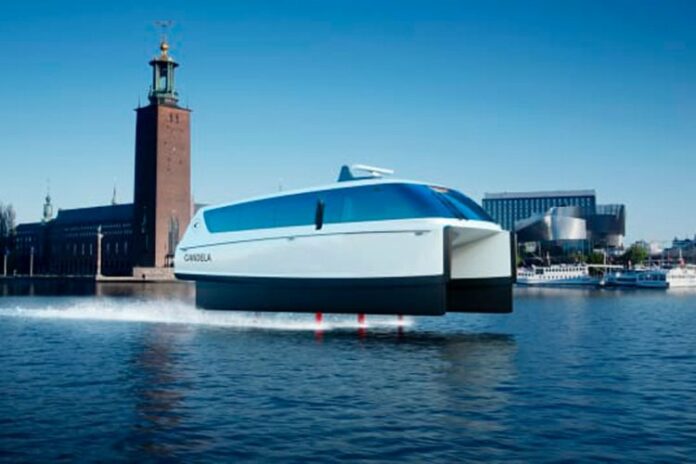
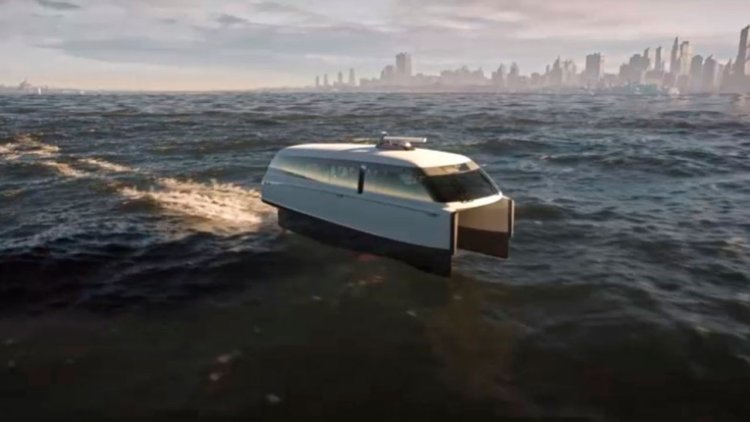
Candela’s boats aim to do that. The Candela C-8 and P-8 Voyager are the first no-wake, high-speed foiling daycruisers. And while the C-8 is a classic boat, the P-8 Voyager has been designed to be able to take passengers — as a taxi or a shuttle boat, sparking thoughts that it could be adopted on a larger level around the city.

Designed by aviation and drone engineers, the boats produce a wake of just 5 centimeters (2 inches) when “flying” at 30 knots — roughly the same amount as a hand-paddled gondola, and unlikely to bash the city’s foundations with waves.

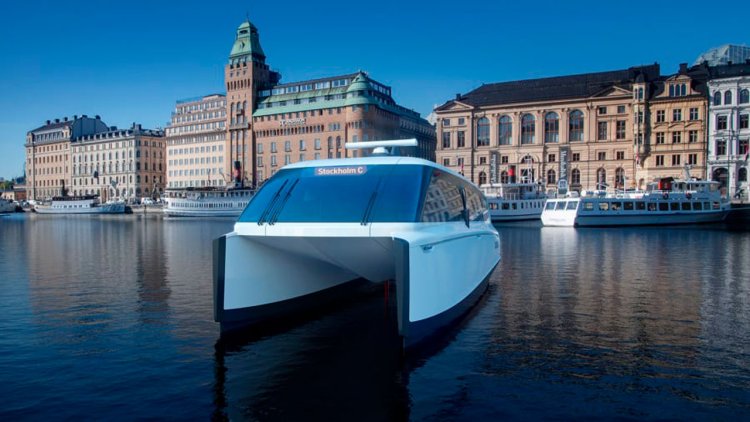
Meanwhile, the larger 30-seater P-12, which was announced in June 2022, promises to be the first “flying” ferry — with a range of 60 nautical miles and speeds up to 60 kph (37 mph), which the manufacturers say could beat rush hour traffic on routes with an alternative on wheels.

The 2022 launches follow the launch of Candela’s first boat, the pilot C-7, which debuted in 2019. Unlike the other boats, it lacks an enclosed cabin, making it more of a pleasure boat for summer.
Electric cars may have been popular for some time, but electric boats have had a harder ride. The water drag on the hull of a boat, combined with the weight of the battery needed to power it, is a double blow for boats, meaning that most have to compromise on either speed or distance.

A 100kWh capacity battery pack in a regular vessel can only manage 30 nautical miles at 20 knots before it runs out, according to Candela. But raising the hull out of the water solves the problem of the drag. These boats have an efficiency of 400%, and can cruise for 150 minutes before needing to recharge, say the company.

Candela’s “flying” boats were the brainchild of founder Gustav Hasselskog, who noticed that his quick ice cream runs while on vacation in the Swedish lakes was costing around 10 times the price of his family’s ice creams in gas.

He calculated that conventional boats use around 15 times more energy than a car, at a steady rate of 20 knots — which made them problematic to power via battery. Instead, he thought about raising the boats out of the water, on hydrofoils, to make them “fly,” and employed aviation and drone engineers to make them a reality.

“Flying in absolute silence, without any slamming and basically for free — it’s just an amazing experience. Once you’ve tried Candela, it will be hard to go back to traditional powerboats”, said Hasselskog, in a statement about the C-8.

“Venice, which is dependent on motorboats but also suffers from their impact, is the perfect place to show how Candela’s craft can contribute to a better world, while offering new levels of performance.”

The boat begins sailing like any other, but — just like a plane — as it builds up speed, it begins to rise. The foils can also retract, meaning that the boats aren’t at risk of marine growth, which could otherwise fur them up.

However, that need for speed to raise the foils means saving Venice won’t be as easy as switching to electric, said Dr Pierpaolo Campostrini, managing director of CORILA, which studies the lagoon system in Venice.

“Boats with that kind of hull don’t produce the moto ondoso when using their foils, but the foils are only activated above a certain speed, which at the moment seems high for the lagoon context,” he told CNN.

“It is certainly not a concept suitable for a vaporetto [waterbus] in the Grand Canal or a cargo boat.”

However, he thought the boats could have potential outside the city center, such as on the way to the airport, further north in the lagoon, or connecting Venice to islands such as Burano and Pellestrina.
However, he warned that maneuvering the boats at high speed around slower traffic could be difficult, and said that a rethink of the city’s transport is in order before decisions are taken.

“It would be interesting to do some experiments [with Candela], but before this possibility is introduced on a large scale, all lagoon water mobility should be rethought,” he said.

“It’s crucial firstly to accelerate the transition to electric propulsion of all boats in the lagoon as far as possible, secondly to enforce compliance of speed limits through existing technologies that can recognize the type of boat, and thirdly, possibly, to adapt the speed limit to the type of boat.”

Meanwhile, as Venice waits, Stockholm has pounced. The regional government has commissioned a trial of the P-12 ferries, using the boats on a commuter route from the city center to the suburb of Ekerö, with a view to ultimately running a fleet of flying ferries. The boats will run on an increased frequency to make up for their smaller size. The boats will go into production in fall 2022 with the trial due to start in the first half of 2023.

Source: CNN