4 C
New York
Home Blog Page 414

Carnival upgrading global fleet with fuel- and energy-saving technology

0

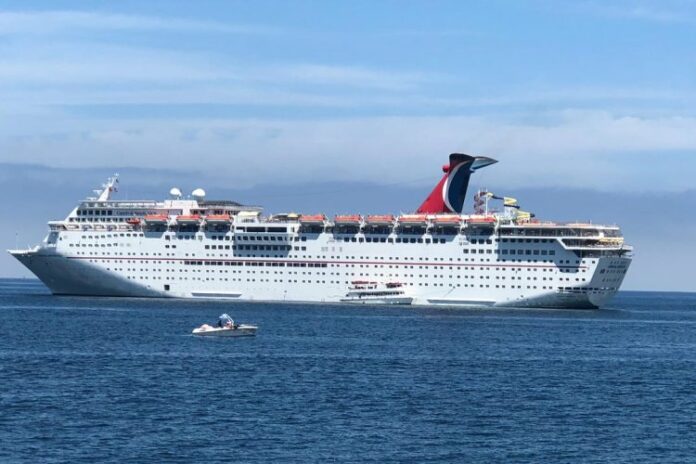
Carnival Corporation & plc has announced the rollout of comprehensive technology upgrades called Service Power Packages across its global fleet to further improve energy savings and reduce fuel consumption. 

The upgrades include ongoing installations through 2023 on ships from the company’s nine cruise line brands – Carnival Cruise Line, Princess Cruises, Holland America Line, Seabourn, P&O Cruises (Australia), Costa Cruises, AIDA Cruises, P&O Cruises (UK) and Cunard.

Carnival Corporation’s Service Power upgrade program delivers an average of 5-10% fuel savings per ship and is expected to reduce fleetwide greenhouse gas emissions by more than 500,000 metric tons each year. In addition to the environmental benefits, the program upon completion is expected to generate over $150 million in annual fuel cost savings.

Developed over the past six years, the company’s Service Power program delivers significant efficiency upgrades across the fleet, including air conditioning upgrades to cabin and public areas, and major enhancements to cooling, lighting and automation systems. Adjusting for variations in ship design, size and equipment, the company customizes the Service Power Package for each ship, which combines the synergies from multiple upgrades with new operational efficiencies, all effectively supporting Carnival Corporation’s energy savings and decarbonization strategies.

The Carnival Corporation Service Power Packages include the following elements designed to work together to reduce each ship’s overall service load – the energy required to support all onboard hotel systems – and as a result, significantly reduce both fuel usage and emissions:

Comprehensive upgrades to each ship’s hotel HVAC systems, accounting for 25% of a ship’s energy consumption, to improve hotel ventilation efficiency using sophisticated variable speed drives and on-demand systems throughout public areas, cabins and galleys. Additionally, indoor air quality is continuously monitored and maintained to the highest standards at sea, using an industry-leading air filtration and ultraviolet-C treatment throughout the ship.

Technical systems upgrades on each ship using variable speed drives and on-demand automated control systems for engine room ventilation, main air conditioning chillers and cooling pumps, which together dramatically lower the energy needed to deliver cooling around the ship.

State-of-the-art LED lighting systems installed throughout each ship to reduce both power consumption and heat load generation – creating a dual benefit from lower air conditioning demand.

Remote monitoring and maintenance improvements that maximize benefits from the upgrade packages, including improved instrumentation and automated management systems, with nonstop ship-to-shore connectivity. Expanded remote monitoring and analysis of each ship’s energy performance and technical status ensure peak efficiency and minimal down times.

Bill Burke, chief maritime officer for Carnival Corporation, said:

“The Service Power program closely aligns with our long-term sustainability and decarbonization goals and our highest responsibility and top priority, which is compliance, environmental protection and the health, safety and well-being of our guests, the people in the communities we visit, and our shipboard and shoreside personnel. 

Based on our improved fleet composition, including adding six industry-leading LNG-powered ships, and our previous investments to increase efficiency and reduce emissions, our absolute carbon emissions peaked in 2011 despite significant capacity growth over the past decade. These tailored Service Power Packages further build on those efforts as part of our comprehensive approach to sustainability.”

The fleetwide enhancements are part of Carnival Corporation’s ongoing energy efficiency investment program and efforts to reduce fuel consumption, including over $350 million invested in energy efficiency improvements since 2016, along with the company’s fleet optimization strategy and design of more efficient itineraries. Together, these ongoing efforts are expected to drive a 10% reduction in fuel consumption per available lower berth day (ALBD) in the company’s first full year of guest cruise operations compared to 2019, along with a 9% reduction in carbon emissions per lower berth distance traveled.
University of Plymouth and BMT join forces to improve cyber security in the maritime sector

0

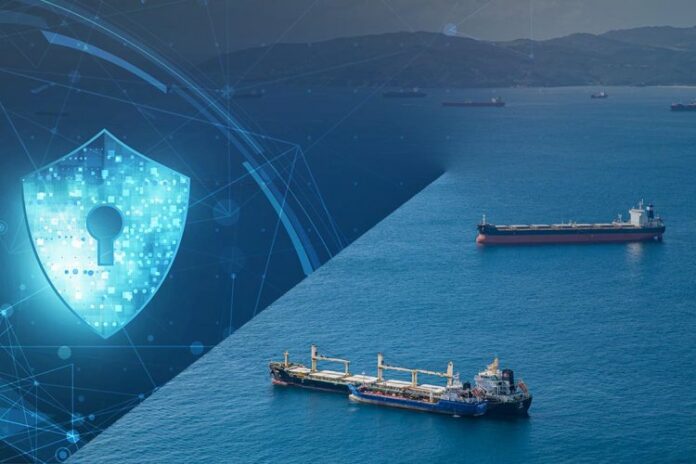
The University of Plymouth has joined forces with BMT, a leading international multi-disciplinary engineering and design consultancy, to jointly research ship design and cyber security in the maritime sector.

The new Memorandum of Understanding will specifically look at harnessing the capabilities of the University’s recently opened £3.2 million Cyber-SHIP Lab. This world-leading facility is dedicated to simulating and understanding maritime cyber threats and facilitating future secure maritime operations through cyber resilience research, tools and training. The facility forms part of the University’s Marine Navigation Centre, which includes a physical ship’s bridge used to simulate attacks and test equipment.

BMT was a founding industry supporter of the Cyber-SHIP Lab when it was launched in 2019, based on the firm belief that through the development of these new tools and lab the UK can become a leading power in maritime cyber security.

Professor Kevin Jones, Executive Dean of Science and Engineering at the University and Principal Investigator on the Cyber-SHIP Lab project, added:

“With our ever-increasing dependence on the global maritime sector, ensuring ships and port operations are cyber secure has never been more critical. Advances in cyber technology, and the emergence of new threats, mean this is a constantly evolving area that needs an innovative and joined-up approach. The partnership between the University and BMT is a perfect example of that, uniting our collective expertise in both identifying potential issues and solutions and finding the means for them to be applied in maritime engineering and design.”

Jake Rigby, Research and Development Lead at BMT, added:

“BMT is delighted to be working with the University of Plymouth in this important work in helping the UK drive the highest possible standards in maritime security. With this knowledge and experience in place, the UK can then offer the benefits of the insights, operational practices and training to the global shipping and marine community. Through combining our expertise and our knowledge, we are confident great strides will be made in enhancing security and cyber protection across maritime.”

The Eco Adriatica enters the Grimaldi fleet

0

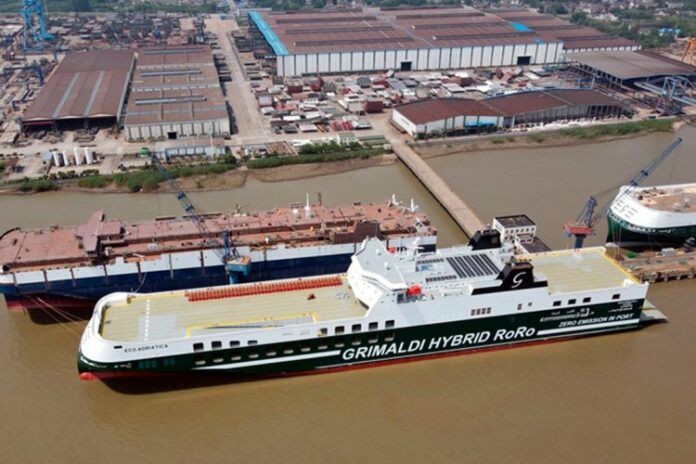
With the delivery of the Eco Adriatica, the fleet of Grimaldi Green 5th Generation (GG5G) class hybrid vessels is almost complete. 

Thanks to their unique design, the GG5G-class ships are not only the largest ro-ro units in the world for short sea shipping, but also the most eco-friendly.

The Eco Adriatica flies the Italian flag, has a length of 238 meters, a beam of 34 meters, a gross tonnage of 67,311 tonnes and a service speed of 20.8 knots. The loading capacity of her seven decks – two of which are hoistable – is twice that of the previous class of short sea ro-ro ships deployed by the Grimaldi Group: in fact, the vessel can carry some 7,800 linear meters of freight, equivalent to around 500 trailers and 180 cars.

However, the increase in capacity does not affect fuel consumption, thanks to the adoption of numerous highly innovative technological solutions that optimize the ship’s operational and environmental performance: in fact, at the same speed, the Eco Adriatica consumes the same amount of fuel compared to the previous generation ro-ro ships, and is therefore able to halve CO2 emissions per unit transported.

The vessel is equipped with state-of-the-art, electronically controlled engines and with an exhaust gas cleaning system for the reduction of sulphur and particulate emissions. In addition, during port stays, the Eco Adriatica is capable of cutting emissions to zero by using the electricity stored in mega lithium batteries with a total power of 5 MWh; these are recharged during navigation thanks to shaft generators and 350 m2 of solar panels.

Emanuele Grimaldi, Managing Director of the Neapolitan shipping company, said:

“It is not enough to talk about ecological transition: we must bring about change, and our Group is doing it by making its fleet increasingly modern, efficient and sustainable. With ships such as the Eco Adriatica and her GG5G-class sister units, we concretely contribute to reducing the environmental impact of maritime transport in Europe.”

Alfa Laval to acquire BunkerMetric

0

Alfa Laval has signed an agreement to acquire BunkerMetric, a Scandinavian software company that develops advanced decision support tools for the marine bunker segment. 

The company will be merged into StormGeo, a global leader in weather intelligence software and decision support services, now part of Alfa Laval. The acquisition will enhance the StormGeo offering in route advisory and voyage optimization services for the shipping industry.

Headquartered in Denmark, BunkerMetric helps ship operators and bunker procurement departments find the best bunker procurement plan and improve voyage margins. Using sophisticated algorithms, the company’s procurement optimization tool uncovers bunkering strategies and market insights that let shipping companies improve their bottom line.
 
Soeren Andersen, CEO of StormGeo, says:

“The acquisition of BunkerMetric will further strengthen the StormGeo suite of software products and services. BunkerMetric’s advanced procurement optimization tool is a welcomed addition to our route advisory services, giving shipping customers timely data for choosing the best bunkering options. It will help optimize scheduling, fuel and voyage performance.”

Christian Plum, CEO of BunkerMetric, who helped found the innovative start-up in 2018, says;

“We are excited to become part of StormGeo and the Alfa Laval family. Combining BunkerMetric’s state-of-the-art optimization algorithms and data platforms with StormGeo’s cutting-edge data science will mean valuable synergies for existing and future customers.”

BunkerMetric’s procurement optimization tool will become a subscription service within StormGeo’s existing s-Suite. It will support well-considered decisions when purchasing bunkers, such as the selection of ports, volumes, and fuel grades for bunkering. Global shipping companies can use it to minimize costs while taking relevant operational, commercial, and environmental factors into account.

Andersen says:

“By leveraging BunkerMetric’s deep expertise and proven optimization tool, StormGeo customers will be able to streamline their operations. As well as reducing their bunker procurement costs, they will gain significant fuel savings through optimized real-time decision-making.”

First power from offshore wind farm Hollandse Kust Zuid delivered

0

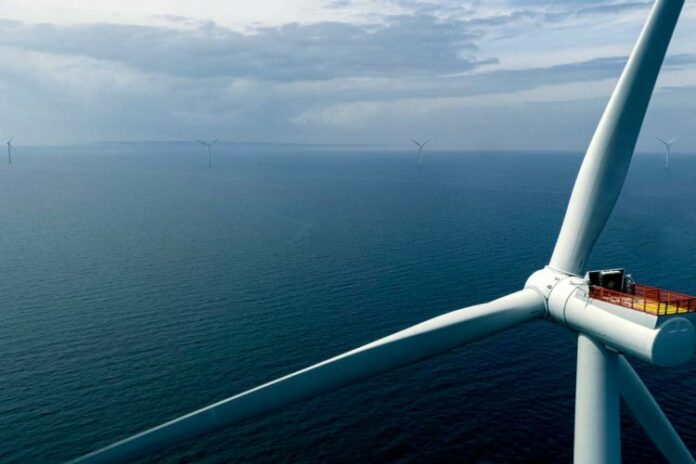
Hollandse Kust Zuid wind farm, located around 18-35 kilometres off the Dutch coast in the North Sea is still in a testing phase, but the first operating turbine is already producing electricity, which is transferred to shore and feeded into the grid.  

Ian Bremner, project director at Hollandse Kust Zuid, says:

“We are immensely proud to reach this milestone. The delivery of power to the Dutch grid is an important moment, not just for us but also for all our partners, suppliers, contractors and all other parties who helped us get to this point.” 

Construction of Hollandse Kust Zuid started last summer and the wind farm is scheduled to be fully operational in 2023. So far 33 out of a total of 140 turbines have been installed. Hollandse Kust Zuid, which is owned by Vattenfall, BASF and Allianz, is expected to have a total capacity of 1 500 MW, equalling the consumption of approximately 1,5 million Dutch households. 

Facts about Hollandse Kust Zuid

  • Jointly owned by Vattenfall, BASF and Allianz.
  • Total capacity 1,500 MW.
  • The wind farm consists of 140 11 MW turbines, the largest ever to be installed at scale.
  • Rotor diameter: 200 meters.
  • The world’s first offshore wind farm to be built without subsidy.
  • Commissioned in 2023.

KNOT’s first LNG dual fuel shuttle tanker delivered

0

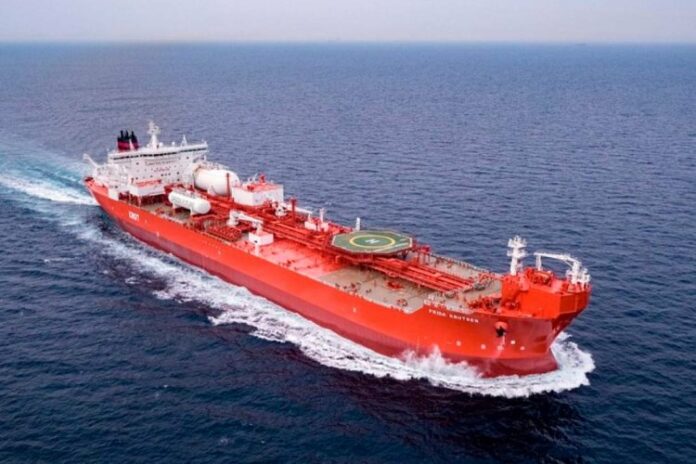
A dual-fuel LNG shuttle tanker1 ordered by Knutsen NYK Offshore Tankers AS,2 which is an affiliate of NYK, was delivered on August 2 at Daewoo Shipbuilding & Marine Engineering Co. Ltd. The vessel has been named “Frida Knutsen.”

The shuttle tanker will be chartered to ENI Trade & Biofuels S.p.A, a subsidiary of Ente Nazionale Idrocarburi S.p.A (ENI), 3 and will be engaged in oil transportation in the North Sea and Barents Sea.

The vessel will be KNOT’s first dual-fuel shuttle tanker that can use not only heavy fuel oil but also LNG. It will use LNG fuel, which is more environmentally friendly than conventional oil-fuel, and will be equipped with a VOC recovery system4 and an energy storage system,5 thereby reducing greenhouse gas emissions.

Norwegian Viva floated out in Marghera

0

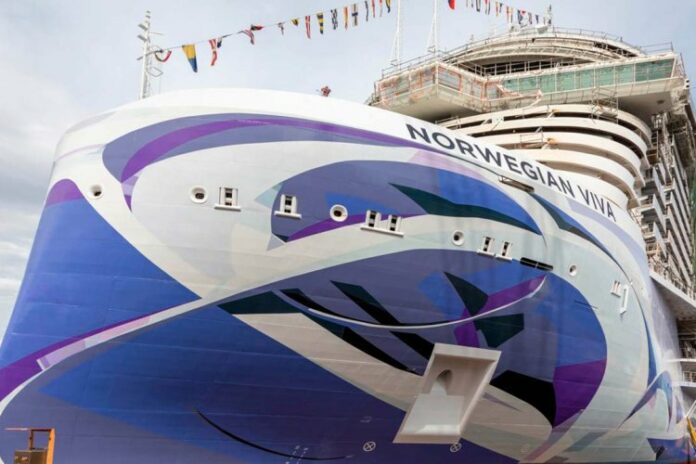
“Norwegian Viva”, the second of six vessels from Norwegian Cruise Line’s (NCL) new Prima Class of ships was floated out ofthe shipyard in Marghera (Venice) today, only a few days after the delivery of “Norwegian Prima”, the first Prima Class vessel on July 29.

Along with her sister-ships, “Norwegian Viva” will form the backbone of the future NCL fleet, at more than 142,500-tons, almost 300 meters long, and accommodating 3,215 guests. Deliveries are scheduled through 2027.

The Prima Class is based on a prototype project developed by Fincantieri, which enhances the consolidated features of NCL’s signature offering of freedom and flexibility, qualified by an innovative configuration for an elevated passenger experience. In addition, focus was set on energy efficiency, with the twofold aim of optimizing consumption at sea and reducing environmental impact, compliant with all the most recent regulations on this matter.

NCL is part of Norwegian Cruise Line Holdings Ltd., the U.S.-based company, which is one of the world’s leading cruise operators. Besides NCL, Norwegian Cruise Line Holdings Ltd. operates the Regent Seven Seas Cruises brand, to which Fincantieri will deliver next year in Ancona a third luxury cruise ship, “Seven Seas Grandeur”, after “Seven Seas Explorer” (2016) and “Seven Seas Splendor” (2020), as well as Oceania Cruises, for which the Group has in its orderbook two new-generation cruise ships which will start the “Allura-class”.

Deltamarin designs archipelago connecting vessel for Finferries

0

Finferries – Suomen Lauttaliikenne has recently signed a shipbuilding contract with Oy HL-metal Ab, that will build the vessel at their premises in Pargas, Finland.

Deltamarin carried out the concept design of the vessel for Finferries during the tender period, and the further work for the project includes the complete basic design and major parts of the detail design. The vessel will be 30.8 meters long and 7.8 meters wide with a carrying capacity of 25 tonnes and the maximum number of passengers is 99. The vessel will start operation May 1st, 2023, and serves islands north of Nagu in Turku archipelago.

Esa Jokioinen, Director of Sales at Deltamarin:

“We are very happy to continue our long-term collaboration with Finferries and look forward to working with HL-Metal on this project. This contract is particularly important for us as it showcases our capabilities in the smaller ferries and workboats segment.”

Mats Rosin, CEO of Finferries:

“We are glad that Deltamarin had the flexibility to provide us the design capacity for this project at a short notice. We have been satisfied with the quality of Deltamarin’s work in the concept design phase and are pleased to continue the successful cooperation on these next stages of basic and detail design.”

Markus Flinckman, CEO of HL-Metal:

“We are proud that we as a local company has got the opportunity to build this connecting vessel, which will serve the archipelago and its people. We see this as a strong confirmation that we have succeeded in developing our business and our know-how, so that we can act as a valued partner in the service and newbuilding market for smaller ferries and workboats.”

CRAIN Technologies’ Suction Wing receives AiP from Bureau Veritas

0

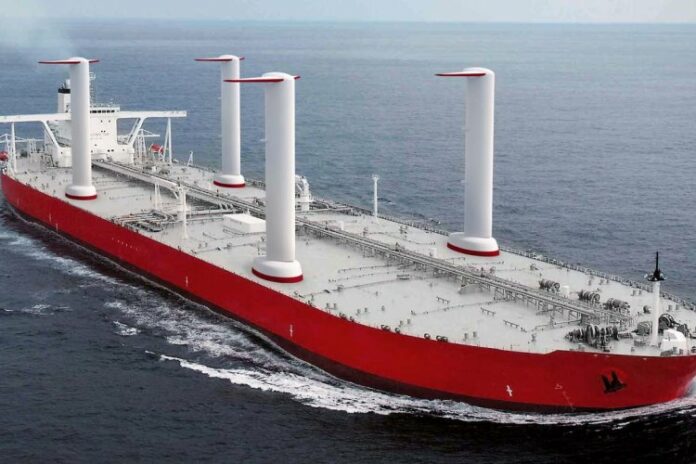
Jointly developed by CRAIN and its partner REEL (Rationnel Economique Esthétique Léger), the SW270 is a solid thick wing, fitted with a rear flap. Grids located on both sides of the wing section create a suction force that draws the air stream around the wing section from the outside to the inside of the wing. The wing is mounted on a structural foundation which contains the suction fan required to operate the system. 

Based on the principle of boundary layer suction, the Suction Wing concept delivers a very high lift coefficient, which reduces the size of the device needed to achieve a given pull force. Thanks to the shape of the system, the drag remains moderate. Therefore, the lift-to-drag ratio provides a good performance in upwind conditions and for ships sailing at relatively high speeds, using the wind to propel the ship in combination with the main engine. Furthermore, the wing section can rotate around a vertical axis to adjust to wind direction and optimize performance.

While the Suction Wing concept can be derived in a range of sizes in order to fit various vessel sizes, the device considered in this AiP was a wing with a span of 27m. 

BV worked very closely with CRAIN Technologies from the earliest stages. The AiP was delivered in accordance with BV’s Rule Note for Wind Propulsion Systems (WPS) – NR 206. It follows a thorough assessment of the conceptual design, risk analysis, wind tunnel report, preliminary stability, loadings and the general arrangement. This AiP assures that this new technology can be safely used and is ready for the next phase of its development and installation on-board.

Laurent Leblanc, Senior Vice President Technical & Operations at Bureau Veritas Marine & Offshore, said:

“The suction wing concept appears to be a very promising option to help reduce greenhouse gas emissions from cargo ship operations. We are pleased to deliver this AiP to CRAIN, and we are proud to help build trust for innovative wind propulsion solutions, which are a key component of shipping’s decarbonisation transition. We look forward to seeing the system in operation.”

François Lebailly, Business Line Wind Products Director at REEL, commented:

“REEL is very proud to collaborate with CRAIN and BV on this innovative project. REEL, as a large industrial group, brings its expertise in the design of complex systems and its own industrialization and production capabilities. Wind is one of the main sources of free and widely available energy and a simple solution for the decarbonization of maritime transport. Our system will provide the best propulsion efficiency and CO2 reduction for our customers. Demand is scaling up, and we are pleased to contribute to this evolving market for a cleaner future.” 

Philippe Pallu De Barriere, CEO of CRAIN, said:

“Suction Wing SW270 is an innovative wind assisted propulsion solution that is suited for a large range of cargo ships. Developed using technologies already widely used by the naval industry, it delivers great power proportionally to its surface, and is easy to install and use on ships. Our collaborative work with the Bureau Veritas team based on their new Wind Assisted Propulsion rules enables us to move on to the next step, providing specifications for the industrialization of SW270 by our partner.” 

NYK participates in marine biofuel data collection and analysis project

0

NYK and Astomos Energy Corporation have participated in a marine biofuel demonstration project launched by the Global Center for Maritime Decarbonisation (GCMD), a non-profit organization aiming to promote decarbonization of the maritime industry.

GCMD is a non-profit organization (NPO) established in August 2021, founded by the Maritime and Port Authority of Singapore (MPA) and 6 industry partners. It has launched this project to establish an assurance framework for ensuring the supply chain integrity of current and future green marine fuels, bringing genuine benefits to end-users and the climate.

Eighteen companies and organizations, including NYK and Astomos, are participating in this project, and demonstration trials will be conducted with an investment scale of approximately US$18 million. One of the objectives is to establish transparency in the biofuel supply chain with the use of tracer technologies, so this project is characterized by the participation of shipping companies as consumers.

Specifically, the shipping companies will conduct a trial operation using biofuels and provide GCMD with data on their biofuel use. By facilitating and creating an optimized drop-in green fuels supply chain, this pilot will help to shape national and international standards of biofuels for the maritime industry and lower the barrier for their wider adoption to reduce GHG emissions from a lifecycle perspective.

Biofuels can be used without remodeling the existing ship’s engines and infrastructure. Furthermore, although biofuels generate CO2 when combusted, they are considered carbon-neutral because they are made from plants and waste cooking oil. So, biofuels are expected to be one of the most promising next-generation fuels for decarbonization.

On the other hand, since biofuels have not been put into practical use in earnest, many data verifications, such as the mixing ratio with conventional fuels, are still needed.

In addition, since biofuels use fossil fuels in their production and transportation processes, they are not considered net-zero emissions in LCA. Moreover, the certification scheme is not standardized internationally, so the transparency of the biofuel supply chain is also an issue.