4.2 C
New York
Home Blog Page 413

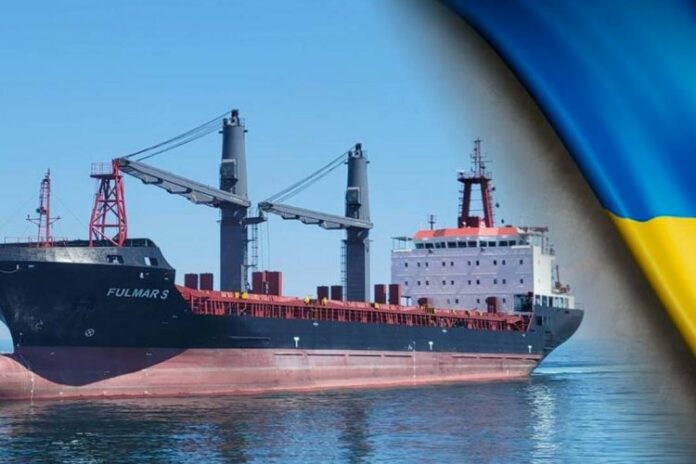
Four cargo ships sail from Ukraine Black Sea ports

0

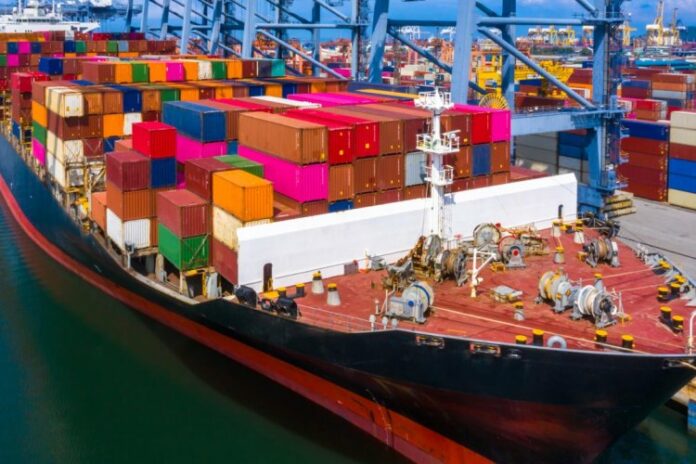
The four bulk carriers were loaded with almost 170,000 tonnes of corn and other foodstuffs, Ukraine’s sea ports authority said on Facebook.

The resumption of grain exports is being overseen by a Joint Coordination Centre (JCC) in Istanbul where Ukrainian, Russian, Turkish and U.N. personnel are working.

The United Nations and Turkey brokered the deal last month after U.N. warnings of possible outbreaks of famine in parts of the world due to a halt in grain shipments from Ukraine that had squeezed supplies and sent prices soaring.

On Saturday, a foreign-flagged ship arrived in Ukraine for the first time since the war started in February to be loaded with grain, Infrastructure Minister Oleksandr Kubrakov said.

“We are gradually moving on to larger volumes of work. We plan to ensure the ability of the ports to handle at least 100 vessels per month in the near future,” he said on Facebook on Sunday.

He said Ukraine soon planned to involve Pivdennyi port in implementation of the grain export initiative and expected that as a result Ukraine will be able to ship up to at least 3 million tonnes of goods a month.

Before Russia’s invasion of Ukraine, Russia and Ukraine together accounted for nearly a third of global wheat exports. Russia calls its action in Ukraine a “special military operation”.

The JCC said late on Saturday it had authorised the departure of a total of five new vessels through the Black Sea corridor: four vessels outbound from Chornomorsk and Odesa carrying 161,084 metric tonnes of foodstuffs, and one inbound.

The ships that have left Ukrainian ports included Glory, with a cargo of 66,000 tonnes of corn bound for Istanbul, and Riva Wind, loaded with 44,000 tonnes of corn, heading for Turkey’s Iskenderun, the Turkish defence ministry said.

It said the other two vessels to have left Ukraine were Star Helena, with a cargo of 45,000 tonnes of meal heading to China, and Mustafa Necati, carrying 6,000 tonnes of sunflower oil and heading for Italy.

The JCC also said it was near finalisation of the shipping procedures to regularize operations to support implementation of the grain deal. The procedures were expected to be published early this week, it said.

The first four ships left Ukraine last week under the agreement.

The JCC said it has also authorized the movement, pending inspection, of Osprey S, inbound for Chornomorsk. That ship is currently at anchorage northwest of Istanbul and was to be inspected on Sunday.

On Saturday, the JCC completed the inspection of Navistar, which was cleared to sail, and its joint inspection teams were to continue inspections on Sunday morning of the remaining two vessels that departed Ukrainian ports on Friday.

The first ship to leave a Ukrainian port under the deal will not arrive in Lebanon on Sunday as planned, the Ukrainian embassy in Lebanon said. The Razoni left Odesa last Monday carrying 26,527 tonnes of corn. read more

The embassy told Reuters the ship was “having a delay” and “not arriving today,” with no details on a new arrival date or the cause of the delay. Shipping data on MarineTraffic.com showed the Razoni off the Turkish coast on Sunday morning.

Source: Reuters
ADNOC awards mega contracts to drive offshore production capacity growth

0

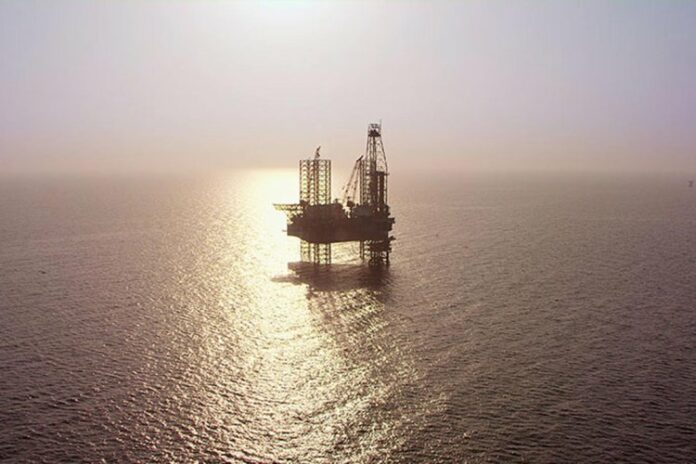
Abu Dhabi National Oil Company (ADNOC) announced today two contracts totalling more than $3.4 billion (AED12.6 billion) have been awarded to ADNOC Drilling to hire 8 jack-up offshore rigs. 

The contracts, valued at $1.5 billion (AED 5.6 billion) and $1.9 billion (AED 7 billion) respectively, awarded by ADNOC Offshore, will support the expansion of ADNOC’s crude oil production capacity to five million barrels per day (mmbpd) by 2030 and enable gas self-sufficiency for the UAE.

Over the life of the 15-year contracts, ADNOC Drilling’s state-of-the-art rig fleet will enable ADNOC and its strategic international partners to further unlock Abu Dhabi’s offshore oil and gas resources, creating significant value for ADNOC, its partners and the UAE.

Over 80% of the value of the awards will flow back into the UAE’s economy under ADNOC’s successful In-Country Value (ICV) program, supporting local economic growth and diversification.

His Excellency Dr. Sultan Ahmed Al Jaber, Minister of Industry and Advanced Technology and ADNOC Managing Director and Group CEO, said:

“This world-leading investment will significantly expand our drilling activity to accelerate growth, drive value and responsibly unlock the UAE’s resources in response to globally rising demand for energy. ADNOC Drilling’s state-of-the-art fleet and market-leading capabilities, will be a key enabler as ADNOC strengthens its position as a leading low-cost and low-carbon energy producer. We are focused on delivering on our 2030 strategy, in support of the directives of our wise leadership to grow and diversify the UAE’s economy.”

The jack-up rigs will be hired along with manpower and equipment to support drilling operations across ADNOC’s offshore fields, which account for about half of ADNOC’s production capacity. ADNOC Drilling is the largest national drilling company in the Middle East by rig fleet size, with 105 owned rigs, including 27 offshore jack-up units, one of the largest operational jack-up fleets in the world. 

MPA and Port of Rotterdam to create Green and Digital Corridor

0

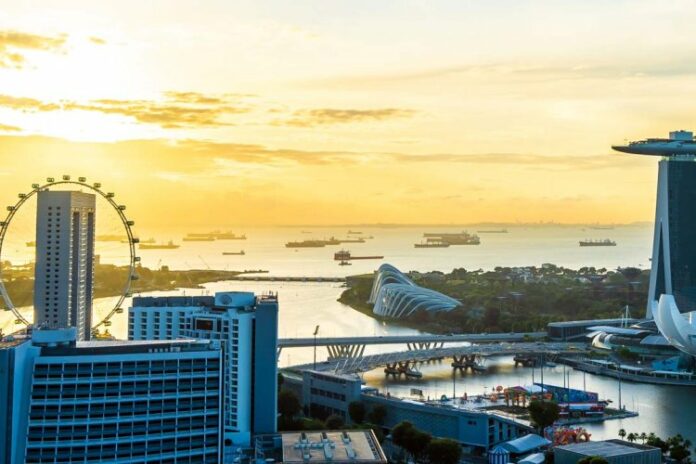
The Maritime and Port Authority of Singapore (MPA) and the Port of Rotterdam Authority have signed a memorandum of understanding (MoU) to establish the world’s longest Green and Digital Corridor to enable low and zero carbon shipping.

Singapore and Rotterdam are among the largest bunkering ports in the world, making them vital links on the Asian-European shipping lanes. While international shipping currently uses largely marine gas oil (MGO) and low-sulphur fuel oil, sustainable alternatives such as biofuels, including biogases, are increasingly being made available. Other alternatives such as synthetic methane, hydrogen, and hydrogen-based fuels including ammonia and methanol are in various stages of R&D for future trials and deployment.

Each alternative fuel has its own challenges relating to costs, availability, safety, and restrictions in range due to lower energy density compared to fossil fuels. To tackle these challenges, the two port authorities agreed to bring together a broad coalition of shippers, fuel suppliers and other companies to collectively work on potential solutions.

Beyond alternative fuels, the MoU also aims to optimise maritime efficiency, safety, and the transparent flow of goods by creating a digital trade lane where relevant data, electronic documentation and standards are shared. This will facilitate the seamless movement of vessels and cargo, and optimise just-in-time arrival of vessels from port to port. 

The port authorities will work with the Global Centre for Maritime Decarbonisation and the Mærsk Mc-Kinney Møller Center for Zero-Carbon Shipping as action partners, as well as other industry partners across the supply chain, including bp, CMA CGM, Digital Container Shipping Association, Maersk, MSC, Ocean Network Express, PSA International, and Shell for a start. This will enable the Green and Digital Corridor project to raise investment confidence, attract green financing, and kickstart joint bunkering pilots and trials for digitalisation and the use of low- and zero carbon fuels along the route.

Ms. Quah Ley Hoon, Chief Executive of MPA, said:

“The pilot will complement efforts undertaken by the shipping industry, including partners such as Google Cloud, and the IMO to support decarbonisation and digitalisation transition for international shipping, as we work towards developing and scaling up green and digital solutions for wider adoption.” 

Bo Cerup-Simonsen, CEO of the Mærsk Mc-Kinney Møller Center for Zero-Carbon Shipping, said:

“The Singapore-Rotterdam Green Corridor is fully in line with our strategy to accelerate the decarbonisation of the maritime industry by supporting first movers. We need bold projects like this to leverage the learnings and further develop green partnerships across the value chain. Connecting globally leading partners around one of the major trade-lanes will allow us to demonstrate concrete, scalable decarbonisation solutions that can inform and inspire industry as well as policy makers around the world.”

AD Ports Group, Adani Ports sign MoU for joint infra investments in Tanzania

0

AD Ports Group, the leading facilitator of global trade, logistics, and industry, has signed a Memorandum of Understanding (MoU) with Adani Ports and SEZ Ltd, India’s largest integrated ports and logistics company, for strategic joint investments in end-to-end logistics infrastructure and solutions, which include rail, maritime services, port operations, digital services, an industrial zone and the establishment of maritime academies in Tanzania.  

The two companies signed the key agreement setting in motion a series of potential country-level investments to grow, improve, and promote an end-to-end maritime and logistics ecosystem which will make Tanzania a hub for the African region.

Capt. Mohamed Juma Al Shamisi, Managing Director and Group CEO, AD Ports Group, said:

“This MoU with Adani Ports and SEZ Ltd is significant in its impact on both Tanzania’s ability to transform itself into an African trading hub, as well as our ability to further develop our global capabilities and connections that will bring goods to market faster and more efficiently.”

“Our strategic investment in Tanzania in infrastructure and solutions will enable international companies to enter African markets. In line with the direction of the UAE’s leadership, we are positioning Abu Dhabi as a global leader in logistics and industry.”

Karan Adani, CEO of Adani Ports and SEZ Ltd, said:

“We are pleased to be partnering with AD Ports Group in the development of key quality infrastructure in Tanzania especially in the ports and maritime sector, which will improve and bring about positive change in the lives of communities, standing by our commitment to growth with goodness. We continue to support local employment, as well as general economic growth in Tanzania and East African countries that will benefit from our investments through the collaboration with AD Ports Group.”

Warm waters marching south threaten the East Antarctic Ice Sheet

0

New research by CSIRO, Australia’s national science agency, in partnership with the University of Southampton in the UK, has revealed for the first time how changes in Southern Ocean circulation are affecting the East Antarctic ice sheet.

The research, published in Nature Climate Change shows how warming waters at the East Antarctic shelf are linked to a reorganisation of water masses that could potentially compromise the stability of the East Antarctic ice sheet.

Whilst scientists have a good understanding of how the West Antarctic Ice Sheet is melting and contributing to sea level rise, far less was known about the East, until now.

Dr Laura Herraiz-Borreguero, CSIRO scientist and lead author of the study, said that the research fills a critical knowledge gap about the physical mechanisms that can lead to East Antarctic Ice Sheet melt which could become a major contributor to global sea level rise in the future.

Dr Herraiz-Borreguero said:

“The Earth’s ice sheets, which are formed from snow accumulation over land and time play a crucial role in our global climate system. 

“In this study we investigated changes in the ocean that interacts with the Aurora Subglacial Basin in the Indian Ocean sector of East Antarctica.

“This basin holds a 5.1-meter sea level rise potential and ice mass loss here is driving most of the East Antarctic contribution to sea level rise.

“When and how fast this ice mass loss occurs is one of the largest uncertainties in climate models and projections of future sea level rise out to the year 2100, and our result shows that this basin is more susceptible to melting than previously thought.”

University of Southampton Professor Alberto Naveira-Garabato, co-author of the study, said that to close the East Antarctic knowledge-gap the research team analysed a comprehensive, nine-decade-long record of oceanographic observations off the Aurora Subglacial Basin.

Professor Naveira-Garabato said:

“We found there has been an unequivocal ocean warming over the continental slope of up to 2 to 3ºC since the earlier half of the 20th century. It’s occurring just offshore of glaciers with the fastest grounding line [the point where glaciers start to float] retreat, for example, the Denman (~100ºE), Vanderford (110ºE), and Totten (~118ºE) glaciers.”

He said:

“As this shift is predicted to persist into the 21st century, the movement of warm waters towards East Antarctica may continue to intensify, threatening the ice sheet’s future stability.” 

The results indicate that the warming of the continental shelf is associated with a multi-decadal, summer-focused poleward shift of the westerly winds over the Southern Ocean.

This change in wind latitude drives a poleward shift of the southern part of the Antarctic Circumpolar Current, which means more warm water moves closer to Antarctica.

Dr Herraiz-Borreguero said:

“Our observations from in front of the Vanderford Glacier suggest that this warm water, also known as Circumpolar Deep Water, is replacing the colder Dense Shelf Water.

“We don’t know exactly how this water mass exchange occurs, however the reduction in salinity as water melts is likely to play a major role.

“Limiting warming below 1.5 ºC is the best way to keep the Antarctic Ice Sheet stable, limit global mean sea level rise to around 0.5 m by 2100, and slow the pace at which sea level will rise.

“This enables greater opportunities for adaptation in the human and ecological systems of small islands, low-lying coastal areas and deltas.”

Naval architect selected for new California coastal hybrid-hydrogen research vessel

0

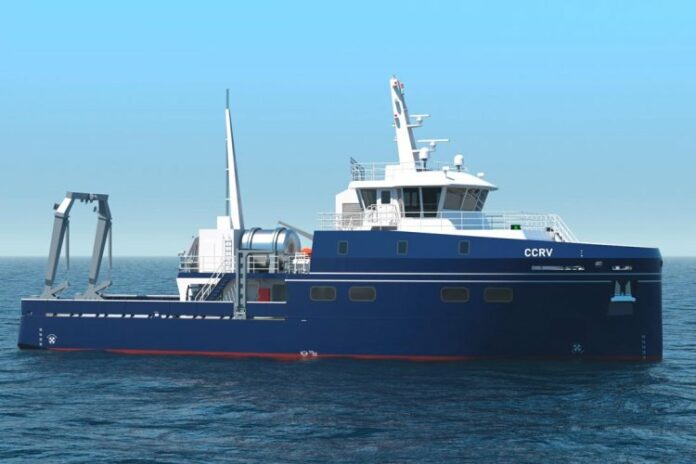
UC San Diego’s Scripps Institution of Oceanography has announced that naval architecture and marine engineering company Glosten has been selected as the naval architect for the university’s new California coastal research vessel. 

The new vessel will be an innovation in the maritime industry with a first-of-its-kind hydrogen-hybrid propulsion system. 

With this selection, Glosten will provide the preliminary design, contract design, and detailed design for the research vessel to be operated by Scripps Oceanography. Glosten is a consulting firm of naval architects and marine, electrical, production, and ocean engineers with expertise in providing design and engineering support to the oceanographic research community. Glosten was selected after participating in the university’s request for proposal process.

Bruce Appelgate, associate director and head of ship operations at Scripps Oceanography, said:

“This vessel will be the first of its kind, and the selection of the naval architect is a major milestone for Scripps. Fundamentally, our ships have to be reliable and capable in order to support the innovative research our scientists conduct at sea. On top of that, the ship we envision needs to demonstrate that zero-emission power systems work effectively under demanding real-world conditions. It’s the job of the naval architect to provide the necessary engineering, design, and integration skills needed for this project to succeed on every level.”

California legislators allocated $35 million towards the design and construction of this vessel last summer. When complete, the vessel will serve as a platform for education and research dedicated to understanding the California coast and climate change impacts to the coastal ecosystem. 

This new vessel will continue the university’s educational mission to train the next generation of scientists, leaders, and policymakers. It is envisioned that the vessel will carry up to 45 students and teachers to sea on day trips, improving the university’s capacity for experiential learning at sea. The new vessel will replace research vessel (R/V) Robert Gordon Sproul, which has served thousands of University of California students in its 42 years of service but is nearing completion of its service life.  

The hybrid-hydrogen design of this new vessel represents an innovation in the maritime industry. Currently, emissions from diesel engines on ships contribute to greenhouse gases and pollution. Development of this and subsequent zero-emission vessels is essential to the University of California’s Carbon Neutrality Initiative, the goal to be carbon neutral by 2025. 

This new vessel will feature an innovative hybrid propulsion system that integrates hydrogen fuel cells alongside a conventional diesel-electric power plant, enabling zero-emission operations. The design is scaled so the ship will be able to operate 75 percent of its missions entirely using a non-fossil fuel—hydrogen—with only pure water and electricity as reaction products. For longer missions, extra power will be provided by clean-running modern diesel generators. The vessel represents a major step in advancing California’s pledge to reduce global climate risk while transitioning to a carbon-neutral economy.

The proposed 125-foot vessel will be equipped with instruments and sensing systems, including acoustic Doppler current profilers, seafloor mapping systems, midwater fishery imaging systems, biological and geological sampling systems, and support for airborne drone operations. These capabilities, along with state-of-the-art laboratories, will enable multidisciplinary research, advancing our understanding of the physical and biological processes active in California’s coastal oceans. This new vessel will be dedicated to California research missions, with the capability to study issues vital to the California economy such as the health of marine fisheries, harmful algal blooms, severe El Niño storms, atmospheric rivers, sea-level rise, ocean acidification, and oxygen depletion zones.

The anticipated schedule for design and construction includes one year to complete the basic design. Following U.S. Coast Guard approval of the design, the university will select the shipyard where the design will be constructed. Construction and detail design will likely take an additional three years. 

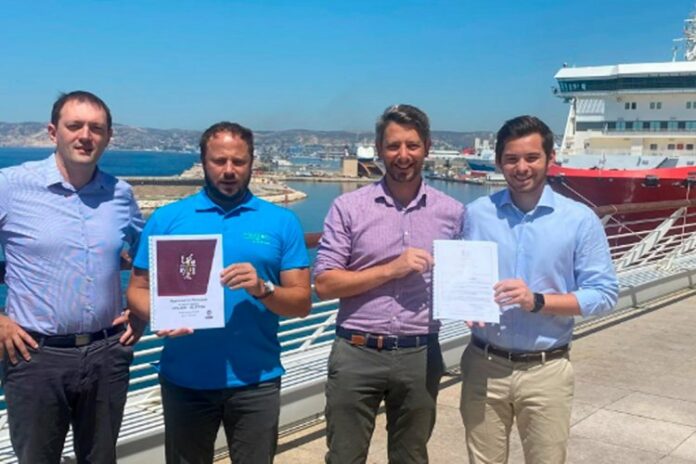
Bureau Veritas delivers AiP to HELION fuel cell system

0

The work carried out has enabled the Alstom subsidiary’s 6th generation of hydrogen fuel cells to comply with Bureau Veritas rules that correspond to the use of fuel cells on board ships.

The fuel cell “marinization” is ensured thanks to a double envelope enclosure that enables the system to be perfectly sealed in a saline environment. In addition, HELION’s new FC-RACK™ Marine incorporates a thermal management system, a dedicated on-board control system, and a hydrogen safety system that enables the FC-RACK™ Marine to be installed inside or on the deck of the vessel. Finally, its vertical architecture facilitates ease-of-access during maintenance operations.

Vincent MAHEO, President of HELION Hydrogen Power, says:

“This new generation of fuel cells is in line with our pillars which are: durability, safety, and maintainability. The substantive work that has been carried out along with our certifying partner confirms our belief that the product meets the requirements of the maritime sector. The latter also suggests that our FC-RACK™ Marine will quickly obtain final approval (Type Approval Certificate). This certificate will lead to the industrialization of the FC-RACK™ Marine in order to provide a reliable and robust solution to our customers in the marine industry in their decarbonization ambitions. The story does not end there since our fuel cell system has already been selected in marine projects in real-world conditions.”

Laurent Leblanc, Senior Vice President Technical & Operations at Bureau Veritas Marine & Offshore, commented:

“Our role as a Class society is to enable our customers to tackle the energy transition. We use our expertise to help advance safe innovation and to make possible solutions for tomorrow. Collaborating with HELION on the zero-emission hydrogen powered electric generator is very stimulating. We look forward to continuing the partnership and support the industry decarbonization’s journey.”

HELION’s marine certified fuel cell will be operational by the end of 2023 and will supply zero-emission power to a dredger operating in the Occitanie Region and built by Piriou shipyard. For this world’s first hybrid diesel-hydrogen dredger, HELION’s 200 kW FC-RACK™ will provide the energy required for life on board when the vessel is at berth and will partly supply the power needed for the propulsion during dredging activities.

Robots documenting deep-sea biodiversity reveal a spectacular spaghetti worm

0

During one of MBARI’s expeditions to Mexico’s Gulf of California, researchers observed what looked like small pom-poms lying on the seafloor. These mystery masses turned out to be a spectacular type of spaghetti worm: Biremis. 

This shaggy species was previously known solely from the Bahamas. Upon further examination and DNA testing by the expert collaborators at Scripps Institution of Oceanography, scientists realized we had encountered a new species of Biremis.

Biremis has no eyes, no gills, and lacks obvious chaetae, or bristles, along its body segments. It is also unusual because its tentacles are inflated, giving it the pom-pom appearance that caught the researchers’ attention. The Gulf of California species is deep-dwelling, with the majority of our observations deeper than 2,000 meters (6,600 feet). It remains undescribed, but the team is hoping to formally publish a detailed description in the scientific literature after we know more about its appearance, genetics, and natural history.

Spaghetti worms are a type of polychaete worm grouped in the family Terebellidae. Scientists have described about 400 different species of terebellids, which are found worldwide. They’re relatively common and characteristically have numerous grooved tentacles for feeding. Like other terebellids, Biremis lives on the ocean bottom, but while most live in a tube or burrow, this species has been observed resting on the seafloor or swimming just above it. Swimming freely allows the worm to easily move around and find new places to feed. Biremis uses its bountiful bundle of non-retractile tentacles to harvest particles of marine snow that have settled on the seafloor. If you look closely at the video, you can see the trail the animal has made in the mud.

Scientists have discovered and named more than 12,000 living species of polychaetes. MBARI’s ROVs have given many opportunities to observe the unique polychaetes that live in the deep sea, including worms that “dance” in the midwater, drop bioluminescent bombs, or digest decomposing bones. 

Carnival upgrading global fleet with fuel- and energy-saving technology

0

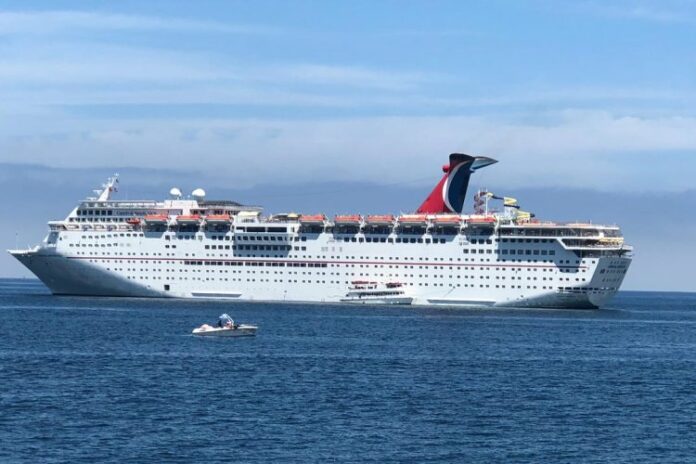
Carnival Corporation & plc has announced the rollout of comprehensive technology upgrades called Service Power Packages across its global fleet to further improve energy savings and reduce fuel consumption. 

The upgrades include ongoing installations through 2023 on ships from the company’s nine cruise line brands – Carnival Cruise Line, Princess Cruises, Holland America Line, Seabourn, P&O Cruises (Australia), Costa Cruises, AIDA Cruises, P&O Cruises (UK) and Cunard.

Carnival Corporation’s Service Power upgrade program delivers an average of 5-10% fuel savings per ship and is expected to reduce fleetwide greenhouse gas emissions by more than 500,000 metric tons each year. In addition to the environmental benefits, the program upon completion is expected to generate over $150 million in annual fuel cost savings.

Developed over the past six years, the company’s Service Power program delivers significant efficiency upgrades across the fleet, including air conditioning upgrades to cabin and public areas, and major enhancements to cooling, lighting and automation systems. Adjusting for variations in ship design, size and equipment, the company customizes the Service Power Package for each ship, which combines the synergies from multiple upgrades with new operational efficiencies, all effectively supporting Carnival Corporation’s energy savings and decarbonization strategies.

The Carnival Corporation Service Power Packages include the following elements designed to work together to reduce each ship’s overall service load – the energy required to support all onboard hotel systems – and as a result, significantly reduce both fuel usage and emissions:

Comprehensive upgrades to each ship’s hotel HVAC systems, accounting for 25% of a ship’s energy consumption, to improve hotel ventilation efficiency using sophisticated variable speed drives and on-demand systems throughout public areas, cabins and galleys. Additionally, indoor air quality is continuously monitored and maintained to the highest standards at sea, using an industry-leading air filtration and ultraviolet-C treatment throughout the ship.

Technical systems upgrades on each ship using variable speed drives and on-demand automated control systems for engine room ventilation, main air conditioning chillers and cooling pumps, which together dramatically lower the energy needed to deliver cooling around the ship.

State-of-the-art LED lighting systems installed throughout each ship to reduce both power consumption and heat load generation – creating a dual benefit from lower air conditioning demand.

Remote monitoring and maintenance improvements that maximize benefits from the upgrade packages, including improved instrumentation and automated management systems, with nonstop ship-to-shore connectivity. Expanded remote monitoring and analysis of each ship’s energy performance and technical status ensure peak efficiency and minimal down times.

Bill Burke, chief maritime officer for Carnival Corporation, said:

“The Service Power program closely aligns with our long-term sustainability and decarbonization goals and our highest responsibility and top priority, which is compliance, environmental protection and the health, safety and well-being of our guests, the people in the communities we visit, and our shipboard and shoreside personnel. 

Based on our improved fleet composition, including adding six industry-leading LNG-powered ships, and our previous investments to increase efficiency and reduce emissions, our absolute carbon emissions peaked in 2011 despite significant capacity growth over the past decade. These tailored Service Power Packages further build on those efforts as part of our comprehensive approach to sustainability.”

The fleetwide enhancements are part of Carnival Corporation’s ongoing energy efficiency investment program and efforts to reduce fuel consumption, including over $350 million invested in energy efficiency improvements since 2016, along with the company’s fleet optimization strategy and design of more efficient itineraries. Together, these ongoing efforts are expected to drive a 10% reduction in fuel consumption per available lower berth day (ALBD) in the company’s first full year of guest cruise operations compared to 2019, along with a 9% reduction in carbon emissions per lower berth distance traveled.

University of Plymouth and BMT join forces to improve cyber security in the maritime sector

0

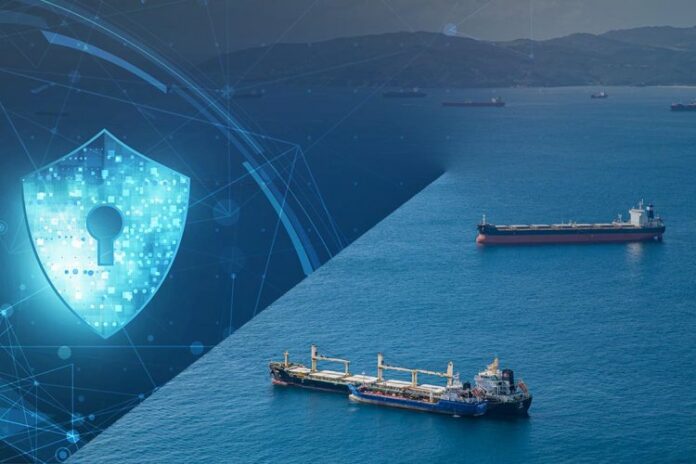
The University of Plymouth has joined forces with BMT, a leading international multi-disciplinary engineering and design consultancy, to jointly research ship design and cyber security in the maritime sector.

The new Memorandum of Understanding will specifically look at harnessing the capabilities of the University’s recently opened £3.2 million Cyber-SHIP Lab. This world-leading facility is dedicated to simulating and understanding maritime cyber threats and facilitating future secure maritime operations through cyber resilience research, tools and training. The facility forms part of the University’s Marine Navigation Centre, which includes a physical ship’s bridge used to simulate attacks and test equipment.

BMT was a founding industry supporter of the Cyber-SHIP Lab when it was launched in 2019, based on the firm belief that through the development of these new tools and lab the UK can become a leading power in maritime cyber security.

Professor Kevin Jones, Executive Dean of Science and Engineering at the University and Principal Investigator on the Cyber-SHIP Lab project, added:

“With our ever-increasing dependence on the global maritime sector, ensuring ships and port operations are cyber secure has never been more critical. Advances in cyber technology, and the emergence of new threats, mean this is a constantly evolving area that needs an innovative and joined-up approach. The partnership between the University and BMT is a perfect example of that, uniting our collective expertise in both identifying potential issues and solutions and finding the means for them to be applied in maritime engineering and design.”

Jake Rigby, Research and Development Lead at BMT, added:

“BMT is delighted to be working with the University of Plymouth in this important work in helping the UK drive the highest possible standards in maritime security. With this knowledge and experience in place, the UK can then offer the benefits of the insights, operational practices and training to the global shipping and marine community. Through combining our expertise and our knowledge, we are confident great strides will be made in enhancing security and cyber protection across maritime.”