0.5 C
New York
Home Blog Page 408

Maersk engages in green bio-methanol partnership with Debo

0

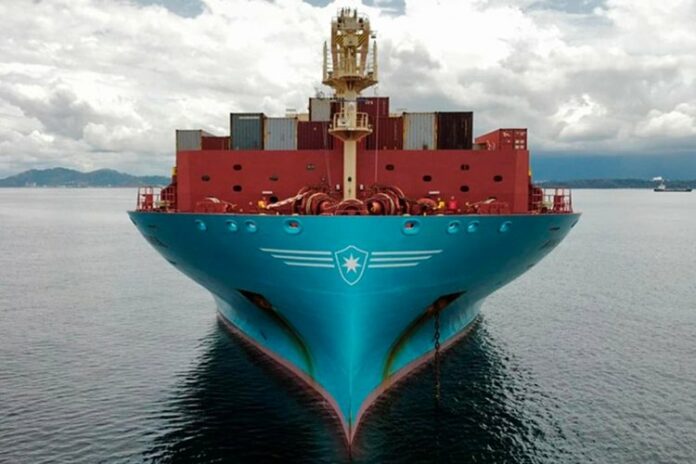
Following the announcement of six strategic green methanol partnerships across the globe earlier this year, A.P. Moller – Maersk (Maersk) adds a seventh methanol partnership with Chinese bioenergy enterprise Debo on the quest to boost global production capacity.

The parties have signed a Letter of Intent covering Debo’s plans to develop a bio-methanol project for Maersk in China with capacity of 200,000 tonnes per year to start commercial operation by fall 2024.

Berit Hinnemann, Head of Green Fuels Sourcing, A.P. Moller – Maersk, said:

“Maersk has set an ambitious end-to-end net-zero goal for 2040 and the availability of green methanol at scale is critical to our fleet’s transition to sustainable energy. Partnerships across ecosystems and geographies are essential for the scale-up needed in order to make meaningful progress on this agenda already in this decade. Therefore, we are delighted to welcome Debo on this journey.”

The feedstock for the green bio-methanol will be agricultural residues. Maersk intends to offtake the full volume produced.

Zhang Shoujun, Chairman and General Manager, Debo, said:

“The use of green methanol as marine fuel to replace the existing fossil fuel is groundbreaking in the container shipping history and will strongly promote the development of green shipping. It is a great honor for Debo to work with A.P. Moller – Maersk to promote the commercialization of the green methanol industrial chain. I firmly believe that through the cooperation, we are able to realize the commercial production and industrial conversion of green methanol and contribute to reduce greenhouse gas emissions.”
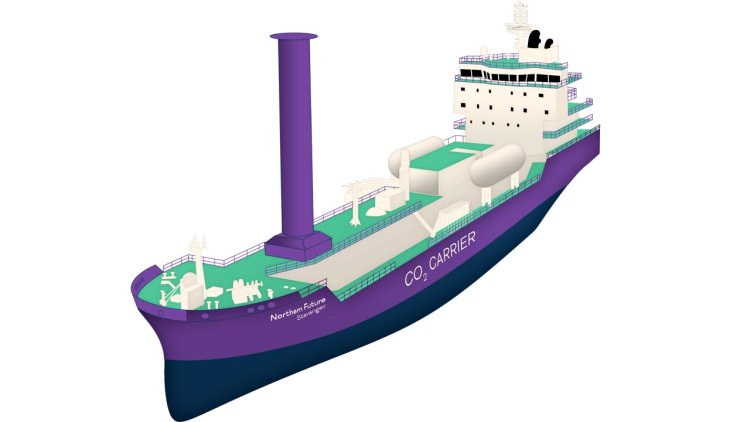
Norsepower to install Rotor Sails onboard two newbuild CO2 carrier vessels

0

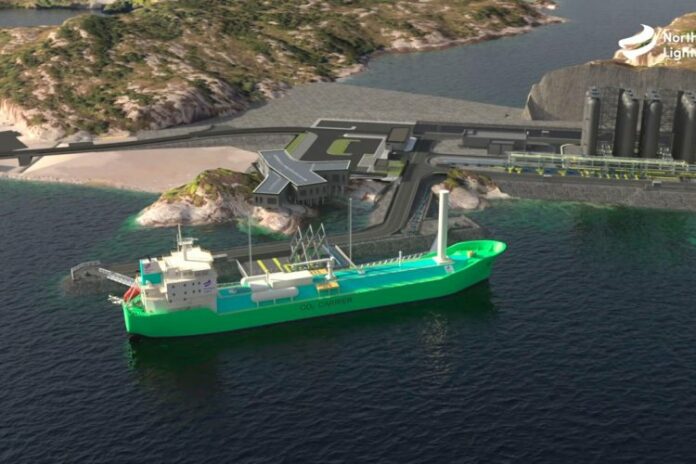
Norsepower Oy Ltd. has announced a contract with Dalian Shipbuilding Industry Co. Ltd. for delivery of single Rotor Sails onboard two newbuild liquefied natural gas (LNG)-powered, wind-assisted CO₂ carriers commissioned by the Northern Lights JV. 

Northern Lights JV is developing the transportation and storage component of Norway’s Longship project to decarbonise industrial emissions. 

The two liquified CO₂ carriers will be equipped with one 28x4m Norsepower Rotor Sail on each vessel. Following calculations, Norsepower estimates the Rotor Sails will reduce the fuel and CO₂ emissions from each vessel by approximately 5%. The Norsepower Rotor Sail Solution is a modernised version of the Flettner rotor, a spinning cylinder that uses the Magnus effect to harness wind power and generate thrust – reducing both fuel consumption and emissions.

The two first-of-its-kind carriers have been designed by Northern Lights and are being built by China-based Dalian Shipbuilding Industry Company. The vessels will be equipped with Norsepower’s wind-assisted propulsion system alongside other energy efficiency technologies, highlighting the benefits of integrating complementary clean tech solutions for maximum impact. 

Tuomas Riski, CEO of Norsepower, commented:

“The industry is transforming quickly and newbuild vessels are being built today to operate efficiently ahead of 2050. Therefore we are seeing the industry seeking to build vessels today which already have proven energy efficiency solutions onboard which can reduce fuel consumption, the associated costs as well as reduce emissions. As fuel prices increase and a carbon levy is initiated, getting newbuild vessels as efficient as possible is essential for long term commercial success.

Northern Lights JV is setting a global standard for CO₂ transportation by ships and highlights the importance of collaboration for accelerating the energy transition. Our technology, alongside an air lubrication system and other clean technologies will ensure operations are as low carbon as possible. This initiative also highlights the role that cleaner shipping has within complex supply chains and decarbonisation strategies outside of the immediate industry. We are pleased to be supporting shipowners in achieving greater climate alignment compliance scores and contributing to the greater sustainability of supply chains as a whole.”

The Rotor Sails will be delivered in early 2023, and following further building, both the 130m long ships, each with a cargo size of 7,500m³, are expected to be delivered in 2024. After commencing operations, the vessels will fill up captured and liquefied CO₂ from European emitters and carry it to the Northern Lights receiving terminal in Norway’s Øygarden.

JERA consortium starts Japanese floater surveys

0

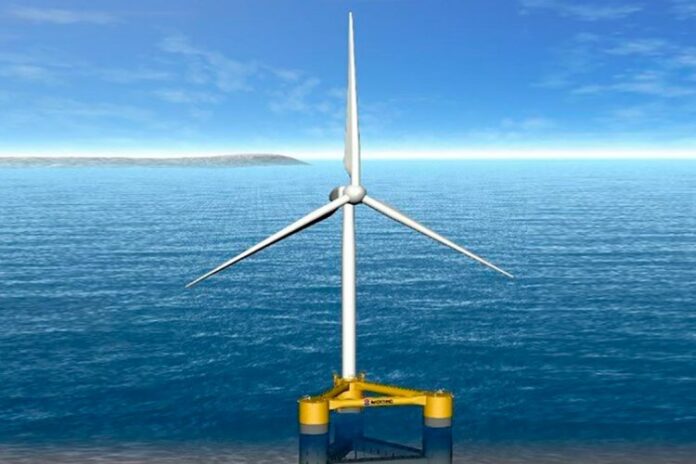
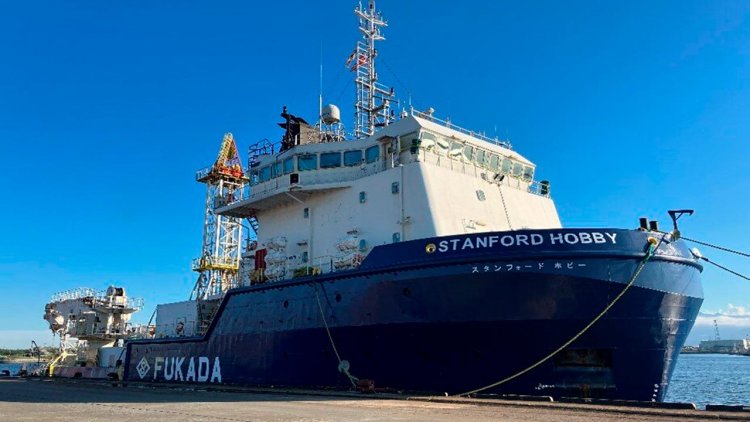
The survey is part of the “Project to Develop Cost-Reducing Technology for TLP Floating Offshore Wind Turbines,” which the consortium was selected to conduct by the New Energy and Industrial Technology Development Organization (NEDO) under its Green Innovation Fund program, and aims to understand the geotechnical structure and other characteristics of the seabed, which are necessary in setting the design parameters of TLP floating offshore wind turbines.

The consortium will move forward in conducting surveys and studying plans in anticipation of future verification testing of power generation using TLP floating offshore wind turbines. 

In formulating plans for verification testing, the Consortium will continue to consult with local fishing industry, residents, government administrations, and other stakeholders to ensure their understanding. 

Berg Propulsion turns on the power with tug order breakthrough in Türkiye

0

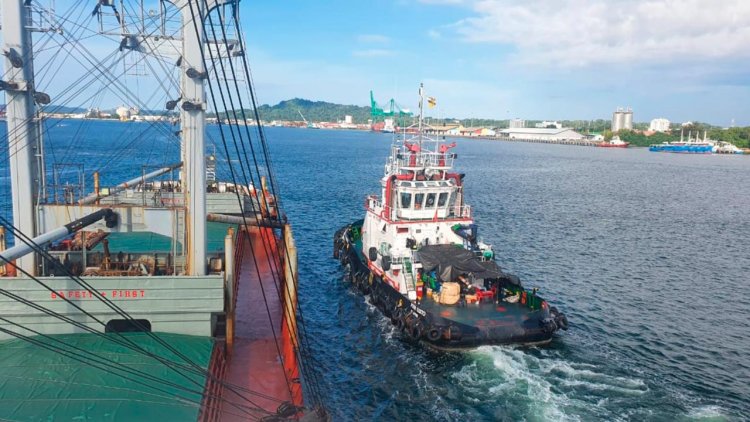
Berg Propulsion has secured its first new tug order in Türkiye since the opening of Berg Propulsion Eurasia in April 2022 – the entity which has been revitalising the well-known marine equipment brand regionally.

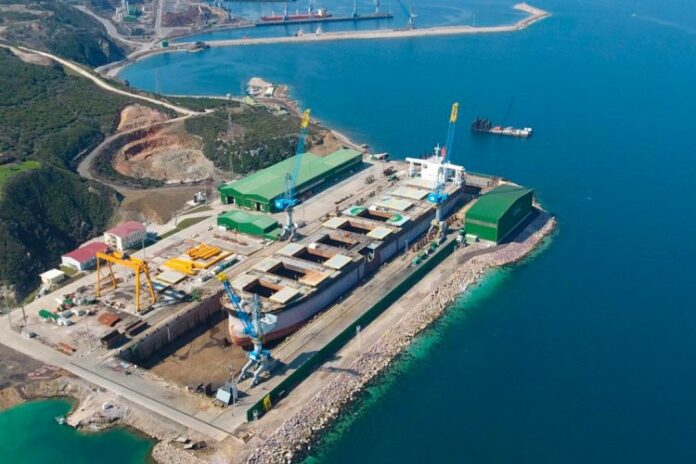
The company has been contracted to provide a range of propulsion and control equipment for a harbour tug to be built at İÇDAŞ Shipyard.

Built to a Robert Allan design, the newbuild RAscal 2000 tug will join the İÇDAŞ fleet to support drydock  operations and activities in its surrounding port area of Çanakkale, northwest Türkiye.

Power capability was a key factor in selecting the twin BERG MTA 318 Fixed Pitch Azimuth Thrusters, shaft system and control system to work in combination with the tug’s 2x1081kW@2000rpm Cat C32 main diesel engine.

Mustafa Müslüm, General Manager, Berg Propulsion Eurasia, commented:

“We needed to achieve a 35-tonne bollard pull, which is high for a harbour tug of this size, and we could do this competitively because our set up can handle 8% higher input power than comparable systems.”

Berg Propulsion supplied four MPP controllable pitch propellers to the same shipbuilder between 2012 and 2015, for cargo ships.

Babcock begins first Type 23 frigate post-life extension upkeep

0

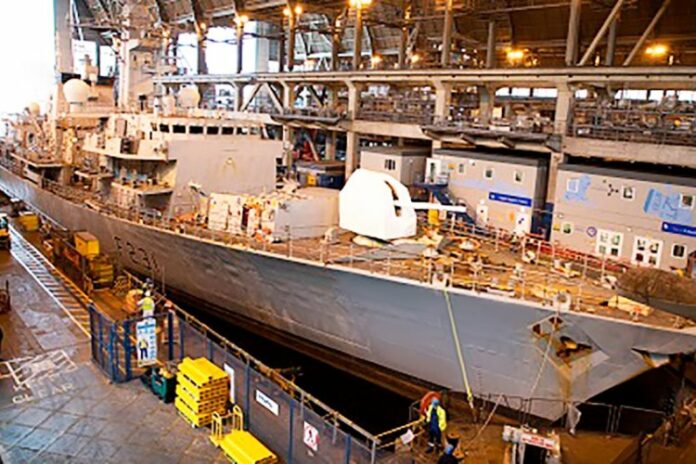
It is the first Type 23 to undergo a post-LIFEX upkeep, adopting a new innovative approach to re-certification at the facility’s Frigate Support Centre (FSC).

Babcock will overhaul equipment and carry out design changes for new capabilities such as communications upgrades and mixed crewing. The Duke Class frigate will also receive a full spray coat of paint the outer bottom and ship side.

Sarah Hilder, Project Manager for HMS Argyll’s upkeep, said:

“HMS Argyll presents a huge opportunity to demonstrate Babcock working in collaboration with our customer throughout the planning period and by implementing new efficient and innovative processes we are striving to complete the project in a reduced timescale compared to a standard upkeep.”

Work began immediately with the vessel being prepared for a Lloyds structural survey to achieve an early full ship assessment in just nine weeks. 

Commissioned in 1991, HMS Argyll is the longest-serving Type 23 frigate and was the first to undergo upkeep within the LIFEX programme in 2015. After she returned to the Royal Navy in 2017 Babcock has continued to deliver the Type 23 life-extension programme across the fleet.

Svitzer Brazil strengthens fleet with two newbuilds

0

Svitzer has announced that it is further strengthening its fleet in Brazil with two newbuilds.

In 2021, Svitzer expanded its port coverage in Brazil by adding Suape and Pecem to the footprint and ordering four newbuilds, also to be delivered by Rio Maguari, as part of the company’s strong growth ambitions in Brazil. With the latest two newbuilds, Svitzer Brazil is further strengthening its fleet to meet customer demands.  

Commenting on the investment in new tugs, Daniel Reedtz Cohen, Managing Director Svitzer Brazil says:

“We are running a solid business in Brazil with good volumes and I am very pleased that we are now investing in another two newbuilds as the investment will enable us to expand our port coverage even further to the benefit of our customers. The two new tugs are a vital addition to our existing fleet as they will be equipped with FiFi 1 (firefighting) capabilities, which we know is highly requested by both our customers and port authorities. We have an ambition to serve our customers with Brazilian built vessels and I am therefore also very pleased that we can continue our good partnership with Rio Maguari with this new order.”

The two new tugs will be from the RAmparts 2300 series designed by Robert Allan Ltd. and will be delivered in 2024.

Today, Svitzer Brazil serves seven ports in the country – Suape, Pecem, Santos, Vitoria, Rio Grande, Sao Francisco do Sul and Paranagua – with 17 tugs and employs 160 people.

Subsea 7 awarded floating wind FEED contract

0

The Gray Whale 3 project is a 504MW development located around 60 to 70 kilometres offshore from Ulsan.

The basic design contract will be executed in a consortium with Technip Energies and Samkang M&T and will include engineering of floating foundations, mooring and inner-array cable in collaboration with the turbine supplier. Engineering will commence immediately at Subsea 7’s offices in the UK, South Korea, Malaysia and France.  

Philippe Gleize, VP Floating Wind, Subsea 7 said:

“The Gray Whale 3 Offshore Windfarm project represents an exciting opportunity for Subsea 7 and furthers our involvement in the floating wind market in South Korea. We are very pleased to have been selected as a consortium partner and are looking forward to working collaboratively with our clients and all parties involved in maximising the wealth of knowledge, capability and expertise we collectively bring to deliver this FEED project.”

SCHOTTEL RudderPropellers to power world’s first hydrogen tug

0

The vessel, which will be among the cleanest of the fleet of the Port of Antwerp-Bruges, has recently been launched by the Spanish shipyard Astilleros Armon and will enter operations at the Belgian port in early 2023.

Jacques Vandermeiren, CEO at Port of Antwerp-Bruges, said:

“With the Hydrotug, the Port of Antwerp-Bruges is making an important step in the transition to a sustainable, CO2-neutral port. The port is systematically pursuing a policy of making its entire fleet eco-friendly by incorporating the most environment-friendly technologies available on the market.”

The main propulsion system of the tug consists of two SCHOTTEL RudderPropellers type SRP 460 (2,000 kW each) featuring propeller diameters of 2.4 metres. With this thruster configuration, the 31-metre long and 12.5-metre wide vessel will achieve a bollard pull of about 65 tonnes.

The SRP units are driven by combustion engines that burn hydrogen in combination with diesel. Combustion of hydrogen does not emit any CO2, and the particle filter combined with the catalyser will result in minimal emissions of NOx and particulates.

Following its delivery, the tug will execute harbour operations in Port of Antwerp-Bruges.

Innovez One to digitalise and optimise port services in Brunei Darussalam

0

By deploying MarineM, DPS will fully digitise and optimise crucial marine services for vessels arriving and departing the port of Muara, from vessel registration to billing. 

MarineM’s digital platform will replace paper-based processes to capture job requests, track the progress of each job in real time, and generate invoices automatically. Agents will be able to use an online portal to register their port calls, providing the convenience to order services from mobile devices and eliminating time-consuming manual workflows. This will support transparency, minimise the risk of errors, and help eliminate billing issues, delays, and disputes.

Innovez One’s AI-powered solution will also be used to automate and optimise the scheduling of port, tug and pilotage services. Key operations including vessel allocation and job planning and tracking will henceforth be managed through a robust and flexible digital platform, rather than manual processes such as whiteboards, paper and spreadsheets. This digital transition will boost the efficiency of service fleets, giving DPS greater scope to optimise vessel and berth allocation, while also helping curb fuel consumption and greenhouse gas (GHG) emissions.

Innovez One’s MarineM software uses GPS and AIS data to track the position of each vessel and the status of jobs in real time and applies artificial intelligence to automate scheduling – allocating resources as efficiently as possible and ensuring that any last-minute requests or changes in vessels’ ETAs are handled instantly. This plays a key role in building port resilience and minimising congestion for arriving vessels.

Zil Husam Abd Rahman, General Manager at Darussalam Pilotage Services (DPS), commented:

“We are excited to enter the digital era with Innovez One’s state-of-the-art solutions, which will help us unlock the full potential of our tug, pilot and towage services, maximise our operational efficiency, and deliver a paper-free and stress-free experience for our clients. As the main gateway for international trade, the Port of Muara is an essential hub for the development of Brunei Darussalam and other economies in the region. Entering the digital era will enable us to not only offer the best possible service to our customers, but also play an even greater role in delivering sustainable development for our country and communities.”

David Yeo, CEO and Founder of Innovez One, said:

“We fundamentally believe that every port can become a smart port, using our turnkey solutions to help them achieve their specific objectives. Digitalisation has the potential to dramatically transform ports of all sizes and on all continents, enhancing their competitiveness and profitability, while also helping them improve their sustainability and reduce their emissions, now and in the long term. We are delighted to partner with DPS and welcome this key towage and pilotage provider as a fully-fledged member of the global network of smart, sustainable ports of the future.”


Robert Allan Ltd. designs new ATB Convoys for Aliança Navegação e Logística

0

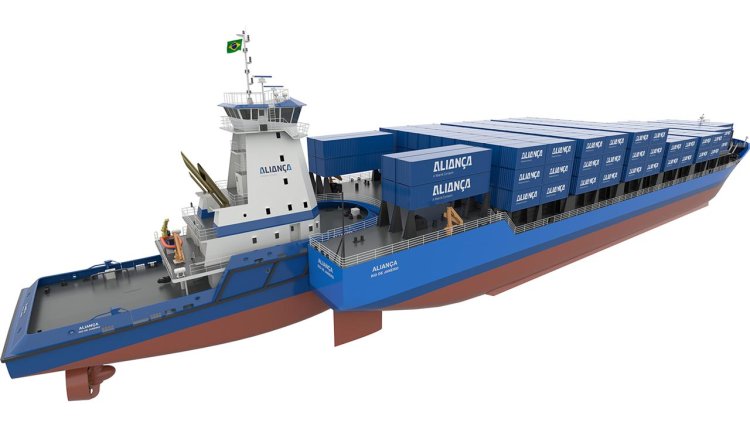
These two ATB convoys will be owned and operated by Aliança Navegação e Logística (ANL), a major logistics services provider in Latin America, and part of the Maersk Group.

Robert Allan Ltd.’s engineering team was tasked with developing an ATB suitable for operations along the entire coast of Brazil, including the south where the worst environmental conditions along coastal Brazil are found.

Design work started by engaging in-house experts with Computational Fluid Dynamics (CFD) and Motions Analysis experience to predict the vessel reactions to the expected conditions, which served as a foundation and guidance for our design processes. The same team performed extensive hull optimization studies in an effort to significantly reduce fuel consumption while providing excellent directional stability for the ATB convoys. Analysis was also performed using our Proteus DS dynamic analysis software package to check the pin loads at the ATB tug barge connecting pins and ensure that they were within allowable limits during extreme sea conditions.

The TRAnsfer 3800 tug will measure 37.5 m by 13.0 m, by 6.2 m depth, have a marine diesel fuel storage capacity of 360 m³ and a freshwater capacity of 45 m³.

Propulsion machinery will include two Wärtsilä 6L32 main engines, each delivering 3,200 kW at 750 rpm, and powering Schottel SRP630FP Z-drives with 3.4 m propellers.

The ATB connecting pins are Intercon model 34C, rated to permit the tug to stay in the notch during all loading/offloading operations by allowing relative vertical movement of the tug and barge while still connected. The fully air-conditioned and MLC compliant accommodations are designed to a very high standard for a crew of up to 14, with a spacious and bright mess/ lounge area, large cabins, and a fitness room.

The tug is designed to American Bureau of Shipping (ABS) Class requirements and for compliance with Brazilian Flag Rules (NORMAM-01/DPC).

Each barge will measure 130.0 m by 28.0 m, by 8.0 m depth, and will be able to carry approximately 700 TEUs (Twenty-foot Equivalent Unit), including dangerous goods and reefer containers, distributed above and below deck. The barges will be fitted with a 500 kW Schottel SST2 bow thruster, and generator sets capable of powering the anti-heeling system, bow thruster, and reefer containers.

The barge is designed to American Bureau of Shipping (ABS) Class requirements and for compliance with Brazilian Flag Rules (NORMAM-01/DPC).