0.5 C
New York
Home Blog Page 407

Svitzer’s Aim for 8 tug speed initiative saves 1000 tonnes of CO2

0

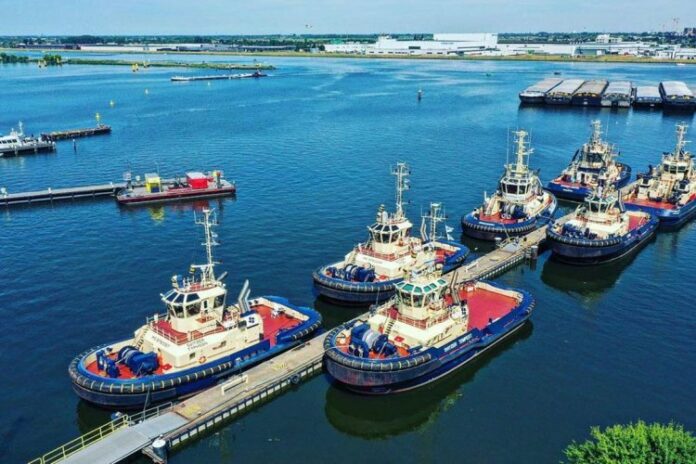
Svitzer has today announced that its Aim for 8 speed initiative – which asks tug crews to navigate at a maximum speed of eight knots during mobilisation and demobilisation – has successfully prevented 1,000 tonnes of CO2 from being emitted into the atmosphere.

A pilot of the Aim for 8 initiative started in late 2021 across Svitzer’s UK operations and is part of the company’s multi-faceted decarbonisation strategy that was launched in May 2022. The initiative proves that small behavioural changes, when implemented alongside more ambitious and long-term shifts such as fuel and tug design, can have an immediate and measurable impact on the CO2 emissions of the global fleet.

Svitzer’s global fleet of 400 vessels emits the same every year as 100,000 diesel-powered cars, so any immediate CO2 saving can have a big impact. The speed target of eight knots was chosen based on analysis of Svitzer’s tug fleet while mobilising to and from a job and asks and incentivises crews to try to achieve the ‘sweet spot’ of potential fuel efficiency that the company’s analysis identified.

There is a huge potential for speed optimisation during mobilisation and demobilisation, compared to more operationally sensitive moments during a towage job. This is because there is less power demand and more predictable conditions. For some individual tugs, optimising speed to eight knots during mobilisation and demobilisation has improved their efficiency by around 20%.

Commenting on the milestone, Kasper Karlsen, regional COO, Svitzer Europe, said:

“We’re extremely proud to share that our Aim for 8 initiative has reached a milestone of 1,000 tonnes of CO2 saved after less than a year of pilot implementation in the UK. We have been able to make this tangible impact at no cost to our operations and with very little disruption to our way of working, simply by asking our crews to make a small change in behaviour and stay below eight knots before and after the towage job.

“We think that this is real proof of the impact that simple adjustments can make on the industry’s sustainability journey. We’re looking forward to implementing Aim for 8 more widely across Svitzer’s global operations and making an even greater impact on our carbon emissions.” 

Following its success in the UK, Aim for 8 will now be implemented across Svitzer’s global operations. This will considerably increase the potential CO2 saving from Svitzer’s operations, contributing to the company’s decarbonisation strategy through to 2040. Meanwhile, Svitzer continues to pursue advances in tug design and future fuels that will help propel itself to a carbon neutral future.
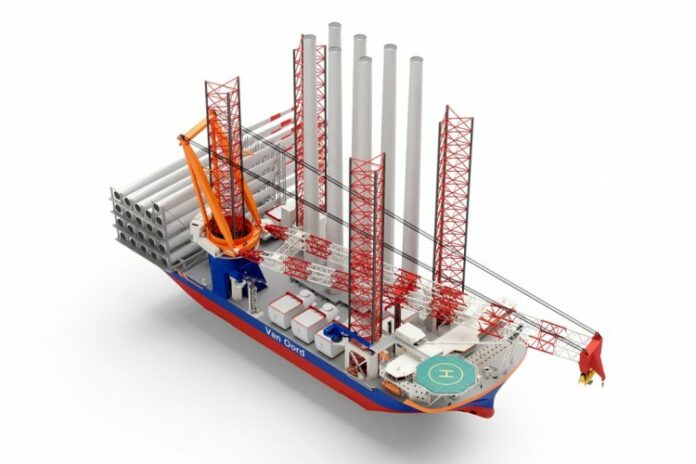
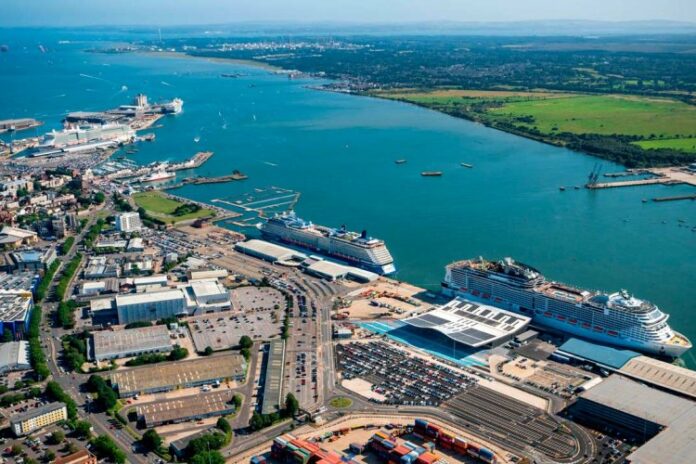
ABB wins Azipod® propulsion order for Van Oord vessel

0

ABB has secured a contract with Yantai CIMC Raffles Shipyard in China to supply an integrated power, automation and propulsion system for a newbuild JUV Boreas. 

As a major player in the global offshore wind market, Van Oord has contributed to the installation of wind turbines with a combined renewable energy capacity of 14.5 gigawatts since 2002, representing 40 percent of the installed capacity worldwide at the end of 2020. Its forthcoming vessel, Boreas, will be one of the largest and most technologically advanced hybridized JUVs in operation, measuring 175 meters in length. It will be able to lift over 3,000 tons and will feature 126-meter-tall legs allowing it to operate at depths of up to 70 meters jacked up, with a capacity to install up to 20 megawatt (MW) offshore wind turbines.

Harold Linssen, Project Director, Van Oord, said:

“Projects involving dynamically positioned vessels, especially JUVs, call for a systems supplier with specialist experience and expertise as well as a proven portfolio of integrated power and propulsion solutions. Having collaborated with ABB in the past, we know that not only does ABB meet all of these requirements; they also offer global support during the project and throughout the lifecycle of the vessel. We are looking forward to collaborating with ABB on this project to shape the future of offshore wind farm installation.”

Boreas will be equipped with four Azipod® propulsion units with a combined propulsion power of 16 megawatts, offering significant space and weight savings as well as facilitating optimal ship design, allowing the vessel to transport heavier loads. In addition, ABB’s hybrid-electric propulsion system is fully future-proof as it allows integration of new energy sources once they become available.

ABB’s comprehensive package includes a closed-ring configuration for safer, more efficient and more predictable operations. Furthermore, through its spinning-reserve and peak-load-shaving capabilities, ABB’s energy storage system will act as a back-up power source while reducing engine running hours to minimize wear and fuel consumption.

Van Oord will also be able to leverage the ABB Ability™ Marine Remote Diagnostic System for the continuous remote equipment monitoring, as well as optimized machinery and planned maintenance activities, helping reduce maintenance costs. Meanwhile, the ABB Ability™ OCTOPUS – Marine Advisory System will enable performance management, predictive maintenance and voyage optimization.

Wärtsilä to digitalise Associated British Ports’ maritime operations

0

Wärtsilä Voyage, part of the technology group Wärtsilä, has signed a prestigious contract for a five-year framework agreement with Associated British Ports (ABP), the UK’s leading ports group, to digitalise operations at its 21 ports. 

The project aims to accelerate the digital transformation of port calls and operations, making them as efficient, sustainable and safe as possible. The Wärtsilä Voyage technologies chosen for the project; Navi-Port, Navi-Harbour Vessel Traffic Services, and Port Management Information System (PMIS) will help ABP employees meet their targets, complement the company’s safety culture during port operations and optimise vessel planning and movements, which can have a positive impact on local, national and global supply chains.

Sean Fernback, President, Wärtsilä Voyage commented:

“ABP truly understands how impactful technology can be in the maritime industry and its innovative approach has cemented its position as the UK’s leading ports group. This new agreement will help ABP maintain its competitive advantage now and into the future.

Holistic and seamless technological solutions are critical to ensuring that ports, and the maritime industry more broadly, are ahead of the curve in terms of supply chain modernisation, that operations are future-proofed, and that data underpins decisions. The scope and scale of what we can achieve with ABP is very exciting, and we’re pleased to be working together.”

After a thorough international procurement process where all major suppliers of port optimisation solutions were invited to tender, ABP chose to collaborate with Wärtsilä Voyage, the cutting-edge technology developer accelerating the digital transformation of the maritime industry. Wärtsilä Voyage’s clear vision on how to enable ABP to become an early adopter of state-of-the-art port management solutions, while also ensuring a strong return on investment aligned with the goals and ambitions of ABP.

The project, which began in June, will span multiple phases across all of ABP’s ports. Wärtsilä’s Vessel Traffic Services system and Port Management Information System are expected to be integrated into the Port of Southampton before April 2023, with other solutions subsequently being deployed across ABP’s other 20 ports. The agreement with ABP includes an ongoing human factor review to ensure the existing control room environment is optimised for people’s needs and is fully compliant with all national and international standards and guidelines.

The framework agreement, valid for at least the next five years, formalises a shared vision and commitment from both organisations to develop modern smart port applications through extensive and long-term collaboration.

Harm Van Weezel, Chief Information Officer at ABP said:

“We are delighted to be working with Wärtsilä on a programme that really delivers towards our vision of a modern, digital port. Wärtsilä’s approach – forming a deep and long-term partnership that is mutually beneficial to both organisations – really stood out to everyone at ABP. We are looking forward to the vast benefits this programme will bring.”

Håkan Agnevall, President & CEO, Wärtsilä Corporation added:

“This is a landmark contract that will have a profound impact on the sustainability, resilience and efficiency of global supply chains. Digitalisation offers great potential for the maritime industry to reach its ambitious emissions reductions targets. That is why the expertise within Wärtsilä Voyage plays such an important role in the pathway to zero emissions and continues to be integral to Wärtsilä’s strategy to generate genuine and long-term change for our sector.”

ABB and Keppel verify next level of vessel autonomy with collision avoidance trials

0

In an industry-first, the vessel developed  by Keppel Offshore & Marine receives autonomous notations from American Bureau of Shipping (ABS) and Maritime and Port Authority in Singapore (MPA)
 
ABB’s pioneering digital technology helps relieve the crew of tasks that can be automated, enabling them to perform at their best during critical periods and enhancing the overall safety of operations.

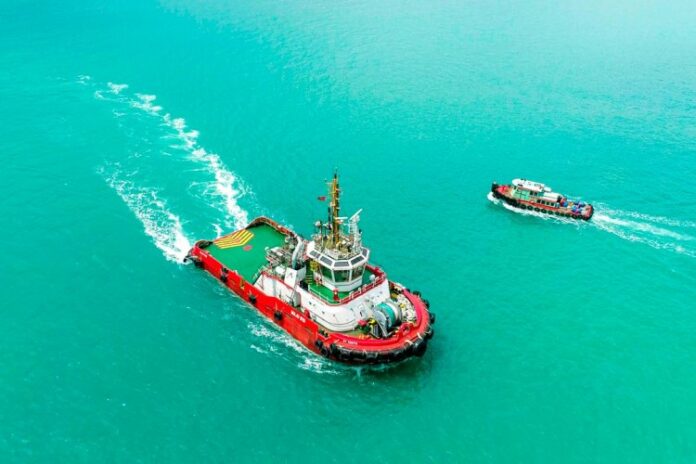
Digital technologies from ABB have enabled the harbor tug Maju 510 to become the first vessel in the world to receive Autonomous and Remote-Control Navigation Notation from ABS classification society and first Singapore-flagged vessel to receive the Smart (Autonomous) Notation from MPA. The notations acknowledge the breakthrough performance of the tug, demonstrating autonomous collision avoidance capabilities in trials conducted at Raffles Reserved Anchorage, off Singapore Island, in March 2022.

Keppel Offshore & Marine (Keppel O&M) is the project lead for the autonomous solutions on the Maju 510, which is owned and operated by Keppel Smit Towage, a member of Rimorchiatori Mediterranei. The vessel has already distinguished itself as the world’s first vessel to secure the ABS Remote-Control Navigation Notation, following initial remote operation trials at the Port of Singapore in April 2021. The latest trials verified next level of autonomy, demonstrating automated situational awareness, collision avoidance, and maneuvering control provided by ABB Ability™ Marine Pilot Vision and Marine Pilot Control.

The 32-metre-long harbor tug demonstrated its ability to autonomously avoid collisions in various scenarios, such as when two other vessels approach simultaneously on colliding paths and when a nearby vessel behaves erratically. The trials were supervised by an onboard tug master.

Romi Kaushal, Managing Director, Keppel Smit Towage, said:

“I had the pleasure of being aboard Maju 510 during the collision avoidance trials and experiencing how smoothly the tug performed in autonomous mode. What I found particularly impressive was how the digital system identified one or several risks in the tug’s planned path and responded to set the vessel on a new, safer course. The vessel performed as if it was operated by an experienced tug master.”

By allowing the crew to focus on the overall situation rather than on performing specific maneuvers, the ABB Ability™ Marine Pilot product family enhances safety and efficiency in tug operations, which is particularly important in congested shipping hubs like Singapore, the world’s busiest container port. Furthermore, the systems can be upgraded to enable higher levels of autonomy depending on local regulations and the requirements of the vessel.

Aziz Merchant, Executive Director, Keppel Offshore & Marine, said:

“As the systems integrator, Keppel O&M collaborated with ABB on customising the autonomous solutions to enhance the vessel’s operational safety and efficiency. By liberating the crew of time- and energy-consuming tasks and improving accuracy during critical maneuvers, our autonomous solution has proven its ability to increase safety in even the busiest of ports. The autonomous solutions are future-ready to handle the growing demand of tug operations in Singapore port. Through digitalization, enhanced connectivity, and integrating ABB’s technology, we are able to generate high accuracy positioning and maneuvering, with AI engines for marine object recognition and classification.”

ClassNK issues AiP for LCO2 carrier developed by MOL

0

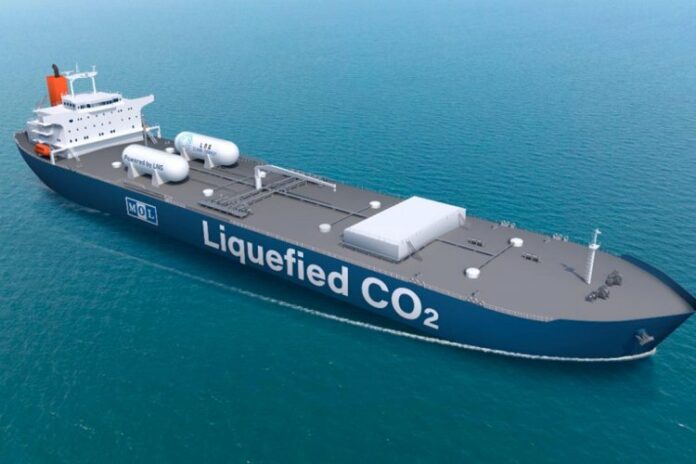
ClassNK has issued an Approval in Principle (AiP) for design of a large-scale liquefied carbon dioxide (CO2) carrier developed through Research and Development Project from NEDO by Mitsui O.S.K. Lines, Ltd. (MOL).

MOL has launched research and development (R&D) on the adoption of a large-scale liquefied CO2 carrier in response to a call for proposals by Japan’s New Energy and Industrial Technology Development Organization (NEDO) to complete the conceptual design, under a project entrusted by NEDO to Japan CCS Co., Ltd. (JCCS). 

The vessel design is one element of NEDO’s “CCUS R&D and Demonstration Related Project/Large-scale CCUS Demonstration Project in Tomakomai/Demonstration Project on CO2 Transportation”. The large-scale liquefied CO2 carrier developed by MOL is intended as a practical solution to the need for long-distance transport of CO2 on a scale of 1 million tons a year, based on NEDO’s vision to implement CCUS technology by 2030.
 
ClassNK carried out the design review of the LCO2 carrier developed by MOL based on its Part N of Rules for the Survey and Construction of Steel Ships incorporating the IGC Code. Upon confirming the conformity to the relevant rules, ClassNK issued the AiP for the design concept of the said carrier.
 
ClassNK will actively continue to take part in advanced initiatives toward decarbonization and also support decarbonization of the entire maritime industry by incorporating the knowledge gained through collaboration with front runners into rules and guidelines.

NYK Line ammonia floating storage and regasification barge

0

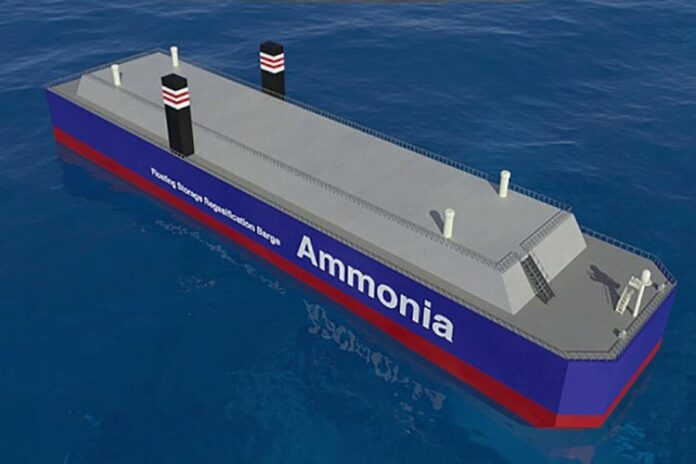
NYK Line, Nihon Shipyard Co., Ltd. (NSY), ClassNK, and IHI Corporation (IHI) signed a joint research and development agreement for the commercialization of an ammonia floating storage and regasification barge (A-FSRB). 

Specifically, the parties will work on the R&D of the world’s first barge equipped with a floating storage and regasification facility for ammonia.
 
Since ammonia does not emit carbon dioxide (CO2) when combusted, it is expected to be a next-generation fuel that contributes to global warming countermeasures. In Japan, technological development is underway for ammonia fuel mixed combustion power generation at coal-fired power plants as an innovative next-generation thermal power generation technology that contributes to the reduction of CO2 emissions. 

On the other hand, when using ammonia in existing thermal power plants, there are issues such as the problem of securing land for new onshore facilities including storage tanks and regasification facilities, and the large initial investment cost.
 
An A-FSRB is an offshore floating facility that can receive and store ammonia that has been transported via ship as a liquid, warm and regasify ammonia according to demand, and then send it to a pipeline onshore. An A-FSRB offers the advantages of shorter construction time and lower costs in comparison to construction of onshore storage tanks and regasification plants. In fact, the A-FSRB is expected to speed up the adoption of ammonia fuel and contribute to its wider use as a lower-environmental-impact next-generation fuel.

AtoB@C Shipping confirms an order for five electric hybrid vessels

0

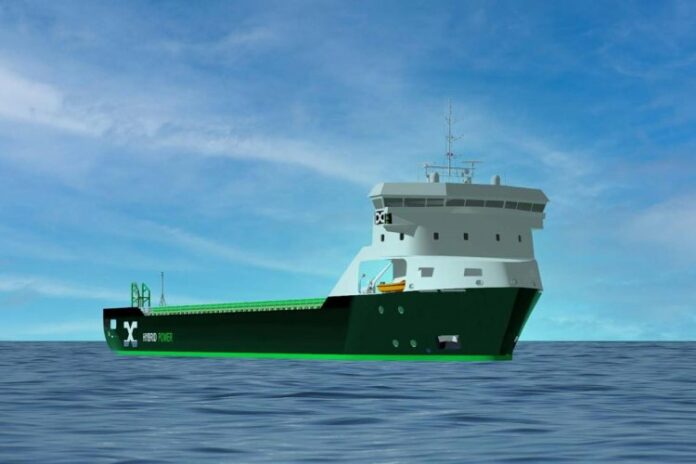
ESL Shipping’s subsidiary AtoB@C Shipping declares an option and order for five additional vessels from the Indian shipyard Chowgule & Company Private Limited, from which the shipping company has previously ordered seven identical electric hybrid vessels. 

Of the series of 12 new-generation electric hybrid vessels, every other vessel is sold to a company formed by a group of investors. As previously announced, the total amount of ESL Shipping’s own investment will remain at the size of six vessels and approximately EUR 70 million.

The first two of the new vessels are already under construction, and the planned delivery of the first vessel is scheduled for the third quarter of 2023. The planned delivery of the last vessel is scheduled for the second quarter of 2026.

As announced earlier, ESL Shipping will establish a long-term GreenCoaster pool for energy efficient electric hybrid vessels together with a group of investors consisting of institutional and private investors.

A pooling structure is a model commonly used in the international shipping business for the ownership and operation of vessels. The forthcoming GreenCoaster pool will accelerate the growth, profitability and return on capital of ESL Shipping’s business. The pool will also form the first phase of the shipping company’s new low-carbon growth strategy that utilizes investor funding and pooling structure.

AtoB@C Shipping will act as the manager of the pool and all vessels in the pool will be placed as part of the shipping company’s existing and growing contract traffic. The investor company is offered complete services related to the construction and maintenance of the vessels on a turnkey basis.

Neptune Energy begins work on 10th Cygnus gas well

0

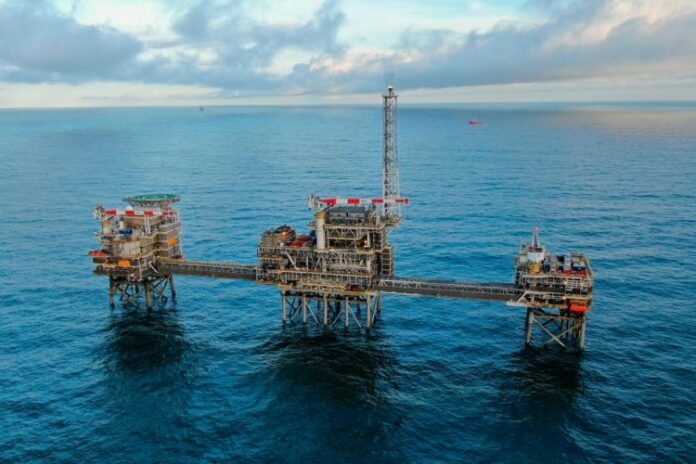
Upon completion of the 10th well on the field in 4Q this year, the Cygnus gas facility will be capable of producing enough gas for approximately 2 million UK households.

Cygnus is an important component of the UK North Sea’s energy infrastructure and has one of the lowest carbon intensities on the UKCS, at ~2kg of CO2/boe2.

Neptune Energy’s UK Country Director, Alan Muirhead, said:

“The 10th well is part of the existing Cygnus field development plan and will support additional supplies of much-needed low carbon gas for UK households from this winter.

“Domestic production has a crucial role in supporting UK energy security and Neptune has been working hard to incrementally increase natural gas supplies from its operated assets, including from Cygnus in the UK and from Gjøa in Norway, which is exported via the FLAGS pipeline to the St. Fergus Gas Terminal in the North-East of Scotland.”

The drilling operation is being carried out by Borr Drilling’s Prospector 1 jack-up rig, equipped with technologies that reduce carbon and nitrogen emissions from drilling by up to 95%, and particle matter emissions by more than 85%.

Cygnus partners: Neptune Energy (operator and 38.75%), Spirit Energy (61.25%)

Scallop harvesting in Arctic by Tau Tech to be supported by Inmarsat Fleet Xpress

0

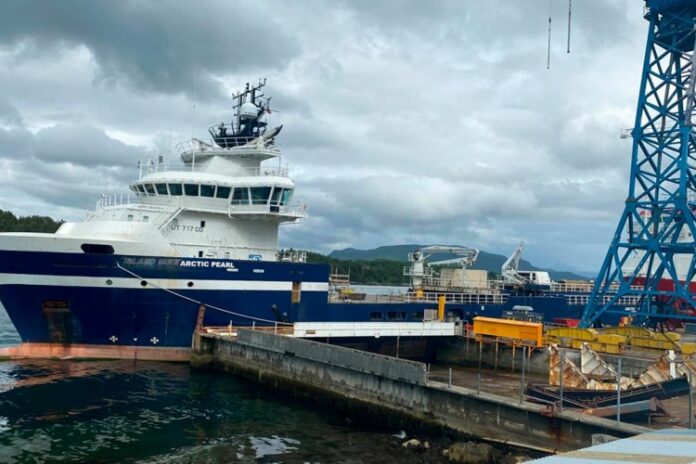
Norwegian company Tau Tech is set to begin sustainable scallop harvesting in the Barents Sea, using technology from Inmarsat, the world leader in global, mobile satellite communications services. Inmarsat’s Fleet Xpress will deliver a consistent, stable, uninterrupted quality of service and seamless high-speed network coverage in the Arctic.

Traditional seabed dredging of scallops has not been allowed by Norwegian authorities for 30 years, due to its damaging effects on marine ecosystems. In cooperation with the Institute of Marine Research, the Directorate of Fisheries and other leading marine experts, Tau Tech has proven over the past five years that its innovative technology makes it possible to identify, select and sort shells without destroying surrounding vegetation and life. The company’s pioneering approach to scallop harvesting will commence in autumn and aims to revive the harvesting of the valuable seafood resource at a commercial scale.

Scott Middleton, Regional Director Sales, Inmarsat Maritime, said:

“Digitalisation in the fishing sector is fast catching up, and Inmarsat has been working closely with fishing vessel operators to deliver integrated and scalable satellite communication solutions to match their operational needs and enable crew welfare. Tau Tech’s new solution opens the door to re-establish commercial scallop seabed harvesting on a fully sustainable basis. Inmarsat is proud to support the company’s project in the Barents Sea – delivering connectivity and providing the option to digitalise and enhance vessel operations in the long term.”

Through the Fleet Edge platform, Inmarsat’s Fleet Xpress offers shipowners access to a broad portfolio of value-added services and supports a flexible, step-by-step approach to digitalisation. Services are delivered via a secure, dedicated network with no impact on mission-critical bandwidth. Fleet Xpress allows users to upgrade bandwidth easily as shipping companies adopt applications at a pace that suits them, from email and basic office applications to IoT-powered solutions and emerging technologies targeting fuel savings, emissions reduction, and other operational enhancements.

Jan Rogne, Technical Manager, Tau Tech, commented:

“Our unique precision seabed harvesting technology enables us to harvest seafood gently, yet efficiently without damaging their fragile surroundings. Inmarsat’s Fleet Xpress installed on our vessel Arctic Pearl, will help us to carry out our operations in a sustainable way and allow us to adopt new services and applications to further enhance operational sustainability, safety and security as new challenges arise.”

Captain Svein Ole Sæther, Arctic Pearl, said:

“Inmarsat’s planned new Arctic satellites are particularly interesting to us, as they will greatly improve connectivity and communications in some of the most hard-to-reach areas on earth.”

The Arctic Circle represents a rapidly growing connectivity region for high-quality broadband with increasing requirements from maritime customers. GX10A and 10B will be the world’s first mobile broadband payloads dedicated to the Arctic region, making Inmarsat the only provider offering dedicated high-throughput mobile broadband connectivity for maritime customers in the Arctic region. The multi-beam, high-throughput HEO (highly elliptical orbit) payloads will ensure continuous coverage and offer the ability to direct capacity in real-time to the areas of highest demand.

Van Oord awarded two new projects in south-east Romania

0

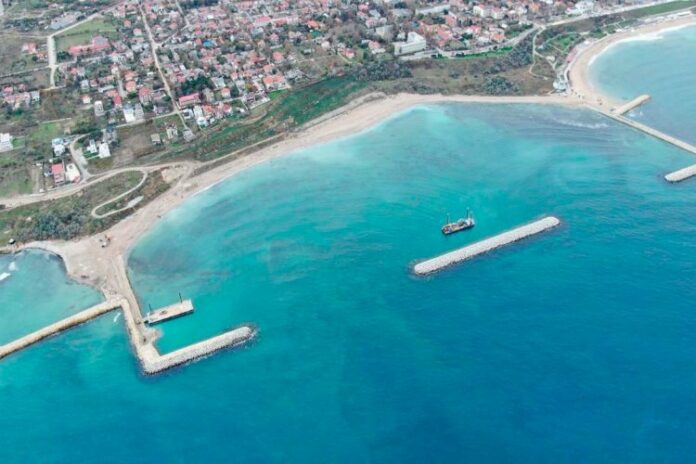
After a two year long European tender process, the Administratia Bazinala de Apa Dobrogea-Litoral (ABA-DL) has chosen Van Oord for the design and construction of new groynes and beaches, this time over a length of 6 km of coastline.

The projects are an addition to similar Projects in Eforie, which are proceeding as expected.

New groynes and beaches will protect the popular coastal areas against the waves of the Black Sea – and at the same time boost the tourism sector. The projects consist not only of smart engineering; sustainability is also a major topic in the development. Several of the current breakwaters will be removed and redeveloped to make way for more nature-friendly alternatives, making the project tie in very well with Van Oord’s vision on sustainability and climate adaptation.

As part of the work scope, the value of marine habitats will be increased through artificial reefs and bio-structures. The replantation of over 12 ha of varying species of sea grass and algae on the Black Sea bed will boost and enrich marine life. Similar initiatives have been successfully implemented in the previous projects in the area.

The construction of the groynes will start in 2023 after the design phase of about twelve months. A trailing suction hopper dredger will be deployed to restore the beaches. The project is expected to be completed in 2025.