1.1 C
New York
Home Blog Page 406

Vestdavit signs order for Rem Offshore CSOV

0

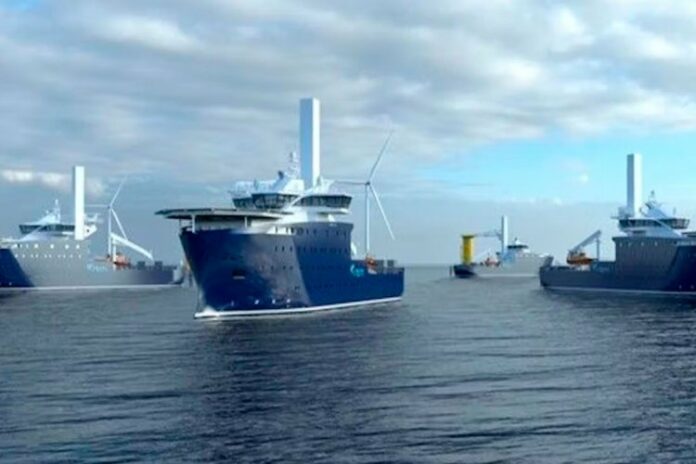
The coveted order for a PAP-15000 davit with painter boom has been secured with contractor Mare Safety for the first of two firm newbuild CSOVs that is due to be delivered in the first half of 2023 from Vard Søviknes.

The advanced CSOV based on the Vard 4 19 design, with a length of 85 metres and beam of 19.5 metres, will carry out service and maintenance operations at offshore wind farms worldwide that are dependent on safe deployment of workboats carrying crew and equipment in variable sea states.

Vestdavit Business Development Director Bjørnar Dahle says:

“The newbuild project for Rem Offshore is significant as it shows this solution is also highly relevant for the offshore wind industry because it is capable of heavy-duty handling of large daughter craft with reliable operation in variable sea states.”

The PAP-15000 has an anti-pendulation system with a fully integrated docking head that is compensated for movement in three dimensions, providing unwavering stability with in and out swings.

Safety and reliability are especially vital elements in offshore wind operations as CSOVs need to operate within a wide weather window to minimise operational downtime, while being able to safely deploy personnel and equipment on workboats in potentially rough sea conditions.

Dahle explains the docking head is an anti-pendulation device installed on a davit to counter swing loads of a boat during launch and recovery, thereby preventing sudden movements in rough seas that could injure the crew or damage equipment, as well as the ship’s structure.  

There are now 48 offshore wind farms under construction worldwide that will add another 17 gigawatts (GW) to current generation capacity of 48.2 GW after a record 15.7 GW was added from 53 new projects that started operation last year, according to the World Forum Offshore Wind.

Research firm Rystad Energy has forecast that further wind farm projects in the pipeline will boost global operational capacity to 265 GW by 2030 when capital expenditure is projected to hit $102 billion, more than double the $46 billion invested last year.

This is being propelled by planned wind farm investments off European nations like the UK, Spain, Norway, Denmark and Poland, as well as other countries including the US, China, Japan and South Korea.

Consequently, the number of SOVs in operation on offshore wind farms worldwide is expected to increase more than threefold to nearly 100 by 2030, up from 32 presently, according to a recent report issued by WindEurope and the Polish Wind Energy Association.

LR Approval in Principle for landmark Norwegian hydrogen ferry project

0

Lloyd’s Register (LR) has awarded Approval in Principle (AiP) to Norwegian ship owner Torghatten Nord for two hydrogen-powered vessels operating on Norway’s longest ferry route, Vestfjordstrekninga, connecting Bodø, Røst, Værøy and Moskenes.

The two vessels, designed by Norwegian Ship Design, will use a minimum of 85% ‘green hydrogen’ based fuel, helping to reduce CO2-emissions on the route by 26,500 tons each year. The two main components of the hydrogen system on board are the hydrogen storage part, feeding hydrogen to fuel cells and the fuel cells themselves, providing electric power for the propulsion and all other consumers on board.  The ferries are scheduled to enter operation in October 2025.

LR awarded the AiP following the completion of a comprehensive and constructive risk-based HAZID certification. The project signifies an important step in the maritime energy transition as the industry moves towards sustainable fuel sources.

Markus Büsig, North Europe President, Lloyd’s Register, said:

“We are pleased to award Torghatten Nord approval in principle based on an extensive risk analysis of the concept and technology. Lloyd’s Register has been present in Norway for 150 years, and we see this as a landmark project that will drive forward the use of hydrogen as a safe and sustainable future fuel.”

Torkild Torkildsen, CEO, Torghatten Nord, said:

“We are pleased with the AiP and we are proud to work with the leading experts on hydrogen as ship fuel. To develop hydrogen ferries on such a long and weather-exposed route is a world-class climate project with great importance for the entire maritime sector and not least Bodø and Lofoten.”

Gjermund Johannessen, Norwegian Ship Design CEO, said:

“The boats that will be developed, built and operated are unmatched anywhere else in the world. We have to think anew and find completely new solutions compared to what we know today as ordinary ships. An impressive job has been done by both Lloyd’s Register and Torghatten Nord to get this Approval in Principle in place.

We have evaluated a number of different solutions for the onboard hydrogen system. and has come up with a unique and safe concept that takes hydrogen’s properties into account. What we are developing now will likely set the standard for an entire class of passenger ships powered by hydrogen.”

The AiP builds on LR’s zero-carbon projects in the region, including the recent Approval in Principle for the hydrogen-fuelled bulk carrier, With Orca, which was granted in March 2022.

Fugro to survey the first large-scale offshore wind farm in Norway

0

This will include mapping the seafloor and sub-seafloor to expand understanding of the site’s geological features and support future developmental phases of the project. The development of the Sørlige Nordsjø II will be divided into two phases of 1500 MW each and will be one of the country’s first large-scale offshore wind farms.

Fugro will mobilise its largest state-of-the-art survey vessel, Fugro Venturer, for the project. A total area of 900 km2 will be surveyed along the eastern side of the site, with Fugro expected to acquire over 5,400 km of geophysical data. 

To gain insight into seabed conditions, Fugro will use a suite of hydrographic surveying technologies and acoustic sensors including full bathymetry and side scan sonar, an ultra high resolution seismic (UHRS) survey, sub-bottom profiler and magnetometer. Additionally, water column data from the multibeam bathymetry system will also be recorded.

NPD has extensive experience in acquiring subsurface data and is happy to see that this can now be utilised in supporting the energy transition.

Robert Abelsen, Fugro’s Service Line Manager for Norway said:

“Being awarded this project highlights our ability to provide services to the evolving Norwegian energy market. We have already provided services to the smaller Norwegian floating wind test sites, and with our global experience in large-scale wind development areas, we’re looking forward to supporting the growing Norwegian offshore wind market.”

Yara and Northern Lights sign agreement on cross border CO2 transport

0

Northern Lights, a JV owned by Equinor, Shell and TotalEnergies, signs the world’s first commercial agreement on cross border CO2 transportation and storage with Yara. 

Yara and Northern Lights have agreed on the main commercial terms to transport CO2 captured from Yara Sluiskil, an ammonia and fertiliser plant in the Netherlands, and permanently store it under the seabed off the coast of Norway.

Anders Opedal, CEO and president of Equinor, says:

“This is a major milestone for the development of carbon capture, transport and storage. With the first commercial agreement for transportation and storage of CO2, we open a value chain that is critical for the world to reach net zero by 2050. Together with our partners, we are building infrastructure to decarbonise industry and energy, securing industrial activity and jobs in a low carbon future.” 

From early 2025, 800,000 tonnes of CO2 will be captured, compressed and liquefied in the Netherlands, and then transported by ship to the terminal for storages at 2,600 metres under the seabed on the Norwegian continental shelf.

There is significant storage capacity on the Norwegian continental shelf, where Equinor and partners have decades of experience from CO2 capture and storage at the Sleipner and Snøhvit fields. Large-scale CO2 capture from industries and storage of CO2 safely under the seabed, will enable the decarbonisation of hard to abate existing industries, that emits CO2 as part of their processes.

Irene Rummelhoff, executive vice president for Marketing, midstream and processing in Equinor, says:

“With this commercial agreement, we are passing a major milestone in the development of a value chain for carbon capture, transport and storage. We experience an increased demand for this service, particularly from large industrial clusters on the European continent. Capture, transport and storage of CO2 is also a prerequisite to produce blue hydrogen and ammonia. These products can eliminate emissions in several energy sectors and act as low carbon feedstock in many industries.”

With the volumes from Yara, phase 1 has reached full capacity and Northern Light JV is now working to mature phase 2 for final investment decision increasing the total capacity to 5-6 million tonnes CO2 per year.

New decommissioning hub at Aberdeen South Harbour

0

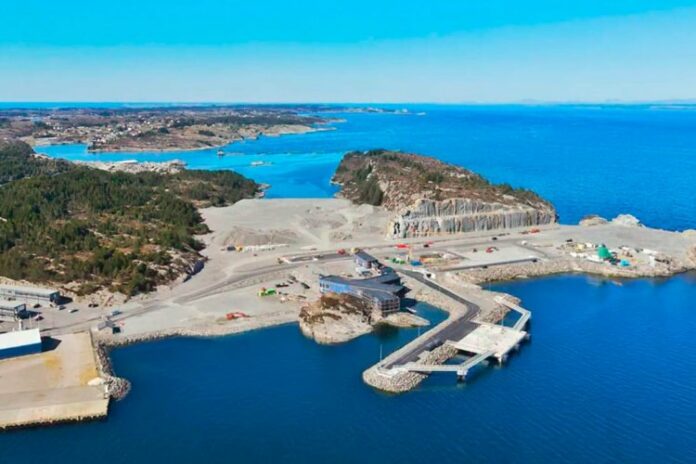
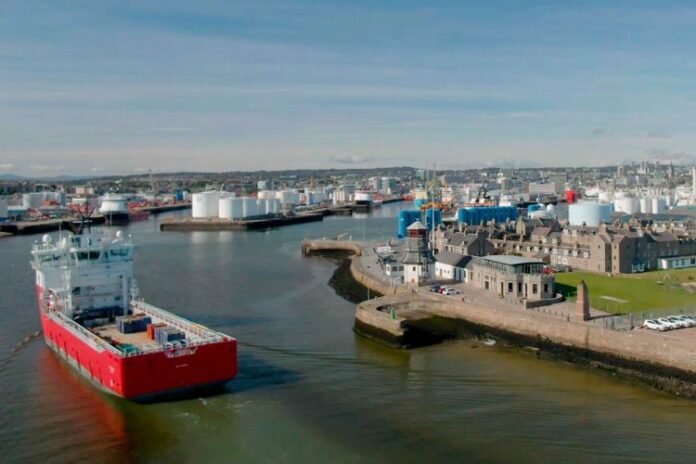
The new hub will be located within Crathes Quay at South Harbour and deliver dismantling, recycling, and reuse services with a key focus on subsea infrastructure. The jobs boost is expected over the next 12 months and CessCon will be encouraging applications from people living locally.

The facility is being established under a Memorandum of Understanding between the Port and CessCon, which aims to establish Aberdeen as a centre of excellence and port of choice for the offshore decommissioning sector. The agreement complements and expands the decommissioning services currently offered at the Port’s North Harbour and CessCon’s Energy Park Fife Decommissioning Facility.

The South Harbour decommissioning hub will offer heavy lift zones, impermeable concrete dismantlement and processing areas, water collection and treatment facilities, material storage areas, offices, and canteen facilities.

CessCon has a minimum target on all projects of 98% reuse and recycling (by weight) of all material and has achieved over 99% reuse and recycling on several projects to date.

The South Harbour expansion significantly enhances the Port’s capability and capacity, adding 1.4km of deepwater berths, considerable heavy-lift, flexible laydown space and expansive project areas. 

The Port commenced a ‘soft start’ to operations at South Harbour in July and has already welcomed a range of vessels while construction continues at pace. South Harbour will be operational by the end of October 2022 and construction will conclude in Q2 2023 when the final quay is brought into service.

The expanded Port of Aberdeen is at the heart of the North East Scotland Green Freeport bid which will create up to 32,000 high quality jobs and opportunities for those that need them most, boost GVA by £8.5 billion and transform the region into the ‘Net Zero Capital of Europe’. The bid is backed by a wide range of private sector companies, academia and parliamentarians from across the political divide.

Bob Sanguinetti, Chief Executive, Port of Aberdeen, said:

“Decommissioning is an important part of the UK’s energy transition and there are growing opportunities to reuse, repurpose and recycle material during the decommissioning process. We are keenly focused on this with CessCon and it complements our vision of becoming Scotland’s premier net zero port at the heart of the nation’s energy transition.”

“South Harbour is an asset of national strategic significance for the Scottish and UK Governments. Green Freeport status for North East Scotland is essential if we’re to maximise the economic benefit of the project for the local community and the national economy.”

Lee Hanlon, Chief Executive, CessCon Decom, said:

“The new facility will be capable of handling turnkey decommissioning projects and the associated vessels. The substantial laydown and processing areas and water depths allow us to accommodate vessels up to 300m in length. With direct access to the North Sea, the facility is well placed to service the growing decommissioning market in parallel with our Energy Park Fife Decommissioning Facility in Methil, Fife.”

Aker Solutions and Aker BP award Valhall LOI to Rosenberg Worley

0

This contract represents the largest new-build project in many years, and it will lead to 1,000 jobs at Rosenberg in Stavanger.

Aker BP CEO Karl Johnny Hersvik says:

“With this award, Aker BP and Aker Solutions are ensuring additional ongoing activity in Norway, in a project that falls under the temporary tax changes. The choice of a Norwegian yard is entirely deliberate. It demonstrates that we’re responding to the politicians’ expectations to preserve activity, guarantee jobs and develop expertise in Norwegian industry during the period before renewables projects ramp up in scope.” 

Aker BP and its licence partners are carrying out a coordinated development of several licences in the Valhall area. The project is called Valhall PWP–Fenris (previously NCP/King Lear) and it is being delivered by the Fixed Facilities Alliance between Aker BP, Aker Solutions and ABB.

Valhall PWP consists of three large modules totalling more than 15,000 tonnes. The process module will be built by Aker Solutions on Stord. Rosenberg Worley will deliver the wellbay module and the utility module. The platform will be assembled on Stord.

Aker Solutions CEO Kjetel Digre says:

“This award is a good example of cooperation between competing companies such as Aker Solutions and Rosenberg Worley to utilise a larger share of the supplier base – in the best interests of the industry in Norway. It is entirely necessary to keep and develop expertise in the industry.”

The letter of intent presumes approval of plan for development and operation (PDO) by the Storting, and it has a value for Rosenberg of around NOK 1.6 billion. If approved, the Valhall modules will bring jobs for more than 1,000 people at Rosenberg in Stavanger. Construction is scheduled to start in autumn 2023.

Rosenberg Worley Managing Director Jan Narvestad says:
“The construction of the Valhall modules will be important in maintaining the high activity, and will help preserve expertise and capacity at Rosenberg in the extension of ongoing projects and towards new market areas. We expect that around 40 apprentices will be able to complete their vocational training as a result of the project. These are young people who’ll be essential in developing renewable projects at our company in the future.” 

Aker BP and the licence partners Pandion Energy og PGNiG Upstream Norway are planning to invest between NOK 40 and 50 billion in Valhall PWP–Fenris. The partners are on track to submit the PDO towards the end of the year. The PDO will be deliberated in the Storting before the summer of 2023. 

Karl Johnny Hersvik says:

“Through Valhall PWP–Fenris, we’re planning to establish Valhall as a gas hub in the southern North Sea, which will provide sorely needed gas deliveries to Europe. At the same time, we’ll be maximising the value of a giant with very low emissions on the Norwegian shelf. This project is an important contribution toward the ambition to produce a total of two billion barrels and extend the lifetime of the Valhall area to 2060. The value creation from this area has vast ripple effects and provides substantial tax revenue for the broader society.” 

In total, the development of Valhall PWP–Fenris is expected to create 65,000 full-time equivalents in Norway during the project and operations phase. The Norwegian share of the project is more than 65 per cent.

New wood-chip carrier for Marusumi Paper delivered

0

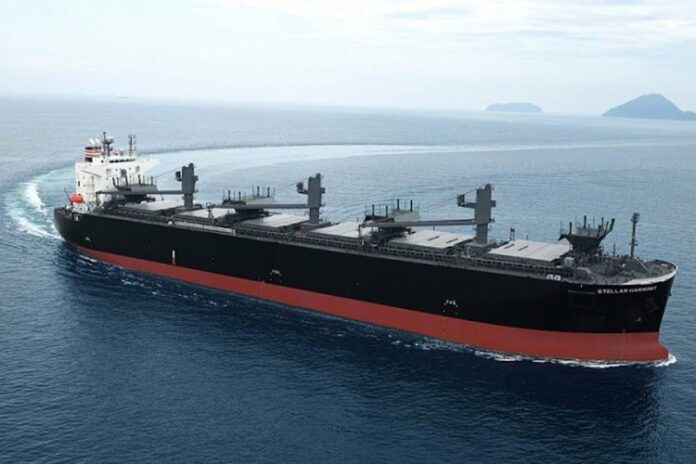
On August 23, Stellar Harmony, a dedicated wood-chip carrier, was delivered at the shipyard of Iwagi Zosen Co., Ltd., a member of the Imabari Shipbuilding Group.

The vessel will transport environmentally and socially conscious wood chips mainly from New Zealand, Australia, North America, and South America under a long-term contract between NYK and Marusumi Paper Co., Ltd.

Stellar Harmony comes equipped with hybrid fins (energy-saving equipment installed on the rudder to improve propulsion efficiency) and an energy-saving governor (equipment that saves fuel and reduces the load during main engine operation), as well as an eco-friendly main engine with specifications that improve fuel efficiency during low-load operation.

The ship will also pump in seawater along its routes to collect microplastics floating in the ocean. The collected microplastics will be unloaded and analyzed by the Chiba Institute of Technology and used for research to clarify the actual distribution of microplastics in the ocean.

Neptune Energy confirms new discovery in the Gjøa area

0

Neptune Energy and its partners today announced a new commercial discovery at the Ofelia exploration well (PL 929), close to the Gjøa field in the Norwegian sector of the North Sea.  

The preliminary estimate of recoverable volume is in the range of 2.5-6.2 million standard cubic meters (MSm3) or 16-39 million barrels of oil equivalent (mmboe). In addition to the Agat volumes, north of the well there is an upside of around 10 mmboe recoverable gas in the shallower Kyrre formation, which brings the total recoverable volume to approximately 26-49 mmboe. 

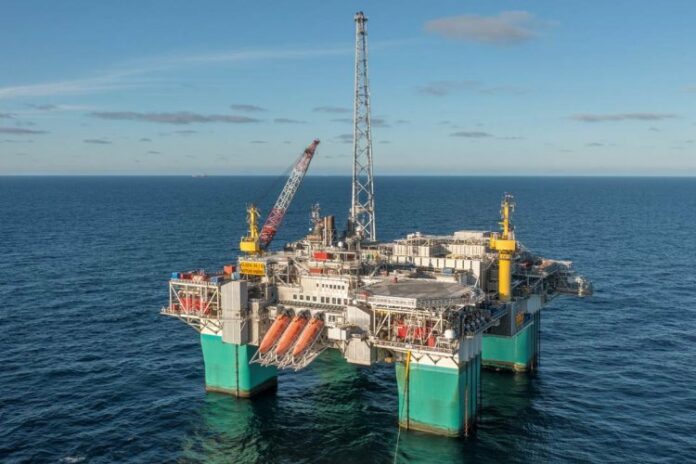
Located 15 kilometres north of the operated Gjøa platform, at a water depth of 344 metres, Ofelia will be considered for development as a tie-back to Gjøa, in parallel with the company’s recent oil and gas discovery at Hamlet. The platform is electrified with power from shore and produces at less than half the average carbon intensity of Norwegian Continental Shelf fields1.

Neptune Energy’s Managing Director for Norway and the UK, Odin Estensen, said:

“I am pleased to announce our second discovery in four months which further enhances Neptune’s position in the Greater Gjøa Area.  

“Gjøa is an important growth area for Neptune in Norway, where existing infrastructure allows for low cost and low carbon developments.” 

The Ofelia drilling program confirmed an oil/water contact at 2,639 metres total vertical depth.  

It is the third discovery by Neptune Energy in the Agat formation, a reservoir which until recently was not part of established exploration models on the Norwegian Shelf.  The first was at the Duva field, which is now onstream and being operated by Neptune. The second was the company’s discovery at Hamlet, with estimated recoverable volumes between 8-24 mmboe. Together these discoveries contribute to the opening of a new geological play in Norway and can add additional new volumes to the Neptune operated Gjøa facilities. 

Neptune Energy’s Director of Exploration & Development in Norway, Steinar Meland, added: “The Ofelia discovery underlines the strength of our exploration strategy and confirms the high prospectivity potential of the area around Gjøa, where we have several more exciting exploration opportunities.”   

Ofelia was drilled by the Deepsea Yantai, a semi-submersible rig, owned by CIMC and operated by Odfjell Drilling.  

Float out of Arvia at MEYER WERFT

0

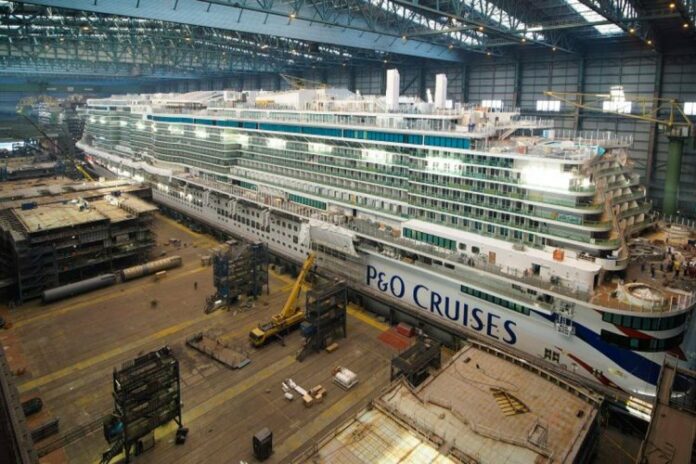
The float out maneuver begins in the morning at around 9:00 am. The newbuilding will then moor at the out-fitting pier in the shipyard harbor, where the masts and funnel will be lifted onto the ship by crane.

The cruise ship will lie in the shipyard harbor until the Ems conveyance in October. The Arvia will thus form the backdrop for the NDR2 Papenburg Festival on 2 and 3 September. Until the conveyance, the interior work on board will be continued and further technical tests will be carried out.

Weather and/or production-related changes to the time when the ship is undocked are possible at any time.

The Arvia measures over 180,000 GT, is 344.5 metres long, 42 metres wide and identical in construction to her sister ship Iona, which was already delivered in 2020. After her completion, around 5,200 passengers will be able to go on board. Like Iona, Arvia will be powered by environmentally friendly liquefied natural gas (LNG). This ensures significantly lower emissions at sea, as neither sulphur oxides nor soot particles are released. This is currently the cleanest form of propulsion in shipping. Another highlight for the passengers on board is the atrium, which is glazed over three decks and will offer a unique view of the sights and cities visited.

After the undocking of the Arvia, the floating engine room module (FERU) for the Carnival Jubilee, which will be delivered at the end of 2023, will be manoeuvred into the then free building dock II. The front part of the cruise ship has already been built there in block construction over the past few months. The FERU was built at NEPTUN WERFT in Rostock and was transferred to Papenburg a week ago.

Damen delivers a Cutter Suction Dredger 650 to HAC Cranes

0

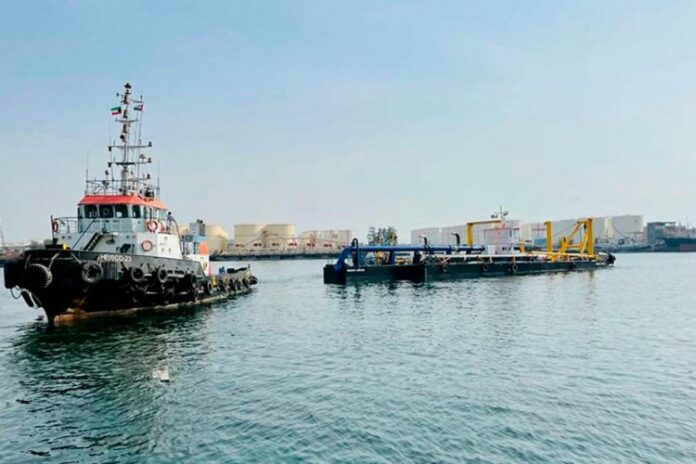
Damen has delivered a CSD650 to HAC Cranes for an end user in Kuwait. The stationary dredger, named GD4000, was mobilized from stock and outfitted, inspected and delivered from the yard to its final destination, all in just 44 days from contract signature. After some modification work and the installation of some extra onboard options in Kuwait, the dredger will be put into operation by Gulf Dredging.

The CSD650 was built on speculation at Damen Albwardy’s shipyard in Sharjah, Dubai. As such, it had just been added to the dredger stock and so was available for immediate delivery. When the customer expressed the requirement for an immediately available stationary dredger, the CSD650 was put forward and, with the contract signed, began customization using options also available in stock. To address the challenging timing with regard to logistics and supply, the parties collaborated successfully to arrange for the final customization and installation work to be completed in Kuwait after delivery.

This customization process included adding an anchor boom installation, a deck crane and a dredging instrumentation package. Moreover, navigation and communication equipment was added on the customer’s request. The CSD650 is designed to pump up to 7,000 m3/h at a maximum dredging depth of around 18 meters.

Mr Boran Bekbulat, Regional Sales Director, underlines:

“This large dredger has been delivered incredibly fast. Due to the remarkable cooperation between all parties involved, who were all energized by the urgent requirement for the dredger, all phases of the delivery process went smoothly. The dredger was even towed to Kuwait by the end user itself in record time.”

Boran Bekbulat adds:

“The extraordinary timeline of the delivery process has just established another milestone. The cooperation between all the parties involved was spectacular. We trust that the CSD 650 will meet HAC Cranes’ expectations and that the end user, Gulf Dredging, a regional leader in marine and civil construction, dredging and other offshore works, will find it to be a significant asset for itself and its customers.”