1.1 C
New York
Home Blog Page 405

ABS and NOV qualifying pioneering subsea ammonia storage system

0

The Joint Development Project (JDP) includes NOV, ABS, Equinor, Shell, The Research Council of Norway and The Net Zero Technology Centre. 

This project unites a group of industry leaders actively enabling an economical subsea storage solution for the market.

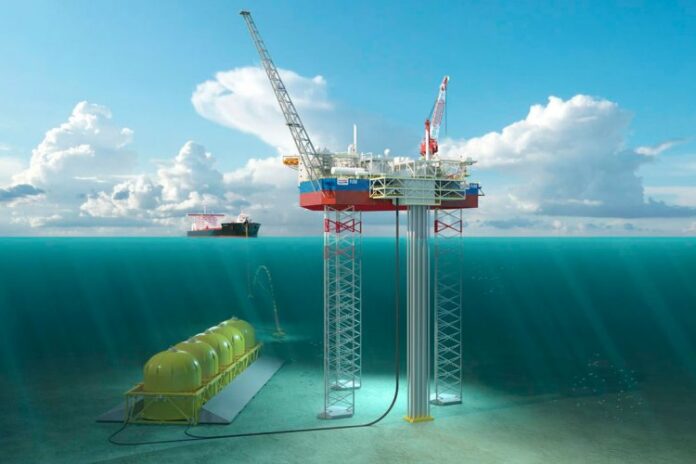
The subsea technology brings a new and unique solution for the safe storage of larger volumes of fluids such as enhanced oil recovery (EOR) chemicals, production chemicals, oil, condensate, and maritime fuels. The subsea storage system is being designed to be placed at any water depth and adjusted in capacity depending on customer requirements.

The industry-leading NTQ process from ABS offers guidance on early adoption and efficient implementation of new technologies – demonstrating their level of maturity – and that potential risks have been systematically reviewed.

Patrick Ryan, ABS Senior Vice President of Global Engineering and Technology, said:

“We are excited to collaborate with NOV and the other project partners on this new technology. It has the capacity to add flexibility to an operator’s logistical package, especially when topside space is limited, and to improve the overall safety profile of upstream storage needs. Our primary goal is always to work with the offshore industry to verify the components that will allow safe and reliable subsea development.” 

Jan Rytter, R&D Director, NOV SPS, said:

“The subsea storage technology is one of those game-changing technologies, allowing the storage on the seabed of all type of fluids whether it is for the oil and gas industry, as an all-electric enabler, or e-fuels such as e-methanol and liquid ammonia for the rapidly growing shipping industry.

We are thrilled to collaborate with ABS on this JIP, together with Equinor, Shell, The Research Council of Norway and The Net Zero Technology Centre towards qualifying the subsea storage technology that will enable a safer and low-emission future and contributing to the global greenhouse gas reduction strategy for both the energy and shipping industry.” 
e1 Marine methanol to hydrogen generator receives AiP from Marshall Islands

0

e1 Marine, a global renewable energy company, announced today that its M-series methanol to hydrogen generator has received Approval in Principle (AiP) for marine applications from the Republic of the Marshall Islands (RMI) Maritime Administrator on any vessel type.

Quickly following the AiP from Lloyd’s Register in May 2022, the AiP from the RMI Maritime Administrator provides further confirmation that e1 Marine’s technology has the potential to become an important player in developing and delivering low-carbon energy to international maritime markets and is accelerating its development and growth on a global scale in line with demand.

Robert Schluter, Managing Director at e1 Marine, commented:

“The M-series methanol to hydrogen generator is making hydrogen a viable fuel option for the maritime industry for vastly different applications. The AiP letter from the RMI Maritime Administrator is one step forward in our efforts to work with flag states to support vessel decarbonization. Our technology emits zero NOx, SOx and PM emissions which is helping to meet regulation but also assist with the potential for a carbon tax. This technology delivers a proven efficiency gain over legacy internal combustion engines with a more reliable, safer, and greener fuel than traditional marine bunkers and we look forward to demonstrating this in the near future.”

Gary Noonan, Director of Innovation at Ardmore Shipping added:

“Shipowners are under pressure to reduce emissions in line with International Maritime Organization (IMO) measures. For Ardmore, the IMO 2030 and 2050 timelines are targets which we are trying to meet and exceed but this means taking innovative and comprehensive strategies to achieve this. When combined with PEM fuel cell technology, the e1 Marine Methanol Reformer costs are comparable with a Tier III generator set. However, it also shows more than a 25% relative improvement when comparing energy efficiencies in typical operation. This helps vessels to improve Carbon Intensity Indicator ratings and can be maximized further when using green methanol.”

David Wamsley, Deputy Commissioner of Maritime Affairs of the RMI Maritime Administrator said:

“It is essential to create the right infrastructure to support sustainable shipping practices and protect marine life and coastal communities. Collaborating on new innovative technologies, like e1Marine’s M-series methanol to hydrogen generator, which will help shipowners explore new options for sustainable shipping, is one way to achieve this goal. Innovative low and zero-carbon energy providers are in a position to transform the shipping industry and we look forward to seeing what progress can be made in the short- and medium-terms.”

Through e1 Marine’s patented hydrogen generation technology, fuel cell-grade hydrogen is safely and cost-effectively generated from methanol and water. It can be delivered on-site, onboard, and on-demand, and it provides an immediately viable pathway to green energy.

The fuel cell grade hydrogen output meets all relevant ISO standards, and it is ideal for use with fuel cells to generate electricity or to supplement the standard fuel of a conventional engine.

Côte d’Ivoire Terminal gears up with new equipment

0

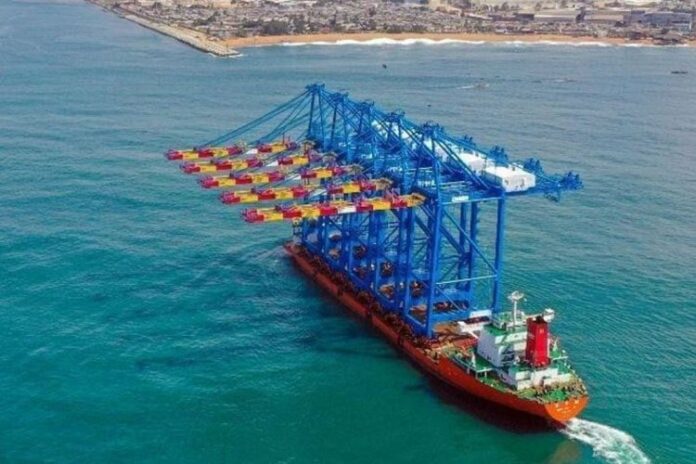
The new terminal has received 6 Ship-to-Shore (STS) cranes and 7 rubber-tyred gantry (RTG) cranes from ZPMC. This was the last delivery of equipment before the terminal goes live, which is expected in November 2022.

The new, fully electric equipment arrived in Abidjan on a semi-submersible vessel and is expected to significantly reduce energy consumption and CO2 emissions of the facility compared to a terminal running on diesel equipment. Thanks to a total investment of 262 billion CFA Francs (approx. 400 million Euro), CIT will, once completed, be equipped with 6 STS cranes, 13 RTG cranes and 36 tractors – all electric. This is fully aligned with APM Terminals’ ambition to achieve net zero emissions by 2040 and a 70% emission reduction by 2030. As the next step, the terminal is also investigating the switch to green sources of electricity to power the equipment.

Koen De Backker, Managing Director of Côte d’Ivoire Terminal, said:

“The arrival of this equipment marks an important milestone for of our second container terminal, with the progress of the development of the container fleet estimated today at 95%. Arrival and commissioning of this equipment was the last element we were waiting for before we can start the operational testing phase.” 

The new terminal aims to improve logistics services in Côte d’Ivoire and the countries of the sub-region and is expected to generate 450 direct and thousands of indirect jobs. It will contribute to development of skills and to training of young Ivorians in port operations and handling of next-generation equipment.

Hien Yacouba Sié, Director General of the Port Autonome d’Abidjan, said:

“We are pleased and proud to receive the latest gantries for container handling at Côte d’Ivoire Terminal. The arrival of these handling machines marks an important step in the finalization of the construction of the 2nd container terminal of the port of Abidjan. This project renews the Ivorian government’s commitment to the development of port infrastructure in Côte d’Ivoire and the increase of trade in the sub-region.” 

Wintershall Dea and Equinor partner up for large-scale CCS value chain in the North Sea

0

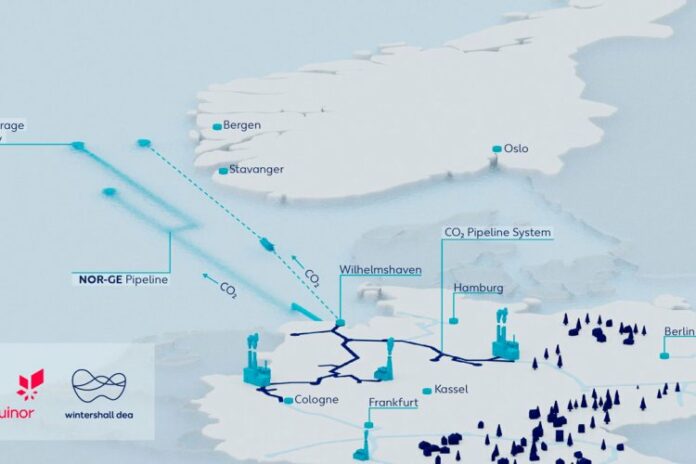
Wintershall Dea and Equinor have agreed to pursue the development of an extensive and safe Carbon Capture and Storage (CCS) value chain connecting continental European CO2 emitters to offshore storage sites on the Norwegian Continental Shelf. The ambition of the Norwegian-German CCS project ‘NOR-GE’ is to make a vital contribution to reducing greenhouse gas emissions in Europe.

Mario Mehren, CEO of Wintershall Dea, commented:

“Wintershall Dea and Equinor will work together to establish technical and commercial solutions for the development of cross-border CCS value chains in Europe and work with governments to shape a regulatory framework that can enable this. We will build on our close cooperation and open the next chapter of German-Norwegian partnership.” 

Through the partnership, both companies are responding to the European demand for the large-scale decarbonisation of carbon-intensive industries that need safe and large-scale underground CO2 storage to abate unavoidable emissions from their processes. The partnership intends to connect Germany, the largest CO2 emitter in Europe, and Norway, which has Europe’s largest CO2 storage potential.

Anders Opedal, CEO and President of Equinor, said:

“This is a strong energy partnership supporting European industrial clusters’ need to decarbonise their operations. Wintershall Dea and Equinor are committed to the energy transition and will utilise the competence and experience of both companies to work with governments and partners to help reach the net-zero target.” 

An approximately 900-kilometre-long open access pipeline is planned to connect the CO2 collection hub in Northern Germany and the storage sites in Norway and is aimed to be commissioned by 2032. It is expected to have a capacity of 20 to 40 million tonnes of CO2 per year – equivalent to around twenty per cent of all German industrial emissions per year1. The project will also consider an early deployment solution where CO2 is planned to be transported by ship from the CO2 export hub to the storage sites.

Wintershall Dea and Equinor also plan to jointly apply for offshore CO2 storage licences, aiming to store between 15 and 20 million tonnes per year on the Norwegian Continental Shelf.

K Line conducts trial use of marine biofuel on Supramax bulker

0

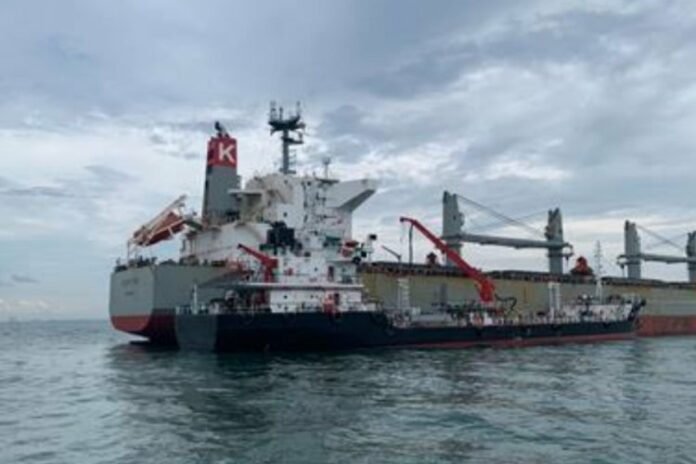
Kawasaki Kisen Kaisha, Ltd. has conducted a trial use of marine biofuel which was supplied by pioneering marine biofuel supply company GoodFuels on Supramax bulker “ALBION BAY” with the cooperation of JFE Steel Corporation.

“K” LINE signed a deal for marine biofuel supply with GoodFuels. The vessel completed the loading operation of Hot Rolled Steel Coils at JFE Steel Corporation West Japan Works on July 24th, 2022 and started navigation to discharging port at Pakistan. The marine biofuel was delivered to the vessel at off Singapore on Aug 3rd, 2022. After leaving Singapore, the vessel conducted the trial use of the marine biofuel and safely arrived at discharging port on Aug 16th, 2022.

Marine biofuel has the potential to become an environmentally friendly alternative fuel generally. Bio-diesel will be able to reduce CO2 by about 80-90% in the well-to-wake (from fuel generation to consumption) process without changing current engine specifications. “K” LINE conducts this trial by using marine biofuel blended with bio-diesel and fossil fuel.

In addition to this trial, “K” LINE is planning same kind of trial use of marine biofuel by cape size bulker for raw material shipment of JFE Steel Corporation.

Neptune Energy and Horisont Energi to cooperate on Errai CCS project

0

Errai could store 4-8 million tonnes of CO2 annually, with the potential to store more in later phases. The project includes an onshore terminal for intermediate CO2 storage, with the intention to permanently store the CO2 in an offshore reservoir.  

The onshore terminal would be capable of receiving CO2 from European and domestic customers, including from the planned CO2 terminal at the Port of Rotterdam. Several onshore locations in Southern Norway are being evaluated for the terminal.  

Neptune Energy brings subsurface expertise and extensive carbon capturing and storage experience to the project, having  reinjected CO2 in the K12-B gas field in the Dutch North Sea for the last 14 years, as well as being a partner in the Norwegian Snøhvit field, which has been reinjecting CO2 since 2008. 

Bjørgulf Haukelidsæter Eidesen, CEO of Horisont Energi, said:

“We are delighted that Neptune Energy chose to work with us on this large-scale industrial CCS project. There is a growing demand for CO2 storage in the market. We believe that this project and our other CCS activities are essential for the net zero transition.” 

Neptune Energy’s Managing Director for Norway and the UK, Odin Estensen, said:

“Sharing the vision of carbon neutrality, Neptune is excited to partner up with Horisont Energi. We look forward to leveraging both our oil and gas operations capabilities as well as our significant experience of operating carbon capture and storage activities.  

“Errai complements Neptune’s strategy to store more carbon than is emitted from our operations and from the use of our sold products by 2030.” 

CCS developments are crucial for accelerating the transition to a lower carbon future, and the Errai project can play an important role in this phase. 

The Errai project was initiated by Horisont Energi in 2021.

Offshore wind consortium sign MoU with Windport AS

0

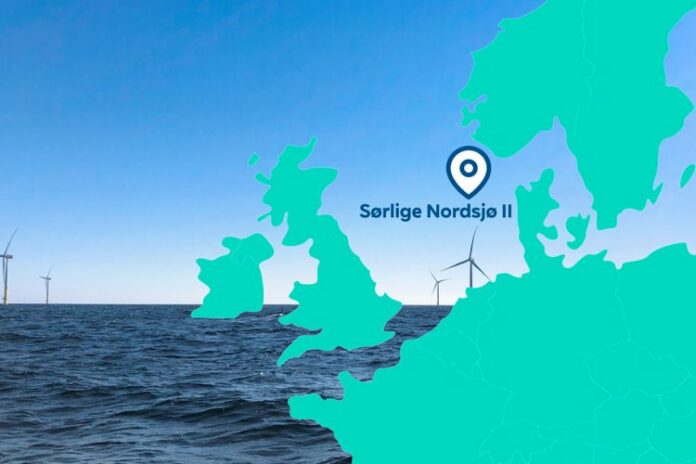
RWE Renewables, Equinor and Hydro REIN jointly aim to develop a large-scale bottom-fixed offshore wind farm in the Sørlige Nordsjø II area in the North Sea. 

Windport AS, a wholly owned subsidiary of Global Ocean Technology, aim to provide port facilities for the development and construction phase of the wind farm. In the agreement signed with Windport AS, the parties have agreed to exchange and discuss information to assess feasibility for a potential industrial development, related to such port facilities. The agreement does not cover operations and maintenance base facilities. This is covered in a separate process towards potential Norwegian harbor locations.

Arne Eik, project director for Sørlige Nordsjø II from Equinor, says:

“We are pleased to enter into this initiative. The Norwegian Government has set a target for offshore wind of 30 GW in Norway by 2040. The North Sea has among the world’s best wind resources. A large-scale offshore wind farm at Sørlige Nordsjø II could play a key role in expanding the North Sea as an offshore energy hub, and create new industrial opportunities.”

Pål Tore Svendsen, Head off offshore wind at Hydro REIN, says:

“The expansion of offshore wind is a crucial factor for a successful energy transition in Europe. We at RWE will bring in our extensive experience and knowledge, and contribute to help Norway in delivering its offshore wind ambitions, together with our partners,” says Matilda Machacek, Development Nordics RWE Renewables.

“Efficient assembly and logistics will be key to projects in the Sørlige Nordsjø. We are impressed by the proactivity and efforts from Windport and the municipalities in the area.”

Øystein Sunde Pedersen, Chief Executive Officer of Windport AS, says:

“The planned offshore wind development in the Sørlige Nordsjø II area represents great business opportunities for the Southern part of Norway, and we are looking forward to jointly explore how the Mandal area can provide the port facilities needed, with Equinor, RWE and Hydro.”

The Norwegian Government has announced that the first phase of the Sørlige Nordsjø II area will be auctioned during 2023, giving the winner the opportunity to develop a 1.5 GW windfarm that provides power to the Norwegian mainland.

Vestdavit signs order for Rem Offshore CSOV

0

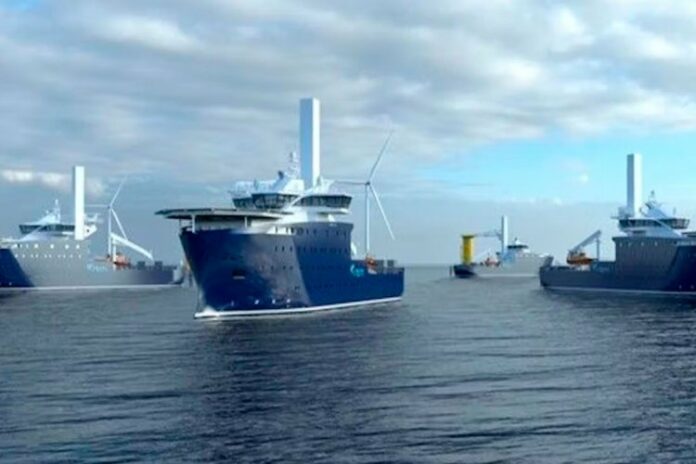
The coveted order for a PAP-15000 davit with painter boom has been secured with contractor Mare Safety for the first of two firm newbuild CSOVs that is due to be delivered in the first half of 2023 from Vard Søviknes.

The advanced CSOV based on the Vard 4 19 design, with a length of 85 metres and beam of 19.5 metres, will carry out service and maintenance operations at offshore wind farms worldwide that are dependent on safe deployment of workboats carrying crew and equipment in variable sea states.

Vestdavit Business Development Director Bjørnar Dahle says:

“The newbuild project for Rem Offshore is significant as it shows this solution is also highly relevant for the offshore wind industry because it is capable of heavy-duty handling of large daughter craft with reliable operation in variable sea states.”

The PAP-15000 has an anti-pendulation system with a fully integrated docking head that is compensated for movement in three dimensions, providing unwavering stability with in and out swings.

Safety and reliability are especially vital elements in offshore wind operations as CSOVs need to operate within a wide weather window to minimise operational downtime, while being able to safely deploy personnel and equipment on workboats in potentially rough sea conditions.

Dahle explains the docking head is an anti-pendulation device installed on a davit to counter swing loads of a boat during launch and recovery, thereby preventing sudden movements in rough seas that could injure the crew or damage equipment, as well as the ship’s structure.  

There are now 48 offshore wind farms under construction worldwide that will add another 17 gigawatts (GW) to current generation capacity of 48.2 GW after a record 15.7 GW was added from 53 new projects that started operation last year, according to the World Forum Offshore Wind.

Research firm Rystad Energy has forecast that further wind farm projects in the pipeline will boost global operational capacity to 265 GW by 2030 when capital expenditure is projected to hit $102 billion, more than double the $46 billion invested last year.

This is being propelled by planned wind farm investments off European nations like the UK, Spain, Norway, Denmark and Poland, as well as other countries including the US, China, Japan and South Korea.

Consequently, the number of SOVs in operation on offshore wind farms worldwide is expected to increase more than threefold to nearly 100 by 2030, up from 32 presently, according to a recent report issued by WindEurope and the Polish Wind Energy Association.

LR Approval in Principle for landmark Norwegian hydrogen ferry project

0

Lloyd’s Register (LR) has awarded Approval in Principle (AiP) to Norwegian ship owner Torghatten Nord for two hydrogen-powered vessels operating on Norway’s longest ferry route, Vestfjordstrekninga, connecting Bodø, Røst, Værøy and Moskenes.

The two vessels, designed by Norwegian Ship Design, will use a minimum of 85% ‘green hydrogen’ based fuel, helping to reduce CO2-emissions on the route by 26,500 tons each year. The two main components of the hydrogen system on board are the hydrogen storage part, feeding hydrogen to fuel cells and the fuel cells themselves, providing electric power for the propulsion and all other consumers on board.  The ferries are scheduled to enter operation in October 2025.

LR awarded the AiP following the completion of a comprehensive and constructive risk-based HAZID certification. The project signifies an important step in the maritime energy transition as the industry moves towards sustainable fuel sources.

Markus Büsig, North Europe President, Lloyd’s Register, said:

“We are pleased to award Torghatten Nord approval in principle based on an extensive risk analysis of the concept and technology. Lloyd’s Register has been present in Norway for 150 years, and we see this as a landmark project that will drive forward the use of hydrogen as a safe and sustainable future fuel.”

Torkild Torkildsen, CEO, Torghatten Nord, said:

“We are pleased with the AiP and we are proud to work with the leading experts on hydrogen as ship fuel. To develop hydrogen ferries on such a long and weather-exposed route is a world-class climate project with great importance for the entire maritime sector and not least Bodø and Lofoten.”

Gjermund Johannessen, Norwegian Ship Design CEO, said:

“The boats that will be developed, built and operated are unmatched anywhere else in the world. We have to think anew and find completely new solutions compared to what we know today as ordinary ships. An impressive job has been done by both Lloyd’s Register and Torghatten Nord to get this Approval in Principle in place.

We have evaluated a number of different solutions for the onboard hydrogen system. and has come up with a unique and safe concept that takes hydrogen’s properties into account. What we are developing now will likely set the standard for an entire class of passenger ships powered by hydrogen.”

The AiP builds on LR’s zero-carbon projects in the region, including the recent Approval in Principle for the hydrogen-fuelled bulk carrier, With Orca, which was granted in March 2022.

Fugro to survey the first large-scale offshore wind farm in Norway

0

This will include mapping the seafloor and sub-seafloor to expand understanding of the site’s geological features and support future developmental phases of the project. The development of the Sørlige Nordsjø II will be divided into two phases of 1500 MW each and will be one of the country’s first large-scale offshore wind farms.

Fugro will mobilise its largest state-of-the-art survey vessel, Fugro Venturer, for the project. A total area of 900 km2 will be surveyed along the eastern side of the site, with Fugro expected to acquire over 5,400 km of geophysical data. 

To gain insight into seabed conditions, Fugro will use a suite of hydrographic surveying technologies and acoustic sensors including full bathymetry and side scan sonar, an ultra high resolution seismic (UHRS) survey, sub-bottom profiler and magnetometer. Additionally, water column data from the multibeam bathymetry system will also be recorded.

NPD has extensive experience in acquiring subsurface data and is happy to see that this can now be utilised in supporting the energy transition.

Robert Abelsen, Fugro’s Service Line Manager for Norway said:

“Being awarded this project highlights our ability to provide services to the evolving Norwegian energy market. We have already provided services to the smaller Norwegian floating wind test sites, and with our global experience in large-scale wind development areas, we’re looking forward to supporting the growing Norwegian offshore wind market.”