1.4 C
New York
Home Blog Page 404

ABS signs Polish offshore wind sector deal

0

American Bureau of Shipping Poland Sp. z.o.o. is supporting the development of Poland’s offshore wind market by signing the Polish Offshore Wind Sector Deal, an initiative that includes signatories such as Total, Orsted, Equinor and Shell.

Investors, developers and supply chain service companies joined the Polish government to develop a robust offshore wind industry. The initiative aims to generate 5.9 GW of electricity by 2030 and 11 GW by 2040, with the local economy and job creation at its heart.

Piotr Janusz Wasilewski, Principal Surveyor in Charge in Gdynia Port, said:

“ABS has served clients in the Baltic region for many years, and in 2023, we will celebrate the thirtieth anniversary of our ABS office in Gdansk. ABS stands ready to support our clients in Poland, bringing our expertise in offshore wind as well as the supporting regulatory landscape to this exciting initiative.”

Greg Lennon, ABS Vice President, Head of Global Offshore Wind, said:

“ABS classed the largest floating offshore wind project in Kincardine off the coast of Scotland, and we look forward to continuing to serve as a trusted advisor, bringing this expertise and capability to support the growth of the Polish offshore wind market for fixed and floating technologies.” 

KNOT takes delivery of second LNG-fueled shuttle tanker

0

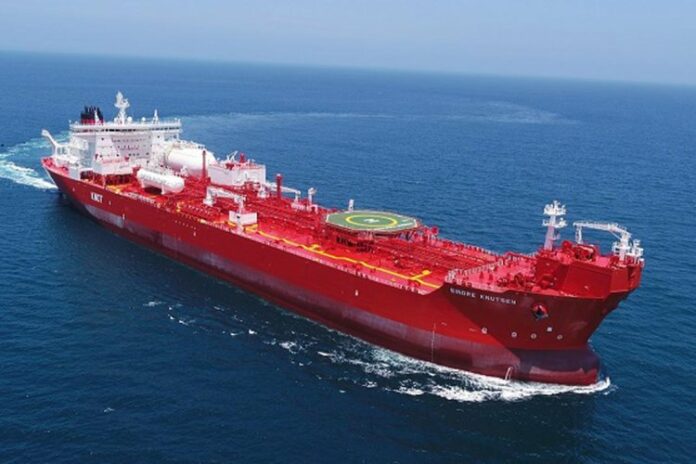
A dual-fuel LNG (liquefied natural gas) shuttle tanker ordered by Knutsen NYK Offshore Tankers AS, which is an affiliate of NYK, was delivered on August 30 at Daewoo Shipbuilding & Marine Engineering Co. Ltd. The vessel has been named “Sindre Knutsen.”

Like its sister ship “Frida Knutsen,” which was delivered on 2 August, this vessel will be a dual-fuel shuttle tanker that can use not only heavy fuel oil but also LNG. The ship will use LNG fuel, which is more environmentally friendly than conventional oil-fuel and will be equipped with a VOC recovery system and an energy storage system, thereby reducing greenhouse gas emissions.

The vessel will be chartered to ENI Trade & Biofuels S.p.A, a subsidiary of Ente Nazionale Idrocarburi S.p.A (ENI), and will be engaged in oil transportation in the North Sea and Barents Sea.

In February 2021, NYK released the “NYK Group ESG Story,” which aims to further integrate ESG into the company’s management strategy and promotes activities that contribute to the achievement of the SDGs through business activities.

In March this year, NYK released the updated “NYK Group ESG Story 2022,” which introduces initiatives for integrating ESG into the Group’s management strategies set forth in the “NYK Group ESG Story” and provides a partial explanation of the Group’s sustainable growth strategy from a long-term perspective.

Vår Energi joins global initiative to reduce methane emissions from operations

0

Vår Energi has set ambitious targets to reduce climate emissions from operations. The main goal is to be climate neutral by 2030 and reducing methane emissions is an essential tool for reaching the 2030 target.

Vår Energi now joins the global joint industry “Aiming for Zero Methane Emissions Initiative”, headed up by Oil and Gas Climate Initiative (OGCI), whose members include companies like ENI, BP, Chevron, Equinor, ExxonMobil, and Shell.

Companies joining the Initiative agree to implement plans and actions to reach near zero methane emissions from their operations by 2030, reporting transparently, adopting better monitoring and measurement technologies, and supporting the implementation of sound regulations.

Vår Energi CEO, Torger Rød explains:

“Sustainability runs as a green thread through all activities in Vår Energi. We have established a roadmap for how to be climate neutral by 2030 and reducing methane emissions is an essential part of the plan. We have already been reducing methane emissions from our production activities for several years. Now we are taking one important step further by joining forces with other industry players at a global level.”

The Aiming for Zero Methane Emissions Initiative is taking an all-in approach and demonstrating the willingness of its partners to take climate protection as seriously as the oil and gas industry takes safety: the target is “zero”, and all members strive to achieve this goal.

Zombie ice from Greenland will raise sea level 10 inches

0

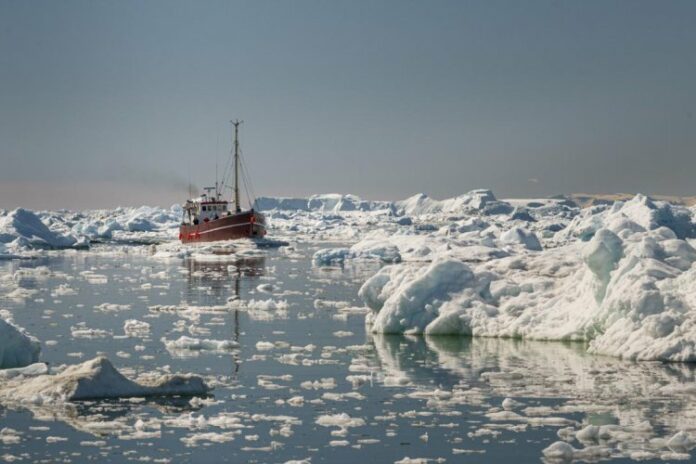
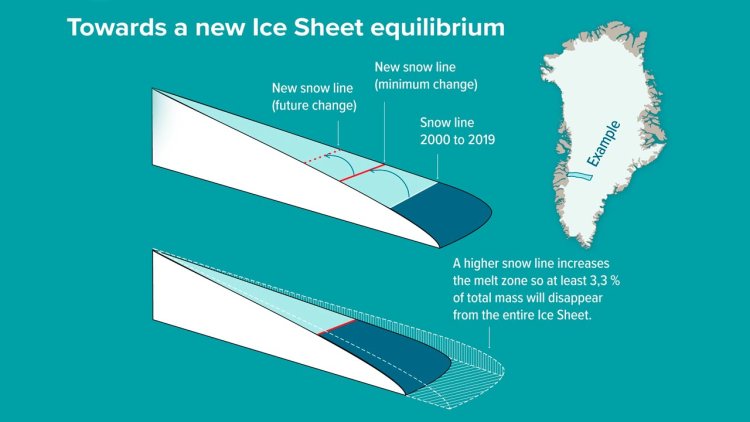
That’s because of something that could be called zombie ice. That’s doomed ice that, while still attached to thicker areas of ice, is no longer getting replenished by parent glaciers now receiving less snow. Without replenishment, the doomed ice is melting from climate change and will inevitably raise seas, said study co-author William Colgan, a glaciologist at the Geological Survey of Denmark and Greenland.

Colgan said:

“It’s dead ice. It’s just going to melt and disappear from the ice sheet. This ice has been consigned to the ocean, regardless of what climate (emissions) scenario we take now.”

Study lead author Jason Box, a glaciologist at the Greenland survey, said it is “more like one foot in the grave.”

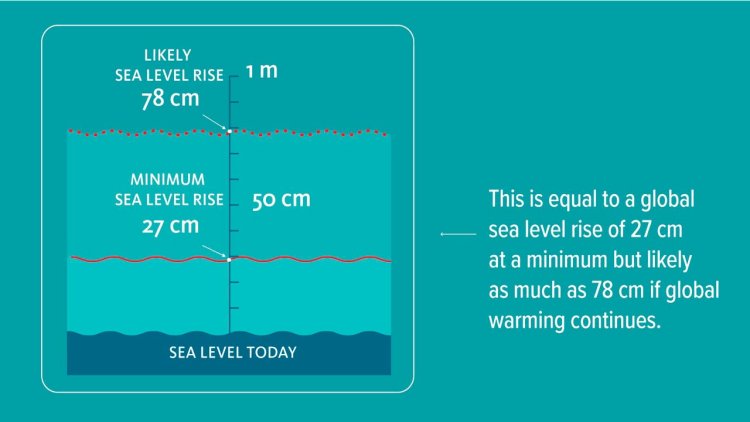
The unavoidable ten inches in the study is more than twice as much sea level rise as scientists had previously expected from the melting of Greenland’s ice sheet. The study in the journal Nature Climate Change said it could reach as much as 30 inches (78 centimeters). By contrast, last year’s Intergovernmental Panel on Climate Change report projected a range of 2 to 5 inches (6 to 13 centimeters) for likely sea level rise from Greenland ice melt by the year 2100.

What scientists did for the study was look at the ice in balance. In perfect equilibrium, snowfall in the mountains in Greenland flows down and recharges and thickens the sides of glaciers, balancing out what’s melting on the edges. But in the last few decades there’s less replenishment and more melting, creating imbalance. Study authors looked at the ratio of what’s being added to what’s being lost and calculated that 3.3% of Greenland’s total ice volume will melt no matter what happens with the world cutting carbon pollution, Colgan said.

One of the study authors said that more than 120 trillion tons (110 trillion metric tons) of ice is already doomed to melt from the warming ice sheet’s inability to replenish its edges. When that ice melts into water, if it were concentrated only over the United States, it would be 37 feet (11 meters) deep.

The figures are a global average for sea level rise, but some places further away from Greenland would get more and places closer, like the U.S. East Coast, would get less. Although 10.6 inches may not sound like much, this would be over and above high tides and storms, making them even worse, so this much sea level rise “will have huge societal, economic and environmental impacts,” said Ellyn Enderlin, a geosciences professor at Boise State University, who wasn’t part of the study.

This is the first time scientists calculated a minimum ice loss—and accompanying sea level rise—for Greenland, one of Earth’s two massive ice sheets that are slowly shrinking because of climate change from burning coal, oil and natural gas. Scientists used an accepted technique for calculating minimum committed ice loss, the one used on mountain glaciers for the entire giant frozen island.

The team doesn’t know how long it will take for all the doomed ice to melt, but making an educated guess, it would probably be by the end of this century, or at least by 2150.

MacGregor receives more than EUR 43 million orders for heavy-lift cranes

0

MacGregor, part of Cargotec, has received two significant orders for heavy lift cranes. These orders, totaling more than EUR 43 million, include the supply of 56 heavy lift cranes for fourteen 62,000 dwt multipurpose vessels built at two shipyards in Asia.

These orders were booked into Cargotec’s 2022 second quarter orders received. The vessels are scheduled to be delivered to the owners starting in the second quarter of 2023 and will be delivered until January 2026.

The orders include totally 56 cranes with a size of 80t and 150t. All cranes are connected to the latest worldwide service support and equipped with an active safety system for the highest possible secure operation.

MacGregor was selected as the supplier of these cranes thanks to its well-known design capabilities and customer’s trust in MacGregor’s delivery capability based on its earlier successes with similar solutions.

Magnus Sjöberg, Senior Vice President, Merchant Solutions, MacGregor, says:

“I’m very proud of the confidence that these two customers have chosen us to supply their heavy-lift cranes. We look forward to providing our high-class equipment and services again.” 
 

Air Products and ABP partner on Renewable Hydrogen Production

0

The facility would import green ammonia from production locations operated by Air Products and its partners around the world. This would be used to produce green hydrogen, which would decarbonise hard-to-abate sectors such as transport and industry.

The UK Government has plans for 10GW of low-carbon hydrogen to be in production or construction by 2030.  Currently there is no significant domestic production of such hydrogen in the UK.  Air Products, as a first mover, aims to help drive progress towards the Government’s targets, addressing the urgent task of decarbonising hard-to-abate sectors, and reduce the UK’s dependency on fossil fuels.

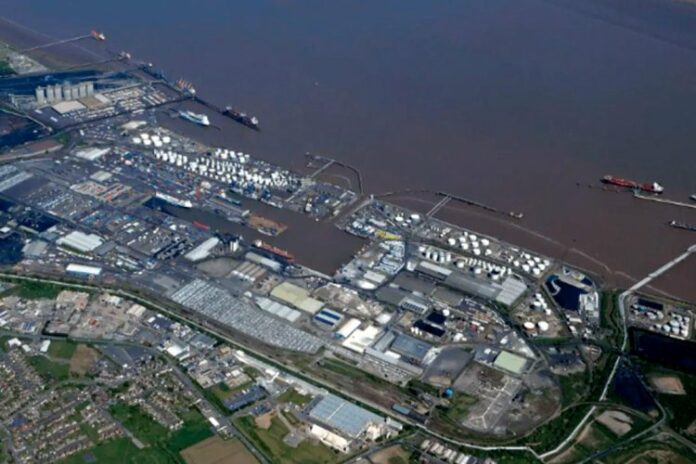
Air Products and ABP are working together to bring the new green hydrogen facility to the Port of Immingham. The location will provide the required maritime infrastructure and offers good proximity to markets and the required utilities. ABP will invest in new infrastructure with a new jetty to service the import and export handling of liquid bulk products. In addition to handling green ammonia, the jetty is being designed so that it can accommodate other cargoes connected to the energy transition, including the import of liquified carbon dioxide (CO2) from carbon capture and storage projects for sequestration in the North Sea – thereby playing a significant role in the UK’s energy transition.

Immingham sits within the UK’s largest industrial cluster and in close proximity to proposed offshore transport and storage networks for CO2. The scheme follows on from an existing Air Products’ plan to develop the UK’s largest blue hydrogen facility in Immingham, making the Humber a major location for low-carbon energy production, businesses and jobs.

The project will bring a wide range of benefits to Immingham and the UK, including eliminating up to 580,000 tonnes of greenhouse gas emissions each year, the equivalent of taking 20,000 diesel HGVs off UK roads, as well as reducing nitrous oxide and particulate emissions. In addition, the project will bring up to $4.6 billion in growth and financial benefits to the region and provide 1,400 direct jobs and approximately 1,600 indirect jobs for supply chains and local businesses.

This first-mover project stimulates demand and will support the development of a local and national green hydrogen market. It will be an important contributor to the Government’s plans to make the UK a “global leader in low-carbon hydrogen.”

Ivo Bols, Air Products’ President, Europe and Africa, commented:

“Globally Air Products supports the energy transition by developing real, first-mover projects.  We are forging sustainable hydrogen supply chains with our partners and using our hydrogen knowledge and expertise to accelerate the energy transition. We are in positive talks with government ministers and officials about our plans to invest in UK green hydrogen.  To enable our investment decision, we are seeking some policy assurances that a viable market will exist for our product.”

Henrik L. Pedersen, ABP’s Chief Executive Officer, commented:

“ABP and the Humber are at the epicentre of the decarbonisation agenda and we are delighted to work with Air Products on this project, which will help deliver the UK’s legal obligation to be net zero by 2050.

“ABP’s ports are a vital part of the UK’s energy transition, and we are making significant investments to support a range of renewable energy generation projects, including the expansion of Green Port Hull and the transformation of Port Talbot to help deliver the UK’s ambition for floating offshore wind in the Celtic Sea.”

Proman Stena Bulk’s tankers conduct South Korea’s first methanol bunkering

0

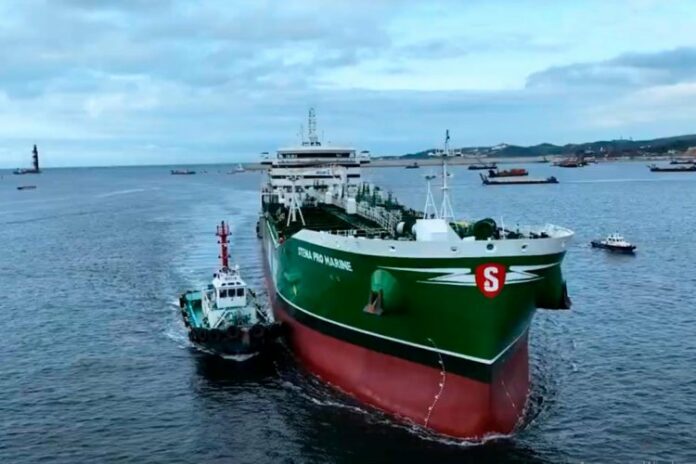
Proman Stena Bulk, the joint venture (JV) between major global methanol producer Proman and one of the world’s largest tanker shipping companies Stena Bulk, has announced that their two fully operational methanol-fuelled tankers have become the first vessels to bunker methanol in Ulsan, South Korea.

Stena Pro Patria and Stena Pro Marine were each refuelled with over 2,000 tonnes of methanol during the bunkering operation, which comes as proof of the growing viability of methanol as a marine fuel (MMF). The bunkering was executed despite South Korea not being a methanol-producing country, and neither vessel was carrying methanol as cargo. The fuel’s availability in Ulsan comes as a clear indicator of the growing and already widespread availability of MMF for owners and operators that are interesting in combating shipping emissions.

The first bunkering in South Korea is even more strategically significant given the nation’s status as an important maritime hub. Ulsan is located adjacent to one of the world’s largest shipyards and South Korea neighbours two other leading global shipbuilding nations, China and Japan. Successfully bunkering MMF in Ulsan is a positive sign for the many of the other methanol newbuild vessels currently on order within the region.

The increasing global uptake of methanol as a marine fuel is aided by its current availability across 120 ports worldwide, including the major global bunkering hubs of Singapore, Algeciras, Houston and Rotterdam. Meanwhile, other key locations such as the Port of Gothenburg and Rotterdam are adopting or developing new simple methanol bunkering guidelines.

The status of methanol as a viable marine fuel, both now and into the future, is being further strengthened by the relative ease in which it can, as a non-cryogenic liquid, utilise existing bunkering infrastructure and storage in line with IMO regulations, considerably lowering the barrier to entry for interested owners and operators.

Erik Hånell, President and CEO of Stena Bulk, said:

“The combination of low emission methanol and fuel-efficient vessels are important steps towards more sustainable shipping, so we’re proud that Stena Pro Patria and Stena Pro Marine have successfully bunkered methanol for the first time. The Stena Sphere has extensive experience in bunkering methanol for passenger ferries and in transporting methanol as a cargo, and this bunkering of methanol in Ulsan is further proof that infrastructure and availability is not a barrier for turning our vision of methanol as a key decarbonisation solution into reality.”

Anita Gajadhar, MD of Proman Shipping, Marketing and Logistics added:

“This successful bunkering in Ulsan, combined with the fact that both Stena Pro Patria and Stena Pro Marine have commenced their first commercial methanol-fuelled voyages carrying various products for third party charterers around the globe, is another important and positive milestone for the JV and for our broader work in helping to develop methanol as a marine fuel.

“As these vessels show, methanol is already available and viable as an alternative fuel solution for shipping. Incorporating methanol bunkering into future fuel infrastructure regulations and policies that are currently being developed will help ensure guidelines are future-proofed as more low-carbon and renewable methanol sources come online, supporting the transition to lower emissions fuels across the industry.”

In 2020, Lloyd’s Register and the Methanol Institute launched a Technical Reference document to help shipowners, ports and bunker suppliers understand the processes and procedures for the safe use of methanol as a marine fuel.
 

METIS platform puts weather routing into ship performance analytics

0

The maritime data analytics specialist says that adding weather routing functionality to vessel analysis means voyage performance can be optimized to take account not only of an individual ship’s characteristics and cargo requirements, but the conditions in which it is working.

Conventional weather routing services help operators avoid ‘unwanted weather’ and choose safer routes but they use generic ship information, explains Mike Konstantinidis, CEO, METIS Cyberspace Technology:

“In reality, even sister ships develop unique performance profiles due to variations in machinery, hull fouling, hull damages, maintenance and repairs, quality and type of fuel oil, and crew skills. Individual ship performance and cargo characteristics information is vital for safety and for choosing the ‘best’ route to save fuel and reduce emissions.”

Augmented Routing Optimization integrates weather routing functionality from specialized service providers seamlessly into the cloud-based METIS analytics platform. Powered by artificial intelligence (AI), weather routing becomes part of the real-time METIS analytics which is already optimizing an individual ship’s performance for fuel consumption, hull fouling, emissions, etc.

Konstantinidis continues:

“By integrating weather routing functionality in the METIS platform, we can take account of all of the variables affecting the ship using a single interface. This delivers a huge leap forward in voyage optimization, so that comparisons can be made in the most accurate way, and sets new data-driven standards which enhance ship safety, efficiency and sustainability.” 

The International Maritime Organization and International Association of Marine Underwriters work with assumptions that weather routing helps ships save over 3% in fuel consumption. Augmented Routing Optimization is already proving far more productive, he says:

“In one six-month pilot using METIS Augmented Routing Optimization advisory functionality, a METIS customer achieved a 923mt cut in FO consumption, equivalent to around $750,000 at today’s prices. This was despite the fact that the distance travelled by the ship increased by 25%. Furthermore, the CII was calculated as 19.5% lower”.

Onboard ship, Augmented Routing Optimization enables ship-specific comparisons between the weather optimized route with other user-defined routes. Onshore, managers can take account of route adjustments, calculate and recalculate optimum routes to optimize schedules, and better evaluate voyage and post-voyage performance against expectations or charter party terms.

Konstantinidis says:

“This is a new demonstration of what is possible when different services are integrated in the METIS platform. The user experiences capabilities greater than the sum of its parts in terms of analytic power as a single and convenient Augmented Routing Optimization tool.”

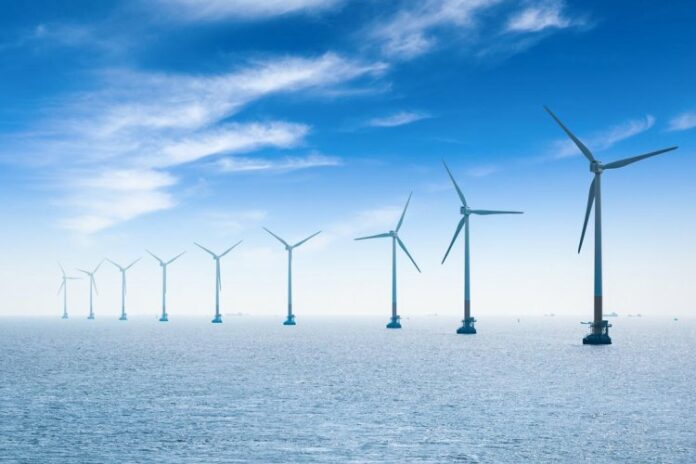
Turning North Sea projects into power in offshore wind

0

Both wind farms are in the North Sea where Equinor has more than ten years’ experience from operating offshore wind farms.

At a press conference at the ONS conference in Stavanger 30 August, Equinor gave a status of Equinor’s offshore wind portfolio focusing on the North Sea.

Pål Eitrheim, executive vice president for Renewables at Equinor, says:

“The North Sea will continue to play a key role for Europe’s energy transition and security towards 2050. The region is expanding from oil and gas production into a broad energy province utilising world-class offshore wind resources. The North Sea is uniquely positioned to help meet European objectives of reliable, affordable and sustainable energy supplies. Renewable mega-projects like Dogger Bank and Hywind Tampen are nearing start-up, enabling Equinor to boost renewable energy to the European market. New projects such as Trollvind and Utsira Nord have the potential to deepen Norway’s lead in making floating offshore wind competitive and affordable.”

Equinor’s offshore wind portfolio is progressing with several projects currently under construction that will be put into production the coming years. With this high activity level, there is no shortage of supply chain development, particularly as Equinor’s focus is on creating local economic value and jobs for host communities. At Hywind Tampen, Norwegian suppliers have secured about 60 percent of the contract value.

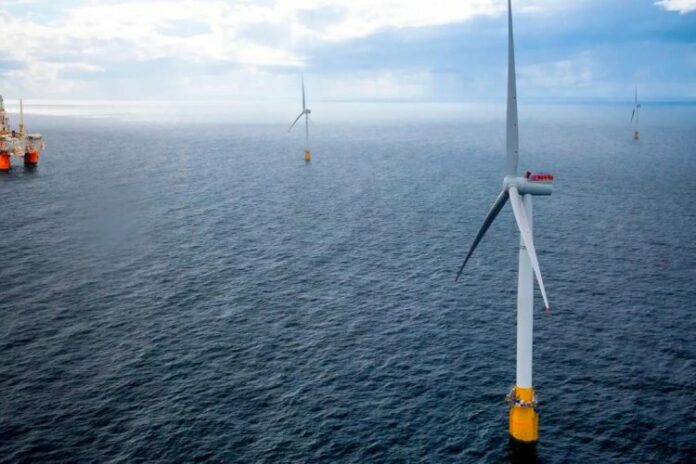
Once Hywind Tampen is completed, it will both be the first floating wind farm to supply electricity to oil and gas platforms, and also the world’s largest floating wind farm. An important milestone was reached when the first subsea cables were laid and connection made to Gullfaks A recently. The seven first Hywind Tampen turbines will come on stream this year according to plan and the final four will be installed next spring.

The Dogger Bank project is moving forward and reached an important milestone when the first foundations were installed in July 2022. First power is expected in the second half of 2023, with commercial operations beginning in 2024 for Dogger Bank A, 2025 for Dogger Bank B and 2026 for Dogger Bank C respectively.

Trine Borum Bojsen, senior vice president for North Sea Renewables at Equinor, says:

“The North Sea is a cornerstone for Equinor’s offshore wind business and will be a key hub for power generation for Europe for many years to come. With Dogger Bank and Hywind Tampen we are building on more than 15 years of wind farm experience and 50 years of experience operating in the harsh environments of the North Sea. Our first floating offshore wind farm, Hywind Scotland, has for several years reached the highest average capacity factor for any wind farm in the UK, and with floating wind anticipated to play a key role in the offshore wind industry of the future, Equinor is uniquely placed with our learnings.” 

Equinor and partners recently launched Trollvind, a 1 GW floating offshore wind farm outside Bergen with a potential start-up of operations in 2027.

Power from Trollvind can make a solid contribution towards electrification of oil and gas installations, deliver extra power to the Bergen-region and accelerate offshore wind development in Norway. Increasing the size of wind farms is key to industrialise floating offshore wind and reduce costs.

By transferring offshore wind power to shore,as the Trollvind concept, this will enable the possibility to build a larger wind farm than one directly connected to oil and gas installations offshore.

Bringing the power to shore also promotes more efficient power utilisation through better interaction with regulated hydropower and onshore industry. Increased access to power in this area also means improved security of supply for the oil and gas installations. Trollvind is located in a geographical area that is well known by the industry and the concept is now being further matured aiming at an investment decision during 2023.

NOAA, NFWF announce $7.7 million in grants to support coastal resilience

0

NOAA and the National Fish and Wildlife Foundation (NFWF) have announced $7.7 million in new grants using funding from the Bipartisan Infrastructure Law to support ongoing natural infrastructure projects in seven states.

These grants will support the design and implementation of projects to enhance the resilience of coastal communities and improve habitat for fish and wildlife in Hawai‘i, Maine, New Jersey, Ohio, Rhode Island, South Carolina and Virginia. The grants announced today will leverage more than $3 million in matching contributions for a total conservation impact of $11.1 million.

The eight grants were awarded through the National Coastal Resilience Fundoffsite link (NCRF), a partnership between NFWFoffsite link, NOAA, Shell,offsite link TransReoffsite link, and Occidentaloffsite link, with additional funding from the U.S. Department of Defense (DoD), the Bezos Earth Fundoffsite link and also funding from the Bipartisan Infrastructure Law. 

NFWF worked to award an early slate of grants in August, ahead of its standard annual award date, so that communities experiencing increasing impacts from rising seas, more intense storms, and other coastal hazards would have funding to spend towards resilience projects. In 2022, NFWF anticipates investing approximately $140 million in grants through the NCRF once additional awards are announced in November.

U.S. Secretary of Commerce Gina Raimondo said:

“Maintaining and rehabilitating our coasts is critical for the health and economic wellbeing of coastal communities, especially in the face of impacts from climate change like flooding and extreme storms. Thanks to funding from the Bipartisan Infrastructure Law, the Biden Administration is making meaningful long-term investments that will strengthen coastal communities and allow them to flourish for generations.”

NOAA Administrator Rick Spinrad, Ph.D., said:

“Climate-driven floods threaten all coastal communities, and these locally-driven projects are critical for developing effective natural infrastructure. By investing in local communities, we invest in our nation’s resilience.”

Jeff Trandahl, executive director and CEO of NFWF, said:

“As coastal communities face growing threats including coastal flooding and hurricanes, communities need resources immediately to help them reduce threats and increase resilience. The Foundation has worked extremely hard to provide this funding as quickly as possible to help these communities bolster their natural defenses to current and future storms, while also enhancing the coastal habitats that are so vital to both communities and wildlife.”

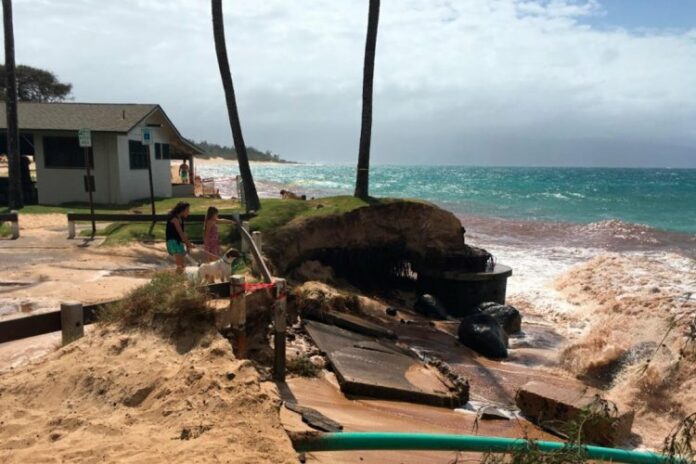
The projects supported by the eight grants will restore and enhance a diverse range of coastal habitats — including wetlands, dunes and tidal rivers — that are vital to the survival of many fish and wildlife species and provide natural buffers for communities against storms and other coastal hazards. These awards build on previously funded NCRF projects and will support efforts of the grantees to finalize project designs and implement important nature-based coastal resilience projects across the country.

NFWF, in partnership with NOAA and joined initially by Shell and TransRe, launched the NCRF in 2018 to support on-the-ground projects to engage communities and reduce their vulnerability to growing risks from coastal storms, sea-level rise, flooding, erosion and extreme weather through strengthening natural ecosystems that also benefit fish and wildlife.