1 C
New York
Home Blog Page 403

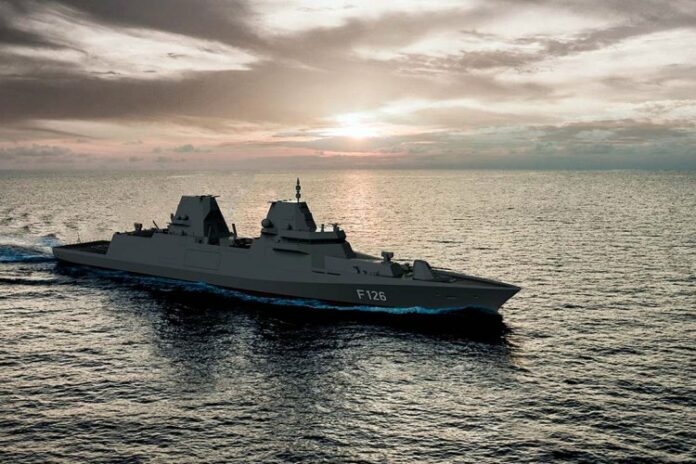
Rolls-Royce will deliver mtu naval gensets for F126

0

Although DAMEN and Rolls-Royce, whose business unit Power Systems is based in Friedrichshafen, Germany, have a long-standing cooperation in shipbuilding, this is the first time a contract has been awarded for mtu naval diesel generator sets. 

According to Managing Director of DAMEN Naval, Hein van Ameijden, the choice was based on Rolls-Royce’s high-end naval-oriented mtu solutions and experience on the high-end naval market.

“We are delighted to announce the news of this contract and the fact we have found another German partner for this prestigious and important project for the Bundeswehr. We look forward to working with Rolls-Royce and its mtu solutions again.”

The onboard power of each F126 vessel will be provided by four mtu Series 4000 variable speed gensets. These high performance gensets are the most environmentally friendly naval gensets Rolls-Royce has ever produced: They meet the requirements of the IMO III emissions directive thanks to state-of-the-art mtu selective catalytic reduction (SCR) systems. Due to their variable speed capability, the engines can be operated efficiently, saving fuel and reducing maintenance. The agreement also includes an Integrated Logistics Support (ILS) package. It is the second F126 contract awarded to Rolls-Royce; earlier this year DAMEN Naval chose the company to supply the automation solutions mtu NautIQ Master and mtu NautIQ Foresight.

Paul Röck, Director Sales Governmental at Rolls-Royce business unit Power Systems, said:

“We are extremely proud to once again be chosen by DAMEN Naval as partner in this very important and prestigious project. Our advanced sustainable solutions for both power and control of the F126 vessels will play a key role in ensuring the frigates’ reliability, efficiency, and operational success.”

Mr Van Ameijden adds:

“The biggest advantage of the variable speed generator set is reduction of fuel consumption at part load operation. For DAMEN Naval it is the first time that variable speed generator sets are applied on Naval vessels in combination with a DC Grid. We expect that this type of configuration will be the new standard in high-end naval applications.”

With this contract, Rolls-Royce continues its decades-long cooperation with the German Navy. Vessels such as the predecessor frigate classes F124 and F125 as well as the corvettes K130 are equipped with mtu engines and diesel generator sets from Rolls-Royce. The diesel generator sets will provide electrical power to the F126’s combined diesel electric and diesel (CODLAD) propulsion system. The CODLAD propulsion system provides a top speed of more than 26 knots. The first diesel generator sets will be delivered early 2024 to the yard.

In June 2020, the Federal Office of Bundeswehr Equipment, Information Technology and In-Service Support (BAAINBw) awarded the construction contract for the four F126 frigates to Dutch shipbuilder DAMEN as the general contractor with its sub-contractors Blohm+Voss and Thales. The ships will be constructed entirely in Germany at shipyards in Wolgast, Kiel and Hamburg. The first ship will be handed over in Hamburg in 2028. The contract includes an option for two further frigates.
Wartsila and Maersk unveil system to avoid corrosion of scrubber discharge pipes

0

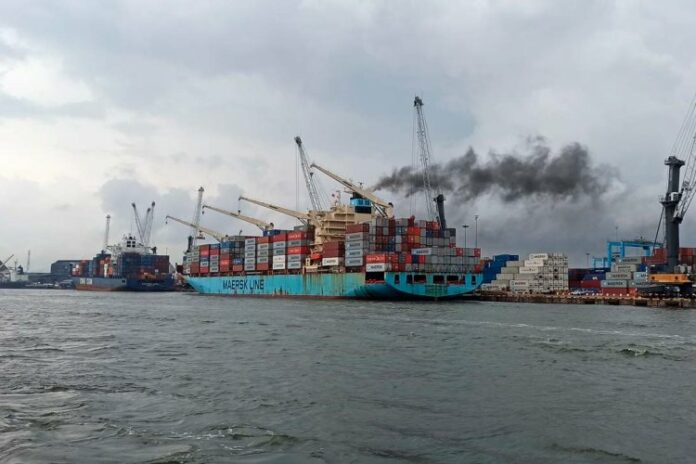
The technology group Wärtsilä and Danish ship operator A.P. Moller – Maersk have provided a means for preventing corrosion in scrubber discharge pipes.

The majority of the estimated 5,000 scrubber systems installed across the global fleet are of open-loop configuration. With this system, seawater is used to scrub SOx from the exhaust gas, with the used water then being discharged back to the sea after cleaning.

Under IMO Guidelines, the washwater from exhaust gas cleaning systems, commonly referred to as scrubbers, should have a pH of no less than 6.5. However, in reality the pH of scrubber washwater is typically acidic, prior to being diluted by seawater. This creates the risk of structural corrosion to the discharge pipes. 

The risk is particularly high for pipes made of mild steel. In some cases, if the discharge pipes are inadequately protected, severe corrosion can damage the surrounding mild steel hull plates, resulting in water ingress.

The new ‘pipe-in-pipe’ solution allows for the original overboard pipe to remain in situ while a new glass reinforced epoxy (GRE) pipe is inserted into it. No metal cutting or welding is necessary. A SMO steel sleeve is inserted between the new GRE pipe and the existing steel pipe. An adhesive permanently secures the GRE pipe in place. Since this ‘pipe-in-pipe’ solution has a small impact on the internal diameter of the pipe, it is best suited for overboard pipes with a diameter greater than 300 mm.

William Winters, Managing Director of Wärtsilä Underwater Services. He further added, explained:

“This is a long-term solution that can be planned for at any time, even if corrosion has not yet occurred. The component pipes can be prepared and stored either on board or at an engineering facility ready for fitting either during a scheduled drydocking or port-call or, if necessary, whilst afloat and in operation using a cofferdam at a convenient time and location. This in-operation repair offers substantial overall savings to the ship owner and allows the vessel to stay in service”

Jorn Kahle, Senior Lead Specialist, Maersk, said:

“We have noted corrosion incidents occurring on some scrubber equipped vessels and wanted to be proactive in solving the problem. Additionally, taking a vessel out of service is extremely costly. One of the key driving forces for development of this pipe-in-pipe concept with Wärtsilä Underwater Services is to minimise these disruptions and costs”.

Installations of this unique, patented solution and licensed know-how will be carried out by Wärtsilä Underwater Services. In most cases, the repair will be completed in less than two days, which can avoid the ship having to go ‘off hire’. Considerable time and cost savings compared to alternative repair solutions have already been demonstrated.

The Wärtsilä/Maersk solution is intended for long-term protection. It reduces complications associated with welding work required on pipes and sometimes hull plates, particularly in underwater repair situations.

Kongsberg to supply integrated technology for new CSOV

0

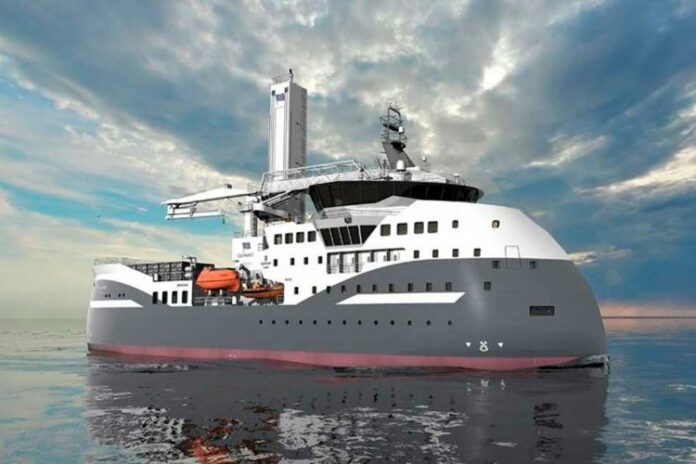
KONGSBERG has secured an approx. NOK 64M contract with Norwegian vessel operator Olympic to equip two new Construction Service Operation Vessels with an appropriately innovative technology suite.

Two KONGSBERG US 205 PM L FP L-drive azimuthing thrusters will be situated fore and aft in the TWIN X-STERN double-ended hybrid-powered vessels.

The KONGSBERG US thruster family has set the industry standards for decades being one of the company’s all-time best selling propulsion products. The range has been constantly evolved and upgraded over that time and the recently introduced PM model offers significant energy savings thanks to its vertically orientated permanent magnet motor mounted directly above the thruster.

KONGSBERG’s integrated technology solution will be integral to the vessel’s operational effectiveness. The suite will include dynamic positioning, navigation, thruster control and information management systems, all enhanced by inbuilt measures to improve efficiency and safety.

Central to the solution is KONGSBERG’s Integrated Vessel Control System. This integrates K-Pos – Dynamic Positioning System, K-Thrust – Thruster Control System and K-Bridge, operating on the vessels’ intuitive K-Master Integrated Workstation Consoles.

The vessels will be owned and operated by Norway-based Olympic, which has operated a specialist fleet in the subsea service and renewable energy markets since 1996. The project marks an important milestone in the development of the Norwegian Maritime Cluster, with Olympic, Ulstein Design & Solutions AS, Ulstein Verft and KONGSBERG all bringing their unique world-leading, but Norwegian-grown expertise and capabilities to the vessels.

Bård Bjørløw, EVP Global Sales and Marketing, Kongsberg Maritime, said:

“The vessel design is a great fit with the integrated solution from Kongsberg Maritime. The four identical US thrusters with our advanced Windfarm DP functionality, enable high speed manouvering in both forward and aft direction. This will reduce the time- and energy needed for transit between turbines.”

Sweden takes delivery of fourth electric ferry

0

Built by Työvene in Finland, the Eloise is a 33-metre, double-ended commuter ferry designed to carry up to 298 passengers and 80 bicycles at speeds of up to 11 knots.

The EST-Floattech installation is based on their flagship Green Orca 1050 High Energy Battery System. This uses Lithium Polymer NMC cells which deliver exceptional cycle life and thermal performance together with a high discharge rate capability. EST-Floattech’s in-house battery management system (BMS) forms the basis of the Green Orca High Energy Module, a technology which has proven itself for more than a decade.

Juha Granqvist, CEO of Uudenkaupungin Työvene Oy, commented:

“We are all proud to have been able to contribute to a greener Gothenburg.”

Antti Vikainen, project manager at Uudenkaupungin Työvene OY and overseeing the build, added:

”We are happy to have partnered with EST-Floattech as a supplier of one of the key components for Eloise. The support we received in addition to the delivery and commissioning of the battery system proved valuable, particularly  when determining the safety requirements for the battery installation. The vessel itself is already a proven design that has evolved from a diesel-electric powered ferry into a battery hybrid that is able to operate almost exclusively on stored electric power for its designed application.”

The battery management system is essential for safe and optimal ESS performance. EST- Floattech’s current version is the result of ten years of continuous development. Multiple safety layers in the mechanical design and software ensure that it meets strict DNV and NMA class requirements.

This commitment to continuous development means that the battery capacity of the Eloise is 25% higher than that of its sister ship the Elvy, which was delivered in 2019. With an installed capacity of 1260 kWh, the Eloise is capable of six hours continuous electric operation. Recharging takes place using either shore power or the onboard diesel generator.

Shipbuilder Työvene specialises in the design and build of small and medium-sized vessels for commercial operations. Their delivery of the Eloise to Västtrafik represents a significant step in the latter’s goal of having Gothenburg’s public transportation system fully electrified by 2030.

Tanker refloated after running aground in Egypt’s Suez Canal

0

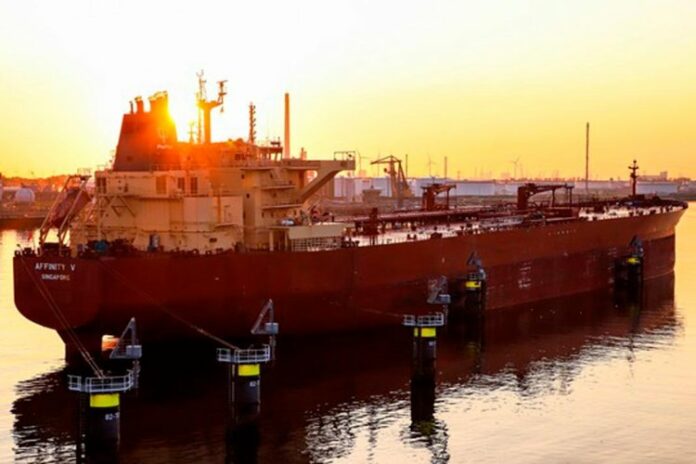
The vessel, Affinity V, had been blocking the southern section of the canal, two navigational sources said, but SCA sources said shortly after midnight local time that traffic had returned to normal.

The incident occurred in the same southern, single-lane stretch of the canal where a giant cargo ship, the Ever Given, ran aground for six days in March 2021, disrupting global trade.

According to ship monitoring service TankerTrackers, the Aframax tanker Affinity V seemed to have lost control in the Suez Canal on Wednesday evening while heading south.

“She temporarily clogged up traffic and is now facing south again, but moving slowly by tugboat assistance,” TankerTrackers said on Twitter.
Refinitiv ship-tracking data and the Marine Traffic website also showed the Affinity V facing southwards and traveling slowly in the canal, surrounded by tugs.

The Singapore-flagged tanker was headed for the Red Sea port of Yanbu in Saudi Arabia, the tracking sites said.

After the Ever Given ran aground, the SCA had announced accelerated plans to expand the canal, including extending a second channel that allows shipping to pass in both directions along part of its course and deepening an existing channel.

Work on the expansion is due to be completed in 2023.

Source: CNN

VOC capture to decarbonise shipping

0

The international community is rightfully focusing on the decarbonisation of shipping, however with the main emphasis on propulsion and less on the significant emissions from crude oil loading operations.

Vapour from oil cargos releases millions of tons of CO2 equivalents – through the release of volatile organic compounds (VOC) – into the atmosphere. Between 60-80 % of these emissions are generated during loading of the crude oil cargoes.

When crude oil is loaded into VLCCs and other crude oil tankers at loading buoys or sea islands at distances from shore, the utilisation of the onboard VOC capture and processing system is not economically feasible. Installing a VOC capture system on loading buoys or sea islands is not very feasible as the capture and transportation of the VOC back to shore for utilization is technically challenging and very costly.

Vaholmen VOC Recovery AS has, in cooperation with its partners American Bureau of Shipping, Ulstein Design & Solutions AS and Wärtsilä Gas Solutions AS, developed and patented a concept that addresses the challenges caused by offshore loading of crude oil tankers. The concept includes a VOC recovery plant installed on a dynamically positioned vessel.

The vessel – the Vaholmen Unit – will operate close to the loading tanker for capturing and processing the VOC generated on the tanker through a hose connected to the tanker’s vapour return manifold. The output from the process – the liquefied VOC– can be monetized through injection into a stream of relevant hydrocarbons like crude oil, as feedstock for powerplants, refineries or others as well as providing fuel for electrical power production on the Vaholmen Unit. The value of the captured hydrocarbons will normally exceed the costs of the operation of the Vaholmen Unit.

CEO of Vaholmen VOC Recovery AS, Arve Andersson, says:

“As pollution is resources gone astray, the combination of two proven technologies into a new and innovative product allows capturing and utilization of values that otherwise are lost in a profitable way.”

Lars Ståle Skoge, commercial director in Ulstein Design & Solutions AS, says;

“This ship design for Vaholmen has been developed in close cooperation with the parties involved in this project, and the design and systems onboard are configured to allow for optimal operation and utilisation of the VOC to achieve low operational cost. Ulstein is continuously working to find ways to reduce the need for energy in operation and to find alternative energy sources. By contributing to this project, we aim to reduce emissions from operations, and this is a great motivation for us as ship designers.”

Hans Jakob Buvarp, Wärtsilä Gas Solutions’ General Manager Sales, says:

“Wärtilä Gas Solutions is a leading provider of gas handling equipment both on ships and onshore. Since early 2000 we have delivered 15 VOC plants for shuttle tankers in the North Sea.”

On initiative from Norway and Canada, IMO is now in the process of taking up the issues related to VOC emissions from tankers through an upcoming revision of MARPOL Annex 6. Vaholmen has the solution for avoiding between 60-80 % of the emissions, bringing the hydrocarbons back into the loop and realizing their values.

Commodity shipping to optimise port time in new digital solution

0

Two shipping software and service digitalisation leaders join forces to deliver end-to-end digitalisation of the voyage management processes in global commodity shipping, solving the complexities of predicting and managing port times, demurrage and costs at terminal level.

The integration between the two systems can help ship owners, operators and charterers more accurately plan and execute their port calls, in order to manage risk and improve operational, cost and environmental efficiencies within the port stay part of a commercial voyage charter.

Via the Veson Partner Network, PortLog will be integrated into the heart of the Veson IMOS Platform (VIP), giving VIP users access to PortLog’s extensive data on port costs and port call times to unlock new opportunities and value. The integration will enable dry bulk customers to enhance pre-fixture workflows within the VIP Voyage Estimator, enabling more accurate estimates of the time and cost of the port call component of a voyage, as well as estimates of the potential impact of unpaid time in port.

Port time and demurrage are inherently difficult to predict and manage, yet these factors have a significant impact on freight rates, voyage results and emissions. The difference between the estimated and actual time spent in port can make the difference between a profitable voyage or a loss-making one. Vessel owners and charterers have been forced to make assumptions in their voyage calculations, and rely on vague estimates and crude cost buffers to account for critical factors which may influence each terminal’s performance, unpaid time risks, and costs.

Vessels spend up to half their time in ports, however this part of the voyage has – until PortLog – seen very little digital tooling. This was the impetus for PortLog, which has since become the port parallel to weather routing. Users of PortLog have experienced established success with optimising their sea passage by leveraging the solution’s high volumes of standardised statements-of-fact (SoF), vessel, weather and AIS data feeding digital models.

PortLog draws on extensive transactional data with over 20.5 million harmonised time events and multiple layers of Master Data. This enables chartering and operations departments to:

  • Estimate the total cost of a port call 
  • Estimate the financial risks related to turnaround time, unplanned downtime, weather impact, and berth level restrictions
  • Predict the relevant calling terminal within a port with more accuracy than ever before
  • Assess the risks and opportunities related to the demurrage and despatch impact before a fixture is agreed upon

PortLog data can now be directly and seamlessly embedded into users’ daily workflow in VIP, providing users with context-relevant alerts and information at a terminal level for chartering, operations and claims handlers.

DNV awards AiP for green ammonia floating production unit

0

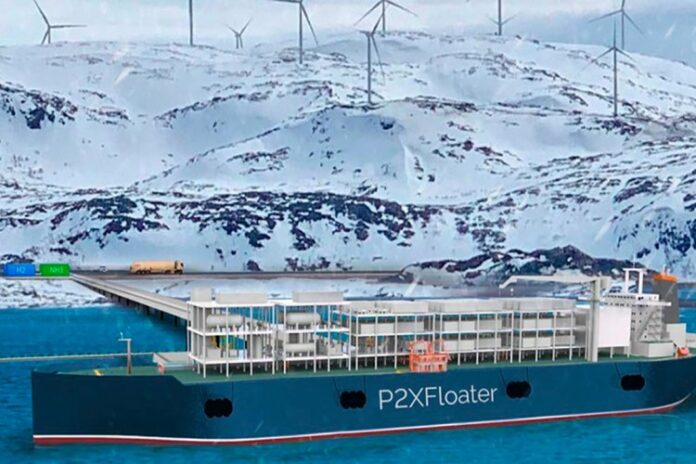
An industrial scale concept for a floating production unit to produce green ammonia at sea has secured Approval in Principle (AiP) from DNV, affirming the technical feasibility of the design.

The so-called P2XFloater concept, developed by Norway-based H2 Carrier, is based on the conversion of an existing Very Large Gas Carrier into a floating, production, storage and offloading unit (FPSO) that can serve to produce environmentally friendly ammonia for the local or for the world market.

The FPSO would source electricity from a wind farm or other renewable source to provide power for electrolysis of seawater to produce the hydrogen as input to the so-called Haber-Bosch process which produces liquid ammonia by combining hydrogen and nitrogen of under high pressure and high temperature. The required nitrogen would also be produced onboard the FPSO.

DNV’s Vice President, Business Development for Floating Production, Conn Fagan, said the AiP covers all aspects of the integrated vessel concept including structural integrity, mooring, ammonia production, ammonia storage and cargo handling.

Fagan said:

“The AiP assessment has looked at the technical challenges associated with offshore ammonia production and has concluded that there are no insurmountable difficulties to preclude future classification of the design.”

“For application of the concept in future projects, detailed engineering studies will of course need to be carried out with particular attention to addressing the hazards associated with ammonia and hydrogen for a particular layout and location.”

Mårten Lunde, CEO of H2 Carrier AS, says:

“The innovative P2XFloater concept provides a low-cost, fast-track and flexible solution to produce green ammonia on an industrial scale and at a competitive price. Market demand is rapidly increasing primarily due to the decarbonisation of the industrial and maritime sectors.” 

Mr. Lunde added:

“We are very pleased to have been awarded the AiP from DNV, which is a significant technical milestone that gives us a springboard for further development towards commercial realisation of this concept.”

KOTUG finalises acquisition of Seaways International

0

KOTUG International B.V. (KOTUG) announces the successful closure of the intended acquisition of SEAWAYS INTERNATIONAL (Seaways).

The acquisition of Seaways brings together the assets, expertise and people of two leading companies that support the worldwide floating facility business such as FSO, FPSO, FLNG, FSRU and SPM Terminals. With all customary, governmental, and other required approvals, KOTUG will now focus on the integration of Seaways and strengthening its leading presence in the floating offshore market.

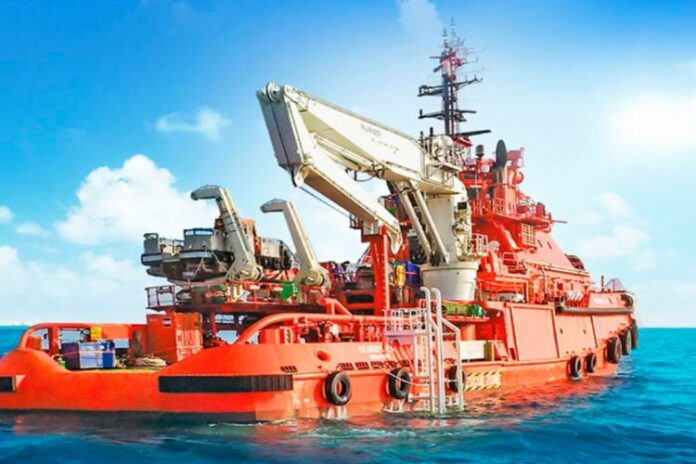
The founder and former owner of the family-owned Seaways, Captain Ashish Nijhawan will be stepping down from his role as Managing Director effective immediately. Under his leadership, the company has been built from scratch to become the thriving business it is today. Owning and operating an impressive fleet comprising DPS-2 capability AHT’s, Fast Crew Suppliers (Crew Boats for Passenger Transportation) and Cargo Barges, and also providing terminal management services.

Ard-Jan Kooren, President & CEO of KOTUG:

“It is with great respect that we say goodbye to Captain Ashish Nijhawan, his sons and wife, whose accomplishments have been outstanding. Today, we welcome 340 new colleagues into the family-owned KOTUG Group of Companies, whose corporate cultures and values are very similar and compatible.”

Captain Ashish Nijhawan said:

“I am very proud of the company we have built, and I am incredibly thankful to everyone who has worked to support our journey. I have deep trust in a bright future for Seaways under the leadership of KOTUG executing their vision to be the world’s leading towage and maritime service provider.” 

Wärtsilä to supply propulsion package for world’s largest aluminium catamaran

0

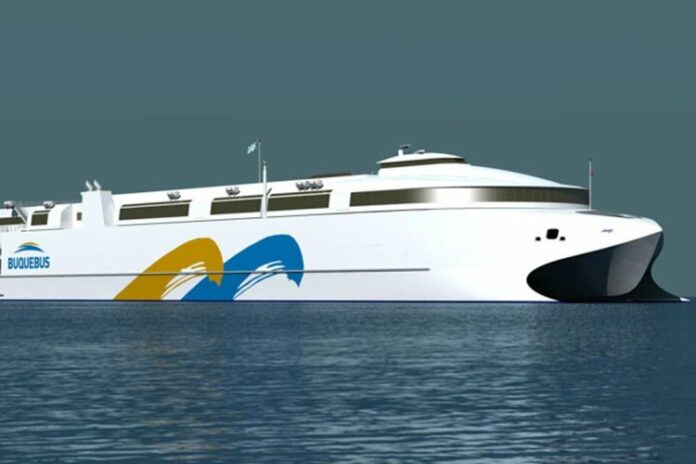
Wärtsilä will supply the engines, waterjets, and fuel storage and supply system for a new high speed catamaran ferry. 

The vessel is being built at the Incat yard in Tasmania, Australia on behalf of Argentinian ferry operator, Buquebus. Having an overall length of 130 metres, a width of 32 metres and the capacity to carry 2,100 passengers and 226 cars, it will be the largest aluminium catamaran ever built by Incat. The order with Wärtsilä was placed in July 2022.

The vessel will operate between Argentina and Uruguay with Wärtsilä’s 31 dual-fuel engine technology using primarily LNG fuel produced at Buquebus own LNG plant. The vessel will also incorporate shaft e-motors powered via the main engine gearboxes taking further advantage of Wärtsilä’s LNG technology. With LNG, the minimised emissions of CO2, nitrous oxides (NOx), sulphur oxides (SOx) and particulate matter will make the ferry Tier III compliant and able to operate in emission control areas (ECAs).

Tim Burnell, Incat’s CEO, says:

“We have selected Wärtsilä waterjets many times in the past, and have always been extremely satisfied with their performance. This though is the first time we will include Wärtsilä engines, and we are excited about the potential they provide. This will be the world’s largest and greenest vessel of its type, and we are very happy to be working with Wärtsilä to make the project a huge success.”

Mikko Mannerkorpi, General Manager, Sales, Wärtsilä Marine Power, adds:

“This is indeed an exciting project. Our latest WXJ generation axial flow waterjets reduce the installation footprint on average by approximately 25 percent, compared to non-axial flow jet designs. They also give a higher power-to-weight ratio, and come with an advanced Propulsion Control System. Combining this with our highly efficient, fuel flexible engines, means that it is a truly future-proof investment.”

The full scope of supply comprises four Wärtsilä 31DF dual-fuel engines, four Wärtsilä WXJ1500SR waterjets, and two Wärtsilä LNGPac fuel storage, supply and propulsion control systems. The equipment will be delivered to the yard commencing in mid-2023.