1 C
New York
Home Blog Page 402

Høglund to deliver integrated solutions for Utkilen chemical tanker newbuildings

0

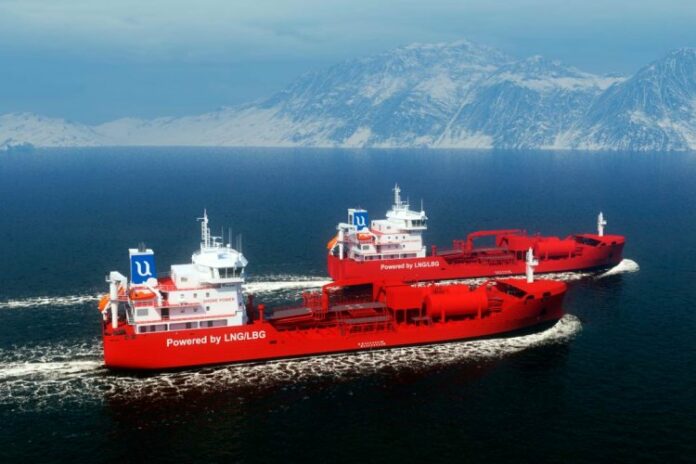
Høglund Marine Solutions will deliver a complete integrated solution featuring automation and power management, hybrid-electric, digital and fuel gas supply systems (FGSS) to power four newbuild vessels for Utkilen, the Norway-based chemical tankers operator.

The vessels will be built at Icdas in Turkey, and delivered from 2024 onwards. Each ship, set to operate in the Baltics and the North Sea, will have state-of-the-art multifuel engines, optimised hull shape and battery and shore power connections as part of Utkilen’s strategy to meet ambitious decarbonisation goals.

The hybrid-electric components for the vessels are being developed by Høglund and CAN MAKINA, the Turkey-based maritime engineering and manufacturing company, and will be integrated with Høglund’s power management and electrical systems.

Høglund will also supply the ships’ FGSS. LNG is a key element of Utkilen’s decarbonisation strategy, in addition to the possibility to use liquid biogas to further reduce the impact of greenhouse gases. The FGSS is entirely developed by Høglund and will be delivered with an integrated gas control and safety system.

Together with the Høglund automation system, this integration will ensure that the vessels and their crew have the highest level of control over their systems to maximise efficiency, safety and reliability.

Additionally, Høglund’s integrated automation system will provide crewmembers with full access to the vessel’s operational data, generated from individual inputs and outputs, which they can use to analyse and optimise the ship’s performance.

Børge Nogva, Høglund President, said:

“Our experience and expertise in developing integrated automation and control systems that make vessels more environmentally friendly is integral to this project. We are excited to work with Utkilen, the yard and suppliers in this project to deliver ships that steer the maritime industry towards a greener future.”

Siri-Anne Mjåtvedt, CEO of Utkilen, added:

“We have owners who invest long-term. In a time of great uncertainty in relation to future green technology, we choose to make large investments that will considerably reduce our carbon footprint.

“We chose to partner with Høglund due to its established track record for successful deliveries of complex marine technology. We are already cooperating with them on a retrofit project, where four vessels will be retrofitted with a turnkey gas solution while they are partly in operation and followed by up to 2 stops. Høglund’s integrated systems provide the tools needed to enhance vessel performance, safety and environmental credentials, making for a safer, cleaner and more reliable fleet.”
Babcock partners with HHI and HMD to develop liquefied CO2 carriers

0

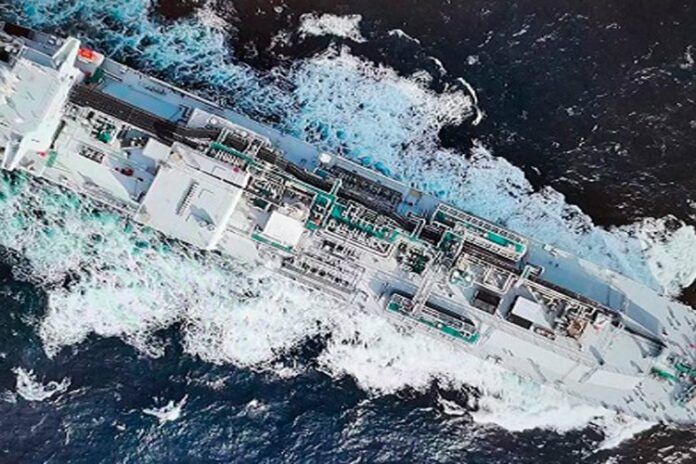
Babcock’s LGE business, the world leader in liquefied gas solutions, has partnered with Hyundai Heavy Industries (HHI) and Hyundai Mipo Dockyard (HMD) to develop liquefied CO2 carrier designs to service growing demand for this kind of vessel.

Babcock will design the cargo handling system for a range of ship sizes, specifications, cargo purities and voyage profiles to produce a highly efficient system, which has been optimised to minimise emissions and cargo loss – thereby reducing environmental impact.

To support global adoption of Carbon Capture and Storage (CCS) – widely acknowledged as a crucial step towards decarbonisation – the transportation of large quantities of liquefied CO2 (LCO2) by ship is set to grow significantly and, as a result, key marine stakeholders have been working to develop ship designs.

Michael Scott, Programme Manager of Sales and New Product Development for Babcock’s LGE business said:

“We know that to build the most effective liquefied CO2 cargo handling system, we need to consider the full CO2 value chain. By working with HHI and HMD – among the world’s largest shipyards – and other industry partners, we can design a cargo handling system that is safe, reliable and efficient. We are well on the way to achieving this and expect the commercialisation of our solution in the coming months.

He added:

“As LCO2 carriers share several common design features with LPG carriers, Babcock has extensive experience in LPG – with more than 300 ships in service – makes us the ideal partner for development.”

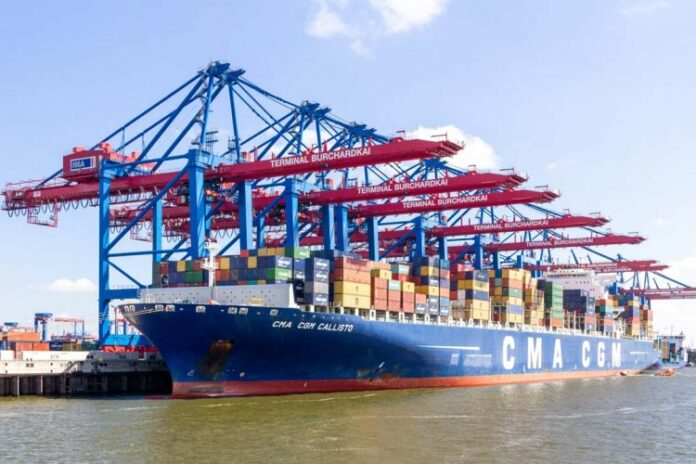
CMA CGM creates fund to accelerate energy transition in shipping and logistics

0

The CMA CGM Group has announced that it is creating a Special Fund for Energies, backed by a five-year, USD 1.5 billion budget, to accelerate its energy transition and achieve net-zero carbon by 2050. 

The Fund will invest to support the industrial production of new fuels, as well as low-emission mobility solutions across the Group’s business base (maritime, overland and air freight shipping; port and logistics services; offices). It will help to support a global innovation platform developed alongside large corporations, SMEs, start-ups, and the academic and scientific community.

Rodolphe Saadé, Chairman and CEO of the CMA CGM Group, said:

“This fund will enable us to make substantial investments in innovative projects to decarbonize our business. We have allocated the resources needed to accelerate our energy transition and that of the entire shipping and logistics industry.”

The Special Fund for Energies will invest in innovative projects to secure the supply of renewable energies and explore new solutions and prototypes to meet the ambitious decarbonization targets being pursued across the CMA CGM organization.  

  • First focus: Supporting the development and production of renewable fuels 
  • Second focus: Accelerating the decarbonization of port terminals, warehouses and truck fleets  
  • Third focus: Supporting, trialing and launching projects at the cutting edge of innovation
  • Fourth focus: Pursuing energy savings and improving the energy efficiency of CMA CGM employee working methods and daily mobility 

The Fund will be backed by a USD 1.5 billion budget and managed, starting in October 2022, by a dedicated team bringing together some of the Group’s most talented engineers, energy experts, financial analysts and project managers. Operating as a cross-functional organization covering all the Group’s operations and divisions, it will guide the Group’s overall strategy towards developing low-carbon energy solutions and accelerating their implementation. 

The CMA CGM Group has always considered its financial performance inseparable from its social responsibility and environmental performance. It is deeply committed to leading the way in decarbonizing the shipping and logistics industries by pioneering innovative, eco-friendly technologies. To do so, it is engaging an ecosystem of start-ups, R&D projects and a vast array of innovative stakeholders and next-generation tools. 

Thanks to this Group-wide engagement, the Fund will give project champions and our industrial partners the visibility – via the Group’s demand for low-carbon energy sources – and the financial resources – via the fund’s investments – they need to make these solutions widely available as quickly as possible.

Finnlines’ Superstar ro-paxes celebrate launching and keel laying

0

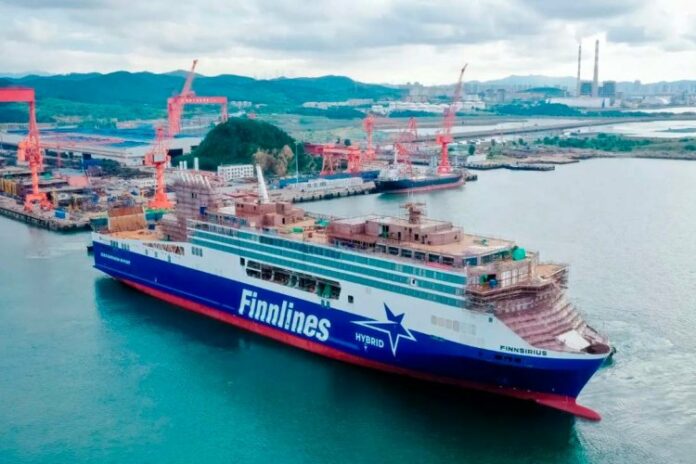
The two freight-passenger vessels will start to operate from Finland to Sweden and Åland Islands in 2023.

Finnlines has successfully completed the launching of the first Superstar ro-pax vessel, Finnsirius, construction on water will now continue. Construction of the second Superstar ro-pax vessel is also proceeding and a keel laying ceremony took place at the China Merchants Jinling Shipyard (Weihai) to officially mark the start of the construction, i.e. hull erection.

Finnsirius and its sister vessel Finncanopus will operate on the Finland–Sweden route where Finnlines has sailed since 1997. The ports of call are Naantali in mainland Finland, Långnäs on the Åland Islands and Kapellskär in Sweden.

The combined freight-passenger vessel will have capacity for about 300 lorries, 200 cars and 1,100 passengers. The vessels are 235 metres long and they utilise the latest innovative technologies.

Antonio Raimo, Line Manager Finnlines, says:

“Superstar ro-paxes will be larger than the existing Star class and they will be Finnlines’ flagships both in terms of size and technology, scaling up the connection and raising the standard offered to our customers.”

Compared with the Star class vessels, the cargo carrying capacity of the Superstar ro-paxes will increase by 20%. Finnlines has designed cargo handling procedures so that they will be highly efficient for the Finland-Sweden route.

With comfortable cabins, large public spaces and upgraded services the vessels offer a new travel experience for passengers.

Raimo says:

“We offer the most convenient schedules for crossing the Baltic Sea.”

Tom Pippingsköld, President and CEO of Finnlines, says:

“We are proud to introduce the next generation of ro-pax vessels, which will enter service in 2023. With the latest technologies and sustainable innovations, these large vessels will not only bring economies of scale to our customers, but also a lower environmental footprint. Our drive to continuously improve both operational and financial efficiency ensures that we can continue to invest in our fleet and grow with our customers.” 

The next milestone for the Finnlines EUR 500-million Newbuilding Programme will be launching of the Finncanopus in January 2023.  The ro-pax vessels are expected to be delivered in the 3rd and 4th quarter of 2023. The Newbuilding Programme also includes three hybrid ro-ro vessels already operating on Finnlines’ routes.

Inmarsat launches Fleet Safety to improve safety standards in global shipping

0

Inmarsat has launched Fleet Safety to modernise safety communication and improve safety standards in global shipping. Several years in the making, and a successor to the industry-leading maritime safety service, Inmarsat C, the formal launch follows the successful conclusion of Fleet Safety sea trials.

Fleet Safety was granted International Maritime Organization (IMO) approval under Global Maritime Distress and Safety System (GMDSS) requirements following the assessment by the International Mobile Satellite Organisation (IMSO).

Following the launch of RescueNET and SafetyNET II, Inmarsat has updated documentation and created training material to ensure the industry is ready for the new safety service. In addition, Inmarsat has added Fleet Poll a new data reporting service for Long Range Identification Tracking (LRIT), Vessel Monitoring Systems (VMS) and asset tracking as well as Ships Security Alert System. The next stage is to gain Flag State approval for adoption across the maritime industry.

Peter Broadhurst, Senior Vice President of Safety and Regulatory, Inmarsat Maritime, said:

“To this day, Inmarsat C forms the backbone of the GMDSS, with more than 100,000 marine terminals having safeguarded the lives of seafarers for over 30 years. However, as we move further into the digital era of shipping, technology can be used for enhanced safety and also provides new ways of tackling emerging challenges. The launch of Fleet Safety marks a turning point in the way satellite communications ensure the preservation of life at sea.”

Delivered via existing FleetBroadband or Fleet One voice and data services with the addition of a Maritime Safety Terminal, Fleet Safety offers unrivalled network availability and global coverage. Its new interface is also optimised for usability, making it easier for seafarers to access critical functionality and communicate with Maritime Rescue Coordination Centres (MRCCs) in an emergency. Now, a network of over 60+ global MRCCs can be contacted by voice or instant messaging at the touch of a button, in seconds.

Fleet Safety also includes an innovative Maritime Safety Information (MSI) interface and a Distress Chat function. The MSI feature allows users to control the stream of MSI broadcasts and download historic broadcasts, which include meteorological, navigational and search-and-rescue warnings. Meanwhile, the Distress Chat capability enables the creation of chat rooms between ships in distress, assisting vessels and MRCCs for quicker response/resolution times.

Given the functionality and features available to Fleet Safety users, Inmarsat has also invested in training seafarers, to help them realise the solution’s full potential. Going above and beyond user instruction, the approach aims to educate crews on the importance of being proactive in maritime distress communications.
 
Broadhurst said:

“In a precarious situation, notifying rescue authorities early can prove pivotal in saving the ship and, more importantly, the lives of the crew on board. Seafarers will generally do their utmost to rectify an issue before requesting assistance, but Inmarsat’s Fleet Safety facilitates a culture for personnel to report situations early, rather than wait until events get beyond their control.”

Maritime safety is part of Inmarsat’s DNA. The company was founded in 1979 by the IMO to establish a satellite communications network for protecting the lives of seafarers. With the launch of Inmarsat C in 1991, it became the first satellite operator to meet the stringent requirements of the IMO’s GMDSS – a set of marine safety procedures that Inmarsat helped to define – for ship security alert systems.
 

Georgia Ports Authority orders 12 Konecranes RTGs for the Port of Savannah

0

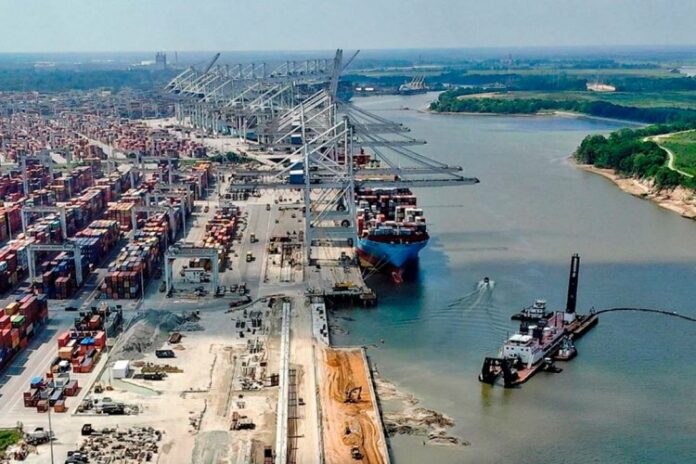
The Georgia Ports Authority (GPA) in the USA has ordered 12 Konecranes RTGs for the Port of Savannah, Georgia. When these cranes are working, the Port of Savannah will operate a fleet of 234 Konecranes RTGs. Konecranes booked the order in Q3 2022, and the cranes will be delivered by the end of 2024.

The Georgia Ports Authority (GPA) owns and operates the Port of Savannah. Its Garden City Terminal is the fastest-growing container terminal in North America. The Port of Savannah already operates 198 Konecranes RTGs with another 24 on order, making it the largest RTG fleet in the USA. The current order will bring the fleet to 234 RTGs in Savannah. The GPA is experiencing significant growth, moving an all-time monthly high of 528,300 twenty-foot equivalent units (TEUs) in July.  

GPA Executive Director Griff Lynch commented:

“Our expansion program is proceeding well, and this order for 12 Konecranes RTGs will support our productivity and continuing growth. Konecranes is our go-to partner for container handling equipment and has been for over 25 years.”

Jussi Suhonen, VP, Regional Sales, Port Solutions, Konecranes said:

“The Port of Savannah is an American success story for the state of Georgia and the entire USA. The Port of Savannah and Konecranes have been growing together in a mutually beneficial relationship, which continues with this RTG delivery.”

The 12 RTGs on order are diesel-electric machines with built-in readiness for electric operation via cable reels. They are high-performance, 16-wheel RTGs with a lifting capacity of 40 tons, a stacking height of 1-over-5, and a stacking width of 6 plus truck lane wide. They will be equipped with Konecranes’ Active Load Control system, which prevents container sway. The Auto-steering feature is included, which keeps the cranes on a pre-programmed, straight driving path. Furthermore, they will have Konecranes’ TRUCONNECT® remote monitoring system.

Saipem and Siemens Energy to jointly develop a concept for floating electrical substation

0

Saipem and Siemens Energy have signed a Memorandum of Understanding (MoU) for the joint development of a cutting-edge technology solution in the offshore wind sector. 

Floating offshore substations, installed in deep water, offer several advantages such as a lighter substructure, an easier and asset-light installation in challenging conditions as well as lower decommissioning costs.

Saipem and Siemens Energy’s floating offshore substation concept will be based on a proven semisubmersible substructure, and it is designed to operate in the most extreme environments with enhanced stability and can be scaled up as required by clients. In addition, the design will address the industrialization phase as it can be adapted to fabrication and assembly infrastructures worldwide. The floating substation could represent a tangible solution for reducing the levelized cost of energy (LCOE) of floating wind farms.

Saipem’s expertise in the engineering of complex and sustainable offshore infrastructures, including floating solutions, will be combined with Siemens Energy’s broad transmission portfolio to develop a cutting-edge, standardized and scalable technology.

Fabrizio Botta, Chief Commercial Officer of Saipem, commented:

“Our ambition is to take advantage of Saipem and Siemens Energy unique expertise, to jointly develop a cutting-edge floating design solution for offshore substations. The new concept will be an enabler to enhance offshore wind developments in deeper waters by lowering the overall infrastructure investment. This agreement further confirms Saipem ambition to strengthen its leadership role in the offshore wind market by delivering industrialised and standard solutions.”

Agustin Tenorio, Vice President Transmission Systems at Siemens Energy, said:

“The new joint solution will significantly optimize critical technical parameters, such as weight, electrical efficiency, and asset longevity, thus lowering the production costs and enabling an unprecedented number of countries to benefit from large-scale offshore wind generation. This MoU is an integral part of Siemens Energy’s Net Zero strategy in scaling up its activities through technology partnerships for specific markets, which complements the well-established turnkey business we already execute today.”
 

Fugro to provide geo data for Renexia’s floating offshore wind farm

0

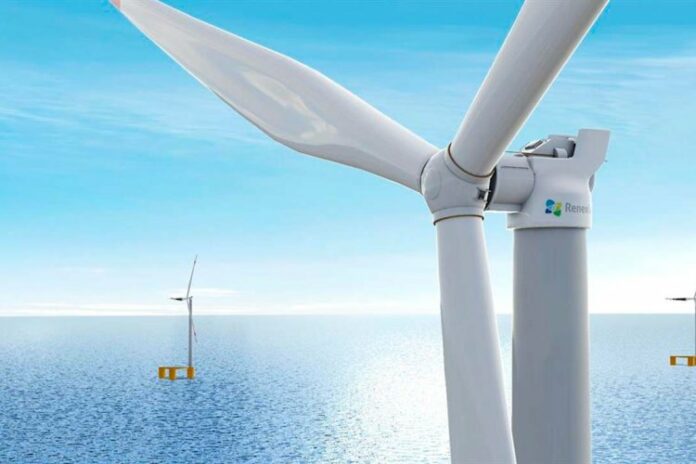
Renexia, part of TOTO Holding, has awarded Fugro a survey contract for the Med Wind floating wind farm in the Strait of Sicily, one of the biggest renewable energy projects planned for the Mediterranean Sea, with 190 floating turbines for an installed capacity of 2.8 GW.

Fugro will provide Renexia with detailed marine geophysical and environmental surveys, deploying state-of-the-art equipment and specialised personnel to acquire comprehensive Geo-data at the proposed wind farm location and along the two proposed export cable corridors.

Once Fugro has acquired the necessary Geo-data in the site’s water depths of 300 m to 900 m, the results of the analysis will be used to advise on geohazard risk mitigation and identify a safe route for installation of the two export cables. These results will also feed into the final integrated environmental impact assessment (EIA) application to Italy’s Ministry of Energy Transition.

Riccardo Toto, General Director for Renexia, said:

“Med Wind is one of the most innovative renewable energy projects in Europe and, as such, we need strong partners to support us on this journey. Fugro is the world’s leading Geo-data specialist and will join our large team of international professionals who are working together to construct the energy infrastructure that’s key to achieving Italy’s sustainable development goals.”

Rodolfo D’Addario, Country Manager for Fugro in Italy, added:

“We are really proud to support Renexia in this challenging floating offshore wind project, which will help our country’s transition to decarbonisation and a sustainable future of green energy and power diversification.”

Once operational, the 850 km2 wind farm located 60 km off the Italian coast should provide enough electricity to power 3.4 million homes a year, which translates to an annual CO2 saving of 2.7 million tons.

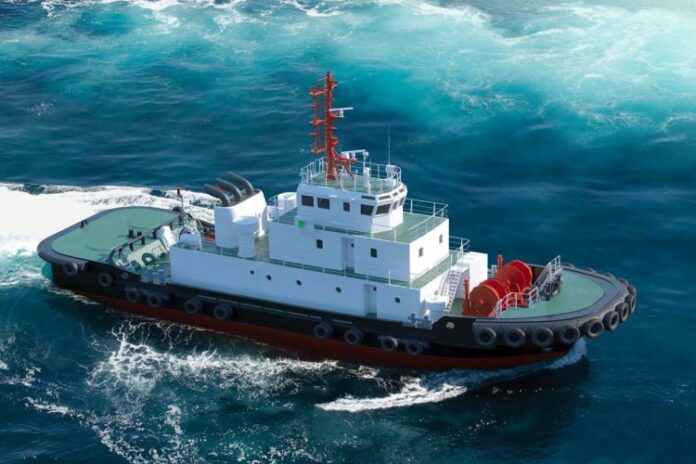
Wärtsilä propulsion solution selected for sustainable new hybrid tug

0

The Wärtsilä thrusters selected have been especially designed for electric propulsion, and support the sustainability requirements of the vessel. 

The tug is under construction for Xiamen Port Shipping at the Fujian Mawei Shipbuilding yard. The order with Wärtsilä was placed in June 2022 by Shanghai CSIC Marine Propulsion Equipment, the integrator for the newbuild project.

The project specifications emphasise emissions reduction and energy savings. The tug will operate with two Wärtsilä WST18FP-L steerable thrusters, providing optimal propulsion performance in line with the sustainability requirements.

Lauri Tiainen, Director Thrusters and Propulsion Control Systems, says:

“Decarbonisation is central to Wärtsilä’s design strategy, and the WST thrusters  reflects the innovative development of our main propulsion systems supporting this strategy. We are also able to support the customer with local production, engineering and after sales in China which makes Wärtsilä a great choice for the full lifecycle of the tug boats. I am very pleased that Xiamen Port, Fujian Mawei Shipbuilding and Shanghai CSIC selected us as a partner for this industry’s future milestone project.” 

The Wärtsilä WST18FP-L thrusters provide excellent thrust on bollard pull, and transit speed performance. They feature high hydrodynamic capabilities, less maintenance, easy installation, and better accessibility for servicing. The WST series has eight thruster types, ranging from 700 to 3300 kW, enabling vessels to meet and exceed the performance levels required in today’s competitive operating environment.

Xiamen port is an important deep water harbour in China’s Xiamen Fujian province. The 5000 HP tug is 38.3 metres long and is scheduled to enter operational service in 2023. The Wärtsilä equipment will be delivered in Q1 2023.

WinGD and HSD Engine collaborate to deliver methanol-fueled two-stroke engines

0

Swiss marine power company WinGD and Korean engine builder HSD Engine have initiated a Joint Development Project (JDP) to advance the development of WinGD’s methanol-fueled big-bore engines.

The aim is to deliver an engine capable of running on carbon-neutral green methanol by 2024, providing shipowners with a power solution enabling them to meet IMO’s 2050 target – and to reach net-zero emissions – with their next generation of vessels.

Under the JDP, WinGD will oversee combustion and injection research, exhaust aftertreatment requirements and engine concept design. HSD Engine will provide support on cost-effective manufacturing and assembly, provide engine testing capabilities and deliver fuel supply and exhaust aftertreatment systems.

Dominik Schneiter, VP R&D, WinGD said:

“With new fuels, new materials are needed and manufacturers’ involvement in design is critical to ensure that engines can be produced at reasonable costs and in a reasonable timeframe. HSD is well-known as a high-class engine builder that will be able to support WinGD in delivering the methanol-fueled two-stroke engines that our customers will be seeking for their vessels in the near future.”

Jong-Tae Choi, VP, Engineering & Technology, HSD Engine said:

“Collaborating with WinGD on this project will place HSD Engine in prime position to serve its shipyard and shipowner customers with the clean fuel solutions they need to reach approaching emissions regulations.”

The JDP will focus on some of the largest engines in the WinGD portfolio, the X92 and X82. These engines will be suitable for the larger and ultra-large container ships in which WinGD sees rapidly growing interest in green methanol. Demand is also growing, albeit at a slower pace, in the bulk carrier and tanker segments.

The project is the latest partnership with engine builders aimed at accelerating the development of WinGD engines capable of running on new fuels.  Schneiter explained that multiple collaborations are essential to meet expectations of all shipbuilding markets and to jointly develop engine builders’ capabilities in testing and designing for new fuels.

The market for green methanol, which is produced using renewable electricity and renewable carbon sources, is growing rapidly and shipowners are increasingly confident that availability will be scaled up in line with the growth of the methanol-fueled fleet. WinGD’s first methanol engines will give ship operators further confidence that the technologies to use clean fuels will be available when they are needed.