0.8 C
New York
Home Blog Page 401

OneWeb and HD Hyundai Avikus sign MoU to advance marine technology

0

OneWeb, the low Earth orbit (LEO) satellite communications company, and HD Hyundai Avikus today announced the signing of a Memorandum of Understanding (MoU). This agreement, signed during a dedicated ceremony at SMM Hamburg 2022, signifies a new partnership to explore opportunities for advanced LEO satellite technology to support the next generation of marine expertise and autonomous shipping.

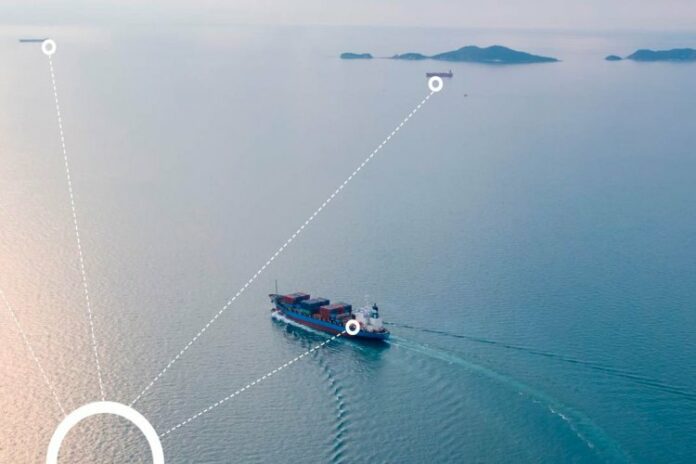
The partnership will test and review the use of OneWeb’s high-speed, low latency LEO service to provide the necessary connectivity for facilitating and strengthening the operations of Avikus’ innovative systems. OneWeb’s technology will advance and future proof remote ship operations through improved latency and bandwidth across oceans, enabling improved data sharing from ship to shore. The companies will work together evaluating the new technologies for LEO connectivity onboard future vessels as well as other solutions for the HD Hyundai Group.

This collaboration has significant and far-reaching potential, unleashing a new sector in maritime autonomous shipping. The advanced technology will enhance connectivity across oceans to modernise the industry, along with its operations and overall safety. This partnership also reflects both companies’ commitment to sustainability, by facilitating the development and implementation of technologies to enable vessels to reduce emissions and support seafarers’ wellbeing so that, ultimately, goods can be more responsibly carried across the oceans. 

Dohyeong Lim, CEO of HD Hyundai Avikus, said:

“This partnership is vital to HD Hyundai Avikus’ development of the next generation of marine technology and autonomous shipping. As a shipbuilding group and autonomous ship solution provider, we’re excited to be an early adopter of OneWeb’s advanced LEO connectivity. It is expected that this partnership will bring Avikus’s technology and business scalability to another level. In addition, Avikus will serve as a bridgehead for HD Hyundai group’s digital twin, remote sea-trial and even new business development.”

Stephen Beynon, Chief Commercial Officer at OneWeb, commented:

“We are hugely excited about this new partnership with Avikus. At OneWeb, we firmly believe in the strength and significance of collaboration, as demonstrated by our global investors and industry relationships, and this MoU is no exception. OneWeb’s advanced LEO service network will provide the connectivity necessary for not only Avikus but also HD Hyundai group to operate their future systems – unlocking huge opportunities for the entire maritime industry.”
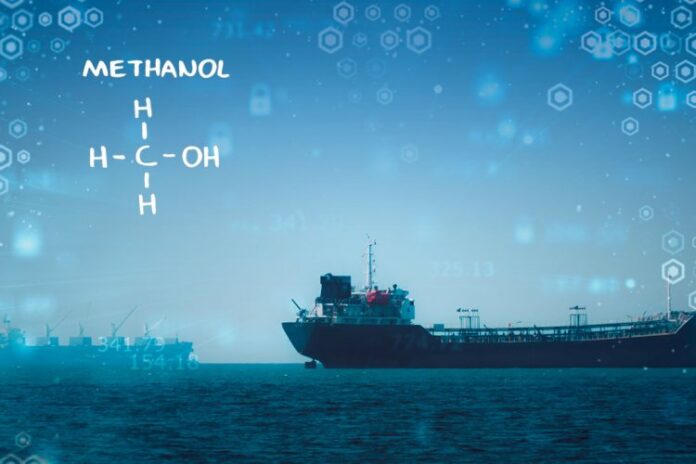
Successful testing of an HT-PEM fuel cell system using methanol

0

Based on positive test results, the project is on track for a 200 kW installation. Ultimately, it will provide the marine industry with a scalable energy supply that does not involve combustion.

The project’s aim is an efficient and cost-effective energy solution based on high-temperature proton exchange membrane (HT-PEM) fuel cells.

Alfa Laval’s Jeroen van Riel, Business Development Manager, Marine Energy Solutions, says:

“We are pleased with the progress in the HT-PEM fuel cell system project. Although this first installation is small, it allows us to test the basic setup and the function of the supporting equipment. The data compiled so far is very promising, which suggests that we can move into the next stage as planned.”

The fuel cell system in development, which will provide clean operation with no particulate emissions, uses carbon-neutral renewable methanol. It comprises modules of HT-PEM fuel cell stacks that can be combined in racks of 200 kW, creating a standardized, scalable system for many megawatts of power.

In the current phase of testing, two modules containing one fuel cell stack each are being run with the distribution systems. The operational data will then be used to fine-tune the 200 kW module and rack setup.

Van Riel says:

“The project will lead to an integrated, safe and marine-certified product for application on tomorrow’s green ships. Within the near future, it will offer a realistic alternative to combustion-based auxiliary power on board.”

Wärtsilä and CLdN cooperate in building of innovative hybrid RoRo vessels

0

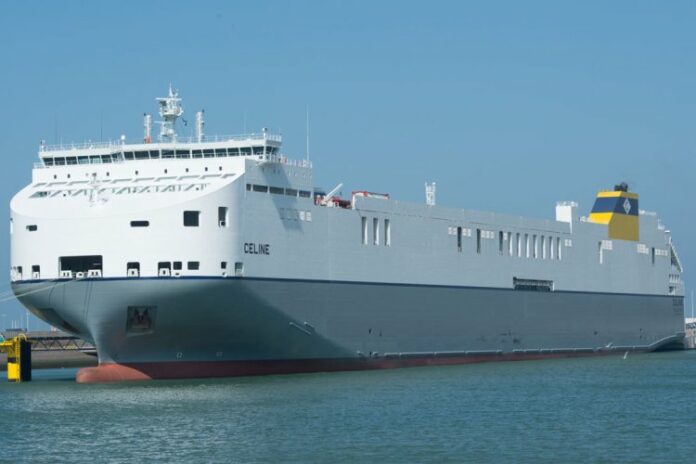
The technology group Wärtsilä and logistics provider CLdN have jointly developed an innovative hybrid design for two new RoRo vessels. 

The propulsion arrangement is such that the ships can operate as gas/diesel-mechanical vessel now, or in the future as gas/diesel-electric vessel. The vessels are being built at Hyundai Mipo Dockyards in Korea.

The Wärtsilä hybrid system includes Energy Storage Systems, two large PTO/PTI generators and electric motors, multidrive converters, and the Wärtsilä Energy Management System that controls and optimises the hybrid operations. The solution will enable the ships’ CO2 emissions to be minimised, thereby supporting the marine sector’s decarbonisation ambitions. The order with Wärtsilä was placed in June 2022.

Gary Walker, COO Shipping at CLdN, says:

“Our aim is to be flexible with regard to future technological developments, which is why we have worked on the development of these new vessels with Wärtsilä, a company with a proven track record in developing advanced hybrid technology for the marine industry.” 

Torsten Bûssow, Director Ship Electrification Solutions at Wärtsilä, says:

“Decarbonisation is a central issue for shipping today, which means that vessel designs need drastic re-thinking. It’s not always clear, however, what these changes should involve, so we at Wärtsilä have for some time now been recommending that built-in flexibility in the propulsion train should be a priority. Together with CLdN, with these vessels we are showcasing what is today both possible and meaningful.”   

The two 234 metre long vessels will each feature 8000 lane metres of cargo space. They are part of CLdN’s fleet renewal programme aimed at drastically reducing emissions. 

duisport and Port of Antwerp-Bruges agree long-term partnership

0

High-ranking representatives of duisport and Port of Antwerp-Bruges have signed a long-term cooperation agreement. duisport CEO Markus Bangen and Jacques Vandermeiren, CEO of Port of Antwerp-Bruges, sealed the far-reaching partnership in the presence of Flemish Prime Minister Jan Jambon.

North Rhine-Westphalia’s Minister for the Environment, Nature Conservation and Transport, Oliver Krischer, as well as the Deputy Mayor of the City of Antwerp and President of the Board of Port of Antwerp-Bruges, Annick De Ridder, attended the event, as did Josef Hovenjürgen, Parliamentary State Secretary in the Ministry for Home Affairs, Municipal Affairs, Building and Digitization of the State of North Rhine-Westphalia.

At the heart of the agreement is the expansion of cooperation in the areas of energy transition, rail and hinterland connections, and port infrastructure. All three areas are of outstanding importance for the reliable supply of industry and the stabilization of supply chains between Germany and Belgium and within Europe.

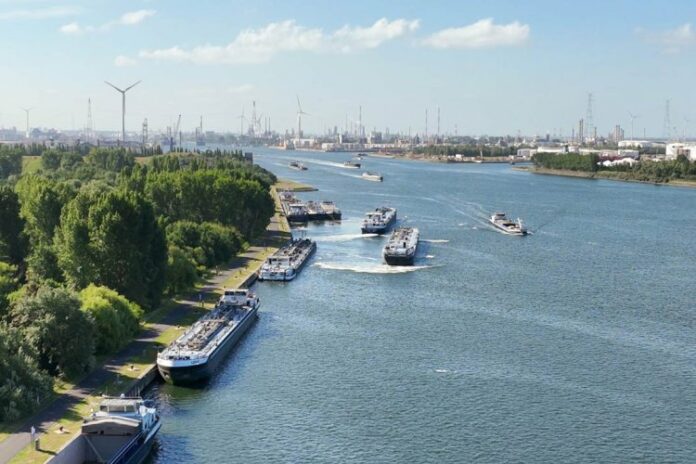
The European energy system will increasingly focus on sustainable energy sources, with green hydrogen carriers playing a crucial role. The development of solutions for the import, storage and distribution of green hydrogen in various forms is therefore one of the main strategic pillars of the cooperation between the two ports. The goal is to build an international supply chain for hydrogen in which both partners become central hydrogen hubs for Europe.

To achieve this goal, duisport and Port of Antwerp-Bruges want to establish a high-frequency rail shuttle in addition to planned pipeline connections and establish rail as a “rolling pipeline”. The expansion of the hinterland network, the promotion of sustainable multimodal transport connections, and the steady shift to environmentally friendly modes of transport are substantial for the realization of the energy transition.

As both ports aim for climate neutrality by 2050, the development of environmentally friendly port handling equipment is also part of the joint agreement.

For duisport, the cooperation with Port of Antwerp-Bruges is another important step in the expansion of its future network. Similar agreements were already concluded with the ports of Rotterdam and Amsterdam in May and June of this year.

duisport CEO Markus Bangen says:

“Our ports have a key role in their regions as leading logistics and industrial centers and are already linked by various multimodal connections. Against the background of the current global challenges, it is only logical that we sustainably strengthen our European partner network and cooperate even more closely.” 

Jacques Vandermeiren, CEO of Port of Antwerp-Bruges:

“To realize the ambitious plan to become a climate neutral continent, we have to guarantee the European industry reliable and secure access to renewable energy sources. The import, transmission and distribution of green molecules needs short, mid and long term solutions. Developing a robust multimodal supply system will be fundamental to make the change happen. And we are pleased that duisport and Port of Antwerp-Bruges are combining forces to that end.”

Hansa Tankers partners with StormGeo for improved environmental performance

0

Partnering with StormGeo will help Hansa Tankers seamlessly transfer voyage data in real-time to improve ship-to-shore communication, adding insight into their bunker management, reducing CO2 emissions of their fleet, and further strengthening their focus on increasing the pool’s fleet-wide sustainability.

Torfin Eide, COO at Hansa Tankers, says:

“StormGeo’s s-Insight provides tools that assist us in managing the environmental and commercial performance of our entire fleet in one dashboard. By also adding weather and routing data to the operator decision-making toolbox, we gain new and actionable insights that enable immediate, measurable CO2 impact on our trade, which in turn will positively enhance the pool’s financial performance and environmental footprint in the coming years.”

s-Insight is a customizable fleet management system that integrates and organizes weather, voyage reporting, sensor data, performance levers, and expert assistance in one powerful analytics tool. The solution gives vessel owners, operators, and managers timely and actionable information to maximize voyage and vessel performance. In addition, its reliable data reporting system ensures the fleet is always compliant. 

For Hansa Tankers, s-Insight provides opportunities to monitor the environmental impact on emissions, improve environmental performance, and keep the fleet compliant with EU MRV, IMO DCS, the Carbon Intensity Indicator (CII), and Sea Cargo Charter regulations. Particularly useful is the new CII Simulator, a key module in s-Insight and a tool that monitors CII compliance status and reveals the impact of commercial parameters on CII ratings.
 
Eide says:

“StormGeo’s powerful and actionable CII Simulator gives us a tool enabling a better understanding of the commercial impact of the CII in our trades. We acknowledge that the earlier we integrate CII simulation into our daily operations and decision making, the better we can manage the impact on CII performance and thereby enhance our competitive advantage in the market.”

First LNG-powered containership for Pasha Hawaii delivered to ABS Class

0

The M/V George III, built by Keppel AmFELS in Brownsville, Texas, was delivered to ABS Class and is the first LNG-powered containership in the Pasha Hawaii fleet.

In addition to classification services, ABS supported the new construction vessel with an innovative design optimization process. Advanced computational fluid dynamics (CFD) including parametric hull form optimization reduced both the powering requirement and CO2 emissions. The 774 by 115-foot Jones Act vessel has a capacity of 2,525 TEUs and will serve ports along the U.S. West Coast and Hawaii for Pasha Hawaii, one of the leading shipping and logistics companies in the United States.

Christopher J. Wiernicki, ABS Chairman, President and CEO, said:

“ABS is the leader in classing containerships, and we are delighted to support Pasha Hawaii and Keppel AmFELS in this new delivery. The modern hull design is the latest advancement that improves the safety profile of these cargo-heavy vessels and LNG as fuel will also improve the environmental footprint – great achievements for all involved.”

George Pasha, IV, Pasha Hawaii President and CEO, said:

“M/V George III represents the finest in shipbuilding in the U.S. The professional support and expertise we received from the ABS team was outstanding. George III is the most technologically advanced and environmentally friendly Jones Act vessel to sail the Hawaii/Mainland trade lane, an accomplishment we are all proud of.”

ABB and Wallenius Marine introduce digital offering driving efficiency gains for ships

0

ABB and shipping company Wallenius Marine have introduced OVERSEA – the maritime industry’s first digital offering and fleet support center available as a service. The two companies have developed OVERSEA to help ship owners, operators and managers enhance the efficiency and sustainability of vessel operations.

OVERSEA leverages ABB’s extensive expertise in ship technologies and the ABB Ability™ Genix Industrial Analytics and AI suite, combined with fleet management knowledge from Wallenius Marine, to enable measurable performance improvements for vessels, leading to decreased fuel consumption and reduced emissions.

OVERSEA helps address such aspects of vessel performance as hull and machinery, speed and route planning, as well as emissions and carbon intensity reporting. With deeper insights into vessel’s operational data, backed by advanced analytics, OVERSEA center experts will be able to recommend concrete actions to shipping companies to help them improve energy efficiency, safety and reliability of operations.

OVERSEA is scalable to meet the various and ever-changing needs of shipping companies. With OVERSEA digital solution, shipping companies with in-house fleet support centers can collaborate on the same data with vessels and onshore office to get insights, provide recommendations and manage improvement actions. In addition, shipping companies in need of further support can rely on the assistance of OVERSEA center experts for daily advice, periodic performance reviews and reporting, and on-demand performance consulting.

Johan Mattsson, CEO, Wallenius Marine, said:

“We talk a lot about innovations that will make us more sustainable in the future, and OVERSEA makes a real difference already today. From our experience, we know that the operation of a vessel has a deep impact on released emissions and fuel consumption. With clear recommendations to the crew, based on data-driven analysis, vessel owners and operators are able to significantly reduce both their environmental footprint and fuel cost.”

Jyri Jusslin, Head of Service, ABB Marine & Ports, said:

“ABB is committed to driving shipping decarbonization, and OVERSEA has been developed to further support this target. OVERSEA allows turning insights into actions that can significantly improve the efficiency and sustainability of vessel operations. We are confident that this pioneering innovation will serve as a new standard in fleet and vessel performance optimization.”

Minesto starts commissioning of second Dragon 4 tidal energy power plant

0

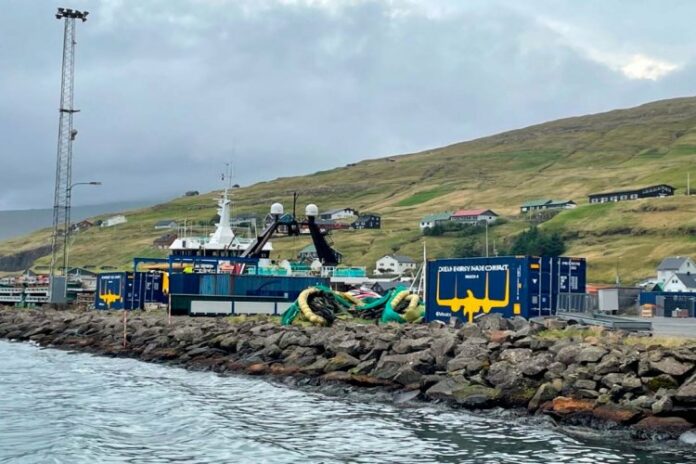
The second Dragon Class tidal energy power plant “Dragon 4” has now arrived at Minesto’s grid-connected site in Vestmanna, Faroe Islands. This power plant commissioning has now commenced, and it will greatly benefit from previous configuration testing executed with the first unit.

Dr Martin Edlund, CEO of Minesto, says:

“As we are now commissioning the second “Dragon 4” unit, it’s with vital experience of cost-efficient onshore and offshore operations. In Vestmanna, we have created a flexible setup, where a small team can assemble and launch the kite in a few hours, practically in all tidal conditions.  This operating methodology can be transferred to any location.”.

Bernt Erik Westre, CTO of Minesto, says:

“At first glance, the two “Dragon 4” kites look identical, though a few upgrades have been implemented as part of the product development process. It’s only three months between the installation of these two units, and it is satisfying to note that this short period is sufficient time to assess, decide, install, and test upgrades prior to delivery. This also underlines the fabrication friendliness of our technology.” 

New seafloor images off the West Antarctic Ice Sheet upend understanding of Thwaites Glacier retreat

0

The Thwaites Glacier in West Antarctica—about the size of Florida—has been an elephant in the room for scientists trying to make global sea level rise predictions.

The potential impact of Thwaites’ retreat is spine-chilling: a total loss of the glacier and surrounding icy basins could raise sea level from 3 to 10 feet.

A new study in Nature Geoscience led by marine geophysicist Alastair Graham at the University of South Florida’s College of Marine Science adds cause for concern. For the first time, scientists mapped in high-resolution a critical area of the seafloor in front of the glacier that gives them a window into how fast Thwaites retreated and moved in the past.

The stunning imagery shows geologic features that are new to science, and also provides a kind of crystal ball to see into Thwaites’ future. In people and ice sheets alike, past behavior is key to understanding future behavior.

The team documented more than 160 parallel ridges that were created, like a footprint, as the glacier’s leading edge retreated and bobbed up and down with the daily tides.

What’s alarming is that the rate of Thwaites’ retreat that scientists have documented more recently are small compared to the fastest rates of change in its past, said Graham.

To understand Thwaites’ past retreat, the team analyzed the rib-like formations submerged 700 meters (just under half a mile) beneath the polar ocean and factored in the tidal cycle for the region, as predicted by computer models, to show that one rib must have been formed every single day.

At some point in the last 200 years, over a duration of less than six months, the front of the glacier lost contact with a seabed ridge and retreated at a rate of more than 2.1 kilometers per year (1.3 miles per year)—twice the rate documented using satellites between 2011 and 2019.

“Our results suggest that pulses of very rapid retreat have occurred at Thwaites Glacier in the last two centuries, and possibly as recently as the mid-20th Century,” Graham said.

“Thwaites is really holding on today by its fingernails, and we should expect to see big changes over small timescales in the future—even from one year to the next—once the glacier retreats beyond a shallow ridge in its bed,” said marine geophysicist and study co-author Robert Larter from the British Antarctic Survey.

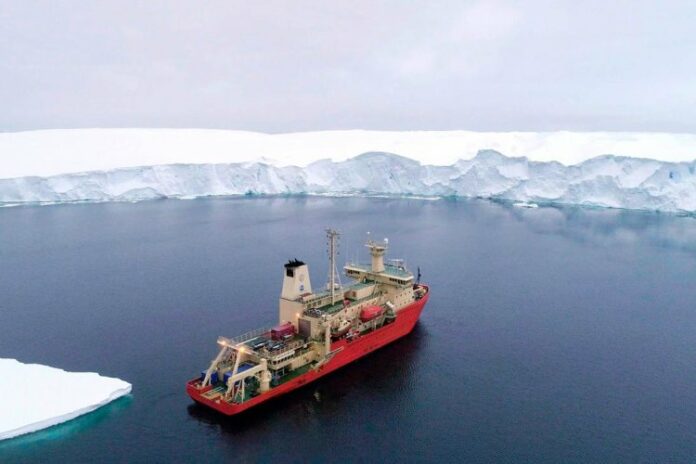
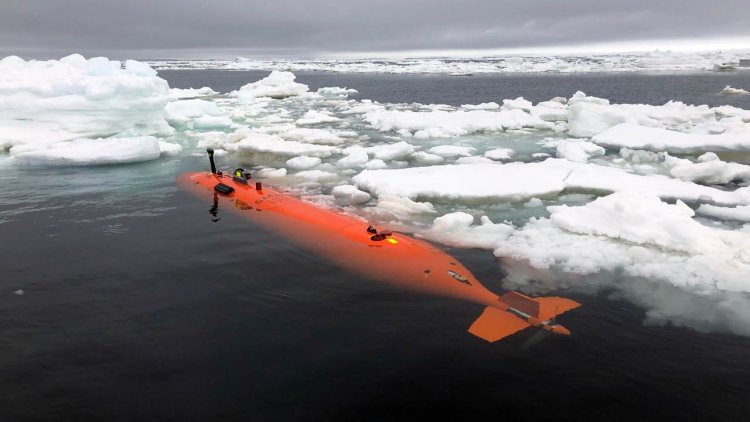
To collect the imagery and supporting geophysical data, the team, which included scientists from the United States, the United Kingdom and Sweden, launched a state-of-the-art orange robotic vehicle loaded with imaging sensors called “Rán” from the R/V Nathaniel B. Palmer during an expedition in 2019.

Rán, operated by scientists at the University of Gothenburg in Sweden, embarked on a 20-hour mission that was as risky as it was serendipitous, Graham said. It mapped an area of the seabed in front of the glacier about the size of Houston—and did so in extreme conditions during an unusual summer notable for its lack of sea ice.

This allowed scientists to access the glacier front for the first time in history.

“This was a pioneering study of the ocean floor, made possible by recent technological advancements in autonomous ocean mapping and a bold decision by the Wallenberg foundation to invest into this research infrastructure,” said Anna Wåhlin, a physical oceanographer from the University of Gothenburg who deployed Rán at Thwaites. “The images Rán collected give us vital insights into the processes happening at the critical junction between the glacier and the ocean today.”

“It was truly a once in a lifetime mission,” said Graham, who said the team would like to sample the seabed sediments directly so they can more accurately date the ridge-like features.

“But the ice closed in on us pretty quickly and we had to leave before we could do that on this expedition,” he said.

While many questions remain, one thing’s for sure: It used to be that scientists thought of the Antarctic ice sheets as sluggish and slow to respond, but that’s simply not true, said Graham.

“Just a small kick to Thwaites could lead to a big response,” he said.

According to the United Nations, roughly 40% of the human population lives within 60 miles of the coast.

“This study is part of a cross-disciplinary collective effort to understand the Thwaites Glacier system better,” said Tom Frazer, dean of the USF College of Marine Science, “and just because it’s out of sight, we can’t have Thwaites out of mind. This study is an important step forward in providing essential information to inform global planning efforts.”

The 2019 expedition was the first in a five-year project dubbed THOR, which stands for Thwaites Offshore Research, and also included team members from a sister project called the Thwaites-Amundsen Regional Survey and Network Integrating Atmosphere-Ice-Ocean Processes, or TARSAN.

First LPG dual-fuel VLGC for Astomos named Lupinus Planet

0

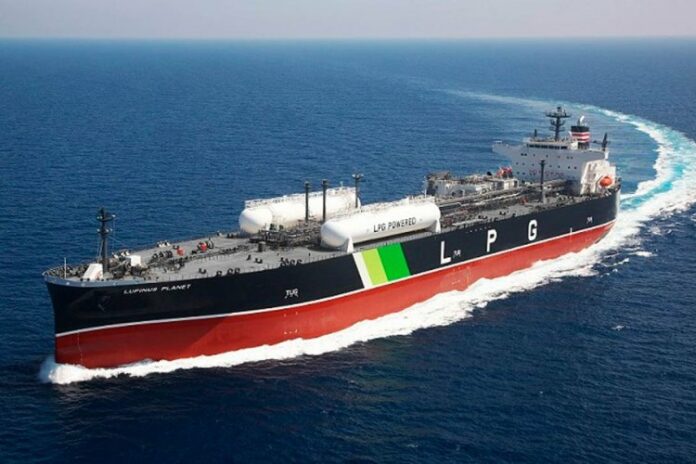
On September 2, a naming ceremony was held at Sakaide Works of Kawasaki Heavy Industries Ltd. for a new VLGC (very large gas carrier) that NYK will charter to Astomos Energy Corporation, the world’s pre-eminent liquefied petroleum gas (LPG) company.

At the ceremony, the ship was named “Lupinus Planet” by Toru Araki, executive vice president at Astomos Energy Corporation, and the ceremonial rope holding the vessel in place was cut by his wife. Yuji Nishijima, NYK executive Officer, attended together with others from NYK.

This vessel will be NYK‘s first liquefied petroleum gas (LPG) dual-fuel VLGC. When LPG is used as fuel, exhaust gas from the ordered VLGC will contain at least 85% less sulfur oxide (SOx) and 15% less carbon dioxide (CO2) compared to conventional VLGCs equipped with fuel-oil engines.

NYK will further strengthen its long-standing close relationship with Astomos Energy and promote the development of an eco-friendly fleet to contribute to a low-carbon supply chain and realize a sustainable society.