0.8 C
New York
Home Blog Page 400

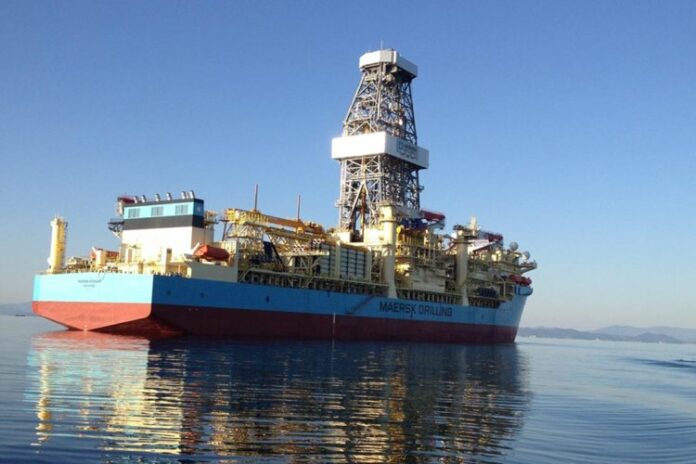
Maersk Drilling secures six-month extension for drillship with Shell

0

The contract extension is expected to commence in April 2023, in direct continuation of the rig’s current contract, with a firm duration of six months.

The contract value of the extension is approximately USD 77m, excluding integrated services expected to be provided and potential performance bonuses. The parties have further amended the options included in the contract, so that it now contains options to add up to 18 months of additional drilling work.

Maersk Drilling and Shell have further agreed to also implement the RigFlow solution, delivered by Maersk Drilling subsidiary Horizon56, for the drilling campaign offshore Mexico. RigFlow supports a strong operational performance by standardising and digitalising the core workflows involved in well construction, including real-time exchange of information between onshore planning units, the offshore drilling teams, and the service companies supporting the operations.

Maersk Voyager is a high-spec ultra-deepwater drillship which was delivered in 2014. It is currently mobilising for a drilling campaign offshore Suriname with Shell.

MacGregor to supply deck handling solutions for Van Oord’s vessel

0

MacGregor has been chosen to supply two auxiliary offshore telescopic cranes for Van Oord’s new generation wind turbine installation vessel. 

The contract was booked into Cargotec’s second quarter 2022 orders received. The delivery is scheduled for the third quarter of 2023.

The vessel is being built by Yantai CIMC Raffles Offshore Ltd, and is a new generation of wind turbine installation vessel (WTIV). The 175-meter offshore installation vessel will be purpose-built for the transport and installation of foundations and turbines at offshore wind farms. The main crane lifting capacity is more than 3,000 tonnes. The vessel has an advanced jacking system. Four giant legs, each measuring 126 meters in length, allow the vessel to be jacked up and work in waters up to 70 meters deep. It is considered to be one of largest WTIV vessels in the world in terms of overall dimensions, jacking capacity and lifting capabilities.

MacGregor’s scope of supply encompasses two auxiliary offshore telescopic cranes, which are used to support the cargo and load handling during the installation of wind turbines in the offshore environment, and are equipped with an anti-collision system. The systems and equipment have a long track record of reliability. All products are proven extensively in stringent offshore environments.

Mr. Sun Shiyan, Director of Supply Chain Management Center, Yantai CIMC Raffles Shipyard, says:

“MacGregor is our preferred choice of offshore crane supplier based on our strong relationship and positive collaboration experiences on the previous projects. These offshore telescopic cranes are customized according to the ship owner’s requirements, with high lifting performance and long outreach but very compact and robust design to meet the stringent offshore requirements. We are confident that MacGregor will take special care to ensure the highest standards in quality control and the on-time delivery to our project.”      

Kongsberg Digital and Shell Marine sign MoU to help decarbonize the maritime industry

0

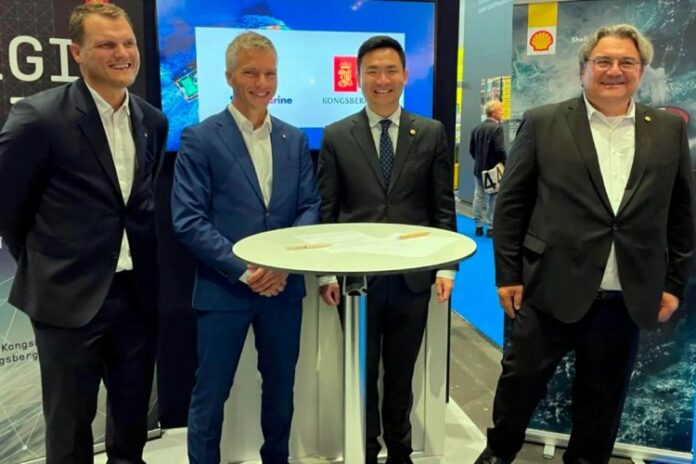
Kongsberg Digital, a subsidiary of KONGSBERG, and Shell Marine have signed an MoU to work together on new ways to accelerate decarbonization initiatives and assist the energy transition in the maritime industry.

Anders Bryhni, VP Digital Ocean Applications in Kongsberg Digital, says:

“The energy transition for the maritime sector will involve new types of fuel, new technology and new ways of working, as the industry pushes towards decarbonization. KDI and Shell both see the urgent need to support their maritime customers through the energy transition. In the short run, the marine industry needs to operate vessels in a more efficient manner through increased uptime and reliability, while ensuring environmental compliance.” 

The new partnership will see KDI bring its digital data infrastructure solutions, applications and open ecosystems together with Shell’s portfolio of Technical and Digital Services, which improve performance and reduce running and maintenance costs for its marine customers.

Marcus Schaerer, General Manager Services & Technical Shell Marine, says:

“Partnerships and technical services play a key role in shipping decarbonization given the scale of the challenge ahead. Shell and Kongsberg have long worked closely to optimize vessel efficiency and operations, and I am pleased that this MoU further underscores this collaboration.”

The MoU strengthens a longstanding partnership between KDI and Shell in the energy sector. KDI provides Shell with its digital twin Kognitwin on several Shell assets, including the Nyhamna Gas facility in Norway.

RINA issues AiP for Aurelia’s 100% hydrogen-powered ship design

0

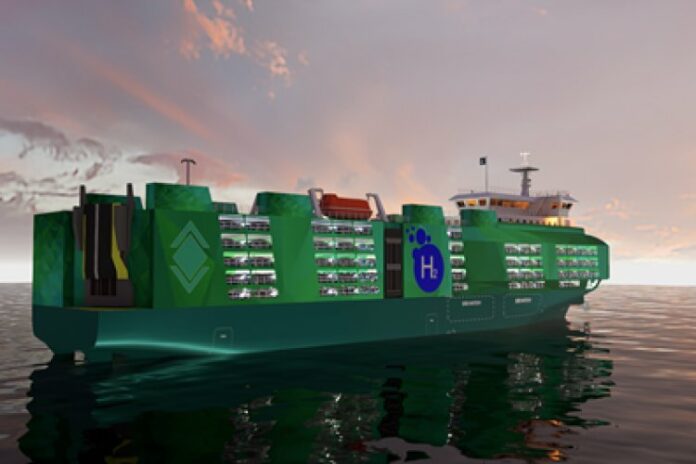
Aurelia Green Ship Concept Design has unveiled a new design with 100% hydrogen propulsion, which challenges the future of the green design business. The Certificate of Approval in Principle has been issued by RINA based on the new published RINA Rules for Hydrogen Fuelled Ships and the RINA Guide for the Approval in Principle of Novel Technologies.

The new design concept is the ACD01 1000, a RORO vessel for transporting ro-ro cargo, with electric propulsion using highly compressed H2 as fuel. Beyond the green design, the difference is marked by the ship’s hydrogen-based engine system, which can be applied to other ship designs.

The fuel used to operate the vessel is 100% compressed hydrogen which generates no environmentally harmful emissions with a design which can be considered as zero emission not only in port, but also during navigation. The hybrid propulsion is based on battery and fuel cell power modules and it is not supported by internal combustion engines supplied by petroleum-based conventional fuels. The batteries are used as an energy storage source to supply power for the hotel load too.

Ton Bos, partner, and co-founder of Aurelia commented:

“The world of zero emissions is a pioneering world open to new opportunities, which to some extent reminds me of the first operations in the heavy lift sector, where there was also no experience yet. In this sense, the cooperation with RINA is a strong signal that the maritime world is ready to work together for clean shipping.”

Patrizio Di Francesco, EMEA Special Projects Manager at RINA, said:

“This cooperation gives us the opportunity to tune the recently published rules for Hydrogen, to focus on new technical challenges as well to verify the technology readiness level of the components and systems used for the storage, supply and bunkering of hydrogen. The commitment of the persons involved is high and this will bring realistic achievements” 

Furthermore, this new design complies well beyond the limits settled by EEDI Phase 3 according to MEPC.203(62), the ballast water treatment plant is in accordance with the latest amendments of the International Ballast Water Management Convention and the hull is designed to ensure excellent hydrodynamic and maximum propeller efficiency.

Raffaele Frontera, founding partner of Aurelia Green Concept Design, said:

“This new design for a compressed hydrogen RORO is part of a long-term cooperation between Aurelia and RINA in which we will develop liquefied hydrogen propulsion system that could be used for heavy lift, cruise and Ro-Pax vessels. This cooperation with RINA will ensure that the design of renewable ships becomes a reality and does not remain a distant dream. From Aurelia we are synergising with RINA to achieve this out of the box design concept, we think big, we think about the future, we think about safety and our planet.” 

TenneT installs 900 MW DolWin kappa platform in the German North Sea

0

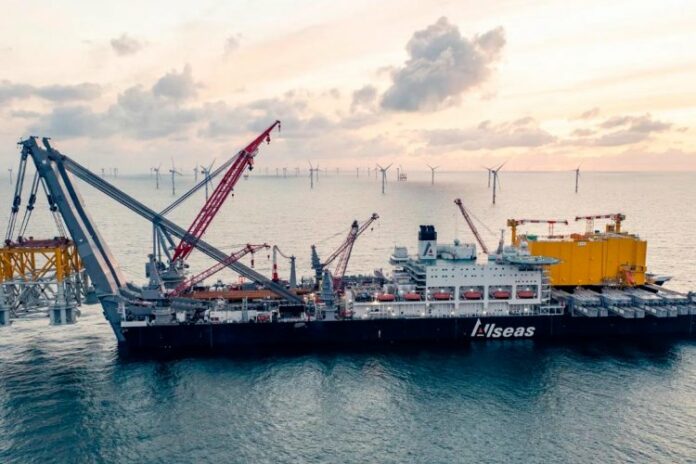
The transmission system operator TenneT has successfully installed the DolWin kappa offshore platform off the coast of Lower Saxony. 

It will be the centrepiece of the DolWin6 direct current link, which will safely bring green wind power from the German North Sea to land. After just three years of construction in the Spanish port city of Cádiz, the platform was shipped to Rotterdam (Netherlands) at the beginning of August, where it was reloaded onto the service vessel the “Pioneering Spirit”. From there, the offshore converter station was transported to its final destination and installed in a 12-day campaign. The DolWin6 grid connection system is scheduled to be commissioned in 2023 and will provide renewable energy to over 1 million households.

TenneT COO Tim Meyerjürgens upon the successful installation of the platform, said:

“DolWin6 is already the 13th offshore grid connection in our German portfolio and will bolster the security of supply in Germany and Europe.”

The “Pioneering Spirit” only needed 12 days to complete the installation. At 382-metres long, the world’s largest service vessel brought the offshore platform from Rotterdam to its final destination. Once there, the foundation structure (jacket), which is almost 44 metres high and weighs over 5,000 tonnes, was installed first. Then, 10 piles were driven up to 68 metres deep into the seabed and attached to the foundation structure. Lastly, the “Pioneering Spirit” placed the approximately 11,000-tonne superstructure (topside) on top of the foundation structure. The two have a combined height of about 82 metres, so the platform will rise about 53 metres above the surface of the North Sea.

Beginning in 2023, the platform will convert the alternating current generated by offshore wind farms into direct current, which will then be transmitted to Hilgenriedersiel on the mainland via an approximately 45-kilometre-long subsea cable. 

From there, the electricity will be transmitted to Emden by a land cable, which will also be 45 kilometres long. Here, TenneT has built the Emden/Ost converter station and transformer station to convert the direct current back into alternating current and then feed it into the high-voltage grid at the required voltage level.

BlueFloat and Energy Estate to expand Greater Gippsland offshore wind project

0

The project is located in the Bass Strait off the coast of Gippsland in Victoria, which last month was declared by the Australian Government as the first area to be assessed for suitability for offshore wind developments. 

Nick Sankey, Country Manager for BlueFloat Energy, said:

“It’s no surprise that Gippsland was selected as the first declared area given the region´s obvious advantages – excellent wind resources, a strong skills base with a maritime heritage, a long history of industrial development, and it is home to a well-established offshore energy industry already.”

Mr Sankey said:

“Projects like the Greater Gippsland Offshore Wind Project will build on the momentum for the accelerated retirement of brown coal-fired power stations and complement the existing and planned transmission infrastructure investments in Gippsland. There is also clear political will and a strong appetite for the necessary renewables-led economic evolution that is coming; this was extremely evident at the successful and well attended Gippsland New Energy Conference held in Sale in August.”  

The increase in the capacity of the Greater Gippsland Offshore Wind Project to over 2GW results from our detailed analysis of the investigation area announced in 2021 and its potential for offshore wind. It takes into account the proposed offshore zone area, available grid capacity, accelerated retirement of coal fired energy generation and the Australian Government’s support for an increasing but orderly transition to renewable energy. The water depth at the Greater Gippsland Offshore Wind Project means that bottom-fixed technology will be used for this project.  

Simon Currie, Founder of Energy Estate, says:

“The expansion of our Gippsland project is aligned with the Victorian Government’s ambitious target for offshore wind generation. It demonstrates BlueFloat Energy and Energy Estate’s commitment to the development of large-scale projects, which can enhance long term energy security in Victoria and across the National Electricity Market (NEM).“ 

WinGD wins another system integration customer with K-LINE duo

0

The vessels will feature WinGD X62DF-2.1 engines coupled with shaft generators – a configuration designed and integrated by WinGD – with energy use optimised by WinGD’s X-EL energy management system.

By using the smart X-EL energy management system developed by WinGD, the K-LINE vessels will be able to optimise energy efficiency in real time across several modes of operation. In one example, power generated through the shaft generators will be used to precisely control the engine load while using LNG, meaning the vessels will not have to switch to diesel for sudden increases in engine load.

K-LINE has anticipated that the two vessels will reduce emissions of carbon dioxide (CO2), which is a greenhouse gas (GHG), by 25% to 30% compared to the previous generation of vessels using heavy fuel oil when they enter service in 2024.

K-LINE said:

“WinGD’s X-EL system integration expertise and energy management solution will contribute to significant efficiency gains on our two newbuild car carriers as we work towards our target of reaching ”K” LINE Environmental Vision 2050. Intelligent energy management to optimise efficiency is an important element in achieving our long-term ambition.”

Stefan Goranov, General Manager Sustainability Solutions at WinGD said:

“This order for X-EL represents another significant step forward in WinGD’s commitment to supporting the energy transition within shipping. The signing with another major Japanese shipping line highlights growing confidence in our technology as well as increasing demand for integrated energy solutions as ship operators look to drive efficiency and reduce emissions across their fleets.”

The order means that two of the three biggest Japanese shipping companies have used WinGD’s X-EL service for electric-hybrid system integration. Last year NYK Line selected WinGD to integrate a battery-LNG systems on four NYK Line PCTCs. The K-LINE pair will also be built at JinLing Shipyard (Nanjing) in China, which developing strong capabilities in the delivery of hybrid-powered PCTCs.

JinLing Shipyard (Nanjing) said:

“We are happy to work with WinGD once more to deliver K-LINE’s highly capable new vessels. X-EL brings a robust energy system design with a tailored energy management system, backed by their in-depth engine expertise. This kind of integration capability is becoming important as more shipowners consider building hybrid vessels.”

WinGD’s X-EL battery-hybrid power integration brings two-stroke marine engine control into the electrified vessel power system for the first time. WinGD has developed proprietary expertise and digital tools to simulate, design and deploy the entire vessel powertrain, incorporating in-line shaft generators, frequency converters, thrusters and, whenever required, battery systems, integrated with the main engine.

The overall power configuration is controlled by a holistic energy management system, X-EL, that offers dynamic optimisation to real-time vessel operating conditions, interacting with WinGD Integrated Digital Expert (WIDE) to incorporate detailed engine insights into energy management.

MAN Energy Solutions wins order from Damen Naval for Propulsion Diesel Engines

0

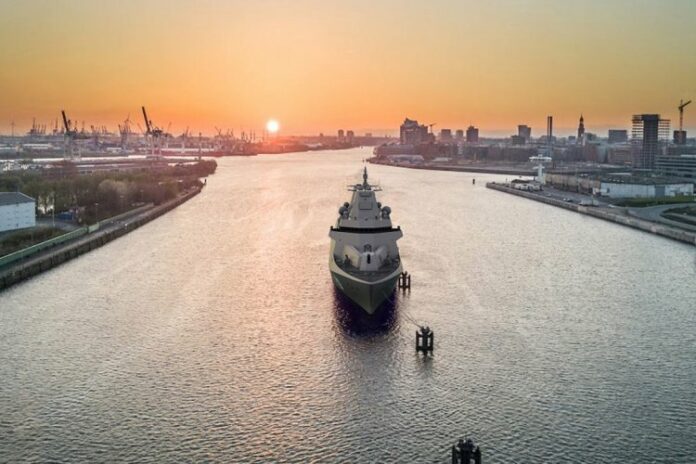
The Propulsion Diesel Engines for the German Navy’s new 126 class of frigates will be supplied by MAN Energy Solutions. 

The news was announced during the SMM trade fair in Hamburg that the company has signed a contract with Damen Naval for the delivery of 8 × MAN 32/44CR propulsion engines, two for each of the four contracted frigates. An option exists for two further frigates.

Hein van Ameijden, Managing Director of Damen Naval, said:

“For a long time, MAN Energy Solutions has been a trusted and reliable partner to us in various projects. We are therefore delighted to have them come aboard for the F126-project for the German Navy. We are committed to making the F126 frigates unparalleled in the world and it is an added bonus to do so with yet another German partner.”

Benjamin Andres, Head of Medium & High Speed, MAN Energy Solutions, said:

“We are very pleased to partner with Damen on this prestigious F126 project for the German Navy. The MAN 32/44CR’s robust design is proven across many demanding applications and I’m very happy to see it chosen again for such an exciting project.”

In June 2020, the Federal Office of Bundeswehr Equipment, Information Technology and In-Service Support (BAAINBw) ultimately awarded the construction contract for the four ships to the Dutch shipbuilder Damen as the general contractor. 

Damen Naval will deliver the frigates to the German Navy as general contractor, together with sub-contractors, Blohm+Voss and Thales. The ships will be constructed entirely in Germany at shipyards in Wolgast, Kiel and Hamburg. The first ship will be handed over in Hamburg in 2028 and the contract includes an option for two further frigates.

Each vessel will be equipped with 2 × MAN 32/44CR engines, with each engine featuring proprietary MAN Selective Catalytic Reduction (SCR) systems to comply with IMO Tier III regulations. Furthermore, the engines will be equipped with a high-displacement, soft-resilient mounting system to comply with the latest regulations regarding shock and noise requirements. MAN Energy Solutions will also supply their latest development in engine control system, which is state-of-the-art in terms of cyber security.

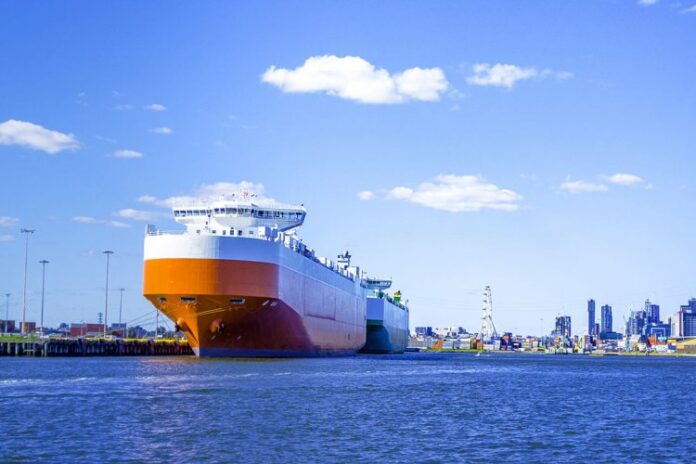
The 32/44CR engines will form part of an F126 combined diesel-electric-and-diesel (CODLAD) propulsion system, providing a top speed of more than 26 knots. The first engines will be delivered to the shipyard in early 2024.

MAN Energy Solutions has maintained a long and successful partnership with Damen Naval, one of the world’s most innovative shipbuilding companies. This has included the construction of frigates and offshore patrol vessels in the past for the respective navies of the Netherlands, Mexico, Morocco, and Indonesia. Furthermore, the Antarctic Supply and Research Vessel for the Australian Antarctic Division is equipped with two MAN Main Propulsion Diesel Engines.

Benjamin Andres:

“Damen chose us based on our decades of innovations in marine technology in fields such as dual-fuel and gas supply, propulsion, exhaust after-treatment, and battery-hybrid solutions.”

Corvus Energy leads innovative research project

0

Corvus Energy has been selected to lead an IPN project – a program funded by the Research Council of Norway to promote innovation in the industry. Corvus Energy joins forces with research institute NORCE and other partners for the project which has been awarded 13,9 million NOK in funding.

The industrial project, titled “Optimized Hydrogen Powered Maritime Mobility” or “OptHyMob” for short, will improve operations of hydrogen-driven marine vessels in order to reduce costs and extend the lifetime of both the hydrogen fuel cells and the batteries in hybrid configurations. The project builds on the ongoing H2NOR project, funded in part by Innovation Norway, where Corvus Energy and partners will develop, demonstrate and certify the inherently gas-safe modularized maritime PEM-based FC system based on technology from world leader Toyota.

Svenn Kjetil Haveland, Vice President of Development Projects at Corvus Energy, says:

“The lifetime of current fuel cell installations and high cost of hydrogen are barriers for upscaling the hydrogen-driven vessel. By solving this we can accelerate decarbonization of shipping.”

“The knowledge gained, as well as the models and systems developed through the OptHyMob project, will enable cost-effective use of hybrid fuel cell-battery systems applied for ship propulsion. Through increased efficiency, and extended lifetime of the systems, the total cost of ownership will be reduced, which is essential to the maritime industry’s progress toward zero-emission fuels.”

The power usage and hence the vessel’s energy consumption will vary a lot for different operational modes, such as acceleration and transit, and also depend upon weather conditions and waves etc. In addition, the hydrogen consumption in a fuel cell system will vary depending on how the system is operated.

Haveland explains:

“Simply stated, a fuel cell system prefers a stable load, but the power requirement fluctuates rapidly. To increase the effectiveness and lifetime of the fuel cell system you also need batteries, and it is vital to optimize the continuous balance of power from the fuel cell system and power from the batteries. The project will develop models and systems for real-time recommendations of optimal load distribution that system integrators may utilize in the power management system.”

This project will perform its research in close collaboration with and in relation to another Research Council funded KSP project, titled “Energy efficient operation of hydrogen-powered vessels” or “HyEff” for short, led by NORCE and involving the same partners.

Fionn Iversen, Chief Scientist at NORCE, says:

“This IPN project performed in tandem with the KSP ‘HyEff’ project will provide unique knowledge transfer between academia and the industry and establish best practices in batteries and fuel cell hybrid operation into the Norwegian and, ultimately, the global maritime industry in its quest towards zero-emission shipping and maritime transportation”.

The projects will combine experimental and full-scale operational data to develop a cost-optimized system that can recommend the optimal load distribution between fuel cells and batteries applied for ship propulsion. Next-minute wave and load predictions will be developed using physics-based and data-driven models which will be implemented in an industrial clustered edge computing infrastructure.

In addition, research on degradation mechanisms in batteries and FC systems used in maritime applications will be performed to determine how these components affect each other and how they can best be combined to limit system degradation and extend system lifetime.

Deltamarin wins a design contract for a new Estonian ferry

0

Valentin Bratkov, Estonian Transport Administration’s Head of the Ship Construction Project, says:

“During the tender, we saw great interest in cooperation from leading experienced design agencies in Estonia as well as abroad in this phase of the project. We believe that our cooperation with Deltamarin Ltd will be competent and diverse.” 

Estonian Transport Administration is a governmental agency that operates within the area of government of the Ministry of Economic Affairs and Communications of Estonia. It is tasked with planning the mobility of people and water, air and land vehicles, and ensuring safe and environmentally sustainable infrastructure.

Janne Uotila, Managing Director at Deltamarin, says:

“We at Deltamarin are extremely happy and thankful to sign this contract with the Estonian Transport Administration. Winning the bid, after thorough procurement process, proves that Deltamarin’s expertise in engineering projects is highly valuated by the Client. Deltamarin’s project team members are excited to start executing this project together with our Client, ensuring that the Estonian Transport Administration will get an energy-efficient and environmentally friendly ferry design.”

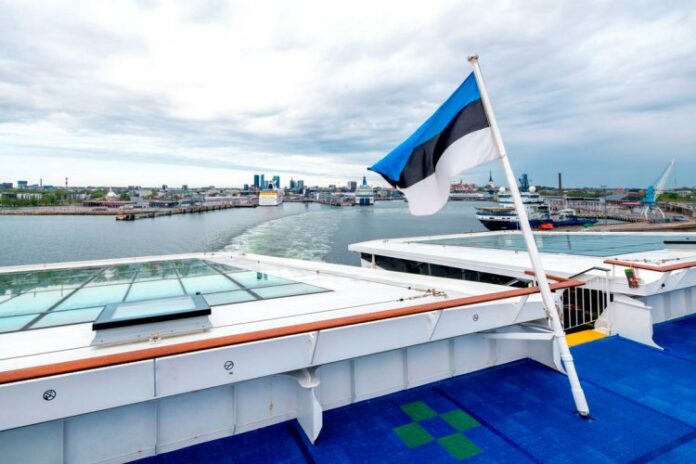
The concept is expected to be completed in early 2023. The concept will be the basis for preparing a public procurement and further designing and constructing the ferry.