1.2 C
New York
Home Blog Page 399

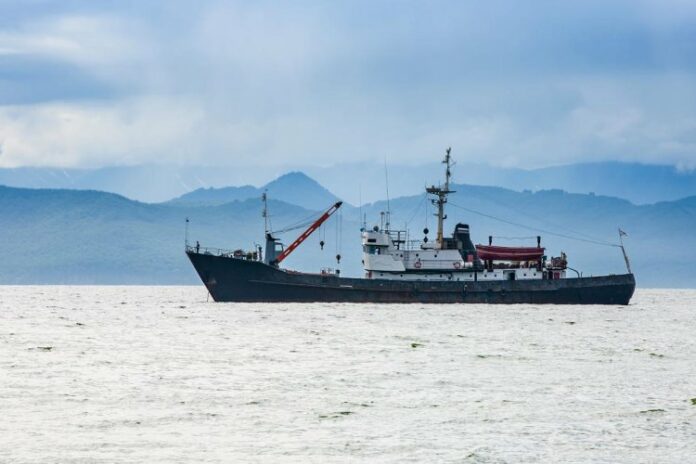
Report: The fishing industry in Norway has larger CO2 emissions than civil aviation

0

The report (link in Norwegian) was prepared by Stakeholder AS, on behalf of ZeroKyst, to map out greenhouse gas emissions by the fisheries and aquaculture industries at sea.

It shows that greenhouse gas emissions from Norwegian fishing boats have fallen between the turn of the century and 2010, and then been stable for a while before starting to rise again. Today, emissions are at about 1.1 million tonnes, based on statistics by the Directorate of Fisheries, and at about 0.9 tonnes according to SSB (Statistics Norway).

For the aquaculture sector, the situation is different. Aquaculture has become a sizeable industry in Norway, and is poised to grow even more in the future. There are no reliable statistics showing direct emissions from fish farms in Norway, but based on existing reports, we estimate that these emissions are between 500 000 and 750 000 tonnes of CO2in 2021, by vessels linked to aquaculture activities in Norwegian waters. New statistics by Kystverket, gathered for this report, show an increase in CO2 emissions from the well-boats, which dominate aquaculture emissions, at 67 per cent from 2017 to 2021.

ZeroKyst director Erik Ianssen says it’s not surprising that the fisheries and aquaculture industries have high emissions, and that it is important to work towards getting even more accurate numbers:

“No one has looked at these numbers before. It has been said that emissions need to be cut by 50 per cent, but no one knows what total we are cutting from, or where we are going. The biggest challenge is in the aquaculture industry. In that sector, there are talks of a tripling in volume, while diesel use has to go down by 50 per cent.

The technology developed by the ZeroKyst project is crucial to cutting emissions. Selling the solutions, meanwhile, will be an important challenge in the coming years.

The industry has solutions, and people are willing to use them. But of course, it’s an uphill battle, when everyone is expected to move away from something that works just fine to a new, different solution. It’s often simpler to just continue using old solutions, says Ianssen.”
Innovez One, Aventra Group sign partnership on integrated analytics for enhanced PMIS

0

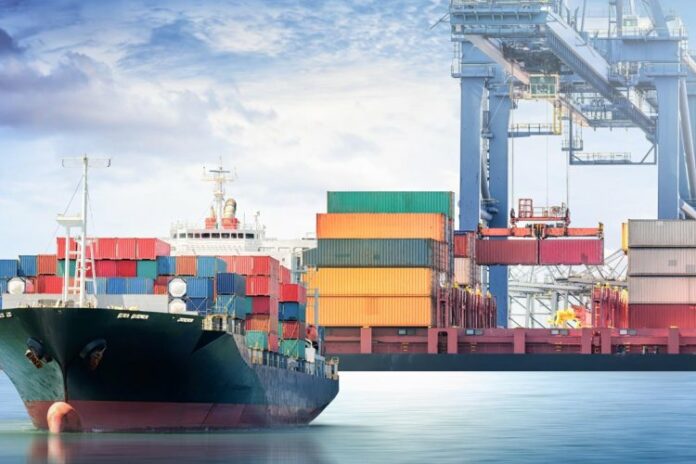
Innovez One and Aventra Group have signed a strategic partnership to develop an advanced and innovative analytics dashboard that will enhance digital Port Management Information Systems (PMIS), giving ports better visibility on their operations and supporting strategic decision-making.

The joint platform, Port Management Insights (PMIn-sightsTM), will use historical and real-time data (coming from sensor-based IoT technology) to improve the operational efficiency of port, towage and pilotage operations, building on both companies’ expertise with machine learning automation and artificial intelligence (AI). An analytics dashboard will integrate data from several sources and applications, facilitating data sharing and enabling managers to see all information in one place.

Moreover, this partnership will enable the two companies to develop a data library of use cases, and create tailored advanced solutions to support port management.

Grant Ingram, CEO of Innovez One for the UK and Europe, commented:

“We are excited to partner with Aventra Group to help deliver state-of-the-art digital solutions for more ports around the world. As a growing number of ports embrace digitalisation as the foundation for their sustainable future, we are proud to be delivering even more value through user-friendly solutions that help them improve efficiency, make robust decisions, and reduce their emissions.”

Juan Jose Gil, CEO & Executive Director of Aventra Digital, said:

“We are very excited to be joining forces with Innovez-One to contribute to the acceleration of Ports’ Digital Transformation. The digital era is the era of collaboration where leading companies bring in their best strengths to build unprecedented value. This partnership will equip ports to run smoother with an in-depth understanding of their operations while uncovering all the potential for improvement.”

Gasum bunkers the first LNG fueled cruise vessel built by Chantiers de l’Atlantique

0

Chantiers de l’Atlantique has chosen Gasum as expert supplier of LNG bunker fuel and technical adviser to perform the initial bunkering of the first LNG fueled cruise vessel built in its premises.

The choice of Gasum as partner in the preparation and performance of this state-of-the-art delivery recognizes Gasum’s unique expertise in supporting shipyards performing initial bunkerings of newbuild LNG fueled cruise vessels.

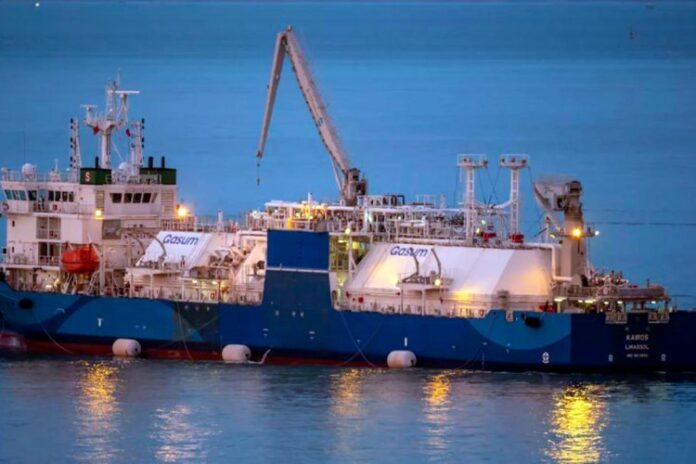
The energy company Gasum has successfully performed the initial bunkering of the first LNG fueled cruise vessel to be completed by Chantiers de l’Atlantique, bunker operation that was performed on the 10th of September 2022 in the Port of La Rochelle. The LNG was delivered by Gasum’s LNG bunker vessel Kairos.

In addition to delivering LNG, Gasum has supported Chantiers de l’Atlantique in the technical preparation of the delivery, including obtaining the relevant permits and authorisations. This delivery marks a new milestone in the extension of the Gasum LNG bunkering network and underlines its ambition to grow geographically, offering its expertise to customers wherever such is requested.

Laurent Castaing, General Manager of Chantiers de l’Atlantique, said:

“With the LNG fueled newbuild program undergoing, Chantiers de l’Atlantique has proven its capacity to embrace new technologies and to remain at the forefront ot the shipbuilding industry. Choosing Gasum is a choice of confidence in its unique experience and track record in supporting yards with technical advice and LNG supplies.” 

Grégoire Hartig, Sales Manager, Gasum, said:

“With this delivery to Chantiers de l’Atlantique, Gasum confirms its position as leading partner for shipyards engaged in the construction of LNG fueled vessels, supplying LNG and delivering decisive technical support in the preparation of initial bunkerings. This new partnership underlines also Gasum’s ambition to extend the geographical reach of its reliable and high quality service in west and south-west Europe. In addition to LNG, Gasum has become a regular supplier of Liquefied Biogas (LBG), supporting the ambitious decarbonization agenda of a series of customers.”

Semco and Bladt to supply two offshore substations for the Baltic Power project

0

A consortium of strategic partners Bladt Industries and Semco Maritime has been appointed selected supplier of two offshore substations for the Baltic Power project, a joint venture of ORLEN Group and Northland Power Inc. aiming to supply more than 1.5 million households with clean power by 2026.

The two substations will be constructed and established in 2022-2025 as key components of the electrical infrastructure for the wind park consisting of more than 70 turbines, each with a minimum capacity of 14 MW. Each substation will be a 2.5 thousand-tonne steel structure standing on foundations and rising about 20 meters above the sea level.

Anders Søe-Jensen, CEO, Bladt Industries, says:

“Together with our partner Semco Maritime we look forward to delivering yet another joint project for the offshore wind industry. At Bladt Industries we are pleased to be perceived as a safe pair of hands and to join forces to safely and successfully deliver in support of offshore wind in Poland.”

Steen Brødbæk, CEO, Semco Maritime, says:

“The Baltic Power project is another milestone in the development of the Polish renewable energy sector, and we are proud that ORLEN Group and Northland Power have signed the preferred supplier contract with our long-standing strategic partner Bladt Industries and Semco Maritime.” 

Jarosław Broda, Member of the Management Board of Baltic Power, says:

”Baltic Power consistently follows its schedule and selects suppliers who can boast not only a great deal of experience, but also a readiness to carry out significant part of the work in Poland. This is a very important aspect for us as an investor, which translates into building a local value chain for the offshore wind sector, because each of these companies are already intensively looking for sub-suppliers in Poland.” 

The Baltic Power wind farm will be erected approx. 23 kilometres off the shore, near Łeba and Choczewo. When completed in 2026, the Baltic Power offshore wind farm will be able to supply more than 1.5 million households with clean energy.

Ports of Stockholm starts procurement of hydrogen fuelling station

0

Hydrogen fuel is part of achieving the environmental target of fossil fuel-free truck operations by 2025.

To be able to refuel the work vehicles at Stockholm Norvik Port, Ports of Stockholm is beginning a procurement process for a hydrogen fuelling station. The procurement will include delivery and bringing into operation a station for refuelling vehicles with hydrogen, as well as a distribution agreement for hydrogen.

Johan Wallén, CCO Ports of Stockholm, says:

“Hydrogen will play a crucial role in converting to fossil fuel-free transport, both on land and at sea. This hydrogen fuelling station is part of converting our work vehicles to run on hydrogen and is the first step towards achieving Ports of Stockholm’s goal for our work vehicles to operate fossil fuel-free by 2025.” 

The agreement is expected to be in place no later than January 2023. Investment in hydrogen is part of achieving Ports of Stockholm’s environmental goal of entirely fossil fuel-free operations by 2030.

PowerCell receives a fuel cell systems order from Amogy

0

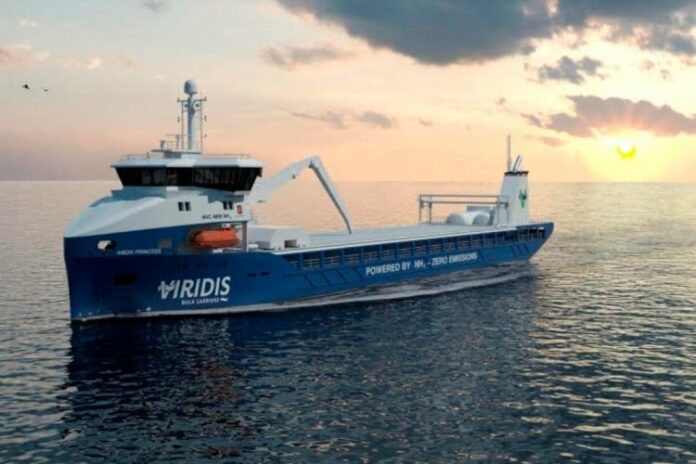
Amogy’s goal is to convert ammonia into a sustainable power source to decarbonize transportation. The company has for instance successfully engineered the first-ever ammonia-powered emissions-free drone flight at 5 kW scale and demonstrated a 100kW powerpack in a tractor.

As industries search for ways to lower their carbon footprint, ammonia has emerged as an attractive fuel source with strong potential since it enables emissions-free, high-performance mobility. The use of ammonia reformed to hydrogen is especially beneficial in industries with long operating hours, for example the marine industry, due to the high energy density.

The fuel cell system that PowerCell will deliver will be integrated in Amogy’s solution, where ammonia is reformed into hydrogen. In this way, it is possible to provide continuous power to a workboat over extended periods. The workboat will be used to demonstrate how to build a complete power system targeted to the marine industry.

PowerCell will deliver the fuel cell systems and related services during the coming fifteen months.

Richard Berkling, CEO of PowerCell Sweden, said:

“This order is a further proof of our leading fuel cell technology that we have industrialized for demanding applications. A key strength is our ability to offer fuel agnostic systems using clean hydrogen from compressed or liquid storage as well as from reformed methanol and ammonia. We believe that refining ammonia into hydrogen to be used in fuel cell systems will be an important emissions-free fuel source for the future.”

GH receives approval for gas handling systems

0

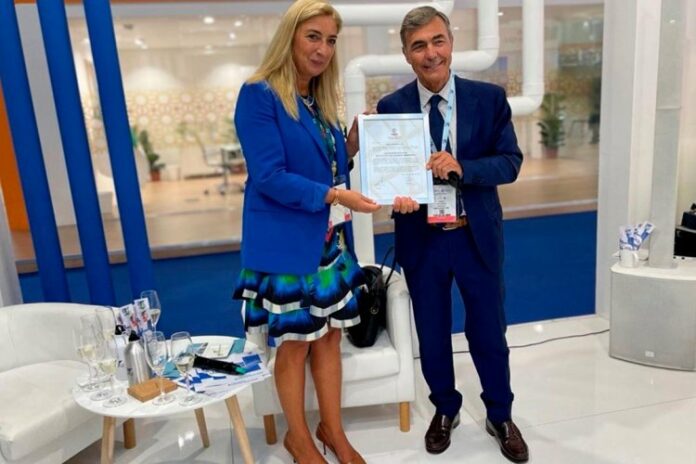
Bureau Veritas (BV) has awarded an Approval in Principle (AIP) to Gas and Heat (GH), a company specializing in the design, construction and integration of Liquefied Gas Handling Systems both for Marine and Onshore installations, for their flexible solution for the transport of LNG and ammonia.

Through a thorough study, GH supported by the BV team demonstrated that IMO Type C cargo/fuel tanks made of austenitic steel with a special grade can transport both LNG and ammonia for sea-going and inland navigation.

While LNG is expected to be widely used this decade, alternative fuels are under scrutiny to ensure their safe and sustainable use in the future. At the same time, shipowners are becoming more and more focused on multi-fuel supply systems able to handle two or more different fuels. As part of their ambitions to develop innovative solutions to help the industry anticipate the next wave of alternative fuels, GH embarked on a study to identify possible options and develop solutions.

GH has used austenitic steel with a special grade for LNG containment since its Approval by Bureau Veritas in June 2022, as an “alternative material” with respect to IGC/IGF Code. The compatibility of this material with ammonia has been verified by a specific Stress Corrosion Cracking test performed by GH and then approved by Bureau Veritas in August 2022.

For this innovative material in the shipping world, twelve specimens were prepared for the tests in accordance with ISO 16540. ISO 16540 provides guidelines to evaluate the corrosion of metals and alloys by determining their resistance to stress corrosion cracking using the Four-Point Bend method. This methodology includes procedures for metals that have no distinct yield point in their stress-strain behavior as well as metals with a distinct yield point.

Throughout the test, the specimens were loaded as Four-Point-Bend (FPB) to the Specified Minimum Yield Strength of the base material. Tests were then performed in three different conditions: at ambient temperature, -20C, and -33C, in an environment of pure ammonia. After the completion of all tests, each specimen was visually examined at x10 magnification by a stereoscopic microscope and subjected to fluorescent liquid penetrant examination to detect any visible surface crack. An additional tomographic scan was performed to ascertain that no inner crack was detected. The outcomes successfully demonstrated that cargo/fuel tanks made of austenitic steel can carry both LNG and ammonia, for seagoing and inland navigation.

BV was involved from the very earliest stages, validating the stress test methodology and reviewing each phase of the test. BV confirmed that the applied methodology opens the way to design and build LNG/Ammonia tanks that comply with the international code for the construction and equipment of ships carrying liquefied gases in bulk (IGC Code) and the international code of safety for ship using gases or other low-flashpoint fuels (IGF Code), as well as applicable BV’s classification rules for seagoing and inland navigation.

Paillette Palaiologou, Vice President South East Europe, Black Sea & Adriatic Zone at Bureau Veritas Marine & Offshore, said:

“While the shipping industry is facing many uncertainties, it is the role of class to support the industry in this period of change. I am proud of the work accomplished by both teams and the results are extremely positive for the industry. Providing different options will be key for industry stakeholders as they make decision. We look forward to collaborating with GH on new projects.”

Mauro Evangelisti, President of Gas and Heat SpA, said:

“Innovation has always been and will remain our main focus. This study is part of the innovation journey the industry needs for a smart and sustainable transition to a greener future. We hope the use of this material will provide more cost-effective and safer components to the industry.”

GH has already secured one contract which includes the supply of cargo tanks for inland navigation of LNG/ammonia and one for a seagoing LNG/ammonia fuel supply system.

NAVTOR and ScanReach sign agreement transforming vessel data into value

0

NAVTOR and ScanReach have announced a partnership that will allow shipowners and operators to maximise the potential of onboard data, creating a simple, integrated solution to capture, aggregate and analyse system information for enhanced decision making. 

Mr Sæther explains further, “Capturing critical vessel data is one thing while utilising it for better operational and business awareness and decision making is another. NavFleet has the potential to unite ship and shore; sharing, validating and analysing data to continually monitor and improve vessel, and business, performance. It delivers complete control for owners and operators.”

Arild Risholm Sæther, CBDO NavFleet of NAVTOR, said:

“However, to really get the most out of the platform it needs as much data as possible – gathering in real-time information from systems throughout assets for optimal insights. This is where ScanReach’s amazing, plug-and-play wireless solution comes in. It helps join the dots between all relevant sensors and systems in a simple, robust and truly connected way. Together, NavFleet and ScanReach can make a huge difference for our customers here, helping them reach ambitious commercial and environmental objectives.”

NavFleet launched last year, using NAVTOR’s established digital ecosystem (including offerings such as digital chart table NavStation and cyber secure data gateway NavBox) as a foundation to enable smarter shipping. In addition to a system of analytics and dual data validation, with both machine and human quality checks, it also radically reduces administration tasks. This is achieved through automation, with auto-populated reports, reduced human interaction/error, and simplified compliance.

ScanReach, meanwhile, created a new industry paradigm when in January 2020 did its first installation on Olympic Orion. Hence launched the ground-breaking wireless IoT platform tailored for industry environments made of complex and confined steel environments. This connected both technology and teams, without the need for expensive cabling and installation work. In short, it’s the IoT made easy.

Arild Sæle, CEO of ScanReach, says:

“Our unique platform is a key piece of the puzzle when it comes to realising those benefits, but we also see a means of adding significant value for the industry through innovative partnerships, like this one, with NAVTOR. They have similar values and ambitions to ScanReach, while sharing our focus on using the power of digital innovation to enable a smarter, more sustainable maritime future. We’re excited to be onboard together.”

Van Oord and DEME awarded contract from Allseas

0

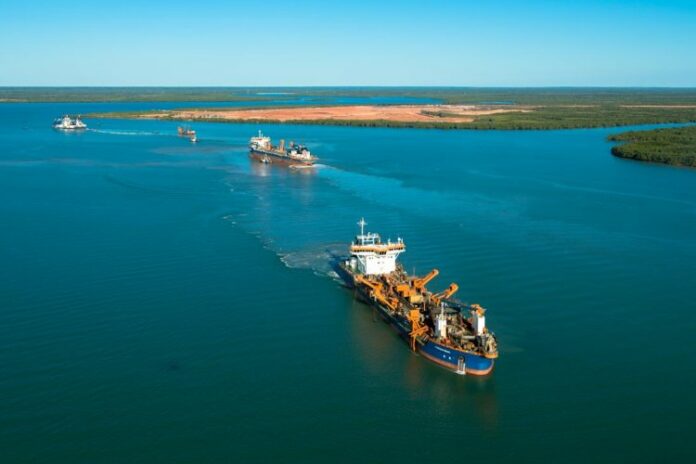
Van Oord and DEME have been awarded a contract from Allseas in support of the Darwin Pipeline Duplication Project, located offshore Northern Australia.

The joint venture will be responsible for providing support for the shallow water pipeline installation scope in Northern Territory waters including trenching, pipe pull operations and rock placement works.

Van Oord and DEME will carry out trenching, pipe pull operations and prepare the shore crossing at the landfall location near the Darwin LNG plant. Additionally, rock placement works will be performed to protect the pipeline.

A cutter suction dredger, trailing suction hopper dredger and backhoe dredger will be deployed for this project, as well as a fallpipe vessel for the rock placement works and a linear pulling winch for the pipe pull. Project preparations will commence immediately.

Hugo Bouvy, Managing Director of DEME Offshore, said:

“DEME is delighted to be returning to Australia. We already have extensive experience through important projects like Wheatstone and Gladstone. Here, we also successfully worked together with Van Oord. Our expert team has in-depth knowledge of the local safety culture and stringent environmental standards Australia has in place. DEME and Van Oord both have large fleets of modern equipment which enables us to choose the most suitable vessels, and to give our client Allseas a flexible and efficient solution.” 

Maurits den Broeder, Managing Director at Van Oord Offshore, comments:

“Van Oord is very pleased to be working in Australia again after having successfully completed the Ichthys LNG project in the Darwin Harbour. Executing complex multidisciplinary projects in challenging marine environments is our expertise and we are keen to, together with DEME,  contributing to Australia’s energy infrastructure.”

LR award AiP for HB Hunte’s new gas storage and supply system

0

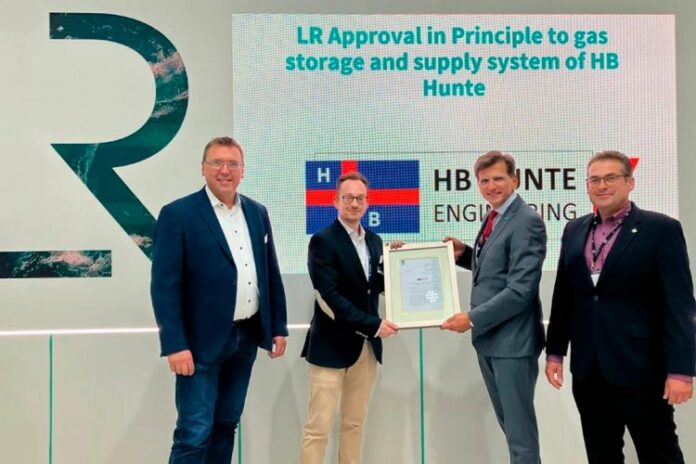
LR has awarded Approval in Principle (AiP) for a new compact fuel storage and supply system, developed by HB Hunte Engineering. 

The new design combines the tank connection space, as required by the IGF Code, and the fuel storage hold, in which the type C fuel gas tanks are located, offering space and cost advantages. 

The gas storage and supply system are designed to offer a space saving solution for smaller LNG-fuelled vessels that have limited room onboard. With more LNG solutions being implemented on small-scale vessels, the concept can deliver significant efficiency advantages for new buildings as well as retrofits.

LR awarded the AiP following a thorough analysis that confirms the technical and regulatory feasibility of the system, becoming the first classification society to approve HB Hunte’s design.

Wolfgang Franzelius, Director Sales & Business Development, HB Hunte Engineering, said:

“We realised that standard solutions for fuel gas systems will not work for small-scale vessels. Accordingly, we thought about a system which will require less space, a smaller ventilation system, shorter pipe routing and overall, less equipment costs. Thanks to LR’s technical support and intense alignments with some of our partners, we are now in a position to offer an efficient system, to support the challenging decarbonisation goals of the maritime industry.” 

Manuel Ortuño, Area Technical Support Office Manager North Europe, Lloyd’s Register, said:

“Awarding Approval in Principle for HB Hunte’s new fuel storage and supply system is a proud moment for LR. The compact solution will provide a number of benefits encouraging small-scale LNG newbuilds as well as incentives for retrofitting vessels. The maritime industry cannot limit decarbonisation measures to larger vessels and this solution will be a valuable tool in reducing greenhouse gas emissions for the small-scale LNG fleet.”

Markus Büsig, North Europe President, Lloyd’s Register, added:
“Clearly, developing this system represents an important step towards reducing the carbon footprint and enabling cleaner emissions in the segment of ships between 24m to 150m in length covered by LR’s Special Service Craft Rules (SSC). As not exclusively developed for LNG, the AiP will be an enabler for the use of various types of future green fuels for governmental, coastal, support and supply vessels.”