-0.7 C
New York
Home Blog Page 398

TECO 2030 launches new product concept TECO 2030 Power Barge

0

TECO 2030 has launched a new product concept for its containerized fuel cells, the TECO 2030 Power Barge.

The solution comprises TECO 2030 fuel cell modules, batteries, power electronics, safety- and automation systems, hydrogen storage, and a refueling solution. The concept forms a scalable multimegawatt solution for electricity production for shore power from hydrogen.

The concept allows major benefits in terms of increased safety, reduced operational costs, reduced land area use, increased flexibility while also eliminating harmful emissions.

Tore Enger, Group CEO of TECO 2030, said:

“The floating and mobile solution for shore power in locations with insufficient electrical grid and for ships at anchor will become a game changer in reducing and eliminating harmful emissions along our coastlines and in ports. Fuel Cells can be used for almost any application and infrastructure solutions where power generation is needed.”

Overall, the concept is in line with the European Commission’s proposal launched September 14th, 2022, to make available over 5 billion euros for European transport infrastructure projects. The funding will support projects across all EU Member States along the Trans-European Transport Network (TEN-T) a network of rail, inland waterways, ports, and roads that connect Europe.

The TECO 2030 Fuel Cell Generator is a complete hydrogen powered genset that can replace both on- and offshore fossil fueled generators for shore power solutions, strengthening of local grids, emergency generators for data centers and more.
Biden plans floating platforms to expand offshore wind power

0

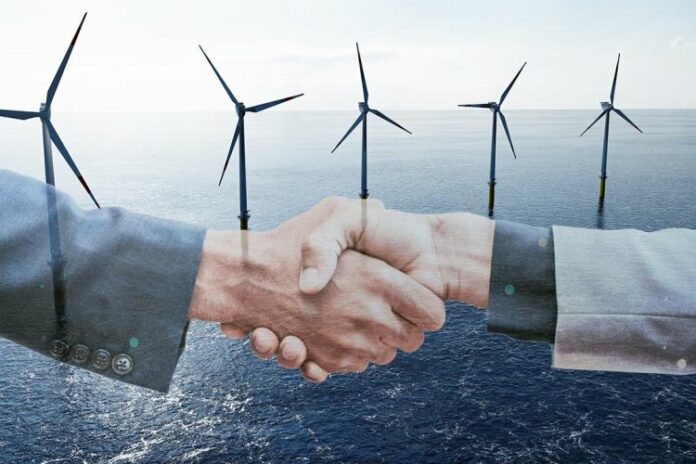
The plan would target sites in the Pacific Ocean off the California and Oregon coasts, as well as in the Atlantic in the Gulf of Maine.

President Joe Biden hopes to deploy up to 15 gigawatts of electricity through floating sites by 2035, enough to power 5 million homes. The administration has previously set a goal of 30 GW of offshore wind by 2030 using traditional technology that secures wind turbines to the ocean floor.

There are only a handful of floating offshore platforms in the world — all in Europe — but officials said the technology is developing and could soon establish the United States as a global leader in offshore wind.

The push for offshore wind is part of Biden’s effort to promote clean energy and address global warming. Biden has pledged to cut greenhouse gas emissions in half by 2030. A climate-and-tax bill he signed last month would spend about $375 billion over 10 years to boost electric vehicles, jump-start renewable energy such as solar and wind power and develop alternative energy sources like hydrogen.

“Today we’re launching efforts to seize a new opportunity — floating offshore wind — which will let us build in deep water areas where turbines can’t be secured directly to the sea floor, but where there are strong winds that we can now harness,″ White House climate adviser Gina McCarthy said at a news conference Thursday.

Deepwater areas in the Pacific especially have potential to vastly expand offshore wind energy in the U.S., McCarthy and other officials said.

McCarthy acknowledged that the floating technology is at an early stage. But she said “coordinated actions” by federal and state officials, working with the private sector, can position the U.S. “to lead the world on floating offshore wind and bring offshore wind jobs to more parts of our country, including the West Coast.″

Two pilot projects are planned off the north and central California coast, and a third is planned in southern Oregon, officials said.

The Energy Department announced nearly $50 million, including funding from the bipartisan infrastructure law Biden signed last year, for research, development and demonstration work to support floating offshore wind platforms. Officials aim to cut the cost of floating offshore wind energy 70% by 2035, to $45 per megawatt hour, Energy Secretary Jennifer Granholm said.

Emerging technology for floating platforms “means there’s real opportunity for greater energy security,″ affordability “and course tens of thousands of good-paying in-demand jobs,″ such as electricians, engineers, ship builders and stevedores, Granholm said.

Source: AP News

ABS gives AiP for 74k cubic meter HHI liquified CO2 carrier design

0

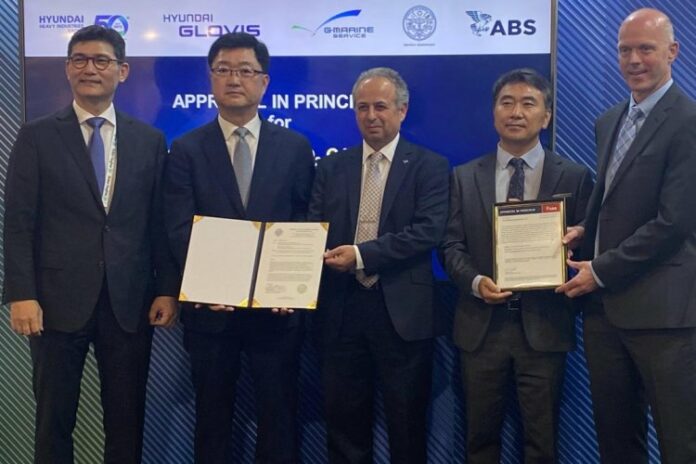
The next generation ultra large liquefied carbon dioxide (LCO2) carrier for Hyundai Heavy Industries Group (HHI) and Hyundai Glovis has received an approval in principle (AIP) at Gastech from ABS and the Republic of the Marshall Islands (RMI) Maritime Administrator.

The 74,000 m3 design builds on the 40,000 m3 “super gap” technology developed in 2021 by HHI, Hyundai Glovis, G-Marine Service, and Korea Shipbuilding & Offshore Engineering Co., Ltd. (KSOE).

A total of nine cylindrical tanks were applied to maximize the load carried and LNG-fueled propulsion engines were installed in response to environmental regulations. ABS approved the basic carrier design and the RMI Maritime Administrator provided acceptance of design and equivalent arrangements as required.

Executives from HHI, KSOE, Hyundai Glovis, and the RMI Maritime Administrator joined ABS at Gastech for the presentation of the AIP certificates.

Gareth Burton, ABS Vice President, Technology, said:

“We are proud to support the development of innovative vessels such as this carrier which have the potential to play a critical role in the burgeoning carbon value chain. ABS is committed to supporting the safe adoption of these technologies across the industry, and we are honored to collaborate with HHI, Hyundai Glovis, KSOE, G-Marine Service, the RMI Maritime Administrator, and others who share this philosophy.” 

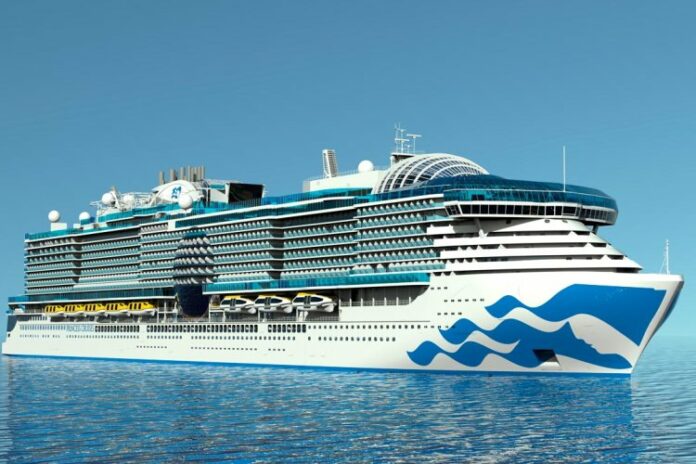
Princess Cruises unveils bespoke next generation ship – Sun Princess

0

Currently under construction at the Fincantieri shipyard and scheduled to debut in early 2024, the 175,500-ton vessel is the largest Princess ship ever constructed and embraces Italian heritage by featuring a next-level, brand-iconic Piazza and The Dome, a cutting-edge entertainment space inspired by the terraces of Santorini. 

John Padgett, Princess Cruises president, said:

“Sun Princess is a new and bespoke ship platform, designed to simultaneously embrace Princess heritage while boldly pressing into the future with iconic, elegant and pure lines unique to our brand. A show-stopping, first-of-its-kind Dome on the top deck and suspended glass Piazza in the center of Sun Princess offer innovative designs showcasing expansive ocean views for incredible opportunities to connect with the sea.”

The cruise line also announced that Sun Princess will sail an inaugural spring/summer season of Mediterranean cruises followed by Western and Eastern Caribbean voyages out of Port Everglades, Florida in the fall of 2024.

Sun Princess is part of Carnival Corporation’s green cruising focus and is one of 11 new ships in the corporate fleet powered by LNG fuel technology.

The inaugural season for Sun Princess begins in early 2024 with Mediterranean itineraries. 

This is the third ship to be honored with the Sun Princess name, adding to the legacy of the first ship sailing from 1974 to 1988 and the second ship sailing from 1995 to 2020. At that time, she had the largest number of balcony cabins, and the cruise line’s first 24-hour cafe.

Jan De Nul installs 80 turbines at the Saint-Nazaire Wind Farm project in France

0

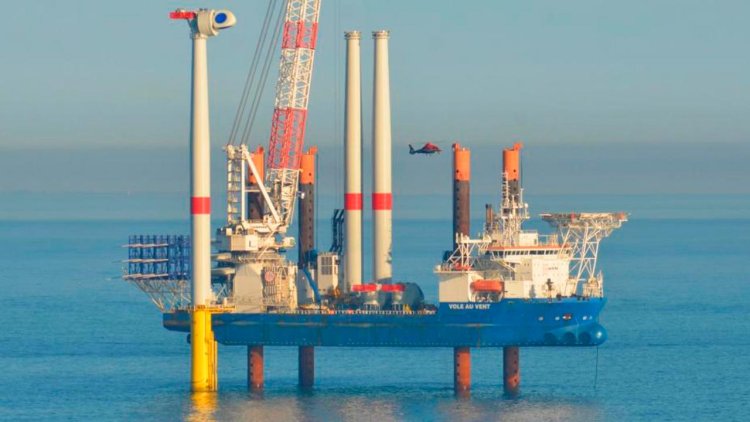
The Vole au vent transported and installed 80 sets of 6 MW Wind Turbine Generators (WTG) for the very first commercial wind farm in French waters. This wind farm will have, by the end of 2022, a total capacity of 480 MW, which is equivalent to 20% of the Loire-Atlantique’s annual electricity consumption.

The Vole au vent loaded the 6 MW wind turbines, in sets of four, at the ‘Forme Joubert’ lock in the port of Saint-Nazaire and then transported the components approximately 12 kilometres offshore for installation on top of the foundations located on the Banc de Guérande seabed, in the northern part of the Bay of Biscay.

On 1 April, the first turbine was loaded in the port. On 5 September, the 80th and very last turbine was successfully installed.  

Pieter Vandezande, Project Manager at Jan De Nul Group:

“The Saint-Nazaire wind farm is a milestone project for Jan De Nul, as this is France’s first offshore wind farm. We are proud to support the country in its energy transition by making possible the delivery of the first electricity produced by the very first French offshore wind farm. The exceptional installation progress has been the result of an extensive engineering process, optimized vessel preparation and planning, and an excellent collaboration with Parc éolien en mer de Saint-Nazaire and the turbine supplier GE.”

The Saint-Nazaire Offshore Wind Farm will contribute to achieving the target of 40% renewable energy by 2030 and carbon neutrality by 2050 in France.

The exceptional installation progress has been the result of an extensive engineering process, optimized vessel preparation and planning, and an excellent collaboration with Parc éolien en mer de Saint-Nazaire and the turbine supplier GE.

Jan De Nul brought its dredging and offshore wind installation expertise together to develop a unique method of construction consisting of preparatory rock fragmenting operations.

The majority of the Saint-Nazaire turbines needed to be installed on an uneven rocky seabed. Since the self-elevating jack-up vessel Vole au vent needs a stable seabed to safely jack on, some additional rock fragmenting operations were required to prepare the seabed for jacking.

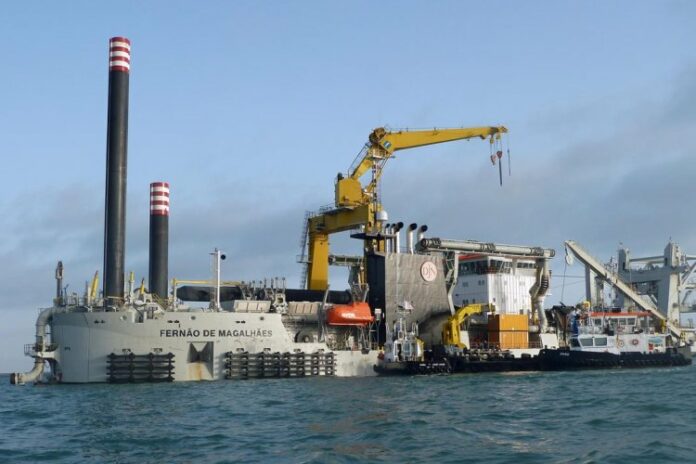
In the summer of 2021, Jan De Nul’s ocean-going Cutter Suction Dredger Fernão de Magalhães performed these preparatory works. The dredger fragmented the seabed using her rotating cutter head to smooth the seabed that then allows the Vole au vent to perform jacking activities.

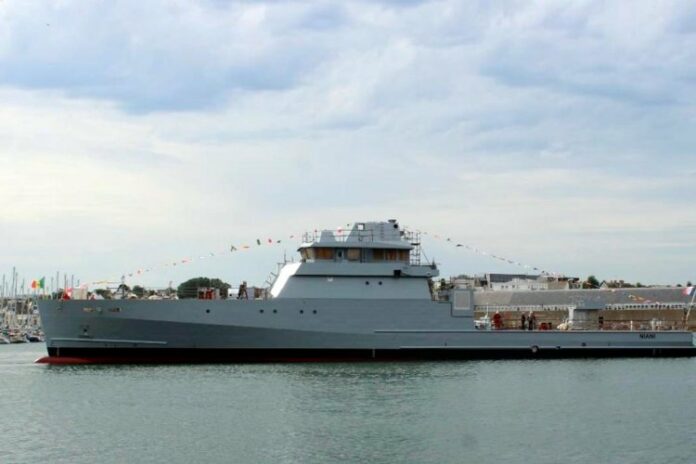
Launch of the second of three patrol vessels ordered by Senegal

0

This stage marks a significant step in the progress of the programme for the supply of three offshore patrol vessels.

In parallel, the first unit is in the outfitting phase before the start of its sea trials, and outfitting is also ongoing on the third vessel in preparation for launch.

This contract was signed in November 2019 by Senegal’s Ministry of Armed Forces and PIRIOU group.
 
Built with the support and expertise of its partner company KERSHIP, the programme of construction of these three patrol vessels is spread over a period of 44 months, until summer 2024. It also includes a support period lasting several years in Senegal.

Vincent Faujour, Chairman of PIRIOU Group said:

“It is an important event for this boat but also more broadly for the OPV58S programme! Thanks to the motivation of the PIRIOU and KERSHIP personnel and the continuous working partnership with the representatives of the Senegalese Naval Staff, we are progressing according to schedule.”

The OPV 58 S (Offshore Patrol Vessel) is a robust 62 m patrol vessel with outstanding versatility and high endurance. The OPV 58 S is dedicated to missions such as surveillance, identification and intervention, and fulfils the entire range of missions related to law enforcement. In addition to her deployment ability -intervention RHIBs- she possesses a first rank deterrence capacity thanks to her anti-surface and anti-aircraft weapon systems. 

These OPVs will be equipped with MARTE MK2/N anti-ship missiles. With the ability to strike at ranges in excess of 30 kilometres and their fire-and-forget capability, these missiles will provide the means to the Senegalese Navy to enforce their maritime superiority. The vessels will also benefit from the SIMBAD-RC system and its MISTRAL missiles- this combination providing an extremely effective defence capability against all threats including anti-ship missiles, combat aircraft, UAVs, helicopters, as well as small surface threats such as those presented by FIACs. These missiles and missile systems are designed and produced by MBDA. 

Future USNS Apalachicola completes accertance trials

0

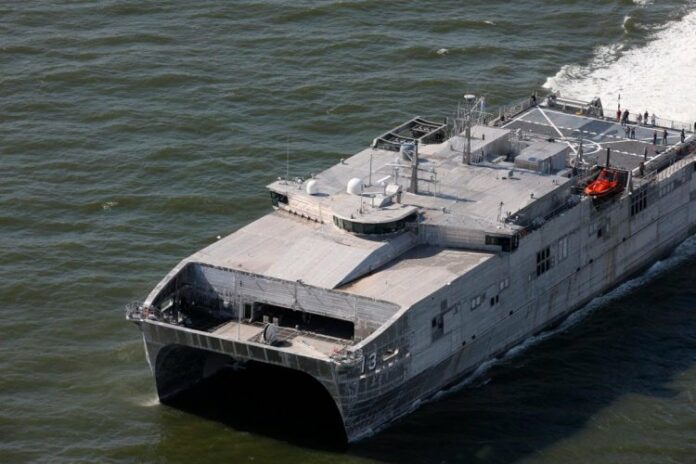
Constructed at Austal USA’s Mobile Alabama shipyard, EPF-13 is the first Spearhead-class Expeditionary Fast Transport (EPF) ship with capabilities for V-22 Osprey flight operations and enhanced medical support. It is also the United States Navy’s largest ship with the capability to operate as an unmanned surface vessel (USV).

Austal Limited Chief Executive Officer Paddy Gregg said the completion of acceptance trials for EPF-13 was a significant milestone, being the first surface vessel constructed by Austal USA with autonomous capability.

Mr Gregg said:

“Apalachicola is the first EPF we have delivered with autonomous capability that demonstrates new technologies that will ultimately enable unmanned missions for the United States Navy.

“We’re very pleased with the performance of the ship, which was rigorously tested over several months by the Navy and teams from Austal USA, L3Harris and General Dynamics.

“We’re looking forward to seeing what she can do when she commences operations with Military Sealift Command following delivery later this calendar year.”

During acceptance trials comprehensive testing is conducted on the ship’s major systems and equipment to demonstrate their successful operation and mission readiness. The United States Navy’s Board of Inspection and Survey participates throughout the trials to validate the quality of construction and compliance with Navy requirements. 

In addition to builder’s trials, EPF 13 went to sea five times over the past several months allowing Austal USA, L3Harris and General Dynamics Mission Systems to test and analyze not only her typical ship systems but those resulting from autonomous design and construction contract modifications required by the Navy to establish EPF 13 as an autonomous prototype. 

The work included installation of a perception and situation awareness suite, an autonomy controller, an autonomous machinery control system, and automation enhancements to the machinery plant improving hull, mechanical, and electrical reliability. The enhancements will allow EPF-13 to operate autonomously for up to 30 days while retaining the capability for manned operation. 

USNS Apalachicola is planned for delivery by the end of the calendar year and will be the 13th EPF ship to join the United States Military Sealift Command’s global fleet. 

Austal USA is currently constructing Cody (EPF-14) and Point Loma (EPF-15) and is under contract to build EPF-16. Each of these ships are being constructed to “Flight II” specifications that incorporate Role 2E medical capability and capabilities to support V-22 Osprey flight operations.

Van Oord selected as contractor for an offshore wind project in Poland

0

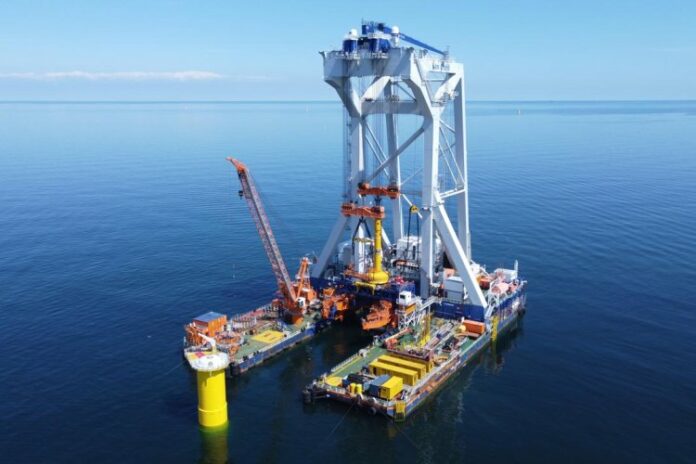
Van Oord will transport and install more than 70 foundations, consisting of a monopile fitted with a transition piece. With a production capacity of up to 1,2 GW, the wind farm is expected to ultimately supply renewable energy more than 1,5 million households in Poland. Construction of the farm is planned to start in 2024 and its commissioning in 2026.

Based on experts’ estimates, the Baltic Sea’s total potential is 85 GW, nearly twice as much as the total electrical capacity currently installed in Poland. The Polish State National Energy Policy (PEP2040) outlines the potential of and assumes the development of offshore wind energy in the area of the Polish Exclusive Economic Zone of the Baltic Sea, with the capacity of aprox. 5.9 GW by 2030 and up to 11 GW by 2040. Offshore wind farms in the Baltic Sea may play a key role in Poland’s energy transition, contribute to the strengthening of the country’s energy security, and help tackle air pollution. Baltic Power is one of the most advanced offshore wind projects planned in Poland and a milestone for the development of the Polish power sector.

Van Oord will deploy its heavy lift installation vessel Svanen. The vessel has an extensive track record and installed the vast majority of all monopiles in the Baltic Sea, including those for Baltic 2, Arkona and Kriegers Flak. Baltic Power is Van Oord’s first offshore wind project in Poland, however the country is well known to Van Oord due to executed dredging projects, like the recently completed deepening and widening of the Świnoujście – Szczecin fairway in Poland.

Jarosław Broda, Member of the Management Board of Baltic Power, said:

“Baltic Power consistently follows its schedule and selects suppliers who can boast not only a great deal of experience, but also a readiness to carry out significant part of the work in Poland.”

Development of the Baltic Power offshore wind farm is a joint venture project of two companies: PKN ORLEN (Poland) and Northland Power (Canada). Van Oord and Northland Power have successfully worked together on the Gemini and Deutsche Bucht offshore wind projects. Baltic Power and Van Oord share the ambition to contribute to the further development of offshore wind as reliable renewable energy source. 

Arnoud Kuis – Managing Director Van Oord Offshore Wind, said:

“The creation of a sustainable energy system is one of the most important challenges of our time and the urgency is growing. The Baltic Sea holds incredible potential for offshore wind in Europe. We are very pleased to win another project in the Baltic Sea, making a significant contribution to the energy transition in Poland.”

Carnival Celebration completes sea trials ahead of debut at PortMiami

0

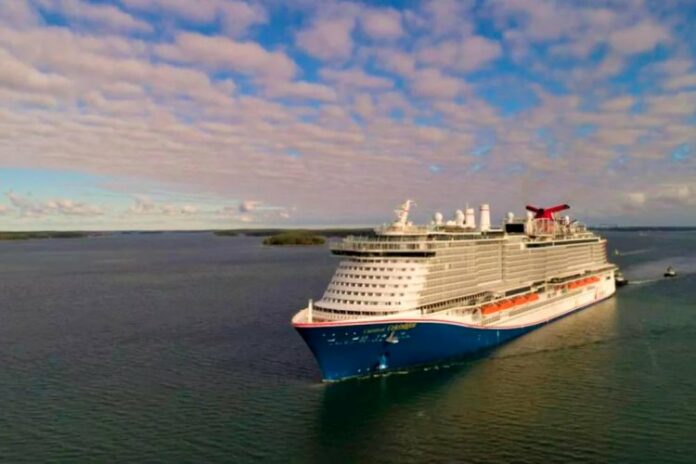
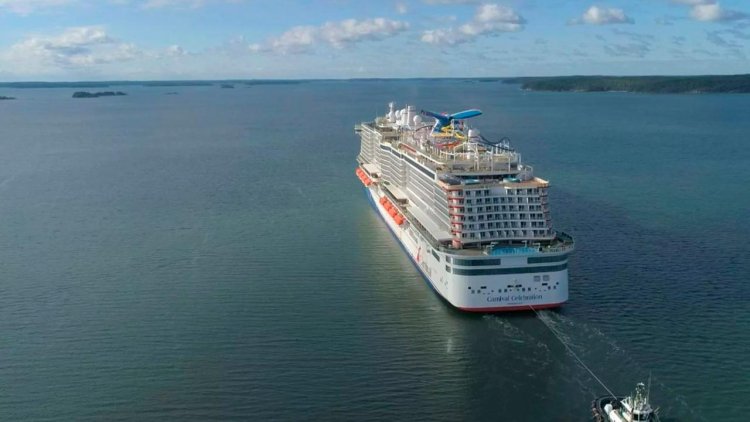
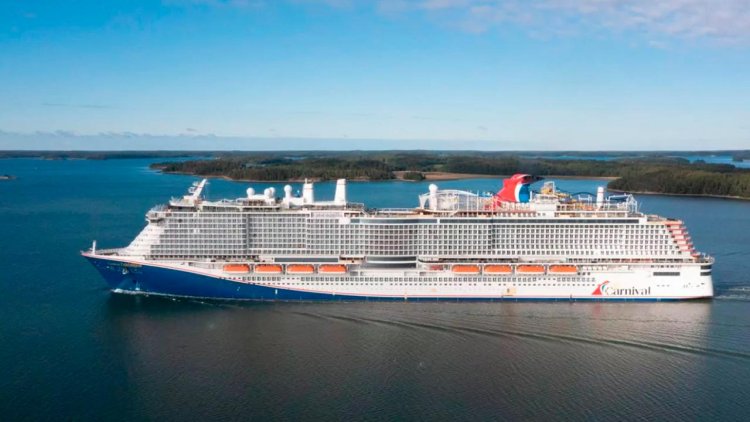
Carnival Cruise Line’s newest ship, Carnival Celebration, is one more milestone closer to her highly-anticipated debut in her homeport of PortMiami after successfully completing sea trials in the Baltic Sea.

Carnival Celebration set sail on her first round of sea trials Monday, September 5, from Meyer Turku shipyard in Finland, the same shipyard where Celebration’s sister ship, Mardi Gras, was built. 

Capt. Vincenzo Alcaras said:

“During her sea trials, Carnival Celebration underwent several tests, which are meant to determine the ship’s capability and her performance. We’ve done many maneuvering tests, such as endurance tests, steering tests, speed tests and thrusters tests. The ship performed wonderfully, and shortly, we will get her out and start cruising.” 

Carnival Celebration’s arrival to Miami will continue the cruise line’s 50th birthday celebration. The ship will feature several unique zones, including 820 Biscayne – a tribute to Miami, where Carnival Cruise Line was born, showcasing styles and flavors of the 305.

Following an inaugural 6-day voyage to the Eastern Caribbean, Carnival Celebration will launch year-round, seven-day cruises to the Eastern and Western Caribbean from PortMiami beginning Nov. 21.  The week-long voyages will visit destinations like San Juan, Puerto Rico, Cozumel, Mexico and Grand Turk.

Wärtsilä to supply the propulsion machinery for four new fishing vessels

0

The technology group Wärtsilä will supply the propulsion machinery for four new fishing vessels being built at Karstensens Shipyard in Denmark. The orders were placed in March 2022.

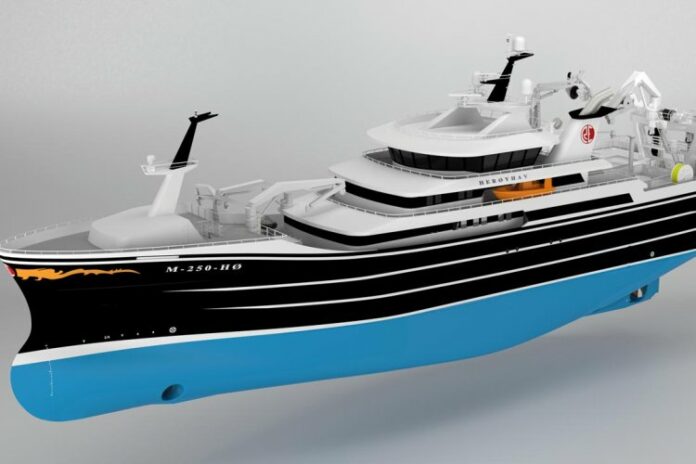
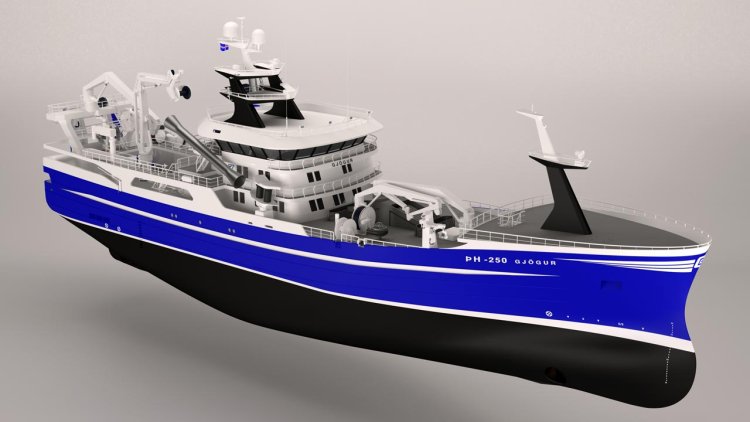
The 75 metre-long purser/trawler vessels are being built for different owners. Two are for Icelandic fishing and processing companies, namely Skinney-Thinganes and Gjögur, while the other two are for Norwegian owners, Veibust Fiskeriselskap and Ronald Ervik.

Each of these vessels will operate with the highly efficient Wärtsilä 31 main engine. Wärtsilä will also supply the gearbox fitted with ‘take-me-home’ functionality, the controllable pitch propeller (CPP), the propulsion shaft lines including seals and bearings, the shaft generator, and Wärtsilä’s ProTouch propulsion control system.

The Wärtsilä 31 has been recognised by Guinness World Records as being the world’s most efficient 4-stroke diesel engine. Its output power has been increased to 5200 kW, thus enhancing its performance even further.

Kent Damgaard, Director, Karstensens Shipyard, says:

“We are very familiar with Wärtsilä’s propulsion offering and have opted for their products on many of our newbuild projects. In particular, the Wärtsilä 31’s efficiency and reliability is ideally suited for fishing vessels operating in these challenging North Atlantic waters.” 

Jens Karlsson, GM Sales, Large Projects, Wärtsilä Marine Power, adds:

“Wärtsilä has a long-standing relationship with Karstensens Shipyard and we are proud and pleased to be again selected as the propulsion provider for this series of modern purser/trawlers. Repeat orders are always a good indicator of customer satisfaction, and are a validation of our focus on efficiency, reliability, and environmental sustainability.” 

The Wärtsilä equipment is scheduled for delivery to the yard during 2023, and the vessels are expected to be ready for delivery in 2024.