-0.7 C
New York
Home Blog Page 397

EPS and Crowley partner on four dual fuel LNG containerships

0

U.S. shipping and logistics company Crowley has awarded Singapore-based Eastern Pacific Shipping (EPS) a contract for the charter of four newbuild containerships powered by liquified natural gas (LNG) for Crowley’s U.S.-Central America trade.

Using LNG significantly lowers vessel greenhouse gas emissions, such as sulfur oxide, carbon dioxide and nitrogen oxide while eliminating particulate matter compared with conventional diesel fuel. In addition, these vessels will be fitted with high-pressure ME-GI engines from MAN Energy Solutions, reducing methane slippage to negligible levels and making these vessels the most environmentally efficient in their category.

Each vessel, which will have capacity for 1,400 TEUs (20-foot container equivalent units), will feature 300 refrigerated unit plugs to reliably transport perishable cargo. Operating under a long-term time charter to Crowley, the ships will expand Crowley’s fleet and supply chain capabilities connecting U.S. markets to Nicaragua, Honduras, Guatemala and El Salvador.

EPS CEO Cyril Ducau said:

“We are excited to develop our U.S. market footprint through these long-term time charters with such a reputable partner. Like EPS, Crowley enjoys a rich history and diverse business portfolio, but more importantly, their organization is driven by a vision to lead the industry’s decarbonization efforts. Once delivered, these vessels will be IMO 2030 compliant five years ahead of schedule and will play an important role as the world and industry transition to cleaner energy sources.”

Tom Crowley, company chairman and CEO, said:

“These four ships will play a significant part in driving Crowley’s strategic growth in our supply chain services for the U.S., Central America and Caribbean. In addition, the vessels use of LNG and emissions technology will advance the company’s commitment to innovation and decarbonization in the shipping industry as part of our sustainability strategy. As more companies diversify their supply chains using nearshoring and the resources of Central America, Crowley will enhance our end-to-end logistics services to be partners in their growth.”

The vessels will be built by Korea’s Hyundai Mipo Dockyard and are slated for delivery in 2025.
HMM partners with PANASIA to study onboard carbon capture system

0

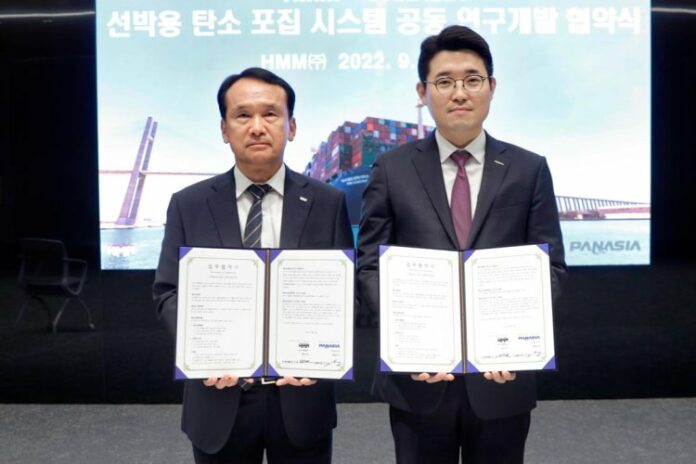
HMM announced that the company has signed a Memorandum of Understanding (MoU) with PANASIA to collaborate on onboard carbon capture system for vessel application.

Onboard carbon capture system is an advanced technology to capture CO2 from greenhouse gas emissions generated during vessel operation, ensuring it is not emitted into the atmosphere. This solution has the potential to play a significant role in reducing CO2 emissions.

Under the terms of MoU, HMM and PANASIA will perform a feasibility study, economic analysis and risk assessment. In addition, the handling process of captured CO2 is one of the vital areas of study. Based on research findings, HMM is expected to install the carbon capture system and perform an operational test on its vessels.

Kim Gyou-bong, HMM Chief Maritime Officer, said:

“Carbon capture technologies are one of the alternatives in support of the net-zero ambitions of the global community. We will continue to participate in collaborative partnerships to develop onboard carbon capture solutions on our pathway to carbon neutrality”.

As an environmental initiative, HMM unveiled its target of reaching net-zero carbon emissions across its entire fleet by 2050. HMM explores various sustainable energy sources to achieve the target, including biofuels, LNG, hydrogen, and green ammonia. 

DMC to equip five PCTC’s with advanced semi spade rudders

0

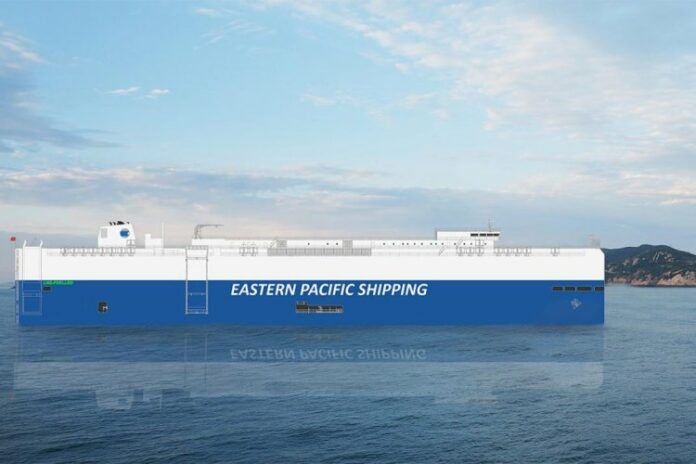
Semi spade rudders with innovative asymmetric leading edge will be installed on five new Pure Car and Truck Carrier (PCTC) vessels for Eastern Pacific Shipping from Singapore. The vessels are to be built by CSC Jinling Shipyard in China. 

The customised rudder will contribute in saving fuel during passages thanks to innovative design.

The five 72,000 gross ton vessels feature 12  cargo decks on which they can carry 7000 vehicles. The carriers of nearly 200 meter long, 38 meter beam and 8.6 meter design draft are laid out for a design speed of 19.5 knots. These car carriers will be propelled by dual fuel diesel-LNG engines by a single propeller. Running on LNG, these vessels will be able to sail with considerable reduction of emissions as compared to conventionally powered ships. For each of the five identical carriers, Damen Marine Components (DMC) will deliver one rudder, that will allow for even more fuel savings thanks to optimised design. The customised rudder will provide 1450 kilonewton meter of torque, the weight is 46 tonnes, excluding the horn.

Asymmetric Rudder Technology (ART) is based on advanced hydrodynamics. The asymmetric leading edge diverts the rotational effects of the propeller wake to enhance the flow along the rudder. This reduces drag and thus saves fuel. ART is often applied to the leading edge of the rudder blade, yet for the five PCTC’s also the horn of the rudder is asymmetric. This further optimisation of rudder design, enhancing fuel economy, is specially engineered for these vessels by the DMC design team.

Bogdan Mocanu, Area Sales Manager at Damen Marine Components says:

“We are very glad to have the opportunity of using our expert knowledge in designing the rudders for top performance, fully complying with the ship’s operational profile.”

The five PCTC’s will be built at the China Merchant Jinling Shipyard under DNV class notation. DMC will deliver the rudders for the five consecutive carriers in the course of 2023 and 2024, in time for scheduled ship delivery from the yard.

REV Ocean, Nekton and OCEEF team up to document twilight zone reefs

0

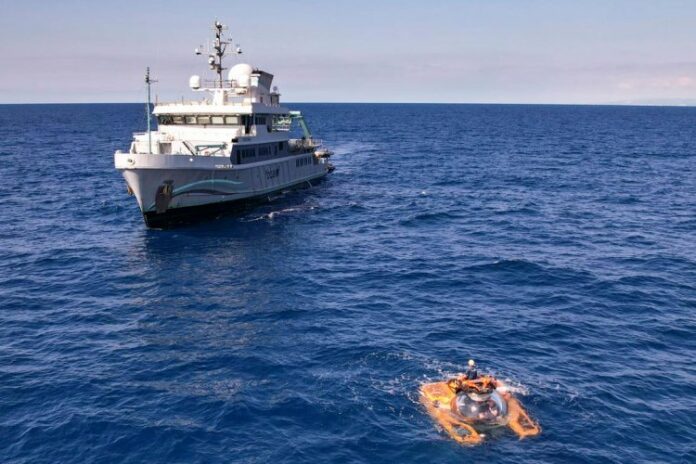
Aurelia’s first mission is to the Indian Ocean to support work by Nekton and the Government of the Maldives to contribute to establishing a baseline of marine life and the state of the ocean in the Maldives from the surface to 1000 metres deep.

The Maldivian and international team’s research will include documenting twilight zone reefs around the archipelago. Even though these reefs lie below the depths to which SCUBA divers swim they host reef-forming corals and a host of other life, including many undocumented species of corals, fish and seaweeds. The work will assist the Maldivian Government to manage its marine environment and enable Maldivian scientists to obtain training in deep-water ecology and conservation management. 

Nina Jensen, CEO of REV Ocean, says:

“Due to the delay of the REV Ocean vessel, we have been searching for interim partners to deploy the sub. I am thrilled to team up with OCEEF and Nekton and to be able to put our submarine to good use. Documenting vulnerable ecosystems in the deep sea and potentially discovering new important species in the deep, will hopefully contribute to better protection of these essential deep-sea ecosystems. The Odyssey is well suited for specialized missions that will contribute to our shared goals of ocean education, exploration, marine science, and conservation.”

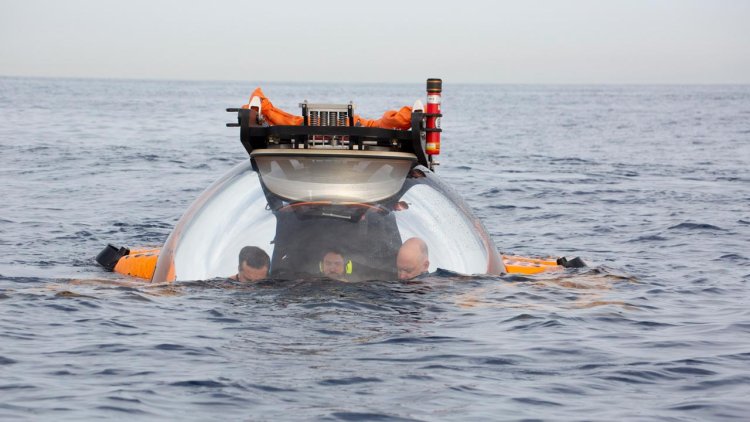
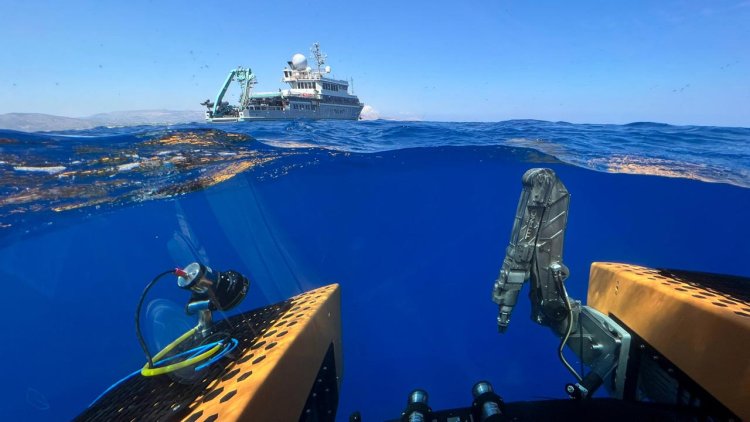
The sub is fitted with a suite of scientific sensors, cameras, and sampling equipment which provide the global science community with unique opportunities to explore and document deep ocean ecosystems. The partnership is also reaching out to several charitable, scientific and educational organisations that share interests in ocean conservation and solutions. 

The Odyssey has previously contributed to marine exploration through missions to film the giant squid live in the wild for the first time, the first deep-sea tagging of a marine animal (a bluntnose sixgill shark), and filming of a BAFTA-Award-winning episode of Blue Planet II. 

OCEEF founder and CEO Alex Moukas says:

“We are honored and excited to join forces with REV Ocean and operate Aurelia out of Odyssey. OCEEF aims to help shape a world where people appreciate the importance of the ocean, take action to protect it and ensure its sustainability by educating a new generation of ocean stewards. 

“Aurelia is the most capable submersible out there, and we are looking forward to working closely with REV Ocean and deploying the sub in fascinating missions in order to change hearts, transform minds, and advance awareness about ocean conservation and research.” 

Aurelia will collect large quantities of data on marine life, which will be deposited in the Ocean Data Platform, hosted by HUB Ocean as well as being distributed to relevant existing global databases such as the Ocean Biodiversity Information System (OBIS) for recording observations of marine life. 

Argentina: Launch of the Fenix Offshore Gas Project

0

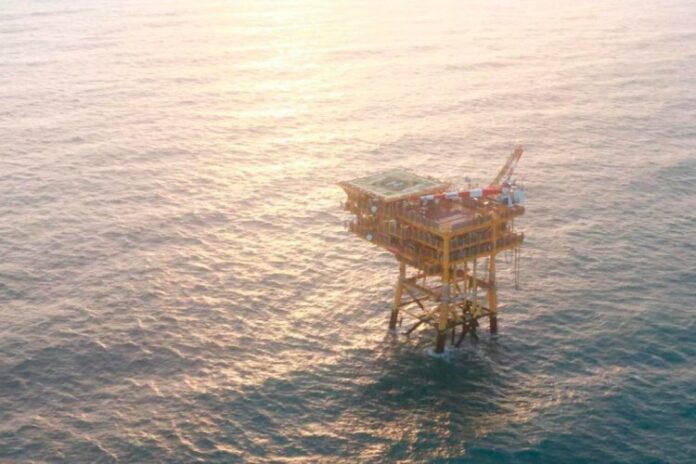
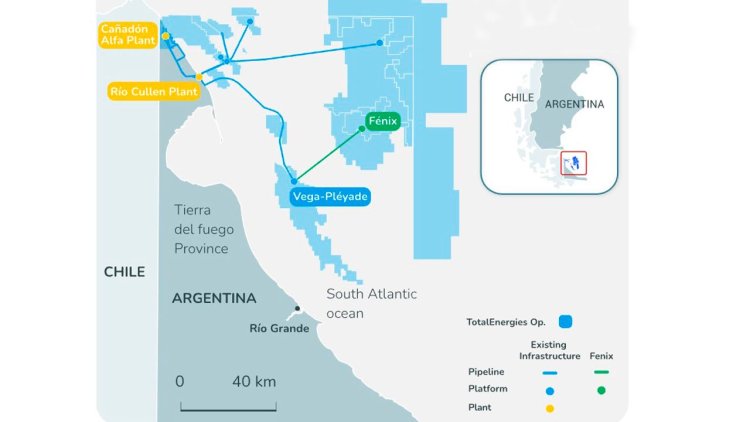
Wintershall Dea, TotalEnergies and Pan American Energy have decided to develop Fénix, the world’s southernmost gas project, offshore Tierra del Fuego. 

The total investment of the consortium amounts to approximately 700 million US Dollars.

Thilo Wieland, Wintershall Dea’s board member responsible for Latin America, says:

“Fénix is a major natural gas project, that will contribute significant natural gas volumes for more than 15 years to the country’s long-term energy supply. At the same time, this decision is a proof of our commitment to Argentina and will strengthen its role as a core country in our global portfolio.”

Manfred Böckmann, Managing Director of Wintershall Dea Argentina, explains:

“The Fénix development represents a material pillar for the growing domestic gas production and will support Argentina to meet the increasing demand and to offset imports. Furthermore, with the significant investments and the ripple effects in the supply chain, Fénix will also create value for the Tierra del Fuego province.” 

“In addition, the project is particularly efficient and hence value accretive, as it will be tied-in into existing offshore and onshore infrastructure, which will also minimise environmental impacts.”

First gas from Fénix is expected beginning of 2025, and is planned to reach a peak production of around 10 million cubic metres of gas per day.

During the first development phase three wells will be drilled from an unmanned wellhead platform installed 60 kilometres from shore in 70 metres of water depth. Production will be evacuated via a 24” subsea multiphase line to the existing Vega Pleyade platform at 35 kilometres distance.

Fénix is part of the CMA-1 concession in which Wintershall Dea and TotalEnergies (operator) each hold a 37.5 per cent share while Pan American Energy holds the remaining 25 per cent. Currently, the four gas fields Cañadón Alfa, Aries, Carina and Vega Pléyade produce in CMA-1, already supplying 16 per cent of Argentina’s natural gas demand.

Photo: TotalEnergies 

DBJ and ClassNK establish Zero-Emission Accelerating Ship Finance

0

As tightened environmental regulations and the future introduction of carbon pricing are expected in the maritime industry, DBJ and ClassNK have anticipated an increasing need for a system to reasonably evaluate the asset value of environmentally friendly ships and to combine them with investment and financing, and brought together each knowledge and expertise.

Under the established Program, ClassNK evaluates ships based on a comprehensive scoring model jointly developed by DBJ from the perspective of “decarbonization, environmentally friendly performance, and innovativeness,” and DBJ provides investment and financing.

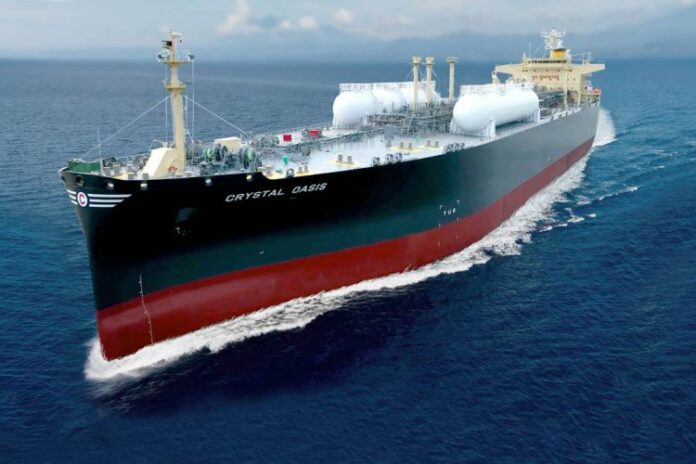
As the first project under the Program, ClassNK evaluated the LPG dual-fueled large LPG carrier, “CRYSTAL OASIS” (IMO No. 9915806) owned by Kumiai Navigation (Pte) Ltd (Head Office: 1 Raffles Place #27-62 One Raffles Place Tower 2 Singapore 048616; Managing Director: Tomomaru Kuroyanagi), and DBJ provided a loan to Kumiai to finance its acquisition.

Kumiai is a Japanese shipowner based in Singapore and has been taking progressive steps toward the transition to decarbonization, such as placing orders for LPG dual-fueled LPG carriers ahead of other industry players. The ship is a state-of-the-art LPG dual-fueled large LPG carrier built at Sakaide Works of Kawasaki Heavy Industries, Ltd. and delivered to Kumiai in June 2022.

In evaluating the ship, the following factors were taken into account:

  • The dual-fuel main engine using LPG has realized a significant reduction of sulfur oxide (SOx) and carbon dioxide (CO2) in the exhaust gas, and the ship has been certified to be compliant with the Energy Efficiency Design Index (EEDI) Phase 3 requirements achieved prior to the enforcement of the regulation; 
  • The installation of an exhaust gas recirculation (EGR) system and a selective catalytic reduction (SCR) system has enabled the ship to meet the nitrogen oxide (NOx) Tier III regulation; and 
  • In further consideration of the prevention of air and marine pollution, the ship is equipped with various environmental technologies not mandated by international conventions, and is assigned ClassNK’s “Environmental Awareness (EA)” and “Advanced Environmental Awareness (a-EA)” notation, which is to be provided to the ships implementing special and advanced environmental measures.

The ship was given with “S” rating, the highest rank in the Program as “the ship with particularly high decarbonization, environmentally friendly performance and innovativeness”, recognizing that adequate environment-related investments have been made.

Through the expansion of the Program, DBJ and ClassNK will support shipping companies’ efforts to contribute to the transition toward decarbonization and work together to accelerate the transition toward decarbonization in the entire maritime industry.

HAL completed the cruise industry’s first multiweek test of biofuels

0

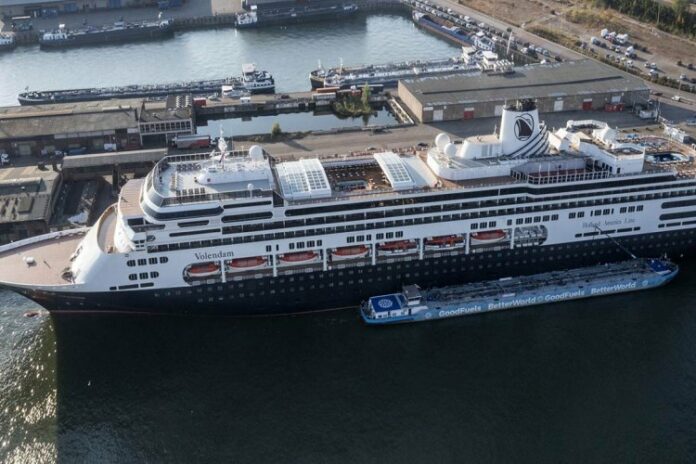
Holland America Line completed the cruise industry’s first multiweek test of biofuels on board Volendam at Port of Rotterdam in the Netherlands. 

The 20-day test was conducted in partnership with GoodFuels, a leading producer and supplier of sustainable biofuels for the transportation industry, and Wärtsilä, a global leader in power and propulsion technologies and lifecycle solutions for the marine market.

The assessment was completed September 7. In the first five days of the test the ship used a mix of 30% biofuel and 70% marine gas oil (MGO) in one of its main auxiliary engines. For the final 15 days of testing, the ship used 100% biofuel. According to GoodFuels, there was a 78% decrease in lifecycle CO2 emissions during the final 15 days of trial compared to marine gas oil emissions.

Gus Antorcha, president of Holland America Line, said:

“We were excited to have this opportunity to test a next-generation fuel resource on a Holland America Line ship, and we are very encouraged by the results. As part of our commitment to sustainability, we have always looked for cutting-edge solutions to environmental challenges that will help us meet Carnival Corporation’s sustainability goals over the coming decades.” 

Dutch-flagged Volendam was selected for the test since it was located at the Port of Rotterdam, one of the global ports where GoodFuels operates the infrastructure necessary to provide biofuel waterside fueling services. There is no significant difference for the ship’s team members in handling regular fuel oil versus biofuel. The use of a “drop-in” biofuel such as the one tested on Volendam requires no shipboard refitting or special equipment.

The advanced biofuel is derived from feedstocks that are certified as 100% waste or residue, with no land-use issues and no competition with food production or deforestation.

Dirk Kronemeijer, CEO and founder of GoodFuels, said:

“Marine biofuel is already the biggest low carbon marine fuel in the world and we expect usage to rise sharply to 10% of total volume by 2030.”

Ricardo Opperman, managing director of Wärtsilä North America Inc., said:

“Our extensive work in testing alternative marine fuels is a central part of our efforts to shape viable decarbonisation options for our customers. We are continuously developing our engine technology to accept and retain operational and environmental efficiency levels with various future fuels, including biofuels. These sea trials with 100% biofuel will be especially important — for Carnival Corporation, for Goodfuels, for Wärtsilä, and for the industry as a whole.”

Holland America Line is the first Carnival Corporation brand to run a long-term 100% biofuel shipboard test. Carnival Corporation’s German brand AIDA also partnered with Goodfuels in July to run a blended biofuel test on board AIDAprima in Rotterdam. While biofuels have been tested on large diesel engines at shoreside research facilities and on a few cargo ships, these represented the first live tests on working cruise ships.

The two brands’ biofuel tests support the overall environmental mission, goals and aspirations of Carnival Corporation. Those include achieving a 40% reduction in carbon per available lower-berth-day by 2030; expanding its alternative fuels strategy across its liquefied natural gas (LNG) program and battery, fuel cell and biofuel capabilities; delivering a 50% reduction in absolute air emissions of particulate matter by 2030; and the aspiration to achieve net carbon neutral operations by 2050.

Amogy’s ammonia-to-power system receives AiP from Lloyd’s Register

0

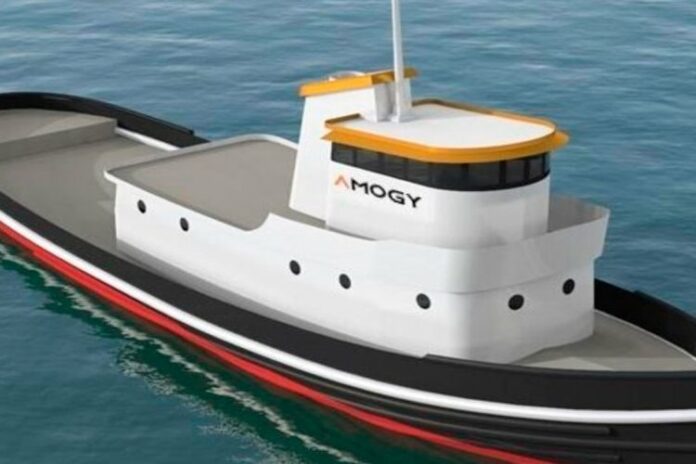
Amogy Inc. has received Approval in Principle (AiP) from Lloyd’s Register, a maritime classification society responsible for ensuring new maritime technologies meet safety requirements.

The AiP covers an ammonia power system that generates electricity from liquid ammonia to power maritime vessels. This is achieved by cracking the liquid ammonia to hydrogen, and using the produced hydrogen to generate electrical power through proton-exchange membrane (PEM) fuel cells. Following this achievement, Amogy will continue the technology qualification and type approval processes, which would make the ammonia-to-power system fit for use on maritime vessels.

Amogy, backed by investors including Amazon, SK, and Saudi Aramco, has plans for a world-first zero-emission, ammonia-powered maritime demonstration in 2023. This follows previous successful demonstrations of this technology in a drone and a tractor. Furthermore, Amogy is working with industry partners across the ammonia and shipping value chains to evaluate its power solutions for commercial use in upcoming newbuild and retrofit vessels. This AiP will strengthen the company’s position to commercialize this technology.

Seonghoon Woo, CEO of Amogy, said:

“This important milestone is further validation in Amogy as we continue to work towards full commercialization of our innovative ammonia technology in the maritime industry. As we get closer to bringing our system to market, it  is critical to solve unique safety challenges for the design and operation of ammonia-fueled vessels, and our team is committed to working with key partners, such as Lloyd’s Register, to enable its safe adoption by the industry.” 

Globally, shipping accounts for approximately 3% of greenhouse gas emissions, which is expected to climb up to 10% by 2050 if no solution is implemented. Decarbonizing this hard-to-abate industry remains a challenge due to the size and operational requirements associated with global shipping. Ammonia offers a significant potential to enable future zero-emission shipping, as the material presents high energy density and favorable economics, supported by existing transportation and storage infrastructure globally.

Provaris, Total Eren sign MoU to ship compressed hydrogen to Europe ans Asia

0

Agreement includes the development of solutions that will meet the requirements of offtakers, port authorities, shipyards, and ship operators.

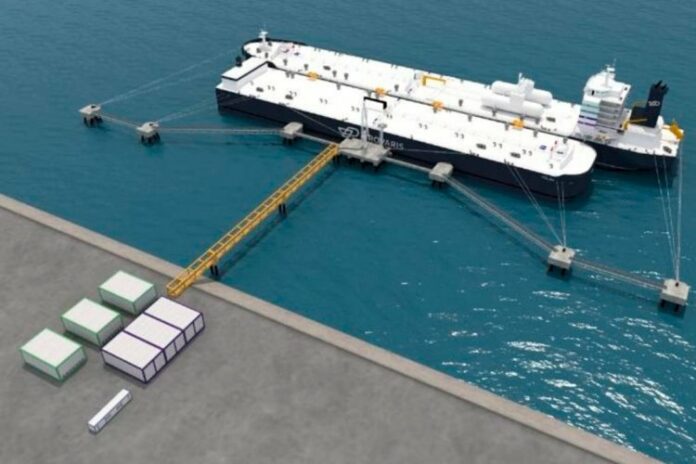
Provaris Energy Ltd has executed a Memorandum of Understanding (MOU) with Total Eren, a leading French-based renewable energy Independent Power Producer (‘IPP’), to further their co-operation on the development of solutions to transport green hydrogen projects to Asia and Europe where the application of Provaris’ compressed hydrogen storage and transport supply chain can be applied.

Total Eren is specialized in the development, financing, construction, operation and maintenance over the long- term of renewable energy power plants (mainly solar and wind) worldwide. In particular, Total Eren is working on several large-scale green hydrogen projects globally, including in Latin America (Chile, Argentina, Brazil, Colombia), in Australia, and in Africa (Morocco, Egypt and Mauritania).

The MOU provides a framework for Provaris and Total Eren to work together on the identification and assessment of green hydrogen projects currently developed by Total Eren that can utilize Provaris’ GH2 Carriers for bulk transport of compressed hydrogen in markets that require imported volumes of pure gaseous green hydrogen.

Martin Carolan, Provaris Managing Director and CEO commented:

“Total Eren is an ambitious renewable energy company with a global portfolio of green hydrogen projects under development for import into markets that include Europe and Asia.

Our discussions with Total Eren over time have identified a strong alignment on the commercial and technical benefits of compression for the storage and transport of hydrogen, and we look forward to a closer relationship to facilitate and accelerate the delivery of the first fleet of GH2 Carriers.”
 

Damen delivers complete mission equipment package for KOEM vessel

0

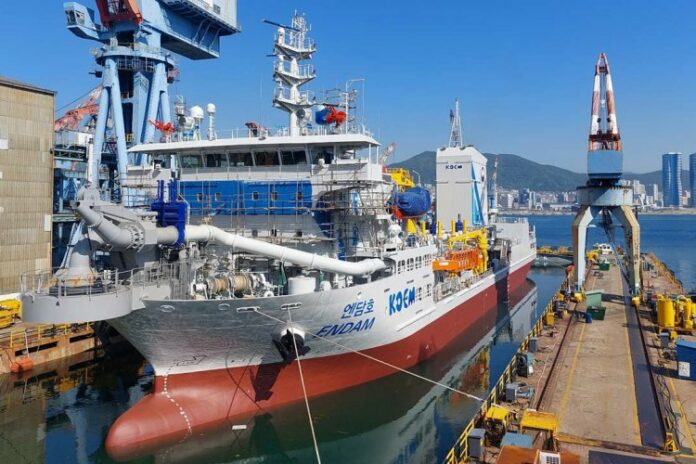
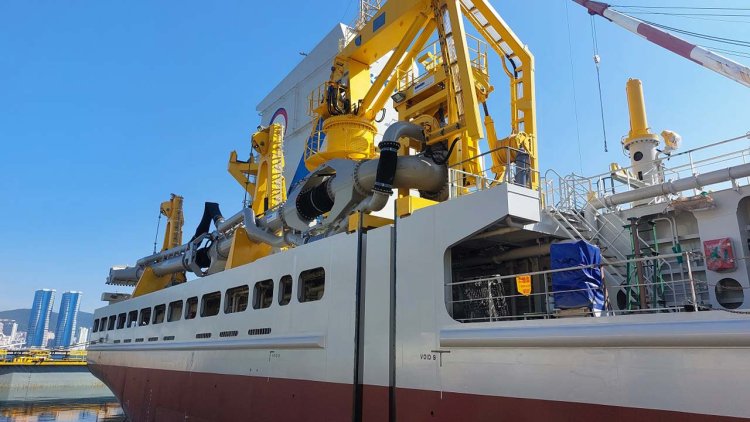
Owned by the Korean Marine Environment Management Corporation (KOEM), the newbuild combines emergency oil spill recovery activities with maintenance dredging tasks.

With a 4,100 m3 hopper hold, the vessel was built by HJ Shipbuilding & Construction at its Busan yard and designed by KmsEmec. The mission equipment package provided by the Damen Technical Cooperation (DTC) team included a 15 m rigid oil sweep arm with a dedicated pump and handling crane for the emergency oil spill recovery functionality, and a complete turnkey dredging system, which was designed specifically for the vessel.

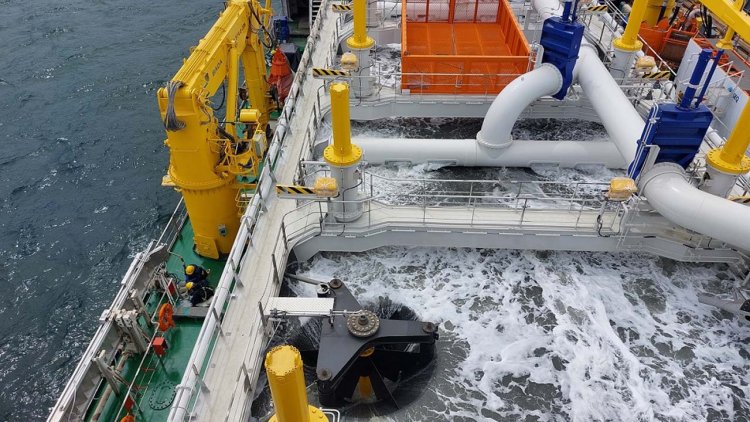
The turnkey dredge package consisted of both loading and discharging equipment, a hydraulic system, dredging control system and various drives. A 900 mm trailing suction pipe, designed to dredge at a maximum depth of -30m, is hoisted by three dedicated gantries and their hydraulically operated winches. All the trailing suction pipe components are located starboard aft.

A Damen dredge pump, type BP9075HD, completed the dredge pipe arrangements. The highly efficient slurry pump is designed for both suction dredging, as well as discharging over the bow using the bow coupling unit or rainbow nozzle. This hopper discharging equipment, including 12 bottom dump valves which Damen designed, were all part of the dredge package. Furthermore, dredge valves in various pressure stages were delivered for the suction and discharge piping. Dedicated dredging instrumentation completed the package. This is crucial to monitor and visualise the dredging process and to optimise the dredging operations.

Due to the DTC team’s extensive experience in component integration at non-Damen yards, the large system parts were delivered from the Netherlands and integrated effortlessly. As well as the mission equipment, the delivery scope included a hydraulic system. This is a logical choice as the dredging equipment is its main user. Additionally, a 3,500-kW electric dredge pump drive and a 1,000-kW electric jet water pump drive were shipped to Korea. The delivery was completed with a full set of spares and Damen also carried out the commissioning and training on board.

The vessel was named ENDAM, which means ‘the fence that protects you’ in the Korean Jeju dialect. A festive handover ceremony took place in the summer and ENDAM has successfully started operating along the Korean coast.