-3.6 C
New York
Home Blog Page 395

NAPA signs eLearning agreement with major cruise company for crew training

0

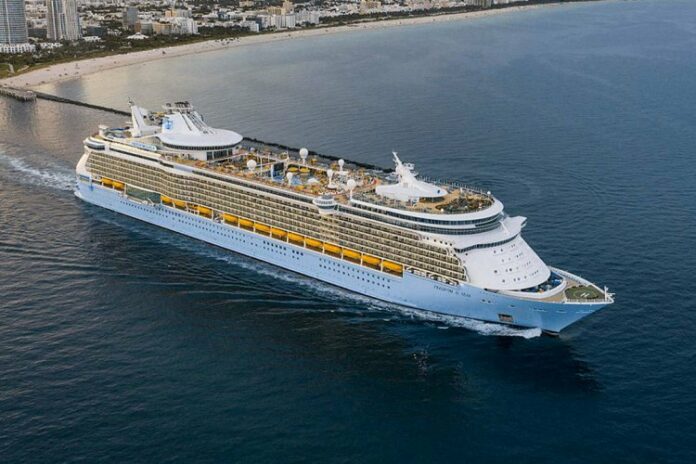
NAPA has entered a new long-term agreement with Royal Caribbean Group to deliver eLearning to its crews worldwide.

This partnership will help Royal Caribbean Group train both shipboard and shoreside crew on the latest stability software and technology. This will assist in facilitating the safe operation of its global fleet of 64 vessels.   

Pursuant to the agreement, the NAPA Stability eLearning course will be delivered to all Royal Caribbean Group crew members who use NAPA Stability, a next-generation safety management software. This represents around 500 people per year across the company’s fleet. The comprehensive online course will not only enable crew members to become proficient users of NAPA Stability, but it will also enable them to acquire core knowledge on ship stability principles such as intact stability, damage stability and strength – essential components of the training needed by every seafarer.   

The rate of adoption of new technologies is accelerating, particularly as the cruise industry looks toward decarbonization. From exhaust gas purification and air lubrication to voyage optimization systems, new decarbonization systems on a vessel will be considered in stability calculations. This enhances the need for comprehensive training to ensure the cruise industry maintains its reputation as a safety leader as well as an environmental pioneer, exceeding regulation on both fronts.  

Implemented directly into Royal Caribbean Group’s training platform, NAPA eLearning is available anytime and anywhere in the world via a cloud-based immersive system. This offers Royal Caribbean Group crew members an opportunity to benefit from high-standard classroom-like interactive experiences with others taking the same course and sharing their experiences in real time. The NAPA eLearning tool requires no hardware installation, upgrades, or maintenance costs.  

Annettys Acosta, Director of Customer Relations at NAPA Safety Solutions, said:

“For shipping’s decarbonization transition to succeed, it must focus not only on technology but also recognize that people are at the very heart of it. As the industry develops and deploys a range of alternative fuels, clean technologies, and digital solutions, it must also ensure that crews have the proper training to handle these new systems and processes.”   
 

MacGregor to supply container lashing systems for twelve Hapag-container vessels

0

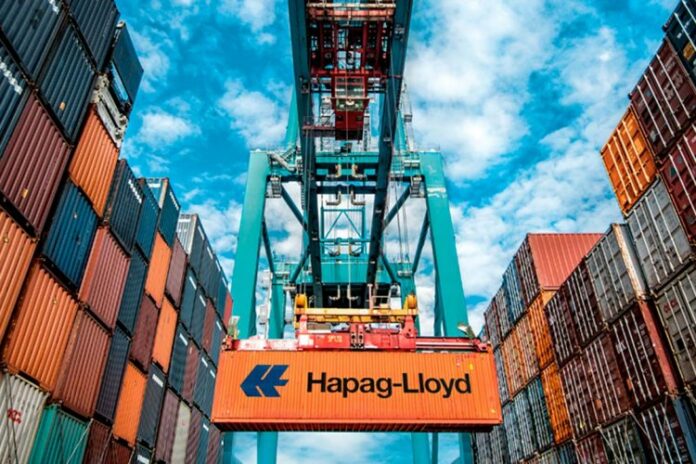
MacGregor, part of Cargotec, has received a significant order for delivering container lashing systems for twelve 23,500+ TEU container vessels for Hapag-Lloyd. The vessels will be built at Daewoo Shipbuilding & Marine Engineering (DSME) in South Korea.

The order was booked into Cargotec’s 2022 third quarter orders received. The vessels are scheduled to be delivered to the owner between the second quarter of 2023 and the fourth quarter of 2024.

Lutz-Michael Dyck, Senior Director, Strategic Asset Projects, Hapag-Lloyd, says:

“Cargo system plays a very important role in the efficient operation of the container ship. Hapag-Lloyd and MacGregor have worked together closely and developed the optimum cargo system for this vessel series to ensure the best cargo efficiency. Placing this order with MacGregor was the first choice for us.”

Magnus Sjöberg, Senior Vice President, Merchant Solutions, MacGregor, says:

“Hapag-Lloyd is a highly appreciated and strategic customer for MacGregor. Over the years we have worked together closely to find ways to improve the cargo efficiency on existing ships and newbuildings. In this project, we have been collaborating on concept design and cargo system configuration from the very early stages. I am very proud that Hapag-Lloyd trusted us with this order.”

Hapag-Lloyd is currently the world’s fifth largest container carrier with 253 container ships totaling a capacity of 1.8 million TEU. Hapag-Lloyd is known for its dedication to efficiency and minimizing environmental impact.

Høglund to deliver IAS for Seaspan newbuilds at CIMC SOE shipyard

0

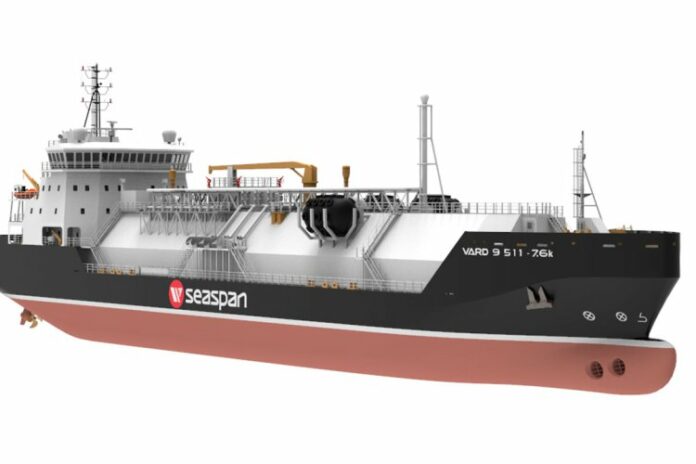
Høglund Marine Solutions will deliver integrated automation system (IAS) for three newbuild LNG bunkering vessels (LNGBVs).    

The IAS will seamlessly connect the cargo handling, control and electrical propulsion systems on each of the 7600m3 ships for Canadian owner Seaspan ULC. Høglund will leverage its experience from successfully developing automation systems on some of the first generation of LNGBVs, such as the MV Cardissa, an LNG bunkering vessel operating for Shell Western LNG, and the LNGBV Kairos.

A central, and standard feature of all Høglund automation systems, is Høglund Playback. Høglund Playback is a vital solution for the crew, having solved hundreds of incidents since its invention in 1995, on vessels all over the world. Using the integrated logging system, an operator can troubleshoot incidents by reviewing any alarms or events as if they were live data, giving them a highly detailed view of a potentially complex event. 

With this unique tool, the crew can check the historical data from an incident such as a blackout and see exactly what went wrong. This is essential for modern vessels such as LNGBVs, with sophisticated interconnected cargo handling, cargo transfer and fuel systems.

Seafarers benefit through being able to identify the source of a system malfunction without having to spend time and money on bringing a specialist onto the ship.   

Each ship will feature emerging technologies that further reduce greenhouse gas and other emissions, as well as radiated noise. The LNG bunkering vessels, being designed by VARD Marine Inc, will offer safe, efficient and economical refuelling for multiple ship types (ship-to-ship LNG bunkering), and allow for transfers to and from a wide range of terminals. They will also be able to perform coastal/short sea shipping operations.

Norwegian consortium targets hydrogen-based shore power solution for maritime sector

0

A Norwegian consortium comprised by four local players, PSW Power & Automation, Westgass Hydrogen, CCB and H2 Production, has been established to provide a high-capacity hydrogen-based shore power solution to the maritime sector.

The maritime sector is under pressure to decarbonize its operations. Supply boats, cruise ships, drilling rigs and fish farms have a high requirement for electricity – each can consume the equivalent of the power requirement of 400-500 houses for their on-board operations. Currently, they rely heavily on diesel generators.

Connecting to onshore power supply when docking at shipyards is a preferred solution to reduce emissions. CCB are a leading provider of shore power facilities to the maritime sector. However, they face significant challenges in meeting demand due to capacity constraints in the electricity grid.

Jan-Dagfinn Lund, CEO at CCB, says:

“It is important that ports across the country offer zero-carbon solutions to the maritime sector. Shore power can be a quick and easy win, and we want to provide clean energy to our customers. However, grid capacity is an issue – there is simply not enough to satisfy megawatt scale demand. We need to speed up this work to reach the goals that have been set.”

PSW’s solution is designed with flexibility, reliability and safety in mind. It caters for the high capacity needs of major actors in the sector, for example supply boats, cruise ships, drilling rigs and fish farms. It works by using clean hydrogen to drive fuel cell generators, which in turn generate high-capacity electricity.

Eirik Sørensen, General Manager at PSW Power & Automation, says:

“This supply of electricity can then be integrated into existing grid connected facilities, or work on a standalone basis for a complete off-grid offering. The system generates no pollutants, with its only other outputs being steam and heat. This solution is the first of its kind in a commercial setting. A major milestone was to ensure we adhere to the highest safety and reliability standards.” 

Havila Foresight, a platform supply vessel chartered by Equinor, were charged during the demonstration event], which attracted key stakeholders across the value chain to witness the zero-emission offering.

A key component to deliver a complete end-to-end set up across Norway is the supply and distribution of clean hydrogen supply itself. Westgass is developing a country-wide network to safely and reliably deliver clean hydrogen wherever and whenever it is needed.

Kinar Kent, CEO of Westgass, says:

“The energy transition needs to be convenient for end users. And it has to make commercial sense. As an energy company, it is our responsibility to make this happen through competitive sources of clean hydrogen in a safe and reliable manner. We have to handle all the supply chain complexities and risks so customers can make an easy switch. Of course, this is not a simple challenge, but we have done our part to show we are ready. We now need the right levels of commitments from clients and government stakeholders for a full-scale rollout.”

Future clean hydrogen supply to Ågotnes will come from H2 Production’s Energy Park in Øygarden. This will be one of several important green establishment that occurs in the Energy Park as a consequence for hosting the CCS facility within Norway’s largest climate investment through the project “longship”.

Ronny Haufe, CEO at CCB Energy and H2 Production, says:

“The Energy Park is a unique location and an important industry hub to ensure a complete and sustainable value chains within green industries, as well as local solutions. We are creating a production and distribution hub for future users of hydrogen and hydrogen/energy carriers for industries to achieve the lowest possible carbon footprint and contribute to reaching their climate goals.”

Damen working on new vessel class to support growing floating wind industry

0

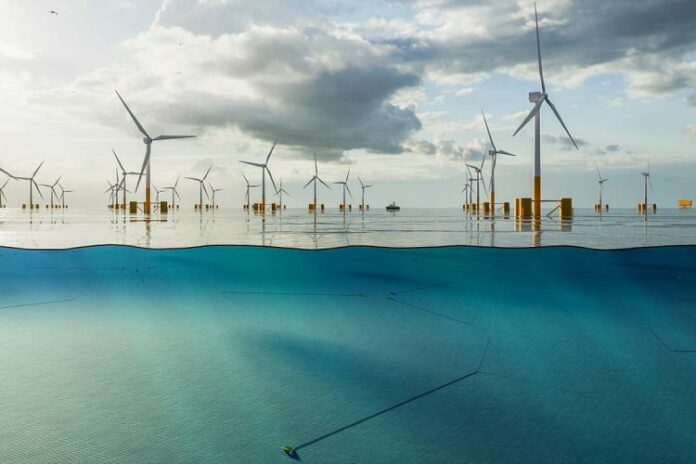
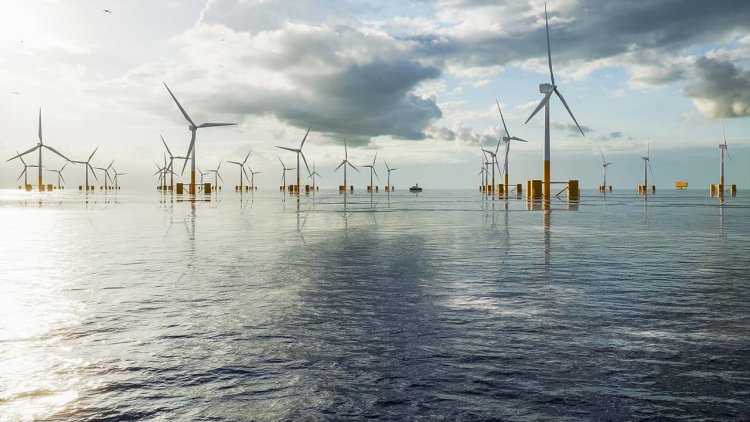
Damen Shipyards is developing a new class of vessel that will be capable of supporting the next big development in offshore wind; the roll out of large scale, floating offshore wind turbines (FOWT). Forecasts indicate that by 2050 over 200GW of new FOWT will be in operation, equating to around 13,500 units which together will be making a significant contribution to the transition to clean energy.

Given the size of the turbines and the depths of the water in which they will be positioned, these FOWTs will require chains and anchors of unprecedented sizes. Even just one installation starting to drag an anchor upwind of others could have a serious impact on the output of an entire wind farm, so the anchoring systems must leave nothing to chance. Research indicates that each FOWT will require between three and six anchors each, with chain diameters increasing from a typical 152mm for a large offshore structure to upwards of 220mm.

While the anchoring technologies will remain much the same, the vessels required to handle them will need to be much bigger than today’s anchor handling vessels. And given the projected demand for their services, they will also have to be exceptionally efficient.

In cooperation with suppliers and vessel operators, Damen is now working on a new class that will be able to meet this need. As an integrated R&D, design, engineering and shipbuilding group it has all the resources needed to undertake this challenge. It even has its own anchor and chain production facility, giving it additional insights.

While there is much work to be done, initial feedback from anchor handling specialists has been positive. Damen is also in discussions with other suppliers regarding new deck systems that can accelerate the loading of chain, synthetic rope, steel wire, clump weights and other possible mooring line components in the harbor while maintaining safety, a major consideration given the sizes and weights being contemplated.

Damen’s Offshore Construction facility at Damen Shipyards Mangalia, Romania, will also be playing a part in the floating offshore wind market development. In particular, it is well positioned and equipped to produce the large number of floating foundations on which the turbines will be mounted.

Damen’s Business Development Manager Offshore Wind, Wijtze van der Leij, says:

“There are many variables relating to the new vessel concept still to be assessed and explored, not least the final nature of the FOWT mooring systems. If larger numbers of lighter anchors and chains per turbine are judged superior to fewer but larger, the vessel design will adapt accordingly. But whatever the outcome, rapid growth in the offshore wind turbine sector is just around the corner and at Damen we are working hard now on the solutions that will support that growth in ways that are both economical and sustainable.”

The new vessel will be just the latest in a long line of innovative vessels designed and built by Damen for the offshore renewables sector. Recent additions include the Service Operations Vessel (SOV) range with walk-to-work capability for the efficient maintenance of offshore installations, and the new Fast Crew Supplier (FCS) 7011 for fast and comfortable crew transfers.

Canadian province sets offshore wind target

0

The Province has set a target to offer leases for five gigawatts of offshore wind energy by 2030 to support its budding green hydrogen industry.

Premier Tim Houston said:

“Setting this target sends a clear signal to the world that Nova Scotia is open for business and becoming an international leader in offshore wind and green hydrogen development. We are taking every opportunity to develop our renewable energy market, not only to fight global climate change, but also to create green jobs here in Nova Scotia.”

Leases for offshore wind development will be granted through a competitive bid process jointly managed by the provincial and federal governments, and the first call for bids will be in 2025. After reaching the five-gigawatt target, calls for bids will be based on market opportunities.

The most promising use for offshore wind energy is generating renewable electricity to produce green hydrogen for use in the province and for export. Green hydrogen is a clean alternative to fossil fuels because it does not create greenhouse gas emissions. Offshore wind is also another option to help Nova Scotia and Canada meet future clean electricity needs.

The Province also announced that it is developing a green hydrogen action plan to be released in 2023. The plan will outline the role green hydrogen can play in the transition to clean energy and the steps the government will take to build this industry, which will help Nova Scotia reach net-zero emissions by 2050.

Premier Houston will attend the WindEnergy Hamburg and H2 Expo and Conference in Germany later this month to promote Nova Scotia as a secure source of clean, renewable energy for the world and to support the investment and development of the emerging green hydrogen market.

Jonathan Wilkinson, Minister of Natural Resources, said:

“The Government of Canada is pleased to support our partners in Nova Scotia in delivering the deployment of clean offshore wind. This clean energy target represents an ambitious step forward towards delivering a net-zero economy powered in part by wind and hydrogen, while delivering sustainable jobs for Nova Scotians and Canadians.”

Tory Rushton, Minister of Natural Resources and Renewables, said:

“Nova Scotia offers some of the best offshore wind resources in the world, with ample capacity to serve both local and international green hydrogen markets. We will use this geography to our advantage in our pursuit of offshore wind as one of many solutions to help fight climate change and grow our green economy. This is a promising opportunity for Nova Scotia.”

Melanie Nadeau, CEO, Centre for Ocean Ventures and Entrepreneurship (COVE), said:

“Today’s announcement further strengthens Canada’s role as a leader in renewable energy and provides a great opportunity for the marine industry in Nova Scotia. The government’s commitment to net-zero emissions by 2050 exemplifies that progress in the renewable energy sector is essential to the future of innovation, climate change and the economy.”

TotalEnergies bunkers CMA CGM containership with sustainable marine biofuel

0

On 29th July 2022, the 4,294 TEU CMA CGM MONTOIR container vessel was bunkered via ship-to-ship transfer with TotalEnergies-supplied biofuel.

The biofuel is made of VLSFO (Very Low Sulfur Fuel Oil) blended with 24% second-generation, waste-based and ISCC-certified UCOME (Used Cooking Oil Methyl Ester).

Laura Ong, General Manager of Trading and Operations for Asia Pacific, TotalEnergies Marine Fuels, based in Singapore, said:

“We are delighted to continue our partnership with CMA CGM, a global player in sea, land, air and logistics solutions, in their decarbonization journey using marine biofuel. This latest project is further evidence of both companies’ long-term collaboration to explore and develop initiatives that promote the introduction of clean, low-carbon alternative fuels.”

This operation follows successful biofuel bunkering trials that TotalEnergies Marine Fuels performed in Singapore with a COSCO Shipping Lines containership, a vehicle carrier operated by Mitsui O.S.K. Lines, Ltd. (MOL) and a bulk carrier chartered by NYK Line this year.

DFDS deploys Wärtsilä Voyage’s SPECS technology onboard Selandia Seaways

0

Smart Panoramic Edge Camera System (SPECS) eliminates blind spots by providing a 360° vessel view, in turn enhancing safety and efficiency, as well as enabling crew on board to make better operational decisions that are based on real-time data

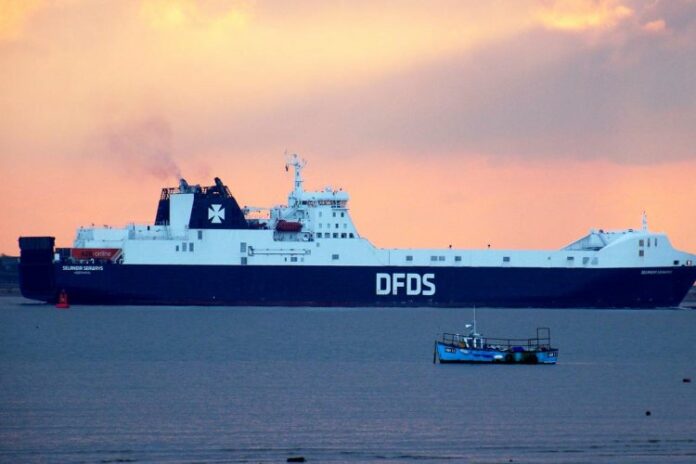
Wärtsilä Voyage, part of the technology group Wärtsilä, has installed its cutting-edge SPECS solution onboard Selandia Seaways, a 197m ro-ro ferry owned and operated by DFDS, to augment crew situational awareness and enhance the safety and efficiency of its navigation and docking procedures.

Operating a congested route – often in challenging conditions, between Cuxhaven, Germany and Immingham, UK – Selandia Seawayswas the ideal vessel for the initial deployment of SPECS. The Selandia Seaways crew have worked with Wärtsilä Voyage to ensure the SPECS user interface is simple and meet their needs. The crew now benefits from a full overview of the vessel’s position in just one image, allowing for total focus on safety during critical procedures at the start and end of every voyage.

Mads Bentzen Billesø, Head of Innovation & Partnerships at DFDS said:

“Many of our vessels operate in narrow and congested waters, where situational awareness and 360-degree vision is crucial. Access to a full and high-res image of the vessel and its surroundings, as well as exact distances to important objects around the vessel, all in real-time, is a very powerful tool. This supports our crew members and captains in making the right operational decisions in even the most challenging situations based on data, improving efficiency and safety.”

SPECS is a smart technology system, spanning cameras, augmented reality and data integration. The vessel was fitted with four robust super-wide cameras, providing 360-degree awareness, including a bird’s eye view, to eliminate blind spots. Regardless of weather and available light, SPECS’ motion stabilisation, vibration cushioning, and automatic camera cleaning offers Selandia Seaways’ crew clear visibility. The system’s calibrated grid also provides the exact distance between the vessel and the quayside and other objects in real-time, which is especially useful when docking.

SPECS’ augmented reality functionality supports operational decision-making by superimposing navigation data onto the video stream provided by the cameras in real time. Potential hazards can therefore be identified before they become a danger, which gives the crew more time to react and adapt, reducing the risk of accidents. The technology also includes a post-voyage incident investigation tool, creating a valuable source of training and enabling learnings to be gathered from real-life events.

The adoption of SPECS comes after long-term collaboration between DFDS and Wärtsilä on a variety of digitalisation, automation and decarbonisation initiatives.

Neptune Energy awards major decommissioning contract for Dutch, UK North Sea

0

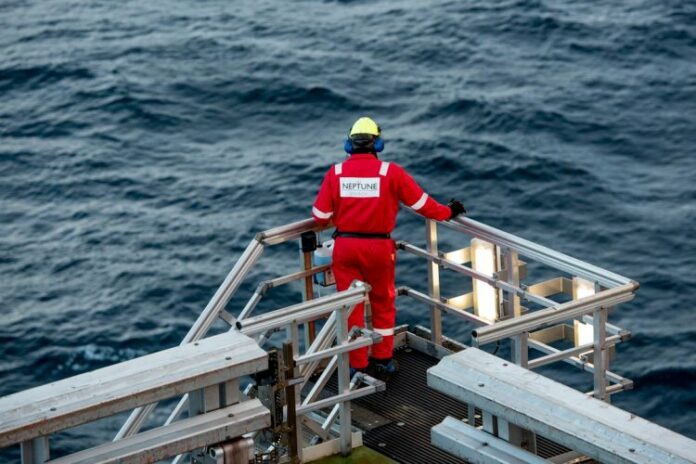
Neptune Energy today announced the award of a $30 million decommissioning contract to Well-Safe Solutions, for a campaign covering more than 20 wells located across eight Dutch and UK North Sea fields.

It is the first multi-region, multi-well decommissioning campaign award by Neptune to a single rig contractor and will significantly reduce time and costs associated with the work.

Well-Safe Solutions’ Well-Safe Protector jack-up rig will carry out the plug and abandonment of at least four subsea and 17 platform wells located in Dutch and UK waters.

Neptune Energy’s Managing Director in the Netherlands, Lex de Groot, said:

“Safely decommissioning assets at the end of their economic producing lives is an important part of our work. We plug and abandon the wells, taking everything with us and leaving the seabed in a clean state. That is our responsibility and we don’t take it lightly. 

“Working with a single rig contractor for this extensive, cross-border decommissioning campaign is an innovative way reduce time and costs.”

Duncan Morison, Rig Manager of the Well-Safe Protector, said:

“The Well-Safe Protector boasts a large volume of deck space for tubing, casing and conductor recovery, allowing effective batch operations and will help Neptune Energy realise considerable operational savings.”

The Well-Safe Protector is scheduled to mobilise in Q1 2023 to the Dutch and UK sectors for P&A operations in fields including D18a-A, G14-B, K12-S2, L10-S2 and K9c-A in the Netherlands and the Neptune-operated Minke and Orca fields.

Neptune has the option to extend the one-year contract by a further two years, via eight three-month extension.

Austal chooses MAN 175D propulsion for new high-speed catamaran ferry

0

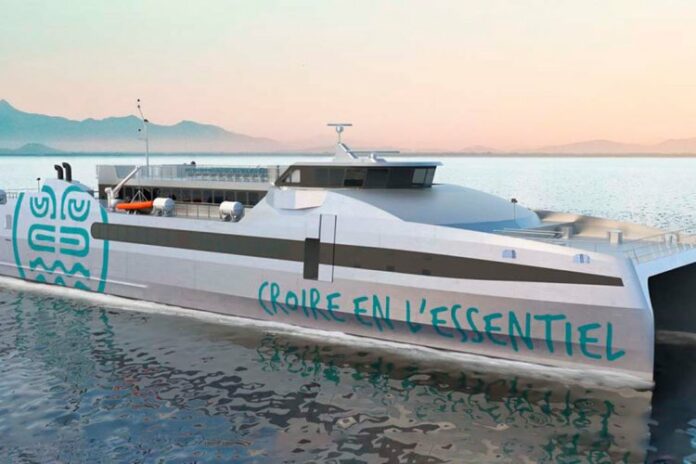
The Austal shipyard in Vietnam has ordered 4 × 16V175D-MM engines, delivering 2,720 kW at 1,800 rpm for water-jet propulsion, in connection with the building of a high-speed catamaran ferry for customer, the Degage Group. 

The 66-metre, 574-passenger ferry is scheduled for delivery in the first half of 2023 and will operate as the ‘Apetahi Express’ between Pape’ete (Tahiti) and Vaitape (Bora Bora) in French Polynesia. The new ferry will have a contracted top speed of 35.8 knots and a range of 360 nautical miles.

Tuanua Degage, President, Degage Group, said:

“These will be the first MAN engines in our fleet. We are very much looking forward to working with MAN Energy Solutions, and in particular the MAN PrimeServ New Zealand team, to ensure the highest levels of engine relaiblity and economy on this very demanding route.”     

Ben Andres, Head of High-Speed Sales, MAN Energy Solutions, said:

“This is an important milestone for the MAN 175D as it wins the favour of yet another, high-speed ferry application, this time with the Degage Group, an acknowledged leader in commercial maritime transportation and tourism. The 175D has a number of advantages that make it eminently suitable for such a technically demanding application, including its long times-between-overhaul, and its best-in-class fuel consumption.”