-4.8 C
New York
Home Blog Page 393

Maersk Drilling secures work for Maersk Viking offshore Malaysia into 2024

0

SSB/SSPC have executed the remaining three one-well options of the current drillship contract and awarded an additional eight-well contract to Maersk Drilling.

A five-well work scope will be novated to PTTEP for drilling and plugging and abandonment activities at the Kikeh field offshore Sabah, with a total estimated duration of 116 days and expected commencement of the first well in November 2022, in direct continuation of the drillship’s previous work scope.

Following completion of its work scopes with PTTEP, Maersk Viking will undergo a scheduled special periodic survey, after which the rig will commence a six-well drilling campaign with SSB/SSPC. This work scope is expected to commence in Q4 2023, with an estimated duration of 281 days.

The total firm contract value of the contract extension and additional contract is approximately USD 153m, including demobilisation and mobilisation fees, as well as fees for the use of managed pressure drilling on certain wells. The additional contract with SSB/SSPC contains options to add work on a total of 11 wells.

Nitipong Kongpat, Head of Malaysia Wells Operations for PTTEP, says:

“PTTEP welcomes Maersk Drilling into our exciting 2022-23 deepwater drilling campaign, and we look forward to forging a strong partnership in Malaysia.” 

COO Morten Kelstrup of Maersk Drilling says:

“We are thrilled to announce that Maersk Viking will continue to support Malaysian oil and gas developments for the next two years. This agreement is a testament to our great collaboration with Shell, and by coordinating the rig’s schedule across several different deepwater operators, we are driving efficiency and leveraging synergies for everyone involved. The campaigns will allow the highly capable Viking crew to add further to their impressive operational record, which recently led to Maersk Viking being named the Shell Floater Rig of the Year, in recognition of the drillship’s outstanding performance in all aspects during its time in Brunei Darussalam.” 

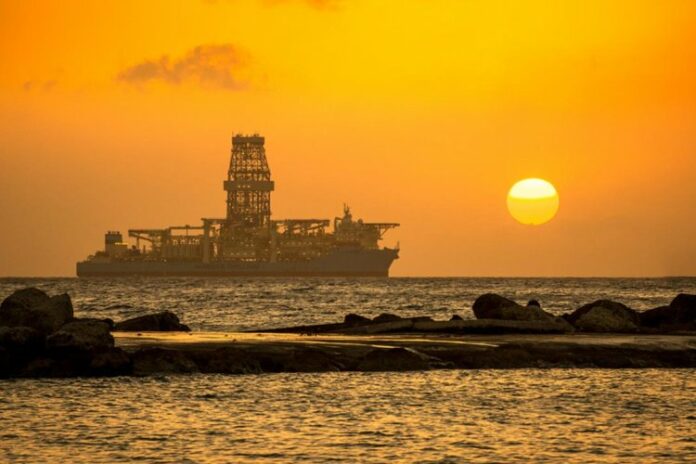
Maersk Viking is a high-spec ultra-deepwater drillship with integrated managed pressure drilling capability. It was delivered in 2013 and is currently operating offshore Malaysia.

Canada and United Arab Emirates first to back maritime sector’s green fuel initiative

0

Representatives of the maritime sector have officially launched an initiative to catalyze the supply of green fuels to support the global energy transition.

The International Chamber of Shipping (ICS) and International Association of Ports and Harbors (IAPH), along with the CEO-led Clean Energy Maritime Taskforce, unveiled the ‘Clean Energy Marine Hubs Initiative’ today at the Clean Energy Ministerial (CEM) in Pittsburgh.

The Initiative will be a convening platform for public and private senior-level stakeholders from the ports, shipping, finance, and energy sectors across the energy-maritime value chain. ICS and IAPH will kickstart activity with governments represented at the CEM, with the objective of advancing the production, export and import of low-carbon fuels.

The governments of Canada and the United Arab Emirates (UAE) confirmed during the CEM meeting in Pittsburgh that they will be among the first countries to back this key initiative, to help accelerate the worlds transition to green fuels and technologies.

The initial concept for creating green marine hubs was announced earlier this year as a forum to enable policy makers and industry stakeholders to quickly unlock clean energy deployment. This announcement represents the next step in the development of an initiative that will help unlock the potential for global adoption of zero emission fuels.

CEM is a meeting of 29 energy ministers from leading governments, as part of the US Department of Energy’s Global Clean Energy Action Forum (GCEAF). The Forum brings together advocates from the energy community to share ideas on how to deliver a successful global green transition.

Representatives of the maritime sector anticipate the participation of Canada and the UAE to establish a “pathway” for others to follow. The broader goals of the Initiative were also discussed at a plenary session organised by ICS. Key objectives include facilitating information and knowledge exchange on policies, programmes, and decarbonisation projects to de-risk investment and accelerate the commercial deployment of alternative fuels and technologies across countries.
Eng. Nawal AlHanaee, Director of Future Energy Department, the UAE Ministry of Energy and Infrastructure said:

“Currently, the expansion of the UAE’s hydrogen economy is in process with mega projects involving several of our leading ports. The two-gigawatt green ammonia project by Taqa, the Abu Dhabi National Energy Company, and Abu Dhabi Ports is one such project that will produce green hydrogen and process it into liquid ammonia, to be used in ships as bunker fuel and for export. This coupled with other endeavours by our ports will reinforce the UAE’s position as a key competitive maritime hub. Therefore, we are looking forward to our collaboration with all international governments, such as Canada, to reinforce the adoption of hydrogen technologies and fuels.”

Recent research from the International Renewable Energy Agency has emphasised the importance of shipping’s role in the global green transition. By 2050, the shipping industry is expected to transport at least 50% of all traded zero-carbon fuels.

The Clean Energy Marine Hubs Initiative is backed by more than 150 CEOs and government representatives, who voted to take forward plans for its creation at an ICS summit in June this year.

Patrick Verhoeven, Managing Director of the IAPH said:

“Resolving the energy transition challenge for shipping and the wider world requires broad-looking, multi-sector solutions. Ports have a vital role to play, not only as bunker infrastructure providers but as new energy hubs in order for the economics around zero emissions fuels to work. Securing the backing of national governments, like that of Canada and the UAE today, will help kickstart collaboration between energy producers and the entire maritime value chain in getting those first hubs established”.

Guy Platten, Secretary General of the International Chamber of Shipping, added:

“To be successful we need to target our activities towards the transition of the whole zero-emission fuels market. The Clean Energy Marine Hubs Initiative will not only support the global clean energy transition but will propel the development of the zero emissions infrastructure that we can all benefit from.

“Our taskforce will now work with the governments of Canada and the UAE, along with other governments to bring forward a tangible workplan for the next CEM that will ensure that the tremendous opportunities of zero emission fuels can be fully realised, produced at scale and safely delivered for all”.

Eng. Nawal AlHanaee concluded:

“We have been committed to upholding our responsibility by participating in several established sustainable platforms for knowledge-sharing among maritime nations and administrations on best practices, while also adding value to the technical and legal discussions held at the IMO, by contributing with proposals aimed at enhancing regulations to preserve the marine environment. Our involvement with the CEM Global Ports Hydrogen Coalition is one such endeavour that supports the UAE Energy Strategy 2050 that aims to achieve an energy mix combining renewable and low carbon energy sources to achieve strategic economic and environmental goals.”

Alfa Laval and SSAB to develop the world’s first plate heat exchanger

0

Alfa Laval has signed an agreement with SSAB, the global Swedish steel company, to collaborate on the development and commercialization of the world’s first plate heat exchanger to be made using fossil-free steel.

The goal is to have the first unit made with hydrogen-reduced steel ready for 2023. The collaboration is also an important step in Alfa Laval’s journey to become carbon neutral by 2030 – the same time frame set by IMO for a 40% reduction in carbon emissions from shipping.

Global steel production accounts for 7% of the world’s carbon emissions. With a leading position in high-strength steel, SSAB’s upcoming fossil-free steel made with HYBRIT technology will be a breakthrough for the industry as it transitions to more sustainable operations. The impact of fossil-free steel will be significant in Alfa Laval marine plate heat exchangers, which can be found on countless vessels worldwide.

Alfa Laval’s heat exchanger portfolio – the industry’s widest – includes plate heat exchangers that are suitable for both traditional and alternative fuels. Excelling in applications from engine and lube oil cooling to LPG cargo condensing and fuel cells, they possess innovative features that create an all-new level of reliability. Besides saving time and effort during maintenance, their design minimizes fouling and maximizes heat transfer capabilities, which ensures the highest possible energy efficiency with a very small footprint.

Peter Nielsen, President, Alfa Laval Marine Separation & Heat Transfer Equipment, says:

“Our marine plate heat exchangers are already key to decarbonizing on board, thanks to their superior level of energy efficiency. Through our collaboration with SSAB, we will minimize their total carbon footprint. Manufactured with fossil-free steel, plate heat exchangers will be as smart in production as they are in operation.”

Martin Lindqvist, President and CEO of SSAB says:

“We’re proud to welcome Alfa Laval as a partner and look forward to jointly exploring ways forward to mitigate climate change. With this collaboration we´re reaching new segments, and hopefully inspiring a whole new range of customers.” 

Kongsberg Digital delivers DP simulators to MOL Marine & Engineering

0

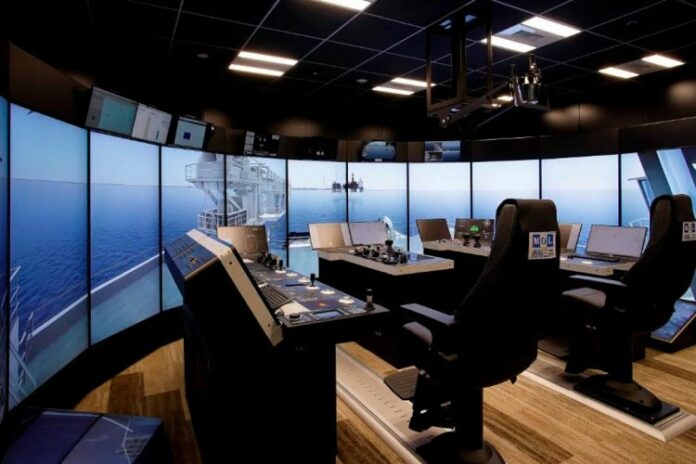
MOL Dynamic Positioning Training Centre (MOL DPTC) is the first Dynamic Positioning (DP) training centre in Japan to be accredited by the Nautical Institute (NI) to provide NI-approved dynamic positioning training courses.

The delivery includes a K-Sim DP Anchor Handling (Class A) simulator to support advanced offshore training, as well as four KONGSBERG K-Pos DP Basic (Class C) desktop simulators for basic DP training, including instructor stations to manage the exercises.

As part of the contract, Kongsberg Digital (KDI) will also deliver a newly developed hydrodynamic ship model; a digital version of the DP2 cable laying vessel KDDI Cable Infinity, owned by Kokusai Cable Ship Co., Ltd.

The simulator will be used to provide NI-approved DP training courses for MOL crew and the company’s customers. It will also be used to develop and provide customized training for cable-laying operations, offshore wind power related projects, or other offshore projects that utilize dynamic positioning systems. Furthermore, the simulator will also be made available for research and consulting services to serve the wider maritime industry.

The NI training scheme for obtaining a Dynamic Positioning Operator (DPO) certificate has formerly been a time-consuming process, involving onshore courses and ‘real life’ DP watch keeping experience on DP vessels.

The K-Sim DP Class A simulator is approved to be used for DP Seatime Reduction training under the Nautical Institute’s training scheme. K-Sim integrates with an advanced physics engine which, in addition to hydrodynamic modelling allows vessels, objects and equipment to behave and interact realistically. This is extremely important for making competence training adaptable to real-life operations.

Aditionally, KDI has signed a five-year Long-Term System Support Program (LTSSP) contract with MOL Marine and Engineering Co. Ltd. to keep the simulator maintained in top condition. This ensures hassle free operations and support, and any new system updates will be actively managed by KDI.

Andreas Jagtøyen, Executive Vice President Digital Ocean, Kongsberg Digital, says:

“This contract signifies recognition of Kongsberg Digital’s Maritime Simulation and DP technologies by one of the largest shipping companies in the world. The K-Sim DP Class A simulator has the necessary fidelity and realism required for engineering, training and mission planning, as well as assessment of existing and new crews, where various challenging operations can be studied, evaluated and optimized safely in the simulator.”

Mr. Nakashima Takashi, President, MOL Marine and Engineering Co., Ltd, says:

“We Installed Kongsberg DP simulator and were able to open a quality DP training center in Tokyo, Japan. We believe that MOL Group can contribute more and more to the offshore wind power business, which is in high demand in Japan.”

Ocean Energy Smart Grid Integration Project reaches full-scale testing

0

In December 2020 Canada’s Ocean Supercluster announced the BMT-led Ocean Energy Smart Grid Integration Project as part of its Accelerated Ocean Solutions Program (AOSP).

Challenged with integrating multiple renewable and distributed power sources, including ocean energy solutions, BMT partnered with fellow Canadian industry leaders Sustainable Marine Energy, Rainhouse Manufacturing Canada, the University of Victoria, and Turtle Island Innovations (TII) to design, build, and test a smart grid controller designed to integrate multiple energy sources and regulate energy distribution for islands and remote communities, increasing the opportunity for use of renewable sources of energy while reducing the dependence on diesel power generation.

The project teams have worked in close collaboration, advancing through technology readiness levels (TRLs) at a steady pace to reach the biggest project milestone yet. This week the project enters full-scale testing at the Sustainable Marine Energy substation in Nova Scotia, with teams on the ground from BMT, Sustainable Marine Energy, and TII to connect solar, tidal, and other energy sources to the BMT Smart Grid Controller to regulate and distribute power to a microgrid. The primary renewable energy source will be provided by Sustainable Marine’s PLAT-I tidal energy device.

The BMT Smart Grid Controller is designed to efficiently manage and integrate an unlimited number of energy sources in a fully off-grid remote microgrid. The integration of additional renewable energy sources is easily handled by modifying the control parameters versus expensive hardware changes.

Martin Moody, BMT’s Principal Electrical Specialist leading the testing, says:

“So far we’ve successfully tested prototypes, controlling and distributing river turbines, batteries, PV and generators to meet various load requirements. The fact that we’ve reached a full-scale testing opportunity is a success in and of itself and is a testament to the hard work and efforts of all the teams involved. But everyone is really excited to put this thing to the ultimate test.”

The BMT-designed solution is unique in that it utilizes commercial off-the-shelf components, along with a series of control parameters which effectively manage the energy optimization of the microgrid. The control parameters operate as a grid controller that efficiently balances the output from each energy source to support the required loads and users of the grid.

Over the next two weeks power sources will be introduced one at a time until all sources are contributing. All eyes will be on the smart grid controller as it gets hit with its most rigorous testing to date. If successful, the project will be one step closer to commercializing the integration of ocean energy and renewable energy solutions to displace the dependence of diesel power in island or remote communities – a feat that would celebrate Canadian innovation and open the door for future Canadian R&D projects supporting blue technology and energy transition initiatives.

Italy’s Guardia di Finanza takes delivery of a new flagship by Damen Shipyards

0

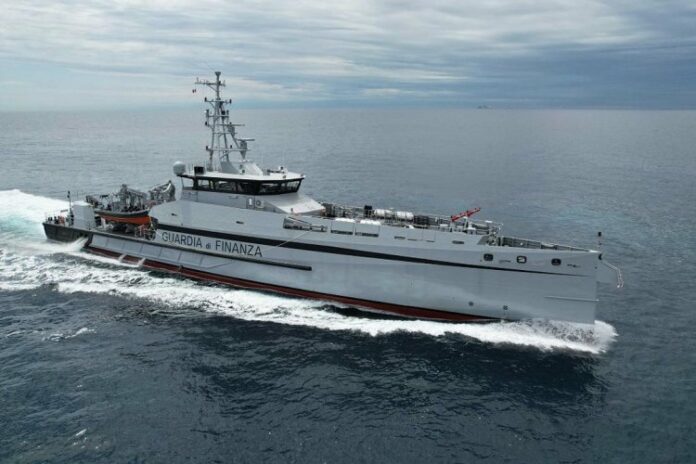
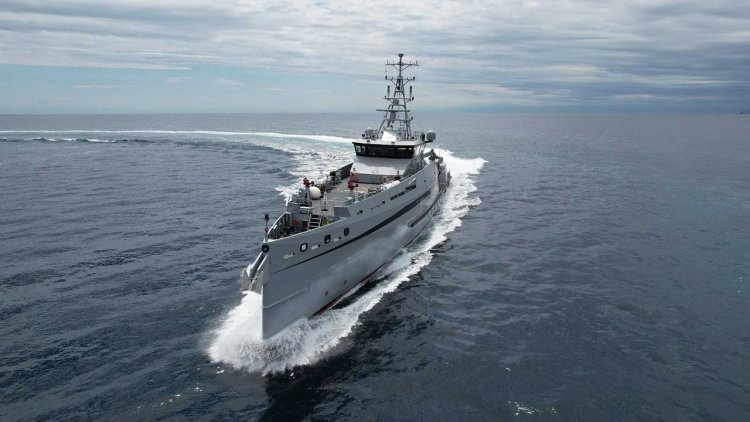
In Genova, on 22 September, the P.04 Osum, built to a Damen Stan Patrol 6009 design, officially received the naval flag. The event marked her joining the fleet of Italy’s Guardia di Finanza, a law enforcement agency under the authority of the MEF, as its new flagship.

The 60-metre vessel was built at the Cantiere Navale Vittoria Shipyard (CNV), based in Adria on Italy’s northern Adriatic coast, under Damen’s Technical Cooperation programme. Not only the largest vessel to be operated by the Guardia di Finanza, P.04 Osum is also their first sustainable OPV with a hybrid, diesel-electric propulsion system.

She arrived in the port of Genova on 16th September at the end of the first of a series of training and operational missions carried out along Italy’s maritime border and will remain there for the duration of the 62nd Genova International Boat Show.

The P.04 Osum has been designated the first of the new “Bandiera” class, one that is characterized by the application of innovative technological equipment and green propulsion systems. These are priorities on which the Guardia di Finanza intends to focus in the years ahead. The OPV has the most modern navigation, communication and identification systems, allowing her crew of 30 to effectively carry out maritime policing and the monitoring of national and European maritime borders in all weather and sea conditions.

The introduction of hybrid diesel-electric propulsion, in addition to safeguarding the environment, ensures continuous operational autonomy for up to 15 days and 2,000 nautical miles at a cruising speed of 18 knots. A maximum speed of 26 knots in a wide range of conditions is possible due to the vessel’s trademark Damen Axe-bow that allows the hull to cut through the waves with minimal resistance. At lower speeds, the diesel-electric system enables low-emission operations at speeds of up to nine knots. This is achieved by twin 270kW reversible (PTI) electric motors linked to the drive shafts.

Other notable capabilities include the deployment and retrieval of UAVs from the aft deck and two, nine-metre RHIBs that can also be rapidly deployed for interception, rescue and the boarding of suspect vessels.

In addition to its domestic duties the P.04 Osum, co-financed with European Community resources under the Internal Security Fund 2014-2020, will also enhance the operational capacity of the Guardia di Finanza in EU waters and the so-called enlarged Mediterranean. In particular, the prevention of illegal activities that threaten the security of maritime borders in the context of the international cooperation activities will be conducted under the flag of the European Frontex Agency, and the vessel is equipped with facilities for hosting European officials during joint international operations promoted by the agency.

Damen and CNV have previous experience of working together for the Guardia di Finanza, with two Stan Patrol 5509 vessels built and delivered in 2014.

Scientists expose vulnerabilities of critical Antarctic ice shelf

0

A new study led by British Antarctic Survey (BAS) scientists shows two processes, whose recent enhancement already threatens the stability of the shelf can interact to increase the likelihood of collapse.

This large ice shelf (the section of the glacier that floats on the sea) controls the flow of ice from Pine Island Glacier, roughly the size of England, into the Amundsen Sea. This is a crucial role as the glacier is one of the world’s largest and fastest changing and is responsible for approximately 25% of ice loss from Antarctica. This equivalent to the amount of water in 13,000 Olympic swimming pools.

Scientists have previously observed that Pine Island Ice Shelf is becoming increasingly fragile due to two processes: enhanced thinning, as a result of an increase in ice shelf melting into the sea, and an increase in calving events in which masses of ice break off into icebergs.

Now, a team of researchers has shown that the combination of calving and melting will likely make an even greater contribution to melting of Pine Island Ice Shelf than was assumed.

Dr Alex Bradley, an ocean modeller at BAS and lead author on the study, says:

“This study highlights the extreme sensitivity of ice shelves to climate change. It shows the interplay between calving and melting can promote disintegration of the Pine Island Ice Shelf, which we already thought was vulnerable to collapse.”

The team used advanced ocean modelling techniques to simulate the effects of continued calving events to see how this would impact melt rate. Their simulations show that calving events could result in in further thinning of the ice shelf, which will in turn make the ice shelf more vulnerable to calving. This suggests that a feedback loop between the two processes could exist and expedite the complete disintegration of the ice shelf. This would reduce its ability to stem the flow of ice from Pine Island Glacier into the sea and increase its contribution to global sea-level rise.

Bradley continues:

“Complete disintegration of the Pine Island Ice Shelf will have profound consequences not only for the glacier but all of West Antarctica as it is thought to play an integral role in maintaining the stability of the West Antarctic Ice Sheet.”

In a warming climate, calving events are likely to become more frequent and so this study further signals the urgent need to reduce emissions and mitigate the worst effects of climate change.

Steerprop wins contract for the new Steerprop T propulsion units with Med Marine

0

The contract is the first for the new Steerprop T product line, especially designed for tug operations and tugbuilders’ stringent demands.

The growth of global trade and marine transport has brought about larger vessels and a need of more powerful and manoeuvrable tugs, with increased bollard pull for ship assistance and harbour operations. As evidence of Steerprop’s commitment to its customers and the changing tug market, the company has developed the Steerprop T azimuth propulsion product line. These robust and hydrodynamically efficient propulsors are able to adapt to changing configurations and versatile operations with mechanical, hybrid or electrical prime movers, while focusing on simplicity and cost-effectiveness.

Donato Agostinelli, Sales Manager at Steerprop, says:

“With the development of this new product family we are clearly meeting our tug customers’ demands for flexibility and value in all operations and conditions, while adapting to the shipyard’s requirements for simple and seemless integration. The Steerprop T design features improved flexibility, increased modularization and scalability, while maximizing the bollard pull per engine’s power input.”

It is therefore with special pride that Steerprop now announces the first contract for propulsor units of the new Steerprop T product line. The contract with Turkish Med Marine, one of the largest tug building shipyards in the world, was signed this summer and includes equipment for two harbour tugs. The four SP 175 T propulsion units have 1.80 m propellers in nozzles and provide the power of 1080 kW per unit to deliver 35 TBP. The delivery is scheduled for January 2023.

Donato Agostinelli says:

“With the new Steerprop T product line and the support of our local partner Nemomarin, whose relationship with the customer was instrumental in making this contract happen, we are confident that we have a winning formula for the future Turkish and global tug markets.”

Med Marine’s Procurement & Technical Group Manager Ertugrul Cetin comments on the contract:

“We are delighted to cooperate with Steerprop on this project. We are sure that this partnership will contribute a lot to the mutual interests of both parties in developing a successful business relationship. By working together with Steerprop, we believe we are ideally positioned to meet the clients’ increased demand for Med Marine’s state of-the-art tugboats.”

Equinor and Poland’s PGNiG agree long term gas sales contract

0

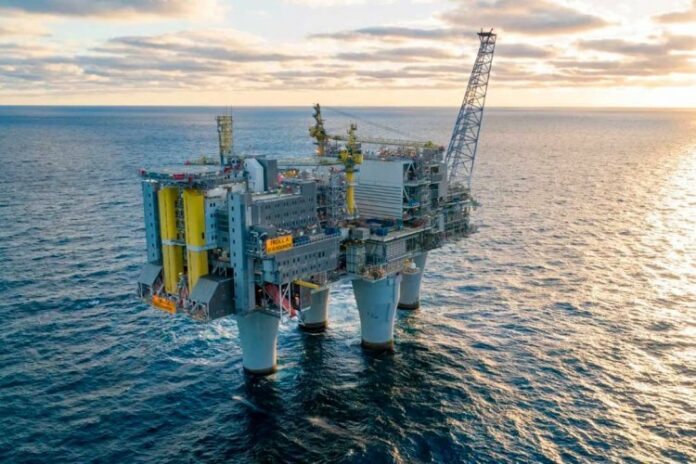
The Baltic Pipe Project connects the Norwegian gas export system to Poland via Denmark and facilitates flow of Norwegian pipeline gas to Poland.

Equinor’s executive vice president Marketing, Midstream and Processing, Irene Rummelhoff, says:

“Equinor is a broad energy provider and has been a key supplier of gas to Europe for 45 years. I am very happy that through this gas sales agreement we can extend our offering as a reliable energy partner also to Poland. Equinor is also working with local companies on developing large scale offshore wind and solar projects in Poland, and we look forward to further developing our energy cooperation with PGNiG and Poland in the time to come.”

Iwona Waksmundzka-Olejniczak, CEO of PGNiG SA, says:

“Equinor is a strategic business partner for the PGNiG Group playing a crucial role in our efforts to diversify gas supplies to Poland. The contracts we have just signed provide for gas that will be delivered to Poland using the Baltic Pipe pipeline, resulting in a significant strengthening of energy security of our country.” 

The volumes under the new, long-term agreement reflecting market prices are equivalent to around 15 % of the typical, annual gas consumption in Poland. The agreement is from 1 January 2023 to 1 January 2033.

The Baltic pipe project connects to the Norwegian gas transportation system with Denmark’s transmission system operator (TSO) Energinet responsible for the components on Danish territory and Poland’s TSO GAZ-SYSTEM in charge of the section between Denmark and Poland.

World’s first offshore renewable hydrogen production pilot site is inaugurated by Lhyfe

0

Lhyfe – which inaugurated the world’s first site for the production of hydrogen from onshore wind turbines in September 2021 and which is currently preparing to deploy its solutions Europe-wide – is convinced of the central role offshore has to play in the massification of renewable green hydrogen production.

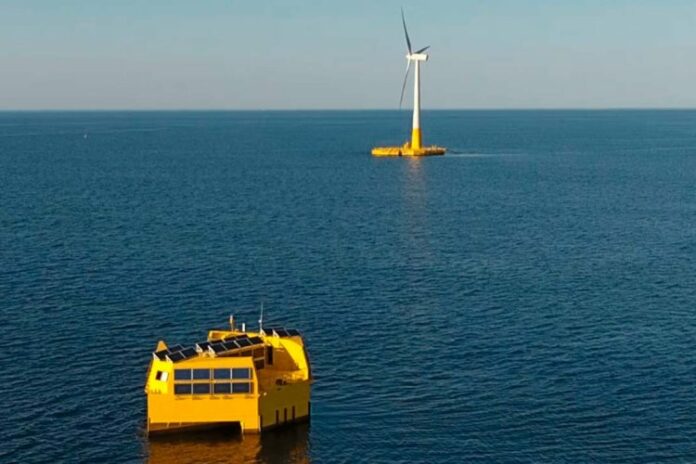
Through this pilot site, Lhyfe will produce the first kilograms of renewable green hydrogen at quay and then at sea, operating automatically, in the most extreme conditions. 

The Sealhyfe platform must meet several major challenges, including:

  • Performing all stages of hydrogen production at sea, i.e. converting the electrical voltage from the floating wind turbine, pumping, desalinating and purifying seawater, and breaking the water molecules via electrolysis to obtain renewable green hydrogen;
  • Managing the effects on the system of the platform’s motion: list, accelerations, swinging movements, etc.;
  • Enduring environmental stress: Sealhyfe will have to survive the premature ageing of its parts (corrosion, impacts, temperature variations, etc.);
  • Operating in an isolated environment: the platform must operate fully automatically, without the physical intervention of an operator, except for scheduled maintenance periods which have been optimally integrated from the design phase.

To achieve this goal, Lhyfe relied on the facilities of the offshore testing site, SEM-REV, operated by Centrale Nantes.

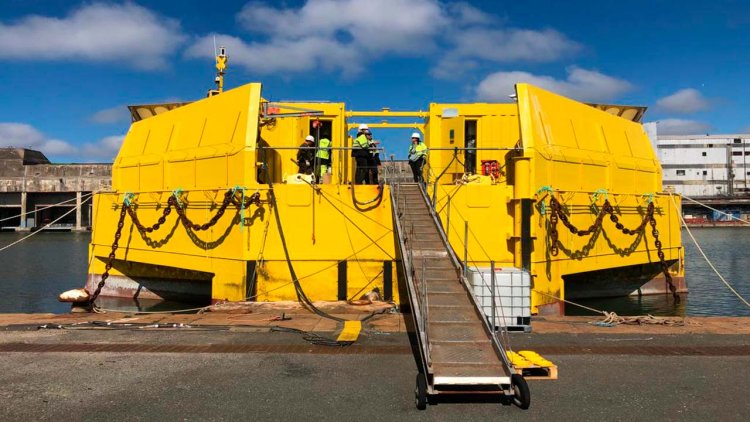
  • The production unit was installed on the WAVEGEM wave energy platform developed by Geps Techno.
  • At the end of the quayside test phase, the Sealhyfe platform will integrate the SEM-REV offshore testing area, off the coast of Le Croisic, about 20 kilometres from the coast.
  • The device will then be supplied with electricity by the pioneering floating wind turbine installed within the offshore test site in 2018 and still unique in France today.

The electrolyser was supplied and optimized for these exceptional operating conditions by Plug Power, one of the market leaders that is strongly engaged in the offshore route. Together, Plug and Lhyfe have developed the first electrolyser capable of operating on a floating platform.

The project also benefited from the expertise of French offshore and marine renewable energy players:

  • CHANTIERS DE L’ATLANTIQUE for enhancing the resilience of the system to environmental stress, ventilation systems and the electrical architecture of the system,
  • GEPS TECHNO and EIFFAGE ENERGIE SYSTÈMES for the system’s integration on a platform and the naval architecture of the latter, specifically for the particularly stormy sea conditions of the site,
  • The Port of Saint-Nazaire, facilitator of Sealhyfe’s assembly and testing, and,
  • KRAKEN SUBSEA SOLUTIONS, which participated in the design of the 

A first six-month trial phase is being started at quay, in the port of Saint-Nazaire, to obtain initial reference measurements and test all of the systems (desalination and cooling systems, stack behaviour, remote control, energy management, resistance to environmental conditions, etc.).

At the end of this first stage, Sealhyfe will spend a period of 12 months off the Atlantic coast. It will be installed less than a kilometre from the floating wind turbine, fixed to the ground by a system of anchors and connected to the site’s underwater hub using an umbilical designed and dedicated for this application (energy and data transfer).

At the end of this trial, Lhyfe will have a substantial volume of data, which should allow it to design mature offshore production systems, and to deploy robust and proven technologies on a large scale, in keeping with the EU’s objective to produce 10 million tonnes a year of renewable hydrogen by 2030.

Sealhyfe has the capacity to produce up to 400 kg of renewable green hydrogen a day, equivalent to 1MW of power.

By 2030-2035, offshore could represent an additional installed capacity of around 3 GW for Lhyfe.

Sealhyfe has had support from the French energy and environment agency ADEME and the Pays de la Loire Region.