-3.7 C
New York
Home Blog Page 392

Matson joins the multi-sector industry coalition SEA-LNG

0

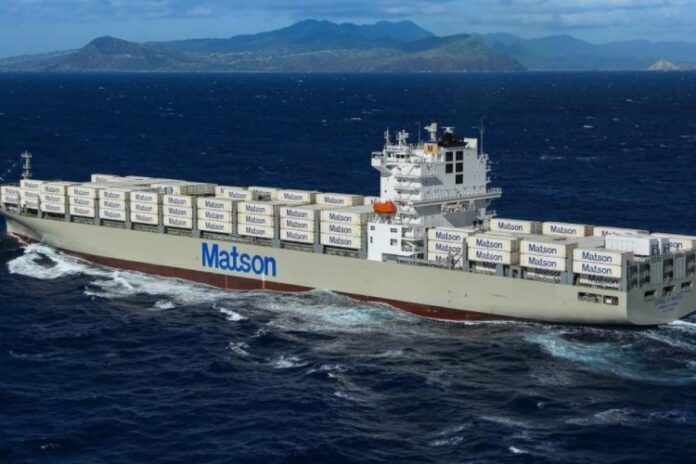
SEA-LNG, the multi-sector industry coalition established to demonstrate the benefits of the LNG fuel pathway for shipping’s decarbonisation, has announced that a leading provider of ocean transportation and logistics services, Matson, is the latest organisation to join its membership.

Matson is already working collaboratively across the shipping industry to promote positive change and to mitigate the industry’s environmental impact. It has also invested in sustainability across the company, for example in the design of new state-of-the-art vessels.

Matson recognises the central role that the LNG pathway will play in moving shipping towards a net-zero future. Next year, it will become one of the first shipping companies to convert existing containerships to LNG operation. Retrofits of dual-fuel systems can future-proof investments and reduce the risk of stranded assets. They offer shipowners a viable pathway to net-zero emissions by 2050, while also providing optionality, more stable costs and lower emissions along the way.

The LNG pathway is also a practical route to net-zero. BioLNG, which can be carbon-neutral depending on the feedstock, is already commercially available as a drop-in bunker fuel – and production continues to scale up rapidly. Meanwhile, once sufficient volumes of renewable hydrogen come online, renewable synthetic e-LNG will be a net-zero fuel option that is more energy-dense than alternatives and benefits from existing LNG infrastructure.

Matt Cox, Chairman and CEO, Matson, said:

“The LNG pathway is an important part of our strategy for reducing the greenhouse gas emissions of our fleet by 40% by 2030 and achieving net-zero emissions by 2050. The transition to bioLNG and in the longer term e-LNG, as well as continuing to improve the commercial availability of conventional LNG worldwide, will be critical to achieving our goals. We believe SEA-LNG will be a valuable partner on this journey and we look forward to working with them.”

Peter Keller, Chairman, SEA-LNG, commented:

“We are pleased to have such a well renowned carrier and logistics company as Matson onboard. With its long history of positive innovation in the important and environmentally sensitive markets it serves, Matson will add valuable expertise to the coalition. We are also pleased to be able to help the company achieve its critical decarbonisation aims through the LNG pathway.”
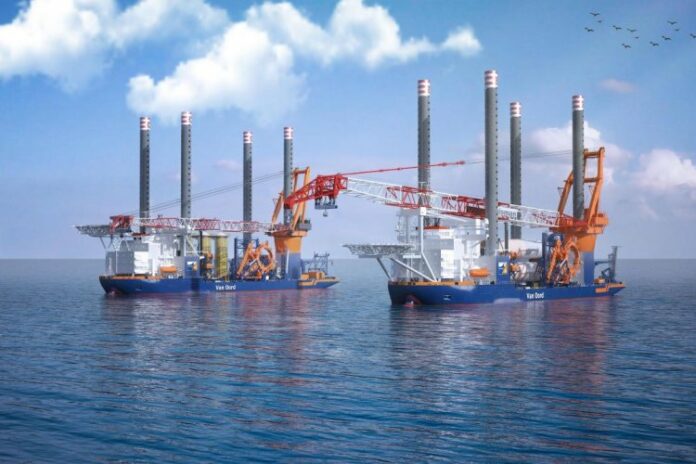
Van Oord’s offshore installation vessel Aeolus will get a major crane upgrade

0

Van Oord decided to upgrade the Aeolus to ensure that the vessel remains competitive in a rapidly changing market and, in particular, the increase in turbines sizes.

The new 133m long boom is being designed and built by Huisman. The Aeolus will be fit for duty with the new boom as from early 2023. The vessel will then be capable of installing the new generation 12-15MW turbines while maintaining its lifting capacity of 1,600t for foundation installations.

The modification plan of the Aeolus fits in the strategy of Van Oord which is aimed to continuously invest in state-of-the-art sustainable technology. To keep delivering innovative solutions to the rapidly growing offshore wind industry, Van Oord also invested in a new offshore installation vessel, Boreas and a cable-laying vessel, Calypso.

Boreas is currently being built in China can operate on methanol and install wind turbines capable of up to 20 MW with a low carbon footprint. The vessel will be 175- metre long and can lift more than 3,000 tonnes. In August the steel cutting ceremony was performed and construction is running on schedule. Boreas is expected to enter the market in 2024.

Calypso will be operational next year. This new DP2 vessel will be equipped with a below-deck cable carousel and a second carousel on deck, with total cable-carrying capacity of 8,000 tonnes. Apart from the ability to run on biofuel, this hybrid vessel has future-fuel ready engines with built-in flexibility to anticipate e-fuels. It will have a large battery pack, a shore supply connection and a state-of-the-art energy management system.

Pieter Van Oord, CEO, said:

‘These investments prepare us for the increase in scale in the offshore wind industry, strengthens our leadership position and reduce our carbon footprint during offshore wind installation.’

With 20 years’ proven experience and an impressive track record in constructing offshore wind projects, Van Oord is leading the way in the transition towards renewable energy. With our safety standards, innovative solutions, our employees’ knowledge and expertise, and specialised offshore wind equipment, we are significantly contributing to making wind energy more competitive.

Uniwise Offshore to enhance cyber security standards across its fleet

0

Uniwise Offshore, Thailand’s offshore support vessel (OSV) company, is enhancing cyber-security standards across its OSV fleet by adopting technology from Inmarsat, the world leader in global, mobile satellite communications. With reliable connectivity delivered by Inmarsat’s Fleet Xpress, Fleet Secure Unified Threat Management (UTM) provides Uniwise with end-to-end functionality to protect its network from cyber-attacks and intrusion via infected devices.

In the busy Gulf of Thailand, where a majority of Uniwise’s OSVs operate, connectivity is a key requirement. During prolonged downtimes and when usage is high, vessels become susceptible to cyber-attacks which could impact vessel operations and result in significant business losses for both owners and charterers.

Jon-Axel Hauglum, Co-Head of Business, Uniwise Offshore, said:

“In busy areas in the Gulf of Thailand usage on the network is high. Both business critical as well as extensive crew traffic must be protected and secured, hence we needed a satellite communications partner that has solutions specifically designed for maritime. We needed security, not only to minimise the risk of downtime during operations but also to safeguard our vessels from the growing threat of cyber-attacks. We identified Inmarsat as that partner. Fleet Xpress offers reliable connectivity and Fleet Secure UTM ensures robust network protection our operations require.”

Fleet Secure UTM is a comprehensive suite of network security tools designed specifically for the maritime industry. Managed through a single online portal and backed by a dedicated security operations centre, the solution allows Uniwise to detect and monitor threats and protect its fleet network from attacks. It also supports the company’s compliance with the International Maritime Organization’s 2021 functional cyber-security requirements for demonstrating cyber-risk management.

Gert-Jan Panken, Vice President Direct Sales, Inmarsat Maritime, commented:

“Cyber-attacks are a growing concern for vessel operators worldwide. Fleet Secure UTM brings together all the tools owners need to assess and mitigate risks and establish a cyber-secure environment, while Fleet Xpress provides the reliable coverage to ensure these tools – and other business-critical applications – remain online even where demand is at its highest.”

Inmarsat’s end-to-end connectivity and security package for Uniwise also includes Fleet Hotspot, which provides crew access to high-speed connectivity and is completely independent of their vessel’s bandwidth. This ensures uninterrupted connection to high-speed, always-on, business-critical bandwidth. With flexible charterer plans, Uniwise also benefits from tailored connectivity needs for charterers. Further contributing to Uniwise’s cyber-resilient environment, both services are delivered via the secure, dedicated network.

CMA CGM Group partners with Plastic Odyssey to build a future free of plastic waste

0

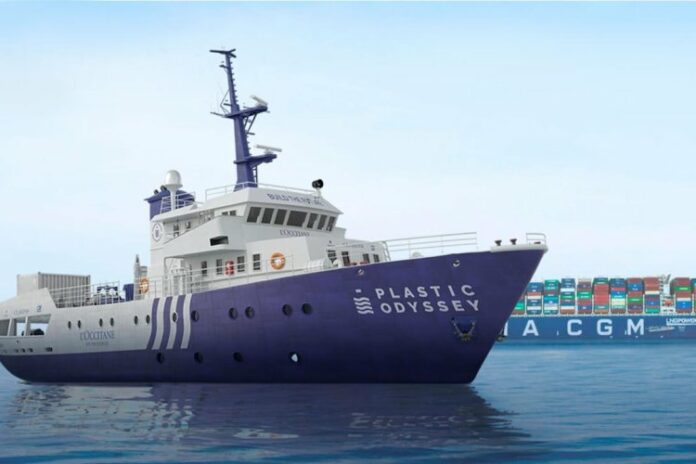
CMA CGM Group strives to make biodiversity protection a cornerstone of its CSR policy and to develop trade that is more respectful of people and the planet. As part of these efforts, the Group is partnering with Plastic Odyssey, a non-profit working to reduce plastic pollution in the ocean by creating a global network of local plastic recycling and upcycling initiatives.

On October 1, the non-profit’s namesake ship will set sail from Marseille on a three-year voyage to the 30 countries worst affected by plastic pollution, on three continents (South America, Africa and Asia). The first two ports of call will be Beirut, Lebanon, and Alexandria, Egypt, where her stay will coincide with the COP 27.

During each stopover, which will last three weeks, one of the main priorities will be to train a dozen entrepreneurs to set up plastic recycling centers. In each country, a range of low-tech, low-cost, open-source recycling solutions will be tested and demonstrated to the entrepreneurs to help them create new products (such as bags, tiles, and pipes) as a way of upcycling plastic waste.

Plastic Odyssey’s aims for this expedition are to:

  • Raise awareness, in emerging countries in particular, of the importance of reducing plastic waste and of how it can be upcycled.
  • Help spread knowledge of recycling methods and technologies in the countries visited by the vessel.
  • Promote the growth of local plastic upcycling initiatives, so that communities can transform their plastic waste into useful everyday objects, in a circular economy solution that will eradicate plastic pollution and create jobs in each country.
  • Give talks, make videos, and produce photo features during the expedition to support public awareness campaigns both in France and elsewhere.

The Plastic Odyssey project is all about solving plastic pollution in the ocean by stopping waste at the source: on land. Once plastic reaches the oceans, it cannot be recovered.

Plastic waste is a major issue both for our oceans and for biodiversity. Every year, around 10 million metric tons of plastic end up in the sea. If nothing is done, this figure is set to triple in the next twenty years to reach 29 million tons annually, and the consequences for marine, animal and plant ecosystems will be irreversible.

Plastic Odyssey is working to implement technologies to upcycle plastic and develop the plastic waste recovery industry, to create jobs while taking action on plastic pollution at the source.​ This goal is in keeping with CMA CGM Group’s focus on entrepreneurship, which has led to the creation of Le Phare, the CMA CGM Foundation’s social incubator supporting business creation in the fields of education and the solidarity economy.

Noatum completes the setup of new port cranes in three of its terminals

0

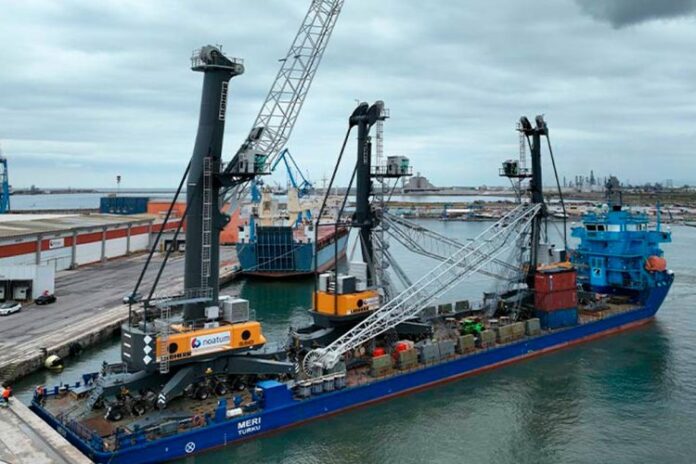
After completing the acquisition of four cranes from the port machinery manufacturer Liebherr for three of its port terminals in Spain, Noatum Terminals has taken delivery of the final three cranes and is preparing for their installation in the assigned ports.

The cranes have the versatility required to be able to handle different types of cargo, in addition to being equipped with state-of-the-art technology, leading to improved operating performance for the ports where they will be installed. They also contribute to minimising environmental impact and energy savings in port operations.

The first crane, LHM 420 Pactronic with a capacity of up to 124 tonnes, arrived at the port of Sagunto at the beginning of the year. It has been operating successfully there since then, and contributing to an improved management of the growing volumes of work at the terminal.

Three more cranes left the port of Rostock in Germany on board the heavy cargo ship MERI on the morning of 5 September. The first delivery of the LHM 550 crane with a capacity of up to 144 tonnes and a reach of 54 metres was completed in the port of Castellon on Sunday 18 September; it has been optimised for handling bulk cargo on Capesize class ships, container handling and New-Panamax ships.

 The cranes destined for the Sagunto and Tarragona terminals arrived on 19 September and 20 respectively. They are two LHM 420 models with a capacity of 124 tonnes, capable of improving productivity by handling up to 18 containers per hour, and to handle bulk cargo, projects, or any type of general cargo.

The first crane which arrived in Sagunto was assembled at its destination, but in this second delivery, the three cranes were factory assembled and ready for use immediately.

This is one of the biggest orders of its kind in all of Europe, including manufacturing, transportation and setup of three high tonnage mobile cranes, simultaneously, for a single client.

Joaquín Ramón Lestau, Managing Director of Noatum Terminals, pointed out that “this ambitious order to the manufacturer Liebherr, which is unprecedented, is part of a strategy that seeks to provide continuous improvements for our clients as well as a clear commitment to reducing our environmental footprint and implementing the most advanced security measures.”

This investment in equipment for the terminals increases its current operating capacity, to six mobile and six electric cranes in Sagunto, five mobile cranes, two for containers and two electric in Castellon, and three mobile cranes in Tarragona.

The CMA CGM Group orders seven new biogas-powered ships

0

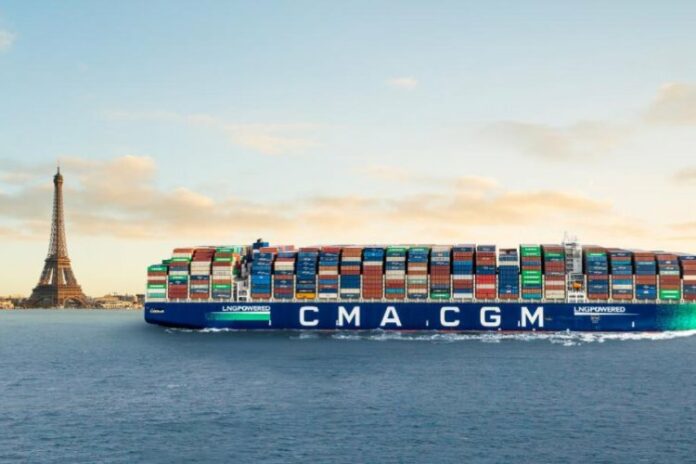
Delivered gradually as of 2024, the seven new container ships – four 7,300 TEU vessels and three 7,900 TEU vessels, each with 1,385 Reefer plugs – will serve Guadeloupe and Martinique, significantly increasing services to the two islands, while also maintaining the same service standards, reliability and regularity. They will replace smaller ships dedicated to routes between the French West Indies, France and Europe

In order to cope with these larger capacity vessels, the CMA CGM Group will help to modernize and increase the capacity of the biggest shipping ports in Guadeloupe and Martinique, as well as making wharfs larger. Fort de France and Pointe à Pitre, central hubs of the Caribbean and South America, will be the starting point for transshipments to Guyana, Saint Martin, Saint Barthélemy and northeast Brazil. 

With its new investment, the Group hopes to offer more support to its customers and partners and more generally to the economies of Martinique and Guadeloupe. 

The CMA CGM Group is committed to the energy transition and has set itself the target of becoming Net Zero Carbon by 2050. The seven new ships rolled out in the French West Indies in two years will be powered by biogas, a technology that helps to significantly reduce greenhouse gas emissions and protect air quality by eliminating almost all air pollutants.

Biogas produced from biomass reduces CO2 emissions by 67% compared with conventional fuel and cuts sulfur oxide emissions by 99%, fine particle emissions by 91% and nitrogen oxide emissions by 92%. It therefore makes a significant contribution to improving air quality. The dual fuel gas engine technology developed by CMA CGM since 2017 is able to use biogas as well as synthetic methane. CMA CGM already has 31 e-methane ready container ships in its fleet fitted with dual-fuel engines. It will have 77 of these vessels by 2026.

Maersk increases its warehousing capabilities in UK and Ireland

0

All the facilities have a strong focus on their operations creating low CO2 emissions.

The Doncaster facility is part of the G Park Doncaster Mammoth 602 development and perfectly connected via road (close to five motorways), rail (Doncaster International Railport), and air (Robin Hood Airport). With more than 600,000 sq ft total space, 60 dock levellers, 20m internal clear height as well as several hundred parking spaces and offices the warehouse is one of the largest in UK. It ranks also among the most sustainable logistics buildings in the North of England.

The developer GLP has built the facility on a net zero carbon scheme for construction (within the UKGBC framework). In addition to the warehouse in Doncaster, Maersk’s portfolio comprises two other distribution centers in the UK in Tamworth and Kettering.

In Ireland, Maersk has signed a lease for renting two new warehouses in the Quantum Logistics Park in the North of Dublin. The units 3 and 4 within Quantum Logistics Park will feature a combined space of 250,000 sq ft and will be built to fulfill the sustainability standards of LEED Gold and BREEAM Excellent ratings.

The Dublin based developer IPUT Real Estate will complete the two warehouses in Q4 2022 and Q2 2023, while unit 4 will also become Ireland’s first net zero logistics building using a glue-laminated timber structural frame. Quantum Logistics Park is strategically located 2 km from Dublin airport and 15 km from Dublin port with immediate access to the M2 motorway.

Gary Jeffreys, Area Managing Director UK & Ireland, said:

“These three new warehouses in the UK and Ireland are a strong statement that we are ready to deliver on our integrator promise to our customers and serve them with end-to-end logistics solutions from factory to their end-consumers if they wish. The demand for integrated and thus more resilient supply chains has grown significantly over the past two years. The disruptions of Brexit and the pandemic moved the logistics from a commodity level to a C-level topic – where it actually belongs.”

As decarbonization of sea, air and land logistics by 2040 is an integral part of Maersk’s strategy, we are happy to partner with two very capable developers which help us to deliver on that ambitious goal in landside logistics.

Following the successful acquisition of the warehousing specialist LF Logistics in Asia, Maersk today offers its customers integrated logistics solutions in more than 550 warehouses with a total global space of around 9.5 million sqm. Several additional Maersk warehouses are planned to go into operation in Europe in the coming months.

As an integrator of logistics, Maersk is developing and providing solutions ranging from ocean transportation to landside and air transportation, contract logistics including warehousing & distribution (W&D) and depots, custom clearances, visibility solutions and more. When supply chains were impacted due to the disruptions caused by the pandemic, Maersk’s resilient end-to-end solutions ensured customers’ cargo kept moving. The integrated solutions allow Maersk to have greater control over the movement of the cargo at multiple stages of its journey and thus bring resilience to the supply chains. With the expansion of W&D facilities, Maersk is strengthening its position further by providing a larger array of services out of one hand to its customers.

DNV signs MOU with SIT to promote maritime decarbonization and digitalization

0

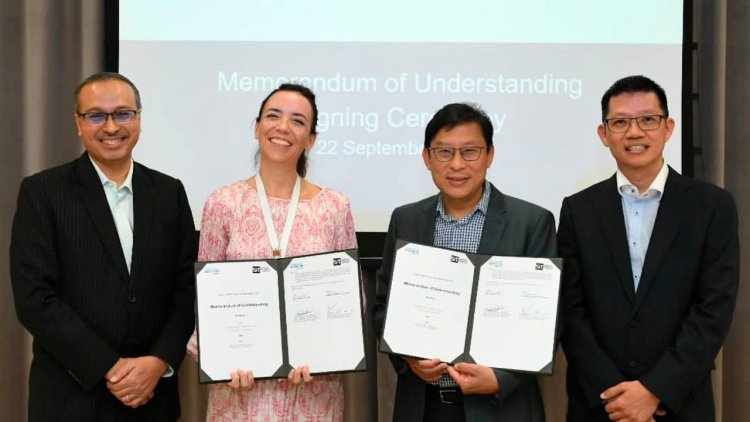
DNV has signed a Memorandum of Understanding (MOU) with the Singapore Institute of Technology (SIT) to explore opportunities to advance net-zero ambitions in Singapore’s maritime sector and actively support the new generation workforce.

As part of the three-year partnership, DNV Maritime Decarbonization & Autonomy Regional Centre of Excellence will help spearhead multiple Research & Development (R&D) and educational initiatives in collaboration with SIT’s Sustainable Maritime Engineering Strategic Translational Research Programme.

The partners have agreed to cooperate on:

  • development of ship and system designs using simulation-based approaches;
  • joint industry applied research projects with entities in the Singapore maritime ecosystem within the areas of decarbonization & digitalization;
  • a deeper and wider knowledge exchange between the two.

Cristina Saenz de Santa Maria, Regional Manager South-East Asia, Pacific & India, Maritime at DNV, said:

“This MOU represents a new level of collaboration with SIT, and the beginning of a partnership focused on innovation, education and cooperation that will help accelerate the maritime industry’s sustainable transition goals.” 

The MOU will enable DNV to support SIT and other maritime entities in Singapore to use DNV’s Simulation Trust Centre for educational and R&D purposes. Research collaborations between DNV and SIT will focus on advancing zero-emission and autonomous ships; shore remote control and simulation centres; shore charging and future fuel bunkering infrastructure.

Under the agreement, DNV intends to transfer knowledge in maritime decarbonization and digitalization to SIT to develop industry postgraduate programmes. The collaboration brings together the university’s applied learning pedagogy and DNV’s Simulation Trust Centre to conduct lessons on optimizing ships, and system design for advanced hydrodynamics, energy management system, emission control, and system safety. Students will also gain opportunities to collaborate with DNV on capstone projects in novel maritime technology applications, perform their Integrated Work Study Programme at DNV, and co-organize student competitions.

DNV Maritime Decarbonization & Autonomy Regional Centre of Excellence in Singapore focuses on maritime digitalization, decarbonization and port capabilities in support of South-East Asia’s transition to a smart and sustainable future.

Set up in 2021 with support from the Singapore Economic Development Board, the regional Centre of Excellence offers a knowledge-sharing forum for industry roundtables and seminars to engage with all stakeholders on maritime green transition trends, such as LNG, Marine Battery, and Hydrogen/Ammonia as fuel.

The centre also conducts joint industry projects, co-funded by DNV, and supports the sector with tailor-made consultancy projects.

Dr. Shahrin Osman, Director of DNV Maritime Decarbonization & Autonomy Regional Centre of Excellence, said: “Singapore is a global maritime hub which supports the test-bedding of innovative solutions. It is paramount that we engage both Institutes of Higher Learning as well as industry stakeholders to ensure that R&D efforts and investments are supporting the maritime transformation, and we are proud to lead the change with SIT.”

Prof John Thong, Deputy President (Academic) & Provost, SIT, said:

“Our collaboration with DNV offers valuable opportunities for SIT to intensify R&D that will help boost Singapore as a leading and sustainable maritime hub by leveraging new technologies and innovation. Additionally, the close academia-industry partnership will enhance authentic learning for our students and contribute towards capability building in the local maritime industry and across its ecosystem. SIT is delighted to partner with DNV in this endeavour.”

Support to harmonize ballast water management procedures in Mediterranean Sea

0

The initiative will focus on developing harmonized procedures for the uniform implementation of specific aspects of the Ballast Water Management Convention (BWM Convention) for which regional harmonization in the Mediterranean Sea region is essential.

The BWM Convention requires ships to manage their ballast water so that harmful aquatic organisms and pathogens are removed or rendered harmless before the ballast water is released into a new location. This protects biodiversity and resources by preventing the spread of invasive aquatic species as well as potentially harmful pathogens. 

The aim of the initiative is to promote the development of coordinated efforts and management measures to address potentially harmful invasions of aquatic species throughout the Mediterranean Sea region. In particular, the project will address exemptions under regulation A-4 of the BWM Convention, including relevant regional protocols for port surveys and risk assessments, and the designation of ballast water exchange areas, while further aspects to be considered will also include sediment reception facilities, pre-arrival reporting procedures, contingency measures and additional measures under regulation C-1 of the BWM Convention.

This activity will also take into account relevant work carried out and practical experience gained in other regions (such as the North-East Atlantic and the Baltic Sea). It will involve various phases of consultations with the Contracting Parties to the Convention for the Protection of the Marine Environment and the Coastal Region of the Mediterranean (Barcelona Convention).

The resulting draft harmonized procedures are expected to be prepared by the end of the year and finalized following a regional expert meeting tentatively scheduled for March 2023 in Malta, with a view to subsequent adoption by the Contracting Parties to the Barcelona Convention.

The project is being supported by IMO’s Integrated Technical Cooperation Programme (ITCP) through the Regional Marine Pollution Emergency Response Centre for the Mediterranean Sea (REMPEC), in cooperation with the Regional Activity Centre for Specially Protected Areas (SPA/RAC).

Maersk Drilling secures work for Maersk Viking offshore Malaysia into 2024

0

SSB/SSPC have executed the remaining three one-well options of the current drillship contract and awarded an additional eight-well contract to Maersk Drilling.

A five-well work scope will be novated to PTTEP for drilling and plugging and abandonment activities at the Kikeh field offshore Sabah, with a total estimated duration of 116 days and expected commencement of the first well in November 2022, in direct continuation of the drillship’s previous work scope.

Following completion of its work scopes with PTTEP, Maersk Viking will undergo a scheduled special periodic survey, after which the rig will commence a six-well drilling campaign with SSB/SSPC. This work scope is expected to commence in Q4 2023, with an estimated duration of 281 days.

The total firm contract value of the contract extension and additional contract is approximately USD 153m, including demobilisation and mobilisation fees, as well as fees for the use of managed pressure drilling on certain wells. The additional contract with SSB/SSPC contains options to add work on a total of 11 wells.

Nitipong Kongpat, Head of Malaysia Wells Operations for PTTEP, says:

“PTTEP welcomes Maersk Drilling into our exciting 2022-23 deepwater drilling campaign, and we look forward to forging a strong partnership in Malaysia.” 

COO Morten Kelstrup of Maersk Drilling says:

“We are thrilled to announce that Maersk Viking will continue to support Malaysian oil and gas developments for the next two years. This agreement is a testament to our great collaboration with Shell, and by coordinating the rig’s schedule across several different deepwater operators, we are driving efficiency and leveraging synergies for everyone involved. The campaigns will allow the highly capable Viking crew to add further to their impressive operational record, which recently led to Maersk Viking being named the Shell Floater Rig of the Year, in recognition of the drillship’s outstanding performance in all aspects during its time in Brunei Darussalam.” 

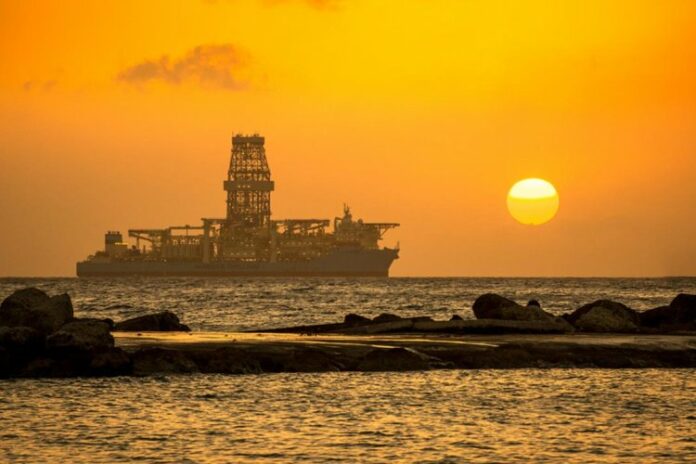
Maersk Viking is a high-spec ultra-deepwater drillship with integrated managed pressure drilling capability. It was delivered in 2013 and is currently operating offshore Malaysia.