-2.4 C
New York
Home Blog Page 391

Austal Philippines launches the largest ferry constructed by an Austal Shipyard

0

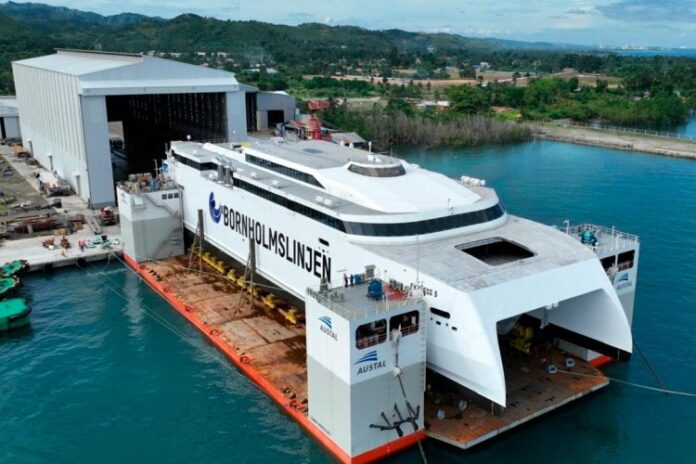
The ‘Auto Express 115’ high-speed catamaran ferry is the largest ferry (by volume) constructed by an Austal shipyard and was securely transported onto Austal Philippines’ floating dock by a new, rail-based system called ‘ANTS’, featuring self-drive trollies with variable geometry to suit any hull configuration.

Austal Limited Chief Executive Officer Paddy Gregg said the successful launch of the Company’s largest commercial ferry build, utilising Austal’s new ‘ANTS’ vessel transportation system, demonstrated both capability and innovation.

Mr Gregg said:

“The launch of Express 5 is a genuine milestone on a number of levels, as the largest ferry ever constructed by an Austal shipyard; and the first to be launched using our proprietary new vessel transport system.” 

“The Austal Nautical Transportation System (ANTS) allows us to move any large vessel safely, securely, and efficiently – monohull, catamaran or trimaran – at a fraction of the cost of traditional mobile transporters.

“Congratulations to the Austal Philippines team, who have not only successfully constructed and launched Express 5 but designed and developed a new vessel transport system to improve efficiency, reduce costs and enhance operations, for the benefit of our customer.”

Austal Philippines President Wayne Murray said the launch of Express 5 demonstrated the ingenuity and dedication of the local team – and the shipyard’s capability to deliver large, world class ships, cost effectively.

Express 5 has the capacity for 1,610 passengers, space for 450 cars (or 617 lane metres for trucks plus 257 cars) over 2 vehicle decks and an operating service speed of 37 knots. It is powered by an LNG-capable, medium-speed power plant that offers a powerful yet economic and environmentally friendly solution. On board, passengers will enjoy leather appointed reclining seats with USB ports, Wi-Fi, a full bistro and bar(s), a children’s play area and multiple audio-visual screens.  

The sleek looking 115-metre catamaran was designed by the same Austal Australia team who developed the original, signature raked-bow hull for Molslinjen’s Express 4 (delivered in 2019); and includes Austal’s proprietary Motion Control and MARINELINK-Smart systems that help deliver a smoother journey for passengers and crew and a more efficient, better performing, ‘smart’ ship for operators.

Following final fit-out of the vessel alongside at Austal Philippines, Express 5 is scheduled for delivery early in the first quarter of CY2023.

DEME upgrades DP fallpipe vessel fleet

0

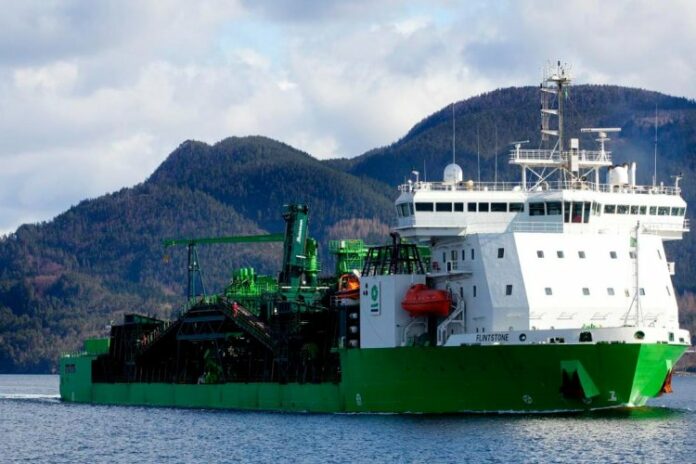
This important move highlights DEME’s commitment to its customers and to rejuvenate its fleet for the offshore energy industry.

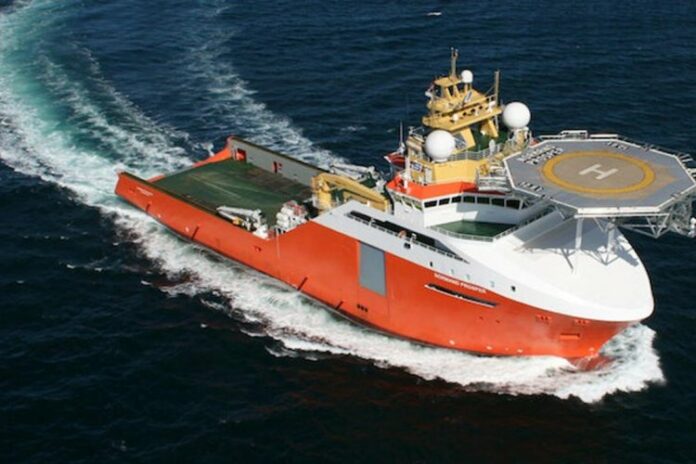
An agreement with Pax Ocean Shipyards of Singapore was signed and the vessel will enter the yard in late October to undergo extensive conversion works.

DEME already operates some of the most well-known fallpipe vessels in the industry, ‘Flintstone’, ‘Rollingstone’ and ‘Seahorse’, which serve clients in all segments of the rock installation market.

Continuing DEME’s efforts to operate a fleet for the future, the new fallpipe vessel will be fully compliant with the latest emission standards and feature the latest environmental technology, including a battery pack for best-in-class fuel efficiency and more sustainable operations.

The vessel will be equipped with a central fallpipe system plus a large, inclined fallpipe in order to allow pre- and post-lay activities using rocks with larger diameters close to subsea structures. The new vessel is set to join the DEME fleet in the first half of 2024.

Scientists find link between fast-melting Arctic ice and ocean acidification

0

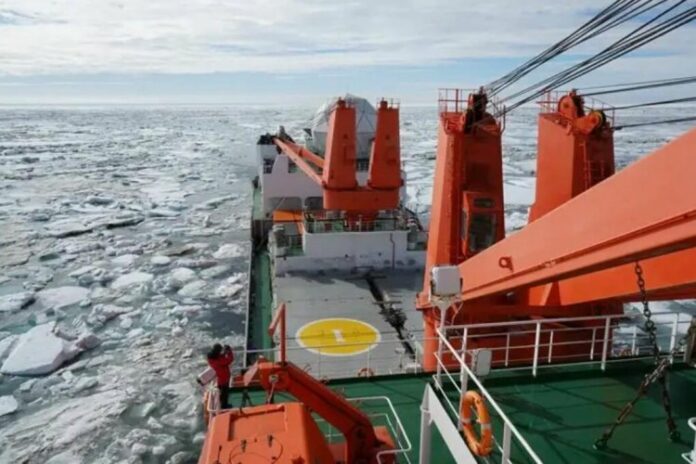
The team, which includes University of Delaware marine chemistry expert Wei-Jun Cai, also identified a strong correlation between the accelerated rate of melting ice in the region and the rate of ocean acidification, a perilous combination that threatens the survival of plants, shellfish, coral reefs and other marine life and biological processes throughout the planet’s ecosystem.

The new study, published on Thursday, Sept. 30 in Science, is the first analysis of Arctic acidification that includes data from more than two decades, spanning the period from 1994 to 2020.

Scientists have predicted that by 2050—if not sooner—Arctic sea ice in this region will no longer survive the increasingly warm summer seasons. As a result of this sea-ice retreat each summer, the ocean’s chemistry will grow more acidic, with no persistent ice cover to slow or otherwise mitigate the advance.

That creates life-threatening problems for the enormously diverse population of sea creatures, plants and other living things that depend on a healthy ocean for survival. Crabs, for example, live in a crusty shell built from the calcium carbonate prevalent in ocean water. Polar bears rely on healthy fish populations for food, fish and sea birds rely on plankton and plants, and seafood is a key element of many humans’ diets.

That makes acidification of these distant waters a big deal for many of the planet’s inhabitants.

Cai, the Mary A.S. Lighthipe Professor in the School of Marine Science and Policy in UD’s College of Earth, Ocean and Environment, has published significant research on the changing chemistry of the planet’s oceans and this month completed a cruise from Nova Scotia to Florida, serving as chief scientist among 27 aboard the research vessel. The work includes four areas of study: The East Coast, the Gulf of Mexico, the Pacific Coast and the Alaska/Arctic region.

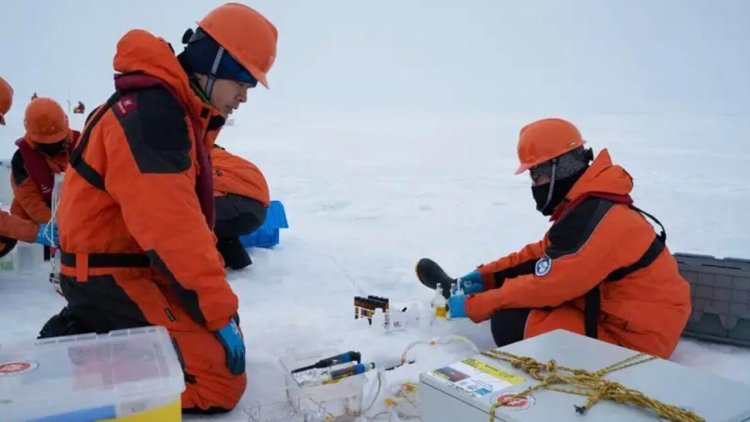
The new study in Science included UD postdoctoral researcher Zhangxian Ouyang, who participated in a recent voyage to collect data in the Chukchi Sea and Canada Basin in the Arctic Ocean.

The first author on the publication was Di Qi, who works with Chinese research institutes in Xiamen and Qingdao. Also collaborating on this publication were scientists from Seattle, Sweden, Russia and six other Chinese research sites.

Cai said he and Qi both were baffled when they first reviewed the Arctic data together during a conference in Shanghai. The acidity of the water was increasing three to four times faster than ocean waters elsewhere.
That was stunning indeed. But why was it happening?

Cai soon identified a prime suspect: the increased melt of sea ice during the Arctic’s summer season.

Historically, the Arctic’s sea ice has melted in shallow marginal regions during the summer seasons. That started to change in the 1980s, Cai said, but waxed and waned periodically. In the past 15 years, the ice melt has accelerated, advancing into the deep basin in the north.

For a while, scientists thought the melting ice could provide a promising “carbon sink,” where carbon dioxide from the atmosphere would be sucked into the cold, carbon-hungry waters that had been hidden under the ice. That cold water would hold more carbon dioxide than warmer waters could and might help to offset the effects of increased carbon dioxide elsewhere in the atmosphere.

When Cai first studied the Arctic Ocean in 2008, he saw that the ice had melted beyond the Chukchi Sea in the northwest corner of the region, all the way to the Canada Basin—far beyond its typical range. He and his collaborators found that the fresh meltwater did not mix into deeper waters, which would have diluted the carbon dioxide. Instead, the surface water soaked up the carbon dioxide until it reached about the same levels as in the atmosphere and then stopped collecting it. They reported this result in a paper in Science in 2010.

That would also change the pH level of the Arctic waters, they knew, reducing the alkaline levels of the seawater and reducing its ability to resist acidification. But how much? And how soon? It took them another decade to collect enough data to derive a sound conclusion on the long-term acidification trend.

Analyzing data gathered from 1994 to 2020—the first time such a long-term perspective was possible—Cai, Qi and their collaborators found an extraordinary increase in acidification and a strong correlation with the increasing rate of melting ice.

They point to sea-ice melt as the key mechanism to explain this rapid pH decrease, because it changes the physics and chemistry of the surface water in three primary ways:

  • The water under the sea ice, which had a deficit of carbon dioxide, now is exposed to the atmospheric carbon dioxide and can take up carbon dioxide freely.
  • The seawater mixed with meltwater is light and cannot mix easily into deeper waters, which means the carbon dioxide taken from the atmosphere is concentrated at the surface.
  • The meltwater dilutes the carbonate ion concentration in the seawater, weakening its ability to neutralize the carbon dioxide into bicarbonate and rapidly decreasing ocean pH.

Cai said more research is required to further refine the above mechanism and better predict future changes, but the data so far show again the far-reaching ripple effects of climate change.

He said:

“If all of the multiple-year ice is replaced by first-year ice, then there will be lower alkalinity and lower buffer capacity and acidification continues. By 2050, we think all of the ice will be gone in the summer. Some papers predict that will happen by 2030. And if we follow the current trend for 20 more years, the summer acidification will be really, really strong.”

No one knows exactly what that will do to the creatures and plants and other living things that depend on healthy ocean waters.

Salt designs Bay du Nord FPSO hull

0

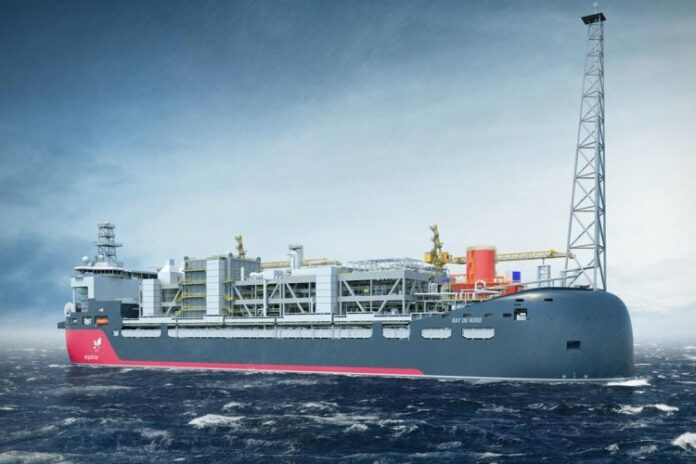
Salt has been working closely with Equinor over quite some time to develop an FPSO with enhanced motion characteristics and purpose made for operation in the exposed weather conditions in the Flemish Pass basin.

Egil Sandvik, CEO Salt Ship Design, says:

“It has been a great experience over the last 8 years to be working with Equinor being a major international energy company with a vast experience in developing, building, and operating FPSOs. Salt’s contribution has been our expertise in design and shipbuilding of complex vessels for demanding operations at sea. The result is a ship shaped FPSO concept with unique design solutions.” 

In February 2022 Equinor and Salt entered a pre-FEED contract to mature and further develop the hull design in cooperation with Equinor, Topside and Turret contractors, Class, Flag and Authorities. This work will carry on until start of FEED.

The development of FPSO designs and concept studies are an important part of Salt’s business, and the being a part of the Bay du Nord FPSO development represents an important breakthrough in an interesting new segment.

Samskip adds Value Maritime CO2 capture to decarbonisation strategy

0

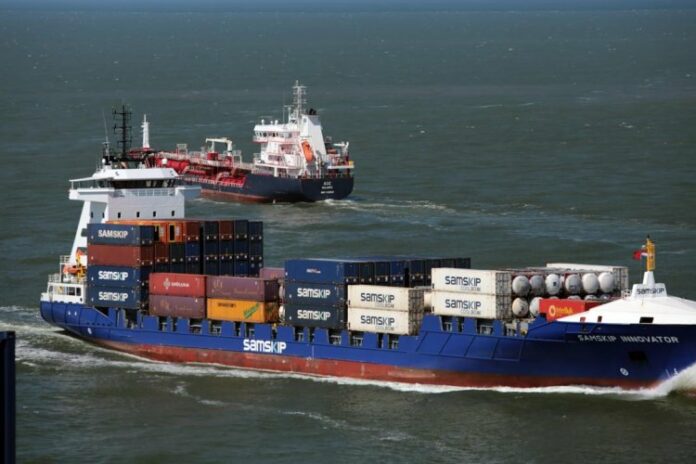
Samskip is making carbon capture a key part of its integrated plan for decarbonising shipping, after choosing the Value Maritime  ‘Filtree’ gas cleaning solution for the container ships Samskip Innovator and Samskip Endeavour.

For ships running on conventional marine fuels, the Filtree system captures 30% or more of CO2 emissions, providing owners with a direct response to coming restrictions on greenhouse gasses. Carbon capture is complementary to other parts of Samskip’s maturing strategy for decarbonisation.

Erik Hofmeester, Head of Vessel Management, Samskip, said:

“We work closely with freight owners who prioritise sustainability and whose end consumers hold them to account. Samskip Innovator and Samskip Endeavour, for example, run between the UK and the Netherlands on bio-fuels, which already cut CO2 by 90%. Using the Filtree system in addition will allow us to offer our first carbon neutral shortsea services.”

Other strands of Samskip’s sustainability strategy include a joint project with Ocean Infinity to build two emission-free ‘SeaShuttle’ ships powered by 3.2MW hydrogen fuel cells, and a battery-powered barge initiative.

Value Maritime has developed its Filtree technology as a prefabricated, pre-installed gas cleaning system for ships which removes sulphur, particulate matter and CO2. The system also neutralises the PH value of wash water, removing oil residues and ultra-fine particles.

Laurens Visser, Commercial Manager, Value Maritime, said tens of Filtree installations had been made to date, for owners seeking to solve a variety of emissions challenges. 

Visser said:

“Ship operators can remain compliant while using lower cost, higher-sulphur fuel, for example. Others may be planning ahead for future regulations on CO2 and want to ensure that the technology they choose has been proven in service.”

Due for commissioning in early 2023, each Samskip installation will feature a gas cleaning unit behind the ship funnel, with recovered CO2 pumped to a 10MW CO2 battery set housed in ISO tank containers and carried on deck. Charged during the voyage, these batteries are unloaded in port, with Value Maritime trucking them to CO2 consumers such as greenhouses for discharge, then returning them empty for the next voyage.

As a multimodal transport provider, Hofmeester said the CO2 logistics aspect of the Value Maritime solution was highly appealing to Samskip:

“We haven’t seen anything like Filtree carbon capture technology out there, but reusing the CO2 by delivering it to greenhouses – that’s something really special. It’s an elegant system which redelivers CO2 for natural absorption.”

Visser added:

“Carbon capture technology can make a significant contribution for owners seeking to reduce their carbon footprints now. We are making a ‘green circle’ for ship owners and freight shippers by recycling the CO2, and offering certificated accountability on greenhouse gas reductions.”

With multiple battery sizes available, ranging between 3MW and 15MW, the Value Maritime’s current carbon capture solution covers engine sizes suitable for container ships of up to 2,000 TEU capacity.

Solstad Offshore completes transition of all fleet connectivity to Marlink

0

Marlink has been awarded overall responsibility for the provision of hybrid network connectivity to Solstad Offshore, a leading provider of specialised offshore tonnage to the international oil and gas industry.

In January 2020, Solstad Offshore renewed its connectivity contract with Marlink, committing 65 offshore vessels to Marlink’s high-throughput Ku-band VSAT service. The remaining 25 ships will now be migrated to Marlink’s smart hybrid network, with an upgrade to bandwidth provision and new digital tools and solutions.

Marlink will ensure that onboard teams are able to reliably use collaborative software tools to keep in touch with shoreside managers on demand. The contract also provides for 4G mobile services and Wi-Fi access on the ships. Solstad Offshore has also taken the opportunity to add another layer of security to its internet connectivity, opting for Marlink CyberGuard solution across the fleet. While most software security services check network traffic or files against a database of known malicious signatures, Cyber Detection uses threat hunting to retroactively investigate whether a newly identified indicator of compromise may have previously attacked the vessel.

Marlink’s solution for Solstad Offshore are made flexible using an innovative self-service portal on board and on shore. Without needing to pick up the phone, users can up- or down-grade their bandwidth allocation online, activate or deactivate services such as content filters and change their coverage area. This adaptability will allow Solstad Offshore greater control, for example by increasing the bandwidth for a vessel according to the current on-board requirements.

To further optimise the user experience onboard and onshore, Marlink will use its network management tools, including routing data traffic according to the application in use based on prevailing latency, to optimise business critical communications and enable a higher quality user experience.

Christian Nesheim, ICT Director, Solstad Offshore, says:

“Solstad Offshore is committed to delivering the highest possible operational excellence and this means we do not cut any corners when it comes to our assets’ performance and co-ordination with shore. Concentrating our fleet with Marlink enables Solstad to upgrade our communication systems to a common standard and enhance crew connectivity and cyber security across all ships, wherever they operate.”

Tore Morten Olsen, President, Maritime, Marlink, says:

“We are delighted that Solstad Offshore has been convinced by the quality and value of Marlink’s smart hybrid approach and our digital solutions to complete the move of its fleet to our network. By combining the very best in connectivity with smart routeing, crew connectivity and cyber security, we can ensure Solstad Offshore keeps its customer promises and stands out in a highly competitive market.”

New generation of ferries for Hong Kong passengers to be classed by BV

0

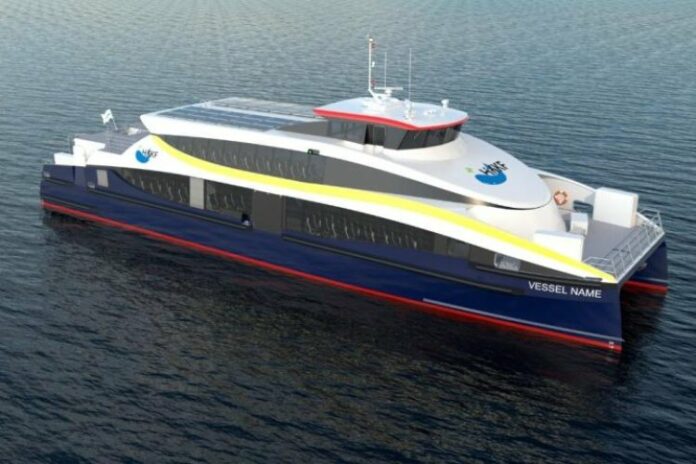
The nine high speed craft (HSC) will measure between 35 and 40 meters; eight vessels will be in full carbon fibre composite and one unit will be in full aluminium.

This new generation of vessels will be built under the Hong Kong Government Vessel Subsidy Scheme (VSS) to replace the existing ferries, upgrading safety and environmental standards including ensuring compliance with the safety standard High-Speed Craft Code 2000.

Marine diesel engines compliant with IMO Tier III requirements will be fitted as the main propulsion system. In addition, two of the nine vessels will be propelled by diesel electric hybrid propulsion systems as part of a trial program led by Hong Kong’s Environmental Protection Department. This will enable these ferries to operate in zero-emission mode as an option during manoeuvring and berthing.

Alex Gregg-Smith, Senior Vice President & Chief Executive, North Asia and China, Bureau Veritas Marine & Offshore, said:

“Ferries are vital in Hong Kong. And as the ferry market continues to grow in Hong Kong, this growth is accompanied by a need to comply with safety and environmental protection standards. Working in collaboration and supporting all stakeholders involved in this project, Bureau Veritas’ certifications will help ensure ferry safety as well as their comfort, energy efficiency and environmental compliance. Energy efficiency and improved environmental performance have become top priorities in order to reduce operational costs and meet stricter environmental regulations.”

All nine of the ferries will be fitted with approximately 102 m2 solar panels and battery systems to capture solar energy for on board electricity consumption. The hybrid vessels will also be fitted with air-cooled Lithium-ion modular battery systems as an alternative propulsion system. The vessels are expected to be delivered between the end of 2023 and early 2025.

The ferries will be built in Hong Kong by Cheoy Lee, one of the few yards in the world to routinely build vessels with steel, fiberglass, aluminium, and various combinations of these materials, to globally recognized standards and regulations.

Rolls-Royce and Lürssen to focus on methanol propulsion for large yachts

0

The companies plan to focus on yachts with lengths of 75 meters and above, which offer great potential for being powered by methanol – ideally ‘green’ methanol.

This is a synthetic fuel produced by taking carbon dioxide (which is harmful to the climate) from the atmosphere and converting it using electricity from renewable generation such as solar or wind farms. The amount of carbon dioxide given off by engines running on ‘green’ methanol is equivalent to the amount originally extracted from the air, resulting in a ‘net zero’ carbon footprint.

In addition, methanol engines emit much less particulate than comparable diesels, and their exhaust gases can be vented without undergoing SCR aftertreatment.

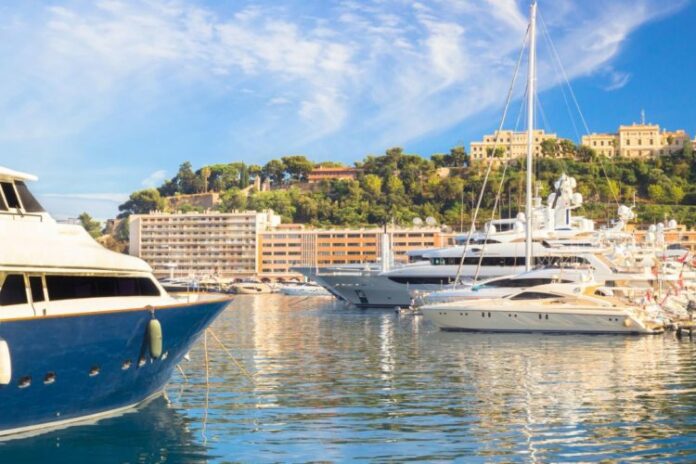
Daniel Chatterjee, Director of Sustainability, Technology Management & Regulatory Affairs at Rolls-Royce’s Power Systems business unit, and Peter Lürssen, CEO and co-proprietor of Lürssen, discussed the opportunities and challenges of this venture during the Monaco Yacht Show. 

Chatterjee, who is heavily involved in numerous committees looking into tomorrow’s fuels, said:

“Methanol is currently leading the discussion on alternatives to fossil diesel. Storage and usage challenges do exist because methanol is highly flammable. But the fuel is liquid at normal ambient temperatures, so these challenges can be managed safely, as with other fuels.”

The main difference, and thus a challenge for naval architects shipbuilding engineers, is that in terms of calorific value methanol has around 2.4 times more volume than diesel, so the tanks have to be correspondingly larger. 

Peter Lürssen noted:

“Methanol has disadvantages here compared to diesel, but clear advantages over other alternatives to fossil fuels. We’re now seeing that today’s prospective buyers of tomorrow’s yachts are increasingly thinking about how they can make running their vessels as climate-friendly and environmentally friendly as possible. We are therefore registering a growing willingness among future customers to invest in new technology for climate protection, and to make space available for it in the vessel.”

Rolls-Royce is currently developing a methanol engine based on the successful mtu Series 4000. Unlike the diesel engine, whose fuel self-ignites under high pressure, methanol – with its lower flash point – is ignited using a spark plug, in much the same way as a gasoline engine.

Dr. Reinke said:

“We want to work with Rolls-Royce to run a stationary methanol-fueled combined heat and power plant in one of our shipyards as a demonstrator for our customers.” 

At the same time, the company plans to use the methanol CHP plant as a source of power for its own shipyard, thus making operations more sustainable. Mechanical energy will be used to generate electricity, and the heat from the engine will be fed through to the shipyard’s heating grid. 

Peter Lürssen emphasized:

“This way, we’re going to reduce the yard’s carbon footprint quite considerably. After all, we don’t just want to help our customers be more sustainable, we also want to be a role model ourselves.”  

Maersk Drilling awarded contract offshore Brazil with Shell

0

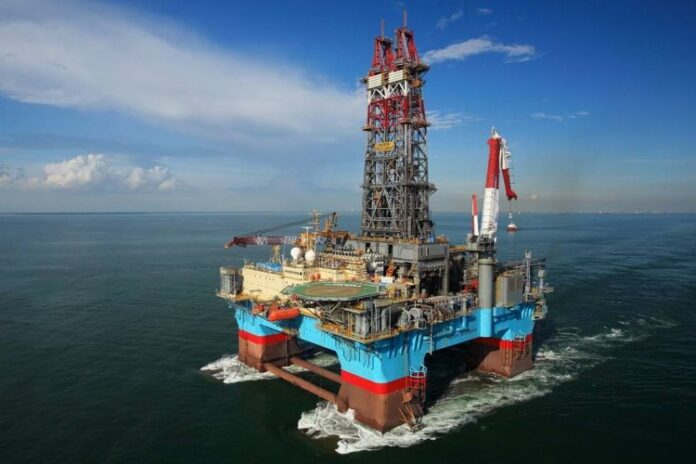
Maersk Drilling has secured a contract from Shell Brasil for the provisioning of the semi-submersible rig Mærsk Developer in the Campos basin offshore Brazil where the rig will drill one exploration well and perform subsea well interventions at the BC-10 field. 

The contract is expected to commence in March 2023, in direct continuation of the rig’s current contract, with an estimated duration of 90 days. The contract value is approximately USD 37m, including a mobilisation fee.

COO Morten Kelstrup of Maersk Drilling says:

“We’re delighted to confirm that Mærsk Developer will continue working in Brazil after it earlier this year became the first Maersk Drilling rig to commence operations in the region for many years. With this campaign, we will be able to add to our strong relationship with Shell, which is now extended to the exciting Brazilian market.”

Mærsk Developer is a DSS-21 column-stabilised dynamically positioned semi-submersible rig, able to operate in water depths up to 10,000 ft. It was delivered in 2009 and is currently operating offshore Brazil for Karoon Energy Ltd.

Brazil’s CBO Group and Wärtsilä sign agreement to speed up fleet sustainability

0

The objective is to support and accelerate CBO´s journey towards decarbonised operations for its fleet of offshore support vessels, which is one of the largest in its segment in Brazil. The agreement was signed in August 2022.

The advanced Wärtsilä platform utilises a vast bank of vessel data and machine learning algorithms, and is supported by the company’s extensive in-house experience in systems modelling. A detailed analysis will be made of the potential benefits to CBO of both short- and long-term solutions, including digitisation, energy efficiency and energy saving devices, hybridisation, and future alternative marine fuels, with a particular focus on the viability of ethanol fuel. The intention is to have a complete report finalised before the end of this year. 

Marcelo Martins, CBO’s Technical and Commercial Director, explains:

“CBO is strongly committed to establishing a leadership position in minimizing the environmental impacts caused by shipping. Decarbonising our operations is, therefore, a priority, as is safety, which is why we are taking advantage of Wärtsilä’s expertise and competence to define the fastest and most cost-effective solutions to achieve these goals.”

This is Wärtsilä’s first Decarbonisation Service agreement for the Oil & Gas segment in Latin America, and its second in the Americas. 

Hanno Schoonman, Wärtsilä Sales Director for the Americas, says:

“We are very proud to be able to extend our close partnership with CBO through this decarbonisation agreement. We will work together to evaluate all possible solutions, taking into account their pros and cons, to find the most environmentally friendly and commercially viable alternatives for the fleet.” 

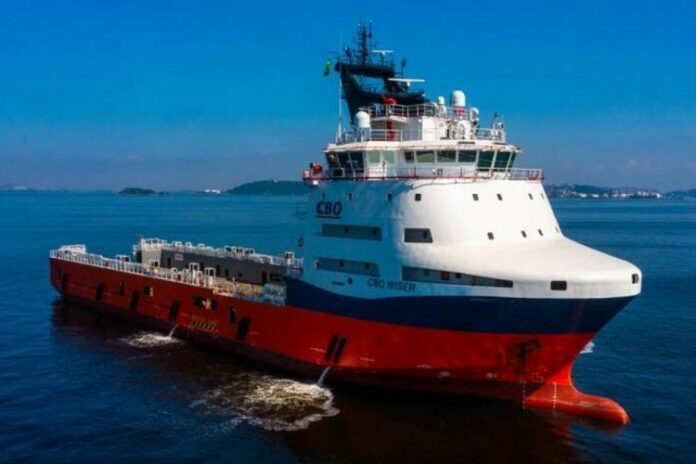
Over the years, Wärtsilä has accumulated a number of important milestones  serving the maritime industry. The most recent of these was the contracting of a hybrid battery solution for CBO, the first ever for a Latin American shipping company, thereby emphasising the forward thinking of both companies. This system will be installed on the PSV CBO Wiser (vessel with Wärtsilä project) which is operating for Equinor Brasil as a result of a win-win negotiation for its long-term charter agreement.

Lucas Corrêa, Wärtsilä’s Senior Market Innovation Manager for the Americas, says:

“Partnering with companies like CBO, which is committed to making our industry more sustainable, and which has a long history of innovation and pioneering, is a perfect match for our ambition to transform the maritime industry. We could not be more excited about the potential and the positive difference we can achieve together.”