-2.4 C
New York
Home Blog Page 390

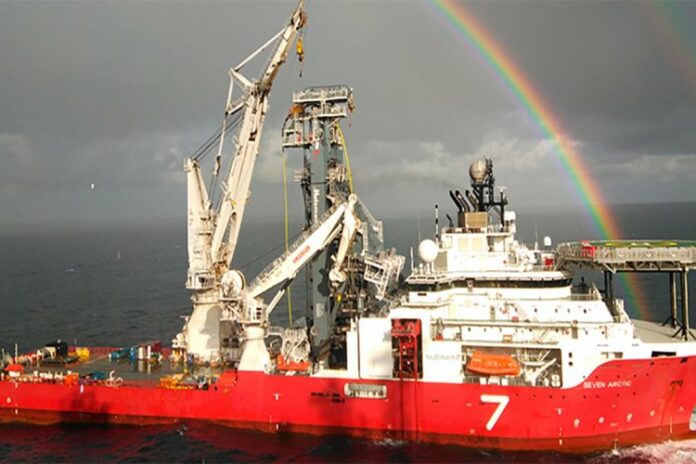
New energy system prepares Seven Arctic for the future

0

The new energy-saving and storage system will hybridise the vessel which currently has a total installed power of 27 MW and DP3 classification and is suitable for worldwide operations in water depths up to 3,000 metres.

At the heart of the new energy storage system is a containerised battery room with a  maximum power of 3750 kW and 1250 kWh of energy. The system also includes a connection for shore power.

Based on the vessel’s operating profile, it’s estimated that a reduction of 5,000 tons of CO2 emissions is expected.

The contract for supplying and fitting the Energy Storage System has been awarded to Bakker Sliedrecht, an electrical integrator specialist in Dynamic Positioning (DP) vessels.

Stuart Smith, Vice President Asset Development at Subsea7 said:

“We are very pleased to continue our relationship with Bakker on this contract which will hybridise Seven Arctic. This represents an important milestone in our sustainability programme to reduce our C02 emissions.”

Bas Oskam, Director Sales at Bakker Sliedrecht added:

“The Energy Storage System can work with any battery or storage type. The control system is designed with maximum autonomy in mind, allowing for integration with different existing power and vessel management systems on board. This makes the system very suitable to apply in existing vessels.”

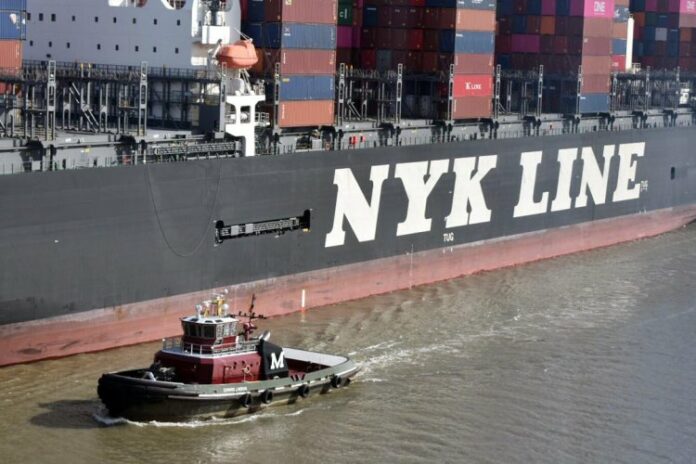
NYK to introduce integrated shipping system as a DX Foundation

0

NYK and NYK Bulk & Projects Carriers Ltd., an NYK Group company, will integrate the Veson IMOS Platform (IMOS) into their core system and begin operating IMOS as a unified platform for their shipping business.

IMOS, a leading ship-management system provided by Veson Nautical, is a platform that covers a series of operations related to ship operations, including ship-chartering contracts, ship operations, revenues and expenditures, and fuel management. The new platform can be linked to financial accounting systems and existing systems and is also equipped with a function to automatically calculate CO2 emissions.

This system integration and restructuring is a part of a DX initiative that NYK is promoting to create new value by using digital technology and collected data analysis to solve various issues faced by the front line and to standardize and streamline various operations and processes to improve competitiveness.

Furthermore, by combining the vessel and operation database through IMOS, NYK will be able to acquire new knowledge and insights, provide added value to customers, and promote the realization of further DX.

In its medium-term management plan “Staying Ahead 2022 with Digitalization and Green,” NYK promotes advanced safety and efficiency through the digitalization of vessels. By steadily strengthening its DX capabilities and applying new technologies, NYK will continue to expand the use of diverse data to strengthen the Group’s ESG competitiveness.

NYK will also work to resolve social issues by providing accurate supply chain information to customers and reducing GHG emissions as a whole.

Stena Bulk launches REMARCCABLE project

0

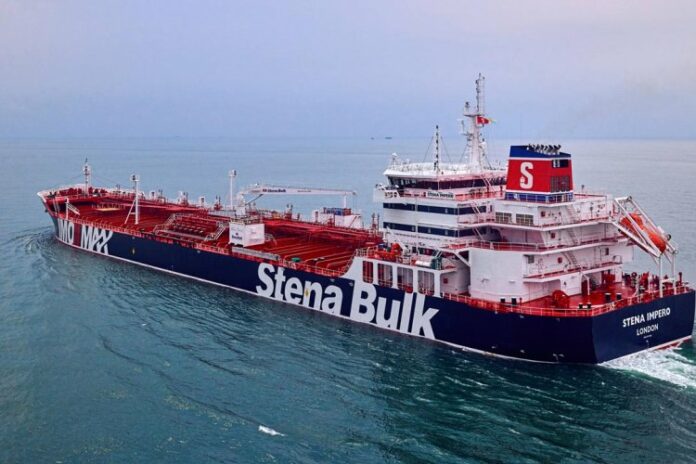
Stena Bulk has announced that it is launching a two-year, three phase project aimed at demonstrating shipboard carbon capture, together with the Global Centre for Maritime Decarbonisation (GCMD) and the Oil and Gas Climate Initiative (OGCI).

Project REMARCCABLE (Realising Maritime Carbon Capture to demonstrate the Ability to Lower Emissions) will see one of Stena Bulk’s Medium Range (MR) IMOIIMAXX tankers installed with a carbon capture system, developed together with other project partners Alfa Laval, the American Bureau of Shipping, Deltamarin and TNO.

Targeting at least a 30% absolute capture rate for carbon dioxide (CO2) during normal vessel operations and on deep-sea voyages, and by working with organisations to offload and sequester or reuse the CO2, the project is the world’s first initiative demonstrating end-to-end shipboard carbon capture at such a large scale and across the full value chain.

The project will use non-proprietary equipment and processes, so results can be shared broadly and publicly to maximise learning and encourage further development. It also aims to establish a pathway to reduce the cost of onboard CO2 capture to €150 per tonne of CO2 or lower, to allow the technology to be commercially deployed in the near future.

Stena Bulk’s participation in the consortium of the seven organisations will help guide the technical design and integration of the system onboard, as well as help evaluate the operational and commercial opportunities and challenges when capturing CO2 at sea.

Erik Hånell, President & CEO of Stena Bulk, commented:

“We are constantly working to push sustainability and technology boundaries to drive our industry forward. By participating in this initiative and collaborating with our consortium partners, we hope to step closer to making carbon capture a reality for the global fleet. We are eager to see and share the results of this project as they unfold over the next couple of years.”

Wintershall Dea awarded its first CO2 licence in Norway

0

Wintershall Dea and its partner CapeOmega have been awarded a CO2 storage licence in the Norwegian North Sea by the Ministry of Petroleum and Energy. 

Wintershall Dea will be operator of the Luna licence which is located 120km west of Bergen, and is estimated to hold a CO2 storage injection capacity of up to 5 million tonnes per year.

Hugo Dijkgraaf, Chief Technical Officer at Wintershall Dea, said:

“This award marks a new chapter of our activities in Norway. With our proven track record, our subsea expertise and our ambition to contribute to Europe’s climate goals, we are ideally placed to help deliver the infrastructure Norway needs to become a hub for European carbon storage.” 

Wintershall Dea and CapeOmega are both working intensively on the further development of Norway’s energy infrastructure and are focused on driving forward decarbonisation.

CEO of CapeOmega, Evy Glørstad, said:

“This award is very important for CapeOmega and illustrates our efforts and strategy to provide infrastructure for the energy transition. We have worked closely with Wintershall Dea, sharing the same ambitions and goals to contribute in reducing the CO2 footprint in Europe. As partner, we are also willing to fast-track the development in a new partnership. We look forward to maturing Luna with Wintershall Dea and continue investing in decarbonisation.”

Wintershall Dea regards the award of the Luna licence as an important milestone in the development of an extensive Carbon Capture and Storage (CCS) value chain, connecting European heavy industry with North Sea basins capable of storing carbon emissions. Germany is the largest emitters of CO2 in Europe, while Norway has the largest storage potential for CCS.

The company also plans to build a CO2 hub in Wilhelmshaven, CO2nnectNow, on the German North Sea coast to enable the collection and transport of carbon dioxide.

In August, Wintershall Dea signed a co-operation agreement with Equinor to pursue the development of a CCS value chain connecting continental European CO2 emitters with offshore storage sites on the Norwegian Continental Shelf. CCS is essential for heavy industries’ economic and environmental viability, which are producing crucially important products like cement, steel and chemicals from industrial sectors employing millions of Europeans.

Nuvera announces fuel cell engine order from H2Boat

0

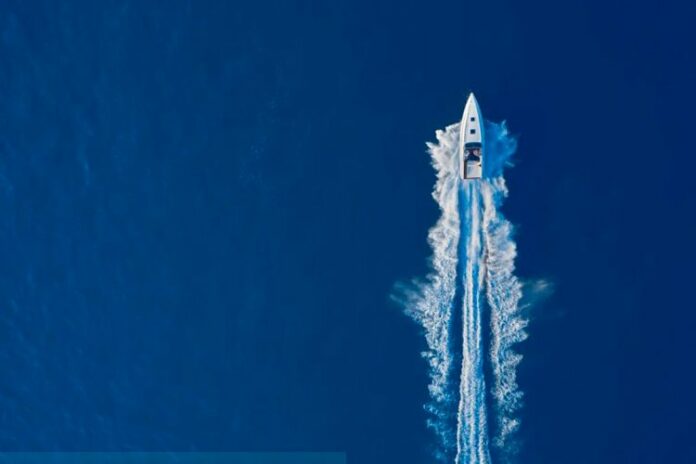
Nuvera Fuel Cells has signed a memorandum of understanding with Italy-based system integrator H2Boat, which is developing a zero-emission energy solution for marine applications. 

As part of the project, Nuvera will supply an E-45 fuel cell engine to H2Boat for marine type approval certification, and subsequently for integration in H2Boat’s forthcoming HP Energy Pack (P>40kW). H2Boat anticipates using Nuvera® E-Series Fuel Cell Engines to expand its marine product line.

H2B launched in 2020 to introduce sustainable hydrogen technology into the marine sector starting with the pleasure boat sector. H2Boat is part of Bluenergy Revolution, a company spun out of the University of Genoa (Italy) and focused on the research and development of fuel cell, electrolyzer and metal hydride systems, with the aim to develop hydrogen technology solutions for mobile and stationary applications.

According to H2Boat, a marine vessel with an onboard hydrogen system exemplifies how passenger comfort can be achieved while minimizing environmental impact. Unlike boats propelled by internal combustion engines, a fuel cell electric boat can access marine-protected areas.

Giampaolo Sibilia, director of European operations for Nuvera Fuel Cells, said:

“Fuel cells provide an extremely attractive value proposition to the marine industry. We believe hydrogen should, and will, play a key role in the sector’s journey towards decarbonization. We look forward to joining with H2Boat to fulfill a specific need in the boating industry to make maritime transportation cleaner and quieter.”

Finnlines invests heavily in passenger traffic with two new ro-pax vessels

0

The vessels are part of the shipping company’s EUR 500 million investment programme, which focuses on state-of-the-art ro-pax and ro-ro vessels.  

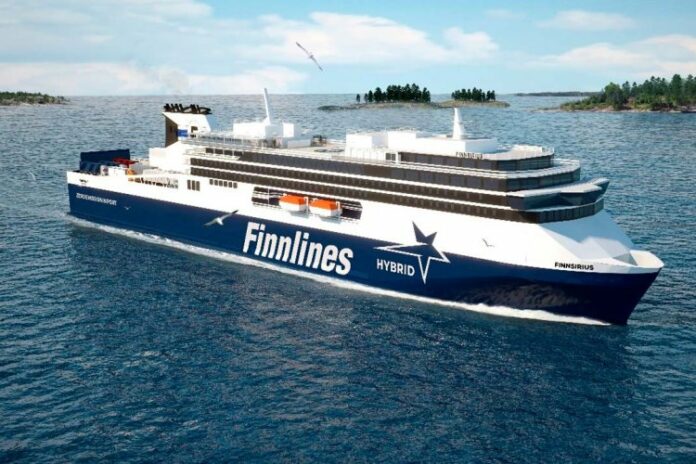
The freight and passenger shipping company Finnlines’ new Superstar class ro-pax vessels, Finnsirius and Finncanopus, will significantly enhance the company’s passenger experience. Both vessels will have a capacity of 1,100 passengers, which is about twice the capacity of existing ro-pax vessels on the route. The cargo capacity will increase from just over 4,000 lane metres in the current vessels to 5,200 lane metres.

Antonio Raimo, Line Manager at Finnlines, says:

“These state-of-the-art vessels will serve a wider market segment and respond substantially better to our customers’ needs by providing required capacity at all times, punctual schedules and efficient operations. Superstar ro-paxes will be larger than the existing Star class and they will be Finnlines’ flagships both in terms of size and technology.”

Marco Palmu, Head of Passenger Services at Finnlines, says:

“The new generation Superstar ro-pax vessels will combine modern travel comfort with the premium freight services for which Finnlines is renowned. We’re very excited about this important investment. We intend to offer the most convenient and easiest way to travel by sea between mainland Finland, the Åland Islands and Sweden. Passengers are sure to enjoy travelling aboard our new vessels as the unique Baltic Sea archipelago is present throughout the travel experience: passengers will be able to take in the maritime atmosphere with all their senses.” 

The new ro-pax vessels are part of Finnlines’ EUR 500 million Newbuilding Programme. The investments of half a billion will not only bring new fleet capacity to the Baltic Sea, but will also develop and improve the company’s existing fleet.

Finnlines’ President and CEO Tom Pippingsköld in the event held in Vuosaari Harbour on 4 October 2022, says:

“Smooth freight traffic in the Baltic Sea is extremely important for Finland’s economy and national security of supply, as 90 per cent of Finland’s exports and 80 per cent of its imports are carried along shipping routes. The Newbuilding Programme will further improve Finnlines’ capacity and reliability. By modernising onboard technologies, i.e. by investing in energy efficiency and environmental technologies, and by optimising the use of the capacity, we will ensure that both people and goods are transported as sustainably as possible. Our concept combines passenger and cargo traffic. This increases the utilisation rate and makes our vessels more efficient and sustainable.”

The programme also includes three new hybrid ro-ro vessels that started operating in summer 2022.

ABS approves pioneering autonomous technology for HHI Group

0

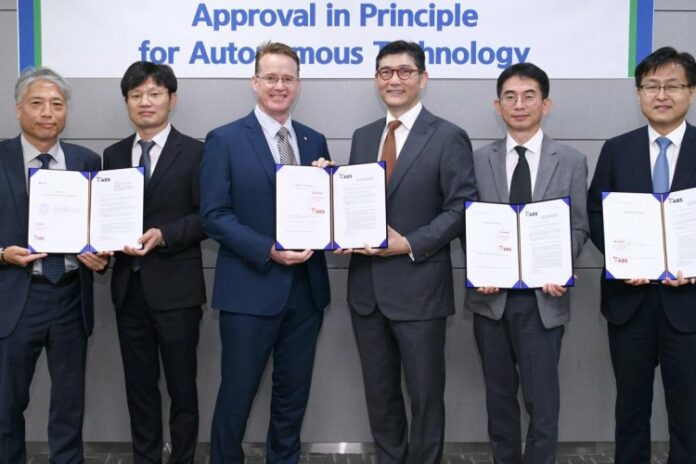
ABS’ industry-leading support for the development of autonomous technology at sea took another step forward with the granting of approval in principle (AIP) to Hyundai Heavy Industries Group (HHI Group) for four areas of autonomous functions: navigation, machinery health management, fire fighting management and network infrastructure.

Patrick Ryan, ABS Senior Vice President, Global Engineering and Technology, said:

“ABS understands that autonomous technologies are not stand-alone products but fully integrated with vessel infrastructure and the result of numerous advancements in a wide variety of mechanisms including sensors, imaging, connectivity, machine learning and more. When used in vessel operations, autonomous functions have the potential to increase safety by reducing human error.”

Kim Sung-Joon, Senior Executive Vice President and CTO of KSOE said:

“HHI Group is a step closer to developing fully autonomous ships by receiving AIPs for not only autonomous navigation systems but also condition based maintenance (CBM) for machinery, onboard safety management and infrastructure. We will lead the market by completing commercialization and demonstration ahead of time in consideration of the IMO’s regulations on autonomous vessels.”

Avikus, a company specializing in autonomous navigation for HHI Group, has obtained approval from ABS for their autonomous navigation system HiNAS 2.0 which will be a standard application for all new construction vessels at HHI Group beginning next year.

Korea Shipbuilding & Offshore Engineering (KSOE), the center of HHI Group’s shipbuilding sector, has obtained approvals for its machinery automation system, HiCBM; an onboard integrated safety control system, HiCAMS; and an autonomous ship integrated platform, Pont.OS.

Artificial intelligence (AI) drives the mechanisms for HiCBM and HiCAMS and can diagnose the condition of mechanical equipment or identify and manage situations such as fires without human intervention.

The integrated platform, Pont.OS, is an open platform that can integrate and control various autonomous functions of ships and is expected to provide an infrastructure that enables safe autonomous and remote operation of ships.

HHI signed a memorandum of understanding (MOU) with ABS at CES 2022, the world’s largest electronic and information technology exhibition, held in Las Vegas in January. As part of the agreement, the two companies will collaborate on autonomous technologies for the shipping industry and include outputs such as AIPs and demonstration tests of ship operations.

Scottish-based subsea robotics system set to clean up in the offshore wind industry

0

Aberdeen-based offshore robotics company, HonuWorx, with support from the Offshore Renewable Energy (ORE) Catapult and Innovate UK, is on track to deliver a revolutionary robotic concept that will transform subsea maintenance.

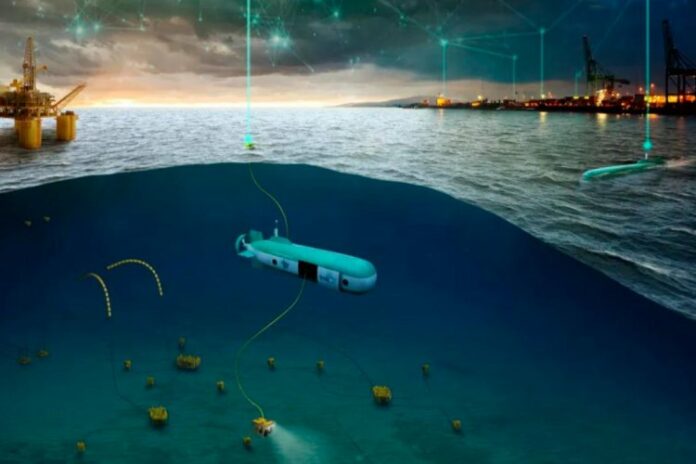
Loggerhead is a multifaceted system providing a sustainable solution for subsea work that requires physical intervention, such as maintenance of offshore energy infrastructure. The system features a control centre connecting geographically distributed stakeholders to the operation, and a submersible mothership that serves as a mobile power and communication hub for Remotely Operated Vehicles (ROVs) – worker robots that will carry out the subsea work.

Loggerhead would deploy and operate ROVs at underwater locations, and data on its movements could be accessed from anywhere in the world.

The project will engage with prospective customers to understand their requirements and refine the design of Loggerhead to enable crewless operations.

Lee Wilson, CEO at HonuWorx, said:

“HonuWorx was founded to scale up the use of subsea robotics across the entire ocean economy. With decades of experience in subsea operations and maintenance, our team recognised that today’s models are heavily reliant on large support vessels that are no longer sustainable from a cost or environmental perspective. We need entirely new approaches to deploy underwater robots economically to enable growing sectors like offshore renewables attain cost parity.

“Multiple stakeholders can access the data during a Loggerhead operation at any given time – including pilots, the end client, the manufacturer – and this goes way beyond any concept currently available, as it doesn’t require a physical control room or onshore building to house a crew.

“Lowering the cost of subsea maintenance will have a large impact on the floating wind market, where we expect to see an exponential increase in subsea infrastructure, all requiring regular inspection.”

While ROVs are currently used for offshore wind farm inspections, they rely on large, crewed, diesel-powered vessels for transportation. Due to the use of these vessels, a 21-day inspection can cost up to £1.5m and emit more than 500 tonnes of carbon dioxide. Dr. Cristina Garcia Duffy, Technical Director at Offshore Renewable Energy Catapult, said:

“To reach our net zero targets at sector level, we must seek to adopt new technologies and systems solutions that address all aspects of our operations.

“HonuWorx’s Loggerhead project provides a fantastic solution that has the potential to revolutionise the way ROVs are deployed whilst achieving a significant reduction in CO2 emissions for operations and maintenance activities. We are very excited to help bring this concept to life at ORE Catapult.”

The Loggerhead project will build on the success of HonuWorx’s Ridley Project, that looked at subsea robotics as a sustainable and cost-effective solution for offshore wind farms. HonuWorx plans to produce a scaled Loggerhead proof of concept by the end of 2022.

Timor Port launches the activites of the first deepwater port of Tibar Bay

0

On 30 September 2022, Timor Port officially started its activities at Tibar Bay port with the arrival of the vessels Selatan Damai of the Singaporean company Mariana Express Lines (MELL), subsidiary of Pacific International Lines (PIL), and Meratus Pematangsiantar of the shipowner Meratus. 

The country’s first public-private partnership, this project involved a $490 million investment over a 30-year period.

Tibar Bay’s new port will target productivity and performance levels in line with those of the world’s biggest ports. It has modern infrastructures with a 630 m quay and 15 m draught. It is also equipped with state-of-the-art equipment including 2 STS gantries, 4 RTGs, 10 terminal tractors and 16 trailers.

Laurent Palayer, Managing Director of Timor Port, said:

“We are proud of the completion of this project, which we have been working on for several years. The new Tibar Bay port combines the latest innovations in equipment and operating systems and will be able to accommodate all types of vessels.”

The commissioning of Tibar Bay port brings with it a local development strategy through job creation followed by employee training as well as an action plan to preserve the surrounding biodiversity. Recently achieving EDGE certification (Excellence in Design for Greater Efficiencies), the new infrastructure should also soon obtain the Bolloré Ports Green Terminal label following an audit by Bureau Veritas.

Allseas secures more North Sea decommissioning work

0

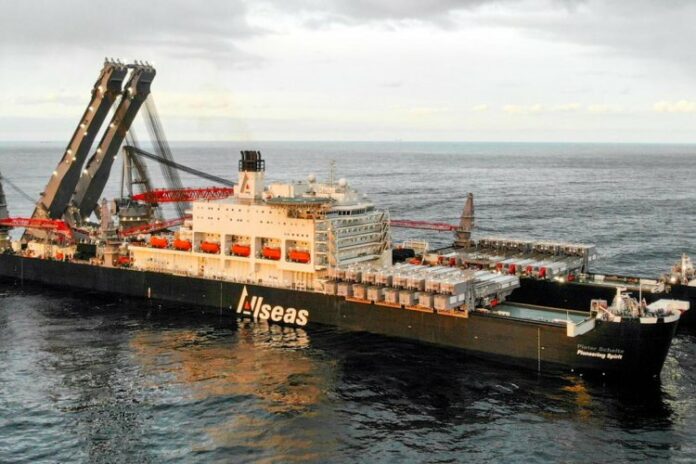
The UK oil and gas company has awarded Allseas the engineering, preparation, removal and disposal contract for the near 13,000-tonne topsides. The award follows an intensive period of evaluation, negotiation, and clarification.

Heather is a fully integrated offshore installation consisting of modular topsides and piled steel jacket, located approximately 460 km northeast of Aberdeen in a water depth of 143 m.

It is a fixed installation providing manned production, drilling, and utilities facilities.

Preparations will begin next year with the lift itself scheduled for 2025.

EnQuest filed its decommissioning programme for the Heather Alpha platform topsides to the UK’s authorities in April 2021. The plan was approved in July of the same year.