-1.1 C
New York
Home Blog Page 388

Petrofac awarded well management services contract by Dana

0

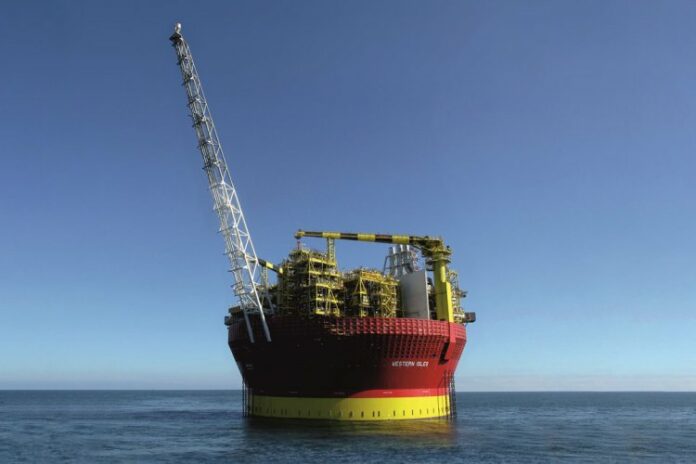
Petrofac, a leading provider of services to the global energy industry, has been selected by Dana Petroleum to provide well management services for all its UK North Sea operated assets. These include both the Triton FPSO and the Western Isles FPSO (Floating Production Storage and Offloading) vessels in the North Sea.

The new two-year contract, with options for extension, continues the existing five-year relationship, providing outsourced well engineering services to Dana’s 11 operated and 18 non-operated Licences in the UK North Sea. The contract scope includes full life cycle well engineering from concept through detailed design and planning, supporting well construction, intervention, and decommissioning activities. As part of its integrated well engineering offering, Petrofac will continue to manage the entire supply chain including rig or vessel hire and well service contracts.

The value of the contract is approximately US$60 million.

Nick Shorten, Chief Operating Officer for Petrofac’s Asset Solutions business said:

“The UK, our home for more than 25 years, is where we first honed our now world-leading well engineering skills. I’m proud of the value we have been delivering to Dana for the last five years, but there is no better validation of our delivery than our customer’s decision to retain our services. We look forward to supporting their delivery of value for their shareholders through continued safe, reliable and efficient operations.”

Andy Duncanson, Chief Operating Officer at Dana Petroleum added:

“We are really pleased to award this new contract to Petrofac. Dana is committed to doing all we can to support the supply chain and nurture the specialist skills that are so important for both our business and the wider sector.”

This long-term UK contract builds on Petrofac’s tier-one wells and decommissioning experience and follows recent major decommissioning contract awards in Australia, Africa, and the Gulf of Mexico.”

EMEC concludes concept design on 100 MW floating wind test site

0

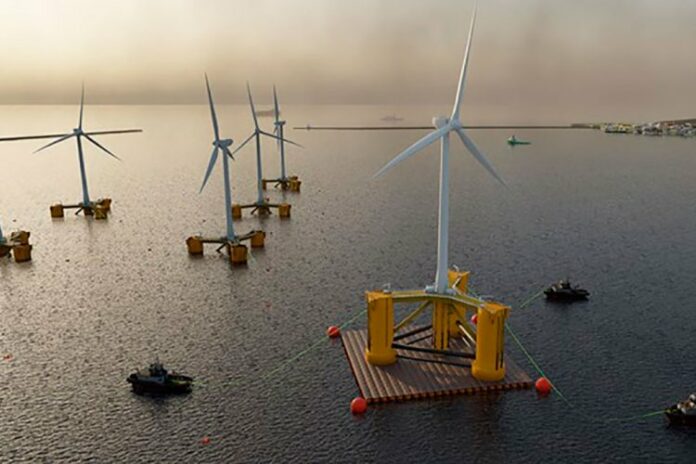
The European Marine Energy Centre (EMEC), based in Orkney, Scotland, has concluded concept design for a new 100 MW floating offshore wind test and demonstration site.

As the world’s leading, and only accredited, ocean energy test facility EMEC is aiming to secure a lease for a site ~20 km west of Orkney, further out to sea from its existing wave energy test facility at Billia Croo.

EMEC’s proposed test site will comprise six berths for floating offshore wind turbines of up to 20 MW rated capacity. With water depths of 80-95 meters, large waves and a mean windspeed of 10.7 m/s, the site will offer floating wind developers representative metocean conditions to those in ScotWind, Celtic Seas and future leasing rounds.

Four of the six berths will be grid-connected, while the final two berths will be reserved for alternative applications such as hydrogen generation.

Following extensive research and engagement with industry, the site setup and configuration has been fine-tuned to dovetail the sector’s existing and future requirements, with more than 25 GW of floating wind due to be deployed in UK waters over the next 20 years.

The site has been designed specifically for floating wind developers to de-risk their technologies, putting turbines, floating structures, moorings and other components to the test in an energetic offshore environment. This will enable performance to be refined on a wide range of floating wind technologies prior to commercial scale-up and build-out.

As well as being a catalyst for floating wind R&D and innovation, the test site will make full use of Scapa Flow and plans for it to become an offshore wind hub, supporting future job creation and supply chain development. This will help capture and retain economic benefit from commercial offshore wind projects in Orkney and the Highlands and Islands.

Building on 20 years of experience operating offshore test sites, helping to reduce the time, cost and risk of demonstrating technologies in the sea, EMEC will provide the site management, technical, and supply chain link-up support required to allow developers to focus more intently on developing and demonstrating their technologies.

Xodus Group (Xodus) has provided expert support through the initial design phases and both parties are working to establish a longer-term collaboration with the award-winning X-Academy initiative, ensuring that the facility plays a key role in developing the skills needed to grow the sector.

Neil Kermode, Managing Director at EMEC said:

“Floating wind will have a large role to play in our future energy mix so we’re gearing up to support development of the sector. We’re looking at how we can use our existing testing infrastructure for floating wind subsystem testing, as well as developing a new test site to enable full-scale demonstrations ahead of commercial deployments around Scotland.

“Floating wind is still in relative infancy with limited experience globally of deploying and operating technologies in high energy conditions. EMEC’s new demonstration site will provide developers with a highly comparable testing ground to proposed project locations prior to large-scale roll out. This testing will enable companies to de-risk projects helping to satisfy technical due diligence requirements and make financing easier and cheaper.

“We know the demand is there, we’ve had a stream of requests over the last few years from wind developers seeking a test site to help them commercialise their technologies, so this feels like the natural next step in the evolution of EMEC. Having hosted more wave and tidal energy technologies at EMEC than anywhere else in the world, we’re well versed in running offshore testing grounds for renewable energy.

“For Scotland to be ready for ScotWind, we need to be testing these technologies and developing our supply chains now.”

Peter Tipler, Managing Director at X-Academy said:

“EMEC’s ambition to create a floating wind test site has been a great innovation project for Xodus to support and will be key to de-risking the sector for decades to come. There’s a huge opportunity here for Orkney to capitalise on the ScotWind developments and become a base for supply chain and assembly.

“As EMEC has demonstrated with the operation of its wave and tidal testing infrastructure, and more recently hydrogen demonstration projects, a floating wind test site will act as a catalyst for jobs, skills and supply chain development helping to retain economic benefit locally. The sector faces a massive ramp-up in demand for skilled individuals to work in the sector. A key opportunity that we’re keen to explore is the use of the test site as part of our X-Academy programme, providing Xcellerators (programme participants) first-hand experience on real projects as part of their training.”

CMHI-Jiangsu gears up to build LNG carriers

0

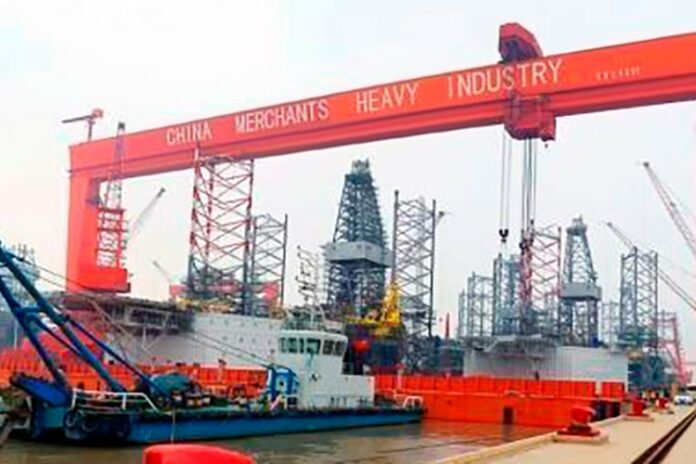
GTT has signed a Technical Assistance and License Agreement with China Merchants Heavy Industries-Jiangsu (CMHI-Jiangsu), a subsidiary of China Merchants Industry Holdings (CMI), one of the three leading shipbuilding groups in China, enabling the yard to construct vessels using GTT membrane technologies.

GTT and China Merchant Industry Holdings have been cooperating for a decade, with a first Technical Service Agreement signed in 2013 for the maintenance and repair of LNGCs. A cooperation agreement has also been initiated in 2016 for the evaluation of CMHI to implement GTT technologies. This Technical Assistance and License Agreement marks a new stage in the partnership between the two companies as the shipyard is now licensed for the construction of large capacity LNG carriers.  

CMHI-Jiangsu began the licensing process earlier this year and successfully obtained it at the mock-up completion ceremony held on October 10.

Philippe Berterottière, Chairman and CEO of GTT, declared:

“We are honoured to carry on our collaboration with China Merchants Heavy Industries, one of the largest shipyards in China. We expect the new stage of this partnership to be a real success both in the LNG carrier construction and in the LNG fuelled market as the shipyard is renowned for its variety of vessels constructions.”

 Simple Hu, General Manager of China Merchants Industry Holdings (CMI), declared:

“We are delighted with the collaboration and the trust that the GTT Group has placed in us. We are already acquainted with GTT’s technologies and we are determined to consolidate our shipbuilding experience with these technologies for large LNG carrier, FSU, FSRU, FLNG, VLEC, as well as LNG fuelled merchant vessels. We aim to further deepen our collaboration with GTT with our other shipyards as well.”

CorPower Ocean and Maersk Supply Services install subsea cable for HiWave-5 Project

0

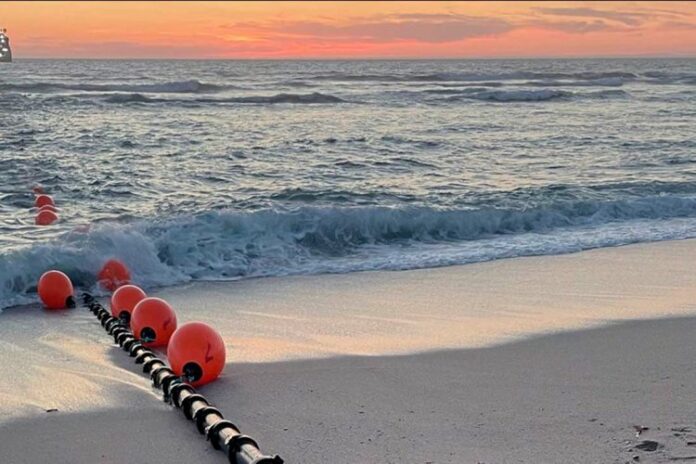
CorPower Ocean and Maersk Supply Services have successfully installed a 6.2km subsea export cable off the coast of northern Portugal to energise the flagship HiWave-5 Project.

The 100-tonne cable was installed using the Maersk Achiever vessel and will provide power and data connection from an on-land substation in Aguçadoura to the wave energy demonstration site 5.5km offshore.

Now connected to the national grid of Portugal, the site will initially accommodate the recently unveiled CorPower C4 Wave Energy Converter (WEC) which later form part of a larger four-system array, and one of the world’s first grid-connected wave farms.

CorPower Ocean Marine Operations Manager Robert Argo said the cable lay process marks another significant milestone for the HiWave-5 Project, which aims to introduce certified and warrantied WEC products to the market.

Mr Argo said:

“We started the installation process by positioning the Maersk Achiever in a safe water depth within the cable corridor, approximately one kilometre offshore. A messenger line was passed from an onshore winch to the Maersk Achiever, and then connected to a cable pull-in head. As the cable was being deployed buoyancy was attached to assist with the cable float into shore. Once onshore the cable was pulled through a pre-installed cable conduit running under the beach and into the on-land substation, while the remaining cable was deployed using an onboard cable tensioner.

“During the lay operation, cable protection was added to provide additional mass where required for on-bottom stability. Various parameters were also monitored throughout including cable tension, cable departure angle and touch down monitoring. On completion a visual and positioning survey was carried out by a remotely operated vehicle.”

CorPower Ocean is now gearing up for the arrival of the C4 PTO (Power Take Off) system, which has completed a rigorous one-year dry test programme in Sweden. Once transported the PTO will be integrated with a composite hull, which was custom built at CorPower Ocean’s Portuguese base, in Viana do Castelo – home to its innovative Composite Hull Development Programme.

Having successfully completed tests to verify power conductors and fibre communication cores, the CorPower C4 WEC will later be fused to the cable trough a quick-connect interface located at the anchor-head. While providing power connection to feed electricity to shore through the 7.2kV cable it will also deliver high speed communication to the wave farm through fibre optic cores.

Nexans signs Empire Wind contract to bring renewable energy to New York

0

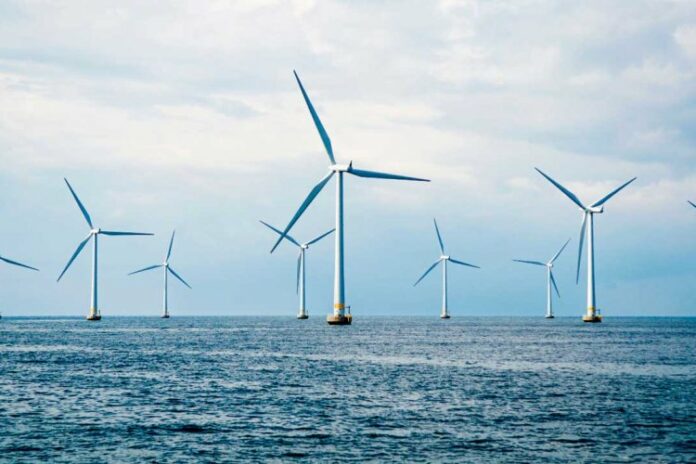
Nexans has announced the execution of a significant contract for phase one of the Empire Wind Project being developed by a 50-50 partnership between Equinor and bp. 

This signature follows the Preferred Supplier Agreement signed in March 2021 which prompted several months of collaborative work to negotiate a turnkey contract, covering the design and manufacturing, as well as the laying and protection of export cables for the project. 

The Empire Wind lease area for the first phase of the overall 2.1 gigawatt project is located about 20 miles (33km) south of Long Island and east of the Rockaways. Nexans will install the export cables over 93 miles (150km) from the offshore substation for Empire Wind 1 to landfall at South Brooklyn Marine Terminal. 

The Empire Wind 1 project, when completed, will deliver electricity to over 500,000 homes of the eventual over 1 million homes that will be powered by the entire Empire Wind project.

Christopher Guérin, CEO of Nexans, said:

“New York is one of the most aggressive states in the U.S. in terms of committing itself to create a fully carbon-free statewide economy, and offshore wind energy will likely be the main source of electricity for the state by 2035.

Signing the contract for Empire Wind 1 further establishes Nexans as a major player in renewable energy in the United States, and will alleviate added pressures on the state’s electrical grids. We look forward to continuing our relationships with Equinor and bp as we work together to electrify the future. ”

ADNOC Drilling awarded $1.53 billion contract

0

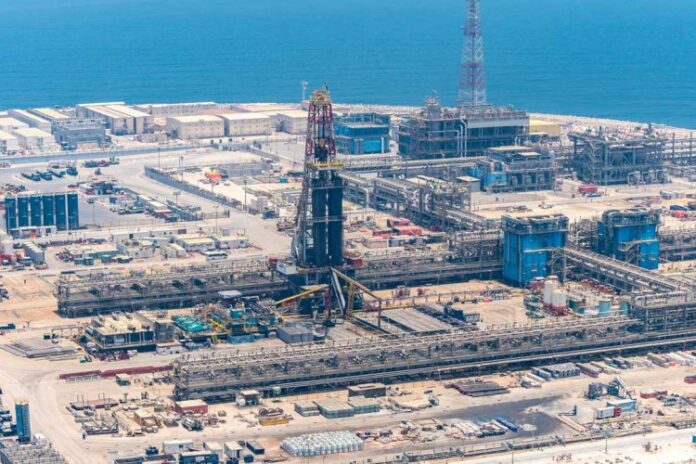
Abu Dhabi National Oil Company (ADNOC) announced today the award of a contract worth $1.53 billion (AED 5.62 billion) to ADNOC Drilling. 

The award supports the expansion of ADNOC’s offshore operations and its objective to responsibly increase production capacity and meet the growing global demand for reliable, lower carbon intensity oil and gas.

ADNOC Offshore awarded the two-year contract which covers the provision of 12 jack-up rigs and two island rigs and the associated Integrated Drilling Services (IDS). ADNOC Offshore and its strategic international partners continue to maximize value from Abu Dhabi’s offshore oil and gas resources and this award will leverage ADNOC Drilling’s start-to-finish offering as well as its position as the largest drilling company in the region by rig fleet size to drive value and efficiencies while minimizing environmental impact.

Over 80% of the award value will flow back into the UAE’s economy under ADNOC’s successful In-Country Value (ICV) program, supporting local economic growth and diversification.

Yaser Saeed Almazrouei, ADNOC Upstream Executive Director, said:

“Through this award, ADNOC Offshore will continue to responsibly harness the energy in Abu Dhabi’s waters, as we increase production capacity to meet the world’s growing demand for energy with lower carbon intensity oil and gas. ADNOC Drilling is a world leader in drilling and completion services. Their deep expertise and wide technical capability will maximize value and minimize the environmental foorprint of every well as ADNOC expands its production capacity. The substantial in-country value generated through this contract will support the directives of our wise leadership to grow and diversify the UAE economy.”

Offshore wind could power Portland aluminium smelter

0

On behalf of the Australian Government, the Australian Renewable Energy Agency (ARENA) has announced $1.5 million in funding to Spinifex Offshore Wind Farm Pty Ltd (a wholly owned subsidiary of Alinta Energy Ltd) to conduct a wind resource assessment and accelerate early stage development activities for a 1,000 MW offshore wind farm project off the coast of Portland, Victoria.

The offshore wind farm is proposed to be connected to the National Electricity Market (NEM) via the existing substation at the Portland Aluminium Smelter and supply renewable electricity to the smelter which will decarbonise its operations.

The smelter has capacity to produce approximately 358,000 tonnes of aluminium per annum (more than 20% of national aluminium production) and represents approximately 10 per cent of Victoria’s total electrical demand. The wind farm aims to demonstrate the direct integration of variable renewable energy generation with a large, continuous, industrial load.

This $3.47 million project is phase 1 of Spinifex’s proposed development pathway for the wind farm and aims to improve understanding of its commercial viability. The project includes scope to procure and deploy land-based Light Detection and Ranging (LiDAR) equipment to validate the wind resources at the proposed Portland site. Spinifex will also conduct stakeholder and community consultation activities and begin scoping activities for relevant planning and environmental studies required under the Offshore Electricity Infrastructure Act 2021.

The development of offshore wind farms internationally has accelerated over the past decade. Offshore wind farms benefit from higher capacity factors, increased turbine size and efficiency, as well as an increased site availability by avoiding onshore land constraints.

The Offshore Electricity Infrastructure Act 2021 commenced on June 2. There are currently over 20 offshore wind projects in early stages of development in Australia.

ARENA CEO Darren Miller said this project would be the first time ARENA has funded a project which proposes to directly integrate variable renewable energy with an aluminium smelter, supporting the transition to low emissions metals.

Mr Miller said:

“Metals production, especially aluminium, represents one of Australia’s most energy intensive industries. We have a real need to help reduce emissions from smelters, which require a steady and sizeable supply of electricity to operate. Offshore wind could be a potential part of the solution space to this problem.

“Further, the early stage wind resource assessment of the Spinifex project will provide the industry with valuable insights regarding commercial, technical and regulatory aspects of offshore wind developments in Australia.

Alinta Energy MD & CEO Jeff Dimery welcomed ARENA’s support and emphasised the project’s unique potential.

“Spinifex has terrific potential because the region has strong wind and the project has a ready-made grid connection point, a potential customer, a port, and suitable topography. Given the offshore wind industry is in its infancy, the support from ARENA will be critical to reaching the next stage.”

Horisont Energi and Neptune Energy sign project agreement for the CCS project Errai

0

Horisont Energi has announced the signing of a project agreement with Neptune Energy to develop the Errai Carbon Capture and Storage (CCS) project in Norway.

The project agreement builds on the memorandum of understanding that was announced on 30 August 2022. The partners are now setting up a project organisation to progress the project.

Bjørgulf Haukelidsæter Eidesen, CEO of Horisont Energi, said:

“CCS is a key component of the decarbonisation of European industry, and we see substantial interest in CO2 storage from European industry. Both partners share a sense of urgency in realising this technology on a large scale, and we have been able to move quickly to formalise this agreement. We look forward to cooperating with Neptune in the years to come.”

Errai plan to store 4-8 million tonnes of CO2 annually in the first development phase, potentially storing more in later phases. The project includes an onshore terminal for intermediate CO2 storage, with the intention to permanently store the CO2 in an offshore reservoir. With the current plans the Errai project will develop the second CO2 terminal in Norway.

The onshore terminal is designed to be capable of receiving CO2 from European and domestic customers, including from the planned CO2 terminal at the Port of Rotterdam. Several onshore locations in Southern Norway are being evaluated for the terminal.

The Errai project was initiated by Horisont Energi in 2021, and CO2 injections are expected to start by 2026. With this important agreement with Neptune Energy, Horisont Energi is now pursuing their second project development following the flagship project Barents Blue.

Neptune Energy has reinjected CO2 in the K12-B gas field in the Dutch North Sea for 14 years, as well as being a partner in the Norwegian Snøhvit field, which has been reinjecting CO2 since 2008. Neptune aims to store more carbon than is emitted from its operations and the use of its sold products globally by 2030.

Channel deepening to support larger vessels and volumes at APM Terminals Gothenburg

0

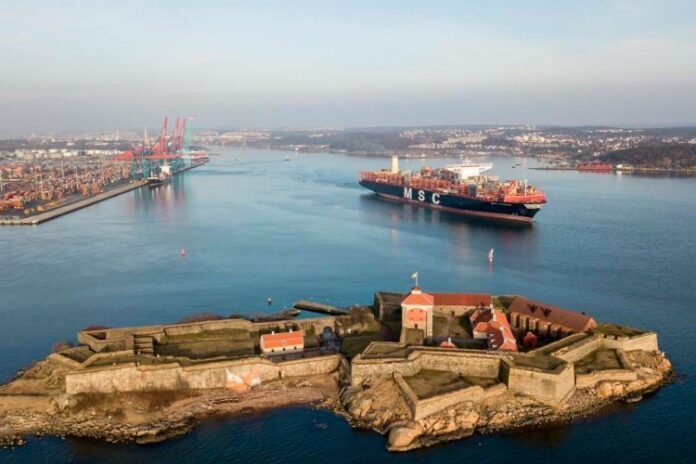
Once completed in 2026, the terminal will be able to receive the world’s largest container vessels and higher volumes.

Volumes passing through APM Terminals Gothenburg are steadily increasing, a trend that has been further accelerated by supply chain disruptions over recent years.

One key driver is that APM Terminals is the only container terminal in Sweden that has the capacity to handle ocean-going direct vessels to and from other parts of the world without transhipment. This greatly reduces transport time, risk and environmental impact.

APM Terminals Gothenburg can currently accommodate vessels up to 19,000 TEU, however in order to receive the very largest vessels of around 24,000 TEU and utilise their total cargo capacity, a deeper channel is needed.

Dennis Lenthe Olesen, Managing Director at APM Terminals Nordic, says:

“If we are to meet the increased demand from Swedish industry for the long term, we need adequate infrastructure. Our customers should not be limited by insufficient channel depth, which is why I am pleased to announce that work to deepen the channel is planned to start in mid-November.” 

The project, to be carried out in collaboration with Port of Gothenburg, the Swedish Maritime Administration and the Swedish Transport Administration, will entail some disruption to container traffic.

Dennis Lenthe Olesen adds:

“We have plans in place to minimise the impact during the course of the work. There is no doubt that this project is essential if we are to maintain Swedish companies’ opportunities to reach the world market efficiently and sustainably. We hope for the cooperation of our customers during the construction period.”

Cepsa completes advanced biofuels shipping trial for the first time in Spain

0

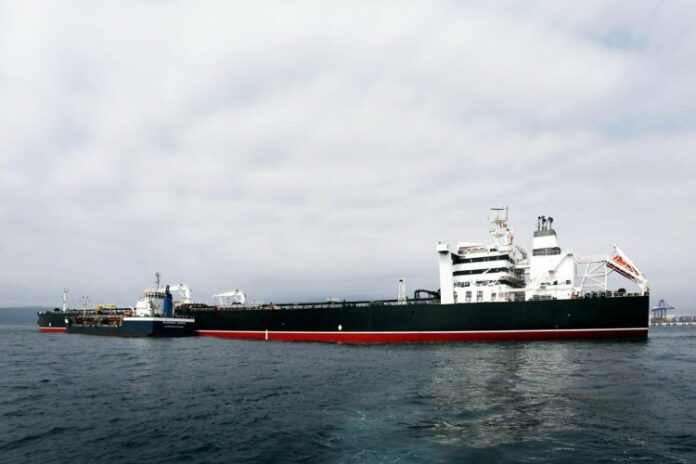
Cepsa has tested the efficiency of its 2G biofuel, produced from used oils (with ISCC certificate of sustainable origin) and very low sulfur fuel (VLSFO), in its own fleet before starting to market them to its customers.

The biofuel used in the test was loaded at Cepsa’s Bioenergy plant, located in the San Roque Energy Park (Cádiz, Spain), and supplied by one of the vessels the company uses in its bunkering operations in the Bay of Algeciras. The Company had previously undertaken analysis and tests to this biofuel at its Research Center to verify its compliance with all specifications and quality standards.

The results of this test have shown an optimal operation and performance of maritime engines leading to Cepsa being able to offer these advanced biofuels to its customers in the maritime sector, who have already shown significant interest.

Carlos Giner, Cepsa’s Bunker Director, has highlighted the importance of this achievement for the energy transition in Spain:

“This test proves the safety and technical feasibility of using advanced biofuels in maritime transport, a sector that has the ambition to decarbonize and for which we are prepared to supply these new sustainable fuels. At Cepsa, we are putting all our experience into making biofuels a sustainable alternative for the present, while at the same time advancing in new technologies that will make it possible to further decarbonize this sector in the future, such as through green ammonia, e-methanol or biogas.”

Javier Antúnez, Cepsa’s Biofuels Director, highlighted that:

“This solution demonstrates to the market that second-generation biofuels can be used as a direct fuel to help industry meet its emission reduction targets, and that their implementation is viable in the short and medium term. It is an important step in the advancement of marine biofuel and environmentally friendly vehicle transportation; the goal now is to analyze the possibilities of increasing it in a sustainable and competitive way.”

The biofuel can be used in ships without modification and has the characteristic that it is practically free of sulfur oxides (SOx) and has a high potential for reducing CO2 emissions compared to conventional fossil fuels. The use of these biofuels can reduce greenhouse gas emissions in the entire life cycle – from the production of the fuel to its use on board the ship (well-to-wake) – by up to 85% compared to traditional fossil fuels.

This advance is part of Cepsa’s 2030 strategic plan, ‘Positive Motion’, through which the company promotes the decarbonization of heavy transport (maritime, air and road) by producing green molecules, mainly biofuels and green hydrogen. Specifically, Cepsa aims to lead in 2030 the manufacture of biofuels in Spain and Portugal, with an annual production of 2.5 million tons.