-1.5 C
New York
Home Blog Page 386

Teck and SAAM Towage to deploy electric tugs at Neptune Terminal

0

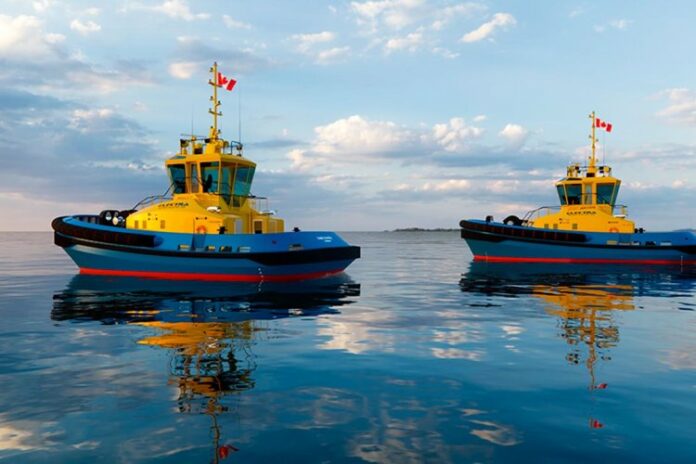
SAAM Towage has reached an important milestone by closing an agreement with Teck & Neptune Terminals that will allow the deployment of the first two electric tugs to its fleet.

At full capacity, the new units will reduce 2,400 tons of greenhouse gases (GHG) each year. The ElectRA 2300SX tugs are designed by Vancouver based Robert Allan and will be built at Sanmar Shipyards in Turkey.

Sander Bikkers, President and Country Manager of SAAM Towage Canada, said:

“With Teck and Neptune Terminals, SAAM Towage has found value aligned partners who want to drive sustainable environmental changes through innovation. This partnership is based on a shared commitment to do our part to address the global challenge of climate change by reducing our carbon footprint. In addition to this, the tugs will significantly reduce the impact of underwater noise, which is another concern in British Columbia’s waterways.”

“With an overall length of 23 meters and a 70 tons Bollard Pull performance, the Tugs will be highly capable of delivering services to all terminals in the Port of Vancouver.” 

SAAM Towage´s Managing Director Hernán Gómez emphasized:

“This alliance is significant for both companies, as it gives financial and technical viability to a common strategic objective: to drive innovation and development for an increasingly sustainable operation. This is how we want to continue projecting SAAM Towage’s leadership into the future in each of the 13 countries where we are present and the ones to come: with partners like Teck, one of the most prestigious global mining companies; with the renowned Sanmar shipyard in charge of the construction and with the state-of-the-art design of Robert Allan.”

The tugboats are powered by two separate battery Li-ion energy storage systems, making them 100% electric and zero-emissions ships. They will be charged by British Columbia’s hydroelectric power grid.

SAAM Towage expects the delivery of the tugs during the second half of 2023.

SCHOTTEL selected for funding under Transport Canada’s Quiet Vessel Initiative

0

The German propulsion expert SCHOTTEL has been selected for funding within the Government of Canada’s Quiet Vessel Initiative, which supports the development of new quiet vessel technologies, designs, and operational practices, leading to less underwater noise from vessels in Canadian waters.

SCHOTTEL will assess the noise reduction achieved by the installation of a redesigned propulsion system by measuring underwater noise. The propulsion system will feature an optimized propeller design for the vessel’s adapted operation profile. This data will enhance the accuracy of underwater noise prediction methods and be used to develop a prototype for a real-time on-board noise monitoring system. 

This will alert ship operators when their vessel exceeds critical sound thresholds and help to mitigate underwater noise impacts in critical marine mammal habitats. The Hydrodynamic Propeller Noise Monitoring System (HyPNoS) project began in June 2022 and is scheduled to be completed by March 2024.

Omar Alghabra, Canada’s Minister of Transport, said:

“Our government is committed to keeping our marine ecosystems safe, and this investment will help do just that. The Quiet Vessel Initiative will advance new technologies to help reduce the impacts of noise caused by humans on marine mammals, like the vulnerable Southern Resident killer whale. Together with industry and academia, we will continue to take concrete steps to protect our endangered marine mammals and keep our waters safe.”

The Quiet Vessel Initiative is one of eight accommodation measures developed to address the concerns of Indigenous communities regarding the Trans Mountain Expansion Project. Projects funded through the Quiet Vessel Initiative will help generate the technical evidence needed to support Canada’s noise management measures in the Salish Sea and elsewhere in the country. 

They will also provide guidance to industry, academia, and the International Maritime Organization (IMO) to influence future quiet vessel design standards and adoption.

Equinor awarding contracts for platform supply vessels

0

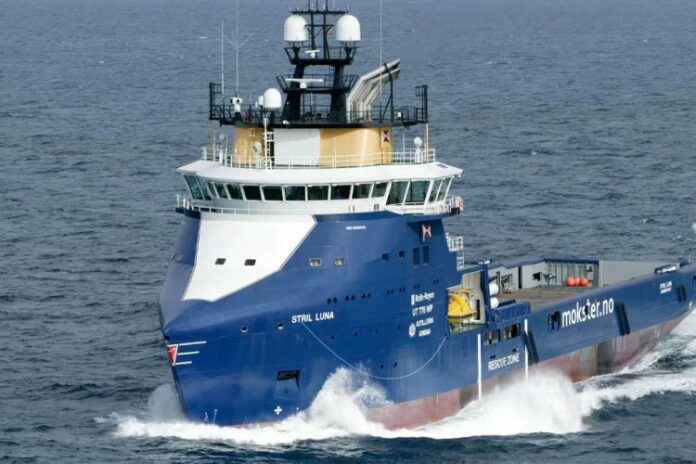
The six platform supply vessels will be managed by Simon Møkster Shipping AS, Island Offshore Management AS, Eidesvik AS, Remøy Shipping AS and P/F Skansi Offshore.

The contracts will take effect before the end of 2022, have a three-year firm period and three one-year options. The vessels will support Equinor’s activities on the Norwegian Continental Shelf.

Mette H. Ottøy, chief procurement officer, says:

“We are pleased to secure contracts with suppliers which have a solid safety culture, and the necessary capabilities to ensure safe and efficient operations for Equinor. Long-term commitments are mutually beneficial to Equinor and our suppliers. They ensure predictability and form the foundation for innovative solutions to improve on all aspects of our collaboration, including reduction of emissions from our operations.”

In addition Equinor has extended a contract with Island Offshore Shipholding LP for four years, for Island Clipper, which is a combined platform supply vessel and walk-to-work vessel. Island Clipper has supported the Oseberg field in the past and is scheduled to also work on the Hywind Tampen offshore wind farm.

As part of the agreement there is a joint commitment to pursue possibilities to modify the Island Crusader and Kongsborg vessels to be powered by ammonia fuel. This will be carried out in two separate projects involving a number of sub-suppliers throughout the maritime industry. The overall goal is to reduce the CO2 emissions by up to 90 percent by use of ammonia fuel. All six vessels either have, or will get, a battery installed for hybrid operations.

The agreements include requirement for the vessels to employ one cadet or ordinary seaman for each shift, as a recruitment contribution to the maritime industry.

Ørjan Kvelvane, senior vice president for Joint operations support, says:

“We are dependent on supply vessels like these to support our more than 40 fields in operation on the Norwegian Continental Shelf (NCS), and we look forward to collaborating with the ship owners and crews for many years to come.” I am especially pleased that we are jointly investigating opportunities for further CO2 reductions.”

Mitsubishi Shipbuilding christens training ship Oshima Maru

0

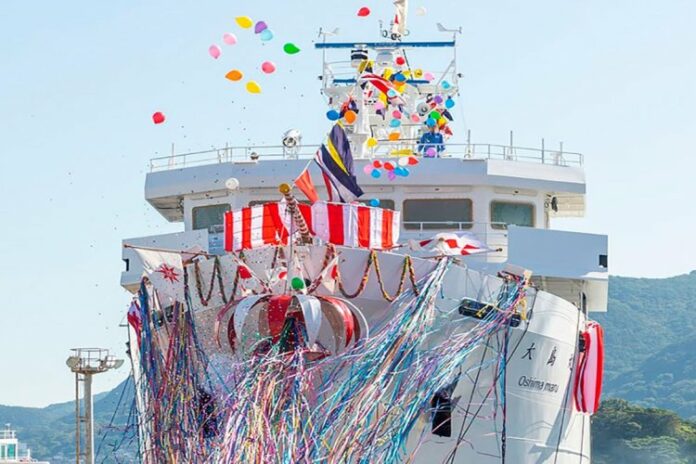
Mitsubishi Shipbuilding Co., Ltd., a Mitsubishi Heavy Industries (MHI) Group company based in Yokohama, today held a christening and launch ceremony for the OSHIMA MARU, a training ship for National Institute of Technology (Kosen), Oshima College. 

The ceremony took place at the Enoura Plant at MHI’s Shimonoseki Shipyard & Machinery Works in Yamaguchi Prefecture. The handover is scheduled for March 2023, following completion of interior work and sea trials. The new vessel will go into service providing students with practical training in ocean navigation, and conducting surveys and experiments related to operations and the ocean.

The OSHIMA MARU is the fourth-generation training vessel for the school, and the first new ship in 29 years, since 1993. This is the second vessel Mitsubishi Shipbuilding has built for the school, following the third-generation training ship currently in operation. From the standpoint of convenience and security, the new ship features a dedicated area for female students, as well as elaborate interior lighting and design, and a comfortable learning and living environment. The vessel also has functions that allow it to serve as a support ship during disasters, such as supplying outboard water and electricity, transport of relief supplies, and providing accommodations.

Consideration has also been given to ease of use, including a multipurpose toilet and sick bay located near the ship entrance, and fewer level differences within the ship to allow for smooth movement. Further, the ship is equipped with an electric propulsion system and lithium-ion batteries, which is expected to provide energy efficiency through parallel operation with the onboard generators, a reduced environmental load by running exclusively on batteries near shore, and a better living environment from reduced inboard noise and vibration.

Going forward, Mitsubishi Shipbuilding will continue to support its customers and the advancement of society by building ships with exceptional fuel efficiency and environmental performance, and that contribute to the training of next-generation maritime officers, and oceanographic surveys.

Keel laying and steel cutting ceremony at Damen Shipyards

0

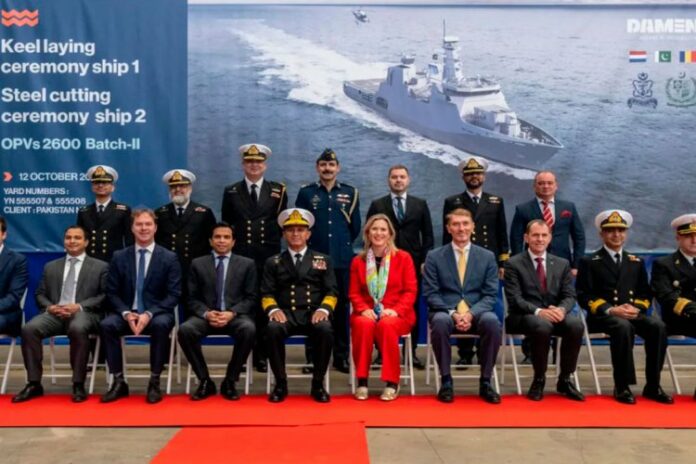
Celebrating the start of the construction of a second batch of two Offshore Patrol Vessels for the Pakistan Navy, the Chief of the Naval Staff Admiral Muhammad Amjad Khan Niazi performed the initial welding work on the keel of the first vessel at Damen Shipyards Galatí on October 12th 2022.  

Together with the keel laying of the first vessel planned for completion, first plates of steel were cut for the construction of the second of two Damen OPV 2600 multi mission patrol vessels. These will provide the Pakistan Navy with a highly effective search and rescue capability, and allow it to play an important role in safeguarding international trade routes from piracy and other threats. The ships are equipped for extended range and performance and benefit from advanced communication systems.

This order for two more OPV vessels from Damen was issued by the Pakistan Navy following their positive experiences with two OPV’s from the Shipyard Group they already operate. The initial order for construction of two OPV’s was awarded to Damen by the Islamic Republic of Pakistan’s Ministry of Defense Production following the completion of a transparent bidding process in which Damen’s design and construction proposal was found to be the most suited for Pakistan’s maritime needs.  In February and November 2020, two OPV 2300’s were delivered. Performance and capabilities of these vessels, known in the Pakistan Navy as the Yarmook class, led to a second order. The two bigger OPV’s are planned for delivery in February and August 2024.

The Admiral underscored the importance of OPV’s in the maritime domain in his speech at the ceremony. These ships will act as force multipliers in enhancing the navy’s capability of safeguarding maritime frontiers and will offer more flexibility for the Regional Maritime Security Patrols (RMSP) in the Indian Ocean.

The Pakistan Navy has been playing its role in providing a secure sea environment, not only to Pakistan but also to the world community. The Admiral appreciated the professional competence of Damen design and construction teams. The ceremony was attended by senior officials from Pakistan   Navy, from the Romanian Navy and local administration of the city of Galatí as well as directors from Damen Shipyards.

Royal Caribbean Group to open the world’s first zero-energy cruise terminal

0

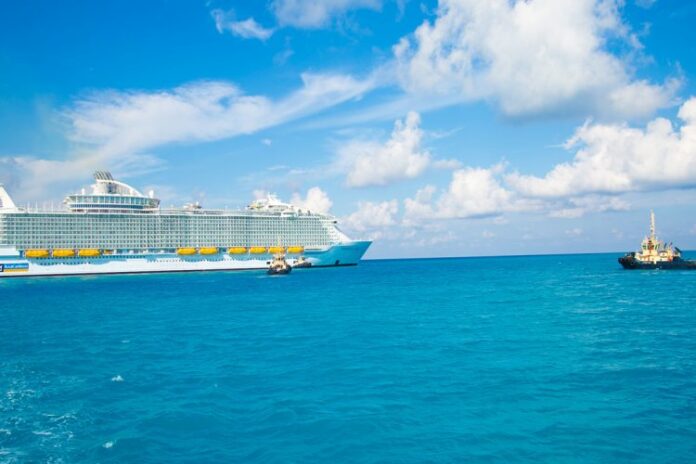
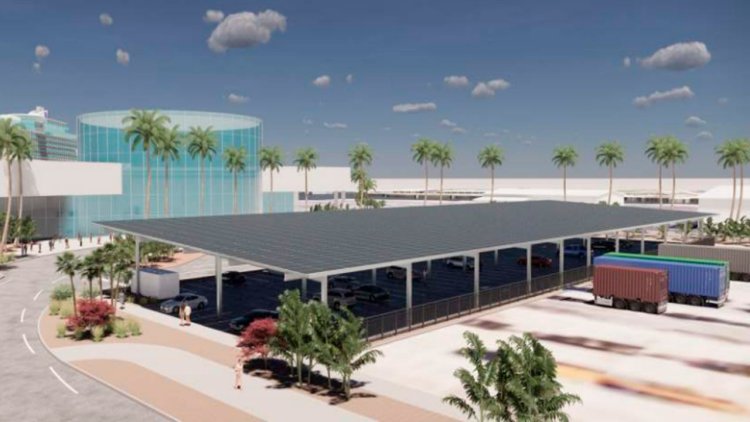
Royal Caribbean Group’s new Galveston terminal, which is opening Nov. 9, will be the first cruise terminal to generate 100% of its needed energy through on-site solar panels. This makes the terminal, which will be used by the company’s Royal Caribbean International brand, the first LEED Zero Energy facility in the world.

Jason Liberty, president and CEO, Royal Caribbean Group, said:

“We are focused on innovating across all aspects of our company, especially in our work to advance sustainability in the communities we visit. We deeply value both the oceans we sail and the communities we visit and operate in, and the modern design and development features at our terminal in Galveston will work in service of both.”

The new cruise terminal at the Port of Galveston will be the first in Texas to achieve LEED Gold certification, an industry-leading certification expected to be received within the first two quarters of 2023.

The project prioritized using materials that produce less carbon based on energy used and the transportation process.

The Galveston terminal marks the cruise company’s fourth LEED certified facility and its first Gold certified. The previous projects include Terminal A at PortMiami; the Springfield, Oregon campus; and the Innovation Lab at Royal Caribbean Group’s corporate headquarters in Miami.

The $125 million, 161,334-square-foot Galveston Cruise Terminal significantly expands the company’s presence in the port, increasing the cruise line’s ability to accommodate up to 630,000 guests per year.


Maersk to transport, install French floater’s turbines

0

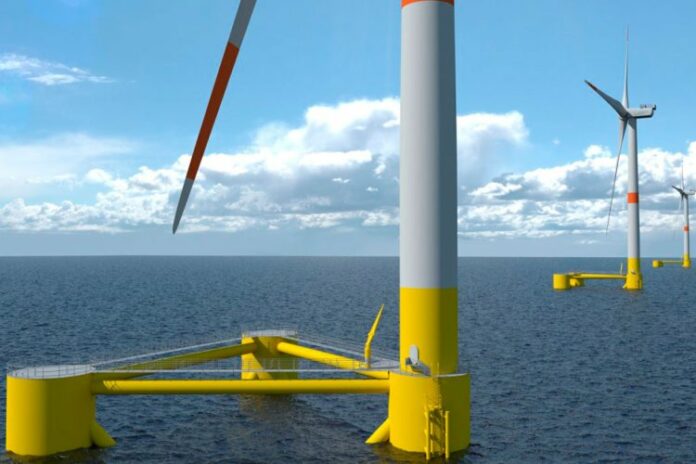
Maersk Supply Service has been contracted for the transport and installation of three 10MW wind turbines at the EFGL (Eoliennes Flottantes du Golfe du Lion) wind farm, a pilot floating wind project offshore France.

Awarded by EPCI contractor Eiffage Métal, Maersk Supply Service’s scope of work includes the engineering, transport, delivery to site and offshore installation of the floating wind turbines, as well as the procurement and installation of the mooring systems.

The EFGL wind farm is located in the French Mediterranean Sea, 16km off the coast of Leucate in the Natural Marine Park of the Gulf of Lion, at 70m water depth and in one of the windiest areas offshore France. The wind farm has been developed by Ocean Winds (JV EDPR/ENGIE) and La Banque des Territoires, Groupe Caisse des Dépôts, and will eventually power 50,000 homes and businesses. The three turbines will be installed on third generation semi-submersible WindFloat® units designed by Principle Power.

Oliver Trouvé, Head of Integrated Solutions at Maersk Supply Service, says;

“Maersk Supply Service is pursuing a clear strategy to diversify into offshore renewables, using our project management capabilities and offshore expertise to support the development and accelerate the growth of the floating wind sector. We are therefore very proud to be awarded this contract for the EFGL project on behalf of Eiffage.” 

The project is expected to run for a duration of 18 months, with the offshore operations scheduled to take place in Q4 2023. The offshore element will involve two deep-water anchor handlers from Maersk Supply Service’s own fleet, a T-class and an M-class vessel.

Jonas Munch Agerskov, Chief Commercial Officer at Maersk Supply Service, says:

“This is a significant contract for Maersk Supply Service. The floating wind industry will play an important role in the offshore energy transition and we are keen to do our part to help harness the potential of this sector.”

Maersk Supply Service offers custom-built solutions for foundations and substructures of floating wind farms, including site selection for assembly and turbine installation, and the offshore installation. Building on its 50-year legacy of safely and efficiently towing and installing large assets offshore, the company is well equipped to accelerate the development and commercial viability of the floating wind industry, particularly by managing concurrent production for commercial wind farms.

Equinor’s Peregrino C produces first oil in Brazil

0

Peregrino phase 2 will extend the Peregrino field life to 2040. Phase 2 adds 250-300 million barrels of oil, while at the same time halving expected CO2 emissions per barrel over the field remaining lifetime.

Geir Tungesvik, Equinor’s executive vice president for Projects, Drilling & Procurement, says:

“I am thrilled that we have started production from the new Peregrino C platform. Covid-19 has made Peregrino phase 2 a challenging project, and I want to thank everyone involved for delivering the project with excellent HSE results.”

Peregrino phase 2 consists of a new platform with drilling facilities and living quarters tied in to the existing Peregrino FPSO, as well as a new pipeline importing gas to the platform for power generation.

In operation the new platform will provide 350 long-term jobs offshore and onshore in Brazil.

The project was on schedule for planned start-up late in 2020 when Covid-19 hit the project hard, leading to cuts in the workforce several times in the crucial and normally labor-intensive hook-up phase. Still, Peregrino phase 2 is delivered within the original USD 3 billion cost estimate.

In line with Equinor’s low carbon strategy, measures have been taken to reduce CO2 emissions from the Peregrino field. By switching from diesel to gas for power generation on Peregrino C, phase 2 will avoid 100,000 tonnes of CO2 emissions from the Peregrino field per year.
This will also reduce costs and simplify logistics in the operational phase.

Al Cook, Equinor’s executive vice president for Exploration & Production International, says:

“The start-up of Peregrino Phase 2 is an important milestone in Equinor’s growth strategy in Brazil. This project showcases how we can bring valuable new resources onto production at the same time as investing in technology to cut carbon emissions. I am proud that Peregrino Phase 2 will increase field production to 110,000 barrels per day at plateau whilst halving our emissions intensity.” 

The new platform is also equipped with the latest digital tools, like a 3D model of the entire platform that operators can use on an iPad in the field. This improves cooperation offshore and between the platform and the onshore operational support team in Rio de Janeiro.

New digital solutions will also contribute to optimized production, reducing energy usage and thereby CO2 emissions.

Titan to build the biomethane liquefaction plant in Port of Amsterdam

0

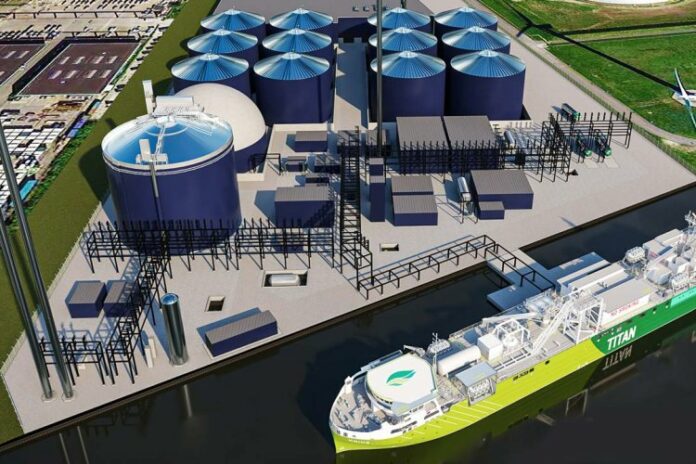
Titan has announced its LBM production project for 200,000 tonnes of LBM per year. Titan will build and operate the LBM plant at its strategic location in the Port of Amsterdam allowing supply to ships and trucks. Important milestones for the project are the two recent contract signings with biogas producer BioValue for the exclusive off-take of all on-site produced biogas, and with Linde Engineering to perform the basic engineering.

BioValue, one of the largest biogas suppliers in the Netherlands, will supply a significant part of the biogas required for the total LBM production. For this, BioValue will construct a new biogas plant, adjacent to the LBM plant. The remaining biogas will be sourced from other production installations throughout Europe that are connected to the existing gas grid. This hybrid sourcing setup enables the scale required for impactful decarbonisation of the marine industry. Titan has selected Linde Engineering to perform the engineering based on Linde’s proprietary liquefaction technology.  

The bulk of the LBM volumes produced by the plant will be supplied to the LBM-powered vessels of Titan’s launching customer. For the remaining volumes truck refuelling stations and industrial customers are also within scope. The LBM will substitute fossil fuels, avoiding about a million tonnes of CO2 equivalent emissions per year, equal to the annual emissions of about 25% of all diesel cars in the Netherlands . The project aligns well with EU regulations such as proposed in the Fit-For-55 package and the recently published RePowerEU plans. The plant will be located adjacent to Titan’s berth in the Port of Amsterdam, from whom the land will be leased. The first LBM production is expected in 2025.

Producing LBM in the most sustainable way is a key project target and has been integrated throughout the plant’s design. Importantly, the project will only source biogas from sustainable feedstocks that are compliant with the latest EU Renewable Energy Directive, and are International Sustainability and Carbon Certification (ISCC) certified. Other sustainable integrations in the plant include the capturing and utilisation of the biogenic CO2 side stream, and the hydrogen-ready design. This enables future production of e-methane where the biogenic CO2 is combined with green hydrogen. For this, a connection to the hydrogen backbone planned in the Port of Amsterdam is envisaged.

Ronald van Selm, CTO at Titan, commented:

“Titan is committed to decarbonise shipping by supplying LBM and any other renewable fuels such as hydrogen-derived methane, also known as E-LNG. Strategic value chain collaborations are paramount to ramping up alternative fuel production to the scale required for shipping. We are proud of the joint efforts with BioValue and look forward to a long-lasting partnership.”

Ids Schaap, CEO at BioValue, continued:

“BioValue is a pioneering biogas producer with six production sites in the Netherlands. With our engagement in this exciting LBM project, we are able to climb the circularity ladder to on-site production of advanced biofuels.”

Roon van Maanen, Director Energy & Circular Industry at Port of Amsterdam, said:

“Having the energy transition, circular economy and clean shipping at the core of our sustainability strategy, Port of Amsterdam welcomes the novel renewable fuel plant with full support. We want to reduce emissions in our port area and lead the way in the transition to a sustainable society. This plant, with its hydrogen-ready design, is a perfect example that fits seamlessly with our long-term strategy for the port.”

Jan De Nul launches new water injection dredger Cosette in the Netherlands

0

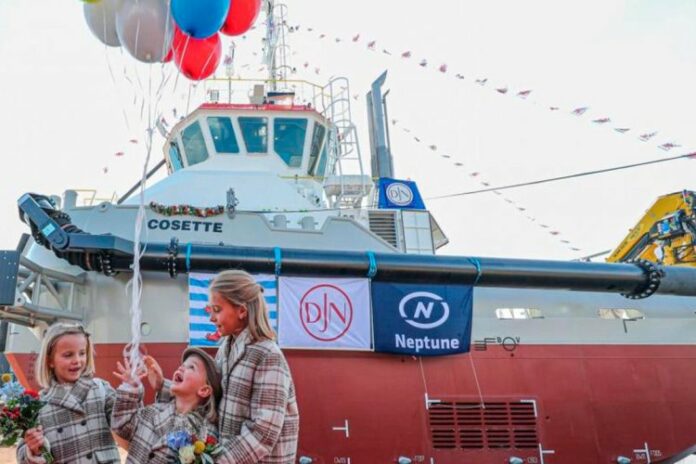
The godmother of the vessel is the four-year-old Cosette Goethals, daughter of Julie De Nul and granddaughter of ir. J.P.J. De Nul. Cosette proudly christened her namesake and wished it good luck and a safe journey.

This new build vessel is a sister vessel to the Pancho, delivered earlier this year. The design of both vessels is based on an existing vessel design from the Neptune’s workboat portfolio. However for this vessel, Jan De Nul, together with Neptune’s engineering department, has integrated its in-house designed and built dredging equipment, including the dredge pump, the dredge pipes, winches, hydraulics and the necessary equipment for an adapted pipeline routing on the fore ship.

Cosette is an Ultra Low Emission vessel or ULEv. Jan De Nul’s latest generation of vessels are equipped with a highly advanced dual exhaust gas filtration system that removes up to 99% of the polluting nanoparticles from the exhaust gases, using a diesel particulate filter (DPF), plus a selective catalytic reduction system (SCR) for significantly reducing NOx emissions.

Jan Van de Velde, Head of the Newbuilding Department at Jan De Nul Group:

“With Cosette we conclude an investment program of two new water injection dredgers that are even more compact than our existing fleet of water injection dredgers. Thanks to their compact character combined with an exceptional depth range, Cosette and Pancho are perfectly suited for maintenance dredging works in harbours and rivers.”

Martijn Schouten, responsible for sales within Neptune Marine’s shipyard business:

‘’After a successful trial run, the first vessel Pancho is now sailing in Argentina. Also the construction of the second vessel for top player Jan De Nul has been successful thanks to the excellent cooperation with the Newbuilding Department within Jan De Nul. Sustainability is a priority within Neptune Marine, so it is worth mentioning that this vessel is Euro Stage V compliant and will be ULEv rated.”