-1.5 C
New York
Home Blog Page 385

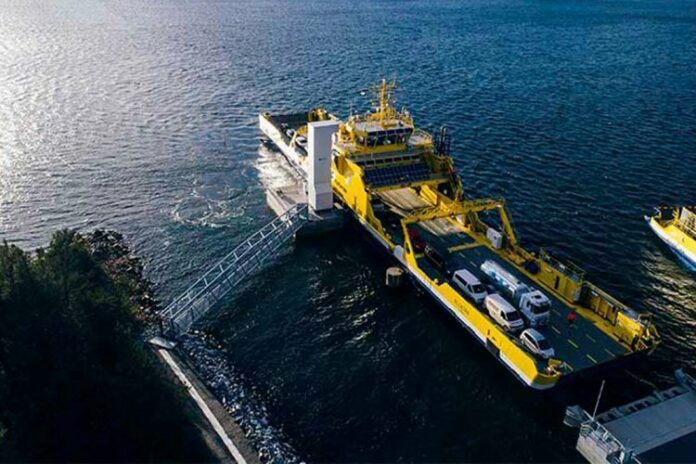
Shift Clean Energy partners with Red Offshore as ESS provider in South Asia

0

Shift Clean Energy (Shift) announces that they have entered into a partnership with Red Offshore Industries.

Brent Perry, CEO and founder of Shift, commented:

“Partnering with Red Offshore is a huge feat and a major step towards scaling up our decarbonization impact. We are proud to be Red Offshore’s ESS provider for Singapore and Malaysia. We believe that together we can offer the safest and most robust solutions for the maritime industry, while powerfully driving this complex industry towards net zero.”

Kervin Goh, the Regional Sales Manager of Red Offshore, commented:

“We are pleased to work alongside Shift to offer the shipping industry the safest technology. It is partnerships like these with leading-edge organizations that are going to show the maritime industry that we don’t have to sacrifice reliability or safety to cut carbon emissions.”

In September, the company revealed its proprietary ESS technology will be used in 17 new hybrid and electric tugboats to effectively reduce emissions and harmful NOx gas, whilst continuing to support efficient operations. 

The same month it was also announced that Shift’s PwrSwäp technology will be used to power the first all-electric battery swapping vessel, the Hydromover in the Port of Singapore, one of maritime’s leading ports – a significant step forward for battery technology and alternative energy solutions.

Construction of Hollandse Kust Noord offshore wind farm kicks-off

0

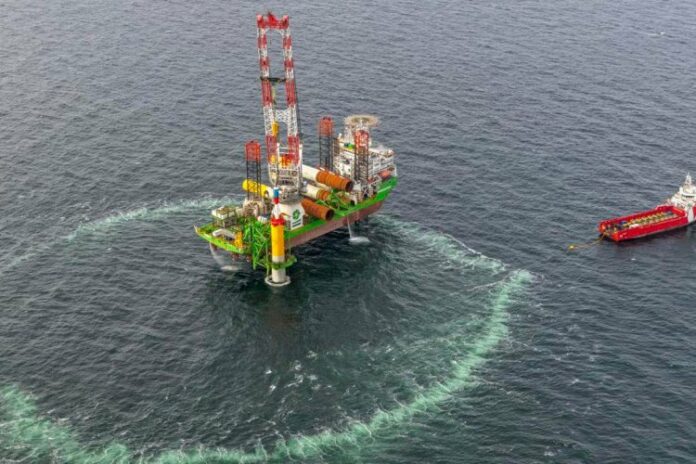
Hollandse Kust Noord is located 18.5 kilometres off the west coast of the Netherlands near Egmond aan Zee. The monopiles are the foundations of the wind turbines. Over the next few months, a total of 70 monopiles will be installed.

CrossWind, a joint-venture between Shell and Eneco, contracted Van Oord in 2020. As Balance of Plant contractor, Van Oord’s activities encompass the design, engineering, procurement, construction and installation of the foundations, inter array cables and transportation and installation of the wind turbines.

To avoid erosion, Van Oord has already successfully installed scour protection using its flexible fallpipe vessel Nordnes. Other Van Oord vessels that will be deployed are the offshore installation vessel MPI Resolution, cable-laying vessel Nexus and trencher Dig-It. For the installation of the monopiles, Van Oord is teaming up with DEME who will deploy its offshore installation vessel Innovation.

Roeland Ris, Project Director Van Oord, said:

‘We are very pleased to have achieved this important milestone. Thanks to the committed and experienced project teams, the installation of the monopiles started about 10 weeks earlier than originally planned.’

Offshore wind is essential in achieving the energy transition in the Netherlands. In the 2030 Roadmap for offshore wind energy, the Dutch government states that more than 21 gigawatts (GW) of offshore wind farms will be built and connected to the mainland by 2030. 

Research explores the potential for mechanical devices to clear the ocean of plastics

0

A new study was led by researchers from the University’s International Marine Litter Research Unit.

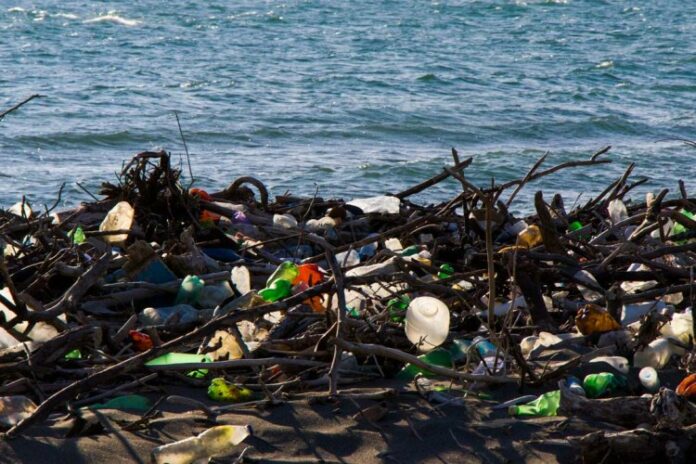
However, a new study by researchers at the University of Plymouth suggests that while mechanical devices remove plastics and other items of marine litter, the quantities of litter removed can be comparatively low and they can also trap marine organisms.

The study was led by researchers from the International Marine Litter Research Unit at the University of Plymouth, who have been studying the issue of marine microplastics for more than two decades.

Their research was conducted in Plymouth (UK), and provides the first formal independent evaluation of the performance of a Seabin device.
The devices are designed to continuously suck water inwards using a submersible pump which is then filtered, and the cleaned water is returned to the surrounding area leaving the litter in the catch bag.

Hundreds have been installed globally and are reported to have captured over 2.5 million kilograms of litter from calm sheltered environments such as marinas, ports and yacht clubs.

This study found that a total of 1,828 items, 0.18kg of litter, was retained by the Plymouth device during 750 hours of operation between April and June 2021. This was equivalent to 58 items a day, and was mainly comprised of plastic pellets, polystyrene balls and plastic fragments.

However, the Seabin also captured one marine organism for every 3.6 items of litter, around 13 organisms a day including species such as sandeels, brown shrimp and crabs. Around 60% of those organisms were found to be dead upon retrieval, and the study indicates some organisms died after entering the device.

During the deployment, five manual trawls were conducted at the same marina using nets from pontoons or vessels. Manual cleaning collected an average of 19.3g of litter during cleans of up to five minutes. By comparison, the Seabin only captured the equivalent of 0.0059g in a similar timeframe.

Writing in the study, the researchers say that – based on their findings – the device was of minimal benefit in terms of marine litter removal in this particular location.

They also warn that the presence of such devices could precipitate techno-optimism, a reliance on technological innovations, rather than systemic changes in our production, use, and disposal of plastics.

Sembcorp Marine’s Brazilian Shipyard completes Petrobras P-71 FPSO

0

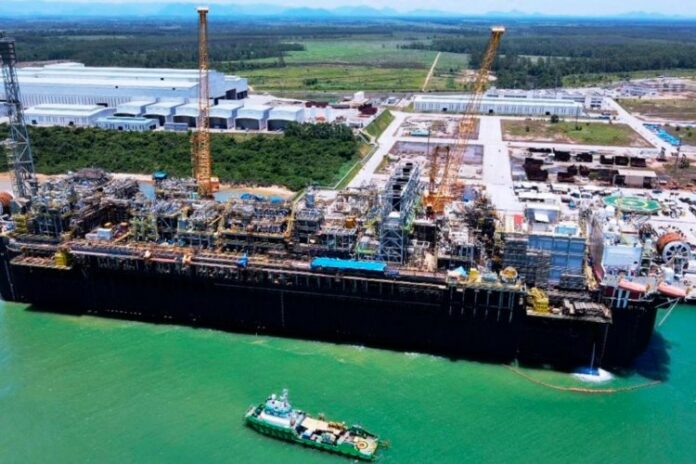
Sembcorp Marine Ltd, through its wholly-owned and operated subsidiary Estaleiro Jurong Aracruz (EJA) has crossed another significant operational milestone with the completion of P-71, its second floating, production, storage and offloading (FPSO) vessel project for Tupi B.V.

A newbuild FPSO vessel, P-71 sailed away from EJA’s shipyard and will be deployed to the ultra-deepwater Itapu field in Brazil’s Santos Basin. When launched into operation, P-71 will produce up to 150,000 barrels of oil per day (BOPD). Measuring 316m in length and 54m in width, P-71 has a 1.6-million-barrel storage capacity and can accommodate 166 persons.

EJA’s P-71 work scope includes fabricating six modules, pipe-racks and a flare, and integrating them on the vessel along with other modules and items supplied by the customer. EJA also executed modification works on the FPSO’s topsides and hull to meet Itapu field requirements.

EJA President Mr T. Guhan said:

“Despite pandemic-related challenges which affected the project over a period of 20 months, EJA successfully delivered the P-71 FPSO on schedule, cementing its status as a premier facility in Brazil capable of taking on full engineering, procurement, construction and commissioning work for large-scale offshore projects.”

“We thank Petrobras and its partners for choosing to work with us on the P-68 and P-71 FPSO projects. We would also like to recognise our employees, vendors and community leaders whose assistance is important to our continued success. We look forward to many more fruitful collaborations with all our stakeholders.”

EJA Chairman Mr William Goh said:

“As a Brazilian shipyard with international expertise and advanced capabilities, we are a major commercial entity and also a part of the social and economic fabric of Espirito Santo and its local communities. We are committed to growing our business here by providing world-class engineering solutions for the offshore renewables, oil & gas and other clean energy sectors; and by actively promoting and providing skills development, education and employment opportunities, as well as healthcare and other sustainable outcomes to advance the social and economic progress of the local communities in Aracruz.”

The 82.5ha EJA facility has been operating in the Espirito Santo municipality of Aracruz since 2014 and employs up to 4,500 workers during peak periods of production activities. Besides tapping into the burgeoning local offshore oil and gas industry, EJA, with its strategic location on the east coast of Brazil is able to service field developments in the Atlantic, Gulf of Mexico and West African regions.

CB&I and DSME sign MoU for feasibility study of large liquid hydrogen carrier

0

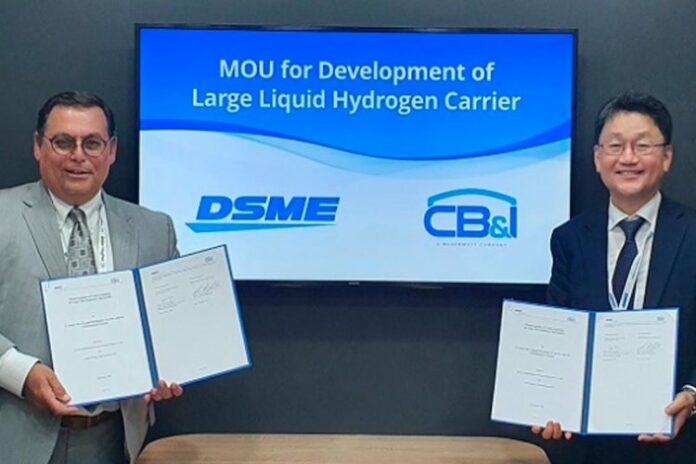
B&I, McDermott’s storage business line, and Daewoo Shipbuilding & Marine Engineering Co., Ltd. (DSME) have signed a memorandum of understanding (MoU) for a feasibility study of a large liquid hydrogen (LH2) carrier including an LH2 storage tank design.

The ability to ship large quantities of hydrogen across the ocean is an increasing need to help countries, like South Korea, achieve carbon reduction goals in a hydrogen economy. CB&I and DSME bring unique expertise to the study. CB&I will evaluate its LH2 storage tank design for ocean-going ships and DSME will investigate and develop the ship’s general design to install the LH2 storage tank. The output of the feasibility study is expected to contribute to the future design of a large-scale LH2 carrier.

Cesar Canals, Senior Vice President of CB&I, said:

“The development of LH2 storage for ocean-bound vessels is essential to South Korea’s focus on a carbon-neutral environment. Our expertise in designing and building field-erected pressure spheres for LH2 storage is a perfect combination with DSME’s technical excellence.”

CB&I spheres can store LH2 at temperatures of minus 423 degrees Fahrenheit, and the company is nearing completion of the world’s largest LH2 sphere in Cape Canaveral, Fla., USA. Their history in this field spans more than 60 years.

DEME contracts Seaqualize for first offshore wind feeder barge operations in the USA

0

Dutch heave compensation specialist Seaqualize has signed its first contract for their newly developed offshore lifting device: the Heave Chief 1100. 

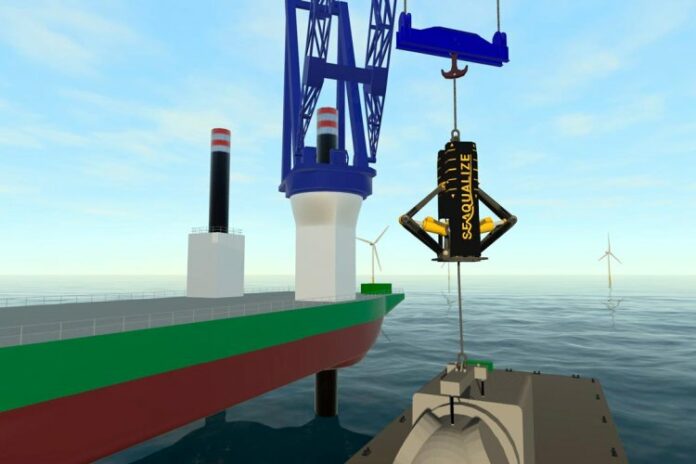
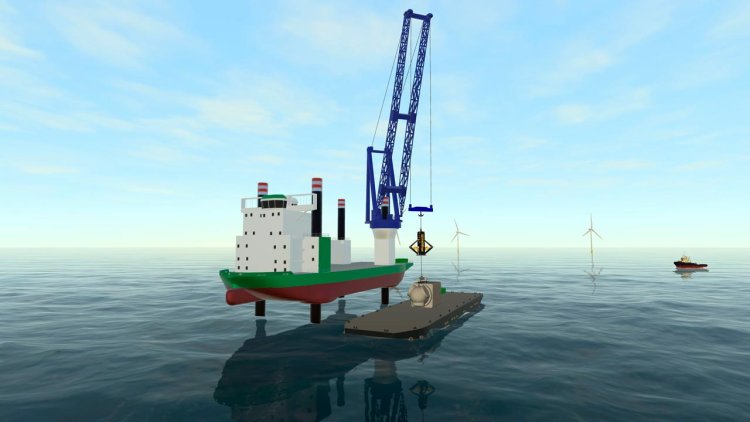
DEME Offshore US will deploy the HC1100 on the first commercial scale wind farm installation project in the USA, Vineyard Wind, to transfer delicate wind turbine components to and from heaving supply vessels. The HC1100 is currently the largest active heave compensator in the world. As a Balanced Heave Compensator (BHC), it can compensate a vessel’s heave motions and safely quick-lift loads up to 1100mT, although being battery powered.

Since the high ambitions of US offshore wind were announced, the market has been looking for ways to get sufficient Jones Act compliant installation capacity in place. Seaqualize and DEME Offshore have been working together on developing a novel tool, enabling a Jones Act compliant feeder-barge concept. To lift delicate wind turbine components from feeder-barges to an installation vessel while being offshore is a complicated operation. This type of operation, which needs to be done safely, efficiently, frequently and often in harsh weather conditions, requires a new, next generation lifting tool.

DEME Offshore is the first contractor that will embark on such an operation, by transporting and installing 62 wind turbine generators for the Vineyard Wind 1 project, the first commercial scale offshore wind installation in the United States. Each turbine will be transported in components from the supply harbor to DEME’s installation vessel Sea Installer. DEME Offshore US has contracted the HC1100 to ensure the components can be safely lifted from the heaving supply barges, and thus continue working in challenging weather conditions.

Glenn Carton, PM Vineyard Wind, DEME, said:

“We contracted Seaqualize to de-risk the Vineyard Wind project: their solution is a novel, but realistic method to safely transfer the delicate components, minimizing the risk of damage and delays. We think this is how Feeder Barge operations should be done going forward.”

REV Ocean and OCEEF to explore the twilight zone in the Chagos Archipelago

0

From October 10 -22 REV Ocean and OCEEF (The Ocean Conservation Exploration and Education Foundation) lead the first deep-sea science mission to explore one of the most remote and least visited places on the planet, the Chagos archipelago, in the British Indian Ocean Territory (BIOT). The expedition will also be supported by Triton Submarines, Teledyne Marine and Nekton. 

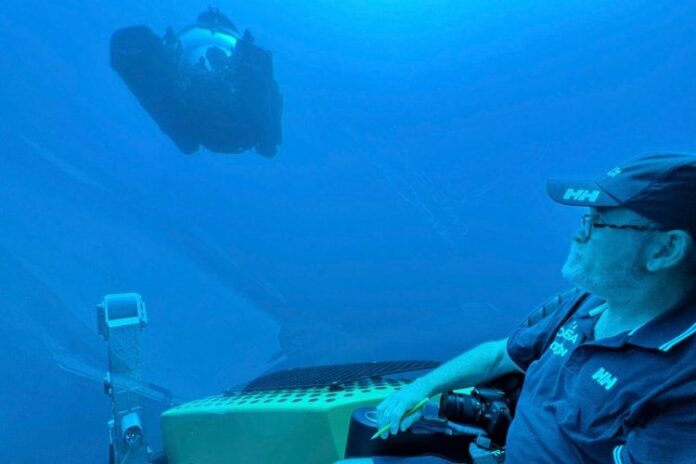
The 12-member mission team will conduct daily dives from 100 m to at least 500 m deep in two Triton submersibles to document the seafloor and fish communities at three locations in the archipelago. Special attention will also be paid to describing human impacts on the ecosystem and to surveying habitats likely to harbour the rarely observed coelacanth, a fish nearly considered a “living fossil”.  

The mission is led by REV Ocean chief scientist Prof. Alex Rogers and includes a diverse international team of experts including 4 Ph.D. students who will participate in daily dives in the subs. Other scientists come from the University of Oxford, University of Plymouth and Bangor University in the United Kingdom. Five REV Ocean specialists will join the mission and work closely with OCEEF’s team to support the new 2300 m depth-rated submersible Aurelia aboard the research vessel Odyssey. 
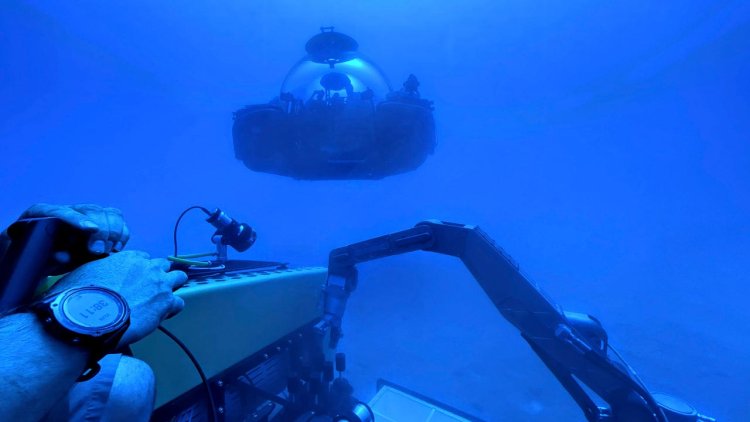
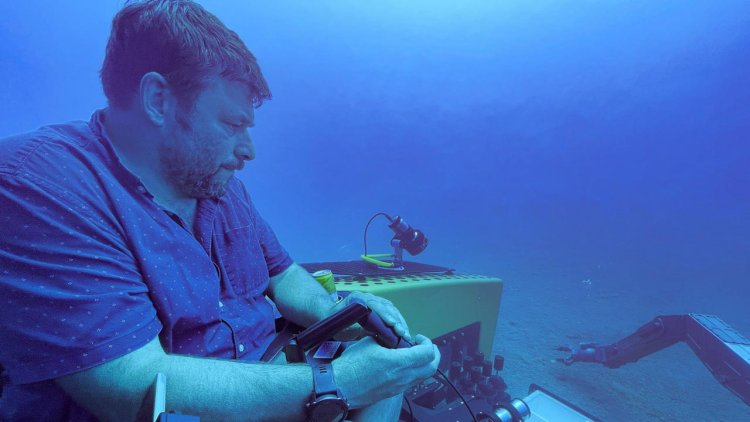
The expedition will use the REV Ocean submersible Aurelia, which is capable of diving to 2300 m. Aurelia is fitted with state-of-the-art scientific sensors, cameras, and sampling equipment which provides the science community with unique opportunities to explore and sample deep ocean ecosystems. 

Alex Rogers said:

“The Chagos Archipelago is one of the world’s largest marine protected areas, yet only shallow waters have been explored by scientists in detail. It is still the case that 95% of the waters of the archipelago are unexplored and most of these are in the deep sea. Using cutting-edge submersible technology, including the world’s deepest diving submersible with an acrylic sphere, we will survey the waters surrounding the islands of the archipelago including submarine slopes and cliffs. I am really looking forward to seeing what life occurs in the deep around Chagos.”

The Chagos research sites have been selected on the basis of past shallow-water ecological studies and monitoring (Peros Banos and Eagle Islands) with one representing exploration of a submerged atoll (Pitt Bank). 

The mission also provides opportunities for early career scientists to join, which is a key component of REV Ocean owner, Kjell Inge Røkke’s, commitment as a UN Patron of the Ocean Decade Alliance and the UN Ocean Decade Special Emissary for Industrial Ocean Data.
Nina Jensen, CEO of REV Ocean, said:

“I am thrilled that our team is getting to use Aurelia to improve our understanding of one of the least explored parts of the world. We hope this contributes to finding the best-suited opportunities and solutions to support a healthy ocean locally and globally. OCEEF’s research vessel Odyssey is ideally suited for supporting such specialized missions and we have shared goals for ocean science, exploration, education and conservation.” 

Aurelia will collect large quantities of data on marine life, which will be shared openly in the Ocean Data Platform, hosted by HUB Ocean, as well as being distributed to relevant global databases such as the Ocean Biodiversity Information System (OBIS) for recording observations of marine life.  

Important data will be gathered that documents change in seafloor and fish community structure with depth and will likely include undocumented species of corals, fish and seaweeds. The work will assist the region to manage its marine environment and enable scientists to obtain training in deep-water ecology and conservation management.  

The Chagos expedition continues on from Nekton Mission in the Maldives which took place from 4th September to 7th October. The Nekton work is the first systematic discovery and documentation of ocean life in the Maldives from the surface down to 1000 metres. 

Fishing gear lost at sea globally revealed

0

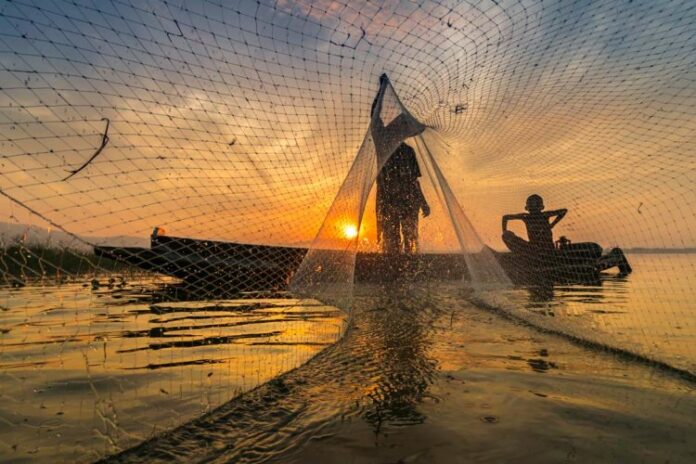
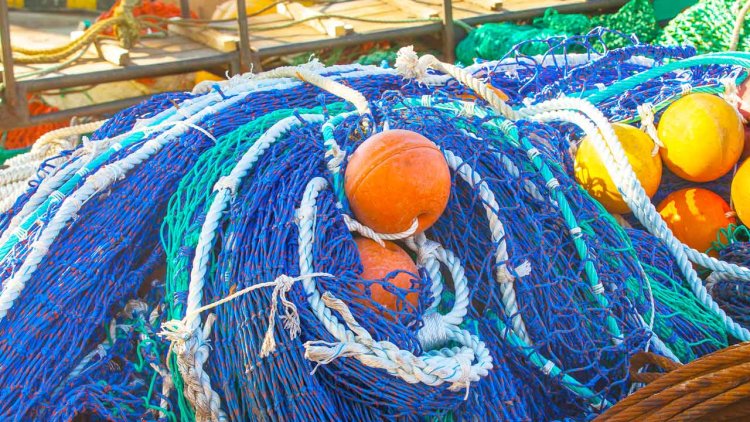
Fishing line that could wrap around the Earth 18 times is lost in the world’s oceans every year, according to research by CSIRO, Australia’s national science agency, and the University of Tasmania.

The research published estimates that nearly two per cent of commercial fishing gear is lost or discarded every year, where it becomes a major component of global marine plastic pollution.

Denise Hardesty from CSIRO said this research is the most comprehensive examination of quantitative amounts of abandoned, lost or discarded fishing gear globally to date.

Dr Hardesty said:

“We found that 14 billion longline hooks, 25 million pots and traps and almost 740,000 km of fishing longlines end up in our oceans through global commercial fishing activities each year.” 

The research used global fishing effort data and interviews with 450 fishers from seven countries around the world including the USA, Indonesia and Morocco. The surveys looked at five major fishing gear types, how much fishing gear was used and lost annually, and gear and vessel characteristics that could influence losses. In general, more gear was lost from smaller fishing vessels, and bottom trawl fishers lost more net than midwater trawl fishers.

The more current estimate presents much lower overall estimates of fishing gear lost at sea than estimates from 2019 which quantified annual gear losses based on literature reviews.

To date, empirical information on how much fishing gear is lost to the oceans has been limited. As fishing gear lost at sea has significant economic, environmental and social impacts, this new research will help inform fisheries management and policy interventions from local to global scales.

Kelsey Richardson, lead author of the paper, previously at CSIRO and University of Tasmania, said:

“The data collected to create these estimates came directly from fishers themselves to inform our understanding of fishing gear losses at source.”

“There have been increases in global fishing effort, as well as improvements in fishing technologies, including better opportunities to mark, track and recover fishing gears.”

“Our updated estimates help to highlight where efforts need to focus to support fisheries management and gear stewardship interventions to generate targeted solutions to reduce fishing gear ending up in our oceans.”

Scientists scour global waters testing ocean plankton and pollution

0

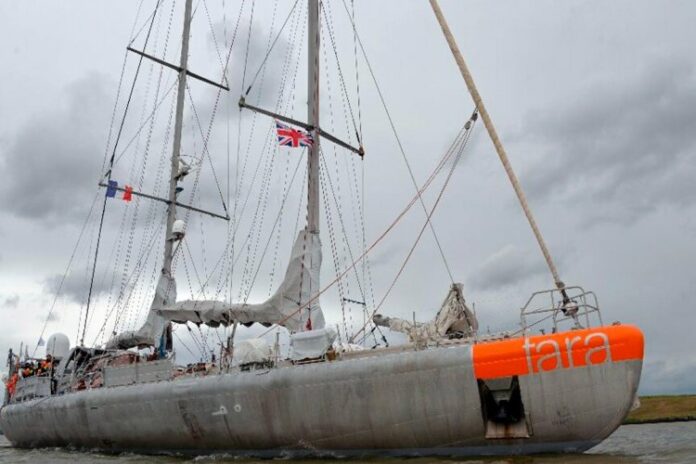
The survey was carried out from the 33-year-old Tara research schooner, which returned to her home port of Lorient on France’s western coast at the weekend.

From Chile to Africa, via the Amazon and the Antarctic, nearly 25,000 samples were collected over the 70,000-kilometer (43,000-mile) route.

“All this data will be analyzed,” Tara Ocean Foundation director Romain Trouble told a press conference.

“Within 18 months to two years we will start to have the first discoveries from the mission,” he said.

At the base of the food chain, micro-organisms were the “invisible people of the sea”, accounting for two-thirds of marine biomass, said Trouble.

“They capture atmospheric CO2 (carbon dioxide) and supply half of the oxygen we breathe.”

Trouble said the mission sought to find out how it all works.

“How do all these marine viruses, bacteria, micro-algue manage to interact to produce oxygen?”

“And how will that change tomorrow with climate change and pollution?”

The Tara team paid particular attention to the impact on the oceans of the River Amazon, which has a water flow rate of 200 million litres (53 million gallons) per second.

They wanted to test a theory that deforestation and the spread of agriculture has increased nitrate fertiliser discharge, leading to an abundance of toxic algae along river banks and coasts, particularly in the Caribbean.

The 22-month odyssey also sought to trace the sources of plastic pollution at river mouths, to understand distribution and the types of material involved.

The mission was Tara’s 12th global journey and involved 42 research institutions around the world.

Next spring, Tara sets off to research chemical pollution off European coasts.

Launch of the second of three patrol vessels ordered by Senegal

0

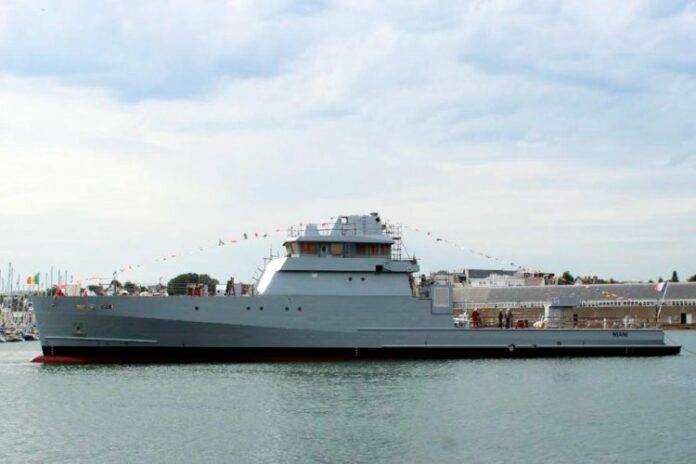
This stage marks a significant step in the progress of the programme for the supply of three offshore patrol vessels.

In parallel, the first unit is in the outfitting phase before the start of its sea trials, and outfitting is also ongoing on the third vessel in preparation for launch.

This contract was signed in November 2019 by Senegal’s Ministry of Armed Forces and PIRIOU group.

Built with the support and expertise of its partner company KERSHIP, the programme of construction of these three patrol vessels is spread over a period of 44 months, until summer 2024. It also includes a support period lasting several years in Senegal.

Vincent Faujour, Chairman of PIRIOU Group, said:

“It is an important event for this boat but also more broadly for the OPV58S programme! Thanks to the motivation of the PIRIOU and KERSHIP personnel and the continuous working partnership with the representatives of the Senegalese Naval Staff, we are progressing according to schedule.”

The OPV 58 S (Offshore Patrol Vessel) is a robust 62 m patrol vessel with outstanding versatility and high endurance. The OPV 58 S is dedicated to missions such as surveillance, identification and intervention, and fulfils the entire range of missions related to law
enforcement. In addition to her deployment ability -intervention RHIBs- she possesses a first rank deterrence capacity thanks to her anti-surface and anti-aircraft weapon systems.

Among innovations and major capacities, the vessel features:

• A versatile design to adapt to various missions
• A large panoramic bridge with 360° visibility
• A fast launching and recovery system for 2 RHIBs on the stern ramp
• A C-Sharp® hull for optimized autonomy and seakeeping
• A high-performance monitoring and combat system

These OPVs will be equipped with MARTE MK2/N anti-ship missiles. With the ability to strike at ranges in excess of 30 kilometres and their fire-and-forget capability, these missiles will provide the means to the Senegalese Navy to enforce their maritime superiority. 

The vessels will also benefit from the SIMBAD-RC system and its MISTRAL missiles- this combination providing an extremely effective defence capability against all threats including anti-ship missiles, combat aircraft, UAVs, helicopters, as well as small surface threats such as those presented by FIACs. These missiles and missile systems are designed and produced by MBDA.