-6.2 C
New York
Home Blog Page 384

Chela Twins installed onboard Velesto Energy Berhad NAGA 6 jackup

0

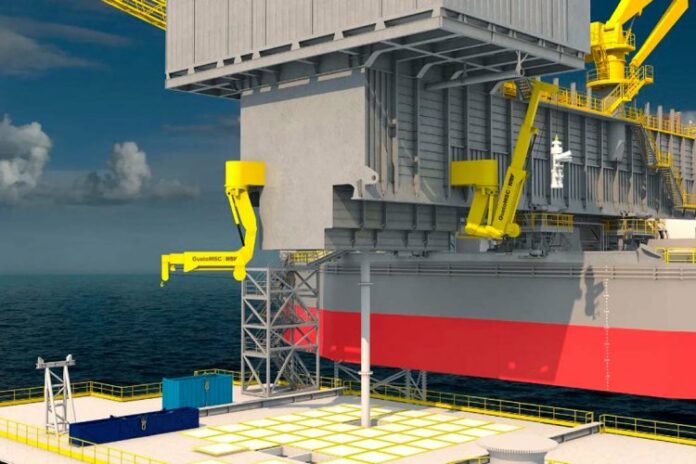
The cost-effective cranes were installed and commissioned onboard the NAGA 6, a GustoMSC CJ46 jack-up drilling rig design, at the Keppel FELS shipyard in Singapore.

Spyros Magripis, Project Manager, GustoMSC, said:

“The entire engineering and construction project was completed within just 8 months. After receiving the order in September 2021, the team immediately put all the needed effort. The fabrication was completed in April and the first-ever Chela Twins were qualified as an accepted product. The commissioning of the Chela Twins in early August this year is an impressive achievement and marks a great milestone.”

Velesto Energy Berhad ordered the two Chela Twins cranes for its NAGA 6 jack-up drilling rig in November 2021. The Chela Twins are two independently operated cranes designed to work in pairs on a cantilever to create the best combination of reachability, handshake capabilities, and construction simplicity.

Featuring a telescopic crane boom, Chela Twins are a cost-competitive alternative for the Chela Single crane. In 2019, the first Chela crane was delivered to Maersk Drilling and installed onboard the Maersk Invincible, an ultra-harsh environment GustoMSC CJ70 jack-up drilling rig design. It has proven its claims while operating at the Valhall field in the Norwegian North Sea for Aker BP.

ZeroNorth unveils new AI-enabled fuel model

0

Technology company ZeroNorth has today unveiled its new advanced fuel model, which uses a combination of AI and best practice naval architecture knowledge to predict the expected operational fuel consumption of any type of vessel in the global fleet.

The new service combines the ability to accurately predict fuel consumption in real operational conditions for vessels that users have little or no data on with the ability to quickly learn and adjust to a very high level of accuracy as the vessel reports data or makes high frequency data available.

In one of ZeroNorth’s largest R&D investments to-date, the company has assembled a team of more than 25 data scientists, data engineers, software engineers and naval architects to develop and continuously improve the model.

The fuel model will use machine learning technology to learn from the vast amount of data held within the ZeroNorth platform, across all vessels and vessel types.

The fuel model combines and learns over time from more than 1.2 billion data points, spanning vessel reports, high frequency sensor data, weather data, AIS signals, port stays, dry-dock and cleaning events, paint characteristics, vessel characteristics and more. It uses this information to predict expected fuel consumption for a vessel, no matter its itinerary, route, condition or current operating pattern. 

Traditional fuel models that only rely on naval architecture principles are generally highly tailored to a specific vessel type and its design. This ‘static’ view of a vessel’s fuel consumption has been useful mostly for owned fleets and for predictions requiring a certain level of accuracy. However, the industry’s demand for ongoing optimised vessel operations requires a dynamic solution that can handle and understand complex situations for any vessel, whether owned or chartered, and whether it has sensor data available or not. 

ZeroNorth’s new fuel model generates 34% more accurate predictions when compared to existing solutions and the current industry standard, and lowers the bias of results by 42%.

Speaking on the announcement, Pelle Sommansson, Chief Product & AI Officer, ZeroNorth, said:

“Our new fuel model supports improved transparency across the value chain. Fuel consumption information is a critical pillar of accurate charter party agreements, and our new model will help to fill gaps for charterers and operators alike on vessels being taken on shorter-term time charter.”

Søren Meyer, CEO, ZeroNorth, added:

“We are extremely proud to unveil our new fuel model, which we believe is a key next step forward for a truly digitalised shipping industry. By combining the best and widest range of available data at our disposal, we have created a model that can generate accurate and quick fuel consumption predictions for any vessel trading in the global fleet.

“This new model will generate more powerful optimisations from our platform but, more importantly, will also enable ZeroNorth to make an even greater contribution to the industry’s decarbonisation efforts.”

MAN PrimeServ wins dual-fuel retrofit

0

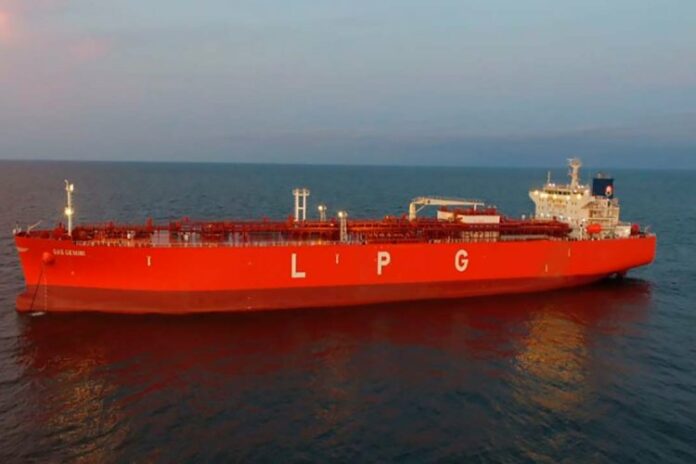
MAN Energy Solutions’s after-sales division, MAN PrimeServ, has announced the signing of a contract to retrofit two LPG carriers for Tianjin Southwest Maritime Ltd. – the Chinese liquefied-gas carrier operator.

The COSCO Shipping Heavy Industry (Guangdong) yard will host the respective conversions of the individual MAN B&W 6G60ME-C engines aboard the ‘Gas Gemini’ and ‘Gas Aquarius’ to dual-fuel MAN B&W 6G60ME-LGIP units capable of running on LPG. The two vessels will be retrofitted in parallel, beginning May 30th 2023.

In a notable first, PrimeServ will jointly carry out the work with CMS (CSSC Marine Service Co. Ltd.), the after-sales subsidiary of CSSC Marine Power Group.

Tao Guohua – Vice President, CSSC Marine Power Group – said:

“Hearty congratulations to Southwest Maritime on the LGIP conversion contract signing between MAN Energy Solutions and CMS. I do believe that the emerging engine-retrofit market will be a new area for MAN Energy Solutions to strengthen the existing close cooperation between us.”

Per Rud – Senior Vice President, MAN PrimeServ – spoke about the importance of developing partnerships to execute successful dual-fuel retrofit projects, and said:

“We treat every project on a case-to-case basis but this particular instance is notable in that it represents the first time that we are collaborating on a retrofit project with a licensee’s own after-sales division. I feel that it is important for the after-sales market to be aware that MAN PrimeServ is open to working with all partners in order to support shipowners globally. The successful negotiations with CMS have strengthened our partnership and both parties are more than satisfied with the result.”

The contract signing comes in the wake of Oslo-listed BW LPG – the world’s leading owner and operator of LPG vessels – announcing in June 2022 that it, under MAN PrimeServ’s supervision, had converted the main engine of the ‘BW Malacca’ to dual-fuel running. The last such conversion for a series of 15 LPG carriers, all work was carried out at Yiu Lian Dockyards in Shenzhen, evidence of China’s ability to successfully execute such retrofits.

Klaus Rasmussen, Head of Projects and PVU Sales, MAN PrimeServ, said:

“In order to decarbonise the existing maritime fleet, switching to low-carbon fuel is the most effective tool. In this context, dual-fuel retrofits represent an eminent way for owners to maintain their assets’ value for years to come. Specifically, in the case of Very Large Gas Carriers, their ability to operate off their own cargo makes for a very positive business case. Tianjin Southwest has already ordered six vessels powered by ME-LGIP main engines and LPG is well on its way to becoming the standard in this segment. Currently, we estimate that there are 154 VLGCs with single-fuel engine technology that could benefit from conversion to LPG-running.”

By leveraging LPG as a marine fuel, vessels benefit from savings due to lower fuel consumption and full dual-fuel flexibility, which guards against price sensitivity to post-2020 fuel-price fluctuations. Furthermore, the ability to use LPG cargo as a supplemental fuel source also reduces time and fees for fuel bunkering.

Harnessing LPG propulsion also translates into cleaner, more efficient engines that are cheaper to maintain. In addition, the fuel flexibility of dual-fuel engines ensures full redundancy for uninterrupted operations.

Compared to 2020-compliant fuels, using LPG as a fuel would reduce: SOx by 99%, CO2 by 15%, NOx by 10%, and particulate matter by 90%.

Sempra announces final EPC Contract with Bechtel for Port Arthur LNG

0

Sempra Infrastructure, a subsidiary of Sempra, has announced that Port Arthur LNG and Bechtel Energy have amended and restated the fixed-price engineering, procurement and construction (EPC) contract, for the proposed Phase 1 liquefaction project under development in Jefferson County, Texas.

The amended contract includes an updated price of approximately $10.5 billion.

Justin Bird, CEO of Sempra Infrastructure, said:

“We are excited to achieve this milestone with Bechtel. The execution of the final contract is a critical step in advancing Phase 1 of Port Arthur LNG toward a final investment decision. Based on robust customer interest, we know that Port Arthur LNG is highly attractive to the global market and we look forward to providing customers with access to secure, abundant and reliable U.S. LNG.”

Paul Marsden, President of Bechtel Energy, added:

“We are delighted to continue our partnership with Sempra Infrastructure to deliver cleaner and more affordable energy to communities around the world. Alongside Sempra Infrastructure, Bechtel is ready to continue active construction in the Gulf Coast and bring more opportunities to the local region.”

Under the EPC contract, Bechtel will perform the detailed engineering, procurement, construction, commissioning, startup, performance testing and operator training activities for Phase 1 of the project.

The Port Arthur LNG Phase 1 project is permitted and expected to include two natural gas liquefaction trains and LNG storage tanks, and associated facilities capable of producing, under optimal conditions, up to approximately 13.5 million tonnes per annum of LNG. A similarly sized Port Arthur LNG Phase 2 project is also competitively positioned and under active marketing and development.

Fugro supports RWE’s delivery of clean energy with geo-data

0

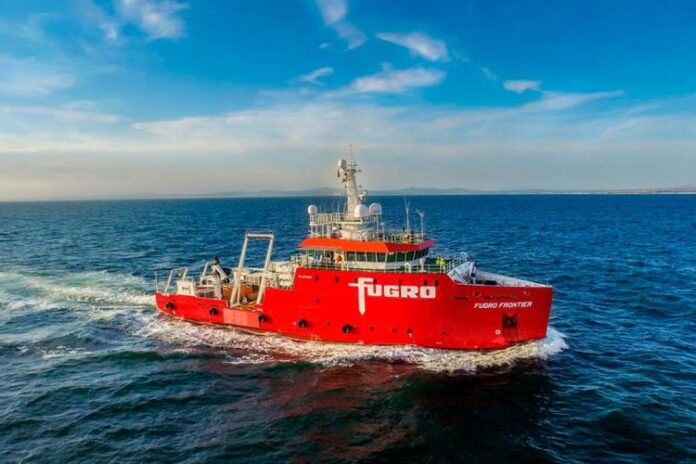
DBS is located more than 110 km off the east coast of Yorkshire, England in the North Sea and has the potential to generate renewable electricity for up to 3.4 million UK homes per year. 

The array area covers approximately 1,000 km2 with over 100 km of proposed export cable routes, resulting in a total survey scope exceeding 20,000 km of survey lines.

Trevor Baker, RWE Project’s Lead for Dogger Bank South said:

“The offshore surveys are a very important aspect of the project’s development and the data collected will help inform the environmental impact assessment process and help in the engineering design of the wind farms. Fugro have demonstrated technical competence in previous projects, and we are pleased to have them on board.”

Fugro mobilised multiple vessels from its industry-leading fleet to complete full coverage surveys. This included seabed cone penetration tests (CPTs), sampling boreholes, multibeam echosounder surveys and the largest 2D ultra high-resolution seismic (UHRS) survey to be completed on a single project. 

In addition to this, Fugro’s environmental surveys comprised of grab sampling, epibenthic trawling and drop-down videos. The acquired Geo-data will be used to understand the site’s subsurface conditions, advise on geohazard risk mitigation and identify a safe route for export cables.

The processed data will be shared on Fugro’s centralised cloud-hosted platform allowing internal and external teams access to authoritative project Geo-data, facilitating faster decision-making and accelerated timelines on critical project milestones.

Peter Aarts, Fugro’s Marine Geophysical Director Europe and Africa, said:

“When considering a project of this scale, early access to Geo-data that provides actionable insights is key. With an understanding of the seafloor and sub-surface conditions, geohazards and environmental constraints, RWE will be able to make informed decisions on their wind farm foundation designs, whilst also reducing installation risks and ensuring the most efficient cable routes.”

KN seeks operator for Lithuania FSRU

0

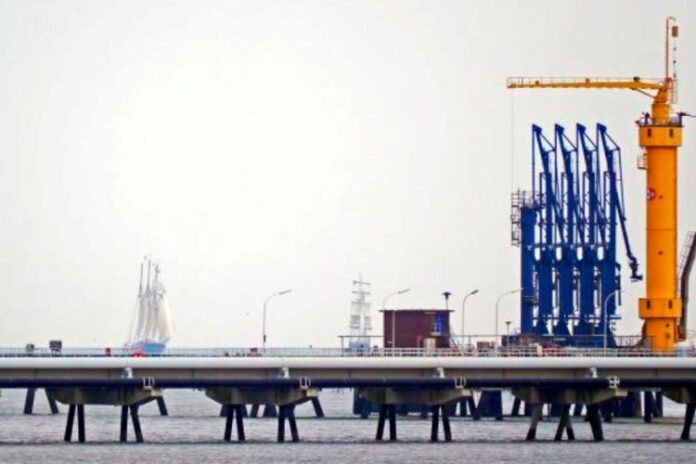
The contractor will be selected with a strong focus on the experience in the operation of facilities such as the FSRU and the ability to ensure the smooth and uninterrupted operation of the LNG terminal, which is important to the energy security of the region.

When taking a decision on the procurement of the operation and maintenance services, KN consulted international experts on the optimal solution. Since KN is not a shipping company and has not accumulated experience in the operation of vessels and considering the overall scope of the O&M activities, it was ascertained that, at this stage, it would be far more efficient and useful to ensure the reliable operation of the LNG terminal by relying on market competences.

The selected contractor will be responsible for the safe and reliable operation of the FSRU, the management of the vessel’s maintenance and technical risks, the fulfilment of environmental requirements, the compliance of the FSRU operations with the requirements of the flag sate and the vessel class, and the formation and coordination of the competent crew for the smooth operation of the FSRU during the whole contract period. To manage the risks of reliable operation, safety and technical performance of the FSRU, the companies with experience in the management of the FSRU are invited to tender.

Darius Šilenskis, KN CEO, says:

“Reliable and safe operations of the LNG terminal have always been our priority. However, the role of the LNG terminal is even more important now – it has become the most significant natural gas import alternative in the region, and the highest level of expertise is critical. KN strengths lie in ensuring the commercial operation of the terminals, and the technical operation and maintenance of the quay and onshore facilities. We understand that by leveraging market expertise in the O&M of the FSRU itself, we will be able to react more flexibly and quickly and make decisions when there is a need for repairs or the need for additional crew members to ensure business continuity. By hiring contractors, we will be able to manage human and financial costs of operating the FSRU more efficiently, and make more cost-effective decisions regarding its maintenance.”

When launching the public procurement, it is envisaged that within the scope of the O&M services the selected contractor will plan and organise the day-to-day operation, maintenance, and repair of the FSRU, and ensure timely procurement of the necessary equipment, spare parts, and services. Following the general practice in the shipping market, tenderers are invited to submit a tender for the fixed vessel management service and fixed crew costs for the entire contract period. All other ongoing maintenance and repair costs will be planned annually and compensated to the contractor on the actual basis.

Before initiating the public procurement, KN conducted the public market consultation aimed at familiarising market participants with the future procurement and seeking their comments and observations regarding the submitted draft procurement documents. Considering that the procurement is complicated and complex, and seeking to ensure transparency of the tendering process, the procurement is coordinated with representatives of the Public Procurement Office, and experts from the Lithuanian Transport Safety Administration (LTSA) are also involved in the process.

The operation and maintenance contract will be concluded for a period of five years, with a possibility to extend it for up to five more years. The service provider is expected to be announced by the end of Q2 2023.

Rolls-Royce agrees major engine deal with Royal Navy

0

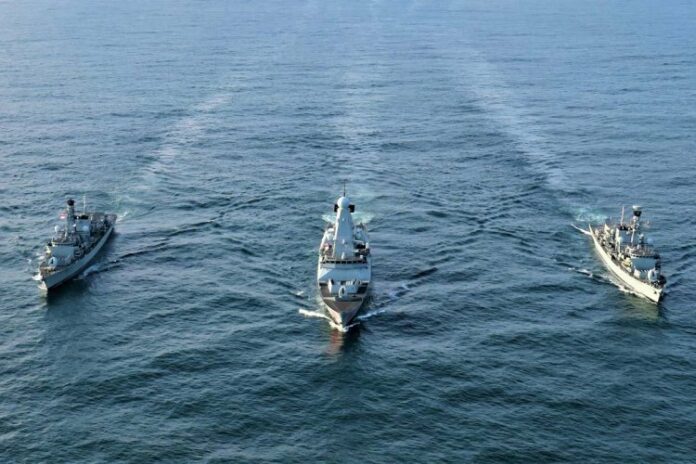
Rolls-Royce business unit Power Systems and the UK Ministry of Defence, Defence Equipment & Support organisation, signed a contract covering the preventive and corrective maintenance of more than 90 mtu engines for the next five years. The contract, which is the first of its kind for Power Systems, includes an option to extend for a further two years.

It covers mtu generator sets of Series 183, 396 and 4000 fitted or to be fitted into a wide range of surface vessels and submarines, including Daring Class (Type 45) destroyers, Duke Class (Type 23) and City Class (Type 26) frigates, Hunt Class mine hunters and Astute Class submarines. Rolls-Royce will provide maintenance and repair support both on and off the vessels, provide spare parts, assist with diagnostics and commissioning, and will also deliver design solutions for the modification and improvement of components if necessary. The contract includes the sharing of engine data between the Royal Navy and Rolls-Royce. Based on its advanced digital analysis of this data, Rolls-Royce will be able to suggest through-life efficiency improvements and deliver cost savings by optimizing deployment and maintenance of the vessels.

Cdr Michael Thomson, Marine Diesel Equipment Group leader, at Defence Equipment and Support, said:

“It is our duty to deliver the optimum level of equipment availability to the Royal Navy to enable our forces to fulfil their important missions at all times. We are delighted to have placed this support contract with Rolls-Royce which will capitalise on the use of data analysis to continually improve availability and support efficiencies for our fleet of mtu engines.”

Knut Müller, Vice President Global Governmental at Rolls-Royce business unit Power Systems, said:

“This remarkable agreement gives a new dimension to our long-lasting and proven relationship with the UK MoD and establishes Rolls-Royce Power Systems as a complete solutions provider for the Royal Navy. We are proud that the Royal Navy now also puts trust in our maintenance and service capabilities, after having invested in mtu propulsion solutions for many years.

With our maintenance know-how and growing digital skills we will help the Royal Navy optimize the operation of their vessels, ensuring highest availability at lower costs. The agreement may also serve as a model for other Rolls-Royce customers who are interested in optimizing the service and maintenance of their fleets powered by mtu engines.”

Rolls-Royce has been a close partner of the Royal Navy for decades, with power and propulsion solutions from both the Rolls-Royce and mtu brands. Several vessel types of the Royal Navy combine Rolls-Royce and mtu brand products as a complete solution. Rolls-Royce business unit Power Systems is transforming from an engine manufacturer to a provider of integrated sustainable solutions. Part of this approach is setting up a comprehensive mtu NautIQ portfolio of ship automation solutions. It includes the Equipment Health Management System mtu NautIQ Foresight which enables preventive maintenance and was recently ordered for the new F126 frigates of the German Navy. This system could become relevant for the Royal Navy as part of the growing cooperation with Rolls-Royce.

New Fortress Energy awards FLNG projects to Sembcorp Marine

0

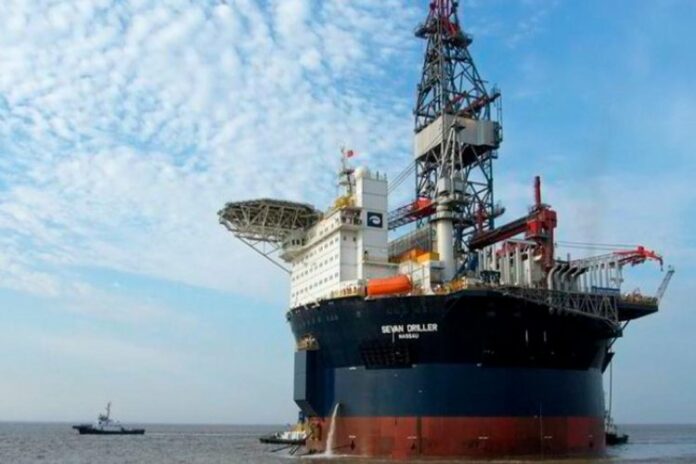
Sembcorp Marine Ltd, through its wholly-owned subsidiary, Sembcorp Marine Rigs & Floaters Pte Ltd, entered into Master Service Agreements with New Fortress Energy Inc. affiliates for the engineering and conversion of two Sevan cylindrical drilling vessels to Floating LNG liquefaction facilities, including the fabrication and integration of LNG topside modules.

The hull conversion and fabrication of topsides for the first FLNG liquefaction facility is scheduled for delivery in the first half of 2024 through the Work Engagement Contract awarded by NFE. Work on the second FLNG liquefaction facility project is expected to be contracted through further Work Engagement Contracts to Sembcorp Marine at a later date.

The two FLNG liquefaction units will host the NFE-designed Fast LNG liquefaction production facility with a capacity of approximately 1.4 mtpa (million tonnes per annum). LNG produced will be stored in a separate LNG tanker moored near the FLNG liquefaction facility. While NFE currently has Fast LNG liquefaction facilities on jackup rigs under construction in the U.S., this marks the first set of two Sevan cylindrical hulls to be re-purposed into FLNG liquefaction facilities.

Mr William Gu, Senior Vice President & Head of Sembcorp Marine Rigs & Floaters Pte Ltd, said:

“We are pleased and honoured to partner New Fortress Energy in its Fast FLNG programme through these two FLNG conversion projects incorporating SCM’s proprietary Sevan cylindrical hull design. Marking SCM’s successful penetration of the FLNG market, these projects allow our customer to rapidly deploy FLNG facilities to capture the growing demand for LNG liquefaction terminals, and to tap on SCM’s full suite of floating and nearshore LNG solutions that are well placed to meet the needs of the burgeoning LNG market.”

Mr Wong Weng Sun, President and CEO of Sembcorp Marine Ltd, said:

“These landmark FLNG conversion projects signal the broadening of our capabilities to provide customised solutions to clients across the energy value chain. Over the years, Sembcorp Marine has advanced its EPC capabilities towards solution-driven initiatives through investments in technology companies such as Sevan SSP.

Our continuous R&D efforts have also enabled Sembcorp Marine to successfully develop and commercialise our proprietary designs and solutions like this FLNG conversion and our Wind Turbine Installation Vessel (WTIV) for the cleaner energy and renewables segment awarded earlier this year. Sevan SSP circular hull design also offers excellent solutions for the electrification of offshore hydrocarbon production units, offshore wind floating substations and converter platforms, and carbon capture, utilisation and storage (CCUS) applications.”

The above contract is not expected to have a material impact on the net tangible assets or earnings per share of Sembcorp Marine for the current fiscal year.

Aramco establishing two offshore fabrication yards in collaboration with partners

0

The Saudi Arabian Oil Company, in collaboration with international partners, is establishing two offshore fabrication yards that aim to deliver a more than 200 percent increase in the Kingdom of Saudi Arabia’s offshore fabrication capacity.

The new yards are being constructed in Ras Al Khair in collaboration with National Petroleum Construction Company (NPCC) and McDermott International. They are expected to fabricate and assemble offshore platforms, jackets and structures for subsea pipelines.

Designed to international standards and harnessing latest technologies, they are intended to serve the Kingdom, GCC and broader markets. Establishing the yards at Ras Al Khair also aims to support localization of the maritime industry, and supplement the nearby King Salman International Complex for Maritime Industries and Services.

Start-up of the facilities is planned for the third quarter of 2023, with the initial combined production capacity estimated at roughly 70,000 metric tons (MT) per year, increasing the Kingdom’s total offshore fabrication capacity from 30,000 MT to 100,000 MT annually. When fully operational, the yards are expected to create up to 7,000 direct and indirect jobs, with a target Saudization rate of 70%.

Ahmad A. Al-Sa’adi, Aramco Senior Vice President of Technical Services, said:

“We believe the creation of these two yards represents a significant addition to infrastructure development for the maritime industry. They are expected to harness latest technologies, support localization efforts, improve the supply chain and contribute to the development of Saudi talent. In addition, they aim to contribute to economic diversification in the Kingdom.”

It is anticipated that the new offshore fabrication yards will support economic expansion and diversification in Saudi Arabia, and tap into different opportunities to create value. They could also help localize state-of-the-art technologies, while supporting Saudi Arabia’s development as a center of excellence for maritime engineering, equipment, material manufacturing and fabrication.

The offshore fabrication yards are expected to take advantage of advanced infrastructure at Ras Al Khair, including Ras Al Khair Port and the King Salman International Complex for Maritime Industries and Services.

Tidal stream energy could dive to record low cost if opportunity is seized

0

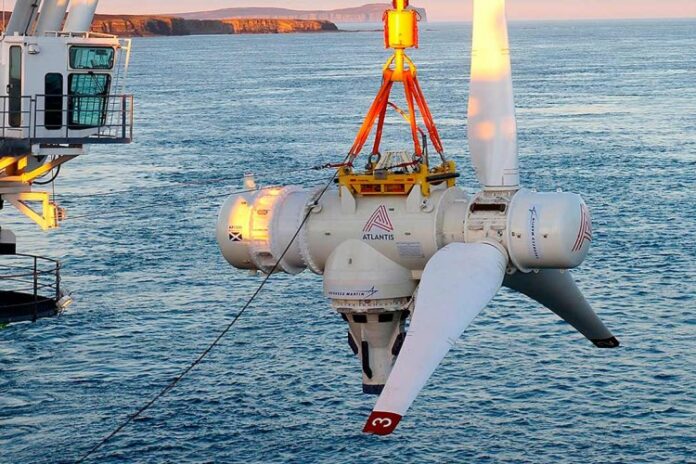
The ‘Cost Reduction Pathway of Tidal Stream Energy in the UK and France’ report, produced by the Offshore Renewable Energy (ORE) Catapult as part of the Interreg FCE funded TIGER project, documents the global state of the tidal market, and presents a cost reduction trajectory taking tidal stream energy from its current price of £260/MWh down to £78/MWh by 2035.

Simon Cheeseman, sector lead for wave and tidal energy at ORE Catapult, said:

“This report presents a cost reduction trajectory for the tidal stream energy industry and an effective way to track progress over the next 15 years. It allows technology providers, policymakers, and investors to see how the industry has evolved, and how tidal stream can make a significant contribution to energy security in the future. The sector has never been stronger and the roll out of tidal stream energy is a huge opportunity we must capitalise on.”

The report found that drivers for tidal stream energy (TSE) cost reduction include scaling up the size and power of tidal devices, and development of larger TSE farms. Moving to piled foundations and anchors for fixed bottom and floating devices respectively would also deliver cost savings. Longer term, the report estimates that a LCOE of £60/MWh could be reached by 2042 and £50/MWh by 2047.

Economic benefits, in recent studies from the University of Edinburgh and University of Manchester, were also highlighted. TSE projects generate over 80% of materials from the local supply chain, create up to 45 jobs per MW deployed – exceeding the wind and solar industries, and could contribute up to £17 billion to the UK economy by 2050. It also highlighted that the UK could capture 25% of the international market value of TSE through export.

The report suggests that 877MW of TSE could be deployed in the UK by 2035, in agreement with the Marine Energy Council’s ask for the UK Government to commit to 1GW of marine energy deployment by 2035.

The report also highlights that TSE could dramatically improve domestic energy security and reduce costs in the future energy system due to its predictable nature. An increasing emphasis on domestic energy security presents an opportunity for TSE to build capacity as a reliable and forecastable complementary renewable energy source.

Caroline Lourie, Technical Manager, at the European Marine Energy Centre (EMEC) said:

“The UK remains the most attractive global market for tidal stream energy, with over 10 GW potential. In 2021, £20 million a year was ring-fenced for the sector through the UK Government’s Contracts for Difference scheme; an important endorsement of the industry. However, to drive down costs so that tidal energy is competitive with other renewables, a huge ramp up of installed capacity will be needed over the next decade. For this to happen, we need long-term policy support and continued ring-fenced funding.”

The report called on policymakers in the UK and France to support the TSE cost reduction trajectory by committing to industry deployment targets, ensure TSE has a secure route to market such as ring-fenced funding in the UK Government’s Contracts for Difference rounds, and streamline the consenting process to strengthen the project pipeline. These three actions will improve private sector confidence, open new TSE funding streams, and accelerate the cost reduction process.