-10.8 C
New York
Home Blog Page 377

AD Ports Group launches KEZAD industrial services

0

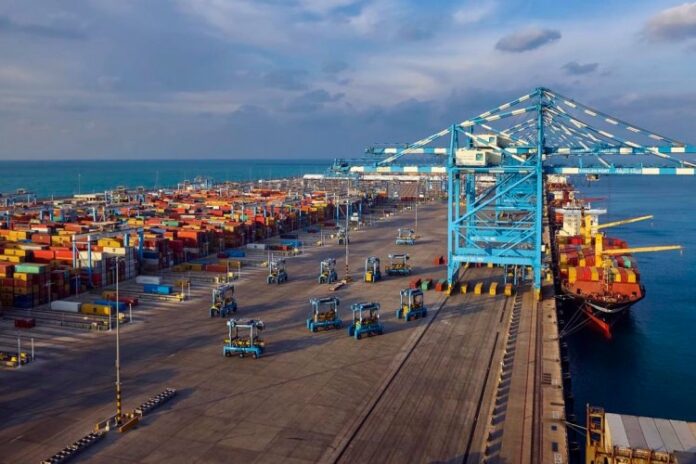
Khalifa Economic Zones Abu Dhabi – KEZAD Group, the integrated trade, logistics, and industrial hub of Abu Dhabi, has announced the signing of an agreement to form a joint venture between its parent company AD Ports Group, and Al Fanar Gas Group, part of UAE’s leading diversified conglomerate, Ethmar Holdings. The new company, “KEZAD Industrial Services”, will oversee the enhancement of multiple offerings to industrial customers and will continually assess and develop new specialised offerings.

Headquartered in Abu Dhabi, with a range of subsidiaries across the UAE, Al Fanar Gas Group provides engineering, procurement, construction, and maintenance services for major developers, consultants, and contractors across public and private sector projects. Its parent company, Ethmar Holdings, covers a wide range of markets internationally, including the Middle East, Asia, the United States, and South America.

KEZAD Group’s integrated business ecosystem is home to more than 1,750 investors from 17 key industrial sectors. It covers 550 square kilometres, including more than 40 staff accommodation complexes under its subsidiary KEZAD Communities. The new entity will invest in developing new infrastructure and capabilities for superior management of its assets and widening the offerings being provided to customers.

Abdullah Al Hameli, Chief Executive Officer of Economic Cities & Free Zones, AD Ports Group, said:

“KEZAD Group is steadfast in its commitment to providing the highest level of services to our clients, including robust infrastructure and services for manufacturing and distribution activities across the industrial and logistics ecosystem. We know this is a key differentiator for companies in strategic industries, who need to be able to scale their operations quickly.

“Launching a new business division focused on these areas raises the level of service and safety available to our clients. The establishment of ‘KEZAD Industrial Services’ with Al Fanar Group will ensure improved efficiency, access to superior services and increase overall competitiveness for all our customers.”

Moustafa Rashad, Group CEO, Al Fanar Gas Group, said:

“We are proud to have a strong and long-lasting relationship with AD Ports Group and KEZAD Group. It was mutually agreed to strengthen our alliance to deliver greater services and further develop the industrial ecosystem together. We have a deep understanding of industrial customers in UAE and across multiple international geographies that we will leverage to introduce new products and services through the Joint Venture with KEZAD Group.”
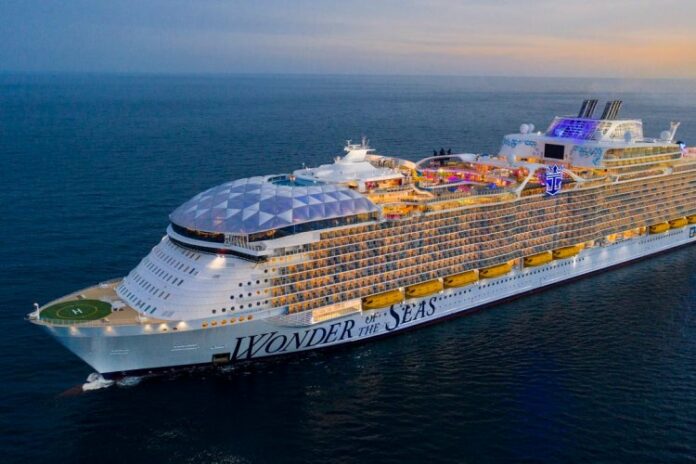
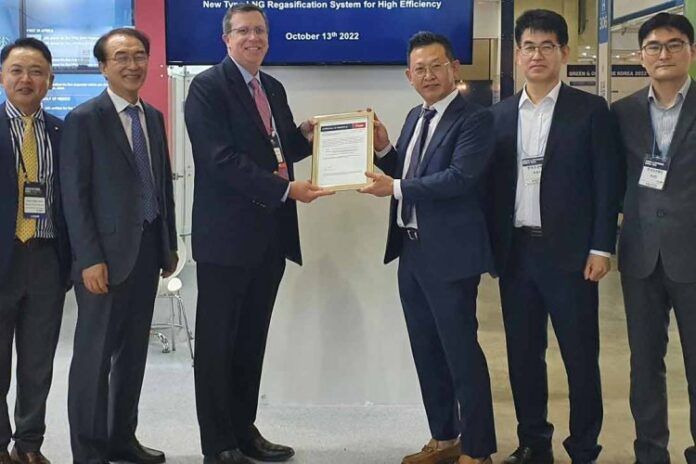
ABB and Royal Caribbean Group collaborate to make emergency stops safer

0

As the world’s largest cruise ship Wonder of the Seas, departed on her maiden voyage in the beginning of March 2022, she was the first in the world to feature the new ABB Ability™ Marine Braking Assistance.

Designed for safe and smooth emergency stops, the automatic braking system is the result of collaboration between supplier and owner, initiated at Royal Caribbean Group’s request.

Following full sea trials by shipbuilder Chantiers d’Atlantique and acceptance by the owner, the DNV-approved Marine Braking Assistance provides the latest example of how technology can be leveraged to improve safety for ships, seafarers and passengers.

Marine Braking Assistance, through the push of a button triggers an automated braking sequence, optimizing the angles and power of all the Azipod® propulsion units based on vessel position, heading and speed to allow maximum braking efficiency. Critically, operators have time to attend to other urgent matters while retaining control over steering.

Kalevi Tervo, Global Program Manager of ABB Marine & Ports, said:

“Marine Braking Assistance is a good example of a co-creation project where we, in close collaboration with Royal Caribbean Group, developed a solution that makes a real operational difference. The adoption of an automated process that improves safety holds special significance at a time when regulators are moving forward on rulemaking for autonomous ships.”

The Marine Braking Assistance can be compared to an automated braking system (ABS) whose safety benefits car drivers today expect as standard. Automation of the braking sequence also minimizes the wear and tear systems experience due to vibration cavitation and the heating up of braking transformers under manual control.

Hard stopping a ship in an emergency situation can be highly stressful. Unlike slamming on the brakes of a car, for vessels with shaftline propulsion the turn to full astern results in losing steering ability. For a vessel equipped with podded propellers, the pod way emergency stopping procedure allows much faster stopping, with limited steering ability, but it demands step-by-step manual actions by the helmsperson, at a moment when other issues require immediate attention.

ABS grants AiP for HHI Group Integrated Regasification System

0

ABS has awarded approval in principle (AIP) for a next-generation, highly efficient concept of a regasification system (Hi-ReGAS+) for floating storage regasification units (FSRUs) and floating liquefied natural gas (LNG) terminals that uses natural circulation.

The technology was developed by Korea Shipbuilding & Offshore Engineering (KSOE), the intermediate holding company of Hyundai Heavy Industries Group, and Hyundai Heavy Industries (HHI) and is a follow-on model to the Hi-ReGAS system from HHI Group. 

The stand-out feature is a natural circulation system that utilizes the density difference of the fluid in the intermediate heat transfer system that transfers heat from seawater to LNG, creating a highly energy-efficient circulation system and reducing energy consumption to improve reliability.

Darren Leskoski, ABS Vice President, Business Development, said:

“We are proud to use our insight and experience to support HHI Group on such innovative projects. FSRUs are in high demand right now, and this new regasification system has the potential to reduce operational expenses while increasing the reliability of the unit – a win/win situation for all involved.”

Sungjoon Kim, Senior Executive Vice President & CTO of Korea Shipbuilding & Offshore Engineering, said:

“LNG will be used as a core energy source in the low-carbon era, and reducing the energy required to use LNG is a core issue for meeting carbon regulations after 2030. Highly efficient systems such as Hi-ReGAS+ are new systems that meet this global trend. We will continue to cooperate in the development of environmentally friendly core technologies in the shipbuilding and marine fields.”

The Hyundai Heavy Industries Group built a demonstration facility on a scale of 1/100 of an actual regasification system to verify the performance of the highly energ-efficient regasification system. Based on the experience accumulated through long-term operation of the demonstration facility, improvements were identified and applied to the design. After an analysis by ABS, an AIP for this ship class was obtained.

Ports of Singapore, Los Angeles and Long Beach to establish digital shipping corridor

0

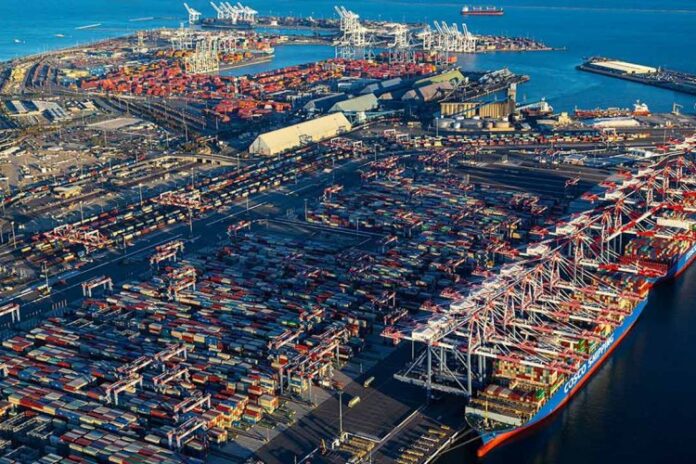
The Maritime and Port Authority of Singapore (MPA), Port of Long Beach, Port of Los Angeles, and C40 Cities have begun discussions to establish a green and digital shipping corridor between Singapore and the San Pedro Bay port complex. 

This collaborative effort supports the Green Shipping Challenge launched during the World Leaders’ Summit at the 27th United Nations Climate Change Conference (COP27) in Sharm el-Sheikh, Egypt, this week. Convened by the United States and Norway, the Green Shipping Challenge encourages governments, ports, maritime carriers, cargo owners and others in the shipping value chain to commit to concrete steps at COP27 to galvanize global action to decarbonize the shipping industry. 

Port of Long Beach Executive Director Mario Cordero said:

“Decarbonizing the supply chain is the future of our industry, and partnerships like this on the world’s most important trade route are important for fulfilling that ultimate goal. We’re excited about developing this initiative in the coming months and what it means for making operations more efficient while advancing the fight against global warming.”

Port of Los Angeles Executive Director Gene Seroka said:

“Reducing greenhouse gas emissions in the maritime supply chain is essential, and this trans-Pacific partnership will help us build a network of ports and key stakeholders to help decarbonize goods movement throughout the Pacific region. We look forward to coordinating with our partners to develop an implementation plan on this critical initiative.”

As hub ports, Singapore, Long Beach, and Los Angeles are vital nodes on the trans-Pacific shipping lanes and key stakeholders in the maritime sector’s green transition. The three ports and C40 Cities will work closely with other stakeholders in the maritime and energy value chains to accelerate the deployment of low- and zero-carbon emission solutions, identify digital shipping programs, and develop green fuel sources for bunkering to support efficient cargo movement. In addition to reducing greenhouse gas emissions, the green and digital shipping corridor aims to catalyze investment in green infrastructure, including zero-carbon energy hubs linked to port and shipping demand.

Teo Eng Dih, Chief Executive of MPA, said:

 “The trans-Pacific corridor is one of the busiest trade routes in the world. MPA is pleased to support the development of a green and digital shipping corridor with the USA through the Port of Los Angeles and the Port of Long Beach, given their strong connectivity and existing initiatives with C40 Cities. Through this corridor, we hope to support the decarbonization of global supply chains, complementing efforts undertaken by the industry and the International Maritime Organization to drive the decarbonization and digital transition for international shipping.” 

C40 Executive Director Mark Watts said:

“Accelerating efforts to decarbonize the shipping sector is urgent if we are to limit global warming to 1.5°C. This initiative has the potential to serve a range of carriers and routes by reimagining infrastructure designs and operational best practices, and advancing the feasibility of zero-carbon fuel production, supply, storage and bunkering.”

Norbulk appoints Verifavia for emissions verification across 65 vessels

0

The tie-up will see Verifavia, the carbon emissions verification services provider to the maritime and aviation industries, supporting 65 Norbulk vessels in complying with regulations aimed at decarbonising the maritime industry including the Carbon Intensity Indicator (CII).

From 1 January 2023, CII will regulate the operations of all cargo and cruise ships that are 5,000 gt or above. Owners will need to calculate their vessel’s operational efficiency by comparing its fuel consumption with the total distance the ship has travelled.

To comply with CII, a ship’s actual annual operational carbon intensity rating must be documented and verified against the indicator’s requirements. This determines the operational CII rating on a scale from A to E, showing the performance level, which is then recorded in a vessel’s Ship Energy Efficiency Management Plan (SEEMP).

In November 2021, Verifavia launched the world’s first real-time CII Dashboard, allowing owners, operators and charterers of ships over 5,000 gt to accurately measure a vessel’s current and predictive CII rating. The CII dashboard provides guidance for ship efficiency, generating data on the amount of carbon produced and, through its calculator, insight into whether emission levels for a single voyage or reporting period meet industry regulations.

The dashboard’s simulator can predict when vessels, and specific voyages, will comply with CII regulations, helping shipowners to simulate and plan for upcoming journeys. It also highlights areas where the vessel falls short of compliance and is required to meet carbon efficiency regulations.

While supporting Norbulk vessels with CII, Verifavia will also assist the ship management company on other aspects of environmental regulatory compliance such as EU and UK Monitoring Reporting and Verification and the IMO Data Collection System.  

Julien Dufour, President of Verifavia SAS, said:

“With just months until CII rules come into effect, demand for an emissions verification specialist has never been greater.”

“Very few, if any, ship owners, operators and management companies have the in-house expertise or time required to ensure all vessels within their fleet are CII-compliant. By entrusting us to carry out this vital work, companies such as Norbulk can focus on their core business and daily operations.”
 

Genco selects the Veson IMOS Platform to optimize business operations

0

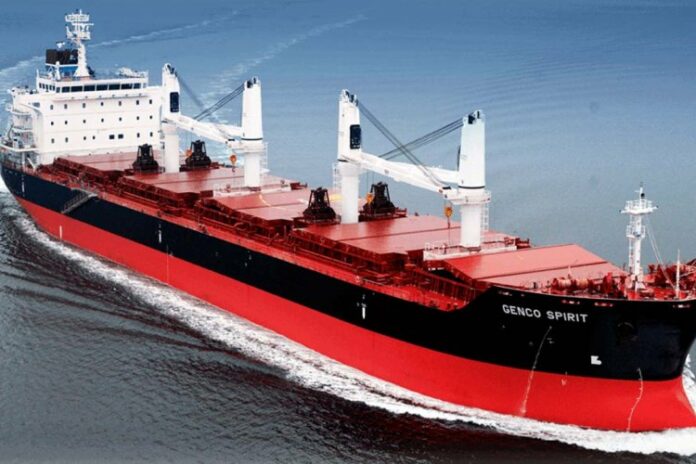
Genco Shipping & Trading Limited (Genco), a renowned provider of international seaborne dry bulk transportation services, has today announced its selection of Veson Nautical (Veson), a leading provider of commercial maritime software and services, as their technology partner to optimize business operations. 

After over three years of carefully evaluating solutions, Genco arrived at Veson as the best fit for the company’s strategic objectives of increasing productivity and profitability. With the adoption of the Veson IMOS Platform (VIP), Genco looks to improve current processes and utilize standardized protocols within the platform to increase efficiencies and improve data analytics. 

Rob Hughes, Captain and Chief Operations Officer at Genco said:

“Ultimately, we felt that the Veson solution stood out – notably for us, it provided improved functions on the accounting module as well as more detailed data management on the voyage reporting side.”

Genco provides a full-service logistics solution for the transportation of key cargoes such as iron ore, grain, steel products, bauxite, cement, and nickel ore among other commodities along worldwide shipping routes. As of August 10, 2022, Genco’s modern dry bulk fleet consists of 17 Capesize, 15 Ultramax and 12 Supramax vessels with an aggregate capacity of approximately 4,636,000 DWT and an average age of 10.6 years. 

With such a vast operation running amidst building volatility and uncertainty in the industry and the world, CEO John Wobensmith and the Genco management team have been laser focused on the ability to unleash the potential of employees around the globe. The Veson IMOS Platform, which provides readily accessible data, easier maintenance, increased security protocols, and the ability to scale data storage, will provide comprehensive support to empower Genco’s multi-faceted workforce.

Rob Hughes added:

“The future is bright with the bold step to team up with Veson. In the coming months, we look forward to bringing online the Veson IMOS Platform to unbridle our team members both afloat and ashore so we can align process with functionality. We are confident in securing our short-term efficiency goals and building upon those efficiencies in further collaboration between our companies.”

Jere Richardson, Chief Commercial Officer at Veson, said:

“We are excited to welcome Genco to the Veson community, they are an impressive organization with a drive for and dedication to excellence. With the support of the Veson IMOS Platform and our diligent services teams, paired with Genco’s unique industry experience, we can unlock more efficient analysis and deeper insights, ultimately advancing Genco’s operations. I am looking forward to what we can achieve together in the near and long-term future.” 

C1 Connections and Heerema test the C1 Wedge Connection offshore

0

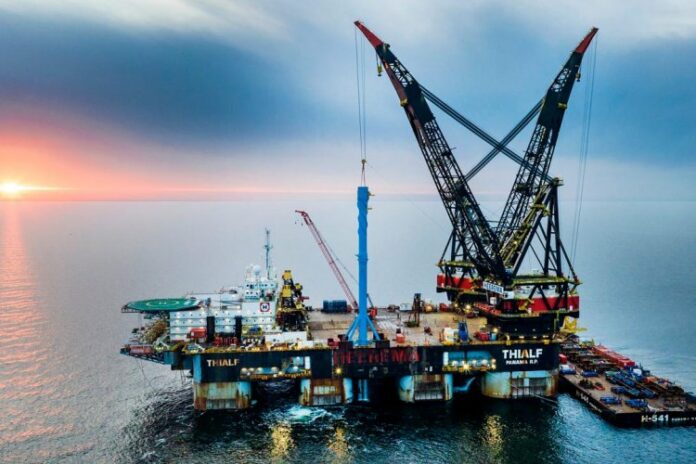
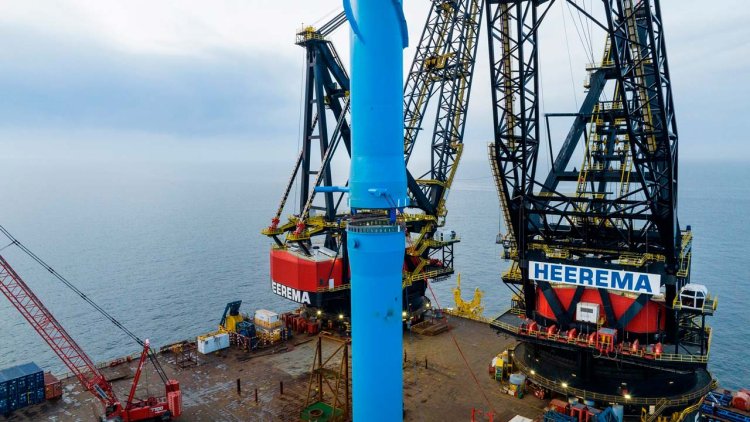
C1 Connections BV and Heerema Marine Contractors have successfully tested the C1 Wedge Connection™ offshore. 

The C1 Wedge Connection™, developed by C1 Connections BV, is a high-capacity connection that can be installed faster and safer than conventional bolted flange connections. It can be used in off- and onshore wind turbines, both in turbine towers and foundations. The installation of the tower on board Thialf was performed as part of the preparations for the Arcadis Ost project, for which Heerema will install 27 wind turbines for the Belgian developer Parkwind.

The C1 Wedge Connection™ can deliver the high capacity that is needed for the next generation wind turbines, which continue to grow in size and are installed on sites in increasingly harsh environmental conditions or on floating platforms. The C1 Wedge Connection™ will improve the LCOE by reducing CAPEX and OPEX while allowing safer installation.

Conventional bolted L-flange connections are reaching their capacity limits and are complex to design, install and maintain. This is where the C1 Wedge Connection™ will make a significant difference. During the offshore test, C1 Connections and Heerema Marine Contractors demonstrated that the C1 Wedge Connection ™ enables a safe disconnection of the tower from a grillage on a barge. The alignment and quick connection of the tower was successfully performed without any personnel below the suspended load. The C1 Wedge Connection ™ features pre-installed fasteners, and only lightweight tools are needed to finalize the connection.

The development of the C1 Wedge Connection™ started in early 2017 in close collaboration with Delft University of Technology (TU Delft). From the offset, this technology has received support from the Dutch Government Agency RVO, with several industry partners contributing to its further optimization.

Jasper Winkes, Managing Director, C1 Connections B.V.:

“Prior research and testing have demonstrated that the C1 Wedge Connection™ delivers a very high fatigue and ultimate capacity. The collaboration with Heerema has allowed us to demonstrate offshore that we can make installation much safer and faster, which are key benefits the entire industry can benefit from.”

Equinor and Hitachi Energy sign agreement to accelerate the energy transition

0

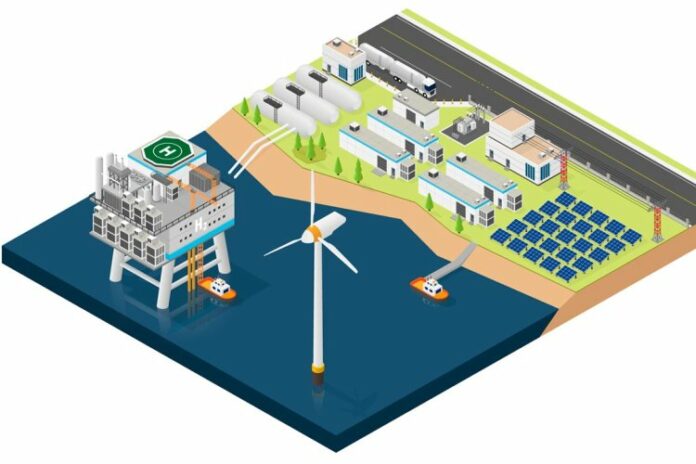
The agreement underlines both companies’ commitment to accelerate the energy transition and advance a more sustainable, flexible and secure energy system.

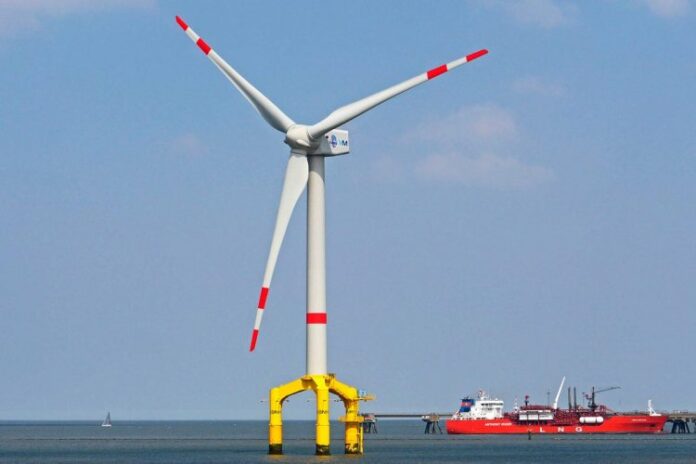
It builds on the two companies’ long and successful collaboration over many decades. During that time, Hitachi Energy has provided Equinor with power grid solutions and pioneering technologies on several projects, such as Dogger Bank A, B and C, the world’s largest offshore wind farm on completion, and Troll A, the world’s first HVDC power-from-shore connection.

Initial areas of focus for the collaboration include developing standardised base designs to be applied for high-voltage direct current (DC) and alternating current (AC) transmission systems to connect offshore wind farms and Equinor production facilities to mainland power grids.

“Hitachi Energy has been a reliable supplier to Equinor for many years. This strategic collaboration agreement is a signal of joint ambitions to increase our competitiveness in the ongoing energy transition. Standardization of technical solutions will be a key to succeed, and we look forward to improving together with Hitachi Energy” said Geir Tungesvik, executive vice president for Projects, Drilling and Procurement at Equinor.

“Equinor has a clear strategic direction to develop even closer collaboration with key suppliers vital to realizing our projects. We are very pleased to enter into such a relationship with Hitachi Energy, which will shape how we work together for many years to come,” says Mette H. Ottøy, chief procurement officer at Equinor.

“We are delighted to deepen our longstanding relationship with one of the world’s leading energy companies and to help Equinor achieve its ambition of becoming net zero by mid-century,” said Niklas Persson, managing director of Hitachi Energy’s Grid Integration business. “Together we make a strong team that will support the society to reach the goal of the Paris Agreement and create a sustainable energy future for all.”

The scope of the agreement covers the complete spectrum of Hitachi Energy’s portfolio of power grid technologies and solutions.

JF Renewables supporting offshore wind cable testing for Greater Changhua

0

James Fisher Renewables (JF Renewables), trusted technical and operations solutions provider to the offshore renewables industry, and a part of James Fisher and Sons, announces they are working with Ho Lung Power Engineering (HLPE) to provide planning, reporting, engineering support / technical review and skilled labour for cable termination and testing (T&T) of Orsted’s Greater Changhua wind farm in the Taiwan Strait.

This news follows the recent announcement of the partnership between JF Renewables and HLPE to strengthen localisation in Taiwan.

This latest strategic partnership with HLPE supports the vital provision of local content offering to the Taiwanese market, overcoming the shortage of high voltage-related skills challenges while enabling customers to optimize their local content requirements. Leveraging its high voltage engineering specialists in-house, JF Renewables is providing consultancy services alongside a team of expert technicians for a systematic approach to project planning and execution of Taiwan offshore wind farm construction.

Technical support began in June which included an assessment of team structure and task timings, logistical planning support, progress rate calculations, fibre optic (FO) installation support, interface management and operational efficiency analysis.

Offshore operations include T&T consultancy and service on 66kV inter array cables. Additional work scope includes FO and electrical testing pre and post installation which began in July.

This comes at a pivotal growth moment for Taiwan as it ramps up to meet its target of 20.5GW of offshore capacity by 2035 against the backdrop of project delays due to covid challenges.

James Wu, General Manager Taiwan, JF Renewables says:

“Our long-term partnership with HLPE represents a solid business development plan for JF Renewables and the Taiwan offshore wind industry. HLPE is a professional power engineering company with more than 50 years of onshore electrical experiences and now actively developing their offshore capabilities through the collaboration with JF Renewables to which we are strongly committed. As the energy transition accelerates here, there is a growing need for a localised workforce to support the construction and, in time, operations and maintenance of these new wind farms. Our decade of ‘lessons-learned’ in Europe including expertise in the extremes and superior commitment to safety and risk management makes us perfectly placed to engage with local partners and government institutions to plug the skills gap and nurture new talent.”

Canadian Coast Guard Ship Terry Fox vessel life extension contract awarded

0

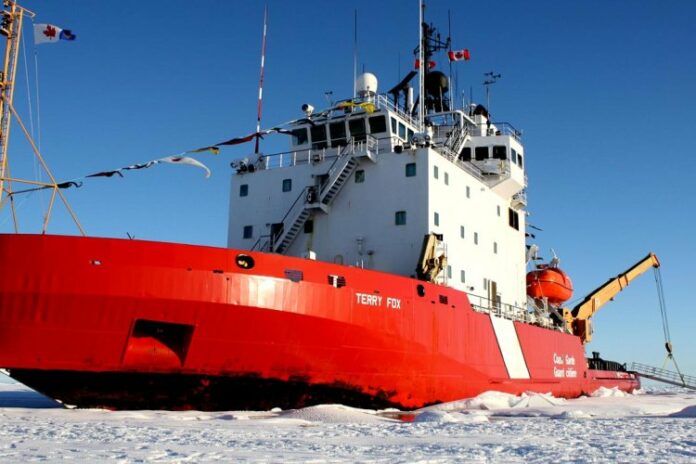
The Canadian Coast Guard (CCG) is announcing the award of a $135.56 million vessel life extension contract for the Canadian Coast Guard Ship (CCGS) Terry Fox. The vessel will be dry-docked and enter an extended maintenance period designed to increase its operational life.

Following an open competitive process, Public Services and Procurement Canada, on behalf of CCG, has awarded Heddle Shipyards in St. Catharines, Ontario, the contract to complete vessel life extension work on the CCGS Terry Fox. The vessel life extension contract includes two phases: a 14-month engineering and procurement phase which will prepare the shipyard for the second phase, the 18 month work period where the vessel will be drydocked for the vessel life extension project.

A large multitasked icebreaker, the ship is capable of sustained operations in the Arctic archipelago over the summer months and icebreaking escort operations in the Gulf of St. Lawrence and East Coast of Newfoundland in the winter. The vessel also assists in various CCG programs including Arctic scientific missions.

While the ship undergoes vessel life extension from late 2023 to Spring 2025, the Canadian Coast Guard will reallocate its other maritime resources to ensure Canada’s waterways continue to be safe for all seafarers.

The Honourable Joyce Murray, Minister of Fisheries, Oceans and the Canadian Coast Guard, said:

“Through the National Shipbuilding Strategy, we are making the important investments so that the Canadian Coast Guard personnel have the proper equipment to perform their crucial work, so Canadians are safe on the water and important trade routes can continue to move throughout the harsh winter. This work benefits the economy and helps us protect our coasts and waters.”

The Honourable Helena Jaczek, Minister of Public Services and Procurement, said:

“The National Shipbuilding Strategy continues to generate social and economic benefits for communities right across Canada. This contract with Heddle Shipyards will extend the life of the CCGS Terry Fox, while creating and maintaining jobs in St. Catharines, Ontario.”

Mario Pelletier, Commissioner, Canadian Coast Guard, said:

“Keeping our vessels in good working order is critical to ensuring that our personnel can provide Canadians with the services they need throughout the year. We are pleased to be working with Heddle Shipyards to ensure that the CCGS Terry Fox will be serving Canadians for many more years to come.”

Quick facts

  • The CCGS Terry Fox was originally built to perform Arctic resource exploration in 1983. In 1991, the vessel was leased by the Canadian Coast Guard and later bought in 1994 to replace the CCGS Sir John A. Macdonald that had just been decommissioned and the CCGS Louis St. Laurent was entering an extensive refit at the time.
  • Homeported in St. John’s, Newfoundland and Labrador, CCGS Terry Fox is a heavy icebreaker vessel named for Canadian icon Terry Fox.
  • Although the vessel is primarily used for icebreaking, it also performs search and rescue, scientific research and environmental response.

The vessel life extension work includes:

  • Propulsion machinery replacement
  • 40-Ton deck crane refurbishment or replacement
  • Shaft alternator replacement and frequency stabilization
  • Bubbler compressor and piping replacement
  • Tank inspections and coatings
  • Hull reinforcement and coatings
  • Superstructure/deck and mast coatings
  • Tailshaft and rudder inspections
  • Internal communication system replacement
  • Deck Machinery inspections and replacements
  • Domestic and auxiliary system upgrades
  • Steering gear and control upgrade