-9.2 C
New York
Home Blog Page 376

“Viking Neptune” delivered in Ancona

0

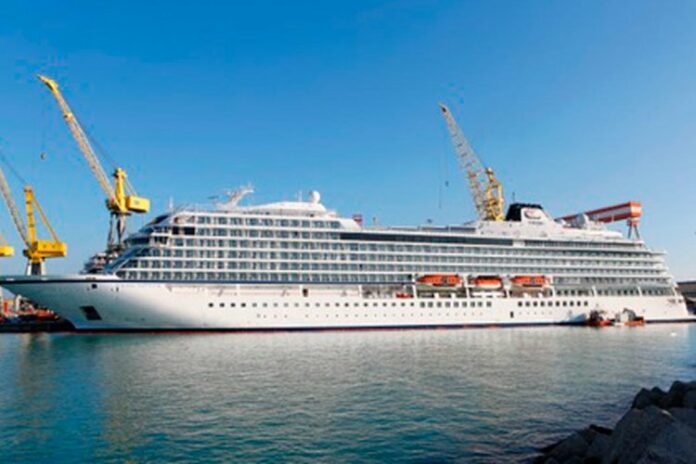
“Viking Neptune”, the newest ocean cruise ship which Fincantieri has built for the shipowner Viking, has been delivered at the shipyard in Ancona. The unit is placed in the small cruise ship segment. As its sister ships, she is about 47,800 tons, with 465 cabins to accommodate up to 930 passengers.

“Viking Neptune”, ninth of this class, marks a quantum leap in the longstanding cooperation between Viking and Fincantieri for designing, delivering and operating environmentally considerate cruise vessels. The two companies, indeed, keep on cooperating for developing pioneering applications based on hydrogen fuel cells, aiming to achieve an increasing reduction of GHG emissions.

“Viking Neptune” embodies the first result of such cooperation, as a hydrogen fuel cell module, with a nominal power of 100 kW, has been fitted on board as a test. Such installation is particularly important for tuning technological devices and developing rules and regulations for use of hydrogen on board a cruise vessel.

This year Viking and Fincantieri have also strengthen their collaboration going beyond the joint R&D activity and aiming to develop large scale hydrogen applications, significantly contributing to the reduction of GHG emissions of the vessels. As a first step the two companies have designed an enlarged vessel configuration (to be applied to the vessels to be delivered after 2024), defining spaces and arrangements for accommodating the increased size of hydrogen tank, the fuel cell systems and relevant auxiliaries.

The second step will be the development of a hydrogen-based generation system with a total power of about 6-7 MW, (the largest size ever tested on board a cruise vessel) and able to ensure smokeless port operation and slow steaming navigation. Such systems, once finalized, could be installed on the vessels under construction and, as far as possible, retrofitted on the vessels already delivered.

Equinor and ORE Catapult announce strategic partnership

0

Equinor and the Offshore Renewable Energy (ORE) Catapult have announced a collaboration agreement that will tackle some of the biggest challenges facing the offshore renewables sector.

The UK-wide partnership brings together Equinor, the operator of Dogger Bank which is set to be the world’s largest offshore wind farm on completion, with the UK’s leading R&D experts in offshore wind energy at ORE Catapult, building on previous collaborations between both organisations.

ORE Catapult and Equinor have a joint aim to collectively invest in technology readiness for offshore wind, and together they will focus on developing skills in the industry, on operations and maintenance initiatives, on improving turbine reliability/performance and on energy integration.

Tony Quinn, ORE Catapult’s Technology Development Director, said:

“With a long history of collaboration between ORE Catapult and Equinor, this agreement was a logical next step that we are very excited to see come to fruition. Supporting Equinor in developing solutions to key challenges for the sector, across skills, O&M and energy integration in particular, will generate exciting outcomes for the industry moving forward.”

ORE Catapult and Equinor are aligned on key areas such as supporting the UK Offshore Wind Sector Deal, accelerating innovation and developing opportunities in clusters across the UK. Broader collaboration in the future could include hydrogen electrolysis and battery storage.

Trine Borum Bojsen, SVP North Sea Renewables at Equinor said:

“We are delighted to strengthen our partnership with ORE Catapult, building on our relationship developed in North East England and around our floating wind project, Hywind Scotland, where we have previously collaborated to share data. We look forward to working together on initiatives across the UK that will help to develop a more competitive UK supply chain, deliver new innovations and support the talent of tomorrow entering the industry”.

Key components in the Dogger Bank supply chain have undergone rigorous testing and certification at ORE Catapult’s world leading testing facility in Blyth as part of the delivery of the project. Equinor has also been a delivery partner on ORE Catapult’s Technology Innovation and Green Growth in Offshore Renewables (TIGGOR) programme since its inception and currently supports the Catapult’s UK wide Launch Academy programme.

Shipping decarbonization action plan launched to upskill global seafaring workforce

0

A new Action Plan, launched at COP 27 by UN organizations, shipowners and unions, sets out recommendations to upskill seafarers to meet shipping’s decarbonisation goals. The plan is in response to findings from new research, the modelling of which cautions that as many as 800,000 seafarers will require additional training by the mid-2030s.

Currently accounting for 3% of global emissions, shipping needs to transition away from conventional fuels towards alternative low- and zero-carbon fuels and technologies to meet the world’s target of keeping global warming to 1.5C or less by 2050.

The three emission reduction scenarios assessed in the research highlight an immediate need to start putting the training infrastructure in place, to ensure hundreds of thousands of the world’s nearly two million seafarers are upskilled and empowered through the transition.

Findings also suggest that a lack of certainty on alternative fuel options is having knock-on effects for seafarer training, as the global maritime community works towards a clearer decarbonization pathway in a post-fossil fuel era.

The research was conducted by leading maritime consultancy DNV and commissioned by the Maritime Just Transition Task Force Secretariat. The Maritime Just Transition Task Force was formed to ensure that shipping’s response to the climate emergency puts seafarers and communities at the heart of the solution
In response to the training challenge that the modelling lays bare, the Action Plan makes recommendations for industry, governments, seafarer unions and academia (including training providers). These recommendations include:

  • Strengthening global training standards
  • Ensuring a health-and-safety-first approach
  • Establishing advisory national maritime skills councils

Sanda Ojiambo, Assistant Secretary-General and CEO of the UN Global Compact, said:

“Climate action focused on people and job creation must be at the core of a Just Transition to Net Zero. This new paper highlights that aligning with a 1.5 C trajectory requires action now to support the upskilling of the maritime workforce as the shipping industry moves to rapidly cut its greenhouse gas emissions. The action-plan represents a global first – it marks the first business sector uniting in a tripartite framework – shipowners, seafarers’ unions and UN organisations – to discuss how to secure a Just Transition together.”

Stephen Cotton, General Secretary of the International Transport Workers’ Federation (ITF) said:

“All three scenarios DNV identified require some form of retraining the workforce. The good news is that seafarers are prepared and willing to be part of this transition. But crew want to know that the fuels they’re handling are indeed safe, and that we as an industry have the training pathways established to upgrade their skills. Seafarers and other maritime workers are already feeling the effects of an unstable climate – dry unnavigable rivers, soaring ocean surface temperatures, shutdown ports with heatwaves and flash floods.”

Guy Platten, Secretary General, International Chamber of Shipping, said:

“There is an urgent need to establish the infrastructure and training required to prepare our seafaring workforce, both in developed and developing countries, to help meet our decarbonisation objectives. This should be done as of today, so they are ready and able to meet the challenges that new green fuels and propulsion technologies will pose and mitigate any potential health and safety risks for ships, communities, the environment and seafarers themselves. This is an opportunity for all so that no-one is left behind. Shipping cannot decarbonise without its workers and the 10-point action plan developed by the Task Force maps out a pathway for how this can be achieved, as our industry continues to navigate towards a decarbonised future.”
Kitack Lim, Secretary General of the International Maritime Organization, said:

“Climate change is a global issue that requires a global response. We must use every tool available to decarbonize the maritime sector. Alternative fuels and green technologies can help meet emission reduction targets. This cannot happen without the people who will be at the heart of implementing shipping’s decarbonization journey. It is clear that seafarers must have the appropriate training for a smooth transition to a greener future. This is something that will be in sharp focus as IMO works on its comprehensive review of the STCW Training Convention.”

Gilbert F. Houngbo, Director-General, International Labour Organization:

“A Just Transition to addressing the climate crisis must be human-centred. Greening the economy in a way that is as fair and inclusive as possible to everyone concerned, creating decent work opportunities and leaving no one behind, is essential. Efforts to decarbonize shipping should be undertaken in accordance with the ILO Guidelines for a just transition towards environmentally sustainable economies and societies for all. Doing so will achieve a transition for seafarers and other maritime workers based upon the importance of labour standards, productivity, skills development, lifelong learning, social justice and equality, and which is therefore truly sustainable.”

CEO of leading maritime consultancy DNV Maritime, Knut Ørbeck-Nilssen, said:

​​”Decarbonization is bringing new opportunities, new technologies but also new risks. Our first priority must be to achieve safe decarbonisation. We must take a collaborative approach to safeguard our people, our ships and our environment. This report points to the challenges and the tangible actions the industry can take to support and protect its workforce. DNV is pleased to see the action plan led by the Task Force and recognize the challenge moving forward to train seafarers on alternative fuel technologies.”
Raal Harris, Chief Creative Officer, at Ocean Technologies Group, which is part of the Maritime Just Transition Task Force’s Global Industry Peer Learning Group, said:

“In the race to decarbonise our industry we have to make sure that seafarers are able to work safely under a higher risk profile than they might be used to. It’s evident this will put pressure on traditional training methods that must be overcome. This huge transition in our Industry will also bring new opportunities for seafarers to develop valuable transferrable skills in new technology and sources of energy that can help attract a diverse new generation. Seafarers and those that support them on shore have a massive part to play in delivering net-zero and we must give them the tools they need to succeed”

Karin Orsel, CEO, MF Shipping, said:

“As shipowners and operators we must recognise that we cannot achieve a green transition without our seafarers. Shipping has an opportunity to be a leader in the creation of a just green transition, in which we invest in the training and upskilling of our workforce, create decent job opportunities for all, not just for the few, raise work standards, tackle safety concerns, and ensure diversity issues are addressed from the outset. This is good business sense, this is ethically and morally the right thing to do, and importantly, if we embed just transition practices into our operations from the outset, we will as an industry have a stronger chance of meeting our global carbon reduction targets.”

Cleo Bierneza, a seafarer (Third Officer) from the Philippines working aboard cargo ships, said:

“As seafarers, we see climate change happening. Some voyages get very hot nowadays for crew onboard, and in some places of the world the weather will change extremely, without warning. It didn’t used to be like that. I would like maritime to reduce our own carbon if we can, so crew can have a more stable climate to work with. I am excited for a Just Transition, because we can make seafaring an even better job and hopefully bring in more women to become seafarers.”

ABS supports China Shipbuilding’s entry into ammonia-fueled vessels

0

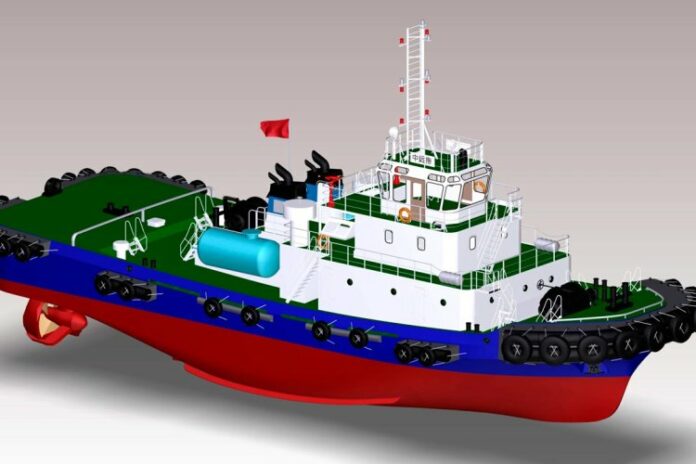
ABS awarded two approvals in principle (AIPs) to COSCO Shipping Heavy Industry Co., Ltd., and COSCO Shipping Heavy Industry Technology Co., Ltd., for their ammonia-fueled vessel and ammonia supply system designs which are being trialed on a tugboat.

Given the challenging characteristics of ammonia, ABS conducted a comprehensive review and risk assessment focused on ammonia filling, storage, supply, ventilation and emergency handling in the AIP process to address the safety and reliability of the systems.

Georgios Plevrakis, ABS Vice President, Global Sustainability, said:

“These are exciting developments for COSCO Shipping and China shipbuilding to show leadership in the decarbonization of our industry. Ammonia offers ship owners and operators a zero-carbon, tank-to-wake emissions profile. Yet, we also recognize that ammonia presents a specific set of safety and technology challenges, and ABS is committed to leading the industry in supporting its safe adoption at sea.”

Ji-Jiang Jiang, COSCO Shipping Heavy Industry General Manager, said:

“This is the first comprehensive technology research project in China focusing on ammonia burning, ammonia-diesel, dual-fuel engine, ammonia fuel supply system, exhaust gas treatment and onboard application demonstration, which is of great significance and has far-reaching impact. In the future, we will continue to pioneer innovation, with the development of green, low-carbon and smart shipping.”

The tugboat is designed to be 36 meters in length with a towing capacity of up to 60 tons. The ammonia supply system will be part of the vessel, providing ammonia for propulsion.

Christiania Shipping adopts StormGeo’s CII simulator

0

The specialized chemical ship owning and chartering company Christiania Shipping currently operates 20 vessels. Eager to improve the environmental performance of its fleet and stay compliant with industry regulations even before they start in 2023, the company added StormGeo’s CII Simulator to its fleet performance management toolbox in June 2022.

Rune Eriksen, Chief Operating Manager at Christiania Shipping, says:

“With the new Carbon Intensity Indicator (CII) rating scheme coming into play soon, we are determined to do our part in decarbonizing the shipping industry. StormGeo’s CII Simulator not only gives us deep insights into the CII status of our individual vessels but also helps us make well-informed decisions on how we best can deploy our fleet. The system is very user-friendly and is being used across the organization.”

Christiania Shipping already leverages StormGeo’s s-Insight | Log reporting tool for onboard data collection, automated ship-to-shore reporting systems, and comprehensive dashboards. With StormGeo’s CII Simulator, the company expands its capabilities, having a flexible and actionable tool to collaborate on operational deployment and achieve desirable CII ratings.

With StormGeo’s CII Simulator, Christiania Shipping is already able to monitor the compliance status for an entire year and forecast next year’s CII ratings based on potential future deterioration. The simulations easily reveal any deterioration that indicates the need for vessel retrofits or major vessel conversions, should operational measures prove insufficient.

Espen Martinsen, VP of Sales at StormGeo, says:

“StormGeo is excited to have Christiania Shipping onboard and provide the tools they need to ensure regulatory compliance and reach their decarbonization targets. We have long experience helping shipping companies improve their environmental performance and now offer a user-friendly solution that can help drive the green agenda in the shipping industry even further.”

The CII Simulator not only allows the user to monitor the current CII performance of the vessel, but it also allows the user to simulate different operational scenarios. The CII simulator is part of the Environmental Performance Module in StormGeo’s s-Insight, a world-leading fleet performance management solution that ensures vessel compliance and provides simple, trustworthy data reporting systems.

Attero, Nordsol and Titan join forces to produce bio-LNG

0

Attero, Nordsol, and Titan, three companies from very different sectors, have joined forces to achieve a decentralized production of bio-LNG designated for use in the maritime industry. 

The three partners met at the site for the plant – located at the facility of waste processor Attero in Wilp, the Netherlands – where the final investment decision was made and where building can now begin.

The FirstBio2Shipping project is set to deliver the first bio-LNG in early 2024. The plant will produce around 2,400 tons/year of bio-LNG (or liquefied biomethane). Attero will process domestic biowaste into 6 million Nm3 of biogas per year. Nordsol and Attero will jointly produce 2,400 tons/year of high-purity bio-LNG and 5,000 tons/year of liquid bio-CO2 from this biogas using Nordsol’s patented iLNG technology. Clean fuel supplier Titan, the exclusive long-term off-taker, will supply the bio-LNG to the maritime industry where it will cost-effectively substitute fossil fuels. 

The produced bio-LNG will reduce GHG emissions by 92% compared to conventional maritime fuel, representing more than 87500 tCO2e net absolute emissions avoided during the first ten years of operation.

More ambitious sustainability goals and the need for energy independence have increased the demand for biomethane in both gaseous and liquid forms. With the decision to invest and collaborate in the FirstBio2Shipping project, the three partners make it clear that bio-LNG production with integrated biogenic CO2 liquefaction offers maximum green value and economic value for biogas, even if the production plant is small-scale and is decentralized.

Léon van Bossum, commercial director, Nordsol commented:

“Nordsol is committed to making bio-LNG mainstream together with various partners. In 2021 we built the first Dutch bio-LNG installation to make road transport more sustainable. As a frontrunner, we are proud to also contribute to the decarbonization of the maritime sector, together with Titan and Attero. The FirstBio2Shipping project is intended to start a snowball effect, resulting in more and larger installations that help make shipping more sustainable.”

Ronald van Selm, CTO, Titan said:

“At Titan, we are dedicated to delivering all fuels that decarbonize shipping and industry in a substantial way. We recognise bio-LNG as a strong clean fuel and we have therefore acted to progress its production and supply to the maritime industry. We are excited to reach the build stage of the project with the Attero and Nordsol teams. They are committed, valuable partners and we look forward to collaborating with them further in the future.”

Jan-Willem Steyvers, business developer, Attero added:

“Producing bio-LNG out of biogas from biowaste for decarbonising the maritime sector is a unique innovation. Attero is delighted with the cooperation with partners Nordsol and Titan in bringing biogas to a high-end quality product. Yet another step in our mission of continuously increasing sustainability and creating raw materials and energy out of waste.”

Last year, The European Union awarded the project with €4,3M in funding, a clear recognition by the EU of the vital role that bio-LNG will play in decarbonising long-haul maritime transport. This year, on the 19th of October, the European Parliament adopted the FuelEU Maritime Regulation, which aims at the decarbonization of maritime transport, and recognized (liquefied) biomethane as a renewable fuel and its potential to blend with and replace fossil LNG. This joint bio-LNG project, therefore, fits perfectly in the European policies to achieve the climate and energy transition goals.

AD Ports Group and Iraq’s IDB sign agreement for port and logistics development

0

AD Ports Group have signed a Memorandum of Understanding to review opportunities for ports and logistics projects that could enhance trade flows between the UAE and Iraq.

The agreement was signed by Captain Mohamed Juma Al Shamisi, Managing Director and Group CEO of AD Ports Group, and Dr.Ziad Khalaf, Chairman, International Development Bank.

Being the only Iraqi financial institute licensed from the Central Bank of the UAE to provide wholesale corporate banking service, IDB aims to provide its services to corporate clients and support a range of landmark infrastructure projects in both countries.

As part of its strategy for growth and globalisation, AD Ports Group has signed a number of milestone agreements to explore opportunities for the management and development of ports and logistics assets across Iraq, including a 2021 agreement with General Company for Ports of Iraq (GCPI) to promote increased cooperation.

Captain Mohamed Juma Al Shamisi, Managing Director and Group CEO of AD Ports Group, said:

“AD Ports Group continues to expand its international operations, at the direction of our wise leadership, which has seen us provide support and expertise for the development of ports and logistics assets around the world. There are significant opportunities for enhancement and modernisation across Iraq’s ports, logistics and economic zones, and, working with IDB, we will review a number of key projects that help drive UAE-Iraq trade.”

Dr. Ziad Khalaf, Chairman, International Development Bank, said:

“Building connectivity helps strengthen both the national economy and the trade ties between our nations, so we are pleased to enter into this agreement with AD Ports Group, which is a leading enabler of global trade, logistics and transport. The ports and logistics sector plays a vital role in supplying communities across Iraq, and we are optimistic that we can collaborate on projects that make a real and lasting impact.”

The UAE and Iraq have continued to strengthen trade ties in 2022, with several trade agreements and development deals. The World Bank estimates that Iraq’s economy will expand 6.3 percent over the next two years.

Rig-to-reef underway in Angola with help from Saab Seaeye Falcon

0

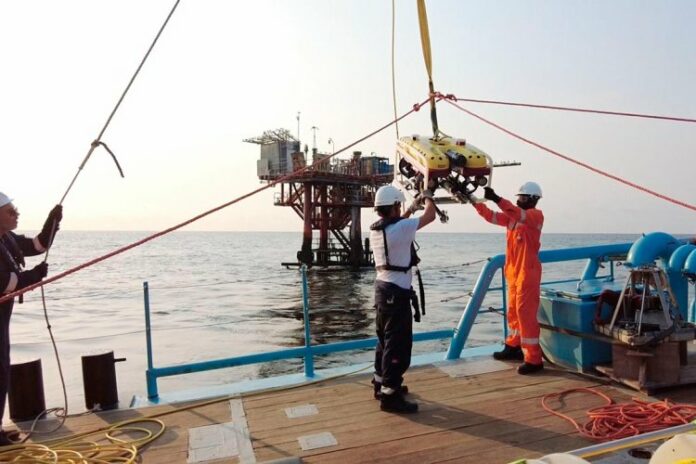
Chief Technical Officer at EQS, Carlos Rodrigues says, “By operating the Seaeye Falcon and all its related capabilities, EQS is supporting its aim to fulfil specific works in a safe and cost-effective manner delivering accurate and relevant information.”

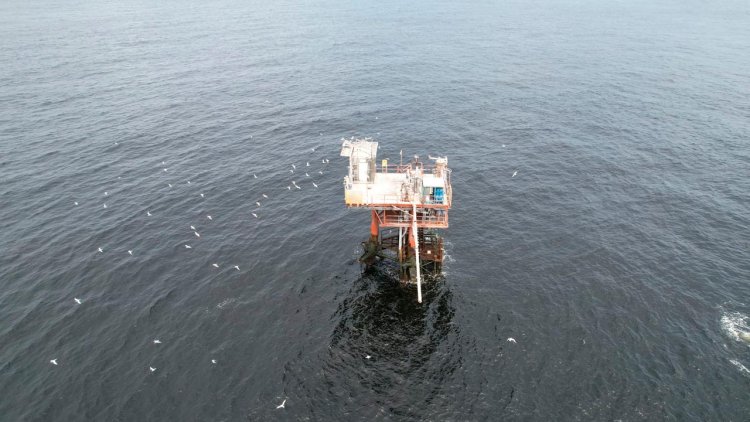
The Falcon is assisting in the survey and mapping of all underwater components, including checking the wellhead, pipelines and the surrounding maritime environment.

Baseline environmental conditions are determined by taking water and sediment samples at several stations and at different depths, focussing on biological matter, namely zooplankton, phytoplankton, and benthos.

Significant marine growth already exists throughout the structure with abundant marine life already in the area for populating the rig when toppled on its side to become an artificial reef.

Once decommissioning is complete, a series of surveys will be scheduled to monitor the evolution of marine growth on the newly created reef.

EQS selected the Seaeye Falcon for its ability to handle an array of cameras, sensors, tooling and complex data gathering systems that include a digital multi-frequency profiling sonar.

Having reached the end of its service life the rig’s transformation into a reef is being undertaken under the auspices of The Ministry of Mineral Resources, Oil and Gas of Angola.

EQS helps offshore energy clients navigate the complex environmental regulatory landscape including compliance, HSE subjects, and business liabilities.

The mission involves a multi-disciplinary team from different companies and sectors of activity, including marine biology, hydrographic surveys, quality inspectors and personnel specialised in survey equipment such as the Falcon.

Future work involves clearing an area of fish nets, restoring platform signalling and marking, positioning of signal buoys and confirmation of pipeline locations along with the surveys to monitor marine growth.

Ex-Navy captain: Ukraine’s drone attack in Sevastopol ‘has no equivalent in the history of naval warcraft’

0

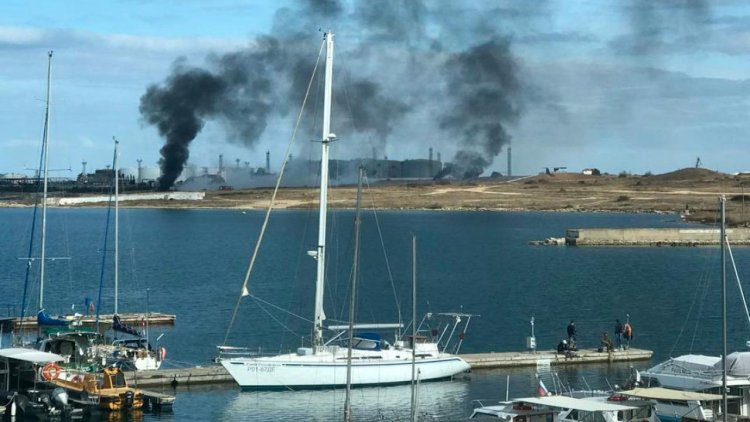
In the early hours of Oct. 29, the famous naval harbor of Sevastopol in occupied Crimea, home to Russia’s Black Sea Fleet, was rocked by a series of mysterious explosions. 

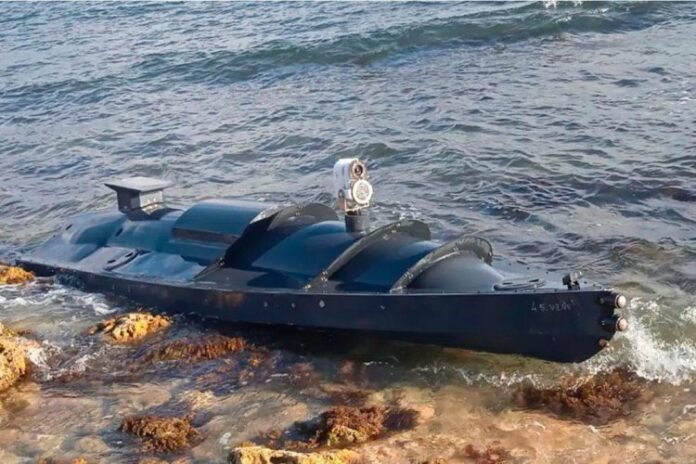
Details were scarce at first, but with the coming of dawn, remarkable footage was released of sleek, black maritime drones maneuvering around the bay on the way to their targets: Russian warships. Seven maritime and nine aerial drones were reported to have been used in the coordinated attack, which damaged the flagship of the Russian Black Sea Fleet Admiral Makarov as well as other vessels.

Russia blamed the attack on Ukraine. Ukraine hasn’t recognized that it was behind the attack. Soon after, President Volodymyr Zelensky announced the start of a fundraising campaign to secure “a fleet of marine drones.” 

With the nearest Ukrainian-controlled coastline almost 300 kilometers from Sevastopol, the ability of these drone boats to reach their targets in the heart of Russian naval power in the Black Sea shocked observers. Comparisons have been made to Japanese suicide boats used in World War II, or even further back, to unmanned fire ships used in the Age of Sail.

The low cost, maneuverability, and effectiveness of the drones have led to the attack on Sevastopol being described as a revolutionary moment in the development of modern naval warfare.

Photo: Benjamin Pittet/Twitter

The Kyiv Independent spoke to military analyst, former Ukrainian Navy captain, and Black Sea security expert Pavlo Lakiychuk about what the attack on Sevastopol means for the Black Sea theater of Russia’s war, and its implications for naval warfare worldwide.

The Kyiv Independent: What was your immediate reaction to the drone attack on the Black Sea Fleet in Sevastopol? Were you surprised, or did you predict something like what happened?

Pavlo Lakiychuk: I can’t say I was surprised, no. In recent months we had seen more and more flying drone attacks against military targets in Crimea, starting from the attacks on airfields in Novofedorivka, Belbek, Dzhankoi and Hvardiiske, to the attacks on the Black Sea Fleet headquarters in Sevastopol. Ukraine has managed to get past the air defense of these bases on a consistent basis now. Just two weeks before this attack, the Russians found one of these drone boats in the area of Kozacha Bukhta. The photos of it match the footage from the attack in Sevastopol. I had no doubts that such an attack could happen, but in what exact fashion it would take place, I could not know; it was a well-kept secret. 

The way they… I can’t say who exactly… managed to pull it off was really impressive. I can’t see any equivalent in the history of naval warcraft to an application of drones, both reconnaissance and attack, maritime and aerial, together like this. It’s a new way of waging war on the sea. Nobody has done anything like this before.

The Kyiv Independent: A uniquely Ukrainian innovation?

Pavlo Lakiychuk: Yes – you could compare it in effect with a combined attack by traditional air and sea forces, but the difference here is that it was very difficult to detect. Like a scene from the game “Silent Hunter,” Ukraine directed its weapons to the target at a great distance away from the operation, and no Ukrainian soldier was harmed.

The Kyiv Independent: What can you tell us about these drone boats? What makes them so effective?

Pavlo Lakiychuk: At their size, objects like this are very difficult to detect. In the sea, not only are they very difficult to spot with the naked eye, but more importantly, they do very well to avoid detection by radar systems. They can’t be seen by radars designed to detect missiles or torpedoes, and their small size means that their signal is broken up by the waves around them on the surface. 

There are other reasons these drone boats were able to travel such great distances undetected; they were only detected when they began their final attack. The systems used to detect an object close to the surface like this are designed to listen for the acoustic signature of a torpedo engine, but these drones used pump jets. 

Moreover, very specific tactical choices were made: to distract the enemy from sea targets and cause overall panic, the first strike came from the air. Only then, with the enemy scrambling to respond, came the attack from the sea.

Continue reading

Author: Francis Farrell

HII unveils REMUS 620 unmanned underwater vehicle

0

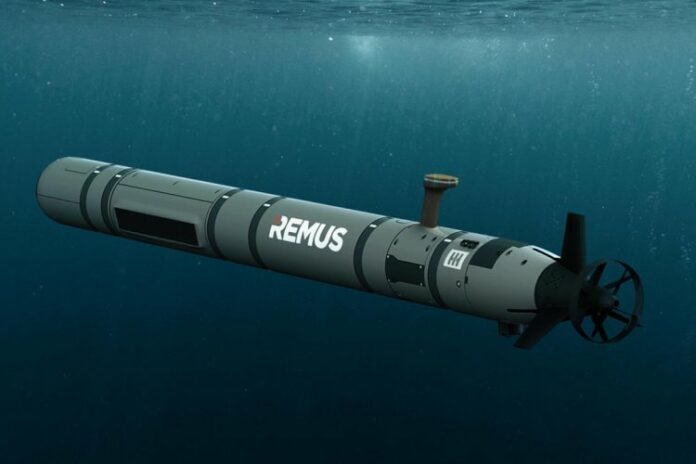
HII’s Mission Technologies division has revealed a new medium-class unmanned underwater vehicle (UUV): REMUS 620.

Building on the design philosophy of the highly successful REMUS 300 — recently selected by the U.S. Navy as the program of record for the Lionfish Small UUV — the REMUS 620 has a battery life of up to 110 hours and a range of 275 nautical miles, providing unmatched mission capabilities for mine countermeasures, hydrographic surveys, intelligence collection, surveillance and electronic warfare.

Duane Fotheringham, president of Mission Technologies’ Unmanned Systems business group, said:

“Retaining a forward strategic advantage requires the ability to deliver a multitude of effects from under the sea. The REMUS 620 is the first medium UUV designed to accurately deliver this range of advanced above-and-below water effects at long range.”

Built to support current and next-generation naval and special operations forces operations, REMUS 620 features a modular, open architecture design to facilitate seamless payload integration and HII’s Odyssey™ suite of advanced autonomy solutions for intelligent, robotic platforms.

REMUS 620 is the same size and weight of the first and only full-rate production medium UUVs: the MK 18 Mod 2, Littoral Battleship Sensing-Autonomous Undersea Vehicle (LBS-AUV) and LBS-Razorback systems operated by the U.S. Navy’s Mine Countermeasure Squadrons, U.S. Naval Oceanographic Office and Submarine Forces, respectively.

Multiple REMUS 620s operating collaboratively can be deployed from submarines, small manned or unmanned boats, amphibious ships, surface combatants and helicopters. REMUS 620 can also be used as a platform to launch and operate other unmanned vehicles or payloads from beneath the sea.

REMUS 620 is equipped with multiple batteries capable of 110 hours and a range of 275 nautical miles per mission, which provides unmatched multi-day endurance, range and stealth. The increased REMUS battery life enables the UUV to execute a significantly longer route to and from a mission area than previously afforded by medium-class vehicles. The energy modules are swappable, allowing for quick turnaround and incorporation of alternative energy sources as they become available.

REMUS 620 is built with modern core electronics, navigation and communication systems, and the vehicle’s open architecture can now be enhanced with HII Odyssey™, a suite of advanced autonomy solutions for intelligent, robotic platforms. The vehicle includes the new Odyssey Mission Management Software.

REMUS 620 standard synthetic aperture sonar payload can be replaced or enhanced for multi-mission capabilities, including intelligence, surveillance and reconnaissance, and cyber and electronic warfare operations.