-9.2 C
New York
Home Blog Page 375

Major investment planned to develop South Auckland-Waikato Offshore Wind industry

0

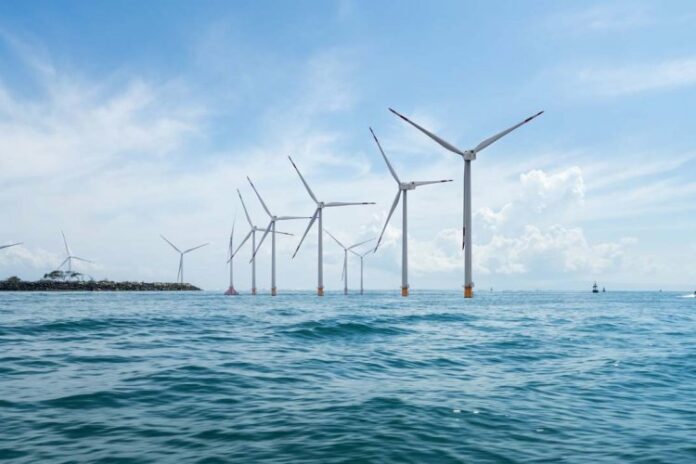
The consortium formed by BlueFloat Energy, Energy Estate and Elemental Group is announcing its plans for a multibillion-dollar investment in offshore wind projects in South Auckland and West Waikato, Aotearoa. The South Auckland-Waikato offshore wind project is the second investment to be announced by the partnership in New Zealand as part of a nation-wide programme to develop up to 5GW of offshore wind.

The project, currently named Waikato Offshore Wind project, is intended to be developed in phases to generate capacity of up to 1.4 GW of power using both fixed and floating foundation technology and capable of powering around 700,000 homes.

Phase 1 of the project is for a ~250 MW development using fixed bottom technology 22 kilometres off the West Waikato coast. The initial phase would create around 300 jobs in construction, operations and maintenance.

Options for Phase 2 utilise floating foundations and include the potential for an 800-1,150 MW development positioned to the west or north of Phase 1. Conservatively Phase 2 will create an additional 800 jobs with the potential for additional jobs dependent on the size of the project.

The consortium has completed its initial site selection and the project is now in the feasibility stage with construction expected to commence before 2030. The lifecycle of offshore wind farms is around 35-40 years at which point they would be decommissioned or re-furbished – providing decades of enduring employment opportunities and a secure supply of renewable generation to the Waikato and Auckland regions.

Carlos Martin, Chief Executive Officer of BlueFloat Energy, said:

“We believe that offshore wind energy can help achieve 600% renewable energy in Aotearoa creating security of supply for the country, meeting increased demands for electrification and decarbonisation.” 
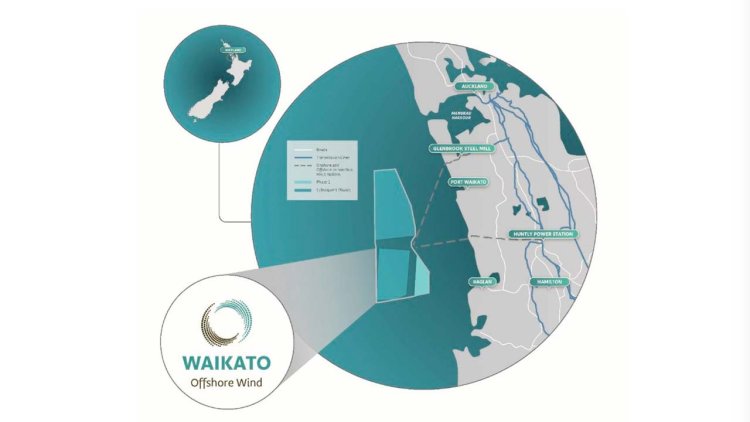
The partnership has been engaging with iwi and key stakeholders to determine the feasibility of offshore wind projects in New Zealand. The partnership is committed to honouring Te Tiriti o Waitangi and are engaging in ongoing discussions with iwi and hapū in South Auckland and Waikato about potential partnership models, including co-design.

Energy Estate Co-Founder Simon Currie said:

“We are committed to the development of the offshore wind energy sector in Aotearoa in a way that is inclusive and future facing and delivers enduring benefits to communities, regions and Aotearoa as a whole. We have a real opportunity to build the sector in a way where the offshore wind industry collaborates and doesn’t just compete. Our partnership wants to build an industry – not just projects.”

Offshore wind in the South Auckland-Waikato region will benefit from close proximity to the Huntly power station and the Glenbrook substation in South Auckland, next door to NZ Steel’s operations, offering a direct route to the grid and the potential to provide new supplies of clean energy to consumers and industry in the Waikato and greater Auckland area.

Local partners, Elemental Group, say the project offers significant opportunity for regional economic development in Waikato and South Auckland:

Elemental Director Nick Jackson said:

“An offshore wind energy industry will provide thousands of jobs for New Zealanders and require an entire local supply chain to support it throughout its lifetime. This is particularly true with floating wind developments which require significantly higher local content in manufacturing and services in addition to the expected operations and maintenance roles.”

Fiona Carrick, Chief Executive of Te Waka, Waikato’s Economic Development Agency commented:

“The energy sector is a key growth industry in the Waikato. The region is uniquely placed to become a national leader in renewable energy generation, and we are very pleased to welcome this project as another exciting development in the sector. As New Zealand, and the world, transition from fossil fuels, the Waikato region’s potential in geothermal, hydro-electric and wind power shapes up as a significant area of opportunity.”

Tātaki Auckland Unlimited Director of Investment and Industry Pam Ford commenting on the announcement said:

“With a new urban development equivalent to the size of Napier planned in southern Auckland for the next 30-years, we are excited for the offshore wind project and the opportunities this presents for sustainable business, investment and skilled employment opportunities in the area. We look forward to working with the consortium on making this project a reality, delivering enduring benefits to the community and a greener Aotearoa.”

Subject to further successful engagement with iwi and stakeholders and obtaining all necessary government and regulatory approvals the consortium hopes to see the first turbines in the water before the end of the decade.
Chevron and MOL to study CO2 shipping from singapore to Australia

0

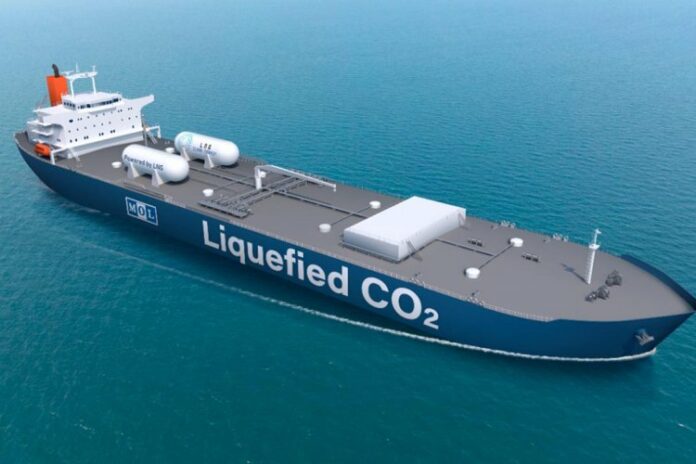
Chevron Corporation and Mitsui OSK Lines (MOL) have signed a joint study agreement on the feasibility of transporting liquified carbon dioxide (CO2) from Singapore to permanent storage locations offshore Australia.

The JSA will complement work to be advanced by a recently announced consortium to explore solutions for large-scale carbon capture, transport and permanent storage of CO2 from Singapore. Through its part in three joint ventures, Chevron was also recently granted an interest in three greenhouse gas assessment permits offshore Australia. 

Mark Ross, president of Chevron Shipping Company, said:

“Developing safe and reliable CO2 transportation services is a crucial step in developing large scale Carbon Capture, Utilization, and Storage (CCUS) solutions. We are pleased to partner with MOL to explore commercially-ready solutions to focus on realizing this goal.”

Chris Powers, vice president, CCUS, Chevron New Energies, said:

“We expect this agreement with MOL to advance the technical and commercial foundations for a regional approach to CCUS, which could provide progress toward the region’s net-zero ambitions. No single entity has all the solutions, but genuine collaboration can help us unlock opportunities as we advance our shared goal of a lower carbon future.”

Yasuchika Noma, Executive Officer of MOL, said:

“As a developer and a provider of social infrastructure service in addition to traditional shipping, MOL is honored and excited to have an opportunity to collaborate with Chevron for opening up CCUS solutions in the Asia Pacific region. We hope to expand our collaboration to wider areas of solutions for decarbonization including CCUS and renewable energies globally.”

Keppel secures two more jackup rig charters from ADES

0

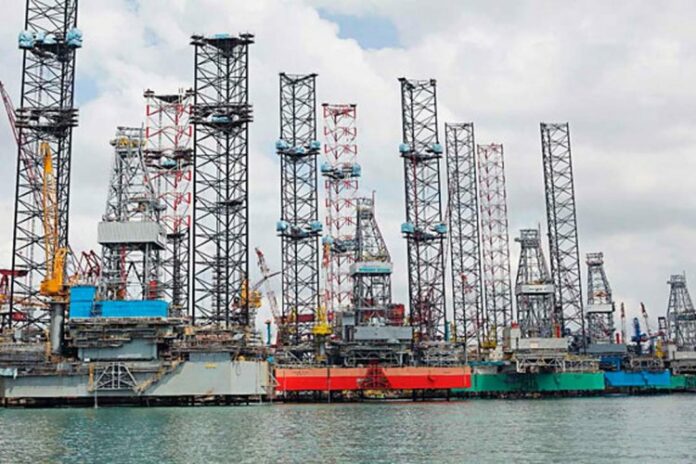
Keppel Offshore & Marine Ltd (Keppel O&M) has, through its wholly-owned subsidiaries, signed bareboat charter contracts with ADES Saudi Limited Company for two jackup rigs to be deployed in Saudi Arabia. This brings the total number of rigs Keppel O&M has on charter with ADES to four.

The charters will be for a period of five years, expected to commence in 1H 2023, and projected to generate total revenue of about S$155 million for Keppel O&M, which includes modification works to prepare the rigs for deployment.

These are the fifth and sixth bareboat charters secured by Keppel O&M this year, pointing to the continued demand for more high quality drilling rigs of Keppel’s proven KFELS B Class design.

The two rigs to be used for these charters are the Cantarell III and Cantarell IV jackup rigs which were under bareboat charters with subsidiaries of Grupo R. These charters have since been terminated due to unremedied events of default under the bareboat charters by the charterers. The rigs, which will be renamed ADM685 and ADM686, are currently in Mexico and will be transported to Saudi Arabia for modification works before commencing their charters for ADES.                    

Mr Tan Leong Peng, Managing Director (New Builds) of Keppel O&M, said:

“We are pleased to receive a repeat contract from ADES for the charter of another two of our jackup rigs. These high performance rigs have been operating successfully in Mexico and can be easily mobilsed to work in Saudi Arabia. They are equipped with our AssetCare digitalisation solution which increases the efficiency, safety and operability of the rigs.      

“All of our KFELS B Class legacy jackup rigs have secured bareboat charters or are on contract, which reflects the value our rigs bring to rig operators and increases their marketability for sale to potential buyers and investors. Utilisation rates across both the jackup and floater segments have continued to trend upwards and we are confident our versatile and robust legacy rigs will be in demand across a variety of markets.”

As part of the definitive agreements Keppel Corporation has signed in connection with the proposed combination of Keppel O&M and Sembcorp Marine, these two rigs are part of Keppel O&M’s legacy rigs and they, as well as their bareboat charter agreements will be transferred to Asset Co that is majority-owned by external investors on legal completion.

The above bareboat charter contracts are not expected to have any material impact on the net tangible assets and earnings per share of Keppel Corporation Limited for the current financial year.

Damen delivers full dredge package for Spanish split hopper

0

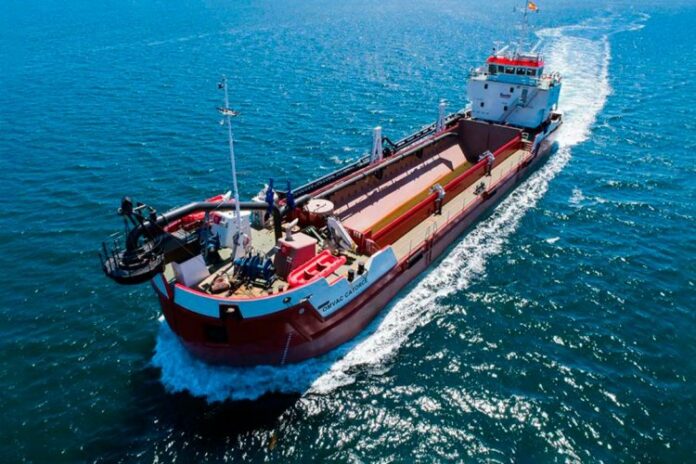
Damen Dredging Equipment has delivered a full dredge package for the brand-new split hull Trailing Suction Hopper Dredger (TSHD) Omvac Catorce owned by the Spanish dredging contractor CANLEMAR, S.L.

Omvac Catorce has already entered service and started working on its first dredge project at the Port of Huelva. Damen worked closely together with both CANLEMAR and NODOSA Shipyards to ensure a successful build and a versatile, future-proof vessel. The hopper dredger is a sister vessel of Omvac Diez, which was built a decade ago by the same team.

The split hopper has been designed with versatility in mind. The dredging equipment comprises a starboard trailing suction pipe which allows dredging up to – 30 m dredging depth using the in-board Damen dredge pump, type BP5045MD. This dredge pump can also empty the 1,200 m3 hopper hold by pumping out the dredged material using the bow coupling connection or the rainbow nozzle. The hopper hold can also be emptied by dumping, that is opening the two split hull parts. Alternatively, an excavator can be placed over the hopper hold on a mobile platform to load stones and rocks.

Carlos González Martín, Sales Manager at Damen Shipyards, explains:

“We really enjoyed working with the NODOSA team again on this dredger. Damen again supplied the complete dredge package just like we did for its sister vessel 10 years ago. This included the dredge pump and complete trailing pipe, plus the dredge valves, the jet water system and dredging instrumentation such as a monitoring system.” 

The complete dredge package was shipped to Galicia, Northern Spain, where the Damen Field Service Engineers assisted during outfitting, commissioning and trials.

José Ramón Regueira, Commercial Director at NODOSA Shipyards, adds:

“The Omvac Catorce design reflects the developments in the maritime industry of the past decade. Even though we see it as a sister vessel of the Omvac Diez, our design team has given the NODOSA Shipyard trademark split hull design a complete upgrade. The hull design has been optimised and it complies with the latest regulations such as IMO TIER III. In short, the Omvac Catorce is an up-to-date and all-round dredger that can work anywhere.

“Immediately after the launch and trials this summer, the trailing suction hopper dredger sailed to the south of Spain to start work in Huelva. The southern Spanish port is being deepened and expanded at present to allow larger vessels into the port. A prestigious project on home soil makes an excellent start to the hopper dredger’s working life!”

Port of Aberdeen accelerates to Net Zero with UK Government funding

0

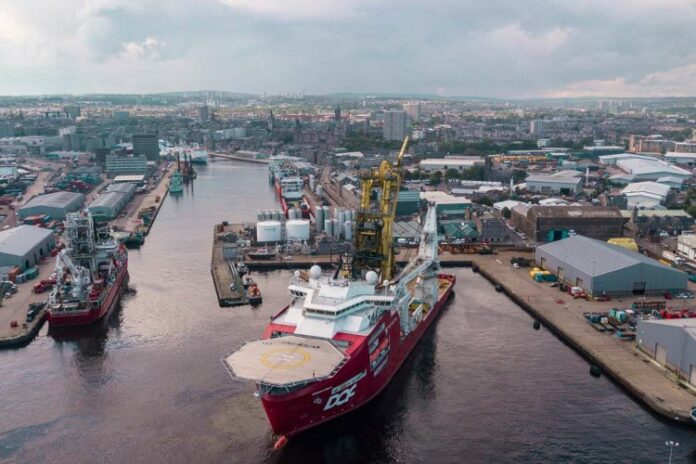
Port of Aberdeen has been awarded more than £200,000 from the UK Government to accelerate its drive to Net Zero by 2040.

The ‘Port Zero’ feasibility study, which is part of the Clean Maritime Demonstration Competition Round 2 (CMDC2), will analyse future port power demands, assess low carbon energy sources for equipment (e.g., cranes, tugs, pilot boats) and quayside infrastructure, and help develop a roadmap to decarbonise port operations.

The study – which is being delivered in partnership with Energy Systems Catapult, Connected Places Catapult and Buro Happold – aligns with the emissions reductions goals published in the Department for Transport’s Clean Maritime Plan.

The project partners also aim to develop a ‘Ports and Regional Strategic Advisory Group’ to address the cross-sector challenges of decarbonisation. The group will agree priorities, develop a solution roadmap that delivers optimum lifecycle emissions reductions and work to address policy gaps that impact the implementation of broader regional decarbonisation initiatives.

Port of Aberdeen is also partnering on the CMDC2 ‘Green Shipping Corridors’ feasibility study led by ACUA Ocean, which has designed a zero-emissions vessel powered by liquid-hydrogen, capable of open ocean transits and transportation of a 4.5ton payload.  

The shipping study will develop a detailed project plan for the world’s first hydrogen-powered zero-emission crossing demonstration from Port of Aberdeen to Norway in 2024, which is an economically important potential green shipping corridor route.

CMDC2 was launched in May 2022, funded by the Department for Transport and delivered in partnership with Innovate UK. As part of the CMDC2, the Department allocated over £14m to 31 projects supported by 121 organisations from across the UK to deliver feasibility studies and collaborative R&D projects in clean maritime solutions.

Bob Sanguinetti, Chief Executive, Port of Aberdeen, said:

“Port of Aberdeen is at the heart of the energy transition and international trade. We want to accelerate the transition to Net Zero through the development and introduction of innovative technology and processes which reduce emissions for the port, its users and supply chain. The funding for our ‘Port Zero’ project will help make this a reality.

“Public sector collaboration and investment in ports is essential to decarbonise the maritime industry and achieve government net zero targets. The Clean Maritime Demonstration Competition is a positive example of government support in action and we hope to be successful in future funding rounds.”

SolarDuck will build largest Offshore Floating Solar plant together with RWE

0

SolarDuck will build a 5MW demonstrator with innovative integrated energy storage solutions

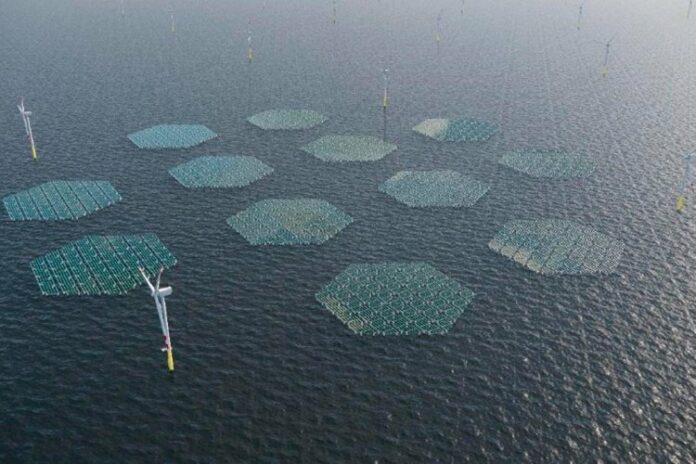
SolarDuck awarded the world´s largest hybrid offshore floating solar power plant at the offshore wind park Hollandse Kust West VII (Netherlands), following winning bid of RWE´s subsidiary Oranje Wind Power II.

Following the collaboration agreement signed between SolarDuck and RWE in July this year, SolarDuck was selected as the exclusive provider for offshore floating solar (´OFS´) technology with integrated energy storage in RWE´s bid for the offshore wind farm HKW VII. The successful bid will now materialize a hybrid OFS power plant at scale. 

SolarDuck´s CEO Koen Burgers states:

“This is a flagship project for SolarDuck and an important milestone for the wider OFS industry. SolarDuck, being the first to build a hybrid project at this scale, will demonstrate the robustness of our solution, prove the important role of system integration in building future-fit energy systems, and enable the scaling of the technology to accelerate its adoption. We are proud to work together with our partner, RWE, in this important project.”

Delivering this project will enable SolarDuck to scale faster, reap the associated cost benefits and ultimately accelerate commercial projects at grid scale. Hybrid offshore wind and OFS projects promise to accelerate the adoption of OFS at scale. The complementarities between wind and solar resources as well as making better use of existing infrastructure and the ocean space will drive the growth of hybrid OFS projects. 

In this way, SolarDuck can have a deeper impact in decarbonizing the world, particularly in sunny regions of the world where land is scarce.

Negligible warming caused by Nord Stream methane leaks

0

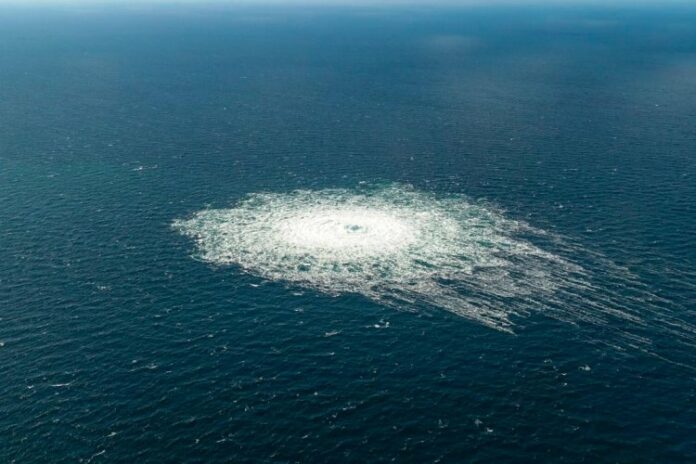
On September 26, 2022, Nord Stream 1 and 2, two subsea pipelines for transferring natural gas from Russia to Germany, were both deliberately ruptured. Massive quantities of gases, primarily methane, escaped into the ocean and were then released into the atmosphere.

Methane is the second most abundant anthropogenic greenhouse gas after CO2, but has a much stronger greenhouse effect. Hence, whether negative climatic impacts would arise from this incident became a key concern worldwide. A news article published in Nature commented on this issue, but no quantitative conclusions were made.

Recently, researchers from the Institute of Atmospheric Physics, Chinese Academy of Sciences, estimated the possible climatic impact of the leaked methane by adopting the energy-conservation framework of the Intergovernmental Panel on Climate Change’s Sixth Assessment Report (IPCC AR6), released in 2021. Their findings have recently been published in Advances in Atmospheric Sciences.

Having collected all estimates of the total amount of leaked methane available in the world’s media after the incident, it was found that the earliest estimates (1-2 days after) reached up to 0.5 million tons (Mt). However, it later became clear that the quantity of methane that leaked was likely to be much lower than first estimated. In particular, a team from Nanjing University, China, provided a more accurate estimate of 0.22 ± 0.03 Mt by drawing upon multiple observations including those from high-resolution satellites.

This value established that this was the largest methane emission in a single event in human history—more than two times that of the Aliso Canyon accident in California in 2015. However, according to IPCC AR6, annual emissions of methane from the oil and gas sectors amounted to as much as 70 Mt during the period 2008-2017. The leaked methane from the Nord Stream pipelines was equivalent to only 1 day worth of emissions from these sectors.

IPCC AR6 also highlighted that methane in the atmosphere is gradually removed by reacting with certain radicals, such as hydroxyl radical, resulting in an approximate 10-year lifetime, which is short-lived compared to CO2. This means that the climatic impact of methane depends on the time horizon, which complicates matters when trying to calculate it directly. Instead, the researchers made an indirect estimate with the help of the concept of “global warming potential.” Specifically, they determined that the quantity of heat accumulated per unit mass of methane in the next 20 years after its emission into the atmosphere is 82.5 times that of CO2.

Then, armed with this information, they were able to calculate that when considering a time horizon of 20 years, the climatic impact of the leaked methane is equivalent to that of 20.6 Mt of CO2, which would raise the atmospheric CO2 concentration by only 0.0026 ppm. Based on the newest assessments in IPCC AR6 of the effective radiative forcing under doubled CO2, climate feedback, and ocean heat uptake efficiency, under the energy conservation framework, the global mean surface air temperature would in theory increase by 1.8×10⁻⁵ ℃.

“Such a tiny warming cannot be perceived in ecosystems or human society,” explains Dr. Xiaolong Chen, first author of the study. “Still, anthropogenic methane has been the second largest driver of global warming, and is emitted from multiple sectors of agriculture and industry. If we are going to achieve the warming target of below 1.5℃ or 2℃ set out in the Paris Agreement, damage to infrastructure such as this should be avoided so that we can better control and reduce methane emissions.”

Port of Valencia and Baleària invest €100 million in passenger terminal

0

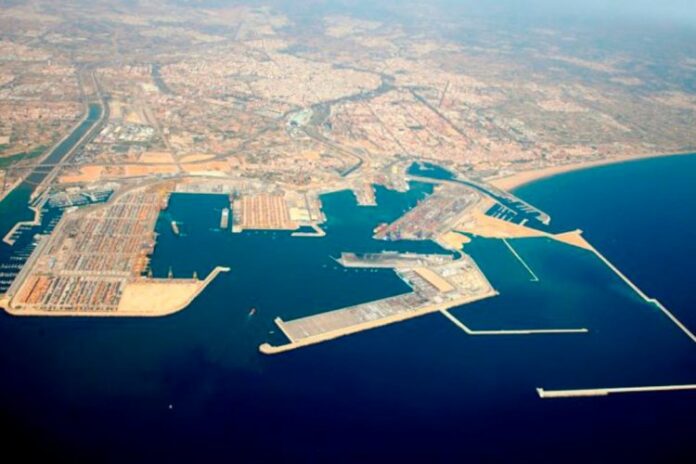
The The Board of Directors of the Port Authority of Valencia (APV) has approved the award to the Valencian company Baleària Eurolineas Marítimas S.A. of the construction and operation of the new public passenger terminal in the Port of Valencia.

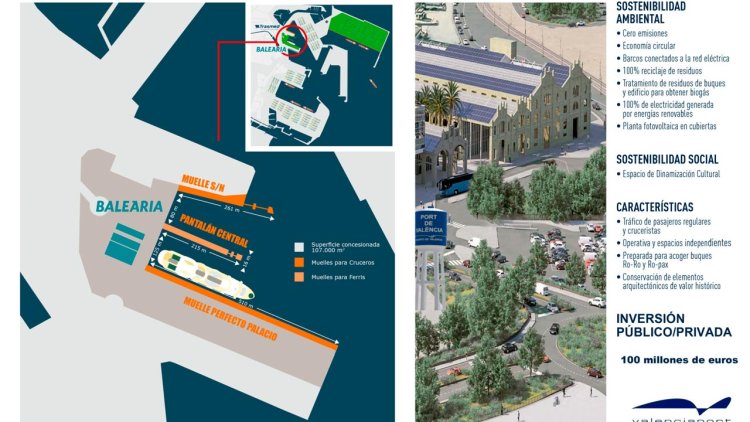
This infrastructure will be located between the Muelle de Poniente and the Muelle Perfecto Palacio, in the area previously occupied by the Unión Naval de Valencia shipyard and will cover approximately 100,000 m2. The investment planned by the Valencian shipping company based in Dènia to develop this project will exceed 37 million euros, while the APV will contribute another 61.8 million euros.

In total, nearly 100 million euros for the new public passenger terminal, which will be a model infrastructure in terms of environmental and social sustainability, accessibility and new technologies. This facility will become a benchmark for the Port of Valencia’s surroundings, will generate added value to the seafront and will provide a service to the city and its citizens.

It will be designed to serve regular national and international passenger lines, including those currently operating between Valencia and the Balearic Islands and Algeria, with separate and independent operations and spaces, as well as cruise and ro-ro traffic (platforms or vehicles that access the ships by their own means). For this reason, it will have four berths, one of which will allow ships of up to 360 metres in length to call and another berth of at least 250 metres in length. A 215-metre central jetty will be built for the berthing of ferries.

The operations for regular passenger and cruise traffic will be separate and with different spaces. The objective is to lead the traffic of people and companies between the peninsula and the Balearic Islands, with a commitment by the future Valencian terminal to provide service to 370,000 passengers in the first year for regular line ferries and cruises and up to 472,000 in the fifth years.

For the management of the cruises, Balèaria will incorporate the experience of Global Ports Holding (GPH), which will contribute all its know-how to the project and its commitment to a more sustainable cruise offer with a lower environmental impact.

The project submitted to the tender launched by the PAV includes all the contributions of the City Council of Valencia in environmental matters and has the maximum consensus. The maritime station will operate with zero polluting emissions, will be committed to the circular economy and will have a space for cultural dynamisation.

The new passenger terminal of the Port of Valencia guarantees that 100% of the necessary electrical energy will be produced in the facilities themselves and will be of renewable origin: photovoltaic, wind, renewable hydrogen or biofuel. Balearia proposes to have 10 mini-wind turbines to produce 60,000 kWh/year, solar panels on the roofs with an estimated generation of 1,459,062 kWh/year, a water-based electrolysis system, and a fuel cell system to produce electricity from hydrogen with an expected generation of 39,525 kWh/year, among others.

All its docks will be equipped with an electricity supply network for docked ships, making it easier to stop the engines and their emissions when they are visiting València. The terminal will recycle 100% of the waste it generates in a biomethane plant that will be built expressly for this purpose; and it will treat waste from the ships and the building itself to obtain biogas.

All these measures will be complemented with centralised control and management systems for the facilities, intelligent consumption systems, LED lighting, electric charger systems to be installed in car parks and a carbon footprint monitoring system.

The project presented by Balèaria has a budget of more than 37 million euros, to which must be added more than 61 million euros of investment by the PAV earmarked for the refurbishment of the site and rehabilitation of the old shipyard, the adaptation of berths at Espigón del Turia and Muelle Grada and Muelle Fondo, among other works. The PAV is finalising the drafting of the construction projects, so the works are expected to begin in approximately 14 months in the case of the Perfecto Palacio Quay, and 18 months for the Grada Quay.

The PAV has already refurbished part of the site of the old shipyard in the Port of Valencia, where the four elements of the old shipyard listed by the Demetrio Ribes Chair of Industrial Archaeology of the University of Valencia as pieces of historical and artistic value have been maintained. Specifically, these are the water tank, the shipbuilding slipway, two cranes and the most emblematic halls.

In fact, the historic water tank of the former Unión Naval de Levante has already been restored and for some months now it has been bearing the name ‘Port de València’ with the corporate colours of the port administration (blue and white) to give greater visibility to the name of the port, both from land and from the seaside.

UK Government funds hydrogen-powered uncrewed surface vessel design

0

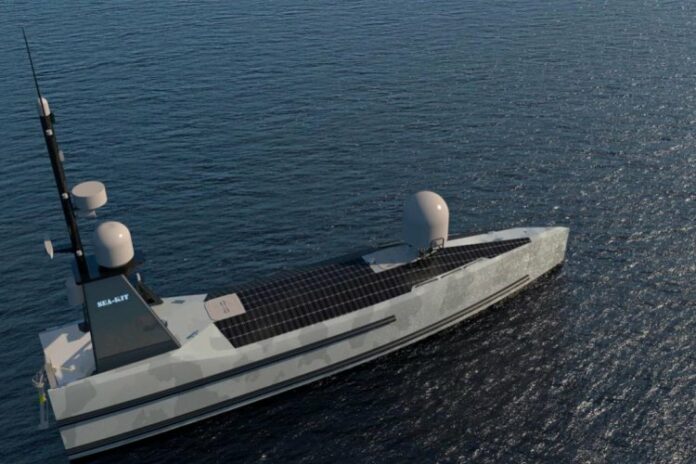
SEA-KIT International has secured funding through Round 2 of the Clean Maritime Demonstration Competition (CMDC) to design a hydrogen powered, zero emission Uncrewed Surface Vessel (USV). 

SEA-KIT worked with clean tech disruptor Bramble Energy on a successful CMDC Round 1 project to marinize a Printed Circuit Board (PCB) Hydrogen Fuel Cell. This latest funding win will see the two companies continue their collaboration, implementing Round 1 outputs into a proof-of-concept USV design that meets the performance, reliability and cost saving challenges of a fast-growing, global marine autonomy market – with zero carbon emissions.

The ‘Zero Emission H-Class Ocean USV’ project, scheduled to start in January 2023, represents a significant step towards the commercialisation of clean fuel vessel technology. 

Ben Simpson, SEA-KIT CEO, said:

“The CMDC2 funding win supports our continued efforts to help the UK meet its emissions targets of reduction of carbon from shipping by at least 50% by 2050. This USV will be suited to deep water offshore operations as well as coastal survey and the launch and recovery of ROVs. The combination of highly capable surveying and inspection instrumentation, improved safety gained from uncrewed, remotely operated vessels and zero carbon emissions will make a very compelling alternative option for the offshore energy, defence and scientific research markets.”

The SEA-KIT H-Class USV is a highly configurable design based on operational data and feedback from the company’s established X-Class vessels. Design work will be carried out in accordance with the Lloyd’s Register Approval in Principle (AiP) process to ensure, as far as possible, that the resulting unmanned technology will satisfy regulatory requirements.

Vidal Bharath, Chief Commercial Officer at Bramble Energy, said:

“Fuel cells provide an extremely attractive value proposition to the marine industry, so it is with great pleasure that we continue collaborating with SEA-KIT on the CMDC project. It’s the perfect opportunity to demonstrate how our decarbonising technology can play a key role in the maritime industry’s journey towards achieving net zero.”

The Zero Emission H-Class Ocean USV project is part of the Clean Maritime Demonstration Competition Round 2 (CMDC2) which was launched in May 2022, funded by the Department for Transport and delivered in partnership with Innovate UK. As part of CMDC2, the Department allocated over £14m to 31 projects supported by 121 organisations from across the UK to deliver feasibility studies and collaborative R&D projects in clean maritime solutions.

Investment decision for the Wisting project postponed

0

The maturation of the project continues, aiming for an investment decision by end of 2026.

Geir Tungesvik, Equinor’s executive vice president, Projects, Drilling & Procurement, says:

“Equinor and partners have worked in close cooperation with the supply industry and developed a technically feasible and environmentally safe Wisting project for the Barents Sea. A development will generate substantial value for society and ripple effects in the north and nationally. In our updated investment estimate for the project, we see a cost increase due to increased global inflation and cost growth in the supply industry nationally and internationally. There is also uncertainty about the framework conditions for the project and execution capacity in the supplier market. Based on an overall assessment, we choose to postpone the investment decision.”

Updated investment estimate for Wisting is NOK 104 billion. The project has a positive Net Present Value before and after tax after the cost increase.

Global inflation, and challenges in the energy markets because of the war in Ukraine, creates capacity challenges and bottlenecks among international and Norwegian suppliers. The lead time from the yards and from the equipment suppliers has increased.

Tungesvik says:

“Many people have been working hard to realise Wisting, and the decision is demanding. However, in the current supplier market postponing the investment decision to ensure an economically sound development and robustness in the execution phase of the project is the right decision. When the pressure in the supplier market subsides, the Wisting project will be possible to execute in a good way.”

Kjetil Hove, executive vice president for Exploration & Production Norway, says:

“Equinor has been present in Northern Norway and in the Barents Sea for more than 40 years, and the industry has generated substantial value, activity, and jobs. We have a long-term perspective with the Castberg field coming on stream in 2024, we will continue to explore, and we will further develop the Barents Sea.”

Hove says:

“We will now, together with partners and suppliers, mature a profitable Wisting project that will have ripple effects in the North within the ordinary tax regime. We have previously successfully improved projects facing challenging cost developments prior to final investment decision. We will aim to do the same with the Wisting project.”

Equinor and partners will now further mature the development concept, the power-from-shore solution, and consider new supplier models for Wisting.

The Wisting partners: Equinor Energy AS (35 %), AkerBP AS (35 %), Petoro AS (20 %) and INPEX Idemitsu Norge AS (10 %).