-15.1 C
New York
Home Blog Page 366

RWE and Hyphen explore offtake of green ammonia from Namibia

0

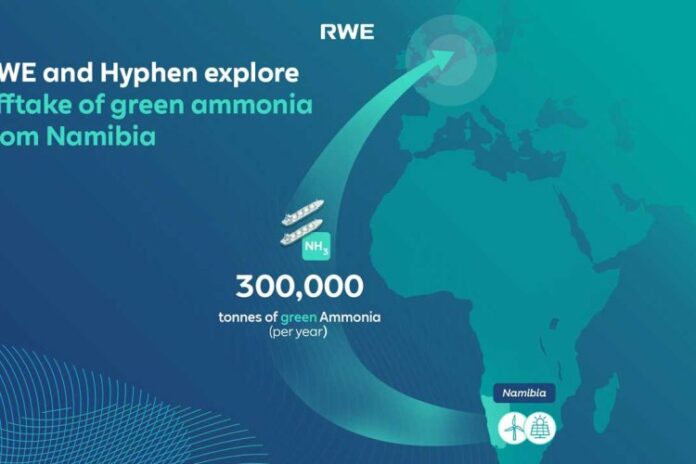
RWE and Hyphen Hydrogen Energy (Hyphen) have signed a memorandum of understanding that could see RWE offtake up to 300,000 tons of green ammonia per year from Namibia. 

Hyphen was appointed preferred bidder by the Namibian government to develop the first green hydrogen project in Namibia for export. By 2027 the project aims to annually produce 1 million tons of green ammonia – a hydrogen derivative that is particularly suitable for transport by ship. German renewable energy project developer Enertrag is a joint venture partner of Hyphen. 

RWE is committed to develop a globally diversified portfolio of long-term offtake agreements for green hydrogen and its derivatives, such as ammonia. In this context RWE has announced in March its plan to build a terminal for green ammonia in Brunsbüttel (Germany) by 2026. This terminal could serve as one port of destination for Namibian ammonia. 

Marco Raffinetti, CEO of Hyphen Hydrogen Energy, said:

“We are delighted to reach this agreement with RWE. This milestone underpins our ambitious targets to export green hydrogen globally from Namibia. By establishing strong connections with policymakers and offtakers across Europe, we are working with the Government of Namibia to develop the industry which will spearhead southern Africa’s role in achieving regional and global decarbonisation goals.” 

Ulf Kerstin, Chief Commercial Officer of RWE Supply & Trading said:

“Green molecules are the only way for many industries in Germany to achieve their climate targets. In the long term, Germany’s demand for them will have to be met mainly through imports. That’s why we’re looking forward to progressing the offtake discussions with Hyphen – to bring green ammonia from Namibia to Germany.” 
 

Neptune Energy confirms new discovery in the Norwegian Sea

0

Preliminary estimates are between 1 – 3.5 million standard cubic meters (MSm3) of recoverable oil equivalents, corresponding to 6-22 million barrels of oil equivalent (boe).

Calypso is Neptune Energy’s third discovery in six months on the Norwegian Continental Shelf.

Managing Director for Neptune Energy in Norway and the UK, Odin Estensen, said:

“We actively explore in areas close to existing infrastructure. These near-field discoveries allow for low cost and low carbon developments.

“Initial analysis of Calypso indicates commercial potential. Together with our partners in the Calypso licence we will now study options to effectively develop the discovery using nearby infrastructure.” 

The Calypso discovery is located within one of Neptune’s core areas, 14 kilometres north-west of the Draugen field and 22 kilometres north-east of the Njord A platform.

Well 6407/8-8S was drilled to a vertical depth of 3,496 metres and encountered an estimated 8 metre thick gas column and 30-metre thick oil column in a 131 metre thick Garn Formation sandstone reservoir, of good to very good quality.

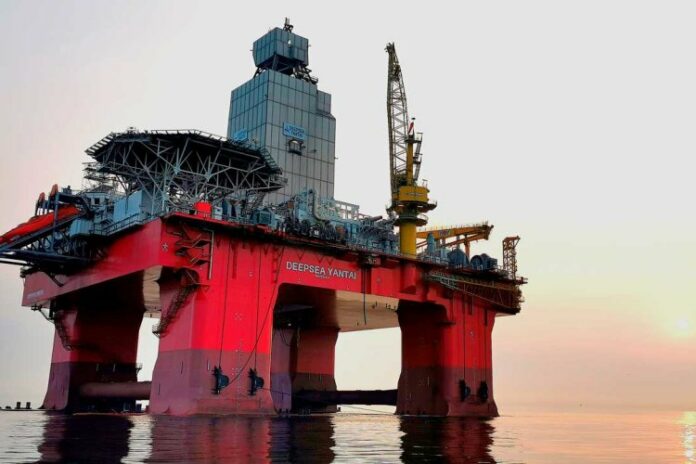
Calypso was drilled by the Deepsea Yantai, a semi-submersible rig owned by CIMC and operated by Odfjell Drilling.

Partners: Neptune Energy (operator, 30%), OKEA ASA (30%), Pandion Energy AS (20%) and Vår Energi ASA (20%).

e1 Marine and NAVTEK sign collaborative agreement

0

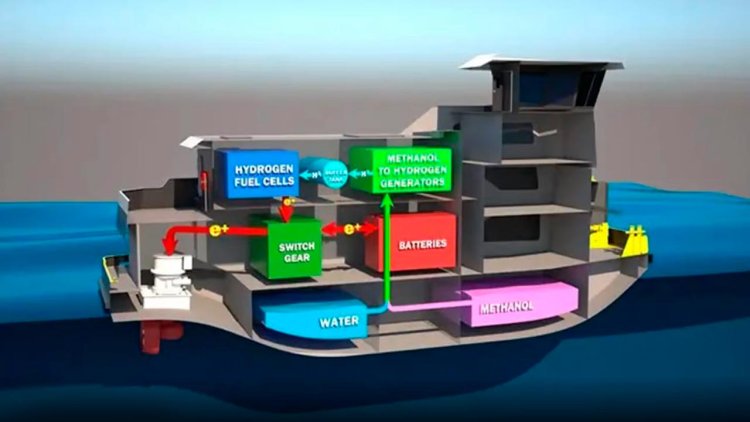
Global renewable energy company e1 Marine has signed a Memorandum of Understanding with naval design and engineering specialists, NAVTEK, to collaboratively develop hydrogen-powered low-carbon emission marine vessels and port applications for the European market. This includes incorporating e1 Marine’s methanol-to-hydrogen generator technology with PEM fuel cell power solutions on NAVTEK-identified marine applications.

The initial project will be to develop a 120-160-meter hydrogen-powered car carrier design that requires 8-10 M.W. of propulsion power, with the focus then shifting to a methanol fuel cell powered hybrid tugboat design.

As part of the agreement, which was finalised at The International Workboat Show in New Orleans, USA on November 30th, NAVTEK will be responsible for the naval architecture and overall vessel design, as well as the supply of electrical propulsion system design. NAVTEK will also manage the power system and controls integration, and the ship assembly and construction. e1 Marine will supply its methanol-to-hydrogen reformers to the vessels and provide best practices on system integration.

NAVTEK is a naval architecture firm with a focus on innovative design for the decarbonization of the tugs, pilot boats, tankers, carriers, and ports sectors. The firm is part of Kiran Holdings, a maritime organization with naval architecture, shipyard, system integration, and vessel operation capabilities. 

e1 Marine’s technology offers a unique solution for decarbonization, adding to a limited selection of methanol-enabling technologies within the industry. The organisation, which is wholly and equally owned by the triumvirate of Element 1, Ardmore Shipping Corporation, and Maritime Partners, has a deep knowledge of methanol, hydrogen, and fuel cell technology, with insight and experience of both the inland waterways market and international shipping.

Commenting on the MOU, Ferhat Acuner, General Manager and Board Member at NAVTEK said:

“NAVTEK is spearheading innovation to create the next generation of vessel designs that can seamlessly reduce total emissions. Our agreement with e1 Marine is the latest in a series of collaborations that brings together specialist technologies and expertise to meet the diverse needs of fleets and port operations in their journeys to reach a zero emissions future.”

Robert Schluter, Managing Director at e1 Marine added:

“e1 Marine is committed to ensuring that safe, efficient, and affordable hydrogen is available at scale for the shipping industry. Collaboration is a key component in the decarbonization of the sector, and this partnership with NAVTEK will enable us to combine our expertise and open up opportunities for car carriers and tow boats to accelerate the decarbonization process.”

e1 Marine’s system produces zero particulates, zero NOx, zero SOx, and less CO2 than a diesel generator. The hydrogen that e1 Marine’s methanol-to-hydrogen generator produces also meets ISO14687 (2019) purity specifications for all PEMFC applications.
 

Shell inks deal with Alfa Laval to develop GCU for hydrogen boil-off gas

0

Shell International Trading and Shipping Company Limited has signed a memorandum of understanding (MOU) with Alfa Laval regarding the development of a new Gas Combustion Unit (GCU) for use on liquid hydrogen carriers. 

Under the MOU, Alfa Laval will develop a system to safely combust hydrogen boil-off gas (BOG) from a vessel’s storage tank, as part of a new liquid hydrogen carrier. Because the venting of cargo is restricted, a GCU offers a means of controlling tank pressure/temperature when the BOG poses safety risks beyond the tank’s design conditions.

Carl Henrickson, General Manager of Shipping Technology, Shell, says:

“Renewable hydrogen will likely be a key fuel in tomorrow’s decarbonization mix, but accessibility will determine its impact. By enabling safe ocean transport of liquid hydrogen, we can help speed up the global transition to clean energy and Shell’s target to become a net-zero emissions energy business by 2050. Alfa Laval shares our ambition and is our choice of partner.”

David Jung, Business Development Manager, Alfa Laval, says:

“We are proud to support Shell in developing a marine infrastructure for hydrogen. Global hydrogen demand is expected to grow many times larger than it is today, and liquid hydrogen carriers at sea will be a vital link in the world’s decarbonized fuel chain.”

The design of the new GCU system for hydrogen will be based on the existing Alfa Laval GCU for LNG. More than 200 of these units have been installed in just over a decade, and an additional 100 units have been ordered during 2022. The challenges in hydrogen combustion, however, are significantly greater than those involved with LNG.

David Jung says:

“With its boiling point of -253°C, hydrogen is expected to have a higher boil-off rate than methane, which will make having a GCU or similar means of BOG handling crucial on hydrogen carriers. In addition, hydrogen is light, highly flammable and easy ignitable. Safety will be paramount when transporting it on board, so there are critical safety considerations when designing the GCU system.”

Alfa Laval will design and engineer the new GCU for hydrogen with the aim of receiving an approval in principle (AIP) from an IACS classification society. Once the AIP is achieved, a GCU prototype will be built for testing and type approval.

Vestas named as preferred supplier for offshore project in South Korea

0

With the introduction of the V236-15.0 MW wind turbine, Vestas is playing a leading role in the expansion of offshore wind, and as a next step of our journey in offshore wind, Vestas has announced that MunmuBaram, a joint venture between Shell and HEXICON AB, has named Vestas as the preferred turbine supplier for the 1.3 GW MunmuBaram floating offshore wind project in South Korea.

If the project materialises, Vestas will supply and install 84 units of the V236-15.0 MW turbine for the project, located off the south-east coast of South Korea. The turbines will be installed on floating foundations in the project area of approximately 240km2 with water depths ranging between 120 and 150 metres. This will mark the first announced large-scale floating offshore project for Vestas, and the first announced project of V236-15.0 MW for installation on floating foundations.

Srdan Cenic, Country Manager of Vestas Korea & Vice President, Head of Sales Offshore of Vestas Asia Pacific, says:

“Vestas will open a new frontier of offshore wind by providing our V236-15.0 MW turbines as the best solutions for this milestone floating project. We will deliver the unparalleled competitiveness of Vestas’ technology combined with our experience in floating wind project execution to strengthen our customers’ business case for the project. As the largest announced floating project world-wide, MunmuBaram will place South Korea as a leading country in floating offshore wind.”

YoungKyu Ju, the Project Director of MunmuBaram, said:

“Large-scale turbines will make floating offshore wind projects more economically feasible by improving the yields. For stable operation of large-scale turbines, the integration with floating foundations (floaters) is essential. This agreement will help develop a competitive floating offshore wind business model by optimising Vestas’ 15MW turbines with locally produced floaters.”

With this project, MunmuBaram and Vestas are together taking a leading role in South Korea’s offshore wind industry development and bringing the country one step closer to achieving its Net-Zero emissions goal.

Once installed, Vestas will also deliver 20-year service and maintenance for the wind farm. Through establishing a dedicated local service organisation, Vestas will contribute to local job creation and provide high-level training for offshore service technicians.

Vestas has installed more than 8 GW or more than 1,500 offshore turbines globally, and Vestas has also installed turbines on floating foundations for over a decade including projects off the coasts of Scotland and Portugal. The MunmuBaram project is Vestas’ third partnership with Shell, following to the 730 MW Borssele III/IV offshore wind project in the Netherlands, and the Atlantic Shores’ 1.5 GW offshore wind project in the USA which will also feature V236-15.0 MW turbines.

Balmoral’s Montrose facility on track for giant composite structures

0

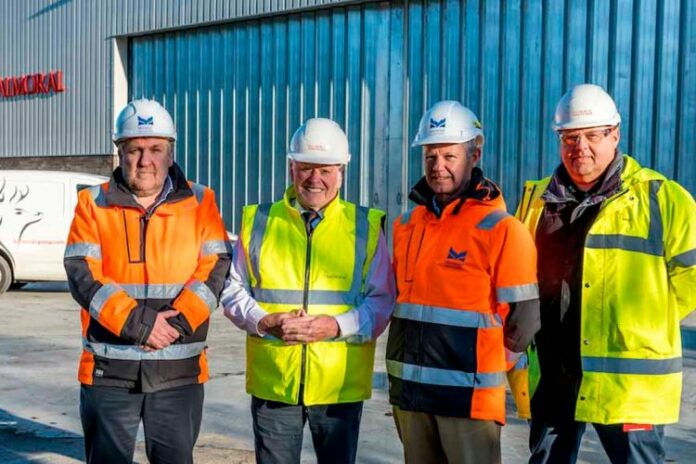
The company invested a seven-figure sum in the 18,299 sq.ft (1700 sq.m) quayside facility where large scale composite components such as subsea and wellhead protection, wave energy structures and manifold covers for the offshore energy sector will be built.

The investment in these premises will help the leading north-east business service the offshore industries more effectively as it strengthens its commitment to the wind, wave and tidal energy sectors.

Balmoral already provides protection products (fatigue, impact and abrasion), buoyancy (mooring and cable) and tethering solutions (clamps) to the offshore wind sector. The new manufacturing site at the Port of Montrose will allow the company to deliver its large advanced composite products direct from shore to ship as the sector expands in the waters off the coast of Scotland and further afield.

30-40 skilled and semi-skilled jobs will be created initially with more expected as this branch of the business grows.

Sir Jim Milne said:

“We are delighted to have reached this stage of our expansion at Montrose so quickly. The facility is operational now and we are completing product prototypes on site and hope to welcome clients to view our capabilities very soon.

“While the offshore renewables sector is moving apace this facility will also service the traditional offshore energy market with large scale advanced composites structures.”

Tom Hutchison, chief executive officer of Montrose Port Authority, said:

“Like us, Balmoral focuses on its team, knowing that its people are its greatest asset and so we are delighted to have them join our port community, creating new jobs for our town and boosting our regional economy.

“Balmoral’s services are greatly welcomed as they will attract new business to the Port within the current energy markets we already serve as well as the growing renewables sector, aligning with our ambition to position ourselves as a renewables hub for the region.”

Horisont Energi and E.ON sign LOI on industrial-scale CO2 storage in the North Sea

0

Horisont Energi and E.ON are intensifying their existing collaboration to jointly build a European carbon value chain. 

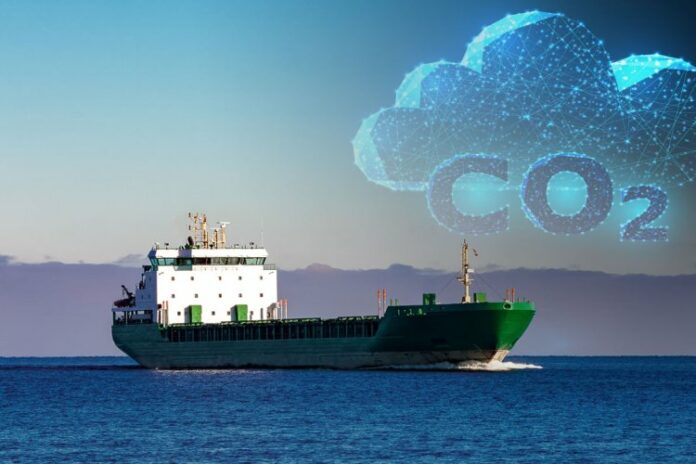
Both companies have signed a letter of intent, whereby E.ON intends to provide more than one million tons of existing CO2 per year from its European customer sites by 2030, starting from 2027 with gradual increase. 

Horisont Energi will provide services on CO2 marine transport and long-term storage. Subject to license award, Horisont Energi targets to start operation of the carbon capture and storage (CCS) project “Errai”, located in Norway. To this end, the development of a European carbon value chain shall apply proven and mature technologies for capture, transport and storage of CO2 on an industrial scale.

The agreement is an important milestone in the cooperation between the two partners and for Horisont Energi’s commercial CO2 transport and storage business. Horisont Energi will apply for the announced license to operate the CO2 storage Errai in the North Sea by early January. With this agreement, both Horisont Energi and E.ON position themselves as key players and Errai as a key project in the decarbonization of European industry and cities.

Bjørgulf Haukelidsæter Eidesen, CEO of Horisont Energi, said:

“It is great to take the next step towards a carbon neutral future together with our partner and shareholder E.ON. Decarbonisation can only be achieved on a European scale, with integrated value chains and large-scale CO2 removal solutions. Today’s agreement is a significant step, not only for the realization of the Errai project, but also for a carbon neutral European industry and society.”

Patrick Lammers, Member of the E.ON Board of Management, said:

 “We are very proud to be a pioneer in the field of industrial CO2 circular economy together with Horisont Energi. With this next step we aim to extend our decarbonization solutions portfolio and make carbon capture and storage available to customers in Europe. For our industrial customers in particular, CCS technology will play a key role in achieving their net zero targets. As a partner to our customers, we stand ready to shape this path.”

Horisont Energi plans to store four to eight million tons of CO2 annually in the first development phase of the Errai project, potentially storing more in later phases. The project includes an onshore terminal for intermediate CO2 storage, with the intention to permanently store the CO2 in an offshore reservoir. With the current plans the Errai project will develop the second CO2 terminal in Norway. It was initiated by Horisont Energi in 2021, and CO2 storage is expected to start in 2026.

Horisont Energi and E.ON entered a strategic cooperation agreement in January 2022 for the development of a Europe-wide range of services for the capture, transport and storage of carbon dioxide, and the establishment of corresponding value chains. Horisont Energi shall be responsible for transport and storage, E.ON for carbon capture and liquefaction. The service will be offered to both existing and new E.ON customers.

NOV-BLM to support the French Eolink floating wind turbine pilot project

0

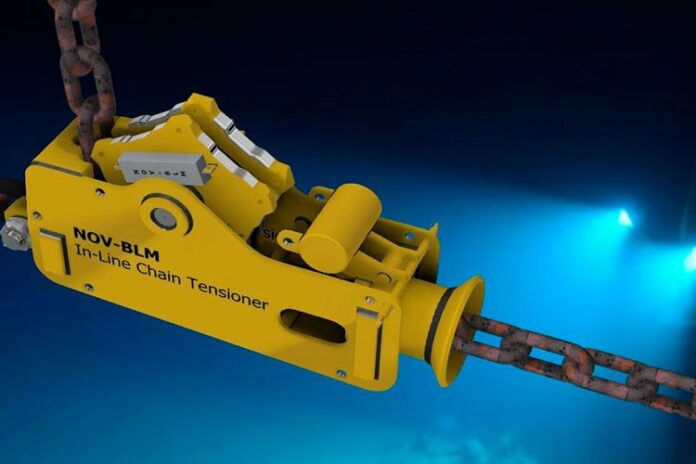
EOLINK has selected NOV-BLM to supply the mooring chain connectors and chain tensioner package for the Eolink 5-MW floating wind turbine pilot project in France. The equipment is expected to be delivered in Q2 2023.

The innovative solution reduces energy costs because it is a 30% lighter floating structure. The 5-MW pre-commercial floating wind turbine will be commissioned in 2024 at the SEM-REV test site in France.

Pierre ROUSSELOT, Managing Director, said:

“This is an important milestone for NOV-BLM as we enter the floating wind market. We are delighted to support the Eolink project. Further to the In-Line Chain Tensioner qualification in April 2021, the delivery will be our first achievement that supports the energy transition.”

Damen and Van Stee Offshore sign contract for delivery of the first Multibuster 8020

0

A new class of 80-metre, ultra-shallow draught, multi-purpose workboats

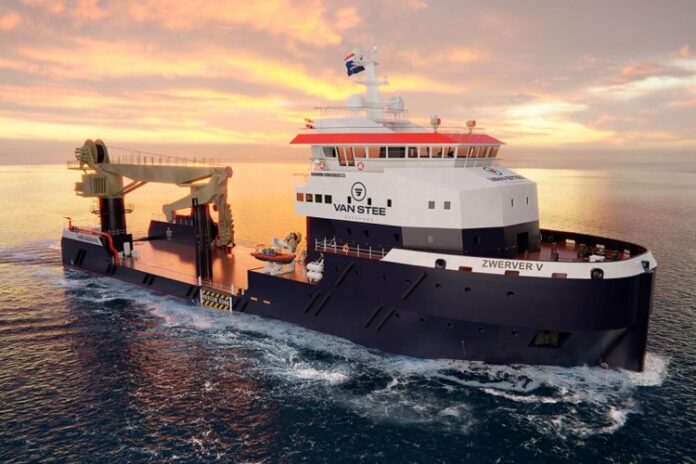
At the Offshore Energy Exhibition & Conference 2022 Kommer Damen, Chairman of Damen Shipyards Group, and Arjan van Stee of Van Stee Offshore have signed a contract for the delivery next year of an 80-metre Multibuster 8020 ultra-shallow draught, multi-purpose workboat. 

Van Stee’s Multibuster 8020 is the first of a new class that combines the key elements of Damen’s highly successful Multi-Cat and Shoalbuster workboat classes to create a large-scale platform capable of undertaking a wide variety of projects in waters as shallow as three metres.

The vessel is the brainchild of Damen CEO Arnout Damen who recognized that workboats of this size and capability were not only in short supply but would also be increasingly required in the years ahead. The basis of the design was developed inhouse, and construction got underway at Albwardy Damen Sharjah in the UAE in 2020.

Key features of the design in addition to the shallow draught include extensive deck space, ample accommodation and the high stability that enables the fitting of larger cranes than those on vessels of a similar size. DP2 dynamic positioning is standard and the propulsion system includes a retractable tunnel bow thruster that ensures that two tunnel thrusters are available at all times for enhanced maneuverability. All third-part equipment is sourced from leading brands.

As well as serving the offshore renewables and oil & gas sectors performing duties ranging from anchor-handling and towing to ROV operations, cable laying and beach pulling. The Multibuster is expected to be in demand for nearshore operations. The vessel is built to ground out on the beach for tasks such as cable landings and shore approaches.

Arjan van Stee, Director Van Stee Offshore, said:

“As a specialist in shallow draft operations the Multibuster will give us new capabilities and opportunities to support our clients in the offshore energy sector. Its low emissions profile will additionally be valued by our partners working on wind and other renewables.”

Joost van der Weiden, Damen Sales Manager Benelux, added:

“It’s great to be working once again with Van Stee Offshore, a family-owned company known for its high-quality vessels and many prestigious customers. We believe that the Multibuster 8020 is the right vessel at the right time, delivering a suite of capabilities that are sure to be in demand in the years ahead. We all look forward to seeing it in operation and to further collaboration with Van Stee Offshore.”

Van Stee Offshore currently operates a fleet of three multi-purpose workboats, at present active in the North Sea, Taiwan and Angola. The Multibuster, to be named Zwerver V, will provide them with another capable of global operations. Prior to its delivery next year, the vessel is undergoing some custom modifications including the addition of a four-point mooring system, the installation of a pedestal to take a large offshore crane and boat landing facilities for crew transfer vessels. The navigation and communication systems are also being upgraded along with the HVAC systems to equip it for high latitude as well as tropical conditions.

Maritime Partners orders methanol-to-hydrogen reformers for Hydrogen One

0

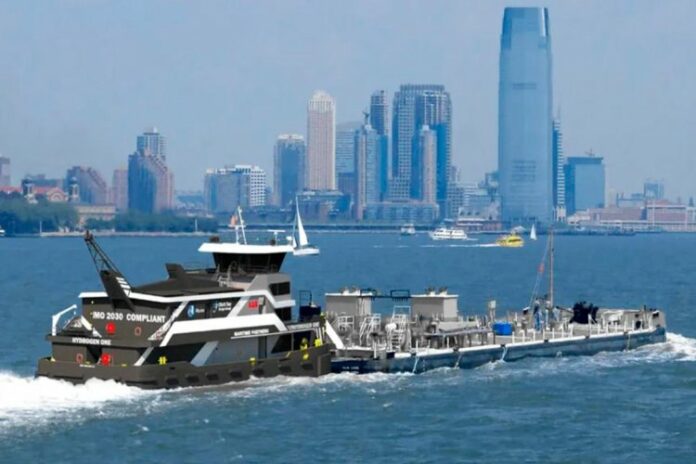
For the development of the ‘world’s first’ methanol/hydrogen-powered towboat, RIX Industries has announced it has received an order for US-based Maritime Partners for its methanol-to-hydrogen (M2H2) reformer systems.

Under the contract, 10 RIX M2H2 Series systems that produce hydrogen on-demand, which is said to eliminate the need of on-board high-pressure gas or cryogenic liquid hydrogen storage, will be delivered to Maritime Partners.

RIX says its system, which integrates technology licensed by Element 1, can generate high-purity hydrogen with zero NOx, SOx, or particulate matter, which will be combined with PEM fuel cells to deliver primary power for the vessel.

Dubbed Hydrogen One, Maritime Partners’ vessel is set to showcase sustainability in workboat operations, with a particular focus on inland sailing.

In 2021, Admore Shipping announced a new strategic investment and joint venture with Element 1 Crop and Maritime Partners to develop hydrogen power to the marine sector.