-14.5 C
New York
Home Blog Page 365

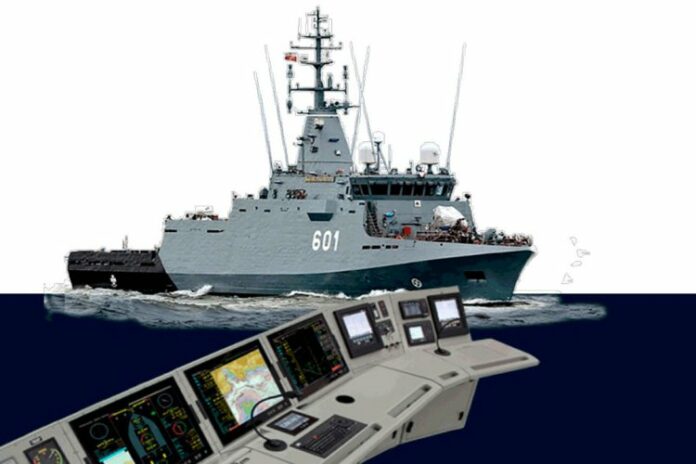
OSI signs contract with Polish Navy to provide naval integrated bridge system

0

This is the third contract awarded to OSI by PGZ SW following an earlier signing in 2020 for the delivery of INTS to boats two and three, and a WECDIS agreement for the ORP Arctowski (Hydrographic vessel).

Ken Kirkpatrick, President and CEO, said:

“We are very pleased to have the opportunity to continue to support the Polish Navy and equally proud of the working relationship with PGZ SW. Kormoran has been a very rewarding project. It has once again proven OSI’s success in a new market and further developed our footprint in Europe.”

Under the terms of the contract, OSI will continue on from the previous agreement and design, build, deliver, and install another three INTSs for the Polish Navy Kormoran Class Mine Countermeasures Vessel new build program.

The Kormoran is part of the Polish naval modernisation program and will operate in the waters of the Polish exclusive economic zone and participate in NATO’s countermeasure group in the Baltic and the North Sea.

Jim Davison, Vice President of Business Development, commented:

“Over 25 NATO and Allied fleets operate using OSI integrated navigation and tactical solutions, which translates to navigation commonality and standard to a level that is on par with many of the world’s leading navies.’

Karpowership hoping to place three floating power plants near Odesa, Ukraine

0

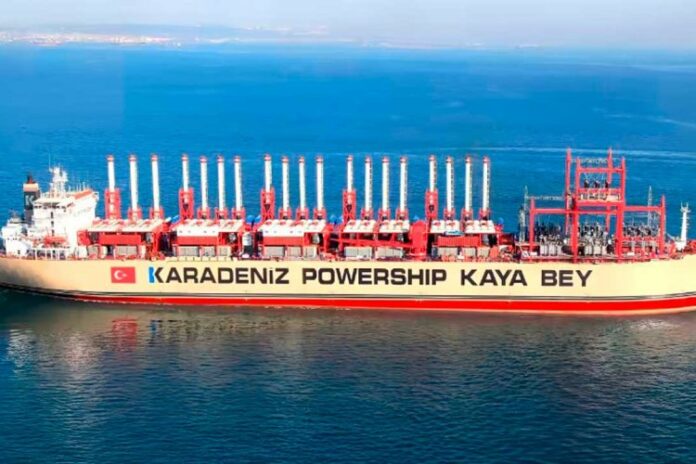
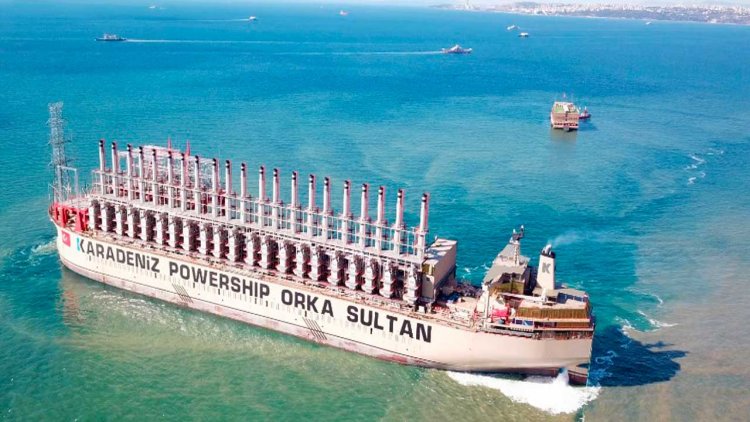
Turkish company Karpowership, which owns a fleet of floating power plants, says it is in talks to send floating “powerships” to Ukraine to supply electricity to the beleaguered country as Russia steps up attacks on civilian infrastructure.

Karpowership would send ships close to Odesa, Ukraine’s largest port, a senior company executive told Nikkei Asia.

“We are discussing with the Odesa governorate and Ukraine’s electricity utility Ukrenergo to put three powerships close to Odesa with a total output of 300 megawatts,” Zeynep Harezi, Karpowership board member for commercial operations, said in an interview at the company’s headquarters.

She said once agreements on technical and commercial aspects are reached, “we need to figure out security-related parameters, in terms of both our operation and maintenance teams as well as our assets. If we can secure those parameters, we would like to proceed with the project.”

Harezi suggested a deal might need U.N. backing. “I think we will need a United Nations level green light to realize this, with the same kind of exemptions that the grain deal has,” referring to the deal brokered by the U.N. and Turkey that has allowed Ukraine to make seaborne grain exports out of Odesa without interference by Russia.

“Depending on need and approvals, we could do it within this year,” Harezi said. “The ships are ready and commissioned. We can deploy them in as little as three weeks.”

The 300 MW that the three vessels could supply would power up to 1 million homes at full output.

Fears have grown in Ukraine over power supplies as winter approaches and temperatures plummet. The European Union is also in talks over how to supply more power equipment to the country.

Ukrenergo could not be reached for comment. A Ukrainian source familiar with the talks said they are at a commercial negotiation stage.

Volodymyr Kudrytskyi, chief executive officer of Ukrenergo, told a briefing last week that Ukraine’s energy infrastructure had suffered “colossal” destruction in Russian missile attacks, adding that practically no thermal or hydroelectric power stations had been left untouched.

“In Ukraine there is a power generation deficit. We cannot generate as much energy as consumers can use,” Kudrytskyi said.

On Monday, Ukraine’s embassy in Ankara said on Twitter that high level foreign ministry officials from Ukraine and Turkey met and discussed the latest situation in Ukraine and bilateral cooperation. “Turkey’s participation in the reconstruction of Ukraine and the provision of humanitarian aid were emphasized in order to overcome the consequences of the energy crisis caused by the Russian attacks,” the embassy said.

Karpowership is the flagship company of Turkey’s Karadeniz Holding. It has 36 powerships, with plants that can generate electricity using either fuel oil or natural gas. They can be connected to local electricity grids in under 30 days, according to Harezi.

Powerships are mostly aimed at countries with inadequate infrastructure as well as for use in emergencies following natural disasters or accidents.

Harezi said the company is in talks over the deployment of up to eight ships to four European countries for the winter of 2023, instead of 2022 as initially discussed. “Now it is expected that this winter will be a warm one and gas stocks of Europe are already filled, contributing to electricity prices coming down from their peak,” she said.

Russian media had recently reported that Russian gas producer Novatek had approached Karpowership to potentially supply electricity to its large Arctic LNG 2 project, in which Japan’s Mitsui & Co. and JOGMEC as well as Chinese companies CNPC and CNOOC are minority shareholders.

Asked about this, Harezi said Novatek had indeed requested information from the company for the project, but stressed, “We are not talking with any party for any business in Russia. As corporate policy, we are determined to follow international sanctions.”

Source: Nikkei Asia.

Timor-Leste inaugurated the new deepwater port of Tibar Bay

0

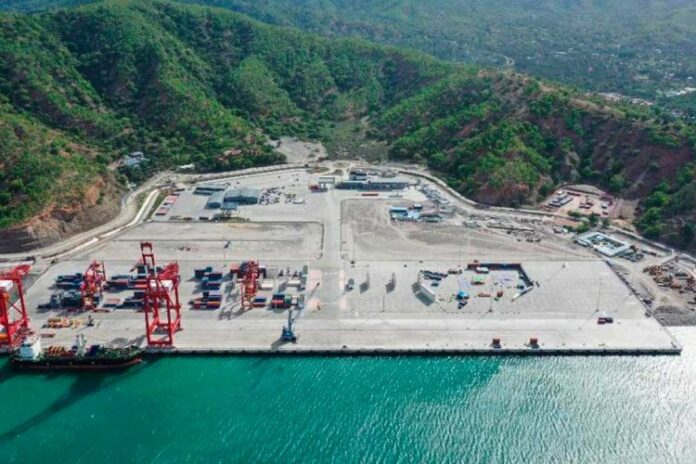
The President of the Republic of Timor Leste, H.E. Dr José Ramos Horta officially inaugurated the Tibar Bay Deepwater Port on 30 November 2022, in the presence of Mr Philippe Labonne, CEO of Bolloré Ports, the Prime Minister of Timor-Leste H.E General Taur Matan Ruak, and members of the Dili port community and of the Asia Pacific region.

As the first public-private partnership in the country, this new port aims to improve logistics services in Timor-Leste and responds to current developments in the maritime and port world. Planned to become a regional transshipment hub, it will enhance Timor-Leste’s attractiveness within the Asia-Pacific region and accelerate the country’s economic development.

The new platform, located 12km from the capital Dili, received investment of $490 million and took four years to build. It has a 630m long quay with 16m of draught and is equipped with the latest generation of handling equipment, including two STS gantries and four e-RTG gantries. In its first phase of operation, the port will be able to accommodate 7,500 TEUs and handle more than 200,000 TEUs per year.

Philippe Labonne, CEO of Bollore Ports, said:

“We are pleased with the completion of this major project, the largest to date in Timor-Leste. We are honoured by the trust the Timorese government placed in us and we have done our utmost to be worthy of it. We have been present in the country for many years and are proud of this new contribution to the local economy. Together, we will develop the activities of Tibar Bay Port with the ambition of positioning it as a reference infrastructure in the Asia Pacific region.”

The commissioning of Tibar Bay port brings with it a local development strategy through job creation followed by employee training as well as an action plan to preserve the surrounding biodiversity. Recently achieving EDGE certification (Excellence in Design for Greater Efficiencies), the new infrastructure is also soon expected to obtain the Bolloré Ports Green Terminal label following an audit by Bureau Veritas.

Royal Navy orders first crewless submarine to dominate underwater battleground

0

In just two years’ time Cetus – named after a mythological sea monster – will move stealthily through the oceans, monitoring hostile activity, listening out for ships or submarines which may pose a threat to the Fleet, or to key national infrastructure such as deep-sea cables and pipelines.

The Royal Navy has experimented with – and in some cases operated – autonomous underwater systems for more than a decade. Most are small, off-the-shelf technologies, largely used in minehunting.

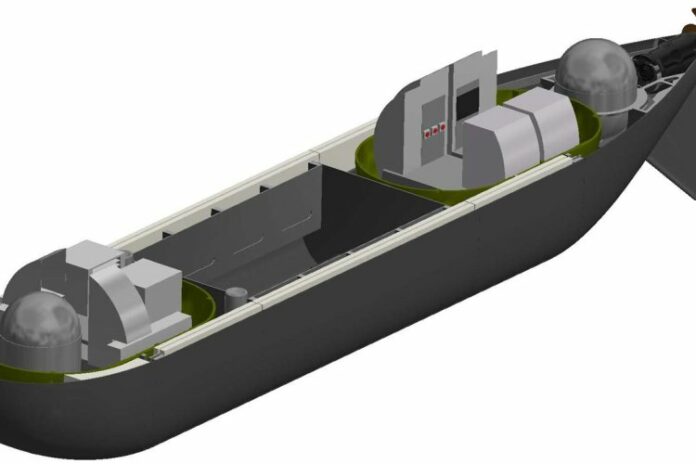
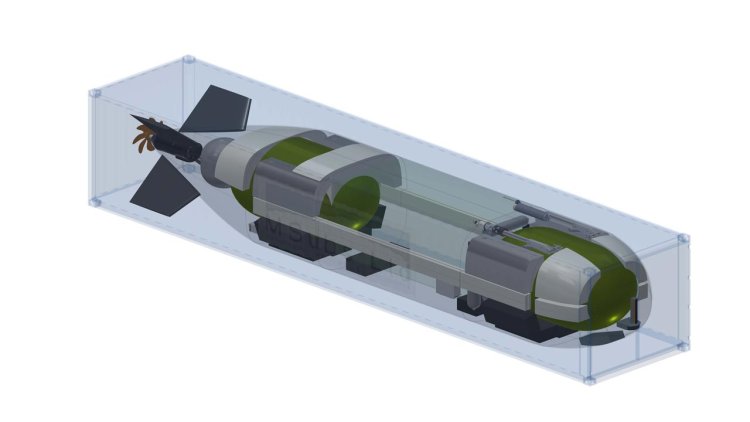
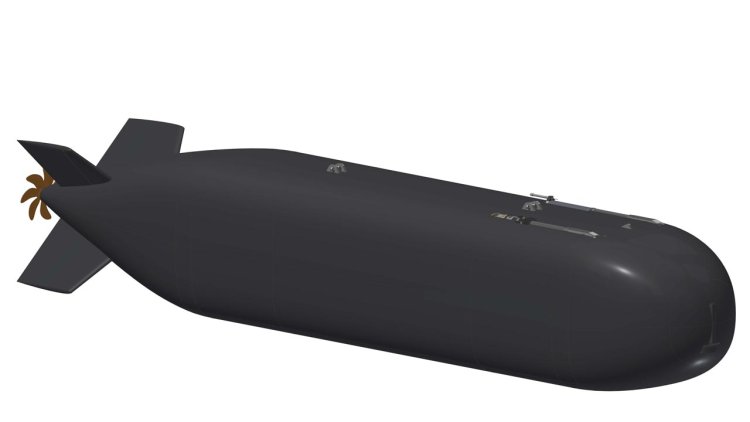
The £15.4m Cetus is in a different league: the length of a bus, it will be the largest and most complex crewless submersible operated by European navies, designed and built specially for the Royal Navy by Plymouth-based tech firm MSubs, creating ten specialist jobs and supporting 70 more.

Funded by the Anti-Submarine Warfare Spearhead programme, run by the Royal Navy’s “Develop Directorate” from their Headquarters in Portsmouth and delivered through the Submarine Delivery Agency in Bristol, this is the latest in a series of novel underwater technologies being brought to life to deal with the threats of the next decade.

First Sea Lord Admiral Sir Ben Key said:

“This is a hugely exciting moment for Project Cetus as the Royal Navy surges ahead with the development of autonomous technology.

“This Extra Large Autonomous Underwater Vehicle is a capability step-change in our mission to dominate the underwater battle space. And I am delighted that the project is able to support a small, innovative UK company which is at the cutting edge of this sector.”

At 12 metres long and 2.2 metres in diameter, the 17-tonne submarine can fit inside a shipping container and be transported around the world to wherever the Fleet needs it.

The unarmed battery-powered craft will be able to dive deeper than any vessel in the current submarine fleet and cover up to 1,000 miles in a single mission.

Acting as an operational demonstrator, the goal is for Cetus – and its successors – to work side-by-side with traditional crewed submarines, such as the current Astute-class hunter-killers, or independently. 

Autonomous minehunting systems are already operating in Scotland, driverless Pacific 24 sea boats are undergoing testing, numerous aerial drones are employed by ships both for reconnaissance/intelligence gathering and target practice for air defence.

And the Navy has invested in a dedicated tech trials ship, XV Patrick Blackett, to assess this new equipment and help determine how it might be used or integrated into the Fleet.

Cetus will do the same for the Silent Service, explained Lieutenant Commander Andrew Witts. He said:

“One hundred and twenty years ago the Royal Navy had the foresight to invest in Holland I – the UK’s first submarine – which helped revolutionise naval warfare above and below the waves”.

“Cetus is our first venture into large-scale, uncrewed submarines. It’s exciting, the possibilities are enormous, and I like to think Cetus could change the way we fight under the sea as much as those pioneers in Holland I did.” 

Pryme Group launches two offshore wind installation solutions to global market

0

Pile Fixation Tool (PFT) and PileProp© are designed to support the installation of monopile and jacketed foundations for offshore wind, by providing a localised, rigid deflection constraint – and in the case of the PileProp© system independent of vessel interaction or station – prior to the critical grouting process of securing the foundations.

PFT is a bespoke monopile foundation installation support solution, designed to address the stabilising issues involved with monopile foundations being placed in pre-drilled boreholes, due to challenging seabed conditions. This proven technology has been used to support DEME with the foundation installation on the St Nazaire offshore wind farm.

PileProp© has been designed to aid securing the fixing of jacket foundations over pre-installed pile pins. This solution was designed to comply to DNV regulation ST-0126, which advised minimising movement in all planes to 1mm, prior to grouting. PileProp© is currently being deployed in support of foundation installation work on St Brieuc offshore wind farm, with Caley’s client, Ailes Marines, being the developer.

These systems were developed as part of Caley’s collaboration with engineering design specialists Houlder, which covers a wide range of engineering design and installation tooling for offshore wind farm projects.

Both tooling systems minimise early age cycling and reduce weather and wave limitations to installation. This results in minimised downtime due to severe conditions, therefore lengthening the installation window, increasing efficiency and speed of the installation process, limiting risk of early failure of grouting and reducing initial project and through life costs.

Kerrie Murray, CEO at Pryme Group, said:

“Pryme Group is dedicated to developing the tools, technology and equipment for the energy transition. Our offshore wind capabilities have been significantly bolstered by these two innovative solutions, successfully operating in the field, and we are eager to work with existing and prospective partners to implement them across the world. We are dedicated to delivering solutions along with our partners to support current and future rapid growth opportunities within the offshore wind market.”

ODE AM selects Peterson as integrated logistics provider

0

International energy logistics provider Peterson has been awarded a three-year contract by ODE Asset Management (ODE AM) to provide integrated logistics services from the Port of Lowestoft.

Peterson’s full Lighthouse suite of technologies will be utilised as part of the contract, bringing significant efficiency benefits across road transport, vessel voyages, and with container rentals.In addition, Peterson will establish a Control Tower at their Lowestoft facility, from which they will coordinate all the activities relating to ODE AM’s vessels in port.

Peterson’s Control Tower team will monitor activity, creating an accurate flow of information to facilitate data-driven decisions and to proactively measure performance against agreed KPIs.

Jason Hendry, Managing Director for England and Renewables Strategy at Peterson, said:

“We are delighted ODE AM have chosen Peterson as their logistics partner in the Southern North Sea, and we look forward to supporting their operations from our Lowestoft base, where we have a long-term commitment with Associated British Ports (ABP).

“The continued development of local talent through apprenticeship programmes and investment in training and development is an integral part of our ambitious plans in Suffolk. This contract award greatly assists our efforts in this regard.”

Jaye Deighton, Projects and Innovation Director at Peterson, added:

“We are excited to work with ODE AM and support them with the full Lighthouse suite of technologies. Through Lighthouse, ODE AM will benefit from digital assurance at every step of the cargo demand planning process, ensuring safe and consistent delivery of operational processes.”

Shaun Hutchinson, UK Technical Services Director at ODE Asset Management, commented:“It is very clear that Peterson share our ambitions to produce conventional energies cleaner and unlock value for our clients through resource sharing. This is a significant contract award for ODE AM, and we are pleased to be drawing on Peterson’s innovative technologies to support the various assets that we operate and maintain across the UKCS.”

The contract will take effect from December 1st, 2022.

Anemoi renews Rotor Sail testing base with Port of Blyth

0

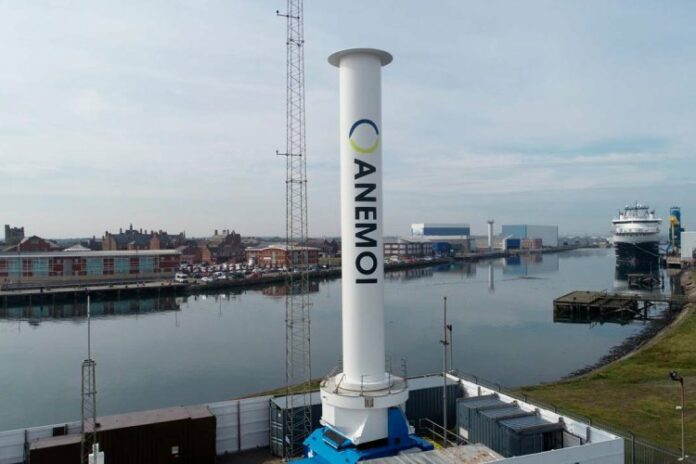
Anemoi is a global provider of proven wind technology for the shipping industry. For nearly 10 years Anemoi’s test facility has been based at the Port of Blyth, which is a leading offshore energy support base.

The collaboration has been instrumental in bringing Anemoi Rotor Sail Technology to the market as the London-headquartered business takes huge strides towards future proofing the shipping industry. The location at the Port of Blyth obtains similar wind conditions to those experienced at sea, which allows Anemoi to test and research the performance of Rotor Sails in a safe and controlled environment. The facility, which houses a full-scale folding Rotor Sail, continues to play an important role in the development of Anemoi Rotor Sails.

Martin Lawlor, Chief Executive at the Port of Blyth, said:

“It’s fantastic that Anemoi will continue their operations here at the Port. Anemoi plays a key role in decarbonisation within the maritime industry and we are proud to facilitate forward-thinking companies who are creating a greener future. There is a growing cluster of pioneering businesses along the estuary that are leading the energy transition from Blyth.”

Kim Diederichsen, Chief Executive at Anemoi, said:

“We’re delighted to be extending our lease at the Port of Blyth. Anemoi is going from strength to strength as Rotor Sails become an integral tool in the race to reduce global ship emissions. Anemoi are proud to invest in the United Kingdom and continue our close ties with such a significant Port.”

Port of Valencia activates an investment of 1,564 million euros for its new container terminal

0

The Board of Directors of the Port Authority of Valencia (PAV) has this morning approved the Construction Project for the Container Quay of the North Extension of the Port of Valencia, with a base budget of 542,694,149.17 euros of public investment. 

To this will be added the 1,021 million euros to be provided by Terminal Investment Limited (TIL), a company belonging to the MSC group, a European company that will be responsible for the construction and operation, under an administrative concession, of the new container terminal.

It is an initiative that will involve a public-private investment of 1,564 million euros to provide the Valencian precinct with the most sustainable and modern container terminal in the world, a model for the environment, where the electricity will come from 100% renewable sources, which will allow the supply of electricity to ships in port and will have a clear commitment to the railway. The new terminal will reinforce Valenciaport’s position in the Mediterranean and its work as a tractor company at the service of Spanish economic activity.

The project will be submitted to the Council of Ministers, since it is an initiative that involves a public investment of more than 12 million Euro.

At the same time, the PAV has already begun to prepare the tender document for these works, which will have a base budget of 542,694,149.17 million euros. Also as of today, Valenciaport technicians are already working to comply with each and every one of the 21 observations and conditions made by the Directorate General for Coasts in its favourable report on Compatibility with the Marine Strategy on the construction project approved today.

The new terminal will be located in the inland waters of the breakwater of the northern extension of the Port of Valencia, whose works were completed in 2012 with an investment of 204 million euros, of which 74 million were subsidised with European Cohesion Funds.
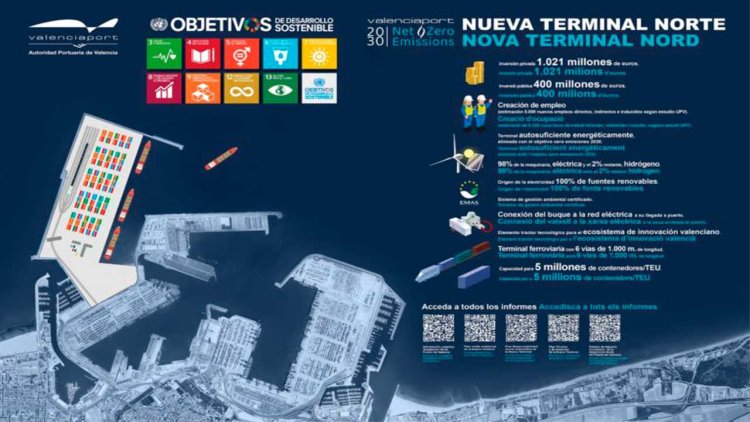
In environmental terms, the new container terminal will be a smoke-free space, as it will minimise CO2 emissions by supplying electricity to cranes and yard machinery, and to container ships that will connect their engines to the electricity grid during their stay in Valencia. The project presented by TIL/MSC to Valenciaport includes the electrification of 98% of the driving components and installations of the terminal; and in addition, 100% of the electricity will come from renewable sources, which in turn will imply a 98% reduction in CO2 emissions.

In this line, automation, the use of advanced traffic prediction systems, the design of the buildings with energy efficiency criteria, and the external lighting system with LED-type luminaires will minimise energy consumption. In its project, TIL makes an important commitment to intermodality and offers to develop a railway terminal equipped with six 1,000-metre-long tracks, with the capacity to move 305,000 TEUs/year by rail.

The new container terminal will involve an investment of 1,500 million euros, both public (448 million euros excluding VAT) and private (1,021 million euros). All this will generate a significant economic impact both during the construction phase and when it comes into operation.

According to the study on the impact of the new Container Terminal of the Northern Expansion of the Port of Valencia carried out by the Institute of Transport and Territory (ITRAT), with the new terminal fully operational, the economic impact of the port of Valencia will represent in terms of added value 2.27% of the whole of the Valencian Community and employment will exceed 44,000 jobs, with an average salary of around 32,000 euros per year. Overall, the port of Valencia will represent 2.2% of all employment in the Valencian Community.

Thus, the total employment generated by Valenciaport when the terminal is active will increase from 38,866 (according to the report drawn up by the Universitat Politècnica de València with data from 2016) to more than 44,000 jobs and will create more than 5,000 new jobs in the area surrounding the Port of Valencia, including direct, indirect and induced jobs. Quality employment that will be supported by Valencian entities for research and training, with an effective equality strategy that will favour the reconciliation of personal, work and family life and will improve the health and safety standards of port operations.

HST signs contracts with Damen for 3x hybrid FCS 2710 vessels

0

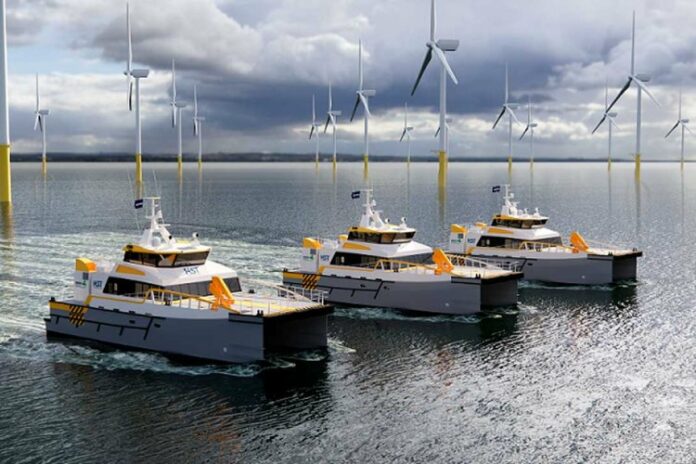
High Speed Transfers (HST) Marine and Damen Shipyards have announced that a contract has been signed for the supply of three new Fast Crew Suppliers 2710s.

The three vessels will be fitted with 190kW battery arrays that will enable them to operate emissions-free both when in harbour and when loitering offshore awaiting the retrieval of their technicians. In zero-emission mode, the vessels will be propelled by an electrical motor that is connected via the gearbox (PTI) to the propeller shaft. When sailing in diesel-mode, the electrical motors are able to work in reverse as PTO and can be used to charge the batteries and provide the hotel load for the vessel.

With the FCS 2710 Hybrids already in build at Damen Shipyards Antalya, Turkey, in anticipation of future demand, the delivery of all three will take place in early 2024. HST will be closely involved throughout as a key part of the build team, with all involved working together to ensure their success. Once operational, the FCS 2710s will receive ongoing support and maintenance services from Damen’s service hub located at Portsmouth on the UK’s south coast, as part of Damen’s commitment to providing through-life support for its vessels. They will also be IMO Tier 3 compliant and feature all the latest upgrades made to the class based on customer feedback and technological advances.

The development and build of these innovative crew transfer vessels is a milestone in Damen’s goal of providing a full range of sustainable vessels to support the offshore clean energy sector. In order to meet market demand, Damen is also investing further in building additional stock vessels both at Damen Antalya in Turkey and in Damen Song Cam shipyards in Vietnam.

The delivery will also enhance the low emission credentials of HST Marine’s fleet of crew transfer vessels. An existing and valued customer of Damen since its foundation, HST Marine is now part of Purus Wind, the offshore wind business of Purus Marine, a company that provides low-carbon maritime transportation and infrastructure systems. HST’s current Damen fleet includes conventional FCS 2710s and a Multi Cat 2309.

Tom Nevin, CEO of HST and Business Head of Purus Wind, said:

“The addition of the FCS 2710 Hybrids to our fleet supports our strong commitment to providing low-carbon solutions to our customers in offshore wind.”

Damen’s Frederik van der Linde added:

“We are delighted that HST Marine is the inaugural customer for this ground-breaking CTV class. Tom and his team brought the first FCS 2710 into the market and now they are acquiring the first 2710 Hybrid. Their foresight and confidence in Damen has played an important role in the evolution of the modern CTV and we are very proud that they are taking delivery of these high-end vessels. It is testimony to the strength of our relationship based on mutual trust and cooperation.”

Wärtsilä to act as system integrator for BMIS

0

The technology group Wärtsilä has signed a Memorandum of Understanding with Texas based Bleutec Industries. The agreement covers Wärtsilä’s role as the system integrator for Bleutec’s innovative Binary Marine Installation Solution (BMIS). The BMIS is a cost-effective, Jones Act compliant alternative to the more expensive heavy-lift jack-up Wind Turbine Installation Vessels currently being utilised by offshore wind contractors in Europe.

The BMIS model will be built around a combined vessel spread comprising of a Piling Installation Vessel, a WTIVLight and Service Operation Vessels. The Piling Installation Vessel will feature a gantry crane capable of lifting up to 4500 MT, a hydraulic hammer, and deck space for the piles. The WTIVLight will be capable of installing wind turbines of up to 22 MW, while the Service Operation Vessels will provide the necessary accommodation and crew support services for working in depths of up to 60 metres. All vessels are designed to be powered by Wärtsilä dual-fuel engines paired with Wärtsilä’s hybrid Battery Energy Storage Systems and will incorporate the latest advances in Dynamic Positioning.

Robin Bodtmann, CEO of Bleutec, says:

“Wärtsilä has taken an active role in this project, and their technical expertise and broad experience are very important to the success of the concept. In particular, we appreciate their industry-leading efforts in developing sustainable technologies that will largely define the industry’s future.” 

George Franssen, Account Manager New Builds Americas, Wärtsilä, says:

“We see the Bleutec BMIS as being a game-changer for the offshore wind industry, and we are excited to have been involved from its early stages. As the system integrator, we will continue to work closely with all the parties to bring the project to a successful conclusion.” 

The vessels will comply with the Jones Act, the law regulating maritime commerce in U.S. waters and between U.S. ports, and will be constructed and flagged in the USA. They will employ U.S. mariners and crews supporting the U.S. offshore wind industry.

Deployment is expected to take place during the early part of 2026.