-14.5 C
New York
Home Blog Page 364

Tallink Grupp’s new ferry MyStar to be delivered to the company on 7 December

0

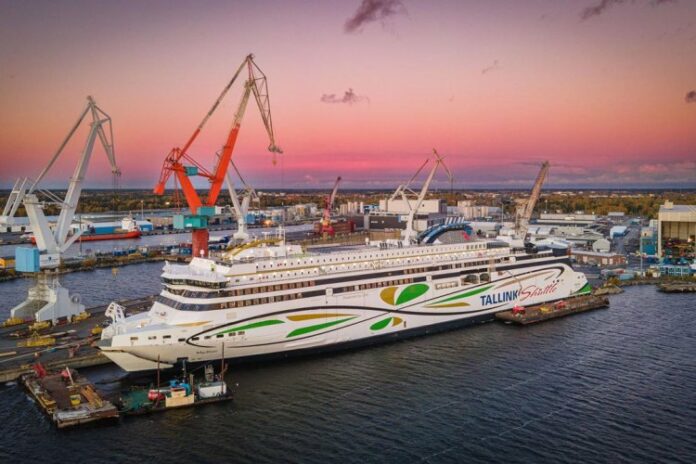
Tallink Grupp’s new ferry MyStar will be delivered to the company by Rauma Marine Constructions (RMC) this week, on Wednesday, 7 December 2022, at Rauma shipyard in Finland. 

The long-awaited start of operations of MyStar, the newest and most technologically advanced vessel on the Baltic Sea, will take place on Tuesday, 13 December at 13.30 from Tallinn to Helsinki. 

Commenting on the delivery of MyStar, CEO of Tallink Grupp, Paavo Nõgene said:

“We are very pleased that the time has now come this week for us to welcome and receive the newest member of our fleet, the brightest star on the Baltic Sea, MyStar into our fleet. Her much-awaited arrival marks the beginning of yet another new era for the Tallinn-Helsinki route, with customer service standards now even higher, passenger comfort even greater and sustainability even more at the heart of our operations. The world has changed greatly since we started building our newest fleet member in spring 2020 with more hurdles along the way than we have ever experienced, but we have met all the challenges head on and are happy that our beautiful MyStar has now been completed and will welcome everyone on board from 13 December onwards.  I want to thank the whole Tallink MyStar project team, Rauma Shipyard and all our partners who have contributed to making our dream of the brightest new star on the Baltic Sea a reality.”
Mika Heiskanen, CEO, RMC, says:

“I want to thank Tallink for their excellent cooperation which has allowed us to bring the project to completion together despite challenging circumstances. I would also like to thank the partners and the classification society. MyStar represents Finland’s strong expertise in shipbuilding. It has been an honour for us to design and build such a technologically advanced vessel that upholds sustainable values. We wish MyStar the best of luck with the sailings.”  

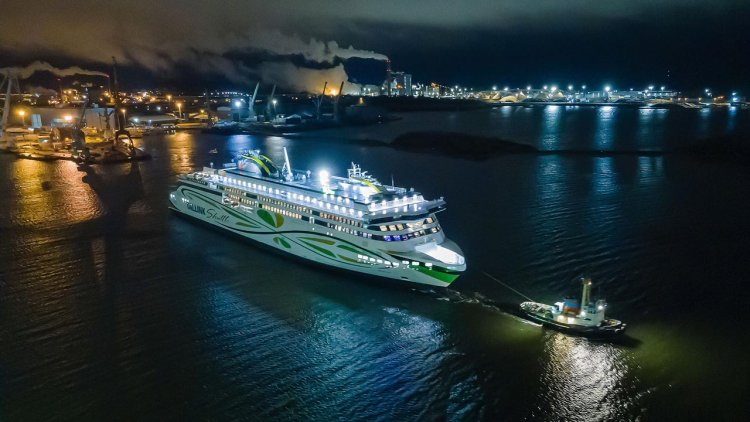
MyStar is expected to depart from Rauma shipyard on Friday, 9 December and to arrive at the Old City Harbour of the Port of Tallinn at 10am on Saturday, 10 December. 

The first commercial voyage of MyStar will take place on 13 December 2022, departing from Tallinn to  Helsinki at 13.30 local time, replacing Megastar in the current Shuttle service timetable. MyStar’s crew of 208 is headed by three captains in total – masters Vahur Ausmees, Aivar Moorus and Ain Aksalu. 

The construction of the vessel cost EUR 247 million and is financed with a loan of EUR 196,3 million from KfW IPEX-Bank GmbH. Finnish export credit agency “Finnvera” guarantees 95 per cent of this post-delivery buyer credit.

MSC now directly connects India and the West Mediterranean

0

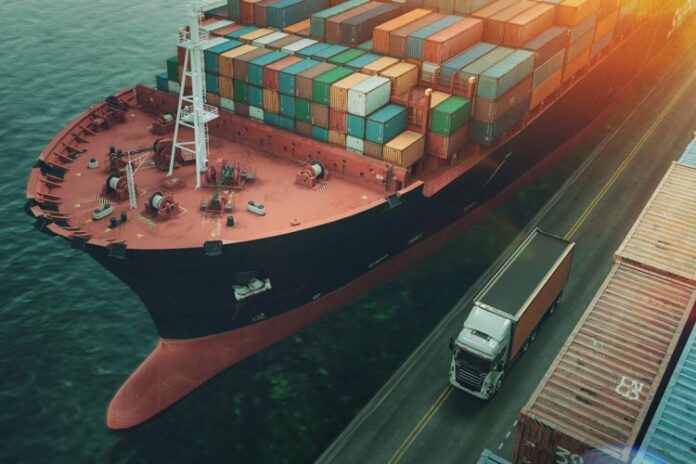
By offering direct connection between the two regions, MSC will reduce transshipment for customers and providing expedited transit times.

The service will offer Mundra to Genoa in 19 days, Valencia in 23 days and Nava Sheva to Barcelona in 16 days, with no transshipment required between load and discharge ports.

The India – West Med service connects with MSC’s broad intermodal networks in Genoa and Valencia, opening new opportunities for exporters across the region and enhancing support for automotive, apparel and pharmaceuticals industries between the India and the West Mediterranean.

The first sailing will be with MSC SHANGHAI from Abu Dhabi on 19 December and will rotate as follows: Abu Dhabi – Jebel Ali Mundra – Nhava Sheva – Jeddah – Gioia Tauro – Genoa –Barcelona – Valencia – Salerno –Gioia Tauro – Marsaxlokk – Jeddah – Abu Dhabi.

Should you have any questions, please contact your local MSC representatives in our global network of more than 675 offices.

Duisport and Vitronic present solution for automatic detection of containers

0

Together with VITRONIC, one of the world’s leading companies for industrial image processing, duisport developed a “Rivergate” based on high-resolution 12K cameras in only 15 months and successfully tested it on two cranes. This created a sustainable solution for digitally recording the ID of the container and comparing it with the loading list in just a few seconds and with a recognition rate of almost 100 percent when loading and unloading an inland vessel.

In combination with the “Crane Management System” (CMS) of the company POLO KNOW-HOW, it is thus possible to avoid incorrect loading, since in cases of so-called “mispicking” the spreader can no longer be unlocked. At the same time, the system is able to detect the integrity of the customs seal and any damage to the container. This will optimize existing processes in day-to-day operations and further advance the digitalization of the world’s largest inland port.

Rivergate will initially be used on a crane at the Duisburg Trimodal Terminal (D3T) at logport I in Duisburg-Rheinhausen and on a crane at the GWW terminal at logport II in Duisburg-Hochfeld. The installation of the specially developed camera systems enables efficient and transparent condition documentation and recording in real time – even at night and in poor weather conditions.

As the container passes the crane bridge, the system records the condition of the loading unit in high-resolution images. Several specially developed algorithms work in the background, making the data immediately available to the Crane Management System (CMS) and the Terminal Operation System (TOS). In this way, the container number can be compared with the loading list to prevent incorrect loading.

Rivergate not only enables important process optimization, but also is another milestone in the digitalization of the Port of Duisburg. This is a great benefit for duisport and the entire customer and partner network of the central logistics hub in the heart of Europe.

“When unloading containers, crane operators rarely have the chance to check their condition. Once set down, the loading unit as flawless, even if it was already damaged. Thanks to Rivergate, we can now prove the condition of the containers and track their whereabouts in the Terminal gapless document”, says Prof. Thomas Schlipköther, duisport Board Member for Technology and Operations, who has been committed to the digitalization of the Port terminals for many years and has initiated numerous projects to this end.

“With the Rivergate solution, VITRONIC is opening up a new business field. We already use the technology in other application areas, such as toll collection or the identification of parcels. We are now using this expertise to further advance digitalization in freight transport as well,” reports Daniel Scholz-Stein, CEO of VITRONIC.

Aker Solutions wins subsea frame agreement with Petrobras

0

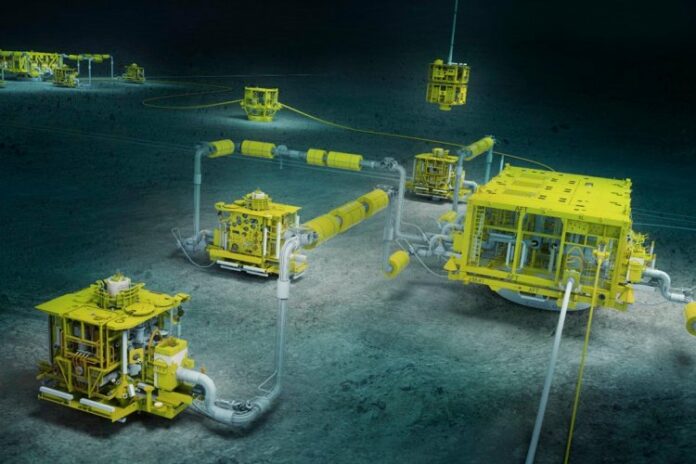
Aker Solutions has been awarded a frame agreement from Petrobras and Partners (Consortiums) to provide subsea production systems (SPS) and subsea lifecycle services (SLS) for Petrobras-operated oil and gas fields offshore Brazil.

The frame agreement has a fixed period of five years, from the fourth quarter of 2022 to the fourth quarter of 2027. The framework agreement will be managed from Aker Solutions’ locations in Brazil.

The scope of the agreement covers the delivery of complete subsea production systems, including equipment such as subsea trees, the company’s latest generation of subsea controls called “Vectus”, subsea distribution units and spare parts, for Petrobras-operated fields offshore Brazil. Over the duration of the frame agreement, it is estimated that the number of subsea trees to be called off could be up to 33 trees. This estimate does not represent a minimum or maximum amount.

The scope also covers the full range of subsea lifecycle services for Petrobras-operated fields offshore Brazil. This will include intervention, preservation, and maintenance, as well as installation services. The service work will be managed from Aker Solutions’ service base in Rio das Ostras in Rio de Janeiro, Brazil.

Maria Peralta, executive vice president and head of Aker Solutions’ subsea business, said:

“Brazil is a key offshore market globally and we look forward to continuing our long-standing relationship with Petrobras. This landmark frame agreement is a testimony to the quality our skilled employees have delivered over time in Brazil and the value our subsea solutions and services. Aker Solutions has been present in Brazil for more than four decades and has a proven track-record of delivering safe, efficient, sustainable and reliable operations.”

The frame agreement continues Aker Solutions’ longstanding commitment to drive local partnerships, with more than 50% local content rate for both SPS and SLS. The agreement has a strong focus on safe and sustainable operations, as well continuous improvements, including increased use of digital solutions in order to increase efficiency, optimize execution and increase value creation for all parties.

The work under the frame agreement will be call-off based. Aker Solutions expects to initially book a significant1 order intake in the fourth quarter of 2022 in the Subsea segment, representing an estimate of the expected initial work to be called-off. The full potential under the five-year fixed period of the frame agreement could represent substantial2 order intake over time. This range does not represent a minimum or maximum amount, the total value will depend on the customer’s future demands.

ICTSI delivers PNG’s first STS cranes

0

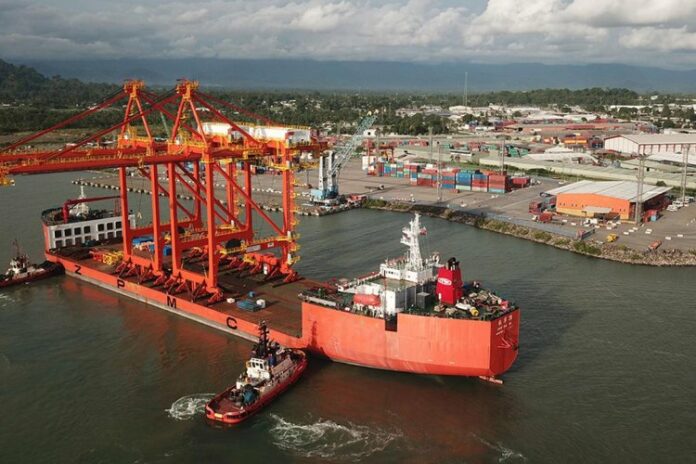
South Pacific International Container Terminal (SPICT), a unit of International Container Terminal Services, Inc. (ICTSI) at the Port of Lae, is now capable of handling larger box ships after receiving a pair of new ship-to-shore (STS) cranes, the largest port equipment in Papua New Guinea today.

Manufactured by Shanghai Zhenhua Heavy Industry Co. Ltd. and with a reach of up to 17 rows across, the new Post-Panamax cranes can easily service vessels of up to 6,000 TEUs and is part of ICTSI’s ongoing program to strengthen and enhance the overall operational efficiency at PNG’s leading container terminal.

Robert Maxwell, ICTSI South Pacific CEO, stressed that the new cranes will contribute to SPICT’s market leader positioning in the national and international logistics chain:

“ICTSI is very proud to have delivered another major milestone in Papua New Guinea after delivering the country’s very first quay cranes at our SPICT facility. With improved productivity, the Port of Lae will soon become an important transshipment hub for the Pacific islands region.”

With the new equipment, shipping lines can expect quayside productivity gains and shorter port stays. The terminal will soon be able to facilitate direct calls by larger vessels operating in the major trade routes, which in turn would reduce costs for both importers and exporters in the region.

Maxwell adds:

“As we plant the seeds to create sustainable port cities and communities, it is our hope that this new equipment will further sustain Papua New Guinea’s economic growth and expanding international trade over the coming years.”

Once the STS cranes are deployed, one of the mobile harbor cranes currently at SPICT will be transferred to Motukea International Terminal (MIT) in Port Moresby, thereby also increasing the operational efficiency for both terminals.

Earlier this year, ICTSI South Pacific has invested into two 2.5-Megawatt Cummins power generators to ensure constant power supply in its Lae terminal, and procured seven new truck trailers in Lae and three units in Motukea, as part of the additional investment to support the STS cranes increased productivity. Additional equipment such as empty container handlers are expected to arrive in both terminals in 2023, same as two additional rubber tired gantries (RTG) for SPICT.

To ensure the continuity of ICTSI’s corporate culture and system of operations across the Group, ICTSI South Pacific likewise sent several of its employees from SPICT and MIT to train at ICTSI flagship Manila International Container Terminal (MICT) in the Philippines. The trainings conducted were done to enhance their familiarity on operating the new STS cranes and improve their management and supervision capabilities. 

KBR to design cutting edge offshore energy storage for CrossWind

0

KBR has been awarded a contract to provide engineering services for an innovative offshore energy storage project for CrossWind, a joint venture (JV) between Shell and Dutch utility company, Eneco.

KBR will perform a front-end engineering design of the baseload power hub (BLPH) for the Hollandse Kust (north) wind farm located offshore Netherlands.

KBR and Shell will design and develop facilities that integrate lithium-ion battery storage and green hydrogen electrolysis production at megawatt scale. The design will enable hydrogen production and electricity storage in periods of high-power production and will convert hydrogen to electricity, via a fuel cell, during periods of lower power production.

Jay Ibrahim, president of KBR Sustainable Technology Solutions, said:

“KBR is extremely pleased to be involved in this sustainable energy project. To solve the current global ‘energy trilemma,’ the world needs an energy mix that relies more on wind, solar and nuclear power. With our deep expertise in engineering and energy solutions, KBR is positioned to help our valued customers — partners like the CrossWind JV —drive the energy transition.”

Trafigura signs USD3 billion loan agreement to secure gas supply

0

Trafigura has entered into a USD3 billion four-year loan jointly arranged and underwritten by Deutsche Bank and another international bank and syndicated to a number of participating banks. Over 25 banks participated in the successful syndication which was 1.6 times oversubscribed.

The loan is secured, in part, by a guarantee under the Untied Financial Loan program (UFK) of the government of the Federal Republic of Germany acting through the German Export Credit Agency (ECA) Euler Hermes Aktiengesellschaft. The program is a tool to secure the long-term delivery of strategic commodities to Germany.

The loan will support a new commitment by Trafigura to deliver substantial volumes of gas into the European gas grid, and ultimately into Germany, over the next four years. Trafigura will supply the gas to Securing Energy for Europe (SEFE), which was recently recapitalised by the German government. The first gas delivery took place on 1 November 2022 and Trafigura will primarily use existing quantities from its global gas and LNG portfolio to help secure gas supplies to SEFE. The agreement included a review of Trafigura’s environmental, social and governance (ESG) policies and performance.

Richard Holtum, Head of Gas and Power Trading for Trafigura, said:

“We are proud to be contributing to Europe’s energy security by supplying this significant volume of gas to Germany backed by our extensive portfolio and long term US LNG contracts.”

Wärtsilä’s solutions selected for world’s largest LPG/Midsize gas carriers

0

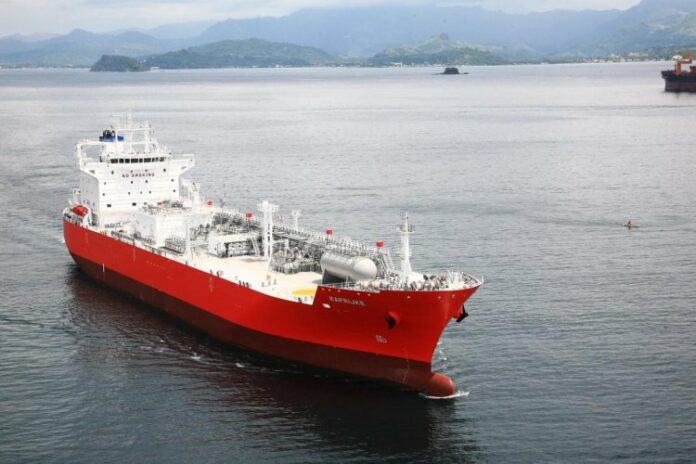
Wärtsilä’s Cargo Handling and LPG Fuel Supply systems have been selected for two LPG/Midsize gas carrier vessels being built at Hyundai Mipo Dockyard in South Korea for EXMAR LPG, a joint venture between EXMAR, a multi-disciplinary maritime and offshore solutions provider and Seapeak. The order was included in Wärtsilä’s order book in December 2022.

The 46,000 m3 capacity vessels will be the largest of their kind in the world, and there is an option for two additional ships as well. Wärtsilä recently supplied a similar scope of solutions for a series of EXMAR vessels built at the Jiangnan shipyard in China.

Mr. Jae Woon Kim, Senior Engineer, Project Planning Department, Hyundai Mipo, says:

“There is increasing demand for efficient and well-designed gas carriers and these two vessels are designed to the latest standards. The equipment selected has also to be the latest and most advanced technology, and we are pleased to have Wärtsilä as the supplier for the cargo handling and fuel supply systems.”

Hans Jakob Buvarp, Sales Manager, Marine, VOC and Cargo Handling Systems at Wärtsilä, says:

“We are extremely proud to be chosen to supply these latest EXMAR vessels with our advanced systems. Wärtsilä is one of the market leaders in this field with an unmatched reference list of successful installations. We are happy to extend this list even further.” 

The Wärtsilä equipment is scheduled to be delivered to the yard in the latter part of 2023.

Vigor begins work on USS John Paul Jones

0

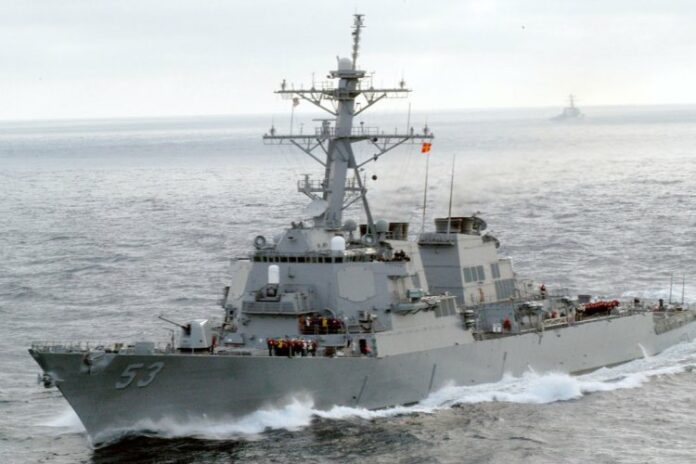
Vigor has been awarded a $131 million U.S. Navy contract to complete a docking selected restricted availability (DSRA) on USS John Paul Jones (DDG 53) at Harbor Island in Seattle. 

The ship arrived at Harbor Island on November 4, becoming the fourth U.S. Navy vessel currently undergoing maintenance at the Seattle shipyard.

Adam Beck, EVP of Ship Repair at Vigor, said:

]“We are excited to welcome USS John Paul Jones to Harbor Island, where our skilled workers will offer excellent service in support of the U.S. Navy. Vigor is proud to have built a reputation of completing challenging availabilities safely and with excellent quality. We are grateful the Navy continues to choose our shipyards for this critical work.”

The DSRA will consist of underwater hull preservation, propulsion overhaul, structural work, valve overhaul, sonar work, deck preservation and significant modifications and alterations. The project will employ more than 600 skilled workers during its year-long stay at Harbor Island.

In addition to USS John Paul Jones, USS Chosin (CG 65), USS Omaha (LCS 12) and USS Cape St. George (CG 71) are currently undergoing maintenance at Harbor Island. This is the first time since Vigor began operating the Harbor Island shipyard in 2011 that four U.S. Navy ships have been onsite undergoing maintenance concurrently. Additionally, USS Tulsa (LCS 16) has recently arrived at Vigor’s Swan Island shipyard in Portland, Ore., while work commenced earlier this year on USS Michael Murphy (DDG 112) at Pearl Harbor Naval Shipyard.

Beck said:

“Vigor’s deep relationship with the U.S. Navy supports hundreds of jobs across the Pacific Northwest, Alaska and Hawaii. We are grateful for the continued opportunity to support our national defense, and our skilled workers look forward to showing our standard of excellence in our work. Not only do Vigor employees consistently perform tremendous work, they do so while making Vigor shipyards among the safest in the industry.”

Brødrene Aa is building autonomous ferry

0

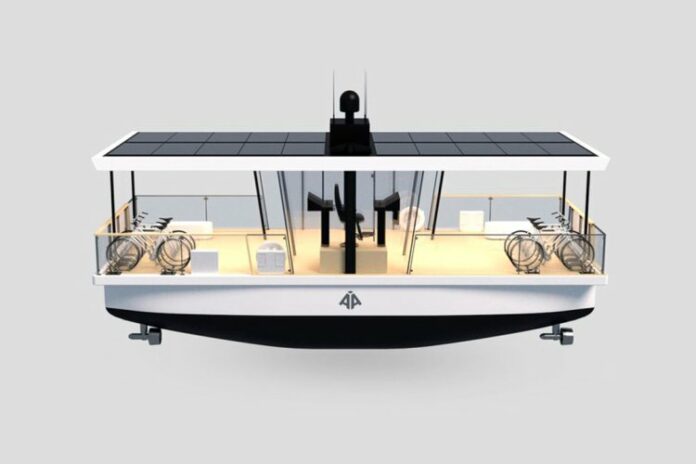
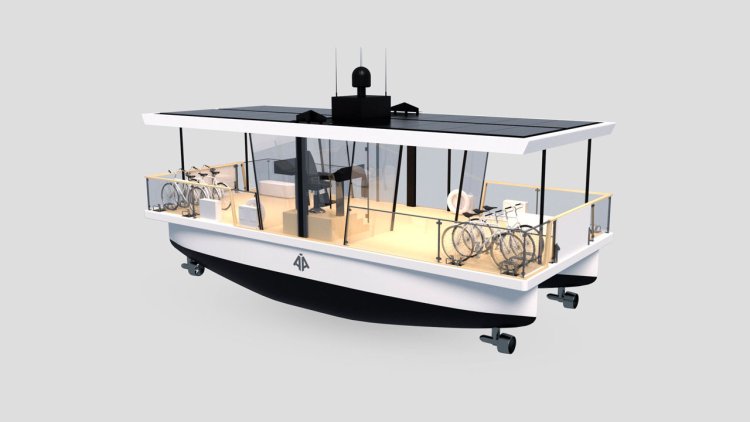
The shipping company Torghatten and the autonomy supplier Zeabuz are behind the project, and Brødrene Aa has been responsible for design and construction and has been given the task of building the first autonomous passenger ferry for commercial operation that will run in the middle of Stockholm.

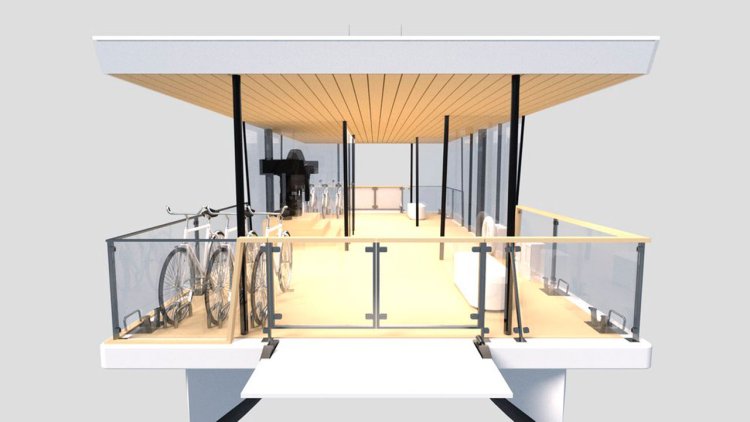
The vessel to be built is an electric catamaran with a capacity of 25 people. It is scheduled to be completed in April 2023. The boat will operate a route between Kungsholmen and Søder Mellarstrand in Stockholm, with 15 hours of continuous electric operation each day. The boat will be 12 meters long and will have an open, covered passenger deck with boarding and disembarking at both ends.

This is a very interesting contract for Brødrene Aa as it gives the opportunity to showcase a new concept for cities that want to make better use of their waterways.

At first, the boat will always be led by a captain on board, while the trip will be monitored from a control room. In the long term, the idea is that everything will be controlled from the control room on land.

Reidun Svarva, Head of Business Development in Torghatten, says:

“Norway is at the forefront of developing autonomous vessels, and we have come a long way in the development of cargo ships. Now we are taking this to the next level with testing and development of commercial, driverless passenger ferries. We are proud of this project where both the shipping company, technology supplier and shipyard become a Norwegian export product to Stockholm.”

It is the Norwegian technology company Zeabuz that supplies the autonomous system for the passenger ferry. The company developed from from the maritime research environment at the Norwegian University of Science and Technology (NTNU). Together with NTNU, Zeabuz has already developed an autonomous test ferry that runs in Trondheim. The project in Stockholm stands out in that it will be the first autonomous ferry with commercial operation.

CEO of Zeabuz, Erik Dyrkoren, says:

“We have learned a lot from our project in Trondheim, and now we are ready to take the next step in creating the world’s first commercial autonomous city ferry. The technology will mostly be the same, but in Stockholm we will test the autonomy system in daily operation with passengers in a way that no one has done before. This will be very exciting.”

CEO at Brødrene Aa, Tor Øyvin Aa, says:

“For Brødrene Aa, this is also a very exciting project, where we make use of the technological expertise and experience we have in building energy-efficient high speed ferries, and get to combine it with the latest in autonomous solutions.”

In the long term, there are interesting future possibilities for this type of vessels, at a time when more and more cities are looking at better utilization of the waterways as a means of transport. 

The project with autonomous ferries in Stockholm is also attracting international interest, not least because of the project’s green profile. Around 90% of all urban areas are located by waterways, but due to extensive emissions and high operating costs, these waterways are used far too little.