-13.3 C
New York
Home Blog Page 361

New mobile app eases evidence gathering burden for marine professionals

0

Launched on 12 December 2022, the ‘The MRCE Handbook’ app from North will help senior officers, surveyors and shore-based technical and marine personnel gather evidence quickly and efficiently, using standardised formats on mobile phones and tablets.

The MRCE Handbook app has been developed by North’s in-house Loss Prevention Team using proven methodologies established in The Mariner’s Role in Collecting Evidence Handbook. Published by North, the source Handbook outlines the most commonly occurring incidents and accidents on board ship, offering evidence collection checklists for each. It is widely regarded as a leading reference guide for seafarers.

“Evidence that is gathered and preserved at the time of the incident is invaluable to the resolution of claims and disputes,” said Colin Gillespie, Director (Loss Prevention), North. “Using digital tools to streamline its collection helps with speed and accuracy, making it more likely that a comprehensive and objective record of events is established. Timely collection reinforces the value of evidence, both for pursuing and defending claims.”

Compatible with iPhones, Androids and tablets, the app is free to access for all North entered Members and Correspondents. It offers clear guidance on best practice in evidence-gathering methods and covers incidents such as those involving people or cargo, those caused by vessels (including pollution), and those relating to H&M claims or commercial disputes.

The MRCE Handbook app is available 24/7, allowing users to generate a checklist based on the types of incident, available evidence and to upload information on each checklist item – online and offline – to generate a standardised report to share with the shipowner or manager. Users can also save incomplete checklists and return to them later to finish the job.

“Once the facts are known, they can be used to demonstrate compliance or determine liability, but also to learn and help prevent similar incidents from happening in the future,” said Mike Salthouse, Global Director (Claims), North. “Establishing what really happened and how it happened is critical and, as well as making it easier for mariners to fulfil evidence-gathering duties, The MRCE Handbook app will also help to base safety recommendations on more accurate evidence.

“Mobile devices are commonly used to capture still, and video images as incidents unfold. Having The MRCE Handbook app to hand will increase awareness that formalised evidence gathering and reporting is also required and can be accomplished more easily than ever before.”
Construction of customised tugs started at Albwardy Damen

0

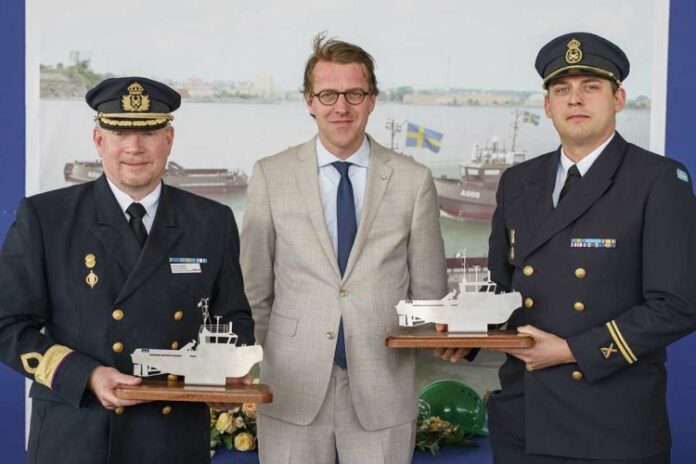
Four customised ice class harbour tugs are under construction for the Swedish Navy to be delivered to Sweden starting in 2023.

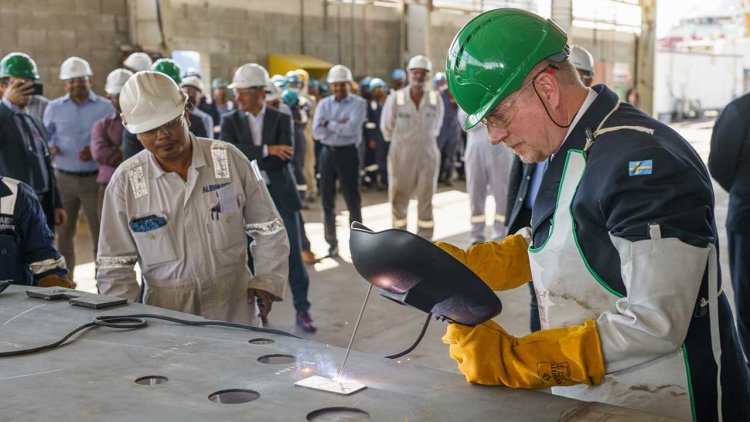
The ceremony started with three coins placed in a stainless steel plate: a Swedish Crown, a Dutch Rijksdaalder and an Emirates Dirham. This symbolises the co-operation of the three countries in manufacturing the special tugs.  The plate with the coins was then welded by General Hjorth to the hull construction.

The four tugs as ordered by FMV are based on the Damen Stan Tug 1606. The Defense organization ordered an extensive range of equipment to be installed on these vessels and had special requirements for operational capabilities. The design of the tugs was there for lengthened to 17 meter. The hull is capable of navigating through ice, as the vessels will also be active in northern harbours along the Swedish coast. They are capable of operating in temperatures as low as twenty degrees below zero Celsius. The wheelhouse is equipped with double glazing and high capacity heating is installed. Navigation lights will be heated to prevent ice and snow blocking the light. Winter days have daylight only for a few hours at northern latitudes. The hulls will be protected by an extra robust coating system to withstand the chafing of ice along the water line.

General Hjorth memorised the naval tradition of putting coins in a vessel for good luck.

“In the days of wooden sailing vessels, ship builders placed a coin on the keel under the mast before it was raised. Today, we like to keep up this tradition to honour and maintain the skills of the seafarers that developed the art of navigation and safely sailing a vessel under all circumstances.”

“We are happy with the approach of Damen to answer all of our wishes and demands for the arrangement of these vessels,” the director continued. “They have taken the performance fundamentals of a workboat to adapt these into a tailormade vessel that is equipped to military standards.”

FMV ordered the four Stan Tug 1706 with an option for two extra.

TECO 2030 signs supplier partnership agreement with SinoHyKey

0

TECO 2030 and SinoHyKey (SHK) have entered into a strategic partnership that will allow SHK to provide MEA, one of the key components in the TECO 2030 fuel cell system to decarbonize the marine transportation. 

The collaboration has already sparked off and is expected to last if the key milestones in the development can be achieved successfully.

“I am pleased to announce our supplier agreement with SinoHyKey in Vancouver and looking forward to a great partnership for many years,” says Tore Enger, Group CEO of TECO 2030. “Together we will be able to provide zero emissions energy solutions to the world,” Enger adds.

“SinoHyKey is very excited to partner with TECO 2030 to demonstrate the potential of the hydrogen fuel cell in marine and other heavy duty applications – not just in Europe, but across the globe. SHK MEAs destined for the TECO 2030 project employ a state-of-the-art design which offers superb power density, durability, and cost efficiency,” says Dr. Yuquan Zou, CEO of SinoHyKey Technology Company.

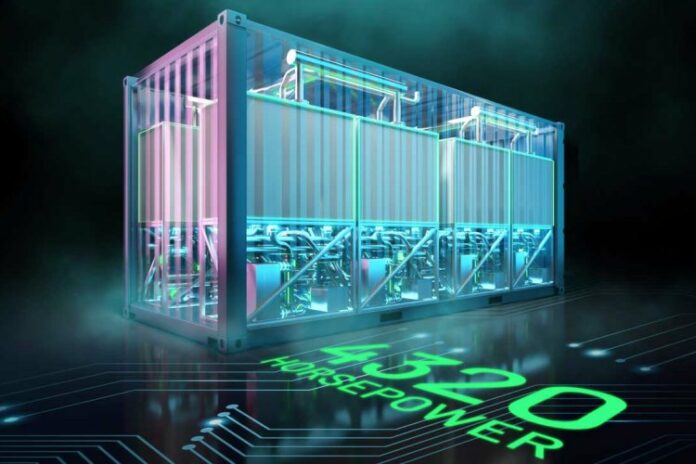
TECO 2030 has recently announced progress in several projects. Implenia Norway has ordered an 800kW HydroPilot container, with an option to increase the power capacity up to 1.6MW. The project will demonstrate that construction sites can operate emission-free. Additionally, TECO 2030’s HydroPilot project, supported by ENOVA, is planned to be delivered in Q3 2023. The order value is NOK 20 million, and if the option is exercised the total will be brought up to NOK 30 million.

Another pioneering project is the announced HyEkoTank, where TECO 2030, Shell and partners received EUR 5 million from Horizon Europe. The HyEkoTank project aims to retrofit a product tanker with 2.4MW fuel cells during 2024 for zero-emission port operations and up to 100% emissions reduction.

Provaris obtains Design Approval for compressed hydrogen carrier from ABS

0

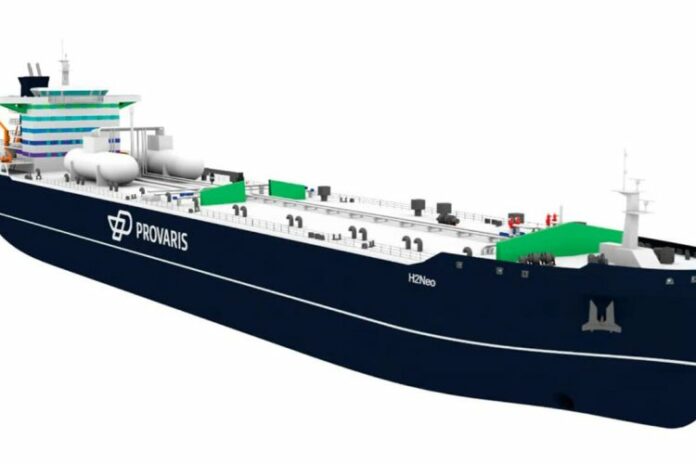
The American Bureau of Shipping (ABS) has reviewed, verified, and approved the design of Provaris’ 26,000m3 H2Neo compressed hydrogen (H2) carrier, the first of its kind to receive this level of approval.

This critical milestone approval follows the completion of extensive Front End Engineering Design (FEED) work and ABS review activities. 

The next steps in our journey to world-scale hydrogen shipping are to construct and test a prototype hydrogen tank, and to prepare for ship construction with a selected shipyard(s).

Provaris’ Chief Technical Executive Officer, Per Roed comments:

“The success of our FEED design stage and corresponding approval milestone is the result of extensive design and engineering works by Provaris’ team of discipline experts and consultants that have actively contributed to the development of Provaris’ innovative H2Neo hydrogen carrier.

Through our close collaboration with ABS throughout this three-year process, we are confident that our compressed hydrogen carriers can safely and effectively establish the maritime transportation of hydrogen at a time when storage and transport remain key to unlocking markets with ambitions for hydrogen imports at scale from 2026.”

More gas to Hammerfest LNG: Askeladd on stream

0

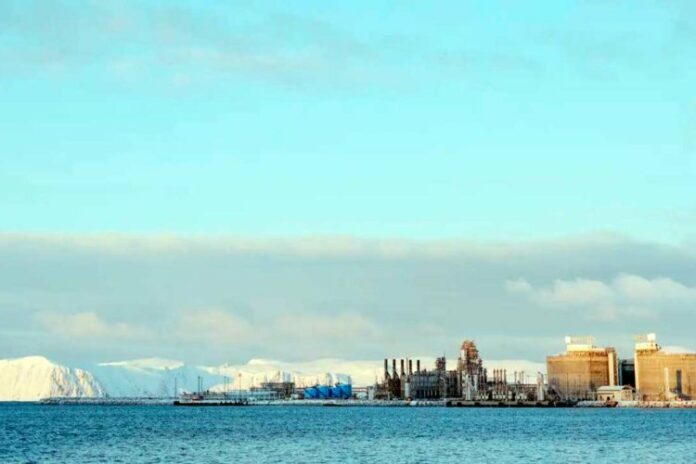
Askeladd is a satellite field of the Snøhvit Field and developed as a subsea tie-in to the Snøhvit facility and Hammerfest LNG.

“Askeladd is now producing, the gas will help extend plateau production from Hammerfest LNG on Melkøya up tothree years,” says Thor Johan Haave, Equinor’s vice president operations & maintenance, Hammerfest LNG.

During normal production, Hammerfest LNG (HLNG) delivers 18.4 million standard cubic metres of gas per day, or 6.5 billion cubic metres per year. This corresponds to the needs of around 6.5 million European households, or 5% of all Norwegian gas exports.

“HLNG delivers significant volumes to customers in Europe, and the gas from the Barents Sea reinforces our position as a predictable and reliable gas supplier. Askeladd and other projects in the region will ensure further value creation and production from HLNG for decades,” Haave adds.

The project was originally completed in 2020, but start-up had to wait until the Melkøya plant resumed operations after the fire the same year. The development was delivered on schedule and NOK 650 million below the cost estimate of NOK 5.2 billion.

“Just over 1.5 million person-hours of work have gone into the project, most of them performed by our suppliers. During the project period, Askeladd generated 250–300 person-years of work in Northern Norway, mainly in Hammerfest. In addition, many employees and suppliers have helped restart Hammerfest LNG, which makes it possible to phase in both Askeladd and future projects,” says Trond Bokn, Equinor’s senior vice president for project development.

Askeladd is the first of several projects in the further development of the Snøhvit field and the infrastructure around HLNG. Next up is Askeladd West with two new wells tied back to existing infrastructure, before further development continues with onshore compression and electrification through the Snøhvit Future project.

Plymouth and South Devon Freeport given the green light

0

The Plymouth and South Devon Freeport – which will create thousands of jobs and transform how businesses can operate in the region – has been formally approved by the Government.

The announcement unlocks millions of pounds of grant seed funding and enables eligible businesses to join and take advantage of the Freeport status.

It also means new employment land can be bought forward and will accelerate the formation of advanced manufacturing clusters, leverage £250m of private sector investment, and support a new £30m Innovation Centre at Oceansgate.

The Freeport plan builds on the region’s status as a centre of excellence for marine, maritime, defence and manufacturing innovation and expertise.

It will also harness and expand its work in nationally critical sectors including marine autonomy, maritime net zero, offshore renewable energy, maritime logistics, and digital oceans.

The plan has been developed by a consortium including Plymouth City Council, South Hams District Council and Devon County Council working alongside Babcock, Princess Yachts, Carlton Power, and the Sherford Consortium. It is also supported by a wide range of stakeholders including the University of Plymouth and University of Exeter, Plymouth port operators, skills providers, and the Heart of the South West LEP.

The University of Plymouth will chair the Freeport Innovation Board and is driving the project’s innovation strategy, working alongside the University of Exeter, Plymouth Marine Laboratory, City College Plymouth, Babcock, and Princess Yachts.

Its work will harness the work carried out through existing initiatives involving the University such as Smart Sound Connect, the National Centre for Coastal Autonomy, and the Plymouth Marine e-Living Lab project.

Professor Judith Petts CBE, Vice-Chancellor of the University of Plymouth, said:

“The Plymouth and South Devon Freeport will create exciting opportunities here in the South West that can benefit the country as a whole. It reinforces the region’s place at the forefront of existing and emerging sectors including marine autonomy, digital oceans and maritime net zero. It also recognises their potential to transform how we use and understand the ocean, and the critical role it can play in the region’s future prosperity and global standing.

“Combining knowledge and engagement for impact is embedded in the University’s ethos. Our internationally recognised expertise in marine and maritime research, innovation and skills development has a long history, and has been shown to deliver real and lasting change. The Freeport initiative gives us the opportunity to build on that, working with our partners to harness the innovation and investment that will enable Plymouth and South Devon to thrive now and in the future.”

Harnessing the region’s key strengths in marine, defence and advanced manufacturing, and supporting the burgeoning space sector, the Plymouth and South Devon Freeport will enable innovators and investors from across the world to test, trial and take to market cutting-edge technology and products.

Working with the Department of International Trade, a dedicated team of experts will showcase the Freeport to global investors and businesses who fit the criteria to expand or relocate to the region.

Businesses that are part of the Freeport can take advantage of a range of tax and customs benefits and incentives to support growth, innovation and investment in the South West, including business rates relief, employer National Insurance contributions rate relief, stamp duty land tax relief, capital allowances, VAT and tariff benefits and simplified import procedures.

Approval now enables interested businesses to begin taking the first steps to contracting, designing and planning their place within the Freeport with the Freeport team, landowners and partners and discuss the myriad benefits this presents.

Levelling Up Minister Dehenna Davison MP said:

“Today is a historic day for Plymouth, South Devon and beyond, as the Plymouth and South Devon Freeport gets up and running to drive growth and innovation locally and nationally. The Freeport is going to shape the fortunes of the Plymouth and South Devon economies by pumping up to £100 million worth of investment across the region. We are maximising the opportunities of Brexit to drive growth and throw our doors open to the world.”

Consortium awarded export cable contract for Norfolk Vanguard Wind Farm

0

This swiftly follows a recent contract award to provide export cables for the Norfolk Boreas Wind Farm.

The consortium will be responsible for the design, engineering, procurement, manufacturing and testing of around 180 km of High Voltage Direct Current (HVDC) export cables for the onshore route and around 320 km for the offshore route for the whole of the Norfolk Offshore Wind Zone and the connection to the national transmission electricity grid. For DEME, the share in the project represents a sizeable contract.

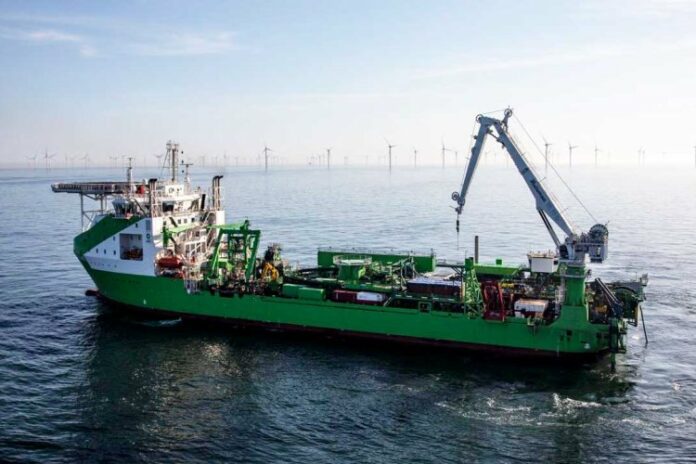
Works for this large-scale offshore wind farm will be executed in 2027 and 2028 and will involve a cable installation vessel, a trailing suction hopper dredger and a fallpipe vessel from the DEME fleet.

Philip Scheers, Business Unit Director at DEME Offshore, comments:

“We are very proud that Vattenfall has again chosen to partner DEME and LS Cable & System for this scope and that we will ultimately provide the export cables for the entire Norfolk Offshore Wind Zone. DEME is doing its utmost to achieve net zero emissions and it is fantastic to stand shoulder to shoulder with pioneers such as Vattenfall, who shares our vision for a sustainable world, and to work on projects like this that will supply green energy to millions of UK homes.”

Catrin Jung, Head of Offshore Wind at Vattenfall, said:

“We’re delighted to have taken the next step with LS Cable & System and DEME Group who will provide the export cables for the whole Norfolk Offshore Wind Zone. This is a big milestone for the project which is vital to deliver fossil-free living within a generation.”

Hyungwon Kim, LS Cable & System Executive, said:

“We are pleased to announce the 320 kV offshore cable being supplied by LS Cable & System will be manufactured solely using renewable energy which is also certified by LS’s Environmental Product Declaration Certification. We would like to thank our client Vattenfall and our partner DEME Offshore with whom we look forward to working to bring clean, green energy to the UK from British offshore wind.”

Located 47 km off the Norfolk coast in the UK, Vattenfall’s Norfolk Offshore Wind Zone will produce clean energy for more than four million households and save about six million tonnes of carbon dioxide.

Hydrogen powered hovercraft feasibility project gets green light

0

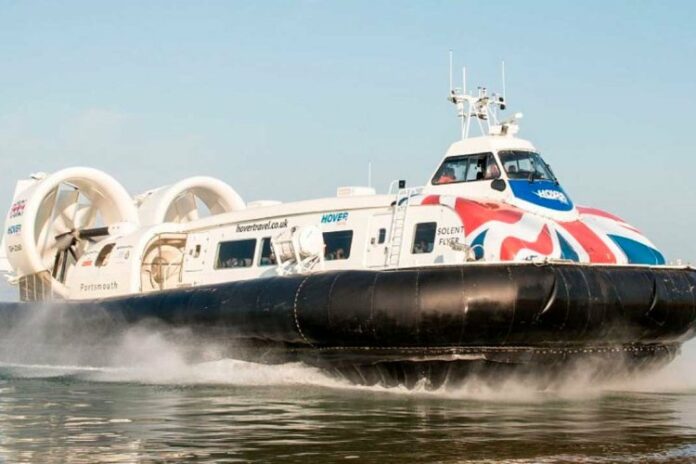
A consortium of UK-based companies led by technology specialist Blue Bear Systems Research has been awarded £569,067 (US$693,578) in funding from the UK government to help lower the maritime sector’s carbon emissions by introducing a new fleet of hydrogen-powered hovercraft that will be used to carry passengers.

Project ZEHPHyr (Zero Emission Hydrogen Powered Hovercraft) is an eight-month feasibility study that aims to de-risk the key barriers to zero-emission hovercraft operations. These barriers include operational barriers (socio-economics, crew training, regulations, life cycle impact), technical barriers (hydrogen-based propulsion system) and availability of hydrogen infrastructure (production, storage, distribution, bunkering, integration with wider infrastructure/mobility).

The focus of the project is investigating the feasibility of replacing diesel engines in today’s hovercraft with a zero-emission hydrogen propulsion system. This will then lead to follow-on phases of development with the hydrogen propulsion system being demonstrated on 12-seat and 80-seat hovercraft. The project partners expect to introduce these vessels into commercial service after 2025.

Other partners in the consortium include hovercraft manufacturer Griffon Hoverwork, Bramble Energy, battery specialist Nyobolt, environmental consultancy Aquatera, and the European Marine Energy Centre (EMEC). Anmol Manohar, Head of Strategy at Blue Bear, said the company’s contribution to the project includes the installation of low-noise propulsion modules originally developed for use on modern aircraft. Matt Storey, Hydrogen Development Manager at EMEC, said that EMEC will support the concept design of the onshore infrastructure including hydrogen production and refuelling.

The ZEHPHyr Project is part of the Clean Maritime Demonstration Competition Round 2 (CMDC2), which was launched in May 2022 and funded by the UK Department for Transport and delivered in partnership with Innovate UK. As part of the CMDC2, the department allocated over £14 million (US$17 million) to 31 projects supported by 121 organisations from across the UK to deliver feasibility studies and collaborative R&D projects in clean maritime solutions.

Source: Baird Maritime

Consortium to build Japan’s first offshore floating solar demonstrator in Tokyo Bay

0

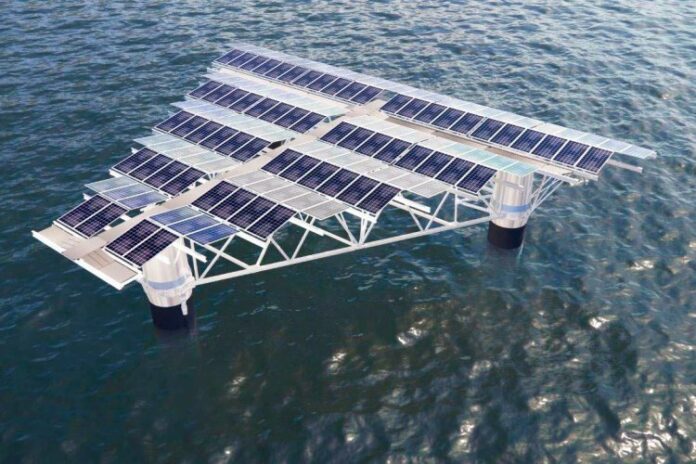
The Tokyo Bay ESG Project’s consortium consists of Tokyu Land Corporation (project owner), SolarDuck (offshore floating solar technology) and Everblue (automated sailing boat with battery storage). 

The three companies have announced that their proposal for Japan’s first offshore floating solar power generation and automated sailing boat technology demonstration has been selected as of November 4, 2022, as part of the Tokyo Bay eSG Project, an advanced project led by the Bureau of Policy Planning of the Tokyo Metropolitan Government. 

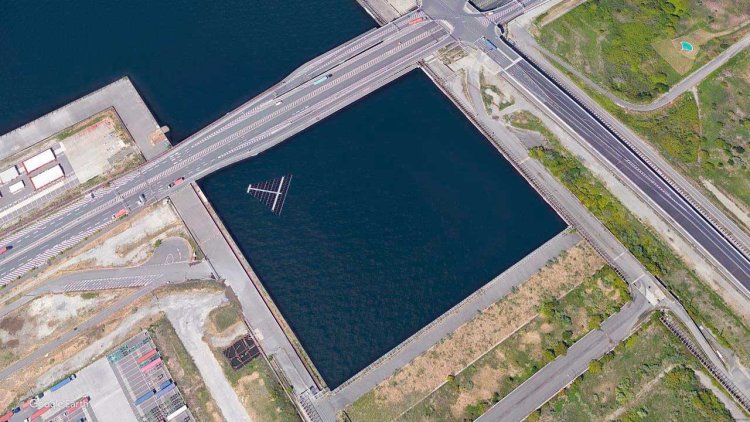
This project is part of the Tokyo Bay eSG Project, which aims to create a sustainable city that looks 50 to 100 years into the future, and aims to implement cutting-edge technologies in the fields of “cutting-edge renewable energy,” “next-generation mobility,” and “environmental improvement and resource recycling” in the central breakwater area. The project aims to realize the world’s most advanced technologies from the Tokyo Bay Area. This project was selected in the field of “cutting-edge renewable energy.

The three companies aim to realize local production for local consumption of energy in the Tokyo Bay Area in the future through the practical application of Japan’s first “offshore floating photovoltaic power generation system,” the use of renewable energy generated on the ocean to power electric-powered boats, and the demonstration of marine transportation of storage batteries.

The details of this project are subject to change as they will be finalized upon consultation with the Tokyo Metropolitan Government.

New feeder service provides direct connection between Poti Port and Istanbul

0

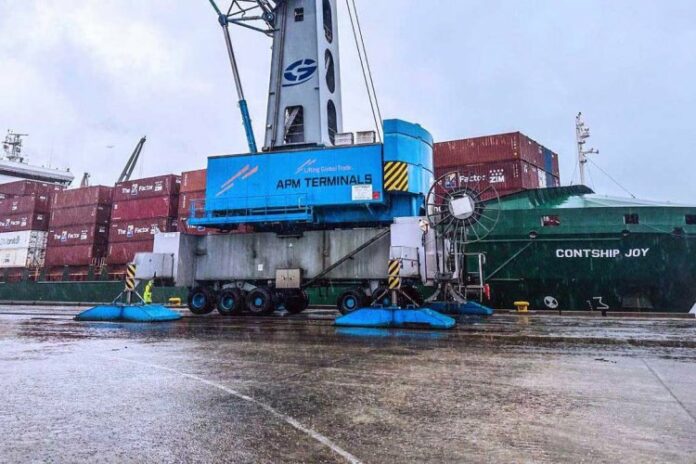
This month, APM Terminals Poti welcomed the maiden call of the new Poti Turkiye Feeder (PTF) service from shipping line ZIM.

The 925 TEU Contship Joy will operate between Turkish ports and Poti Port every 12-14 days. Established in 1945, Israeli cargo shipping company ZIM is one of the world’s leading shipping companies, operating in every part of the globe.

APM Terminals Poti serves as a global gateway for trade in Georgia, Armenia and Azerbaijan, as well as operating as a hub for trade between Europe and Central Asia. With on-dock rail connections and direct connections to the region’s road and rail networks, the port is connected to all key cities in Georgia, the greater Caucasus region and Central Asia. This new service expands Poti’s global connectivity even further via Zim’s worldwide network.

Iain Rawlinson, Chief Commercial Officer:

“APM Terminals Poti is delighted to welcome ZIM’s new service. With the increased need for connections between Georgia and Central Asia and the rest of the world, and the growth in this market, we are confident that ZIM will have great success with their new Turkiye-Poti Feeder service.”