-13.3 C
New York
Home Blog Page 360

Moray West awards foundation installation contract to DEME Offshore

0

Moray West is the second major project undertaken for Ocean Winds, which is leading the development, and represents a sizeable contract for DEME. DEME Offshore’s scope includes the installation of monopile foundations and transition pieces.

In an industry breakthrough, this challenging project will be the first time XXL monopiles will be installed in the winter period, and DEME will deploy its double-staged, motion compensated pile gripper. Moray West will also be the first time a vibro-hammer is being utilised for the XXL monopiles to overcome weaker soil layers.

As well as the XXL monopiles and transition pieces, DEME will perform the bolting and grouting works for the monopile/transition piece connections.

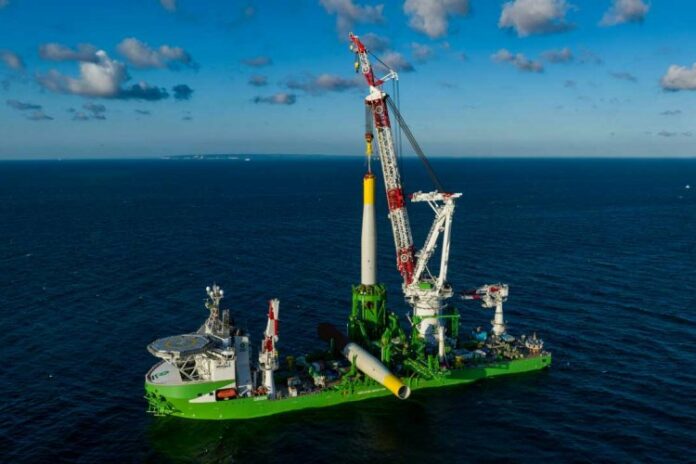
The revolutionary floating DP3 offshore installation vessel ‘Orion’ is set to install the monopiles and jack-up ‘Apollo’ will be deployed for the installation of transition pieces. DEME’s expertise regarding this exceptionally challenging project will be combined with its high-tech fleet and specialised equipment, to ensure that the installation campaigns in 2023-2024 can be carried out efficiently.

Moray West is set to make a vital contribution to Scotland’s renewable energy and climate change targets, supplying low-carbon electricity to approximately 640,000 homes.

DEME Offshore has been awarded the contract from Moray West, which is principally owned by Ocean Winds, an international company dedicated to offshore wind and created by two energy utility companies, EDP Renewables and ENGIE.  A small minority stake is held by UAB Ignitis Renewables.  

Uniper builds a swimming non-permanent LNG import terminal in Wilhelmshaven

0

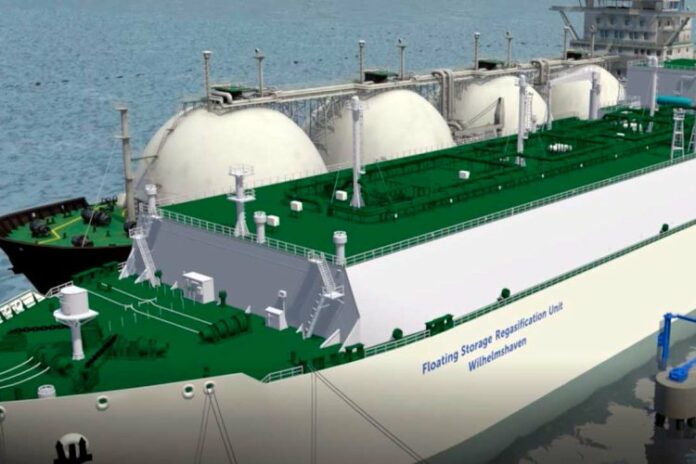
To ensure security of supply in Germany during the cold season, Uniper is working resolutely to build a swimming non-permanent LNG (liquefied natural gas) import terminal in Wilhelmshaven. 

Two additional projects related to decarbonization are also being implemented in parallel under the name “Green Wilhelmshaven.” 

The first is an ammonia import terminal, which will deliver large quantities of green hydrogen to Germany via Wilhelmshaven in the form of ammonia from sunny regions around the globe. This project is planned for the second half of the decade. The second project is an electrolyzer with a capacity of up to 1000 MW, which will produce hydrogen from offshore wind energy.

The LNG terminal was planned a few years ago, but it could not be implemented as a commercial project at that time and Uniper continued to focus on other green projects. Russia’s war of aggression against Ukraine made it necessary to further diversify sources of imports and required a rapid response from the German government, resulting in plans being restarted and intensive work being carried out. 

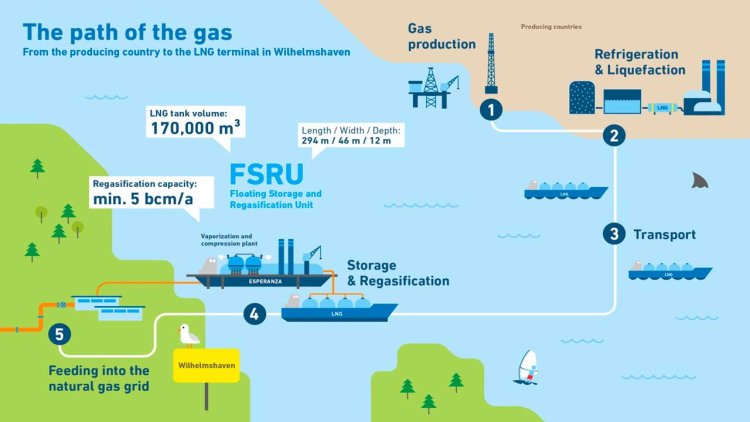
This means that the project will be completed in less than a year, despite original plans estimating five years. This was made possible by the LNG Acceleration Act, which came into force on June 1, 2022, but also because the import terminal does not need to be built from scratch and an existing ship will be used as an FSRU (floating storage and regasification unit) in Wilhelmshaven. The vessel has traveled across the world’s oceans for the last four years and has now undergone early maintenance and necessary modifications in Brest.

The FSRU will be based at Wilhelmshaven, where it will be based for the next 10 years and become operational around the turn of the year.

“In the near future, up to 8% of Germany’s gas demand before the war can be met by the terminal in up to 70 LNG tankers a year. Each vessel can transport 170,000 m³ of liquefied gas and thereby supply 50,000–90,000 German households,” says Holger Kreetz, COO Asset Management at Uniper.

While the LNG project will be completed this year, the ammonia import terminal and the electrolyzer—which is to be built at the current power plant site—are still in the planning phase. The three major energy projects are being carried out in parallel by different teams. 

“The LNG terminal has not put everything else on hold; instead, it will provide even greater momentum to future projects,” says Kreetz. “In fact, the terminal is creating synergies since the infrastructure in Wilhelmshaven can be used for LNG and hydrogen”. 

For example, the pipeline from OGE (Open Grid Europe) spanning 26 km is H2-ready, meaning that in the future a proportion of hydrogen can be mixed into natural gas or pure hydrogen can be transported. Until now, Wilhelmshaven has not been connected to the European high-pressure gas network. The current LNG project now provides this connection and thereby paves the way to a hydrogen economy. 

“Our main focus is not on short-term LNG — this is simply to ensure Germany’s security of supply. Our vision is to build a bridge to a decarbonized hydrogen world. The LNG terminal puts Uniper in an ideal position to achieve this goal, not only because of its synergies and infrastructure, but also because it demonstrates that we can implement a comparable project in a very short time,” explains Holger Kreetz.

Keppel O&M delivers second of three dual-fuel dredgers to Van Oord

0

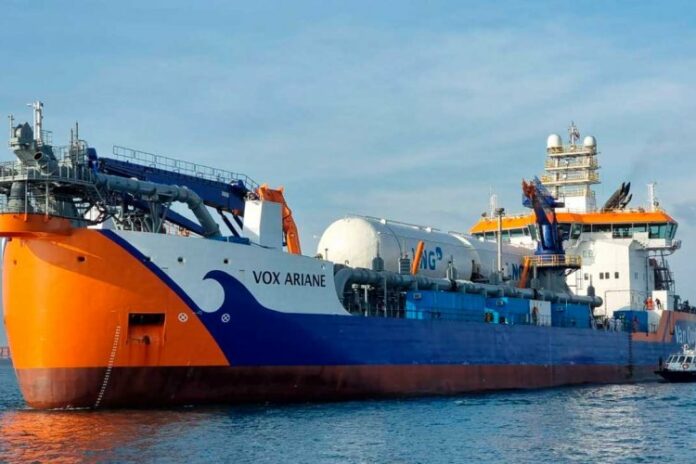
Keppel Offshore & Marine Ltd (Keppel O&M), through its wholly-owned subsidiary Keppel FELS Limited (Keppel FELS), has delivered the second of three dual-fuel dredgers to Dutch maritime company, Van Oord.

It is identical to the first dredger, Vox Ariane, delivered by Keppel O&M in April this year. A third dredger for Van Oord, Vox Alexia, is on track for delivery in 2023.

Mr Tan Leong Peng, Managing Director (New Energy / Business), Keppel O&M, said:

“We are pleased to deliver our second dual-fuel dredger to Van Oord, extending our track record in delivering new build high quality and sustainable vessels. LNG plays an important role in the clean energy transition. Through our ongoing partnership with Van Oord, we are pleased to support the industry’s transition to a more sustainable future by delivering efficient vessels with more environmentally friendly features.”

Built to the requirements of the International Maritime Organisation’s (IMO) Tier III regulations, the Dutch flagged Vox Apolonia has a hopper capacity of 10,500 cubic metres and includes several features that reduces fuel consumption and carbon emissions. Like the Vox Ariane, it is also equipped with innovative and sustainable systems and has obtained the Green Passport and Clean Ship Notation by Bureau Veritas.

Mr Maarten Sanders, Manager Newbuilding of Van Oord, said:

“Van Oord is committed to lowering its impact on climate change by reducing its emissions and becoming net-zero. We can make most progress by investing in the decarbonisation of our vessels, since approximately 95% of Van Oord’s carbon footprint is linked to its fleet. The delivery of the Vox Apolonia is another important milestone in this process. In the designing the new LNG hoppers, we focused on reducing our carbon footprint and working more efficiently by reusing energy and making optimal use of the automated systems in combination with electrical drives.”

The state-of-the-art Vox Apolonia is equipped with a high degree of automation for its marine and dredging systems, as well as an onboard data acquisition and integrated control system to enhance efficiency and operational cost savings. The TSHD has one suction pipe with a submerged e-driven dredge pump, two shore discharge dredge pumps, five bottom doors, a total installed power of 14,500 kW, and can accommodate 22 persons.


BAE wins $295 million contract for USS Kearsarge modernization work

0

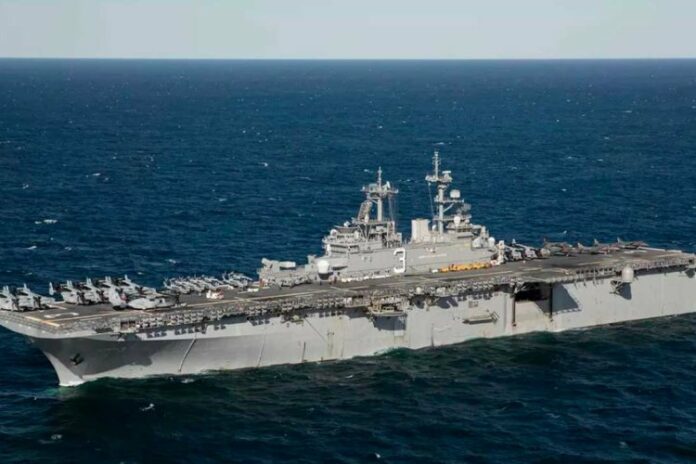
BAE Systems has received a $294.7 million contract from the U.S. Navy to drydock and perform more than 20 months of maintenance and modernization work on the amphibious assault ship USS Kearsarge (LHD 3). The contract includes options that, if exercised, would bring the cumulative value to $340.3 million. 

Under the awarded contract, the maintenance availability of USS Kearsarge will begin in April. Starting in June, the 843-foot-long ship will be drydocked for nearly a year at BAE Systems’ Norfolk shipyard. The shipyard will perform extensive hull, tank, and mechanical work, rehabilitate all crew and embarked Marine living compartments onboard, and inspect the ship’s boilers. BAE Systems is expected to complete work aboard the 29-year-old ship in January 2025. 

“The extended sustainment period onboard the USS Kearsarge provides a great environment to apply BAE Systems’ substantial experience with ships of the same class and considerable production skills, and supports job stability across our shipyard and supply base,” said Mike Bruneau, vice president and general manager of BAE Systems Norfolk Ship Repair. “Through our maintenance and modernization efforts, the Kearsarge will be ready to deploy for many years to come.”

USS Kearsarge is the third ship of the USS Wasp class of U.S. Navy amphibious assault ships, which are designed to carry expeditionary Marines and their equipment to anywhere in the world. The current Kearsarge is the fourth U.S. Navy vessel to sail with the name. The company’s Norfolk shipyard is also completing a similar modernization project aboard the Wasp. 

To prepare for drydocking the Kearsarge, BAE Systems has been hiring employees and temporary workers. Individuals interested in joining the team can visit jobs.baesystems.com for more details. The Norfolk shipyard currently employs about 1,000 people across a number of skilled marine trades and support functions.

First milestone in the Windea Leibniz project completed

0

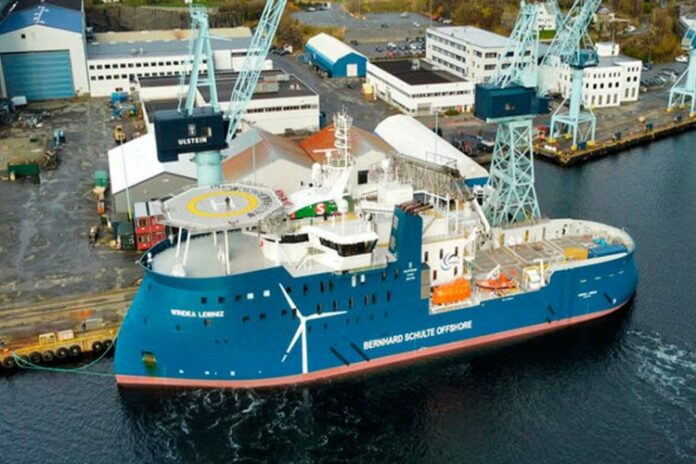
On 30 November, the yard installed the adjustable pedestal for the gangway, a lift of approx. 32 tonnes. With this pedestal in place, the vessel will be able to take on assignments on all wind farms in the North Sea, and this is the first major milestone in this project.

The next milestone will be to complete a 50 per cent increase in single cabins for charterers. When this milestone is completed, the vessel will have her status changed from being an SOV to becoming a CSOV.

“After the upgrade, this will be one of very few vessels with 60 single cabins for charterers, compared to the current 40. This means we can take in more people, enabling the vessel to operate as a Construction-SOV,” says Matthias Müller at Bernhard Schulte Offshore.

Windea Leibniz is X-BOW vessel number 100, and she also comes with the X-STERN, a design feature which Bernhard Schulte Offshore was the first shipowner to opt for. 

UK awards £45 million to maintain flagship scientific research vessels

0

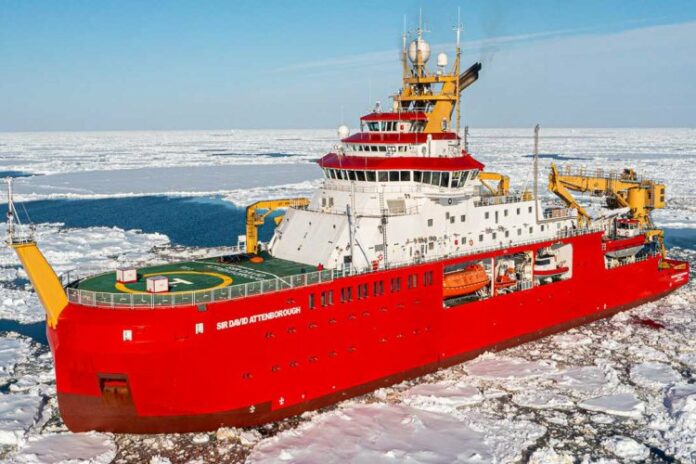
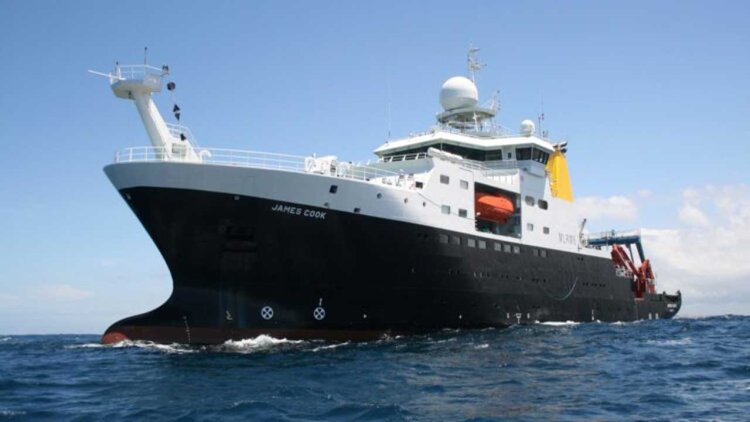
Babcock International’s Rosyth shipyard has been awarded £45 million to maintain the UK’s fleet of scientific research vessels – RRS Sir David Attenborough, RRS Discovery and RRS James Cook.

Industry and Maritime Minister Nusrat Ghani said: 

“RRS Sir David Attenborough and its maiden voyage to Antarctica inspired the explorer in all of us, venturing into some of the world’s most unforgiving climates, while conducting vital scientific research on pressing global issues like sea level rise and marine biodiversity.

“This research is invaluable, which is why we are committing the funding needed for the upkeep of these key research vessels, drawing on Rosyth Shipyard’s proven track record of excellent work maintaining UK ships.”

Defence Secretary and Shipbuilding Tsar, Ben Wallace, said: 

“This is another fantastic example of the National Shipbuilding Strategy delivering for British industry and boosting investment in UK yards.

“A cornerstone of British shipbuilding, Rosyth is already home to a number of major build and maintenance contracts, bringing a wealth of expertise and experience to the British shipbuilding sector.”

The shipbuilding industry supports more than 40,000 jobs across the UK. This investment will secure highly skilled jobs and suppliers to maintain the UK’s advanced fleet of research ships.

The initial three-year contract, with additional two-year option, will see the large oceanographic and polar research vessels dock at Babcock’s state-of-the-art facilities in Rosyth, Scotland, for programmed maintenance and upgrade work.
Professor Sir Duncan Wingham, Executive Chair of NERC, part of UK Research and Innovation, said: 

“The UK’s fleet of advanced research ships provide state-of-the-art facilities for scientists to conduct research of our oceans and polar regions, building our understanding of the ice, atmosphere, and seas.

“We look forward to working with Babcock Rosyth to maintain these ships and onboard facilities, which are a key part of the UK’s scientific infrastructure.”

David Lockwood,  Babcock CEO, said: 

“We are delighted to have been awarded the contract to maintain this important NERC fleet. 

“Our flexible and efficient solution will ensure the fleet is maintained to exceptional standards and optimise vessel availability in support of NERC’s global footprint.”

Tom Chant, CEO of the Society of Maritime Industries, said:

“Congratulations to Babcock on this important business win.  The Rosyth base has already benefitted from the investment for the Type 31 project. This has developed the workforce and their skill base and created a world beating shipyard. 

“The skills and facilities at Rosyth will be a great match for the NERC vessels with their specialist requirements and tough expeditionary voyages.”

The RRS Sir David Attenborough is operated by the British Antarctic Survey (BAS) and is one of the world’s most advanced polar research vessels, having departed the UK for its maiden voyage in November 2021. The vessel recently left its UK home port on November 20th, for a six-month expedition to Antarctica. In the coming expedition, the RRS Sir David Attenborough will be testing a new artificial intelligence system which will help chart the most environmentally-friendly route at any given time.

Measuring 129 metres in length and with a range of 19,000 nautical miles, it accommodates up to 90 crew, scientists, and support staff, and will enable research of the oceans, seafloor, ice and atmosphere.

The RRS Discovery (2013) and RRS James Cook (2006) are operated by the National Oceanography Centre (NOC) and conduct oceanic exploration around the world, undertaking multi -disciplinary marine science to unlock the mysteries of the deep ocean.

Following the refit, RRS Discovery will be heading to the Arctic to explore nitrogen fixation with the University of Liverpool and NERC, whilst RRS James Cook will continue its research expeditions to some of Earth’s most challenging environments, from tropical oceans to the edge of ice sheets.

All three research ships use state-of-the-art technologies such as autonomous underwater vehicles, including the famous NOC Autosub called Boaty McBoatface.

Boaty, and other NOC-developed technologies have the ability to travel under ice and to depths of 6,000m to investigate the process driving change in the Polar Regions. The marine robot fleet at NOC is one of the most capable in the world and support the ships’ scientific research with environmentally-friendly marine observation.

MOL implements Marlink smart hybrid connectivity

0

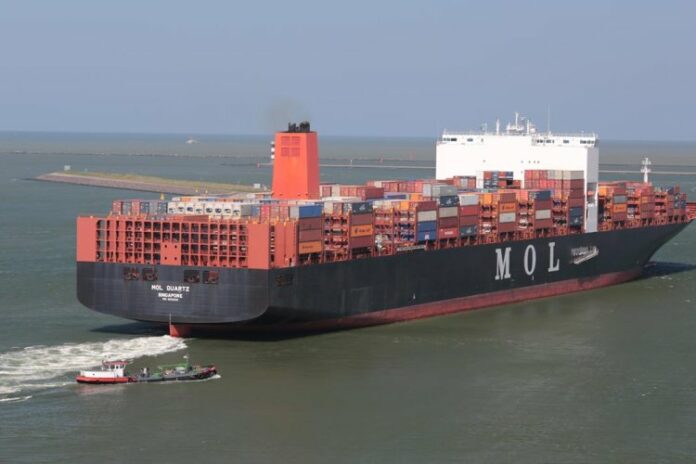
MOL will verify how Marlink’s network can enhance operating safety and improve high-speed communications for seafarers. Starlink’s high speed, low latency connectivity will form an integral part of this hybrid solution, designed to provide a reliable Committed Information Rate (CIR) in combination with unparalleled Maximum Information Rate (MIR) performance.

The Marlink network will be completed with an L-band backup solution and will be seamlessly and securely orchestrated with Marlink’s network management platform, XChange and advanced Cyber threat detection, including Security Operation Center (SOC) as a service.

Marlink’s integration of Starlink into one seamless end-to-end managed hybrid network provided to MOL, will improve user experience, application performance and security. MOL will also benefit from additional managed services including global 24/7 support to ensure the smooth integration of the connectivity into MOL’s business operations.

Marlink’s network management platform, XChange will include the latest software-defined (SD-WAN) technology to optimise the routing of MOL’s applications by leveraging the different connectivity solutions simultaneously.

Tore Morten Olsen, President, Maritime, Marlink, said:

“Marlink is honoured to have been selected by MOL for this next-generation connectivity evaluation, blending GEO/LEO services and we look forward to working with our Japanese colleagues to demonstrate the power of this hybrid, future-proof network. This pilot will demonstrate the unique user experience of high speed, low latency connectivity working alongside our highly reliable GEO VSAT services, enabling shipowners to drive operational efficiency and enhance crew welfare.”

Kongsberg to supply heavy duty towing winches on 16 new escort tugs

0

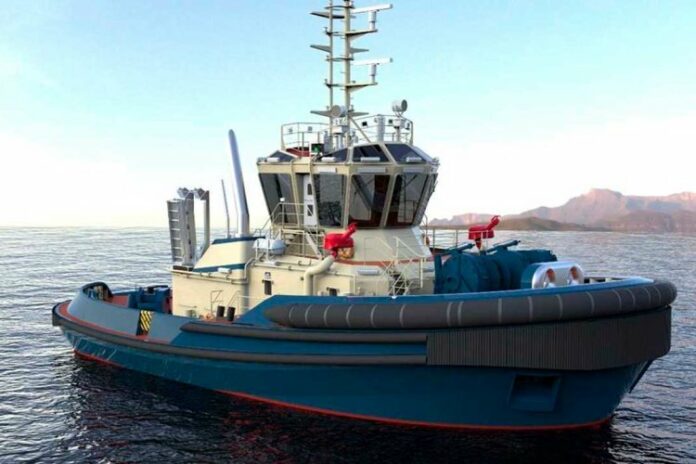
This order follows on from a contract signed earlier this year to supply winches for seven tugs. The new agreement brings the total number of Kongsberg’s winch supply contracts for Med Marine to 16 shipsets.

Kongsberg Maritime’s Escort Series of towing winches are a popular choice for tug operators in terminals and harbours around the world, demonstrated by the hundreds of tugs in operation that are fitted with Kongsberg’s towing winches.

“I want to thank Med Marine for their excellent cooperation over the past few months it has taken to negotiate these significant contracts,” said Arto Salo, KM’s Senior Sales Manager for Towing Winches. “I am very pleased that we were able to close such a large deal and I would like to extend my gratitude to the regional team in Turkey, who worked hard on this contract and were key to the final negotiations.”

Kongsberg Maritime and Med Marine have a longstanding relationship, with many Med Marine-built tugs featuring Kongsberg technology and equipment. Kongsberg is one of the world’s leading suppliers of deck machinery, propulsion engineering and digital technology for tugs and workboats worldwide.

“We are pleased to collaborate with Kongsberg Maritime on these projects. We are confident that this partnership will greatly enhance the mutual interests of both parties in the development of a successful business relationship. Together with Kongsberg, we believe we are in an ideal position to meet the growing customer demand for Med Marine’s cutting-edge tugs,” said Ertuğrul Çetin, Procurement & Technical Group Manager at Med Marine.

Partners awarded EU funding for building the Antwerp@C CO2 Export Hub

0

The funding is earmarked for the construction of shared CO2 transport and export facilities on the Antwerp port platform. The grant award is a major step towards the final investment decision, expected in 2023.

The project, named “Antwerp@C CO2 Export Hub”, is set up as an open-access infrastructure to transport, liquefy and load CO2 onto ships for onward permanent offshore storage. CO2 captured on industrial players sites on the Antwerp port platform will be collected and transported via an intra-port open-access pipeline network. A shared liquefaction and export terminal will be built, including a CO2 liquefaction unit, buffer storages and marine loading facilities for cross-border shipping. This innovative project will be among the first and largest multimodal open access CO2 export facilities in the world.

As part of the project, Air Liquide and Fluxys intend to form a joint venture for the construction and operation of the CO2 liquefaction and export terminal. The joint venture will benefit from Air Liquide’s expertise in CO2 liquefaction and handling and from Fluxys’ experience in terminalling activities. Air Liquide will provide its proprietary technology for the CO2 liquefaction plant, which will be a first of a kind in its scale and design. The Port of Antwerp-Bruges reserved a plot of land for the terminal on a strategic location inside the port, and will build new quay infrastructures for the mooring of CO2 ships.

The project is the first phase of Antwerp@C, an initiative gathering Air Liquide, BASF, Borealis, ExxonMobil, INEOS, TotalEnergies, Fluxys and Port of Antwerp-Bruges with the ambition to halve the CO2 emissions in the Antwerp port area by 2030. In this first phase, Air Liquide and BASF will be the launching customers of the export hub through their joint CO2 capture and storage (CCS) project “Kairos@C”[1]. The Antwerp@C CO2 Export Hub will have an initial export capacity of 2.5 million tonnes per annum (Mtpa), with the ambition to reach up to 10 Mtpa by 2030. It will pave the way for future CCS initiatives in the region by providing scalable and modular infrastructures accessible to all industrial players.

Pascal Vinet, Senior Vice President and a member of Air Liquide’s Executive Committee, supervising notably Europe Industries activities, said:

“We are very pleased that the Antwerp@C CO2 Export Hub project, supported by innovative Air Liquide technologies, has been selected by the Connecting Europe Facility for Energy program.Alongside the use of renewable energy, carbon capture technology is essential to achieve in a short time frame massive CO2 reductions and carbon neutrality objectives namely for hard-to-abate sectors. This initiative illustrates Air Liquide’s expertise and ambition to actively contribute to the emergence of a low-carbon society and to support its industrial customers in their decarbonization strategies.”

Pascal De Buck, CEO Fluxys, said:

“We are delighted to launch this CO2 infrastructure project with Air Liquide and Port of Antwerp-Bruges. Together with our partners, we offer strong and complementary know-how and expertise for providing reliable and efficient decarbonisation solutions, essential for achieving climate change objectives and ensuring the long-term viability of the economy. Antwerp@C CO2 Export Hub is an integral part of the full-scale Fluxys CO2 approach, offering emitters in the Port of Antwerp-Bruges, in Belgium and beyond, the opportunity to convey their captured CO2 through a backbone.”

Jacques Vandermeiren, CEO Port of Antwerp-Bruges, said:

“Port of Antwerp-Bruges has been committed from the very start in the Antwerp@C project in order to reduce the CO2 emissions on the Antwerp port platform by 50% in 2030. The fact that we have been awarded this CEF-E subsidy today, which means we can now start building a joint CO2 infrastructure, makes us particularly proud. It strengthens us in our conviction that as a port authority we must continue to fully assume our role as community builder in order to achieve a climate impact that reaches far beyond the boundaries of the port platform.”

Ardmore opts for Value Maritime’s emissions-cutting technology

0

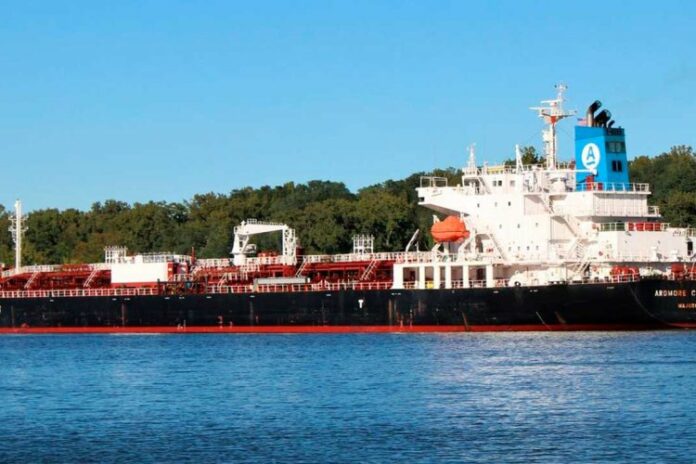
Ardmore’s tankers will be made Carbon Capture ready for collecting CO2 emissions onboard in the future. Taking place during regularly scheduled drydocks, the Filtree units will be installed in yards in Europe and Asia. Timing installations in this way ensures zero disruption to the commercial activities of Ardmore’s vessels.  

The Filtree system is based on innovative technology that will filter sulphur, CO2 and 99% of ultra-fine particulate matter from the tankers’ exhaust stream. The system uses a Clean Loop mechanism which additionally filters its own washing water, removing oil residues and particulate matter, ensuring the pH neutral value of the water, and contributing to reduced acidification of seas and rivers.  

Ardmore Shipping is looking for sustainable solutions for its fleet, now and for the future. Due to the Filtree system’s removal of sulphur from the exhaust gas flow, Ardmore can cut its emissions today, while continuing to sail with more cost-effective high-sulphur fuel. Additionally, this positively affects the vessel’s performance and maintenance requirements. As a direct result, the Filtree system offers a rapid return on investment.  

Ardmore is finding technologies that promote the roll-out and short-term implementation of alternative fuels, as well as identifying and implementing fuel efficiency technologies that lead the way to a sustainable future for the tanker industry.

Garry Noonan, Director of Innovation – Ardmore Shipping, said:

“In terms of technology, we believe strongly in working with technical and commercial partners to develop solutions addressing the energy transition. As we embrace what could be referred to as the next generation in exhaust gas cleaning system technology, Value Maritime’s Filtree is unique in its ability to not only clean and neutralize overboard discharge, but also offer an additional benefit in the form of a potential carbon capture upgrade, this allows us flexibility today, while future-proofing our vessels for tomorrow in an economical and efficient way.”

Value Maritime has designed the Filtree as a plug and play system. The Filtree system, to be installed on the Ardmore tankers, will be outfitted with a modular CO2 capture and storage system to help reduce further emissions when this becomes viable. With this, CO2 is captured from a vessel’s exhaust and stored in tanks onboard. This is then discharged onshore where it can be used, for example, in the sustainable cultivation of greenhouse crops, methanol plants, and even the food industry.