-11.4 C
New York
Home Blog Page 359

Huisman awarded Leg Encircling Crane order for Cadeler’s installation vessels

0

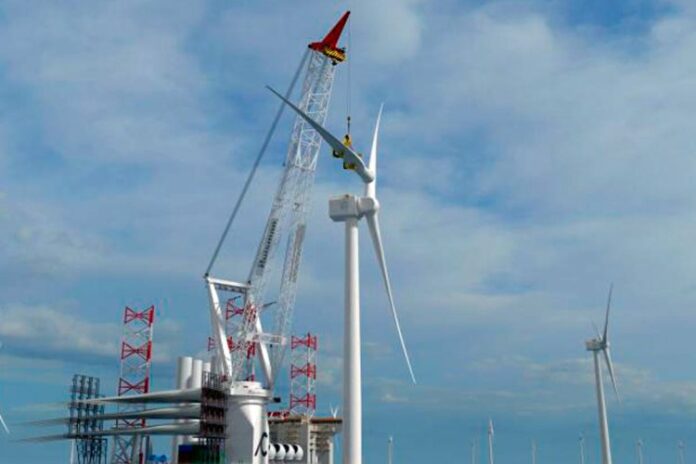
Huisman has announced another contract award from COSCO Shipping (Qidong) Offshore Co., Ltd. for the design and construction of a 3,000+mt Leg Encircling Crane (LEC). 

This crane will be installed on the second new build F-class jack-up vessel of Cadeler A/S, a key supplier within the offshore wind industry for installation services, operations and maintenance works.

The contract award follows this year’s order of a similar crane for Cadeler’s first F-class vessel. The F-class vessels feature a unique hybrid design, allowing them to convert from a foundation installation unit to a wind turbine generator installation vessel within a short period of time.

In 2021, Huisman received an order for two similar 2,600mt LECs for Cadeler’s X-class vessels, which are currently under construction at Huisman China. The X-class as well as the F-class vessels have a fully electric 40mt Huisman Pedestal Mounted Crane on board that functions as auxiliary crane.

With the LECs, Cadeler will be capable of installing foundations and wind turbines for next generation offshore wind projects worldwide. 

Mikkel Gleerup, CEO of Cadeler A/S:

“Cadeler’s growth journey is dependent on stable and reliable suppliers, which we can trust not only to construct the required parts but also come up with visionary designs that meet future demands. Based on our previous experience from working together with Huisman on the cranes for the two new X-class vessels, we are confident that also this time around they will be able to deliver the high-quality cranes we need for our new F-class vessels, which will be able to lift the next generation of turbines and foundations.”

Huisman has designed its LECs to meet the requirements of the continually developing offshore renewables sector. The cranes are lightweight yet robust, have high positioning accuracy and are highly energy efficient, contributing to a reduced emissions footprint during the installation of increasingly large turbines.

David Roodenburg, CEO of Huisman:

“We are very thankful for the confidence that Cadeler has put in Huisman by awarding this fourth Leg Encircling Crane order. The trust of Cadeler’s clients is reflected in the long-term relationship that it has built with its supply chain. We admire the way Cadeler continues to motivate and challenge us to push boundaries on every project. Together with COSCO and other partners, we are committed to successfully delivering this project and enabling Cadeler to accelerate the installation of offshore wind capacity around the world.”

The crane will be built at Huisman’s production facility in Zhangzhou, China and is scheduled to be delivered end of 2025. The crane will be commissioned in 2026 at COSCO’s shipyard in Qidong, China, where both F-class vessels will be built.

Features & benefits of the Huisman Leg Encircling Crane

  • A fully electrically driven system, resulting in high positioning accuracy, reduced maintenance and high reliability.
  • The optimised energy grid reduces the energy consumption of the crane significantly.
  • In-house developed slew bearing system, providing highly reliable and accurate positioning of the crane.
  • The boom’s unique design makes it stiff and lighter in weight.
  • Stiff construction of the boom leading to reduced motion at the crane tip.
  • Small tail swing allowing for optimised utilisation of free deck space.
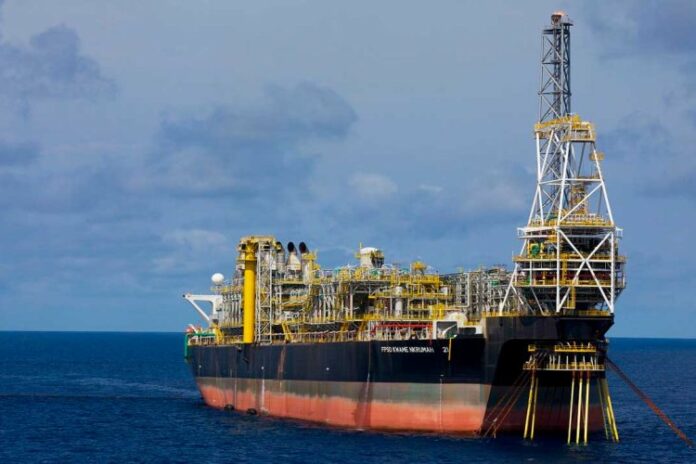
     

Tullow signs PSC for new offshore exploration licence in Côte d’Ivoire

0

Tullow will operate the licence with 90% equity, the remaining 10% is held by PetroCi. CI-803 covers an area of 1,345 square kilometres and is adjacent to licence CI-524 which is also held by Tullow (90%, operator) and PetroCi (10%).

With this new exploration licence, Tullow strengthens its position in the Tano Basin where significant prospectivity has been identified within the proven Cretaceous turbidite plays, similar to the plays which are producing in the adjacent TEN and Jubilee Fields. 

The work programme for the initial two and a half years includes reprocessing of existing 3D seismic data, along with prospect evaluation. In CI-524, a number of drill candidates are being matured while preparations continue for an exploration well to be drilled during 2024.

Rahul Dhir, Chief Executive Officer, Tullow Oil plc, commented:

“This new licence underscores our strong commitment to investing in and unlocking the resource potential in Côte d’Ivoire. Our exploration strategy is focussed around existing producing fields in basins where we have a differentiated understanding, in this case through our deep understanding of the Tano Basin.”

Marinfloc delivers combined systems for methanol fuel container vessels project

0

To date, three of a total of twelve shipments for the 16,200 TEU methanol-powered vessels have been sent. 

All 12 vessels will be using a MAN B&W 8G95ME-C10.5-LGIM-EGRTC for  methanol fuel and will be equipped with a Marinfloc CD5.0 EGR system to treat both the EGR bleed-off water and the bilge water.

The flocculation technology utilized by the Marinfloc’s treatment unit is effective in terms of both treatment efficiency and cost, regardless of the type of fuel utilized. The delivery is the first for methanol-fueled vessels but several units have been delivered to date with the first vessel in operation since early 2022.

Competitive both in Capex and Opex for EGR bleed-off and Bilge treatment Exhaust Gas recirculation (EGR) is used to reduce NOx as per the Tier III requirements when used with compliant fuel.

The EGR process will generate  leed-off water that must be treated to <15 ppm, which is also the requirement for  bilge water. By combining the two treatment systems, the Capital Expenditures are significantly reduced – without any negative impact on performance. Additionally, there is also a welcomed reduction in Operating Expenditures as maintenance, spare parts and training are needed only for one unit.

BV and ThorCon join forces to develop a molten salt nuclear power barge

0

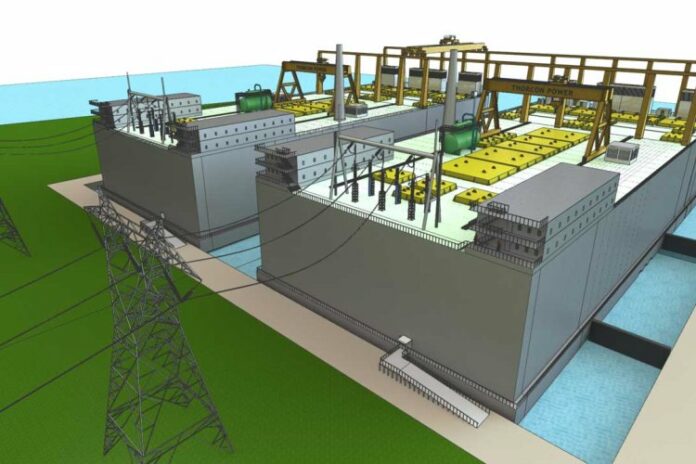
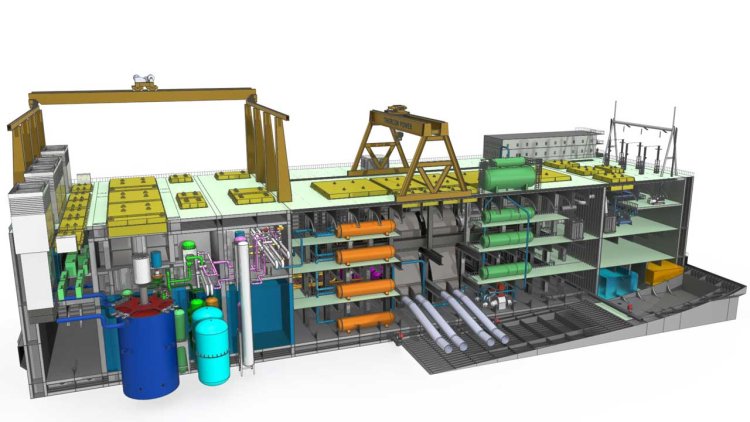
Bureau Veritas and nuclear power technology developer ThorCon have entered an agreement for the Technology Qualification and the subsequent development of a 500 MW molten salt nuclear power barge for operations in Indonesia.

The concept developed by ThorCon is a molten salt fission reactor. Unlike current nuclear reactors, the ThorCon reactor operates at low pressure and uses liquid fuel. The liquid fuel enables much higher operating temperatures, leading to greater efficiency while also enabling completely passive safety (requiring no action from the operator nor intervention on the power source to stop the reaction). The 500 MW fission power plant will be integrated within a floating barge hull and then towed to a shallow water site before being ballasted to rest on the seabed. The technology will then deliver energy to the power grid to meet land-based energy needs. ThorCon plants will be designed to be mass produced, which will support the transition to carbon free and reliable energy.

BV has been selected to support ThorCon through the Technology Qualification process, both for the nuclear reactor itself and for its encapsulation (enclosed safe compartmentalization allowing the replacement of depleted fuel) and integration with the hull systems.

Experts from Bureau Veritas’ Nuclear Certification Department and from the Marine & Offshore Division will collaborate throughout the process. A key area of work will be to identify the applicable standards, codes and Class Rules, potential gaps with those currently available and the development if needed of new guidance notes and rules.

The scope of the agreement also includes the potential development and deployment phases once the Technology Qualification is completed. At this stage, it is anticipated that the Technology Qualification process will take a minimum of three years and if successful, the deployment phase would require an additional two years.

ThorCon has entered into discussion with the Indonesian province of Bangka-Belitung, the State Electricity Company PLN, and the Nuclear Energy Regulatory Agency BAPETEN regarding potential sites for the demonstration and the final installation of a 500 MW power plant.

Laurent Leblanc, Senior Vice President Technical & Operations at Bureau Veritas Marine & Offshore, commented:

“Nuclear power is increasingly seen as one of the means to achieve global decarbonization and the 1.5°C objectives. New technologies, such as molten salt reactors, open opportunities for the deployment of nuclear energy, power generation in the marine environment being an example. At BV we are proud to be at the forefront of safe innovation, supporting pioneers like ThorCon, by helping them assess the feasibility of new nuclear technology development up to their industrial application. Our role is to assess and address risks to ensure such technologies can be deployed with the highest safety standards. This project is very exciting as it can be a stepping stone to other applications such as the generation of hydrogen offshore and even nuclear ship propulsion.”

Dave Devanney, CEO ThorCon, commented:

“ThorCon has developed a 4th generation advanced nuclear reactor design that solves the most perplexing problem of conventional nuclear power: excessive cost. ThorCon is initially implementing its technology in Southeast Asia where the need for low-cost dispatchable carbon-free energy is urgent. Providing a practical clean solution to Southeast Asia’s growing energy needs will significantly slow global warming and climate change.”

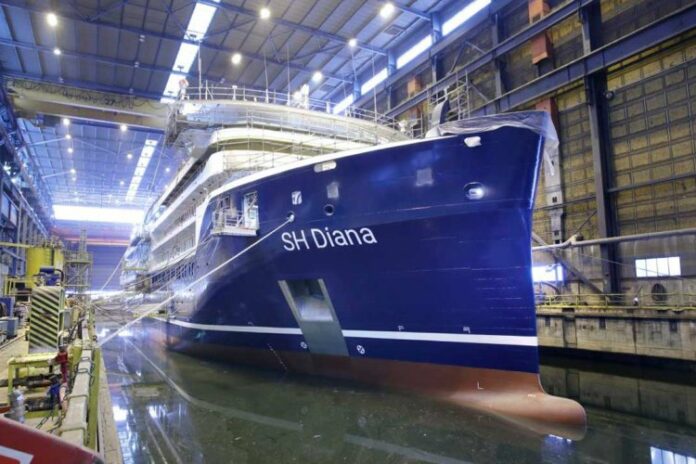
Helsinki Shipyard announced the successful acquisition of SH DIANA by Swan Hellenic

0

Helsinki Shipyard has exercised the right to sell the ship by tender, provided for by the shipbuilding contract, after the original buyer failed to take delivery of the ship.

The auction ended at midnight on Friday the 9th of December and was satisfactory for Helsinki Shipyard, which analyzed the bids and declared Swan Hellenic the winner.

The Shipyard and Swan Hellenic will now enter into a new agreement for the completion of the vessel, which is scheduled to be delivered to Swan Hellenic in March 2023, in time to start cultural expedition cruises of the Mediterranean from the beginning of April as planned.

Andrea Zito, CEO of Swan Hellenic Limited, said:

“We are happy to have secured SH Diana, a Polar Class PC6 vessel with state-of-the-art ship technology and sustainability that will enter service as planned in March. We look forward to welcoming our guests aboard SH Diana to experience our cultural expedition cruises in the historic regions for which they were first conceived.

Kim Salmi, Helsinki Shipyard’s CEO says:

“The shipyard is satisfied with multiple inquiries and received bids. We are also happy to announce Swan Hellenic as winner of the tender, as it naturally helps next step, the fast agreement and continuation of works for completion of the vessel according to the plan in March”.

Stellantis launches a new maritime logistics service

0

Stellantis is launching a new maritime logistics service, in partnership with Suardíaz and Peel Ports, in order to supply parts to the Ellesmere Port manufacturing plant and reduce carbon emissions in line with the Dare Forward 2030 Strategic Plan.

The Ellesmere Port plant is currently undergoing a major transformation to manufacture a compact electric van (Vauxhall/Opel Combo Electric, Peugeot e-Partner and Citroën e-Berlingo) from Spring 2023.

A number of the sheet metal parts and components required for production will be supplied from partner companies that are based near the Vigo plant in Spain – the other Stellantis plant that manufactures these electric light commercial vehicles.

In order to improve the supply chain flows to Ellesmere Port, a new end-to-end logistical service is being put in place, operated by Suardíaz.  This will include a new twice weekly shipping service from Vigo Port to Queen Elizabeth II Eastham docks, Merseyside. 

Starting from June 2023, after the initial production ramp-up, the new 891 nautical miles maritime route will take an estimated 14,700 lorry journeys off the roads of the UK and continental Europe annually saving around 17.5 million kilometres (c.11 million miles) of road travel. 

Each ship will be able to take up to 95 lorries whose cargo will comprise around 47 different part lines of sheet metal parts and components that will be used in the assembly of the all-electric compact vans.  The packaging used to transport the parts is then taken back to Vigo Port on the return leg in order to be reused for subsequent trips.  The journey time from Vigo Port to Queen Elizabeth II Eastham docks is around 50 hours – a comparable time to the current road journey. 

Compared to road transport, the direct maritime route has 30% lower CO2 emissions over the course of a full year as well as 37% less energy consumption.  

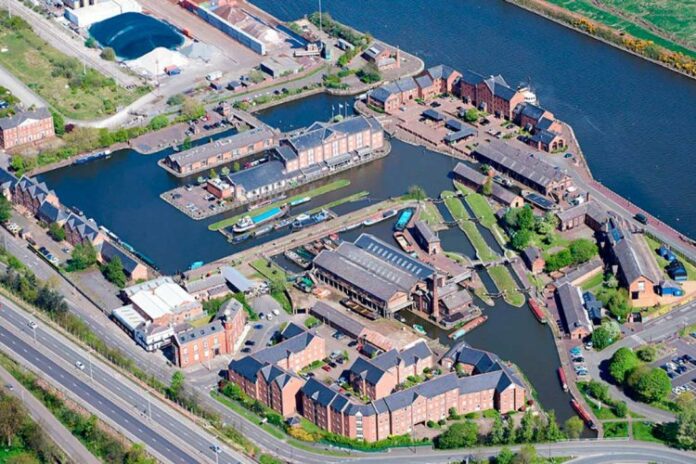
Suardíaz will manage the end-to-end logistical service from one plant to another.  Peel Ports will provide a 9.4-acre site at the Queen Elizabeth II Eastham dock in order to enable this new maritime route. 

Peel Ports and Suardíaz have invested a combined £10million in recommissioning a berth at the Queen Elizabeth II Eastham dock and installing the infrastructure needed to support the processing of the Roll-on Roll-off (RoRo) ships and their cargo. 

The dock is conveniently located two miles from the Stellantis Ellesmere Port plant with direct access to the River Mersey and the Manchester Ship Canal. 

Paul Willcox, Senior Vice-President, UK Country Manager, Stellantis:

“With Ellesmere Port set to soon reopen manufacturing all-electric light commercial vehicles, we are looking at all aspects of our value chain in order to improve sustainability and efficiency, in line with our Dare Forward 2030 Strategic Plan.”

Juan Riva, President of Suardíaz:

“We assume responsibility for the logistics connection between the Stellantis facilities in Vigo and Ellesmere Port, and we use maritime transport with an efficient and environmentally friendly solution. By avoiding trucks on the road and with the forthcoming addition of biofuels to our ships, we are contributing to sustainability in the same spirit under which Stellantis electric vehicles are manufactured.”

David Huck, Chief Operating Officer at Peel Ports Group:

“We are delighted to be part of this exciting project, enabling Stellantis’ vision to develop a more sustainable and efficient supply chain for this important North West manufacturing base.

Our co-investment of £10m into QEII Eastham Dock with Suardíaz will create a new Green Automotive Hub for Ellesmere Port which will increase efficiency while reducing road congestion and carbon emissions. We are fully committed to continuing to invest in sustainable projects of this nature to support our supply chain customers and partners.”

Video: how biofouling management cuts GHG emissions

0

A new IMO video that highlights the importance of maintaining smooth and clean ships’ hulls free from biofouling has been launched (13 December) at IMO Headquarters. 

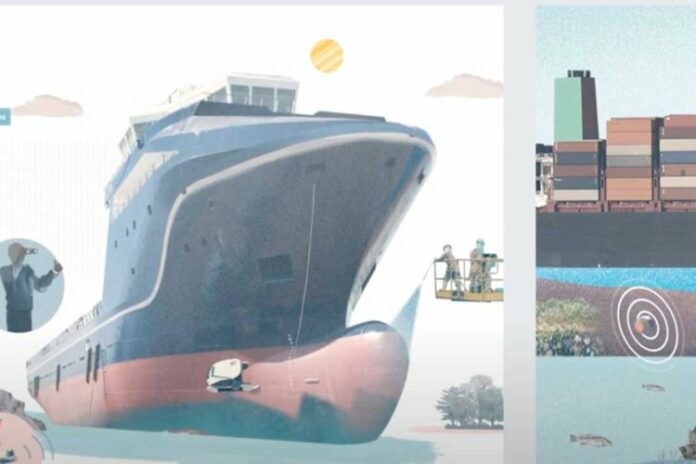
Biofouling is the accumulation of aquatic organisms on wetted or immersed surfaces such as ships and other offshore structures.   

The video also spotlights the results of the report Analysing the Impact of Marine Biofouling on the Energy Efficiency of Ships and the GHG Abatement Potential of Biofouling Management Measures which highlights that a layer of slime as thin as 0.5 mm covering up to 50% of a hull surface could trigger an increase of GHG emissions in the range of 25 to 30% depending on ship characteristics, its speed and other prevailing conditions. These percentages can be much higher for more severe biofouling conditions, depending on the type of ship and other parameters. 

The development of new technologies for preventing and managing biofouling is also featured in the new video as an essential component on the goal of reducing GHG emissions.  

AD Ports-led consortium signs initial pact to develop Sudan’s Red Sea port

0

A consortium led by AD Ports Group and Invictus Investment has signed a Heads of Terms agreement with the Government of the Republic of Sudan that provides them with the right to develop, manage, and operate port and economic zone assets in Sudan. 

Under the terms of the agreement, the consortium will have the sole right to directly develop, manage, and operate specified port and economic zones assets and to create joint ventures, partnerships, or other business agreements to support the financing, development, construction, management, and operation of the projects.

The Heads of Terms follows an earlier agreement between AD Ports Group and Invictus Investment to launch a new international dry bulk shipping service to serve as the carrier for Invictus’ dry-bulk trading business, which is a major transporter of commodities to and from the Sudanese market. 

Capt. Mohamed Juma Al Shamisi, Managing Director and Group CEO, AD Ports Group, said:

“AD Ports Group continues to extend its international reach under the guidance and direction of our wise leadership, supporting the development of port and trade assets in key markets around the world. We are grateful and honoured by the trust that the government of Sudan has placed in our consortium by signing this agreement and we look forward to working with them on the development and management of key facilities.” 

Osama Daoud Abdellatif, Chairman of Invictus Investment Company PLC, said:

“Invictus Investment is proud to be part of the consortium selected by the Government of the Republic of Sudan for this important agreement. Drawing on our deep experience of working with customers in Sudan, and working alongside AD Ports Group, which is the premier global trade, logistics and transport enabler, we will strive to meet their high expectations and deliver for the people of Sudan.” 

The Republic of Sudan is a major trading partner of the United Arab Emirates. During the last 25 years, exports from the United Arab Emirates to Sudan have increased at an annualised rate of 14.6%, from $37.8M in 1995 to $1.14B in 2020, with key exports including raw sugar, jewellery, and broadcasting equipment, while exports from Sudan to the United Arab Emirates have increased at an annualised rate of 18.4%, from $27.3M in 1995 to $1.86B in 2020.

Port of Felixstowe deploys first autonomous trucks

0

Hutchison Ports Port of Felixstowe is believed to be the first port in Europe to introduce autonomous terminal tractor units (ATs) into mixed traffic container terminal operations. 

The first two battery-powered units to enter service at the UK’s largest container port have been supplied by manufacturer Westwell.

Commenting on the new equipment, Clemence Cheng, Chief Executive Officer at the Port of Felixstowe, said:

“These new autonomous trucks represent a significant technological step forward for the Port of Felixstowe. The tools underpinning port operations have evolved continuously and we already have a range of very advanced systems and equipment in place but this is the first time we will have wholly driverless vehicles.

“Safety is our No.1 priority. This applies equally to technological developments and especially when introducing new equipment into live terminal operations. The ATs have a range of built-in safety features which will allow them to navigate effectively and safely within our container terminals.”

The autonomous trucks use a digital map which is loaded to a fleet management system that controls the navigation around the port. The AT then combines that map with its on-board GPS navigation to track its real-time position.

Project Director, and Hutchison Ports UK Chief Information Officer, Karen Poulter explained:

“The Port of Felixstowe has a long record of innovation and we are very excited by this latest development at the port. The ATs use LiDAR – a light sensing technology that creates a 3D map of an AT’s surroundings using a laser and receiver, which, when combined with its on-board 360-degree cameras, provide real-time, all-round ‘vision’. This enables it to ‘see’ everything instantaneously in its vicinity to allow safe and accurate navigation.

“With the support of Extreme Precise Position (EPP) system, it can achieve positioning accuracy of 2 cm and a steering angle accuracy of 0.5 degrees.”

The ATs have been through a thorough commissioning and testing programme. They are to be used initially to transport containers between the port’s Trinity and North Rail terminals.

Wintershall Dea submits plan for developement of the Dvalin North gas field

0

Wintershall Dea, and partners Petoro and Sval Energi, are set to increase gas exports to Europe with the development of the Dvalin North field in the Norwegian Sea.

The handing over of the Plan for Development and Operation (PDO) on December 13 to the Norwegian Ministry of Petroleum and Energy, marks rapid progress from exploration to execution for the Dvalin North field, which was the largest discovery in Norway in 2021. Dvalin North is the latest in a line of Wintershall Dea operated, and partner operated, project sanctions on the Norwegian Continental Shelf this year.

“This field builds on our existing position as one of the largest producers of Norwegian gas at a time when Europe needs more energy,” said Dawn Summers, Wintershall Dea Chief Operating Officer. “Committing to a development only the year after discovery is very rare, but shows our determination to supply natural gas to Europe through a major investment in Norway.”

The Dvalin North discovery is a consequence of Wintershall Dea’s strategy to explore for hydrocarbons close to existing assets. As a tie-back to the Heidrun platform via the operated Dvalin field, Dvalin North is utilizing existing infrastructure in the region, ensuring future production volumes with low carbon intensity.

“We are a firm believer in using smart, subsea engineering to supply the European market with vital fuel. Dvalin North will be our fifth operated subsea field in Norway and we are committed to investing in delivering even more. As a gas supplier and subsea expert we are delivering on our goal of producing more energy with lower emissions,” said Wintershall Dea Norge MD, Michael Zechner.

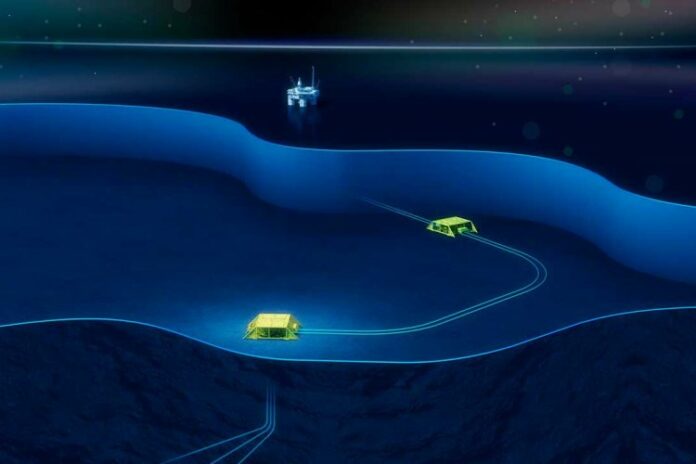
The Dvalin North partnership will commit some 780 million Euro (8 billion NOK) to develop the discovery, drilling three producing wells from a single subsea template located 10km to the north of the existing Dvalin field. Dvalin is forecast to come into production in the coming months. Dvalin North is scheduled for planned start-up late 2026.

The Dvalin North gas field is located around 200 km off the coast of Northern Norway, west of Sandnessjøen at a water depth of 420 metres. It is estimated to contain around 84 million barrels of oil equivalent and the gas will be exported via the Polarled pipeline to Nyhamna near Kristiansund in mid Norway.

Wintershall Dea is operator of the field with a 55% share. Petoro has 35% and Sval Energi has 10%.