-4.6 C
New York
Home Blog Page 35

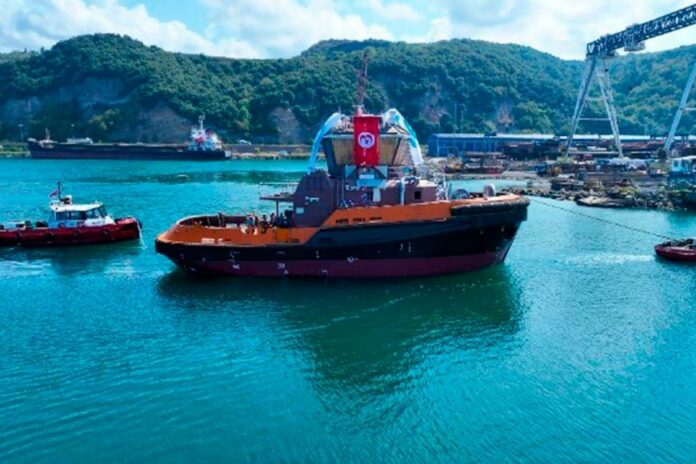
Med Marine launches third RAmparts 2800 tug to reinforce OMMP’s fleet

0

Measuring 28.20 meters in length and delivering a forward bollard pull of 60 tonnes, the MED-A2800SD tug has been engineered by the internationally renowned naval architecture firm Robert Allan Ltd. to meet the rigorous demands of modern port operations.

Powered by twin medium-speed diesel engines and fully compliant with Class FIFI-E standards, the tug ensures both operational excellence and safety. Thanks to its optimized hull design, the MED-A2800SD tug delivers exceptional manoeuvrability, stability, and fuel efficiency, even under the most demanding harbour conditions. Capable of performing a wide range of operations—including towing, mooring, escorting, firefighting, pollution control, and coastal support.

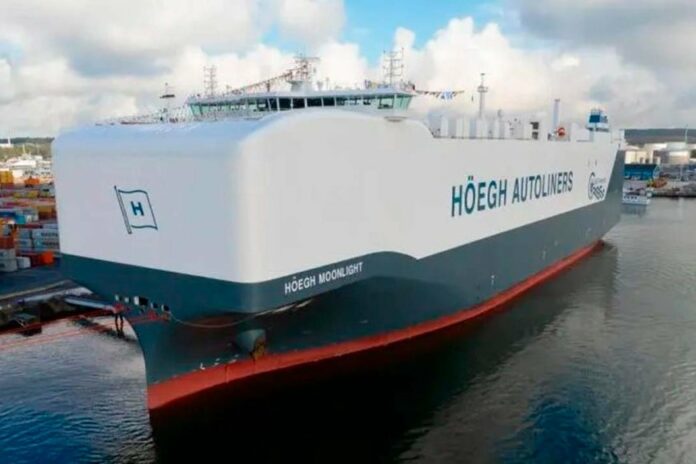
Höegh Autoliners names Höegh Moonlight at the Port of Gothenburg

0

The vessel was sponsored by Mrs Jenny Westermark, Senior Vice President, GTO Production Logistics at Volvo Group, who performed the traditional bottle-breaking. 

With a capacity of 9,100 car equivalent units (CEU), the Höegh Moonlight joins Höegh Autoliners’ flagship series of 12 next-generation pure car and truck carriers (PCTCs). The fifth sister vessel, the Höegh Sunrise, was named at Omaezaki Port in Japan in June this year.

Built for a low-carbon future, the Aurora Class is the most technically advanced and environmentally friendly series of car carriers ever constructed. All 12 vessels are designed from the keel up to transition to clean fuels, with the first eight powered by LNG via dual-fuel engines. The vessels are estimated to deliver 58% lower emissions per transported car compared to the industry average. The first 8 vessels are dual-fuel “ammonia-ready” with reinforced decks and an integrated tank developed by TGE Marine at the heart of the design, allowing for straightforward conversion to be able to run on clean ammonia in the future. The final four vessels in this Aurora newbuilding program, scheduled for delivery from 2027, are dual-fuel vessels able to operate on ammonia from day one.

Andreas Enger, CEO of Höegh Autoliners, commented: “The naming of Höegh Moonlight demonstrates our strong commitment to decarbonising deep-sea shipping – not in the future, but right now, today. These vessels are not concepts; they are working, sailing answers to one of the most urgent challenges in our industry. I would like to thank Jenny Westermark for graciously sponsoring the vessel.”

Höegh Autoliners CSO Oskar Orstadius also commented: “The naming of Höegh Moonlight in the Port of Gothenburg marks more than the arrival of a vessel; it is a celebration of our close collaboration with key customers and our shared commitment to sustainable, high-quality transport solutions. We are proud to strengthen these partnerships, in a port that plays an important role in our global network, and we would also like to express our sincere appreciation to our agent in Sweden, Scandinavian Shipping and Logistics, who has represented Höegh Autoliners with dedication for more than 20 years.”

The Aurora Class plays a central role in Höegh Autoliners’ ambition to reach zero emissions by 2040. All are classed by DNV and fly the Norwegian flag.

By 2030, the Port of Gothenburg aims to reduce carbon emissions by 70 percent, at sea, in the terminal areas, and on land. The transition is being carried out in close collaboration with industry, policymakers, and academia, with a strong focus on creating sustainable value chains for a thriving society and strengthening business access to global markets.

Key components of this effort include investments in shoreside power, green shipping corridors, electrification, and the fuels of the future, all driven by close cooperation with stakeholders across the entire transport chain.

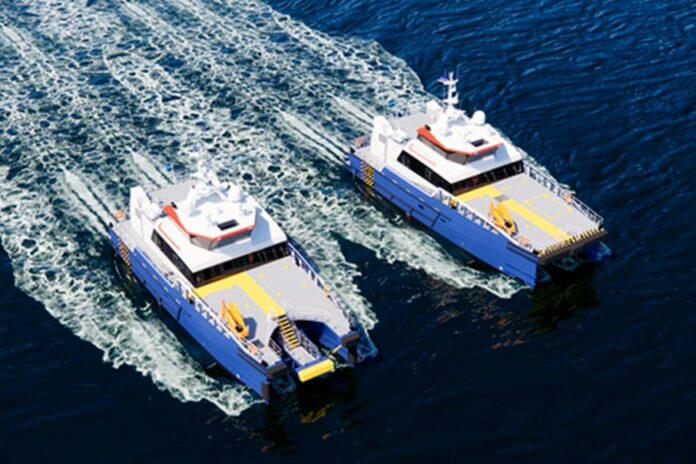
Damen’s FCS 2710 adapted for wider scope of offshore operations

0

Over the past years, the Damen Fast Crew Supplier (FCS) 2710 has become a familiar fixture in the offshore wind sector. With approximately 50 vessels in operation to date, the vessel has gained a well deserved reputation for outstanding performance. Now, with a few straightforward modifications, the FCS 2710 is set to support operations in the oil & gas sector, too.

The FCS 2710 represents the evolution from the slightly smaller FCS 2610 – an icon of the wind industry that went on to sell no fewer than 47 models – including a significant number in the oil & gas industry. One of the key features of the vessel, ensuring its suitability for wider offshore energy use, is its flexibility. In addition to a range of propulsion options, the FCS 2710 can be configured in diverse ways to accommodate varying numbers of personnel. 

“In its standard form, the FCS 2710 is able to transfer up to 24 persons,” explains Wim Boerma, Product Manager High Speed Craft at Damen. “However, with relatively straightforward modification it’s possible to configure the vessel to transport 60, 90, or even 100 offshore personnel, together with between eight and twelve crew members.”

Further ensuring the relevance of the FCS 2710 is its range of up to 1,200 nautical miles and high speeds of up to 25 knots. 

“With such a vessel, it is possible to transfer large numbers of people offshore, quickly, in safety and comfort, at considerably lower operational costs than with a helicopter.”

Damen operates a stock building programme, designed to offer clients rapid access to a newbuild vessel. As such, the company has constructed a number of FCS 2710 vessels in advance and is nearing completion of several more. The adaptions required for the vessels to serve the oil & gas sector are expected to take just a few short weeks. 

To facilitate the transfer of personnel to an oil & gas platform, the FCS 2710 is installed with robust fendering designed to withstand the impact of a push-on platform connection. Once connected, personnel are transferred via hydraulic gangway – clearly visible from the wheelhouse. 

“Not only is the transfer safer and more efficient than methods such as swing ropes or baskets, it’s entirely suitable for accessing platform at various heights, with the gangway being height adjustable, ensuring optimal operational flexibility.” 

The enhanced safety presented by the transfer methods is one of many examples of enhanced safety presented by the FCS 2710, as Wim explains. 

“The emphasis on safety has been integrated into every detail. You can see it in the wheelhouse, which is spacious, ergonomic and features 360-degree views. The deck is another example – this is stepless, spacious and free from obstacles, ensuring both safe working and transfer.”

The deck – comparable to those found on 40-metre workboats – boasts a clean, single level walkway, uninterrupted by transfer equipment or from the passenger accommodation. Additionally, the anchor equipment is recessed to create a flush surface with no tripping hazards for crew. 

The FCS 2710 also offers excellent seakeeping capabilities – the result of its Damen Twin Axe bow. This distinctive feature allows the vessel to cut effortlessly through the waves with minimal slamming, reducing peak accelerations, flat water resistance, and resistance in waves. It also significantly cuts fuel consumption – as well as associated emissions – by as much as 20%.

The FCS 2710 is prepared for compliance with IMO Tier III regulations. This is achieved by installation of a Damen Marine NOX Reduction System – a proven selective catalytic reduction system that reduces emissions up to 80%. 

“The FCS 2710 has a very good track record in the offshore wind industry, with a lot of satisfied clients. We firmly believe the vessel has a lot to offer in the oil & gas market. It provides a significant boost to safety, comfort, cost-efficiency, as well as sustainability; all of which are attributes relevant to oil & gas. We’re very much looking forward to seeing the vessel in action in this sector in the coming months and have every confidence in its success,” concludes Wim. 

ABB and eMarine partner to drive energy efficiency in the maritime industry

0

ABB will deliver 1,500 NINVA™ non-invasive temperature sensors approved for marine use to eMarine, a Swedish company dedicated to enabling efficiency and sustainability in the maritime industry. 

This marks the introduction of ABB’s NINVA technology to the global marine sector. NINVA will complement eMarine’s advanced energy management solutions already deployed on major cruise and cargo vessels worldwide.

The data collected by the innovative NINVA temperature sensors will play a key role in optimizing heat recovery as well as the management of cooling water and ventilation systems onboard. The insights will enable lower fuel consumption, measurable energy savings, and reduced CO₂ emissions. With enhanced vibration resistance up to 4g, the sensors meet the demanding conditions of marine operations while maintaining the same accuracy as invasive thermowells – without the need to perforate pipe walls.

“At eMarine, we are committed to delivering high-quality, innovative solutions that help our customers achieve real and lasting energy savings,” said Ola Persson, CEO of eMarine. “By partnering with ABB and integrating NINVA, we can provide the maritime industry with smarter tools to accelerate decarbonization.”

“For some time, we have delivered safer and simpler temperature measurement for applications in the chemical, oil and gas and other industries,” said Dr Guruprasad Sosale from ABB’s Measurement & Analytics division. “This is the first time we are bringing the benefits of NINVA to the global marine industry, helping to drive decarbonization in the sector.”

ABB’s non-invasive approach to temperature sensing dramatically simplifies temperature measurement by providing an alternative to the traditional thermowell. The clamp-on solution removes the need to perforate pipe walls, eliminating the risk of potential leakages. Using the surface temperature of piping to infer the process temperature, NINVA provides the same level of accuracy and performance as an invasive measurement device. 

Fincantieri and PGZ sign MoU to support Poland’s Naval modernization

0

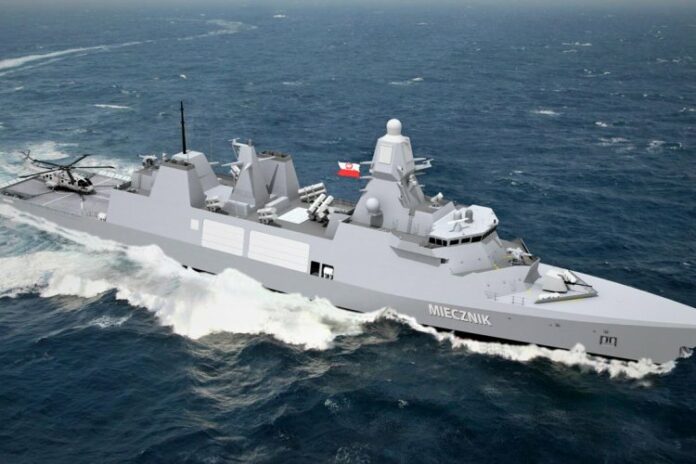
Fincantieri and Polska Grupa Zbrojeniowa S.A. (PGZ) have signed a Memorandum of Understanding (MoU) during the MSPO International Defence Industry Exhibition, currently ongoing in Kielce.

The MoU was signed by Mauro Manzini, Vice President Sales of Fincantieri’s Naval Vessels Division, and Jan Grabowski, Vice President of PGZ, and establishes a framework for collaboration aimed at supporting the modernization of the Polish Navy, with a particular focus on the ORKA submarine acquisition program.

“Poland is a key strategic partner for Fincantieri, and we are proud to contribute to the country’s ambitious naval modernization plans,” said Pierroberto Folgiero, CEO and Managing Director of Fincantieri. “With a legacy of more than 180 submarines built and a proven track record in advanced naval platforms, we bring unparalleled expertise to support the ORKA program and to develop a long-term industrial cooperation with PGZ and the national defense industry.”

Under the agreement, Fincantieri and PGZ will explore joint opportunities in the design, construction, and through-life support of advanced naval platforms, including submarines. This partnership will combine Fincantieri’s technological leadership in naval shipbuilding with PGZ’s extensive industrial base, which plays a central role in Poland’s defense modernization strategy. Together, the two companies aim to develop joint opportunities not only for the Polish Navy but also in broader international markets.

PGZ is Poland’s leading state-owned defense group, managing a portfolio of companies active in shipbuilding, offshore construction, and the technical modernization of the Polish Armed Forces.

Color Line selects NAPA to provide fleetwide electronic logbook solution

0

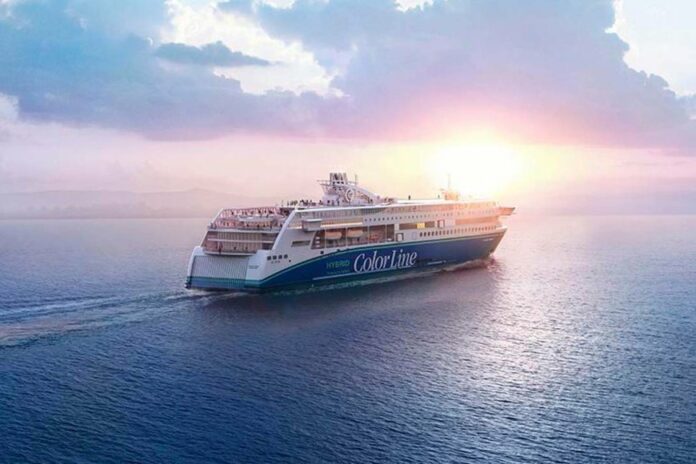
Color Line has signed an agreement with NAPA to deploy NAPA Logbook across its entire fleet of five vessels throughout 2025. The implementation of the electronic logbook solution helps meet growing safety, compliance, and efficiency requirements for ferry operators, while reducing onboard workload for crew. The vessels will operate along domestic Norwegian routes and international services between Oslo and Kiel.  

This strategic move away from manual data entries builds on a longstanding relationship between the two companies, and supports Color Line’s digitalization goals by automating compliance, ensuring traceability and improving collaboration between ship and shoreside teams.  
 
By adopting NAPA Logbook, Color Line will simplify environmental and safety reporting, streamline regulatory compliance, and ease crew workload. Seafarers will be able to save time, avoid duplicate data entry and reduce the risk of errors, while shoreside teams gain seamless access to 24/7 real-time data via NAPA Fleet Intelligence, enabling faster, more informed decision-making. 

The rapid rollout of NAPA Logbook has been fully remote, without the need for onboard hardware installation, making it easier to update in line with crew needs and to scale across the fleet.

Henrik Baråt Svensen, Superintendent Maritime Digitalization at Color Line commented: “The wellbeing and safety of our crew and passengers is always our top priority. Working with NAPA has allowed us to take a proactive approach to safety by leveraging digital solutions, like NAPA Logbook, that understand our operations and crew. This has helped simplify daily tasks and save time, while improving data quality and reporting.”  

Markus Tompuri, Account Director, Ferry and Navy at NAPA said: “The potential for digitalization to transform the ferry sector is significant, and our long-standing relationship with Color Line is testament to the numerous benefits for safety, compliance and crew wellbeing that are on the table. We are looking forward to working with Color Line to further support them on their digital transformation with connected, purpose-built solutions, particularly as regulatory requirements tighten.” 

Scotland approves first semi-closed containment fish farm

0

Loch Long Salmon has secured planning permission to create the first semi-closed containment fish farm in Scotland in Loch Long, Argyll & Bute.

Representing £40 million of investment and recognized as a project of national significance, Loch Long Salmon can now progress with its ambitious vision to bring semi-closed containment technology to Scotland for the first time, having already secured its permit from SEPA in December 2021.

Mark Shotter, project director at Loch Long Salmon, said that “after years of planning and engagement with communities and stakeholders, we are tremendously pleased to have the backing of the Scottish government to deliver our first project at Loch Long. Representing £40 million of investment, the project brings a wealth of community benefits through job creation and dedicated community funds, strengthening both the national and local economies.”

“Achieving a positive determination underlines the Scottish government’s prioritization of investment within rural communities and positions Scotland as a forward-thinking and innovative country, adoptive of new technologies that will enhance the aquaculture sector’s international competitiveness and send a positive signal to investors.”

The project will also directly benefit the communities around Arrochar through the creation of 12 full-time jobs once the site is in operation. Loch Long Salmon will also establish a dedicated community benefit fund, contributing £100,000 of funding every year for a minimum of 20 years. Community representatives will decide how to use these funds to best enhance the local area.

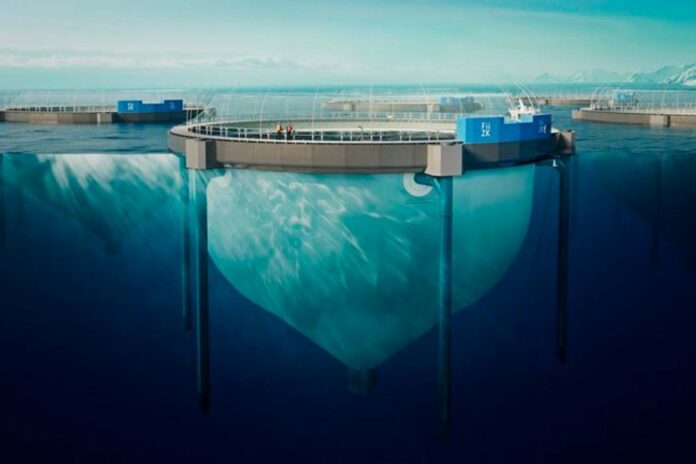
Semi-closed containment farming systems resemble conventional pens from above, but below the surface, they feature an opaque, impermeable outer barrier surrounding the fish net. Water is drawn from deeper in the bay and circulated within the system. This design eliminates the risk of sea lice and seal attacks while allowing farmers to capture waste and bring it ashore for circular economy uses such as waste-to-energy.

Source: aquafeed

Fugro secures two contracts to support Brazil’s offshore energy expansion

0

Fugro has signed two three-year contracts with offshore energy services company Constellation to support responsible deepwater exploration activities in two of Brazil’s most strategically important regions: the mature Campos Basin and the emerging Equatorial Margin. 

The contracts come as Brazil works to strengthen its long-term energy security by developing its domestic oil and gas resources as a strategic bridge to low-carbon developments.

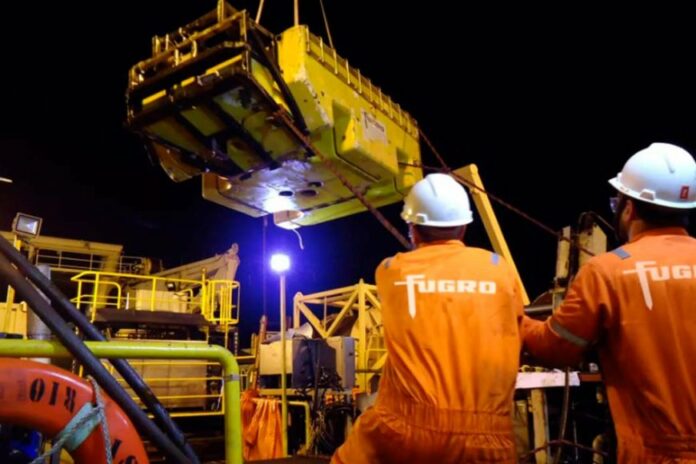
Fugro’s work will involve deploying advanced remotely operated vehicles (ROVs) aboard Constellation-managed vessels to carry out subsea equipment inspections, interventions and a range of observation and survey activities. The first campaign will begin this quarter in the Campos Basin on board the vessel Tidal Action, followed by a second deployment in early 2026 in the Equatorial Margin on board the Amaralina Star.

Fugro will outfit both vessels with its FCV® 3000 ROV systems, a class of deepwater vehicles built for complex offshore environments. Operated by Brazil-based staff, these systems have a proven track record in technically demanding areas like the Equatorial Margin. For Constellation, that experience translates into greater operational confidence and reduced risk in one of Brazil’s most challenging offshore frontiers.

“Our partnership with Constellation reflects a shared commitment to advancing offshore exploration in alignment with Brazil’s broader energy transition,” said Felipe Vasconcellos, Fugro’s Brazil Country Manager. “By combining trusted subsea expertise with advanced survey technology, we’re helping to ensure that exploration in these frontier regions supports a safer, more resilient and more sustainable energy future.”

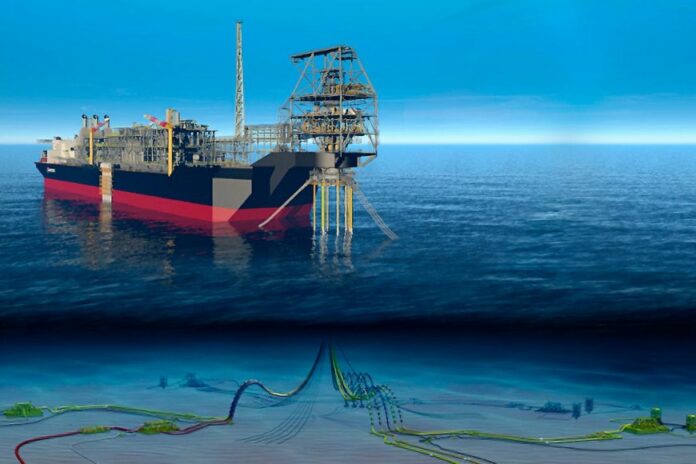
MODEC and AFC Sign Co-operation Agreement to Advance Maritime Infrastructure in Africa

0

AFC is a multilateral financial institution, established in 2007 to be the catalyst for pragmatic infrastructure and industrial investments across Africa. 

With 45 member countries and having invested over US$15 billion across the continent, AFC’s approach combines specialist industry expertise with a focus on financial and technical advisory, project structuring, project development, and risk capital to address Africa’s infrastructure development needs.

This CA is a framework aiming at future cooperation and information exchange in technical studies, market studies, structuring of finance solutions and sourcing of potential projects for future maritime infrastructure space in Africa.

MODEC Group President and CEO, Mr. Hirohiko Miyata, expressed his delight for enhancing relationship with AFC. “We are honored and excited to execute the CA with AFC. Africa is a core market for us with infinite potential for offshore development. MODEC is committed to supporting the development of African countries through our offshore solutions.”

Stena Bulk and Crowley announce addition of CS Anthem to the Tanker Security Program

0

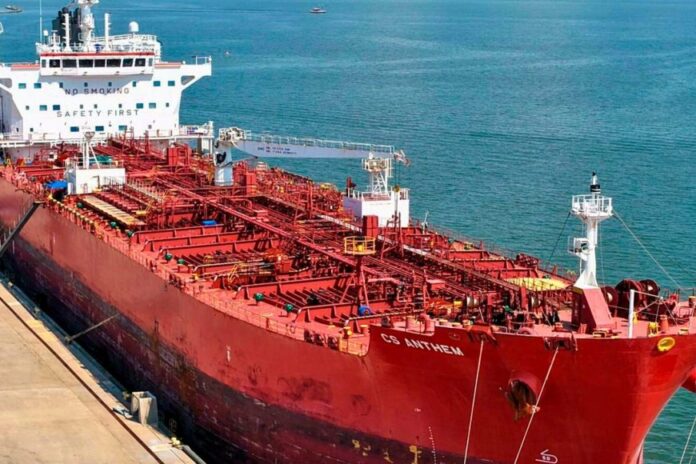
The joint venture between Stena Bulk and Crowley, Crowley Stena Marine Solutions, has received approval from the U.S. Maritime Administration (MARAD) to bring the CS Anthem, a medium-range tanker, into the United States Tanker Security Program (TSP).

The U.S.-flagged 49,990mt CS Anthem will be managed and crewed by Crowley under a bareboat charter through Crowley Stena Marine Solutions. The vessel enters the program alongside Stena Imperative and Stena Impeccable, replacing the Stena Immaculate.

Erik Hånell, President and CEO of Stena Bulk, said: “The addition of CS Anthem highlights our commitment to the Tanker Security Program. Following the challenging incident with the Stena Immaculate earlier this year, we felt that it was important to do everything in our power to ensure we can maintain reliable tanker capacity for our US partners.

“Our joint venture with Crowley continues to demonstrate the value of combining our global tanker leadership and expertise with Crowley’s US-flag leadership to deliver agile and dependable solutions.”

Through the tanker security programme, CS Anthem will provide vital energy transport readiness in support of the U.S. Department of Defense and help bolster the nation’s strategic sealift capacity.