-10.3 C
New York
Home Blog Page 358

Green Fuels for Denmark receives Danish IPCEI funding

0

The Danish Business Authority has awarded the Danish Power-to-X flagship project ‘Green Fuels for Denmark’ DKK 600 million as part of Denmark’s participation in the European IPCEI programme. The funding will go towards realising Green Fuels for Denmark’s first phases of 10 MW, 100 MW and 300 MW, respectively.

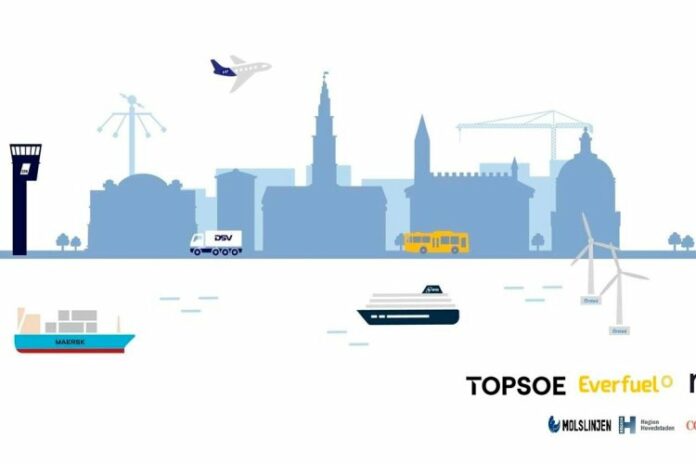
The Green Fuels for Denmark consortium consists of Ørsted, who is leading the development of the project, and a number of major Danish logistics companies with global reach. The demand-side partners are: A.P. Moller – Maersk, Copenhagen Airports, DFDS, DSV and SAS. Topsoe, Nel and Everfuel are technology partners on the project, and COWI acts as knowledge partner. By bringing together the leading Danish companies from both the technology and the supply and demand side, Green Fuels for Denmark is ideally placed to develop Denmark’s large potential within Power-to-X while creating jobs and supply chain development in the process.

The funding from the Danish Business Authority represents a strong contribution to Green Fuels for Denmark, which, as a flagship project, can help advance the Power-to-X industry as a whole to deliver the green fuels that are urgently needed to secure Europe’s regional energy independence and fight climate change. Green Fuels for Denmark, and the Power-to-X industry in general, remain dependent on competitive supply of renewable power and clear national and international regulations that advance the demand for green fuels and drive out fossil-based alternatives. Together with the necessary framework conditions, the Danish IPCEI funding can contribute to the realisation of this pioneering project.

Green Fuels for Denmark’s first two phases will produce renewable hydrogen to power heavy road trucks and enough e-methanol to power an ocean-going vessel or several ferries. The consortium also plans to start production of green synthetic jet fuel, e-kerosene, in the project’s second phase. In Green Fuels for Denmark’s later phases, the project could produce a quantity of e-kerosene corresponding to 30 % of the pre-pandemic jet fuel consumption at Copenhagen Airport – far beyond the fuel needed for Danish domestic aviation.

Anders Nordstrøm, Chief Operating Officer, Ørsted Power-to-X, says:

“We’re very pleased to have received funding from the Danish government for Green Fuels for Denmark, and we’d like to commend Denmark for taking a leading role in fighting climate change also in the hard-to-abate sectors. Power-to-X can become Denmark’s next green business stronghold, and with the right, supportive regulation, ‘Green Fuels for Denmark’ is uniquely placed to lead this second phase of Denmark’s green success story.”

Jens Bjørn Andersen, Group CEO, DSV A/S, says:

“An important part of moving the industry forward is in creating forums and partnerships for collaboration, innovation and the sharing of best practices across companies. That is why I am thrilled that DSV is part of Green Fuels for Denmark and that we have now reached this important stage in the project. The use of alternative fuels will play a critical role in the future of a lower-emission transport sector and links to DSV’s long-term sustainability ambitions.”

Torben Carlsen, CEO, DFDS, says:

“Transforming the shipping and logistics industry takes heavy investments in new technologies and infrastructures to accommodate high volumes of green power. DFDS is committed to having a green vessel in operations by 2025 and is already deploying electrical trucks on European roads. As an off-take partner in the Green Fuels for Denmark partnership, we highly welcome political ambition, will and actions that speed up the green transition.”

Kim Saaby Hedegaard, CEO Power-to-X, Topsoe, says:

“Decarbonization of heavy transportation is a tough challenge for society and one that we need to solve now to reach net zero in 2050. We are thrilled to support with our expertise in Power-to-X solutions and to help this visionary project reaching its ambitious targets.”

Jacob Krogsgaard, CEO, Everfuel, says:

“We would like to gratulate Ørsted and the Green Fuels for Denmark consortium on this major milestone. This is an important project for scaling Power-to-X and for the decarbonisation of mobility in Denmark and Europe. At Everfuel we look forward to participating in bringing the project forward and providing sustainable fuels to the market.”

Jens Højgaard Christoffersen, Group CEO, COWI, says:

“Partnerships and co-creation are key to addressing the huge and complex challenges we face in making the world more sustainable. Thanks to the partners’ high ambitions, this new funding will help deliver a significant contribution to an important project in the green transition. We are excited to contribute our knowledge about large-scale projects and green technologies.”
Damen builds scampi vessel for seafood company Sanford, New Zealand

0

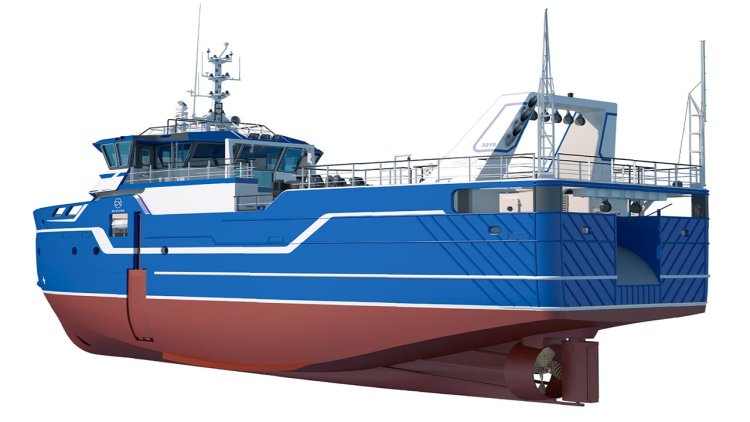
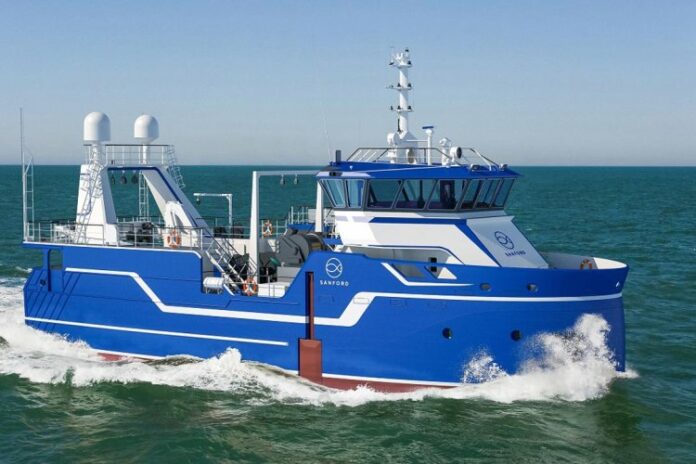
Both companies joined in a close co-operation for the development of a purpose equipped and laid out vessel for Sanford Limited’s operations in the Southern Ocean.

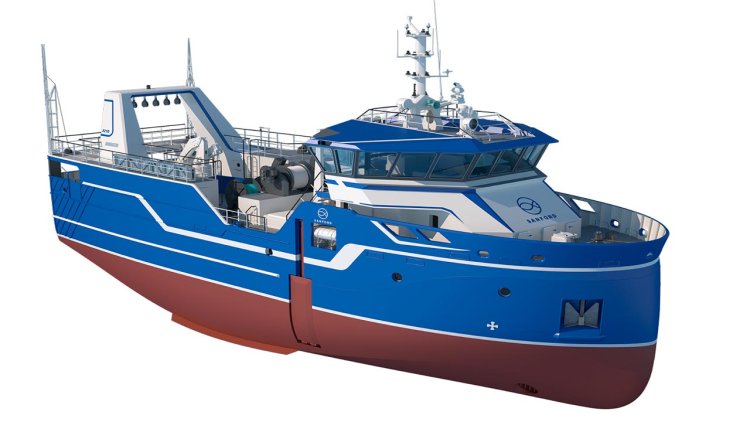
The vessel, based on the Damen Sea Fisher 3210 will be built to the latest standards in terms of sustainability, comfort and safety.

Pim Schuurman, Regional Sales Director of Damen Shipyards:

“We are very grateful that Sanford gives us the confidence by ordering a fishing vessel that will contribute to Sanford’s target of reducing the carbon footprint from its direct operations at sea.”

The fishing vessel, with a diesel-electric system and modern freezer, will be built in Stellendam at Damen Maaskant, the Damen yard specialised in fishing vessel newbuild and repair since 1948. Delivery is expected in 2025.  

The unique vessel design for the scampi fisher vessel was created as a result of intensive cooperation between Sanford and the management and technical teams of Damen Shipyards, Damen Maaskant and the Damen Representative for New Zealand. 

Johan Sverdrup Phase 2 on stream

0

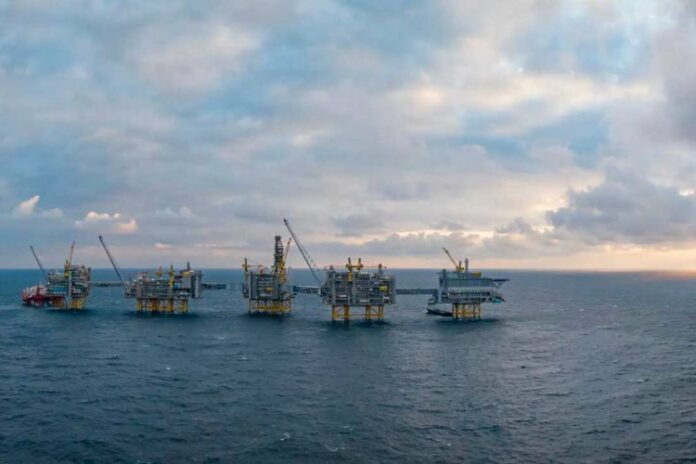
When the Johan Sverdrup field reaches plateau production, every third Norwegian oil barrel will come from this giant field, which for decades will be essential to ensuring high and stable energy deliveries from Norway.

Geir Tungesvik, Equinor’s executive vice president for Projects, Drilling & Procurement, says:

“The entire Johan Sverdrup field is now on stream. This is a red-letter day for us and our partners, Aker BP, Petoro and TotalEnergies, but also for Norway and Europe. Johan Sverdrup accounts for large and important energy deliveries, and in the current market situation, most of the volumes will go to Europe.”

At plateau, the Johan Sverdrup field will produce 720,000 barrels of oil daily, aiming to rise to 755,000 barrels per day. Johan Sverdrup alone can thus meet 6-7 percent of the daily oil demand in Europe. Recoverable volumes in the Johan Sverdrup field total 2.7 billion barrels of oil equivalent.

The Johan Sverdrup Phase 2 project consists of a new platform, five new subsea systems, 28 new wells, a new module for the existing riser platform, and facilities to send power from shore to the Utsira High area. The Johan Sverdrup Phase 2 project was delivered as planned, on time and cost, despite the Covid-19 pandemic.

Tungesvik says:

“It has been challenging, and I would like to send a big thank you to everyone who has helped bring the project safely to the finish line, both partners, our own employees and, not least, the suppliers.”

More than 90 percent of deliveries to Johan Sverdrup Phase 2 have a Norwegian billing address, and many of the suppliers were also involved in the first part of the development of the highly profitable project. The full-field development of Johan Sverdrup has a break-even price of less than USD 15 per barrel.

The Johan Sverdrup field receives power from shore through cables from Haugsneset north of Stavanger. The first cable currently supplies the first four platforms on the Johan Sverdrup field with electricity. The new cable supplies the fifth platform and the rest of the Utsire High installations.

Marianne M. Bjelland, vice president, exploration and production, the Johan Sverdrup and Martin Linge areas, says:

“In combination, this reduces CO2 emissions by a total of 1.2 million tonnes per year, equivalent to 2,5 percent of Norway’s annual emissions. Electrification is an important measure to further developing the Norwegian continental shelf (NCS) towards the goal of net zero greenhouse gas emissions by 2050.”

Johan Sverdrup has been in stable production for more than three years. The field is estimated to generate more than 3,400 person-years of work each year, and production from the field has already contributed substantially to the Norwegian welfare state.82 percent of the revenues from the Johan Sverdrup field goes to the state through taxes and direct ownership interest, estimated at a total of about NOK 900 billion over the field life.

Bjelland says:

“I am proud that we have now put the entire Johan Sverdrup field on stream in a safe and secure manner. We will deliver stable energy volumes for several decades, while contributing to Norwegian value creation for a long time to come.”

Proman Stena Bulk takes delivery of fourth methanol-fuelled tanker Stena Prosperous

0

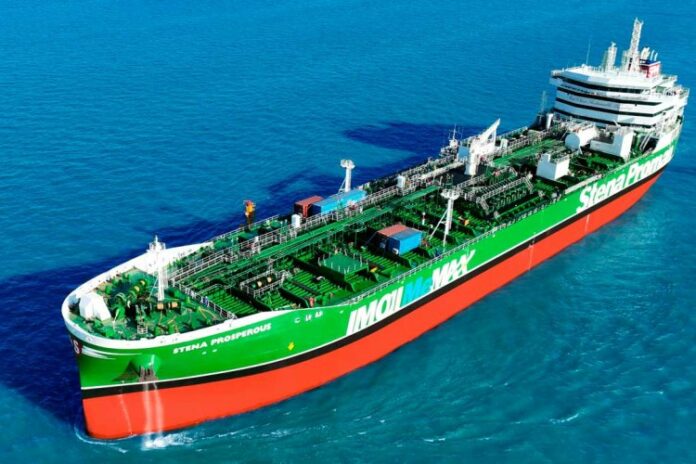
Proman Stena Bulk, the joint venture between leading tanker company Stena Bulk and the leading methanol producer Proman, has successfully taken delivery of a further methanol-fuelled tanker, Stena Prosperous, the companies have announced today.

The 49,990 DWT vessel was successfully delivered from Guangzhou Shipyard International Co Ltd (GSI) and will now enter commercial operation running fully on methanol.

The delivery caps a marquee year for the joint venture, which now has four vessels actively trading and bunkering fully on the low-emission future fuel. The fourth ship joins the Proman Stena Bulk-owned Stena Pro Patria and Stena Pro Marine, and the Proman-owned Stena Promise, which were all delivered in 2022.

The joint venture fleet has already loaded methanol fuel in Ulsan, Trinidad and Rotterdam in the past year, with other major bunkering hubs to follow in 2023.

A fourth vessel entering into service underlines Proman Stena Bulk’s commitment to unlocking a more sustainable maritime sector in the immediate term by driving the uptake of methanol as a marine fuel.

Stena Prosperous, like the other methanol-fuelled joint venture vessels, has an unprecedently low EEDI (Energy Efficiency Design Index) value while running on methanol. The IMOIIMeMax vessel series benefits from industry-leading design improvements and technologies to maximise energy efficiency and minimise fuel consumption, resulting in an EEDI 11% below the 2025 Phase 3 requirements and setting a new benchmark for mid-range tankers.

Moreover, the vessels’ future-proofed engine designs make the ships ready to achieve every incoming emissions reduction target, as greater quantities of very low-carbon blue and renewable methanol becomes available for blending and bunkering in the near future.

Stena Prosperous will use approximately 12,500 tonnes of methanol as fuel per year. Conventional methanol from natural gas, which is widely available, virtually eliminates SOx and particulate matter, cuts NOx by 60%, and reduces CO2 emissions from the vessel’s operations by up to 15% on a tank-to-wake basis, compared to conventional marine fuels.

Erik Hånell, President and CEO of Stena Bulk, said:

“It’s fantastic to be able to end 2022 with a fourth methanol tanker joining our joint venture fleet. These vessels are truly pioneering and meet the highest standards of safety, sustainability and efficiency, laying down a marker for what is already possible today through progressive partnerships like ours with Proman.”

Anita Gajadhar, Managing Director, Marketing and Logistics, Proman added:

“We are immensely proud of what our joint venture with Stena Bulk has been able to achieve over the last year. We now have four vessels in operation running on methanol as a marine fuel, which proves that methanol isn’t a future fuel – it’s a today fuel. Its highly scalable and commercially viable decarbonisation pathway means it is one of best solutions for shipowners to meet sustainability commitments and every incoming emissions target that the maritime industry will face.”

RCL announces strategic agreement with Meyer Turku Oy, Finnish Government

0

Royal Caribbean Group has signed a maritime declaration with the Finnish government, represented by the Ministry of Economic Affairs and Employment (MEAE) and Meyer Turku Oy, to chart the way forward for innovative and sustainable shipbuilding in Finland. The commitment is set to advance innovation, strengthen competitiveness and bolster the maritime industry’s ecosystem.

Jason Liberty, president and CEO of Royal Caribbean Group, said:

“Our partners in Finland have helped us deliver some of the world’s most impressive and sustainable ships of their time, including our newest ship debuting in January 2024, Icon of the Seas. This new partnership sets the stage for future innovations and allows us and the maritime industry to continue pursuing sustainability at the highest level.”

The declaration announces the following actions:

  • Preparing a roadmap for the production of climate-neutral ships in Finland. The roadmap is part of the maritime industry’s green transition.
  • Strengthening the innovation of Meyer Turku, Royal Caribbean Group and the maritime industry.
  • Supporting networking to curb economic challenges, develop new solutions and secure the long-term viability of the maritime industry.
  • Assembling a digital demonstration of a climate-neutral ship as part of the sustainable maritime industry development program of the Ministry of Labor and Economy.
  • Piloting and testing new innovations and technologies on Royal Caribbean Group ships.

This partnership also advances Royal Caribbean Group’s Destination Net Zero strategy to decarbonize its operations by 2050 and its near- and medium-term targets, including reducing carbon intensity by double digits by 2025 compared to 2019 and the introduction of a net-zero cruise ship by 2035. 

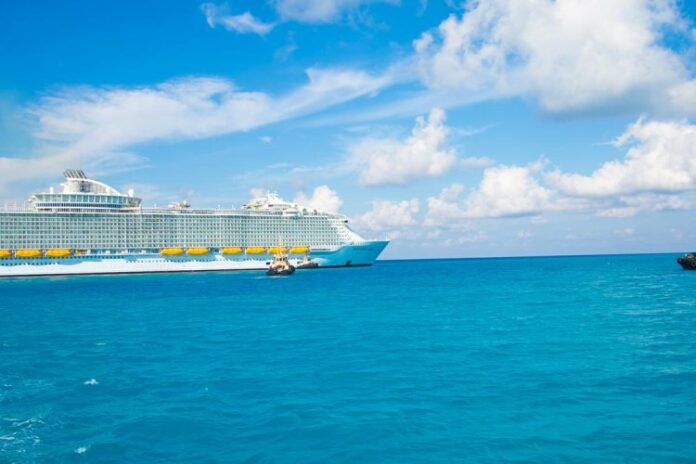
The declaration comes on the heels of another major milestone for Royal Caribbean. On Friday, Dec. 9, the revolutionary, new vacation, Icon of the Seas, reached its next phase of construction ahead of its iconic January 2024 debut. The new ship floated on water for the first time since the assembly began nine months ago at Meyer Turku shipyard in Turku, Finland. Icon will join the company’s Royal Caribbean International cruise line and its lineup of industry-leading ships, becoming the brand’s most sustainable ship to date and the crown jewel of shipbuilding in the Finnish maritime industry.

Mika Lintilä, Finland’s Ministry of Economic Affairs, said:

“The Finnish maritime ecosystem is built on the innovativeness, expertise and skills of the thousands of leading shipbuilders at Meyer Turku, and Icon of the Seas is the latest example of what can be built here in Finland. This new declaration will secure a future in which the maritime industry continues to make strides in our decarbonization goals and economic growth priorities for years to come.

The company also has agreements with the shipyard to build the unnamed second and third ships in the Icon Class for its Royal Caribbean International brand, and Mein Schiff 7, which is currently under construction for the company’s TUI Cruises brand.

Tim Meyer, CEO, Meyer Turku Oy, said:

“While expertise and interdisciplinary collaboration will always be key to the success of shipbuilding, we recognize the need to continuously evolve and create strategies to reduce carbon emissions toward net zero. This commitment will set us up, as an industry, to innovate and adapt in how we design, build and operate ships. This challenge presents significant opportunities for the Finnish maritime industry to take the lead globally and bring to market new technologies and products.”

Offshore wind company Havfram increases equity funding to USD 500 million

0

Havfram, an offshore wind services company based in Norway, announced that it has secured an additional USD 250 million in equity funding through a partnership between its primary sponsor, Sandbrook Capital, and Canada’s PSP Investments

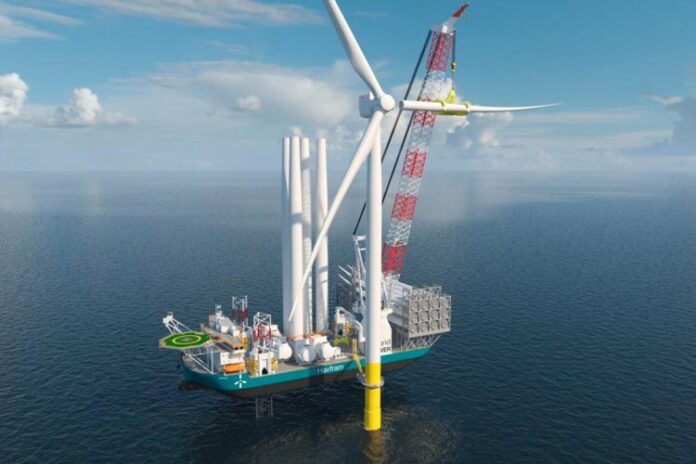
The substantial equity funding, in addition to credit financing from commercial banks and export credit agencies, will be used to build a fleet of state-of-the-art offshore wind vessels. These vessels, capable of installing turbines reaching over 300 meters in tip height and foundations of up to 3,000 tonnes at water depths of up to 70 meters, are among the most critically scarce components of the global renewable energy supply chain.

Havfram also confirmed that its first vessel is now under construction, following execution of a shipbuilding contract with CIMC-Raffles. The NG20000X vessel is equipped with a 3,250-ton crane and the latest battery hybrid drive train technology designed to reduce carbon emissions per MW installed by over 70% compared to previous vessel models.

Even Larsen, CEO of Havfram’s offshore wind construction business, said:

“I am proud to announce this important milestone for Havfram Wind AS. With this world-class equipment and one of the most experienced teams in the industry, we are certain that we will be able to provide a first-class service to project owners, turbine suppliers and construction partners globally. I’m also excited that our vessels will have some of the lowest emission profiles in the industry, as we have designed them to use latest electric battery and energy recovery systems, as well as numerous other sustainability innovations”.

Commenting on the additional capitalization, Havfram’s CEO Ingrid Due-Gundersen said:

“Our planet can’t afford delays in the fight against climate change. The doubling of our equity funding only a month after Sandbrook’s initial investment in Havfram is a testament to the fact that rapid progress can in fact be made when we bring together the right engineering and operational capabilities and specialized investors of scale. We’re extremely grateful to Sandbrook and PSP Investments, not just for their trust and financial support, but also for the way they are already leveraging their experience and extensive networks to help Havfram become a leading partner to the global offshore wind industry”.

Patrick Charbonneau, Senior Managing Director and Global Head of Infrastructure Investments at PSP, added:

“PSP Investments believes the buildout of the offshore wind supply chain to be part of the solution in addressing climate change and the global shift to net zero. The state-of-the-art vessels built by Havfram will enable the construction of the largest offshore wind turbines to date. For this reason, we are excited to partner with Sandbrook and with the Havfram team to support the growth of offshore wind as one of the world’s most scalable sources of clean energy.”

Doosan obtains international certification for 8MW offshore wind power system

0

Doosan Enerbility has obtained a type certification from DEWI-OCC, the Germany-based international certification authority, for its 8MW offshore wind power system, making Doosan the first company in Korea to accomplish such a feat.

Since 2018, Doosan Enerbility has been pursuing “development of the 8MW large-capacity offshore wind power system,” with the support of the Korea Institute of Energy Technology Evaluation and Planning(KETEP) which is under the Ministry of Trade, Industry and Energy. This past January, a prototype was implemented in Yeonggwang of South Jeolla Province, after which a demonstration run was carried out, followed by the securing of the international certification. The international certification received by Doosan is only awarded to those who have satisfied all the applicable criteria in the areas of design evaluation, manufacturing evaluation and type testing.

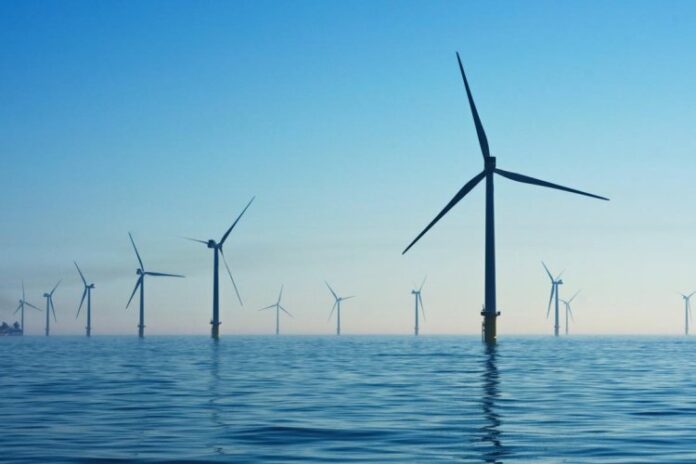
The DS205-8MW, the offshore wind turbine model with the largest capacity to date in Korea, was designed to be suitable for the Southwest Sea environment, which has notably lower wind speeds compared to Europe, which is the leader of offshore wind power.  The diameter* of the rotor was lengthened to 205 meters (blade length: 100m), so that the wind turbine could be used even when the average wind speed is 6.5m/s and thereby making it possible to record a utilization rate over 30%.

The 100 meters-long blade was developed jointly by Doosan Enerbility with the Korea Institute of Materials Science (KIMS) and the blade manufacturer Human Composites.  At the Buan Wind Power Testing Facility, an internationally certified testing institute, the structural soundness and security of the blade were verified by conducting repeated fatigue load tests on the design lifecycle of 25 years and load testing under extreme conditions such as typhoons.

Hongook Park, CEO of Doosan Enerbility’s Power Services Business Group, said:

“We are seeking to expand the market by introducing the 8MW offshore wind turbine, which was developed jointly by the local industry, academia and research sectors, to the Korean offshore wind power market which has been the stage of competition for global wind power companies. We aim to increase the local manufacturing of parts, which is currently over 70% to an ever higher rate, and to apply our local technology and manpower to the area of turbine maintenance services, which has largely been dependent on overseas companies until now. This will ultimately help to contribute to promoting the domestic offshore wind power ecosystem.”

Saipem awarded new offshore contracts in Guyana and Egypt

0

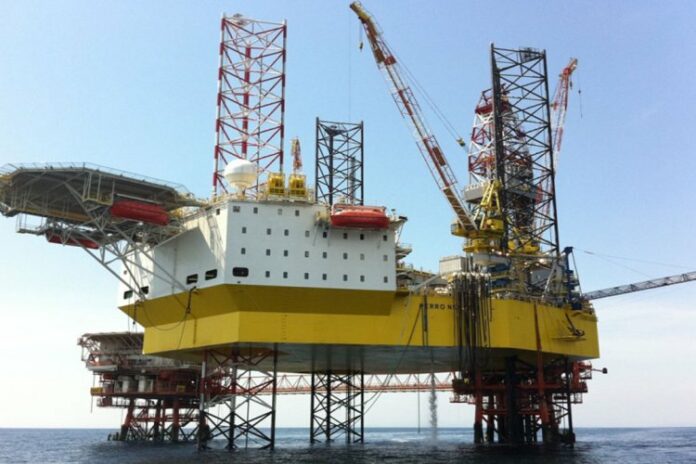
The first contract has been awarded by ExxonMobil Guyana, subject to government approvals, for the UARU oil field development project, located in the Stabroek block offshore Guyana at a water depth of around 2,000 meters.

The contract scope includes the design, fabrication and installation of subsea structures, risers, flowlines and umbilicals for a large subsea production facility.  Saipem, who was previously awarded other four subsea contracts by ExxonMobil Guyanafor prior developments in the same area, namely Liza Phase 1 and 2, Payara, and Yellowtail, will perform the operations by using its vessels, including FDS2 and Constellation.

Subject to the necessary government approvals, project sanction by ExxonMobil Guyana and its Stabroek block coventurers and an authorization to proceed with the final phase, the award will allow Saipem to start some limited activities, namely detailed engineering and procurement.

The second contract has been awarded by Petrobel for the transportation, installation and pre-commissioning of 170 km of umbilicals for the Zohr Field, to be transported and installed between the central control platform (70 m water depth) and the subsea field (1,500 m water depth), connecting to the existing subsea production systems. The offshore campaign is planned to start during Q3 2023.

TECO 2030 completes production of first fuel cell stack

0

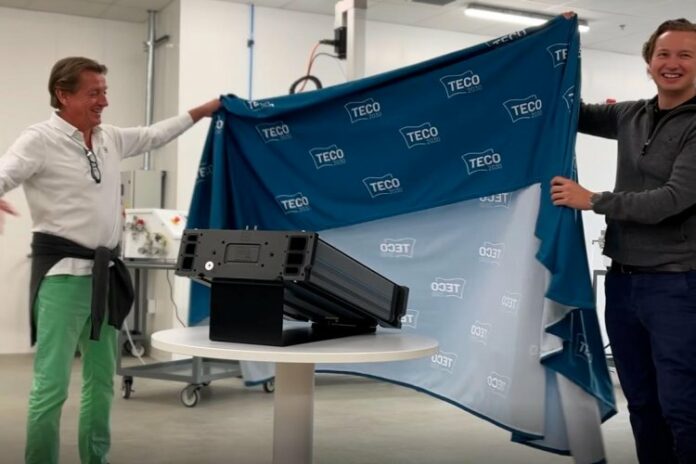
A fuel cell stack consists of a number of individual stack cells, each generating electricity from electrochemical reactions based on fuels such as hydrogen. 

TECO 2030’s fuel cell stack contains a few hundred stack cells and provides a net output of 100 kW. The stacks are then combined together with balance of plant (BoP) components into a fuel cell module. TECO 2030 plans to assemble and test the first FCM400 (Fuel Cell Module 400 kW) during the summer of 2023 at AVL’s s facility in Graz, Austria.

Several modules, in turn, can be combined to supply the megawatts of output needed for applications such as ship propulsion, auxiliary power and other heavy-duty applications.

Tore Enger, CEO of TECO 2030, says:

“It’s amazing to be able to physically touch the first TECO 2030 fuel cell stack. I would like to thank all the team members at TECO 2030 and our development partner AVL who have worked hard to ensure this project has progressed according to schedule over the past months and years, enabling us to proceed with several pilot projects during 2023.”

The occasion was celebrated in Vancouver, Canada, where AVL has its global center of excellence for proton exchange membrane (PEM) fuel cell stacks. Key management from TECO 2030 and AVL, as well as several investors of TECO 2030, took part in the event.

Berg adds:

“It’s great to see the fuel cell stack that TECO 2030 is industrializing inching towards serial production.” said Falko Berg, Manager and Technical Product Responsible PEM Systems at AVL List. “Today’s milestone marks the next logical and important step towards launching the fuel cell factory in Narvik, its class-leading fuel cell system and finally decarbonizing the marine industry.” 

Enger adds:

“Following the milestone announced today, we will gradually increase production during 2023 to supply fuel cell systems for a number of pilot projects, followed by automated volume production at our gigafactory in Narvik, Norway, from early 2024.” 

Gen2 Energy AS and Åfjord municipality have signed an agreement on green hydrogen

0

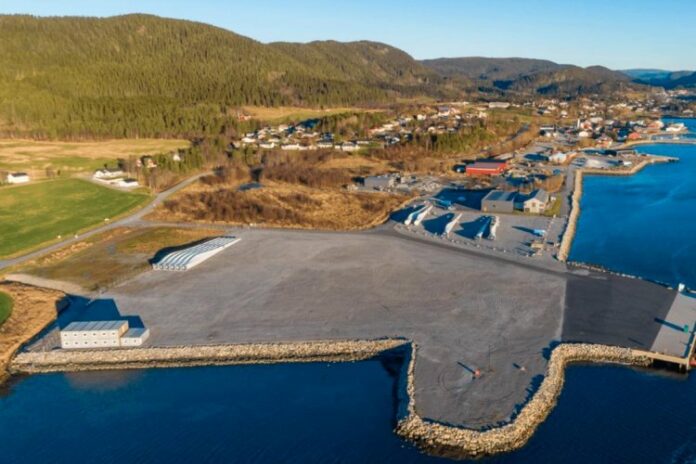
In the agreement, Gen2 Energy and Åfjord municipality have agreed on long-term lease of an industrial site in Åfjord for large-scale production and shipping of green hydrogen.

The parties agree that Gen2 Energy can secure, on a long-term basis, the industrial site Monstad Havneområde in Åfjord to build a production facility for green hydrogen, as well as gain access to quay facilities for the transport of green hydrogen to relevant markets in Europe and Norway. Gen2 Energy plans to build a plant that ensures large-volume production of green hydrogen.

Jonas Meyer, managing director of Gen2 Energy says:

“We are very happy to have chosen Åfjord as the location for large-scale production of green hydrogen. Åfjord has a good mix of low-cost renewable energy, access to land for industrial purposes with good shipping possibilities, and will be an important addition to our portfolio of production sites for green hydrogen along the Norwegian coast.”

Vibeke Stjern, mayor of Åfjord municipality says:

“Åfjord has an ambition to be a driving force for the fulfillment of the “Green shift”-targets with a particular focus on industries that are based on the use of renewable energy. The fact that there are now great opportunities for green industrial establishment, which the hydrogen producer Gen2 Energy represents, means that Åfjord can transform its policy into concrete projects. This means new future-oriented jobs and a basis for further population growth in the municipality, emphasizes the mayor.”

The agreement gives Gen2 Energy the opportunity to build a production plant on the industrial area Monstad Havnemråde (41 acres). The area must be prepared and regulated for hydrogen production and this work starts at the first opportunity. Gen2 Energy is currently conducting a concept study related to the hydrogen plant in Åfjord in order to clarify important matters such as the size of the plant and the form of production.

An important part of the agreement is that Gen2 Energy gets access to quay facilities that make it possible to export large quantities of green hydrogen to Europe.