-10.3 C
New York
Home Blog Page 357

Maersk and SunGas Renewables sign strategic green methanol partnership

0

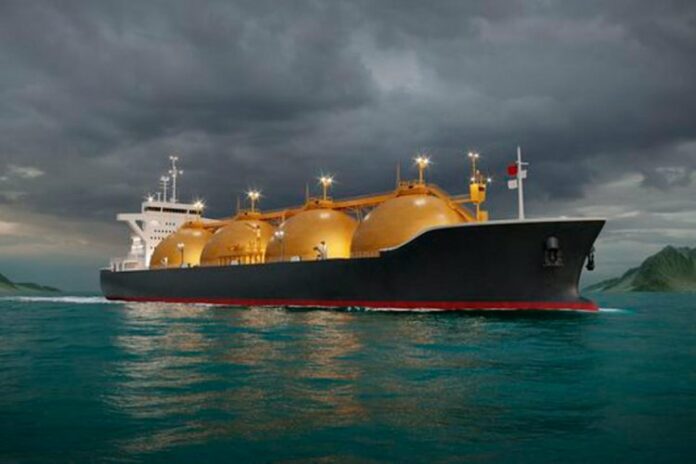
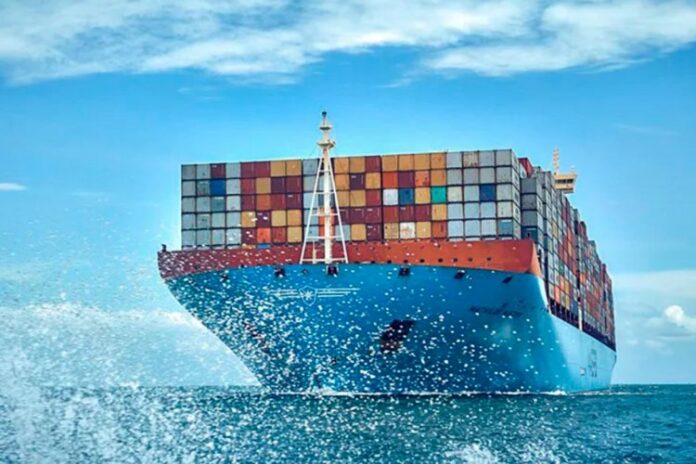
As part of its strategy to decarbonize customers’ supply chains, A.P. Moller – Maersk (Maersk) has entered a green methanol Letter of Intent with U.S. based SunGas Renewables, Inc., a spin-out of GTI Energy, and a leader in providing technology and equipment systems for large-scale production of renewable fuels. This is Maersk’s 9th such partnership to drive the acceleration of global production capacity for green methanol.

The Letter of Intent covers the production of green methanol from multiple facilities to be developed by SunGas in the United States from which Maersk intends to offtake full volumes of green methanol. The first facility is expected to begin operations in 2026 and have an annual production capacity of approximately 390,000 tonnes.

Emma Mazhari, Head of Green Sourcing and Portfolio Management, A.P. Moller – Maersk, said:

“Securing green marine fuels at a global scale within this decade will require rapid scale up of green methanol production capacity using a variety of technology and feedstock pathways. We are very pleased to welcome SunGas Renewables as a strategic partner in our efforts to achieve our goal of net zero greenhouse gas emissions in 2040 across our entire business, and to ensure meaningful progress is made within this decade in line with the Paris Agreement.”

The SunGas facilities will utilize its flagship System 1000 platform to convert sustainably sourced residues from the forestry and wood products industries into green methanol.

Robert Rigdon, CEO of SunGas, said: 

“Our partnership with Maersk marks an important milestone for SunGas as we continue our mission to make a global impact in the energy transition. We applaud Maersk’s leadership in catalyzing decarbonization of the entire marine shipping industry and look forward to working together to accelerate growth of production capacity for green methanol marine fuels.”

SunGas joins eight other strategic partners working to supply the green fuel needed for the 19 methanol enabled container vessels Maersk currently has on order. The other partners are Carbon Sink, CIMC ENRIC, Debo, European Energy, Green Technology Bank, Orsted, Proman, and Wastefuel.

Aker BP submits record number of field development plans

0

Aker BP and its partners are submitting a total of ten PDOs (plans for development and operation) and one plan for installation and operation (PIO) to the Ministry of Petroleum and Energy (MPE). With total investments of more than NOK 200 billion in real terms, these Aker BP-operated oil and gas projects represent one of the largest private industrial developments in Europe.

“The scope of the development plans we are submitting to the Minister of Petroleum and Energy is a manifestation of our ambition to create the oil and gas company of the future – with low costs, low emissions, profitable growth and attractive returns,” says Aker BP CEO Karl Johnny Hersvik.

Total recoverable resources in these development projects amount to 730 million net barrels of oil equivalent for Aker BP. The projects will also contribute to extending the life of existing production and enable future growth opportunities.

The company’s share of the investments is approximately 70 percent, amounting to approximately USD 19 billion in nominal terms. The average break-even price is estimated to USD 35-40 per barrel.

Along with several measures to increase efficiency and recovery, these development projects will enable Aker BP’s oil and gas production to grow from around 400,000 barrels per day in 2022 to around 525,000 barrels in 2028.

Hersvik says:

“We are uniquely positioned for profitable growth, not least through our role as operator for several of the major field developments on the Norwegian shelf in the years ahead. This gives us a great opportunity to lead the way in transforming the oil and gas industry, in close cooperation with our licence partners, our alliance partners and other strategic partners.”

Aker BP’s CO2 emissions per barrel are among the lowest in the entire oil and gas industry. The emission intensity will be further reduced when these new projects, which will predominantly receive power from shore, come on stream. This is an important element in the company’s strategy to achieve net zero emissions by 2030.

“We take the global climate challenges seriously, and we have a three-pronged strategy to meet the world’s growing need for energy while simultaneously contributing to reduce emissions. We will deliver oil and gas with a minimum climate footprint. We will generate revenue that can be used to facilitate the energy transition. And we will contribute knowledge, data and experience to support new industries. This creates growth and improvement that reach far beyond our own business. These development projects provide an important foundation for this strategy,” says Hersvik.

Hersvik points out that the stimulus package adopted by a broad parliamentary majority in the summer of 2020 has been important for both the supplier industry and for the society at large.

“The stimulus package allowed oil companies to embark upon new commitments, in the midst of a pandemic, and in an increasingly uncertain world. The wheels started turning again. Now here we are, just over two years later, seeing the direct results of that stimulus package,” Hersvik emphasises.

Aker BP’s operated development projects are expected to contribute to more than 150,000 full-time equivalents in Norway in supplier companies across the country. In addition to ensuring activity and jobs, the projects contribute to developing technological expertise in the Norwegian industry in the period before renewable projects are expected to increase in scale. 

Aker BP is already the largest taxpayer in Norway that is not state owned and expects to pay more than NOK 80 billion in taxes for 2022.

“With an average oil price of USD 65 per barrel, these development projects will generate net tax payments to the Norwegian state totalling NOK 160 billion in real terms, and thus make an important contribution to financing welfare schemes and strengthen the state’s ability to support the energy transition, says Hersvik.

In connection with the PDO submissions, Aker BP has awarded a number of contracts to alliance partners and other strategic suppliers. The total value of the contract awards amounts to tens of billions of kroner. 

The awards are aligned with Aker BP’s strategy to increase value creation by establishing alliances and strategic partnerships with our suppliers.

“Through the development of the Yggdrasil area (formerly NOAKA), which is the largest of the projects, we aim to set new standards for field development and operation using new technology, data-driven decisions and work processes, remote operations and unmanned platforms.”

EU-funded project tests standard digital language for container terminals

0

On 13 December, the European consortium of the iTerminals4.0 project, an initiative led by Fundación Valenciaport and co-financed by the Connecting Europe Facility Programme (CEF) of the European Commission, held its final conference.

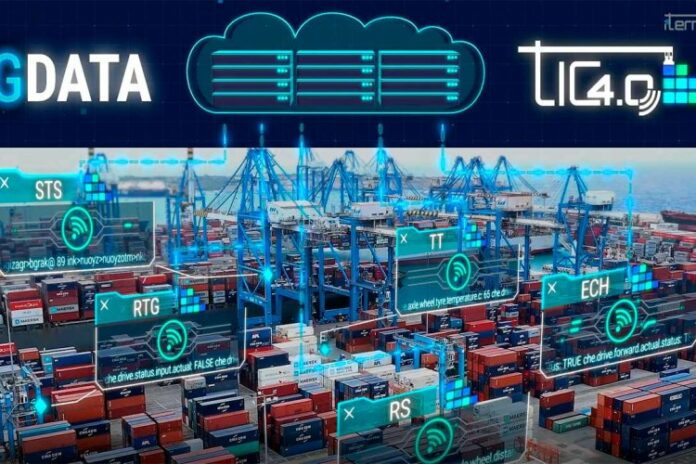
The iTerminals4.0 project aimed to develop and test in real operations a standard digital language that facilitates bidirectional communication between port equipment and container terminal operations management systems. 

The initiative is led by Fundación Valenciaport and co-financed by the Connecting Europe Facility Programme (CEF) of the European Commission. 

This communication language has already been implemented in the terminals run by the CMA CGM-Terminal Link group in Malta, Thessaloniki, Dunkerque, and Montoir, as well as in the terminals of the PSA group in Antwerp, Sines, and Genoa. 

The initiative was promoted by the international association of port operators and manufacturers Terminal Industry Committee.

The project partners discussed the creation of the language known as TIC4.0 Semantics and its areas of application at the conference.

The event was divided in three sections, with the first one focusing on how the adoption of digital standards has improved port operations.

This section introduced three application scenarios where IoT devices were mounted on port machinery to record and transmit operational data to BigData management platforms.

It was feasible to identify inefficiencies, such as waiting periods and non-operational times that are typically challenging to recognise using standard methods, through the use of visualisation modules that were particularly built for the project.

The conference’s second session was a round table discussion where participants presented their project-related experiences and lessons learned.

Some of the topics covered were cybersecurity and the quality of the data that is currently accessible.

The conference’s last session was devoted to the application of the digital standard in fields including predictive maintenance, energy conservation, and operational security in port terminals.

SC Ports investing in capacity ahead of demand

0

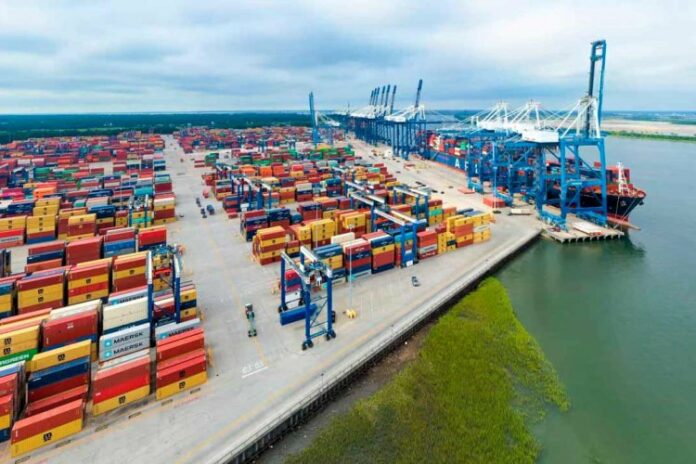
In the past few months, work has either wrapped or commenced on several of SC Ports’ long-planned infrastructure projects. Smart infrastructure investments bring greater efficiency and capacity to port operations for a more fluid supply chain.

SC Ports’ multiyear effort to modernize Wando Welch Terminal culminated in August with taller cranes, a stronger wharf and an enhanced container yard — all designed to handle the biggest container ships calling on the East Coast.

Also in August, SC Ports launched its new SMART Pool, which will add 13,000 chassis into the Southeast port market through next spring. SC Ports’ new fleet will improve the availability, reliability and quality of chassis for motor carriers, ocean carriers and cargo owners.

SC Ports broke ground on the Navy Base Intermodal Facility in October, thanks to a $400 million investment from the state. This critical infrastructure project will bring near-dock rail to the Port of Charleston and speed goods to market when it opens in 2025.

The expansion of Inland Port Greer hit a big milestone in November with the completed rail expansion. The next phase of construction will double cargo capacity of the container yard, helping to move more goods for manufacturers, automakers, retailers and solar companies.

And earlier this month, SC Ports and the U.S. Army Corps of Engineers, Charleston District celebrated the successful completion of the Charleston Harbor Deepening Project. This 12-year, $580 million project created the deepest harbor on the East Coast.

Charleston Harbor is now 52 feet deep, giving South Carolina a significant competitive advantage. SC Ports seamlessly handles fully loaded mega container ships any time, any tide.

SC Ports President and CEO Barbara Melvin said:

“SC Ports has been able to invest in capacity ahead of demand, which is critical to remaining competitive as a top 10 U.S. container port. These strategic investments are possible because of the strong support we receive from our elected leaders and Board of Directors. We are setting South Carolina up for continued success.”

Valenciaport awards the photovoltaic plant at the Príncipe Felipe dock

0

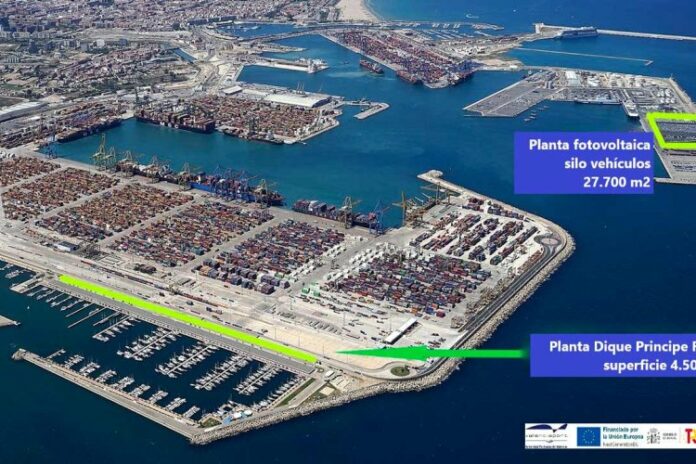
The Port Authority of Valencia (PAV) has awarded the PAVASAL-PAVENER joint venture the contract for the installation and maintenance of the solar energy plant to be located on the Príncipe Felipe dock in the Port of Valencia. 

The amount awarded for the construction and maintenance of this initiative was 3,032,469.33 euros, VAT included, and the infrastructure, once awarded, will have to be built within 10 months, while maintenance will be granted for 50 months.

This installation will generate 2,353 MWh/year, that is, 3% of the electrical energy consumed by the Port of Valencia. The solar panels will occupy a surface area of 6,420 square metres and will have a 30% slope for optimum use. This project is financed by the Next Generation funds of the European Union and the Spanish Government’s Recovery, Transformation and Resilience Plan.

This is the first of the photovoltaic plants being developed in the Valencian precinct and which will enable progress to be made in the self-supply of green energy to the Port of Valencia. In fact, the PAV has also put out to tender another solar park on the roof of the Valencia Terminal Europa vehicle warehouse, which is currently in the process of evaluating the bids and which will involve an investment of 17 million euros. Between the two, 14% of the electrical energy required by the site will be produced.

The PAV is studying the site for the location of a third plant in the Port of Valencia. In this sense, the use of green energies is a priority in the infrastructures that Valenciaport is executing and which are embodied in projects such as the new passenger terminal or the north container terminal. These initiatives will contribute to the strategic objective designed by the PAV to be an emission neutral port by 2030, twenty years ahead of the objectives set by the European Green Pact.

It should also be remembered that the company Electromur S.A. has also been awarded the contract for the installation and maintenance of the solar energy plant to be in shed 4 of the Port of Gandia.

Project launched to create Hydrogen Highway from Scotland to Rotterdam

0

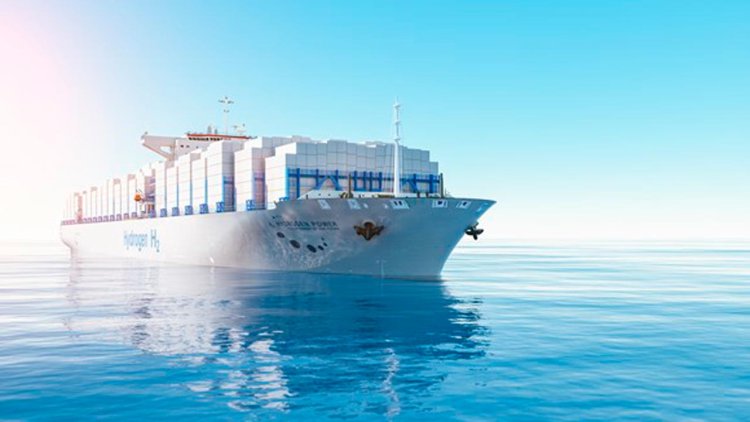
The LHyTS project seeks to demonstrate that LOHC, in the form of methylcyclohexane (MCH), can be successfully transported at scale, providing an export route to the Port of Rotterdam and other European destinations.

The project will be delivered by a diverse, international consortium, including Axens, Chiyoda, EnQuest, ERM, Koole Terminals, Port of Rotterdam, Scottish Government, Shetland Islands Council, Storegga and the Net Zero Technology Centre. The partners will work together undertaking engineering studies targeted at developing a pilot project as a precursor to large scale export. 

Hydrogen will facilitate various decarbonisation applications. The project aligns with Scottish Government’s Hydrogen Policy Statement, which aims to deliver 5GW of renewable and low-carbon hydrogen production by 2030 and 25GW by 2045. The global ambition has also been established, with The European Commission targeting 10 million tons of hydrogen to be imported by 2030.  

The Port of Rotterdam, as an established energy hub, already imports 13% of Europe’s energy and has ambitions to become the Hydrogen Hub of Europe. To achieve this, the port will draw on its extensive import, export and storage infrastructure, established energy industry supply chain and pipeline connections to other industrial clusters in Northwest Europe.

Hayleigh Barnett, Project Manager at the Net Zero Technology Centre, said:

“The main challenge in exporting hydrogen is choosing the best means of transportation. Early stage studies in this project have concluded that LOHC has several advantages over other carrier forms, such as ammonia, methanol or liquid hydrogen. Conducting an industrial scale trial is an exciting step in making LOHC export a reality.”
René van de Plas, Director International of the Port of Rotterdam Authority:

“Scotland is extremely fit for the production of green hydrogen, because of its abundance of wind and the demand at the continent nearby. On top of that, the area is one of the heartlands of the oil and energy sector. That ecosystem of knowledge, infrastructure and companies will help to kickstart the hydrogen economy.”

Paul Massie, Director of Corporate Development and New Energy at EnQuest said:

‘EnQuest is committed to building a New Energy hub at Sullom Voe in Shetland which will produce a million tonnes of green hydrogen a year. With hydrogen a key part of our future plans, we are pleased to participate in this important study.’ 

Osamu Ikeda, Managing Director, Chiyoda Corporation Netherlands B.V. said:

‘MCH-LOHC technology for its compatibility with existing oil industry’s asset as well as high technology readiness, has great capability to make hydrogen introduce quickly, safely, to Rotterdam from Scotland, that enable energy transition and decarbonization to be promoted. We hope that this project will become literally LHyTShouse toward the sustainable future.’

Sarah Potts, Head of Hydrogen at Storegga said:

“The north-east of Scotland is playing an important role in developing the huge potential of hydrogen in the UK and Storegga is right at the heart of those efforts with our Acorn Hydrogen project at St. Fergus and our Cromarty Green Hydrogen Project north of Inverness. We are so pleased to be collaborating on this study with so many other organisations who are also striving to develop a thriving hydrogen industry.”

Andrew Sneddon, Consulting Director at ERM said:

“With the predicted demand for hydrogen in Europe, this project represents a significant step forward in enabling the safe and efficient export of hydrogen to a growing market. ERM welcomes this opportunity and is very pleased to be part of this initiative that will be at the centre of developing a major contribution to achieving zero emissions energy.”

Patrick Sarrazin, Executive Vice President New Development & Transformation  at Axens said:

“Axens toluene hydrogenation technology, proven since decades in oil&gas industry, allows producing MCH that will be used as LOHC. We are thrilled to join this major energy transition project for Northern Europe.”

UK Government Minister for Scotland John Lamont said:

“The launch of the new Hydrogen Highway project will strengthen links with the wider European energy sector and bring new jobs and investment to Scotland. Along with Scottish Government, the UK Government is investing £180million in the Net Zero Technology Centre to support the projects that can deliver our energy transition.”

Marco Polo Marine signs MoU for new commissioning service operations vessel

0

Marco Polo Marine Ltd., a reputable regional integrated marine logistics company, has announced the signing of a landmark Memorandum of Understanding (MoU) between its Taiwan-based subsidiary, PKR Offshore Co., Ltd, and Vestas Taiwan Co., Ltd, for the maiden deployment of its new Commissioning Service Operations Vessel (CSOV).

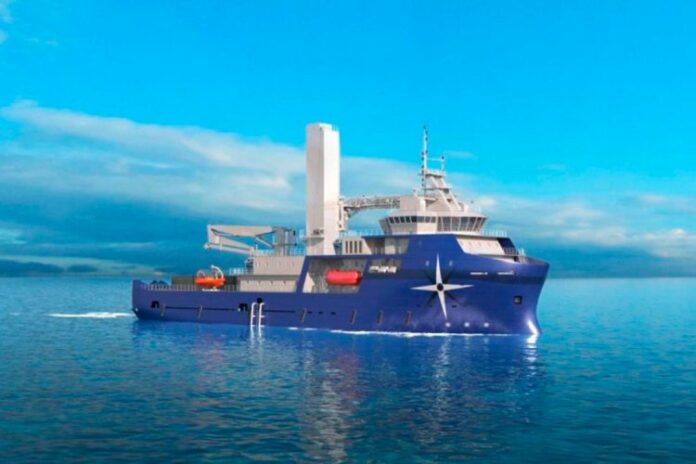
The new CSOV, which can accommodate up to 110 persons, will be deployed across various offshore wind farms in Taiwan, Japan and South Korea, over a 3-year period, based on a minimum utilisation commitment per annum. The vessel is currently under construction at Marco Polo Shipyard at Batam, Indonesia, and will commence operations towards the end of Q1 2024.

In September last year, Marco Polo Marine unveiled its plans to build, own and operate a Commissioning Service Operations Vessel (CSOV) to meet the rising demand for support vessels from the offshore wind farm industry in Asia. The 83-metre long vessel will be the first CSOV to be designed in Asia and will be equipped with a walk-to-work gangway and a 3D motion-compensated crane. It will also feature a hybrid-based energy storage systems that will reduce carbon emissions by up to 20%.

Sean Lee, CEO of Marco Polo Marine, said:

“Over the past few years, we have worked closely with major offshore wind providers to design a contemporary CSOV that services their most crucial needs. Today, we are very pleased to have secured the maiden deployment for our new CSOV with Vestas, a major offshore turbine manufacturer. This milestone is a testament to our ability to build, own and operate highlyspecialised wind vessels that deliver the highest performance, quality and reliability for our customers.”

Dennis Mordhorst, Regional Director at Vestas Taiwan Ltd., said:

“With continued growth expected in Taiwan’s offshore wind market, we are delighted to establish this relationship with Marco Polo Marine and collaborate on this vessel newbuild development. We see Marco Polo Marine being well positioned in the Asia-Pacific region and look forward to strengthening our mutually beneficial working relationship in the coming years.”

According to the Global Wind Energy Council (GWEC), new offshore wind installations in Asia are likely to exceed 10 GW in 2026 and nearly 15 GW by 2030. By 2050, Asia is projected to achieve a grand total of 613 GW offshore. Against this backdrop of tremendous growth, the industry will continue to grapple with a shortage of suitable specialised wind vessels. Coupled with the global pivot towards cleaner energy, Marco Polo Marine foresees tremendous room for growth for its marine vessels over the long-run.

Krafla to be developed using ground-breaking concept

0

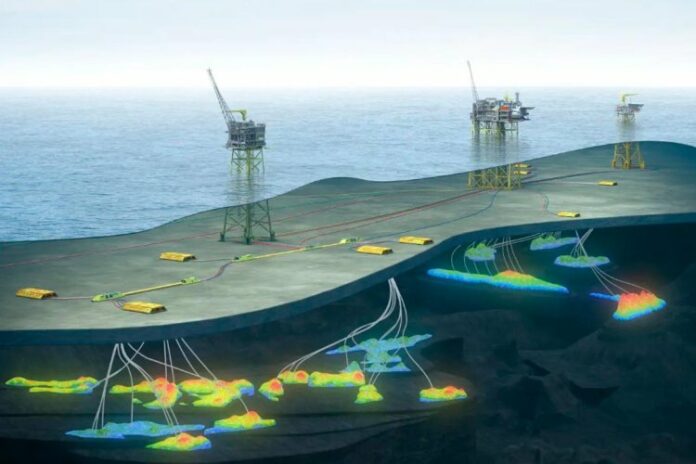
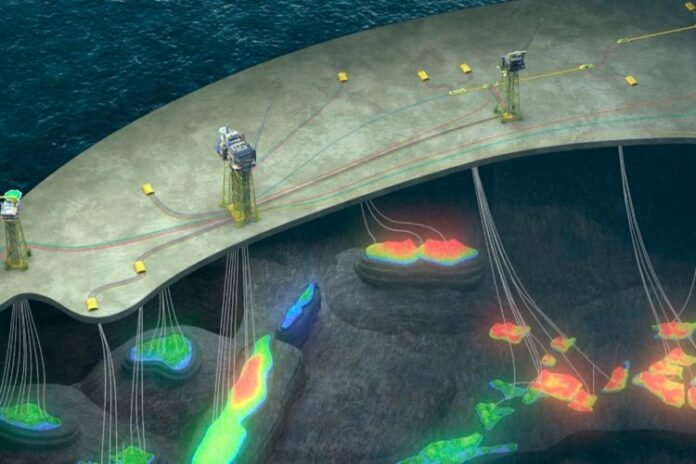
Aker BP will be developing Krafla along with the Fulla and North of Alvheim discoveries in the same area.

Krafla was proven in 2011 and recoverable resources are estimated at 325 million barrels of oil equivalent. Total investments for Krafla are approx. NOK 46 billion (2022-NOK).

Trond Bokn, Equinor’s senior vice president for project development, says:

“Krafla is yet another example of how we are redefining what can be achieved on the Norwegian continental shelf. Krafla will be developed utilising extensive technological innovation and high levels of digitalisation, automation and remote operation, thus setting a new standard for future offshore developments. With an entirely new operating model, the technologically innovative design will improve safety, cut operating costs and result in close to zero CO2 emissions from production.”

The unmanned Krafla platform is the first of its kind. It will be remotely operated from shore and will be built without a helicopter deck, living quarters and lifeboats. Access and stays at the platform will be accomplished using service operation vessels. Systems and functions have been reduced to the bare necessities in order to realise the unmanned concept. The solutions are simple, robust and can be run without manual operations.

Future-oriented solutions have been chosen to facilitate a large extent of data-driven decisions based on continuous monitoring of processes and equipment. For example, maintenance planning will be optimised using digital twins. The plan is to carry out maintenance in annual campaigns.

With power from shore, Krafla will be a world leader in low CO2 emissions from production, calculated at 0.4 kg per barrel of oil equivalent.

Together, Krafla, Fulla and North of Alvheim (NOA) make up the area called NOAKA.

In June, Equinor and Aker BP entered into an agreement to transfer operatorship for the development phase and further operation of Krafla to Aker BP in connection with the PDO submission. At the same time, the partnerships are proposing a name change for NOA and Krafla to Hugin and Munin, respectively, and that the entire NOAKA area be called Yggdrasil.

Bokn says:

“A coordinated development of the entire area will provide the best preconditions for efficient project implementation and for safe and efficient field operations. We’re looking forward to continuing the good cooperation with Aker BP in the development and operations phase.” 

Total investments for NOAKA are calculated at NOK 115 billion (2022-NOK). Overall resource estimate in the area, forming the basis for the investment decision, is 103 million standard cubic metres of oil equivalent, which corresponds to around 650 million barrels of oil equivalent.

There is considerable potential for more exploration activity in the area, which could further increase both the scope of resources and profitability. Discoveries near existing infrastructure can quickly be brought to market with low costs and low emissions from production.

Shell and Eneco win right to build large Dutch offshore wind farm

0

Shell and Eneco have won the tender to build an offshore wind farm at Hollandse Kust (west) lot VI. The project will have an installed capacity of approximately 760 MW and will be located approximately 53 kilometres off the Dutch coast from the town of IJmuiden.

The new wind farm will be delivered through a joint venture called Ecowende and is due to be operational in 2026. Shell and Eneco have already taken final investment decision for the wind farm.

Wael Sawan, Director of Integrated Gas, Renewables and Energy Solutions at Shell, said:

“With Ecowende, we will take a huge step in growing our offshore wind portfolio while making a positive contribution to biodiversity. Through this project we can profitably accelerate the large-scale roll-out of offshore wind in the Netherlands and beyond. This fits well with Shell’s Powering Progress strategy to deliver more and cleaner energy to our customers, at home, on the road and at work.”

Kees-Jan Rameau, Chief Strategic Growth Officer at Eneco, said:

“Together with Shell, we were at the forefront of the development of offshore wind in the Netherlands. We gained a lot of knowledge, also in the area of ecology, and reported on this. This has contributed to the further development of offshore wind in recent years. It is great that we are now moving into a new phase with Ecowende, with nature as the starting point. This is entirely in line with our ambition to live and act within the natural limits of the planet.”

Ecowende aims to set a new ecological benchmark for the development and construction of wind farms in the North Sea and to enable offshore wind farms to have a net positive impact on nature in the future.

The design of the wind farm takes account of the natural environment through measures such as: placing wind turbines a greater distance apart to create a corridor for birds to fly through; using innovative foundation techniques that keep the impact on marine mammals and marine life to a minimum; and placing natural reef structures on the seabed to boost biodiversity. More details on the investments, innovations and research programmes will be announced at a later stage.

Subsea7 confirms contracts offshore Norway

0

A major contract for Yggdrasil field development project (formerly NOAKA), a large contract for Skarv Satellite Project and a substantial contract for Valhall PWP-Fenris project, all located offshore Norway. 

The awards were pre-announced on 8 December 2022 and will be recorded in the backlog of Subsea and Conventional upon signature by all parties, expected to occur later today.

The contract scopes are awarded within the Aker BP subsea alliance framework as part of which Subsea7 will provide flowlines, flexible lines and perform the complete installation scope and Aker Solutions will provide subsea production systems and umbilicals.

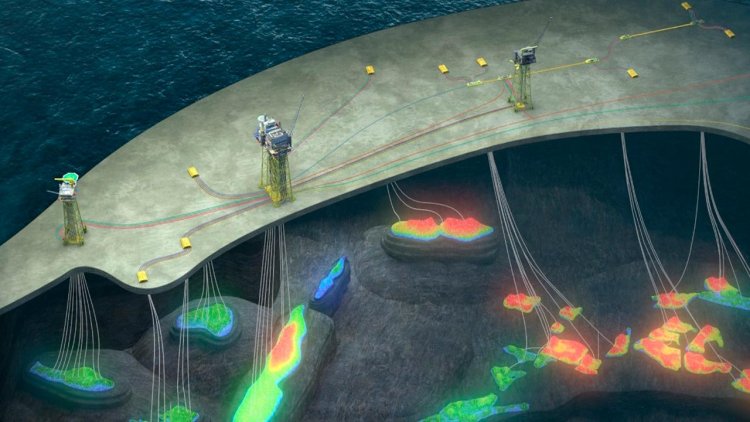
The Yggdrasil field development project, located between Alvheim and Oseberg area in the North Sea, involves multiple subsea tiebacks to the fixed platforms in the Yggdrasil greenfield development. The tiebacks will utilise several Subsea7 technologies including pipeline bundles, pipe-in-pipe solutions and Swagelining polymer lined flowlines. Project management and engineering will commence immediately at Subsea7’s offices in Stavanger, Norway and Aberdeen, Scotland. Fabrication of the pipelines will take place at Subsea7’s spoolbase at Vigra, Norway while bundles will be fabricated at Wester, Scotland. Offshore operations are expected to take place between 2024 and 2027.

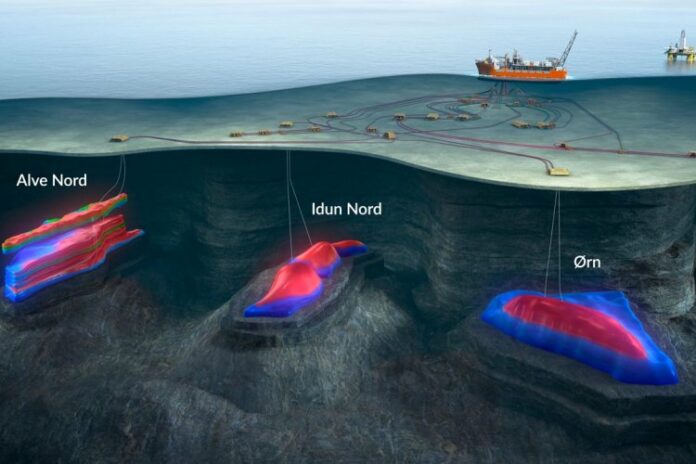
The Skarv Satellite project, located in the northern part of the Norwegian Sea, consists of Alve Nord, Idun Nord and Ørn tied back to the existing Skarv FPSO. Project management and engineering will commence immediately at Subsea7’s offices in Stavanger, Norway. Fabrication of the pipe-in-pipe pipelines will take place at Subsea7’s spoolbase at Vigra, Norway and offshore operations are expected to take place between 2023 and 2025.

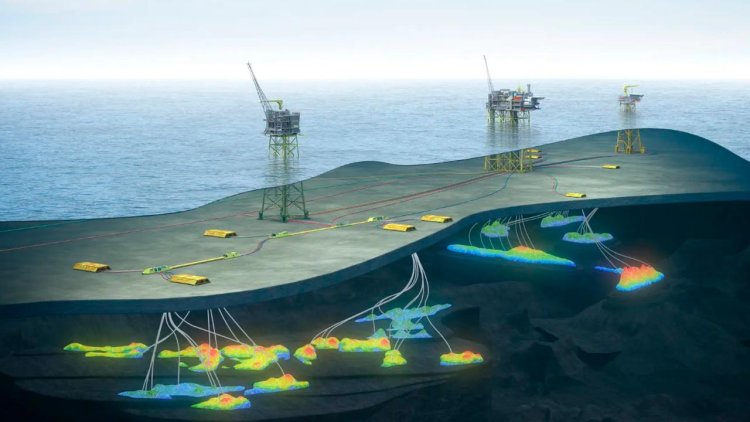
The Valhall PWP-Fenris project, located in the southern North Sea, involves a tieback from the Fenris unmanned installation to the Valhall production wellhead platform and re-routing of existing gas export and gas lift pipelines to a new platform. Project management and engineering will commence immediately at Subsea7’s offices in Stavanger, Norway and Aberdeen, Scotland. Fabrication of the pipelines will take place at Subsea7’s spoolbase at Vigra, Norway and the bundle fabrication will take place at Subsea7’s site at Wester, Scotland. Offshore operations are expected to take place in 2024, 2026 and 2027.

Monica Th. Bjørkmann, Senior Vice President for Subsea7 Norway said:

“We are delighted to have been awarded these three important projects by Aker BP. They are all testament to our collaboration with Aker BP and Aker Solutions, through the Aker BP Subsea Alliance, building upon our collective experience from previous and ongoing projects. The partnership enables Subsea7 to engage early in the field development process, optimising design solutions and contributing to a positive final investment decision. Subsea7 is looking forward to continuing our collaboration with a focus on safe, efficient and reliable operations.”