-7.5 C
New York
Home Blog Page 354

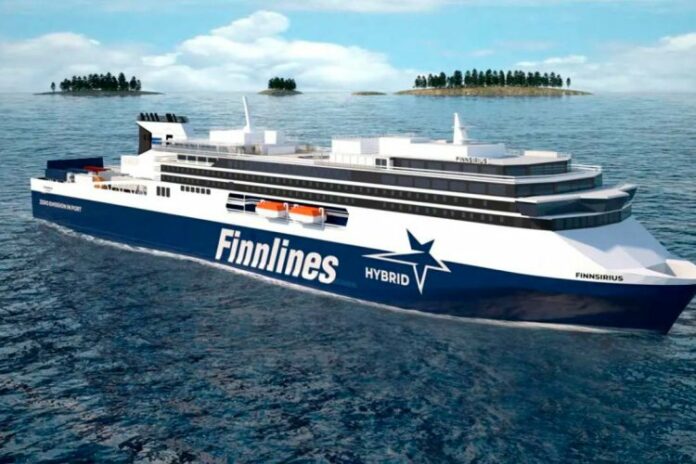
Finnlines’ new cargo-passengers vessels will sail under the Finnish flag

0

Reliable transport of freight over the Baltic is vital for the Finnish trade, industry and security of supplies. As an example, around 90 per cent of the Finnish and Swedish exports and imports are carried by ships.

Finnlines and the Finnish Seafarers’ Union have reached an agreement, which will ensure that Finnlines’ new Superstar class cargo-passenger vessels, i.e. ro-pax vessels, which will enter traffic in 2023, will operate under the Finnish flag.

The new vessels will offer 200 new permanent jobs and they will also employ a large number of extra crew during the high season.

“Reliable transport of freight and passengers over the Baltic is vital for the Finnish trade, industry and security of supplies. One example of this is that around 90 per cent of the Finnish and Swedish exports and imports are carried seaways. I am pleased with the outcome of the negotiations and that Finnlines’ new Superstar ro-pax vessels will operate under the Finnish flag and employ Finnish seafarers,” says Kenneth Bondas, President of the Finnish Seafarers’ Union. 

Finnlines employs nearly 1,000 seafarers, 700 of them are Finns. The fleet consists of 23 vessels, of which 18 sail under the Finnish flag.

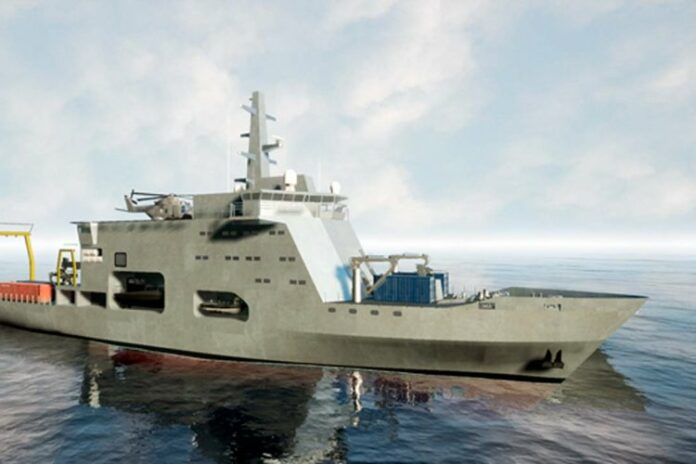
Fincantieri to build new Hydro-Oceanographic Ship

0

As part of an EU tender for the Defence and Security sector, Fincantieri has signed a contract with the Secretariat General of Defence and the National Armaments Directorate – Naval Armaments Directorate (NAVARM) for the construction of a new Hydro-Oceanographic Ship (NIOM) for the Italian Navy Hydrographic Institute, with delivery scheduled in 2026 at the integrated shipyard in Riva Trigoso-Muggiano.

The total value of the contract is approximately euro 280 million and it also includes integrated logistics support and temporary support services for a duration of six years with an option to extend for another four.

This marks the start of the renewal of the naval units of the Italian Navy’s hydrographic service. This programme is part of an innovative European project involving the Italian Ministry of Defence, and within the scope of which a funding agreement between the European Investment Bank (EIB) and the Italian Ministry of Economy and Finance (MEF) has been reached.

Pierroberto Folgiero, CEO of Fincantieri, commented:

“We are proud that Fincantieri’s technological leadership is once again establishing itself also in the scientific field, which requires specialised skills. In fact, the vessel must be able to operate with the highest performance in all marine weather conditions. This will require the integration of many complex systems, a distinctive capability of a Group like ours, which not only builds state-of-the-art platforms such as naval ships but can also rely on the synergy between the naval world and the offshore world in the development of advanced control systems like dynamic positioning”.

The unit was designed paying the utmost attention to green aspects. Among its main features are technologies to contain emissions, a diesel-electric propulsion system to optimise fuel consumption, hull shapes to reduce drag and the use of environment-friendly materials. In the area of sustainability, the production process also participates in the company’s ongoing commitment to environmental management systems, as witnessed by the integrated Riva Trigoso-Muggiano site’s compliance with the ISO 14001 international standard, as well as all the Group’s other Italian sites.

A further key driver of the ship will be the focus on health&safety, aimed at ensuring the well-being of all personnel who will operate the ship during its operational life. Working with first-class suppliers, Fincantieri took a proactive approach to identify the best technical solutions to fully meet the customer’s operational requirements.

In 2018 Fincantieri supplied the Kronprins Haakon, an oceanographic icebreaker intended to operate in polar waters, to the Institute of Marine Research (IMR), the Norwegian government’s oceanographic and fisheries research organisation. Furthermore, in 2021 the Group oversaw an exceptional refit of the Laura Bassi, Italy’s only oceanographic research icebreaker, owned by the National Institute of Oceanography and Experimental Geophysics.

The Hydrographic Institute of the Italian Navy is the Cartographic Body of the State appointed to produce official national nautical documentation.

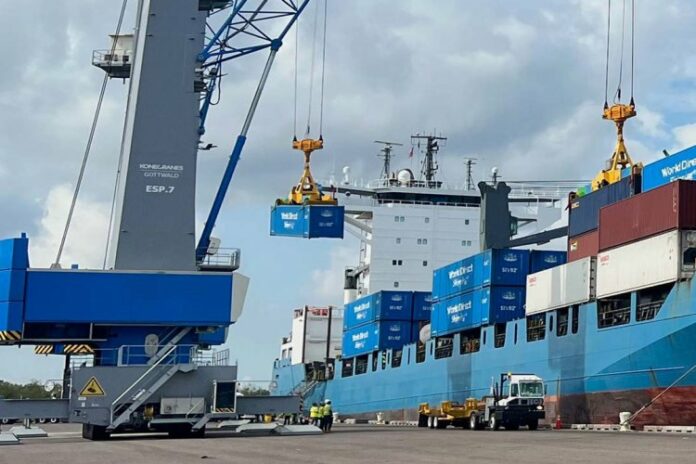
Port in Bahamas orders Konecranes mobile harbor crane

0

Nassau Container Port (NCP) has ordered an eco-efficient Generation 6 Konecranes Gottwald Mobile Harbor Crane for container handling at their terminal at Arawak Cay, Nassau, Bahamas. The order was booked in November 2022 and the crane will be delivered in July 2023.

With a joint government and private shareholding, Arawak Port Development (APD)/Nassau Container Port (NCP) has a mission to facilitate port growth and business expansion in the region. Its NCP operations play a significant role in this task as the largest container handling operation in Nassau, Bahamas. Throughput has recovered to pre-pandemic levels and NCP expects this upward trend to continue. So, they decided to invest in a new crane with the advanced technology necessary to simultaneously increase capacity and take them further along the path to electrification.

“Terminal development is a continuous process, and we’re interested in the best available lifting equipment that suits our needs both now and in the future. Konecranes was able to offer us an easily adaptable, high-performance hybrid solution that will help us build even more capacity as we ready our port for shore power and greater energy efficiency. We also appreciate Konecranes’ digital services, which provide deep insight into the crane’s performance and condition,” says Dion Bethel, President/CFO of APD.

For deeper insight into how their crane is operating, NCP chose TRUCONNECT® remote monitoring with the customer web portal yourKONECRANES.  The crane sends its data via a secure mobile connection to the Konecranes cloud service, accessible through yourKONECRANES. Here customers get a full overview of their crane, with information such as the exact location of the crane on the quay, its fuel consumption and handling performance, even if it is offline. NCP can receive a detailed analysis of every load cycle and diagnostic message.

“Generation 6 Konecranes Gottwald Mobile Harbor Cranes are building a strong reputation around the world for the many benefits they bring to port facilities. We’re excited that NCP has chosen us for their new container handling crane as they develop their terminal. This order confirms their confidence in the technology of the Generation 6 crane with its high productivity, reliability and eco-efficiency,” says Alan Garcia, Sales Manager, Port Solutions, Konecranes.

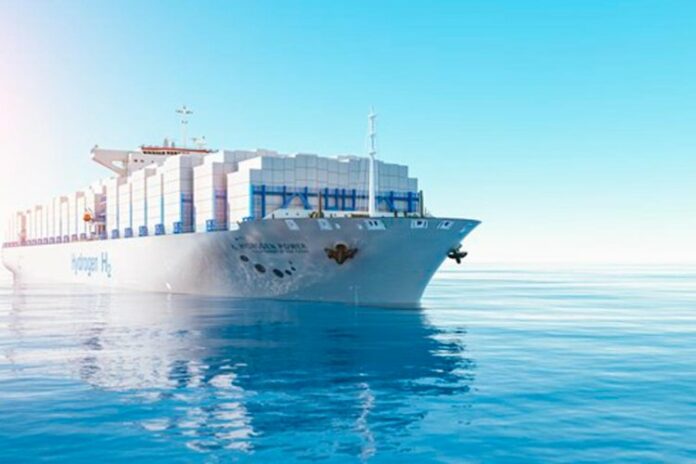
Chiyoda participates in a hydrogen marine transportation project

0

Chiyoda Corporation has announced that it is participating in a hydrogen marine transportation project (LHyTS project) to export hydrogen from Scotland to Rotterdam. 

The LHyTS project aims to demonstrate an industrial-scale international hydrogen supply chain, utilizing MCH as the liquid organic hydrogen carrier (LOHC), selected following comparative examination of alternative hydrogen carriers in a previous phase.

The LHyTS project is run by a diverse international consortium of 10 companies and governments, including the Net Zero Technology Centre, ERM, Axens, EnQuest, Koole Terminals, Port Authority of Rotterdam, the Scottish Government, Shetland Islands Council, Storegga and Chiyoda. The partners will conduct feasibility studies for construction of a pilot project as a forerunner to developing the hydrogen chain from Scotland to Rotterdam.

The Scottish government’s hydrogen strategy includes the production of 5 GW (approximately 0.45 million tons/year) of low-carbon hydrogen by 2030 and 25 GW (approximately 2.25 million tons/year) by 2045, and the investigation of options to export hydrogen to the rest of UK and Europe. 

The European Commission has set a goal of importing 10 million tons of hydrogen across Europe by 2030. As a core energy port in Europe, the Port of Rotterdam has created a goal of becoming Europe’s premier hydrogen hub, with extensive import, export and storage infrastructure, an established energy industry supply chain and pipeline connections to industrial clusters in Northwest Europe.

DNV to lead research project to strengthen marine and offshore wind coexistence planning

0

DNV and partners will research and develop a toolbox to strengthen coexistence between ocean stakeholders, after the project received a grant of NOK 8.8M from The Research Council of Norway. 

The three-year project, called MARine CO-existence scenario building (MARCO), aims to develop a scalable system model toolbox for determining and forecasting marine coexistence between different users of the ocean and marine ecosystems. The innovation project, led by DNV, will focus on establishing a common knowledge base among ocean stakeholders, enabling them to identify synergies, resolve conflicts, and negotiate win-win solutions while safeguarding ocean health. The Utsira Nord offshore wind licensing area in Norway will act as one of the case studies in the development of the toolbox. 

The partners include offshore wind developer Mainstream Renewable Power, SalMar Aker Ocean, the Norwegian Institute of Marine Research, and the Norwegian Fishermen’s Association.

Demand for ocean space for aquaculture and energy production is forecast to increase significantly by 2050, driven largely by offshore wind, according to DNV’s Ocean’s Future report released last year. 

In this race for space, it is essential that expansion takes place in a safe, equitable, and sustainable manner. 

Future marine spatial planning processes will increasingly need to emphasize coexistence with nature and other human activities. The MARCO toolbox is meant to help offshore field developers and operators gain a competitive advantage by more quickly understanding how future competition for space will influence their overall risk and opportunity picture in relation to other ocean users as well as the marine ecosystem. 

The toolbox will be developed in a way that allows for scaling and adaptation to different regions and international settings. Offshore wind and aquaculture stakeholders will play an active role in the project to research and develop the toolbox through workshops and meetings to ensure it meets the industry’s needs and expectations. 

“From the perspective of an offshore wind developer, this toolbox will add tangible value to our project planning and it also shows us how digitalization and digital innovation are critical as we work to ensure a sustainable ocean economy. With the upcoming licensing round in Norway next year, the use of the Utsira Nord licensing area as a case study is extremely timely and what we develop together in the project will contribute to knowledge and technology development in the Norwegian marine and offshore wind sector in the short and long term,” said Ingrid Lomelde, Head of Sustainability at Mainstream. 

The MARCO toolbox will support strategic planning and stakeholder dialogues in connection with offshore field developments, marine spatial planning, and ecosystem management. It will seek to capture the impact ocean industries have on each other and the environment, as well as the cumulative effects from all industries combined. 

The toolbox will combine spatial and temporal analysis to allow ocean stakeholders to interactively explore different scenarios for coexistence. It will draw upon state-of-the-art marine science and ecosystems modelling. 

‘Spatial analysis using Geographic Information System (GIS) technology for mapping out plausible development trajectories will link and explore implications for marine ecosystems. Temporal analysis using system dynamics (SD) modelling will link economic development with the impacts on nature. 

“The toolbox aims to provide transparency and trust in consenting processes and stakeholder dialogues. It will move beyond existing solutions for ocean management by targeting opportunities for coexistence and taking account of the impact of future uncertainty on nature and the Blue Economy,” said Bente Pretlove, Ocean Space programme director at DNV.

MOL and GAIL sign time charter contract for newbuilding LNG carrier

0

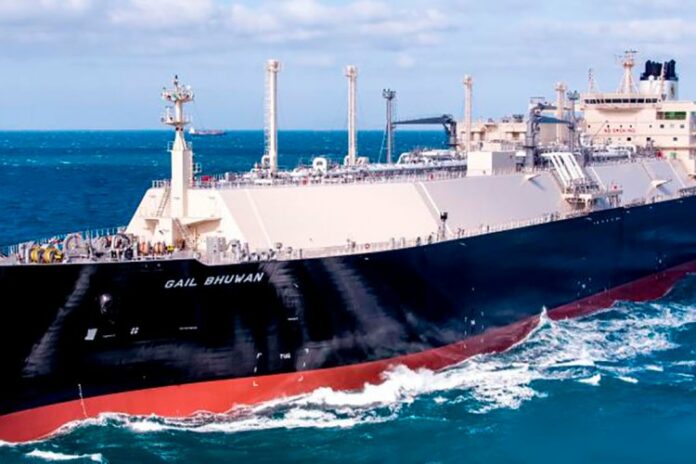
On December 20th, Mitsui O.S.K. Lines, Ltd.(MOL) and GAIL (India) Limited, a central public sector undertaking under the Ministry of Petroleum and Natural Gas, Government of Indian and India’s largest gas utility and gas supply company, through a wholly owned MOL subsidiary signed a time charter contract for a newbuilding LNG carrier and a joint ownership of an existing LNG carrier.

The existing vessel still has been chartered to GAIL through a wholly owned MOL subsidiary from 2021 and even now, MOL’s shipping service is highly regarded by GAIL. At this time, MOL and GAIL reached an agreement to share the vessel by transferring a portion of a wholly owned MOL subsidiary’s shares to GAIL.

By strengthening MOL and GAIL’s partnership, there will be synergies that will make us to provide more reliable services, and this will lead us to extend our services even further against the demand that will grow in the future.

MOL sets regional strategies as one of the pillars in “Rolling Plan 2022,” its fiscal 2022 management plan, and takes a proactive stance in its business expansion in Asia, especially in India, as a region with strong potential for growth. It will strengthen its presence and business base in India, where energy demand is expected to increase. 

It continues to work proactively to provide high-quality LNG transport services that precisely meet customer needs by leveraging the know-how and network it has accumulated as one of the world’s largest LNG carrier ownership and management companies.

JFD wins £63M Third In-Service Support NATO submarine rescue system contract

0

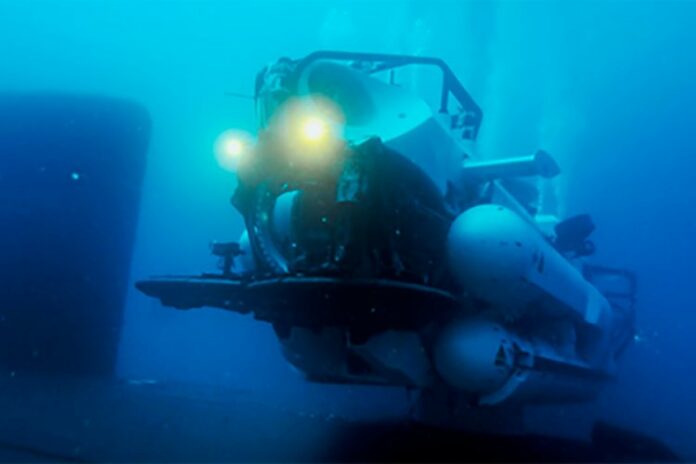
JFD has won the prestigious ‘Third In-Service Support’ (3ISS) contract, worth £63M, continuing seven years of safety critical operational assurance services to the NATO Submarine Rescue System (NSRS).

The 3ISS contract awarded to JFD by the NSRS Authority, on behalf of the Participant Nations, UK, France and Norway, demonstrates its confidence in JFD’s ability to provide a full and complete in-service support solution. The NSRS is a premier fly-away global submarine rescue capability which exists to give submariners the best chance of survival should a submarine incident occur. The five-year 3ISS contract will start in summer 2023 and has the potential to be extended to a total of nine years.

JFD has experience with real-life submarine rescue incidents, including locating and identifying the wreckage of KRI Nanggala, and deploying systems in support of the submarine Kursk and AS-28 Priz incidents. JFD builds upon the expertise and lessons learned from these incidents to continue to raise the standards for safety in the submarine rescue domain.

Richard Dellar, Managing Director, JFD said:

“We are extremely proud to have been awarded the NSRS 3ISS contract. It is a true testament to the breadth and depth of our talented personnel’s submarine rescue expertise and dedication. 

Safeguarding the lives of submariners around the world is our number one priority. The all-too-long list of submarine incidents globally poses as a stark reminder of the critical nature of the services JFD provides.”

JFD also has a comprehensive global submarine rescue infrastructure, supporting submarine rescue contracts with multiple navies as well as in-service contracts for the Australian, Singaporean and Indian submarine rescue systems.

In the event of a distressed submarine (DISSUB), any delay to the rescue operation can have catastrophic results. To locate the DISSUB and rescue the lives on board as quickly as possible, the NSRS must be maintained at a high state of operational readiness and specialist personnel must be fully trained in all aspects of a safe rescue.

JFD’s 3ISS solution builds upon the past seven years’ performance and the team’s extensive knowledge of global submarine rescue systems. Throughout the course of the 2ISS contract, JFD has undertaken 18 mobilisation exercises and its proven team has an established track record for delivery in their field.

This expert team, which is focused locally and supported globally, will play a key role in the delivery of 3ISS. Digitisation will also be incorporated into the 3ISS solution, with JFD at the forefront of digitalised asset management.

Castor Marine to outfit Acta Marine’s vessels with Starlink connectivity

0

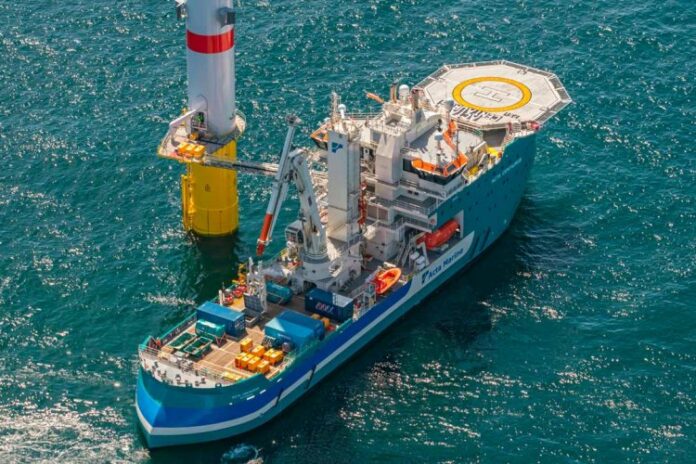
Acta Marine turns to Castor Marine to integrate Starlink with its Walk-to-Work vessel fleet comms infrastructure.

This includes the two Methanol MDO/HVO powered DP2 Construction Service Operating Vessels (CSOVs) that Acta Marine ordered earlier this year. Castor Marine already manages Acta Marine’s entire fleet connectivity. Starlink will be integrated with the existing onboard communications infrastructure.

The W2W vessels will each get four Starlink antennas and the full Fortinet suite for secure SD-WAN and SD-LAN network connectivity. This means that onboard operational and Crew Internet traffic is secure and fast, i.e., a download speed of more than 500 Mbps. 

Castor Marine already serves Acta Marine’s fleet of offshore and DP2 workboats with VSAT and Iridium Certus services and recently installed the new Internet security infrastructure as well. This is important, as good communications between all parties involved in an installation or maintenance project is the basis of successful and safe offshore operations. This goes especially for Acta Marine’s fleet and crew who’s combined capabilities mean that work can be performed around the clock in harsh offshore conditions.

Mark Olthuis, director at Castor Marine, adds:

“Acta management wants the Crew to feel at home on board. The fact that they now have much faster Internet connection, allowing the Crew to stream videos or facetime with their families and friends, was one of the considerations for installing Starlink.”

In addition, the moment a vessel has access to a higher bandwidth, a new range of operational capabilities becomes available. It’s possible to execute more remote operations simultaneously, deploy and monitor more subsea cameras, VR- and AR-enabled technologies come into view and controlling all remote assets becomes much easier. 

The ‘low latency’ of the LEO satellite network of Starlink shortens the delay in vessel-to-shore communications considerably. This means better accuracy and reduced chances on misunderstandings when executing complicated offshore projects, real-time two-way communications comparable to a fiber connection in an office in fact. The Starlink system also enables the use of real-time applications, which means operators can expand their service portfolio. 

The expanded connectivity suite that Castor Marine now offers creates a seamless user experience that was impossible a few months ago. 

In fact, Ivo Veldkamp, Castor Marine’s CEO, expects Starlink to “become the dominant connectivity technology onboard merchant ships, offshore vessels and yachts. Ships that currently rely on VSAT will add Starlink for high bandwidth and speed, while continuing to use VSAT as a back-up and failover service. Castor Marine is well-positioned to meet this demand.” 

TECO 2030 with consortium finalizes agreement for EUR 5 million in HyEkoTank project

0

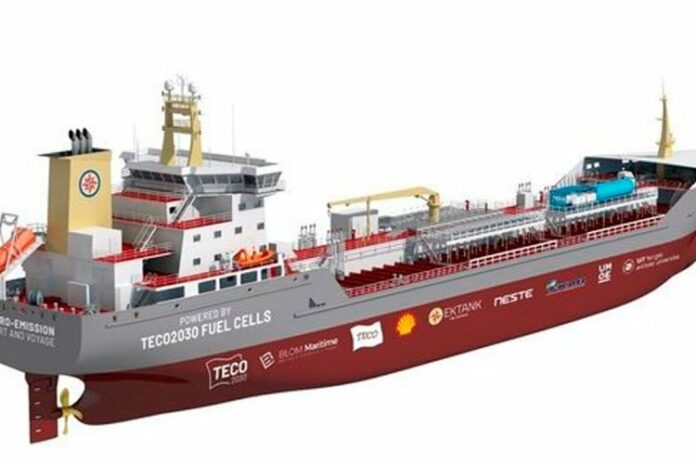
TECO 2030 has announced that the Grant Agreement has been signed by the European Union. The grant consists of EUR 5 million in grants under the funding scheme HORIZON EUROPE. The project is planned to start in February 2023.

The HyEkoTank project will retrofit an 18.600 DWT product tanker with a 2.4 MW fuel cell system by TECO 2030 and 4000 kg compressed hydrogen storage for demonstration in 2024.

“I am pleased with the tremendous efforts dedicated by all the consortium partners to this project; together we will show the world what fuel cells are capable of when retrofitting a product tanker for Ektank,” says Tore Enger, Group CEO, TECO 2030. “I am grateful to the EU who wants to assist us in realizing a retrofit fuel cell project for reducing and eliminating emissions along the European coastlines,” Enger adds.

“Shell is proud to be a part of this fuel cell project, which aims to demonstrate the viability of  hydrogen as a zero-carbon fuel for the maritime sector. Our target is to be a net-zero emissions energy business by 2050 and to accelerate this transition we are partnering with customers and businesses from across the sectors. Shell will purchase the fuel cell system and provide the renewable hydrogen to power this pioneering project as we continue to drive innovation to deliver the cleaner energy solutions that our customers need,” says Carl Henrickson, General Manager Technology, Innovation & Digitalisation, Shell Shipping and Maritime.

The HyEkoTank hydrogen powered tanker will demonstrate zero emission at berth and great reduction of GHG emissions during voyage. This pioneering project could become a first mover in this maritime shipping segment and contribute to achieving the ambitious climate targets set by the European Union. As part of the European Green Deal, the EU has committed to reducing GHG emissions by 55%  by 2030, and a binding target of achieving climate neutrality by 2050. Under the ‘Fit for 55 package’ the EU is currently developing its climate, energy and transport-related legislation to align current laws with the 2030 and 2050 ambitions.

Plastic pollution kills sea urchin larvae

0

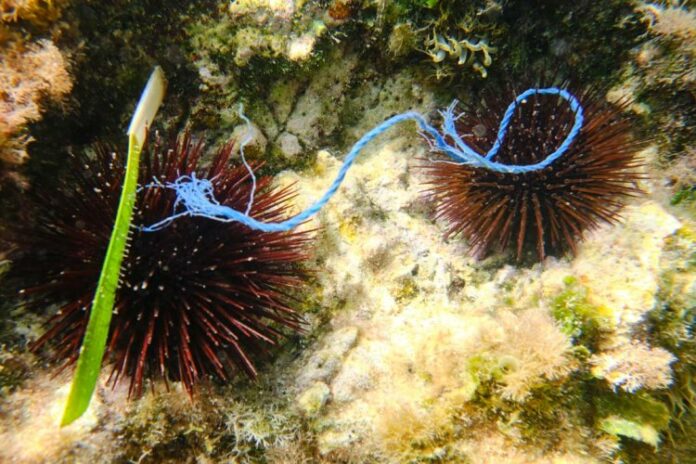
Scientists put fertilised urchin eggs in seawater with varying levels of plastic, and compared the effects of newly made PVC pellets (called nurdles) with fragments collected on beaches.   

In all three concentrations tested (1%, 5% and 10% of plastic in seawater), PVC led to significant abnormalities and all urchin larvae died.

Beach-collected fragments at 10% concentration also killed the larvae, which developed no proper shape.

Lower concentrations of beach-collected plastic did not kill the embryos, suggesting newly made plastic – which still contains high levels of additives that can leach out – are more harmful.

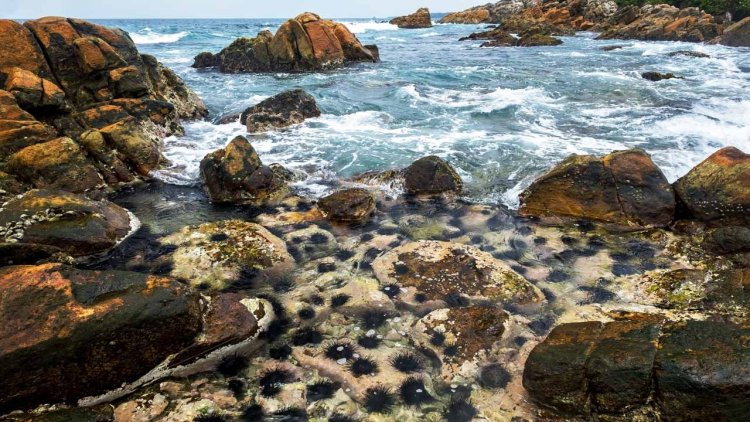
Although the concentrations tested in the study are rare in the oceans, they could occur after spills of plastic or in areas like the tide line where pollution accumulates.

The research team – from the Anton Dohrn Zoological Station and National Biodiversity Future Center (Italy), and the University of Exeter (UK) – previously found plastic additives can harm sea urchin larvae, and the new study develops this and reveals how this harm is caused.
Dr Eva Jimenez-Guri, from the Anton Dohrn Zoological Station and the University of Exeter, said:

“The larvae affected by plastic pollution showed developmental abnormalities including malformation of the skeleton, neural and immune cells.” 

“They also showed ‘radialisation’ – meaning they lacked proper symmetrical structure, and were instead largely formless and therefore unable to survive.

“In these larvae, mitochondria (the ‘powerhouses’ of cells) didn’t work properly, and they showed signs of oxidative stress, which damages cells.”

The study reveals the genetic processes behind these abnormalities.

In the case of new PVC nurdles, the damage was caused by high concentrations of zinc that leached into the water.

Larvae exposed 10% PVC pollution developed their gut outside their body, while the 5% and 1% levels also lead to fatal abnormalities.

The beach-collected samples – gathered in Cornwall, UK – did not release high levels of zinc, as most of the additives they contained would already have been released in the sea.

However, such particles are known to collect a variety of organic pollutants, and the release of these pollutants explains the abnormalities seen in this study.
Dr Jimenez-Guri said:

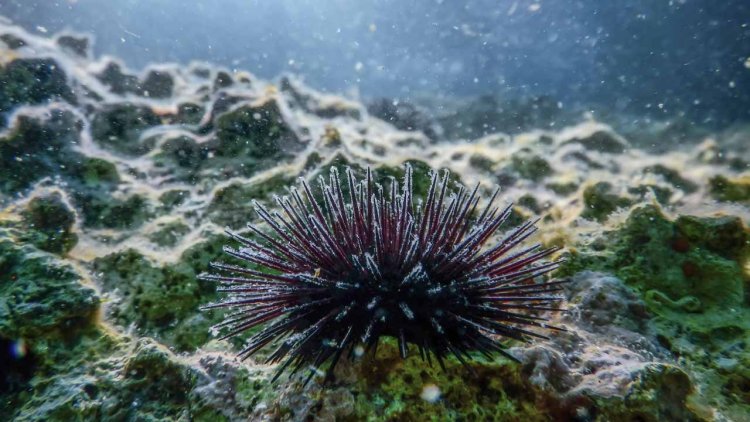
“Our findings point to clear and specific detrimental effects of marine plastic pollution on the development of sea urchin larvae.”

“We have identified the genes that are affected by these pollutants, and we know many animal species rely on the same genes for key early stages of development.

“So it’s possible that plastic pollution could cause similar abnormalities in other species, and we are already investigating this in the next stage of our research.

“While the levels of pollution assessed in the study are not common in the ocean, marine plastic pollution continues to increase at a rapid rate – with potentially serious consequences for marine life.”

Dr Jimenez-Guri’s work was funded by a Marie Skłodowska-Curie fellowship.

The paper, published in the journal Science of the Total Environment, is entitled:

“Plastic leachate-induced toxicity during sea urchin embryonic development: Insights into the molecular pathways affected by PVC.”