-7.5 C
New York
Home Blog Page 353

We4Sea releases new platform to share performance data between the parties

0

Dutch ship performance monitoring company We4Sea has released a new update, aimed to significantly improve cooperation between charterers and owners.

Dan Veen, CEO and founder of We4Sea:

”We believe the only way to meet the new CII regulations is by cooperation between charterers and owners, as they both can impact the results. In the proposed new BIMCO clause, focussing on long-term charters, cooperation is key.

First, there is a “good faith” duty to cooperate. Secondly, to share findings and data which may assist in monitoring and assessing the vessel’s compliance with CII regulations.  And last, in planning future voyages, and sharing best practices which may enable the vessel to improve its energy efficiency.”

We4Sea has now released a new module, enabling the real-time sharing of performance data between the parties in the charter party.

Dan Veen:

“While we consider the CII far from perfect, we consider it a step in the right direction. In our opinion, ideally, CII will lead to more cooperation and transparency between parties.

In our view, open data transfer between owners and charterers and jointly operating the vessel in an optimum manner is the key to reducing carbon intensity and achieving a good CII rating.”

We4Sea now supports this dialogue by supplying a Single Source of Truth (SSOT) platform. SSOT is a known concept used to ensure that everyone bases business decisions on the same data.

Accessible to both owners and charterers, accurate and reliable data around operations, vessel positions, speed, reported consumption, weather, and CII can now be shared in (near) real-time. This will save lengthy discussions in analysing vessel performance.

Also, the costs of monitoring the vessels may be shared between the parties, saving costs for both owners and charterers.


Ocean Conservancy offers tips for an ocean friendly holiday

0

The 2022 holiday season has meant a return to gifts and gatherings. But holiday cheer can also lead to holiday waste, and that waste can wreak havoc on our ocean.

“Between buying gifts, planning parties and decorating your home, it can be hard to remember to reduce and reuse during the holiday season,” said Sarah Weller, manager of the International Coastal Cleanup® (ICC) at Ocean Conservancy.  “But the festivities can take a toll on our planet. Every year, ICC volunteers find holiday-related trash on beaches and waterways, often months after the holidays have ended.”

That’s why Ocean Conservancy is offering tips and resources on how to make these four key elements of your holiday season fun and festive for the ocean.

Decorations

While holiday decorations might only come out in our homes for a few weeks, they’re a year-round problem for the ocean. In 2021 alone, ICC volunteers around the world found trashed ribbons, string lights, and even multiple Christmas trees on beaches and waterways.

For a more ocean friendly option, deck the halls with decorations that can be used for years on end. Avoid any decorations that use glitter: in addition to getting everywhere, glitter pieces are aform of microplastics, which have been found in everything from the deepest part of our ocean, to the air we breathe, to inside human bodies. You can make decorating a family affair by following Ocean Conservancy’s guide to upcylced DIY décor for a trash free holiday.

Wardrobe

Between party looks and ugly holiday sweaters, many pieces of clothing purchased during this season are worn only a few times before being discarded. Since the first ICC in 1986, more than three million articles of clothing have been collected from beaches and waterways; and that doesn’t even account for the microplastics and microfibers that come with synthetic fabrics.

This holiday season, skip the fast fashion: buy second hand, do a clothing swap with friends, or work with what you already have. If you’re crafty, show off your skills by making your own upcycled ugly holiday sweater using Ocean Conservancy’s guide.

Gifts

It wouldn’t be the holidays without gifts. But along with toys and treats come plastic packaging and waste. More than half of all the plastic ever produced has been made within the last 20 years; and much of this growth has come from  single-use packaging. Toys themselves also frequently wind up in our ocean: in nearly 40 years of cleanups, ICC volunteers have collected over 2.9 million toys.

Give the ocean a gift this year by avoiding gifts with plastic packaging, gifting experiences rather than items to your loved ones, and getting creative with your wrapping paper: opt to reuse bags, wrap with reusable fabric, or even colorful newspaper pages.

Parties

As you’re gathering with your loved ones, keep a lookout for ways to cut down on party plastic. Single-use plastic foodware items are the most common items polluting our beaches: in 2021, ICC volunteers collected 1.34 million food wrappers, over 260,000 plastic straws, nearly 246,000 plastic plates, and 163,000 plastic utensils. So at your holiday party or family dinner this year, make sure to provide reusable cutlery, plates and cups to your guests, and skip the straws.

DNV awards first blockchain statement of fact to Samsung

0

In the first of its kind for a shipyard, DNV has awarded a Statement of Fact (SoF) to Samsung Heavy Industries (SHI) for applying blockchain technology to its own SAS (Samsung Autonomous Ship) and SVESSEL ® eLogbook data streams on an operating vessel.

As the shipping and offshore industry becomes more digitized, yards, shipping companies, manufacturers and class societies worldwide are actively developing and verifying smart and autonomous ships amid rising need to strengthening cybersecurity. This is increasingly important for real-time data transmissions from ship to shore, remote monitoring, and equipment maintenance.

The blockchain application for the SHI data stream pertains to Samsung Autonomous Ship’s navigation information, particularly the Collision Risk Index and Distance to the Closest Point of Approach. Also, the SVESSEL eLogbook satisfying IMO MEPC.312(74) were released via blockchain technology.

SHI’s Director of Ship and Offshore Research Institute, Vice President Dr. Dong Yeon Lee, said:

“The maritime industry is paying attention to cybersecurity as another key to the digital revolution of ships. Blockchain technology is ground-breaking in data security for autonomous ships. We are grateful for DNV’s cooperation and look forward to vitalizing blockchain technology as a new business in the future.”

Dr. Hyun Joe Kim, Vice President of SHI’s Ship and Offshore Performance Research Centre at an award ceremony at Samsung Heavy Industries’ Daejeon R&D Center, said:

“We are delighted SHI has become the first shipyard certified by DNV in applying blockchain technology for its evolving SAS automatic navigation system and the digital asset management system of our SVESSEL eLogbook. We deeply appreciate DNV for their hard work in this collaborative research. This is only the beginning, but we are eager to demonstrate and verify blockchain technology as it impacts cybersecurity on real ships.”

Vidar Dolonen, DNV’s Regional Manager, Korea & Japan, added:

“Blockchain technology is an essential requirement for future ships and to respond to upcoming maritime regulations. This collaboration with industry leaders has become a meaningful milestone in the digitization of ships and their safety, and we are proud to be part of it.”

HII’s Pharos demonstrates launch and recovery with navy unmanned vehicle

0

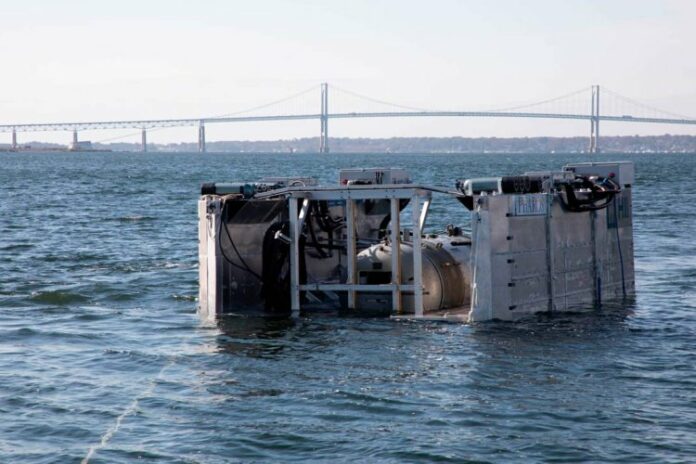
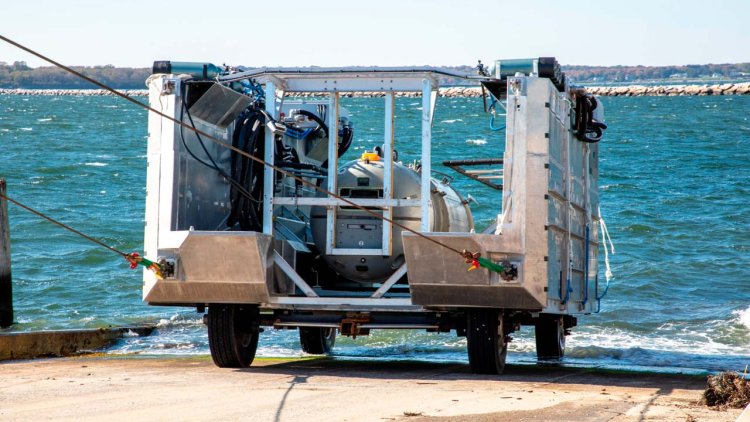
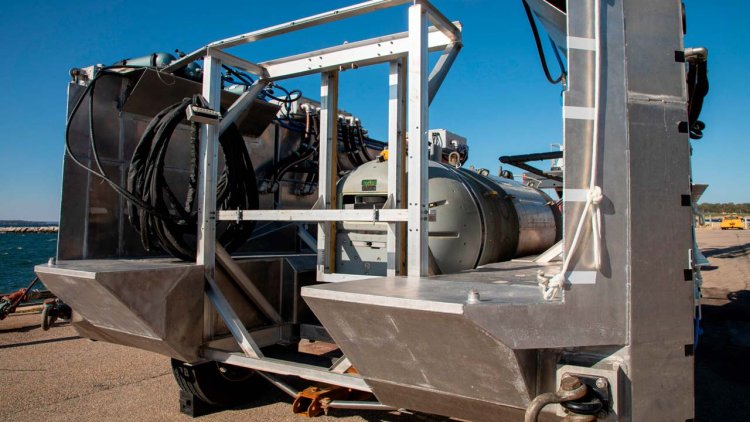
Global all-domain defense partner HII collaborated with the Navy on a research and development effort that advanced the launch and recovery of a large size unmanned undersea vehicle, using an amphibious ship and HII’s Pharos system.

“This is a great example of synergies within HII that accelerate the Navy’s vision for the future fleet,” said Chris Kastner, HII president and CEO. “I’m proud of the cross division teaming, plus the pace of progress of unmanned systems toward launch and recovery from an amphibious ship.”

Building on the success of a June 2022 demonstration where HII launched and recovered its large diameter UUV Proteus with its Pharos system, HII entered into two separate Cooperative Research and Development Agreements (CRADA) to further advance the capability to deploy unmanned vehicles from ships. The CRADAs were with Naval Surface Warfare Center Panama City division and the Naval Undersea Warfare Center Division Newport, Rhode Island.

Led by the company’s Advanced Technology Group, comprised of members from Mission Technologies and Ingalls Shipbuilding divisions, HII designed and constructed a surrogate system which was land tested in Panama City, Florida, to ensure the system could accommodate the Navy’s Snakehead phase one large displacement unmanned undersea vehicle (LDUUV) in a loaded condition. The test demonstrated that Pharos can be adapted to a wide range of vehicles, including LDUUVs.

Following that successful demonstration, Pharos and the Snakehead LDUUVs were tested at the Navy’s Narragansett Bay Test Facility in Newport. Pharos, with the Snakehead LDUUV embarked in its cradle, was lowered down and pulled up a ramp to simulate disembarking and embarking the system in the well deck of an amphibious ship. The simulation ensured that the 22,000-pound pull was within the existing capabilities of an LPD as operating in the Navy Fleet.

“These demonstrations validate a near term launch and recovery capability for the Pharos system,” said Todd Borkey, HII’s executive vice president and chief technology officer. “HII accelerates the transitioning of new technology into the customer’s mission, thus we are eager to enter the next phase of testing and demonstrate a launch and recovery from an LPD.”

The Pharos system began as a corporate independent research and development project. Ingalls Shipbuilding developed over 40 launch and recovery concepts from a mothership. These concepts were down-selected to the Pharos system with the objective of demonstrating the launch and recovery capability of a LDUUV from an LPD. Ingalls Shipbuilding and Mission Technologies took the Pharos concept and collaboratively designed, developed and constructed Pharos to enable the demonstrations.

Partners extend research collaboration to support research in aquaculture

0

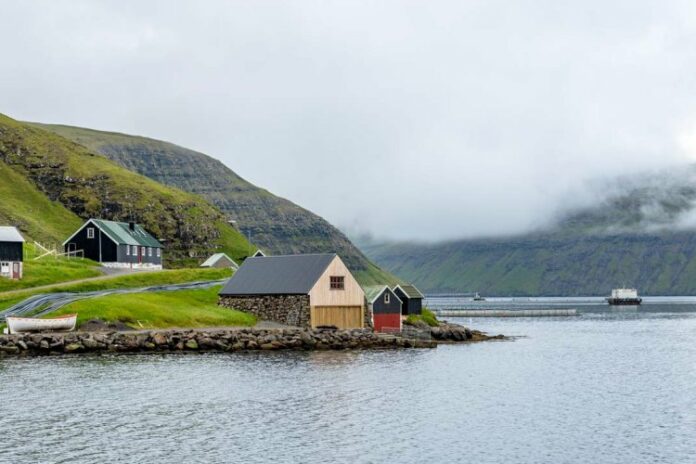
The University of the Faroe Islands and Bakkafrost have signed an agreement to extend their current research collaboration until the end of 2027.

The collaboration agreement is extended until the end of 2027. Bakkafrost will provide funding of 5.6 million DKK over five years for research and to support the establishing of a new Centre for Ccean Modelling. 

The project aims to improve knowledge about the ecosystems in the Faroese fjords and wider marine environment to support the development of the Faroese aquaculture industry. The collaboration will work to improve knowledge and strengthen assessments regarding the impact from the aquaculture industry on the fjords as well as the potential impact that climate change can have on the ecosystems of the fjords and on Faroese aquaculture.

The funding will support the establishing of a new University Centre for Ocean Modelling. Ocean modelling is a vital element in research into oceanography and the impacts from climate change, and through the agreement, Bakkafrost commits to support the University of the Faroe Islands with 5.6 million DKK through the next five years. The University and Bakkafrost share the initial financing of the research Centre but the aim is to extend the project and raise funds from additional partners and research foundations.

Chik Collins, Rector at the University of the Faroe Islands, and Regin Jacobsen, CEO at Bakkafrost, signed the agreement.

University Rector Chik Collins said:

“We are delighted to extend the successful collaboration with Bakkafrost. With the new agreement, we can establish the Centre for Ocean Modelling, and we now have funds to employ key staff for the next five years. We will start working together with colleagues to benefit the industry and Faroese society with a specific focus on sustainability in the Faroese aquaculture industry.

We hope to also raise funds from other partners to further strengthen the Centre for Ocean Modelling, and in general, the University of the Faroe Islands aims to establish partnerships with other Faroese companies and institutions in the public as well as in the private sector to support the need for research and education in the Faroe Islands.”

Bakkafrost COE Regin Jacobsen said:

“The extended agreement is part of our sustainability project, the Healthy Living fund, which aims to establish partnerships with companies, institutions and organisations which have a positive impact on the local communities in which we operate. We hope that this collaboration will provide valuable knowledge for the industry and support fish welfare and biologically and environmentally responsible operations.

We are delighted to extend the collaboration with the University of the Faroe Islands on this project working together to strengthen the aquaculture industry in the Faroe Islands, and we hope that this will have a positive long-term impact on the industry.”

In addition to improving knowledge about the impact from salmon farming and the potential impact from climate change, the project includes research into fish health and welfare as well as biosecurity.

Fincantieri: third corvette Al Khor for Qatar delivered

0

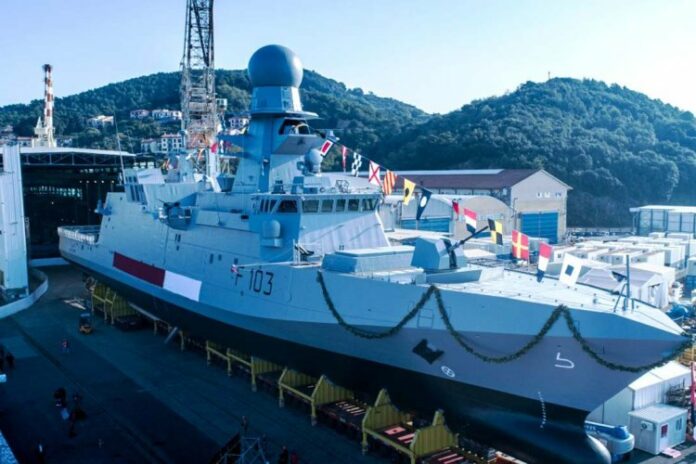
The delivery of the corvette “Al Khor”, the third of the Al Zubarah-class of four vessels ordered to Fincantieri by the Qatari Ministry of Defence within the national naval acquisition program, took place at the Muggiano (La Spezia) shipyard.

The ceremony was attended by Staff Major General Hilal Al Muhannadi, Defense Attaché of the State of Qatar in Rome, Major General Hassan Rashid Al Ali, Head of QAF Projects, Brigadier General Abdulla Al Mazroey, Deputy Chief of the Qatar Navy and Commander of the Flottilla, Mr Ahmed Mohammed AlShebani, representative of Qatar Embassy, Rear Admiral Giuseppe Scorsone, Director of Maritime Military Arsenal of La Spezia, and by Andrea Viero, Senior Vice President Market Development and Innovation Naval Vessels Division of Fincantieri.

The Al Zubarah-class corvettes, designed consistent with the RINAMIL rules, will be highly flexible and capable of fulfilling different kinds of tasks, from surveillance with sea rescue capacities to being fighting vessels. They will be about 107 meters long, 14.70 meters wide, and equipped with a combined diesel and diesel plant (CODAD), with a maximum speed of 28 knots. The units will be able to accommodate 112 persons on board.

Furthermore, the corvettes will be capable of operating high-speed boats such as RHIB (Rigid Hull Inflatable Boat) through lateral cranes or a hauling ramp located at the far stern. The flight deck and hangar are sized for hosting one NH90 helicopter.

HII successfully completes builder’s sea trials for destroyer Jack H. Lucas

0

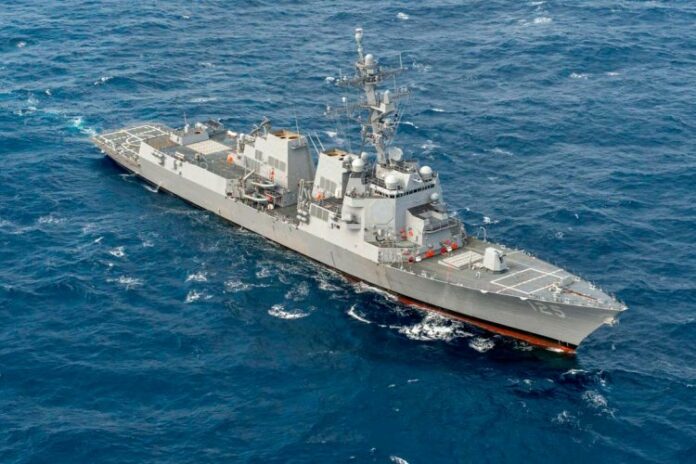
HII’s Ingalls Shipbuilding division announced today the successful completion of the initial builder’s sea trials for guided missile destroyer Jack H. Lucas (DDG 125). 

The Arleigh Burke-class destroyer spent several days in the Gulf of Mexico with Ingalls’ test and trials team operating the ship and performing an extensive list of test events.

During the sea trials, the team successfully accomplished the hull, mechanical, and electrical tests, conducted the first in class Flight III events with the SPY-6 arrays and tested the machinery control system to ensure remote operability of the new electric plant.

“Getting DDG 125 underway is a significant milestone in keeping this first Flight III ship on schedule, and reflects the hard work and dedication of our combined Ingalls and Navy team to ensure a successful sea trials,” Ingalls Shipbuilding President Kari Wilkinson said. “We are all very happy with how DDG 125 performed, and we look forward to delivering this highly advanced ship to the Navy.”

Jack H. Lucas (DDG 125) is the first Flight III Arleigh Burke-class destroyer being built for the U.S. Navy by Ingalls. DDG 125 features enhanced detection and engagement of targets, as well as ballistic missile defense capability. The Flight III upgrade incorporates a number of design modifications that collectively provide significantly enhanced capability.

Ingalls has delivered 34 destroyers to the U.S. Navy, with five currently under construction including DDG 125, Ted Stevens (DDG 128), Jeremiah Denton (DDG 129), George M. Neal (DDG 131) and Sam Nunn (DDG 133). Lenah Sutcliffe Higbee (DDG 123) was delivered to the Navy by Ingalls on Nov. 30 and will leave the shipyard early next year.

Arleigh Burke-class destroyers are highly capable, multi-mission ships and can conduct a variety of operations, from peacetime presence and crisis management to sea control and power projection, all in support of the United States military strategy. Guided missile destroyers are capable of simultaneously fighting air, surface and subsurface battles. The ship contains a myriad of offensive and defensive weapons designed to support maritime defense needs well into the 21st century.

Gen2 Energy and UAC to develop containers for large scale transport of green hydrogen

0

Gen2 Energy and Umoe Advanced Composites AS (UAC) have signed a contract to jointly develop containers for large scale transport and storage of green hydrogen.

UAC is a global supplier of large type IV glass fibre pressure vessels and transportation modules for CNG, biogas, and hydrogen. The company has experienced an annual revenue growth of 46% since 2017, and announced at the end of November 2022 that it has secured financing for further capacity expansions in Norway and China.  

Øyvind Hamre, CEO in UAC, said:

“UAC expects maritime projects where hydrogen will be stored onboard, either for vessel propulsion and operation or for cargo applications, to grow in number and importance over the coming years. This contract shows that UAC’s products are a great match with Gen2Energy’s need for cost leading solutions for transporting large quantities of hydrogen by sea.”

Gen2 Energy is a Norwegian company dedicated to developing, building, owning and operating an integrated value chain for green hydrogen. The company targets to have a portfolio of large-scale production facilities for green hydrogen as well as a distribution network ensuring safe and reliable customer delivery, making it easy and cost efficient for consumers to adapt to green hydrogen.

Jonas Meyer, CEO in Gen2 Energy, said:

“We are pleased to sign the agreement with UAC. Transport of hydrogen is a challenging part of the value chain. Together, Gen2 Energy and UAC aim to develop the preferred solution for customers in Europe. We believe the containers from UAC offer a great solution which is easy to adapt for customers and with uncompromising quality”.

As part of the agreement, UAC shall deliver containers that are approved and fully suitable for marine transport of hydrogen according to The International Maritime Dangerous Goods (IMDG) Code.

The contract includes a base order of 50 containers subject to Final Investment Decision (FID) for Gen2 Energy’s production facility and a Type Approved Container from UAC, and additional options ranging from 300 containers and upwards.

Gen2 Energy will partially finance the development phase, and has acquired a minority shareholding in UAC.

Var Energi announces gas discovery in the Barents Sea

0

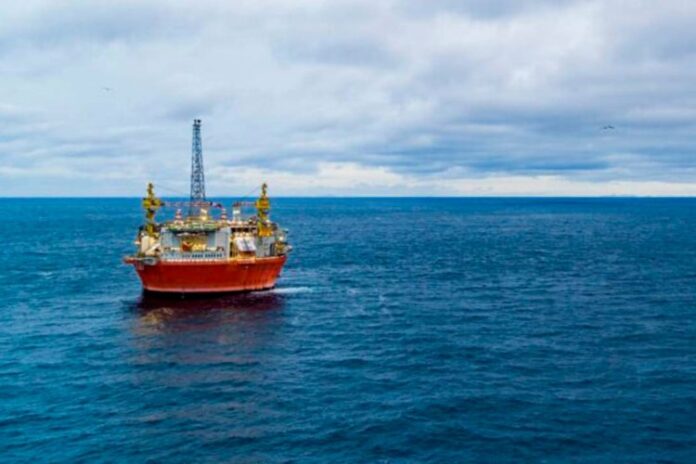
Preliminary estimates of the size of the discovery are between 57-132 million barrels of recoverable oil equivalent (9-21 billion Sm3 recoverable gas resources).  

Building on the successful 2021 exploration performance, Lupa brings the 2022 exploration success of Vår Energi to 57%. Three of the successful wells in 2022 were drilled in the Barents Sea. 

Rune Oldervoll, EVP Exploration & Production, says: 

“The well confirms our hub-focused strategy. The Lupa discovery further strengthens our foothold in the north. The discovery could serve as another step towards realising additional gas infrastructure in the Barents Sea in the future. We have a long-term growth strategy for the Barents Sea and will continue to chase new opportunities for value creation.”

Alessandro Barberis, VP Exploration, says: 

“This is the largest discovery on the shelf this year and comes as a Christmas gift. I want to give credit to our highly skilled and dedicated exploration professionals, continuing to perform, placing Vår Energi amongst the top explorers on the Norwegian shelf.”

The primary exploration target for the 7122/9-1 T2 Lupa well was to prove hydrocarbons in the Havert formation of Triassic age. The well encountered a gas column of 55 meters in sandstones with moderate to good reservoir quality. The gas-water contact was not encountered in the well. The total depth was called in the Ørret formation. Extensive data acquisition took place, including sampling, and the discovery will now be further assessed and matured. 

The Lupa well was drilled in PL229E by Transocean Enabler and will be permanently plugged and abandoned. The rig will now move back to continue drilling 7122/8-1S Countach in the PL229 licence.  

Vår Energi holds a 50% stake in the PL229E license, with Aker BP (50%) making up the rest of the JV. 

Bunker measuring system mandatory in Antwerp, Zeebrugge and Rotterdam

0

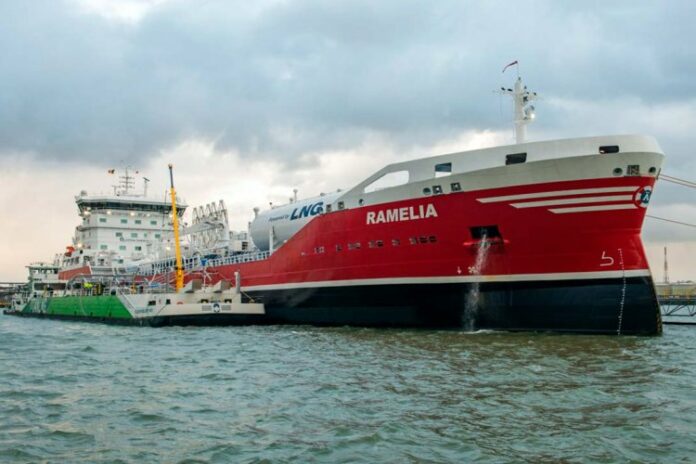
Antwerp-Bruges Port Authority and Port of Rotterdam Authority will make it mandatory to use a bunker measuring system (such as a Mass Flow Meter) on board bunker vessels to measure the exact amount of fuel delivered to sea-going vessels. 

This follows an independent study in both Antwerp and Zeebrugge and Rotterdam, which showed regular quantity issues in the bunker market. With the measure, the port authorities aim to make the ARA bunker market more transparent, efficient and reliable.

During the first half of 2023, the port authorities will first identify suitable bunker measuring systems. They will also determine the date on which the obligation to bunker with a bunker measuring system on board bunkering vessels will enter into force in Antwerp and Zeebrugge as well as Rotterdam.

The port authorities are aware that this measure will have a major impact on the bunker market. Therefore, they choose an ambitious yet realistic deadline. The different companies in the bunker chain will be given sufficient time to adapt to this measure. The requirement will be included in the licence for bunker fuel suppliers. Currently, 40 out of 170 bunker vessels in Rotterdam, Antwerp and Zeebrugge are equipped with a bunker measuring system.

The introduction of a bunker measuring system will greatly improve efficiency. After all, data from transactions can be read digitally and immediately processed in the accounts.

Both the Port of Antwerp-Bruges and the Port of Rotterdam Authority were told from different ​ sides that there would be regular problems regarding the supply of bunker fuels. To investigate the extent and nature of these complaints, the port authorities commissioned independent research and consultancy firm CE Delft to look into the experiences of the parties involved in the bunker market. This study was conducted through interviews and surveys.

The conclusion is twofold: there are similarities between the two ports and there are structural quantity problems in the bunker market. 80-90% of the survey respondents recognise the issues outlined.

65% of stakeholders interviewed and over 90% of survey respondents see the introduction of the mandatory use of an official bunker measuring system on board bunker vessels as a solution to quantity problems. A bunker measuring system measures the amount of fuel delivered in real time rather than calculating it from tank level measurements on board the bunker vessel (the methodology currently used as standard). ​

The Harbour Master of Rotterdam and the Harbour Master of Antwerp-Bruges are working closely together in the coming period to introduce a uniform requirement for a bunker measuring system. This will be done in consultation with Belgian and Dutch stakeholders.