-2.6 C
New York
Home Blog Page 352

NIWA and SLSNZ develop rip current identification tool using AI and deep learning

0

Rip currents are narrow, fast-moving segments of water that travel away from the shore. They can reach speeds of 2.5 metres per second, which is quicker than the fastest Olympic swimmer.

NIWA and Surf Life Saving New Zealand (SLSNZ) have developed a state-of-the-art rip current identification tool using artificial intelligence (AI) and deep learning. The tool showed around 90% accuracy detecting rip currents in videos and images in trials. The work is published in the journal Remote Sensing.

NIWA coastal scientists Dr Christo Rautenbach and Neelesh Rampal say the technology has been tested on a large variety of images from different coastal settings and they hope will ultimately be used by beachgoers to alert them of rip currents.

Dr Rautenbach said:

“We hope that by using cameras and drones at beaches, the tool will be able to scan video footage and notify people of the presence of rip currents. Even knowledgeable surf lifeguards can struggle identifying rips, depending on the beach and environmental conditions. As well as this, some beaches are remote or really large, so surf lifeguards can use all the extra help they can get!” 

The technology was developed by feeding millions of coastal aerial images into the AI model, along with artificial rain and fog data, to teach it to identify where rips occur in real-time, regardless of weather conditions and camera angle.

Adam Wooler, Special Projects Manager at SLSNZ, says once operationalised the technology will be invaluable for people while they’re out enjoying our beautiful coastline:

“This is only the beginning of our research together and our goal is to build even more effective, accurate and reliable safety tools for New Zealand beaches. Rip currents can sweep even the strongest swimmers out to sea – we had 90 people sadly drown in New Zealand last year, 25 of them on beaches, so we’re hoping that this technology helps to significantly reduce that number.”

Rip currents are reported as the most hazardous safety risk to beachgoers around the world. An Australian study published in 2013 revealed that they have killed more people on Australian territory than bushfires, floods, cyclones, and shark attacks combined. 

The Crown Estate announces investment in marine surveys

0

The awarding of the first contracts marks an important step in what is anticipated to be a multi-million pound series of technical and environmental surveys around potential locations for new floating wind farms.

The Crown Estate, which manages the seabed around England, Wales and Northern Ireland, has set out ambitious plans to deliver an initial 4GW of energy capacity in the Celtic Sea by 2035, with the region assessed to have the potential to accommodate up to 24GW by 2045. This would be one of the first uses of new floating wind technology on a commercial scale, with further rapid growth expected as the technology, supply chain and infrastructure mature.

Over the last year, The Crown Estate has been working with its technical advisors, alongside industry and other stakeholders, including statutory nature conservation bodies, to develop a programme of surveys which will deliver strong, reliable and useful datasets for developers. Precise specifications will be kept under review as the programme progresses, but will cover a range of important areas, including the geophysical and geotechnical properties of the seabed, wind, wave and current patterns, and marine wildlife.

As well as providing successful bidders with easy access to vital data and speeding up the development process, it is hoped the programme will avoid the need for developers to conduct additional surveys later in the process, while making best use of limited specialist survey resource.

Contracts have now been signed for the initial phase of metocean surveys, which look at wind, wave and current patterns, to begin in Spring 2023. The Crown Estate is progressing the procurement of the remaining surveys over the coming weeks and months, subject to further commercial discussions.

The Crown Estate is developing its leasing approach for the Celtic Sea floating offshore wind programme through close engagement with other key stakeholders, including but not limited to the UK and Welsh governments and industry, to understand their plans to drive investment in infrastructure, innovation and skills.

In October, The Crown Estate updated developers on how it intends to support the opportunities presented by floating wind in the Celtic Sea, including through early investment in pre-consent surveys and seeking to streamline the programme to accelerate the development of projects. Further work is underway to engage the market with a view to supporting such investment through supply chain requirements as part of the leasing tender process. The Crown Estate expects to provide further updates to developers in the first half of 2023 ahead of the official launch of the leasing tender.

Nicola Clay, Head of New Ventures, said:

“A successful floating wind market in the Celtic Sea will not only support the UK’s journey to net zero and strengthen our energy security, but can be the catalyst for new jobs, investment and supply chain opportunities. Ensuring these benefits are fully realised is a shared challenge, and The Crown Estate is committed to playing its part in supporting the growth of these important markets.

“Part of this is ensuring the swift deployment of this new technology, which is why we have been working across the industry to develop a programme of surveys that will ensure decisions are based on timely and robust data. The Crown Estate is uniquely placed to facilitate this sort of collective data-gathering, which will not only help maximise the growth of secure, affordable green energy, but also support the protection and restoration of marine ecosystems.

“We are also considering how else our proposals for The Celtic Sea can support the investment in supply chains and infrastructure that this new market will need. We have been clear this will form an integral part of the tender process for the upcoming leasing round, and we remain in dialogue with UK and Welsh governments to better understand their own approaches to supply chain development. By working together to address these challenges, we can put in place the foundations for clean energy and economic opportunity for generations to come.”

Tim Pick, Co-Chair of the Offshore Wind Acceleration Taskforce, said:

“The prospect of floating offshore wind in the Celtic Sea is taking shape, with The Crown Estate working with government and industry to progress the leasing process and stimulate a sustainable approach to the supply chain. I welcome the news of the awarding of contracts for surveys at an early stage, since it will accelerate the process and allow developers to take full advantage of the data that the surveys generate.”

Ireland issues first offshore wind maritime consents

0

The seven Phase One projects to receive consents are Parkwind and ESB’s 375MW Oriel Wind Park, SSE Renewables’ Arklow Bank 2, RWE and Saorgus’ 900MW Dublin Array, Statkraft’s 500MW North Irish Sea Array, EDF and Fred Olsen’s 1.5GW Codling Wind Park (Codling 1 and Codling 2), and Corio Generation’s 450MW Skerd Rocks.

The award of MACs ensures that only projects with the greatest viability to deliver Ireland’s ambitious energy targets can progress into the planning system. The award of a MAC follows a comprehensive assessment, by the Department of the Environment, Climate and Communications, into each project’s financial and technical competency. This approach enables all Phase One projects to begin their pre-planning application engagement with An Bord Pleanála.

The award of a MAC also enables Phase One projects to participate in the ORESS 1, the first auction for offshore wind under the Renewable Electricity Support Scheme (RESS). ORESS 1 is expected to procure approximately 2.5GW of electricity generating capacity.

Speaking following the award of the State’s first offshore energy MACs, Minister Ryan said:

“With the award of Maritime Area Consents [MACs] to seven Phase One projects today, we have given Ireland’s most viable and well-advanced offshore energy projects the opportunity to progress through the planning system and reach development. This is a significant milestone on the pathway to decarbonising our energy supply and securing energy independence.

“These first Maritime Area Consents [MACs] have been carefully drafted to promote the speedy and efficient deployment of offshore renewable energy, while ultimately protecting the State’s rich and unique maritime resource, in line with the principles of the National Marine Planning Framework.”

Projects which have been granted a MAC will be required to apply for development permission and secure a route to market within set timeframes, ensuring project progression and maximising benefits to the State. Phase One projects are also required to pay an annual levy to the State – under the terms of their MACs.

The grant of Phase One MACs follows the opening of the MAC assessment window in April, and the publication of the ORESS Terms and Conditions in early November. It was enabled by the enactment of the Maritime Area Planning Act last year, and indicates the strong commitment across Government to deliver a secure pipeline of offshore renewable energy projects in the State, which can meet our Climate Action Plan targets.

Microplastics deposited on the seafloor have tripled in 20 years

0

The total amount of microplastics deposited on the bottom of oceans has tripled in the past two decades with a progression that corresponds to the type and volume of consumption of plastic products by society.

This is the main conclusion of a study developed by the Institute of Environmental Science and Technology of the Universitat Autònoma de Barcelona (ICTA-UAB) and the Department of the Built Environment of Aalborg University (AAU-BUILD), which provides the first high-resolution reconstruction of microplastic pollution from sediments obtained in the north-western Mediterranean Sea.

Despite the seafloor being considered the final sink for microplastics floating on the sea surface, the historical evolution of this pollution source in the sediment compartment, and particularly the sequestration and burial rate of smaller microplastics on the ocean floor, is unknown.

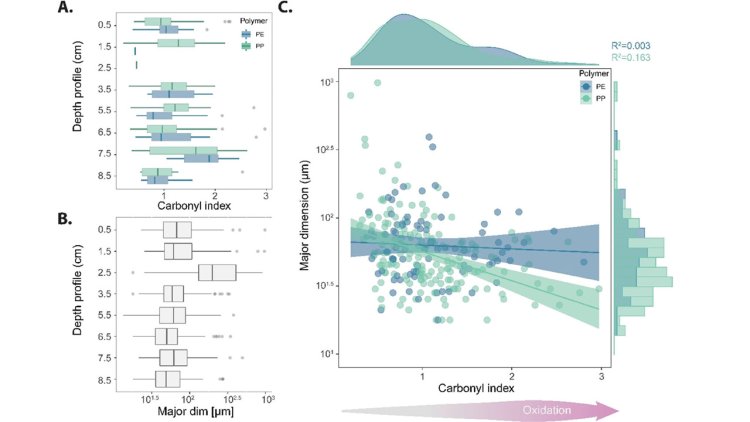
This new study, published in the journal Environmental Science and Technology, shows that microplastics are retained unaltered in marine sediments, and that the microplastic mass sequestered in the seafloor mimics the global plastic production from 1965 to 2016.

“Specifically, the results show that, since 2000, the amount of plastic particles deposited on the seafloor has tripled and that, far from decreasing, the accumulation has not stopped growing mimicking the production and global use of these materials,” explains ICTA-UAB researcher Laura Simon-Sánchez.

Researchers explains that the sediments analyzed have remained unaltered on the seafloor since they were deposited decades ago. “This has allowed us to see how, since the 1980s, but especially in the past two decades, the accumulation of polyethylene and polypropylene particles from packaging, bottles and food films has increased, as well as polyester from synthetic fibers in clothing fabrics,” explains Michael Grelaud, ICTA-UAB researcher.

The amount of these three types of particles reaches 1.5mg per kilogram of sediment collected, with polypropylene being the most abundant, followed by polyethylene and polyester. Despite awareness campaigns on the need to reduce single-use plastic, data from annual marine sediment records show that we are still far from achieving this. Policies at the global level in this regard could contribute to improving this serious problem.

Although smaller microplastics are very abundant in the environment, constraints in analytical methods have limited robust evidence on the levels of small microplastics in previous studies targeting marine sediment. In this study they were characterized by applying state-of-the-art imaging to quantify particles down to 11 µm in size.

The degradation status of the buried particles was investigated, and it was found that, once trapped in the seafloor, they no longer degrade, either due to lack of erosion, oxygen, or light.

“The process of fragmentation takes place mostly in the beach sediments, on the sea surface or in the water column. Once deposited, degradation is minimal, so plastics from the 1960s remain on the seabed, leaving the signature of human pollution there,” says Patrizia Ziveri, ICREA professor at ICTA-UAB.

The investigated sediment core was collected in November 2019, on board the oceanographic vessel Sarmiento de Gamboa, in an expedition that went from Barcelona to the coast of the Ebro Delta, in Tarragona, Spain. The research group selected the western Mediterranean Sea as a study area, in particular the Ebro Delta, because rivers are recognized as hotspots for several pollutants, including microplastics. In addition, the influx of sediment from the Ebro River provides higher sedimentation rates than in the open ocean.

Japanese insurers to halt ship insurance for all of Russia

0

Three Japanese insurance companies will stop insuring ships for damage in all Russian waters due to the war in Ukraine, potentially affecting Japan’s energy imports including liquefied natural gas (LNG), the Nikkei newspaper said on Saturday.

Tokio Marine & Nichido Fire Insurance Co, Sompo Japan Insurance Inc and Mitsui Sumitomo Insurance Co started notifying shipowners about their decision on Friday, the business daily reported.

Calls to the three companies to seek comment went unanswered on Saturday.

The insurers’ decision was prompted by reinsurance companies refusing to take on risks related to the war that Moscow launched 10 months ago, the newspaper said.

The halt, applying even to waters in Russia’s Far East, far from the fighting, could make shipping there too risky for some companies, it said.

Japan’s LNG imports from Russia’s Sakhalin-2 gas and oil project could be affected, the Nikkei said. The Sakhalin Island complex, partly owned by Gazprom and Japanese companies, is vital to Japan’s energy security as it accounts for 9% of the country’s LNG imports.

The three Japanese insurers will likely start negotiating with reinsurance companies after the Christmas holidays on possibly restarting coverage, the Nikkei said.

Almost all vessels obtain ship insurance, and without additional coverage for Russian waters the area would be too risky for navigation, the Nikkei said.

In February, London’s marine insurance market added the Ukrainian and Russian waters around the Black Sea and Sea of Azov to its list of areas deemed high risk as tensions persist in the region.

Source: Reuters

How sunlight could turn seawater into freshwater for coastal communities

0

A summer of extreme heat and drought around the world has been a reminder that water scarcity is a pressing issue and one that will only get worse with climate change. Already, more than two billion people worldwide lack easy access to clean water, according to the World Health Organization (WHO).

For some countries, desalination plants offer a solution – removing salt from seawater to satisfy their freshwater needs. The Middle East has the highest concentration of these in the world. But such plants, still mostly powered by fossil fuels, are energy-intensive and the process creates an extremely salty wastewater known as brine, which can damage marine ecosystems and animals when it’s pumped back into the sea.

That’s why some startups and researchers are updating centuries-old solar still technology, which uses only sunlight to purify water. While the technology is still a long way off from producing the volume of freshwater generated by desalination plants, it could prove valuable for off-grid or coastal communities.

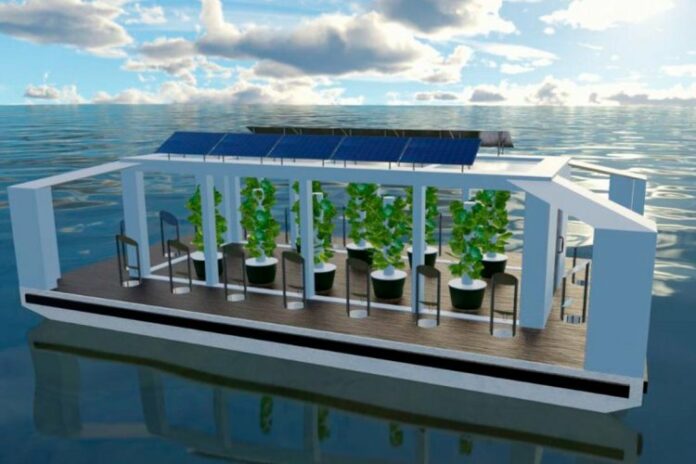
Abu Dhabi-based startup Manhat, founded in 2019, is developing a floating device that distills water without requiring electricity or creating brine. It consists of a greenhouse structure that floats on the surface of the ocean: sunlight heats and evaporates water underneath the structure – separating it from the salt crystals which, are left behind in the sea – and as temperatures cool, the water condenses into freshwater and is collected inside.

“It’s really similar to the natural water cycle,” says Dr. Saeed Alhassan Alkhazraji, the company’s founder and associate professor at Abu Dhabi’s Khalifa University. He says solar evaporation has long been used for this purpose, but typically it involves putting water in a basin where, once the water has evaporated, salt is left behind.

Unlike traditional solar stills, Manhat’s device floats in the ocean, drawing water directly from the sea. Salt does not accumulate in the device and the angle of the collection cylinder prevents water droplets evaporating back to the sea, says Alhassan.

Earlier this year, Manhat’s patented technology won the Water Europe Innovation award for small and medium enterprises with breakthrough solutions in the water sector, commended for its ability to produce freshwater with “zero carbon footprint and zero brine rejection.”

The startup plans to harness its technology in floating farms, which would use its desalination devices to provide freshwater irrigation for crops without the need for water transportation and its associated emissions.

This would benefit arid coastal areas where land is intensively farmed, says Alhassan. “If you produce (fresh) water on the sea’s surface and use it for farming, you can effectively allow arable land to be rejuvenated,” he says, adding that the technology could work well for countries like the Maldives that have little land available for desalination plants.

Others have also been innovating with solar stills. In 2020, researchers at the Massachusetts Institute of Technology (MIT) developed a free-floating desalination unit consisting of a multilayer evaporator that recycles the heat generated when the water vapor condenses, boosting its overall efficiency.

While field tests are ongoing, it was touted as a technology that could “potentially serve off-grid arid coastal areas to provide an efficient, low-cost water source.” Researchers suggested it could be configured as a floating panel on the sea, delivering freshwater through pipes to the shore, or it could be designed to serve a single household, using it atop a tank of seawater.

Geoff Townsend, who works on innovations in water scarcity for water treatment and hygiene company Ecolab, believes that while solar still innovations are unlikely to replace conventional desalination, they could “supplement existing technology, reducing the overall carbon footprint of desalination.”

But he cautions that “desalination typically needs to provide a very predictable supply of water,” and that “there will be potential concerns on the extent to which diurnal (daily) and seasonal changes in performance could impact the ability to achieve the minimal production requirement.”

An even bigger challenge for this kind of technology is scale. “A drawback is their intrinsic low efficiency,” says Townsend, adding that they tend to take up a lot of space for the small amount of water they produce.

MIT’s device was found to produce around five liters of freshwater per hour for every square meter of solar collecting area. Manhat’s current floating prototype, which covers 2.25 square meters but only has one square meter open to water, produces 1.5 liters of freshwater per day – a drop in the ocean, considering the World Health Organization estimates that an average person needs at least 50 to 100 liters a day to be healthy

Alhassan says Manhat is working to increase this volume to five liters by optimizing materials and design, with the long-term goal of reaching at least 20 liters. The startup has raised $130,000 in funding so far, predominantly via a collaboration with Abu Dhabi Ports, but with increased investment he is confident these targets can be met.

A pilot of the floating farm concept will begin next year. By linking up multiple modular devices in a grid formation, Manhat believes that its current technology could provide enough desalination to grow less water-intensive crops, such as mushrooms, and as the devices improve they could start targeting other crops such as lettuce or tomatoes.

Despite the challenges, Alhassan believes solar stills will one day become an important source of freshwater. “We have to accept the fact that seawater should be a key player in providing freshwater,” he says. “But we need to have a solution that will minimize CO2 emissions and eliminate brine altogether.”

Source: CNN

Pillar coral increase its extinction risk to Critically Endangered due to human activity

0

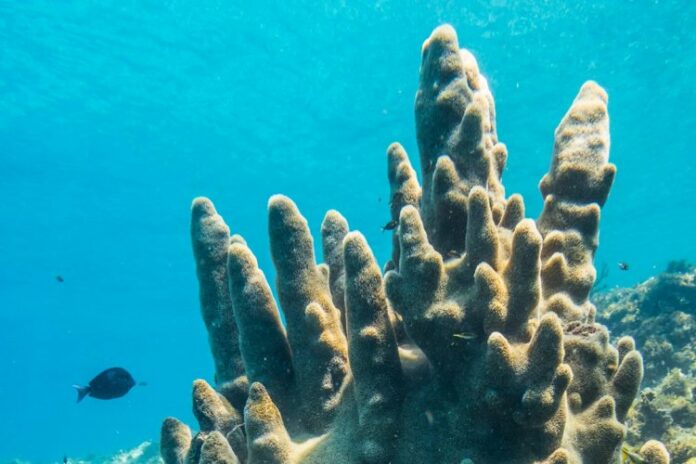
Experts have warned the pillar coral, found throughout the Caribbean, is at a higher risk of extinction as a result of unsustainable human activity.

It has moved from Vulnerable to Critically Endangered on the International Union for Conservation of Nature’s (IUCN) Red List of Threatened Species, after its population shrunk by over 80 percent across most of its range since 1990.

An international team of researchers, including from the University of Portsmouth, were tasked with evaluating the global extinction risk of reef-building corals in 2018.

Dr Francoise Cabada-Blanco, School of Biological Sciences at the University of Portsmouth, said:

“With the rapid degradation that reefs have suffered worldwide due to massive bleaching events, it was imperative to update our knowledge about how the populations of individual reef-building coral species have changed.”

Dr Francoise Cabada-Blanco, from the School of Biological Sciences at the University of Portsmouth, said:

“The extinction risk of reef building corals in the Caribbean had not been updated since 2008. With the rapid degradation that reefs have suffered worldwide due to massive bleaching events, it was imperative to update our knowledge about how the populations of individual reef-building coral species have changed.

“The pillar coral is a good example of how species-focused research on rare species is crucial to assess their extinction risk and highlight the urgency with which conservation action is needed.”

The IUCN SSC Coral Specialist Group found bleaching caused by sea surface temperature rise — as well as antibiotics, overfishing, fertilisers and sewage running into the oceans — have ravaged their numbers over the past four years.

The most urgent threat is the Stony Coral Tissue Loss Disease, which emerged in 2014 and is highly contagious, infecting between 90 and 100 metres of reef per day. 

“The pillar coral is just one of the 26 corals now listed as Critically Endangered in the Atlantic Ocean, where almost half of all corals are now at elevated risk of extinction due to climate change and other impacts,” explained Dr Beth Polidoro, Associate Professor at Arizona State University.

“These alarming results emphasise the urgency of global cooperation and action to address climate change impacts on ocean ecosystems.”

The IUCN’s Red List is the world’s most comprehensive information source on the global extinction risk of animals, fungi and plants. Developed over 50 years ago, it influences policy development and priority setting at a global, regional, and national level. 

The list has now been updated to include 150,388 species, of which 42,108 are threatened with extinction. Over 1,550 of the 17,903 marine animals and plants assessed are at risk of extinction, with climate change impacting at least 41 percent of threatened marine species. Populations of dugongs and abalone shellfish are also under threat and could disappear forever.

Reacting to the latest updates, IUCN Director General Dr Bruno Oberle, said:

“The IUCN Red List update reveals a perfect storm of unsustainable human activity decimating marine life around the globe. As the world looks to the ongoing UN biodiversity conference to set the course for nature recovery, we simply cannot afford to fail.

“We urgently need to address the linked climate and biodiversity crises, with profound changes to our economic systems, or we risk losing the crucial benefits the oceans provide us with.”

We4Sea releases new platform to share performance data between the parties

0

Dutch ship performance monitoring company We4Sea has released a new update, aimed to significantly improve cooperation between charterers and owners.

Dan Veen, CEO and founder of We4Sea:

”We believe the only way to meet the new CII regulations is by cooperation between charterers and owners, as they both can impact the results. In the proposed new BIMCO clause, focussing on long-term charters, cooperation is key.

First, there is a “good faith” duty to cooperate. Secondly, to share findings and data which may assist in monitoring and assessing the vessel’s compliance with CII regulations.  And last, in planning future voyages, and sharing best practices which may enable the vessel to improve its energy efficiency.”

We4Sea has now released a new module, enabling the real-time sharing of performance data between the parties in the charter party.

Dan Veen:

“While we consider the CII far from perfect, we consider it a step in the right direction. In our opinion, ideally, CII will lead to more cooperation and transparency between parties.

In our view, open data transfer between owners and charterers and jointly operating the vessel in an optimum manner is the key to reducing carbon intensity and achieving a good CII rating.”

We4Sea now supports this dialogue by supplying a Single Source of Truth (SSOT) platform. SSOT is a known concept used to ensure that everyone bases business decisions on the same data.

Accessible to both owners and charterers, accurate and reliable data around operations, vessel positions, speed, reported consumption, weather, and CII can now be shared in (near) real-time. This will save lengthy discussions in analysing vessel performance.

Also, the costs of monitoring the vessels may be shared between the parties, saving costs for both owners and charterers.

Ocean Conservancy offers tips for an ocean friendly holiday

0

The 2022 holiday season has meant a return to gifts and gatherings. But holiday cheer can also lead to holiday waste, and that waste can wreak havoc on our ocean.

“Between buying gifts, planning parties and decorating your home, it can be hard to remember to reduce and reuse during the holiday season,” said Sarah Weller, manager of the International Coastal Cleanup® (ICC) at Ocean Conservancy.  “But the festivities can take a toll on our planet. Every year, ICC volunteers find holiday-related trash on beaches and waterways, often months after the holidays have ended.”

That’s why Ocean Conservancy is offering tips and resources on how to make these four key elements of your holiday season fun and festive for the ocean.

Decorations

While holiday decorations might only come out in our homes for a few weeks, they’re a year-round problem for the ocean. In 2021 alone, ICC volunteers around the world found trashed ribbons, string lights, and even multiple Christmas trees on beaches and waterways.

For a more ocean friendly option, deck the halls with decorations that can be used for years on end. Avoid any decorations that use glitter: in addition to getting everywhere, glitter pieces are aform of microplastics, which have been found in everything from the deepest part of our ocean, to the air we breathe, to inside human bodies. You can make decorating a family affair by following Ocean Conservancy’s guide to upcylced DIY décor for a trash free holiday.

Wardrobe

Between party looks and ugly holiday sweaters, many pieces of clothing purchased during this season are worn only a few times before being discarded. Since the first ICC in 1986, more than three million articles of clothing have been collected from beaches and waterways; and that doesn’t even account for the microplastics and microfibers that come with synthetic fabrics.

This holiday season, skip the fast fashion: buy second hand, do a clothing swap with friends, or work with what you already have. If you’re crafty, show off your skills by making your own upcycled ugly holiday sweater using Ocean Conservancy’s guide.

Gifts

It wouldn’t be the holidays without gifts. But along with toys and treats come plastic packaging and waste. More than half of all the plastic ever produced has been made within the last 20 years; and much of this growth has come from  single-use packaging. Toys themselves also frequently wind up in our ocean: in nearly 40 years of cleanups, ICC volunteers have collected over 2.9 million toys.

Give the ocean a gift this year by avoiding gifts with plastic packaging, gifting experiences rather than items to your loved ones, and getting creative with your wrapping paper: opt to reuse bags, wrap with reusable fabric, or even colorful newspaper pages.

Parties

As you’re gathering with your loved ones, keep a lookout for ways to cut down on party plastic. Single-use plastic foodware items are the most common items polluting our beaches: in 2021, ICC volunteers collected 1.34 million food wrappers, over 260,000 plastic straws, nearly 246,000 plastic plates, and 163,000 plastic utensils. So at your holiday party or family dinner this year, make sure to provide reusable cutlery, plates and cups to your guests, and skip the straws.

DNV awards first blockchain statement of fact to Samsung

0

In the first of its kind for a shipyard, DNV has awarded a Statement of Fact (SoF) to Samsung Heavy Industries (SHI) for applying blockchain technology to its own SAS (Samsung Autonomous Ship) and SVESSEL ® eLogbook data streams on an operating vessel.

As the shipping and offshore industry becomes more digitized, yards, shipping companies, manufacturers and class societies worldwide are actively developing and verifying smart and autonomous ships amid rising need to strengthening cybersecurity. This is increasingly important for real-time data transmissions from ship to shore, remote monitoring, and equipment maintenance.

The blockchain application for the SHI data stream pertains to Samsung Autonomous Ship’s navigation information, particularly the Collision Risk Index and Distance to the Closest Point of Approach. Also, the SVESSEL eLogbook satisfying IMO MEPC.312(74) were released via blockchain technology.

SHI’s Director of Ship and Offshore Research Institute, Vice President Dr. Dong Yeon Lee, said:

“The maritime industry is paying attention to cybersecurity as another key to the digital revolution of ships. Blockchain technology is ground-breaking in data security for autonomous ships. We are grateful for DNV’s cooperation and look forward to vitalizing blockchain technology as a new business in the future.”

Dr. Hyun Joe Kim, Vice President of SHI’s Ship and Offshore Performance Research Centre at an award ceremony at Samsung Heavy Industries’ Daejeon R&D Center, said:

“We are delighted SHI has become the first shipyard certified by DNV in applying blockchain technology for its evolving SAS automatic navigation system and the digital asset management system of our SVESSEL eLogbook. We deeply appreciate DNV for their hard work in this collaborative research. This is only the beginning, but we are eager to demonstrate and verify blockchain technology as it impacts cybersecurity on real ships.”

Vidar Dolonen, DNV’s Regional Manager, Korea & Japan, added:

“Blockchain technology is an essential requirement for future ships and to respond to upcoming maritime regulations. This collaboration with industry leaders has become a meaningful milestone in the digitization of ships and their safety, and we are proud to be part of it.”