-2.6 C
New York
Home Blog Page 351

Vattenfall achieves climate smarter seabed inspection with uncrewed vessels

0

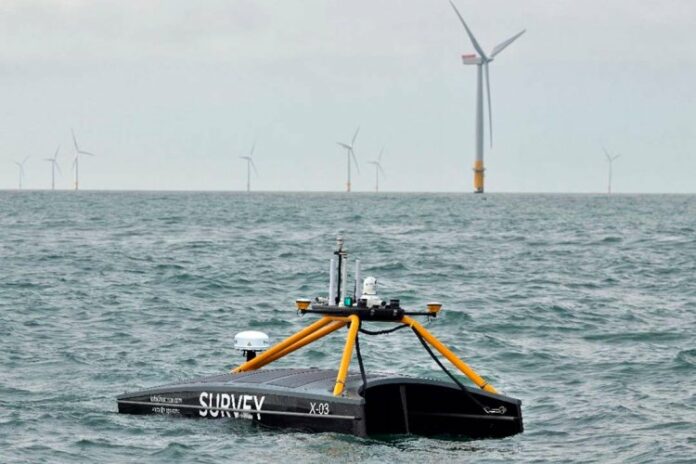
In the late summer and early autumn of 2022, Vattenfall successfully conducted large scale seabed surveys with uncrewed surface vessels. The surveys were conducted at several of Vattenfall’s offshore wind farms in Denmark, Sweden and the UK.

As a part of operating an offshore wind farm it is necessary to periodically survey the seabed around turbine foundations and substation jacket legs to monitor changes in cable burial depth and scour development. This knowledge is also important for repair and maintenance activities involving jack-up vessels, where legs require a stable seabed to ensure safe elevation out of the water.

Traditionally, seabed surveys are carried out using crewed vessels, which emit substantial amounts of carbon from the consumption of fuel.

Rasmus Juncher, Senior Lead Geophysicist at Vattenfall, says:

“When we issued the tender to select a contractor for seabed surveys across our Danish wind farms, we received an interesting proposal using uncrewed vessels. Having observed their deployment in small-scale trials elsewhere, we were curious to understand how successful their deployment would be on a larger scale. This technology consumes much less fuel than a traditional survey vessel, and because the vessel is controlled from an onshore operations centre instead of having a crew onboard, personnel aren’t exposed to the same challenges as working offshore, thereby improving safety and wellbeing.”

The uncrewed vessel is significantly smaller (4.5m total length) than crewed vessels, and typically also more modern which explains the big fuel saving.

Vattenfall aims to expand the use of uncrewed vessel in future operations. Rasmus Juncher says:

“This is the first step of many using uncrewed vessels, supporting the aims of a fossil free future. We want to pursue further opportunities to support other functionalities of the uncrewed vessels, for instance for visual inspections of our assets both above and below water and in-site investigations on a broader scale to support the wind farm design. The journey of autonomous vehicles in general have just begun and I believe that the possibilities are endless. I am proud that Vattenfall is part of the journey. This is only the very beginning.”

The service was provided by ocean data acquisition company XOCEAN, who has used uncrewed survey services since 2019.

James Ives, CEO, XOCEAN, says:

“Our uncrewed survey vessel platform offers a safe, reliable and low carbon solution for the collection of ocean data. We are delighted to be supporting Vattenfall through the provision of sustainable data to support their survey requirements across the development and operation of their offshore windfarms.”
Gondan launches another Commissioning Service Operation Vessel

0

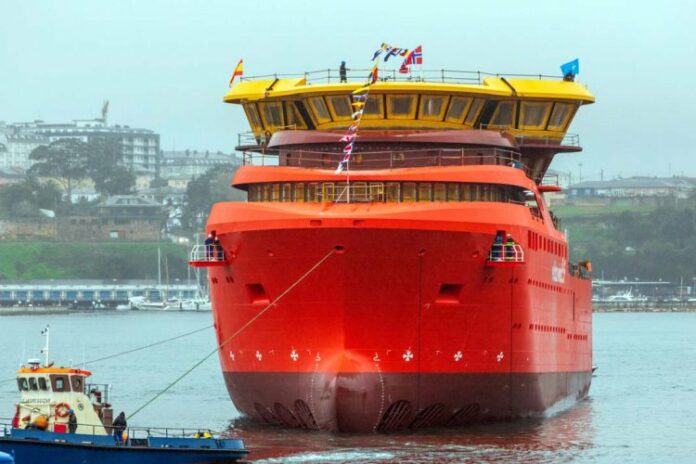
The newbuild is a purpose-built CSOV of similar design as the six vessels being built at Gondan.

This new vessel, designed by Salt Ship Design, also with a length of 88.3m and a beam of 19.7m, will be powered by zero-emission technology and supported with funding from the Norwegian government through Enova SF.  Accommodating 120 people – 97 technicians and 23 crew – it will feature state-of-the-art automated equipment, including a 3D offshore crane, an offshore gangway with a 30m outreach and an integrated 26-person capacity elevator.

CEO of Edda Wind, Kenneth Walland, says:

“Launching of a vessel is always a special moment and not a usual Christmas activity. Therefore, to observe the third of six sister vessels successfully launched is again an important milestone and a great achievement for Gondan and Edda Wind.”

CEO of Edda Wind Kenneth Walland says:

“The first four of the new building series plus two existing vessels in the Edda Wind fleet are committed on medium- to long term contracts. C491 is the first of four vessels scheduled for delivery from late 2023 until mid 2025 that so far are not committed. They will be delivered into a market that will have a high demand for these type of vessels for the foreseeable future, further increasing the attractiveness of these assets. We are currently observing significant increases in building and equipment costs and consider having vessels already on order and under construction as a great advantage for Edda Wind.”

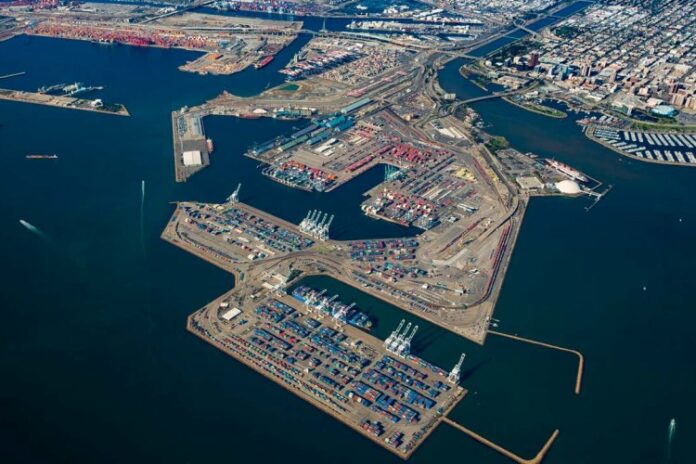
Port of Long Beach Channel Deepening Project wins federal authorization

0

Joe Biden has signed into law the Water Resources Development Act (WRDA) of 2022, the biennial legislation authorizing federal flood control, navigation and ecosystem improvements that include the Port’s Channel Deepening Project. 

The Port’s Channel Deepening Project is one of only five navigation projects nationwide that met the goals of the Corps’ rigorous planning process to make the cut for construction authorization under the new water resources law. The WRDA was packaged with the National Defense Authorization Act for fiscal year 2023.

“This project will widen and deepen the harbor serving one of the world’s top 10 busiest container port complexes,” said Port Executive Director Mario Cordero. “Increasing the safety and efficiency of vessels transiting our waterways supports our mission to remain competitive while reducing pollution from port-related operations.”

The Port’s Channel Deepening Project has been in the works for more than eight years and is an essential component of the Port’s Master Plan. Key elements include deepening the Long Beach Approach Channel from 76 to 80 feet, easing turning bends in the Main Channel to deepen a wider area to 76 feet, deepening parts of the West Basin from 50 to 55 feet, constructing an approach channel and turning basin to Pier J South with a depth of 55 feet, improving the breakwaters at the entrance to Pier J, and depositing dredged material in nearshore sites for reuse or in federally approved ocean disposal sites.

The project’s operational benefits include more room for the largest tankers and container vessels to transit the harbor and fewer delays related to tidal flows. Deeper, wider channels also reduce the need for large vessels to transfer liquid bulk cargo or containers to smaller vessels before entering the harbor. The process, known as lightering, ensures large vessels have the underkeel clearance they need to move through the harbor as it is currently configured.

Environmental benefits include lower fuel consumption because ships will be able to maneuver more efficiently through the harbor. Burning less fuel reduces vessel pollution – emissions of particulate matter, nitrogen oxides and sulfur oxides.

The Port is sharing the cost of the $200 million project with the Corps, whose responsibilities include building and maintaining the nation’s waterways. Setting the stage for congressional authorization, the Corps issued a record of decision in July 2022 endorsing the project based on multiyear environmental and cost-benefit studies of project. The Corps concluded deepening and widening channels in the harbor would lead to improved vessel navigation, safety, and national economic benefits valued at more than $15 million annually. In September, the Long Beach Board of Harbor Commissioners certified the project’s companion environmental impact report. 

The progress built on momentum from the 2021 Bipartisan Infrastructure Law, which reflected the project’s support from the Biden-Harris Administration by designating nearly $8 million for early planning, engineering and design work. 

California Sens. Dianne Feinstein and Alex Padilla played key roles in shepherding WRDA through the legislative process, as did Rep. Alan Lowenthal, who serves on the House Transportation and Infrastructure Committee. Cordero appeared before the House committee in February to discuss the global importance of the project and urge Congress to advance it. 

Lowenthal is retiring after five consecutive terms representing the 47th District, which includes Long Beach, Lakewood, Signal Hill and neighboring Orange County communities. A former Long Beach city councilman who served in both houses of the California Legislature before winning his congressional seat, Lowenthal has advocated for the region’s economic interests and environmental protection throughout his three decades in government. 

Federal authorization of the Channel Deepening Project allows the Port and the Corps to proceed with engineering agreements, detailed planning and budgets, bidding and awarding construction contracts and procuring funding. In the coming year, the Port and the Corps are expected to execute a design agreement and initiate the design work. Construction is projected to start in 2027 and take approximately three years.

AD Ports Group signs agreements with Kazakh National Oil Company Subsidiary

0

AD Ports Group has signed a shareholder agreement with KMTF (Kazmortransflot), a fully-owned offshore logistics and services subsidiary of the Kazakh National Oil Company (KazMunayGas), to launch an exclusive joint venture, 51 percent owned by AD Ports Group and 49 percent owned by KMTF, to provide offshore and shipping services for energy companies in the Caspian Sea.

Furthermore, the two parties have signed an agreement to pool tanker resources.

The joint venture, which will look at investments opportunistically will offer a broad range of services, including offshore support vessels, integrated offshore logistics and subsea solutions and, at a later stage, will offer container feedering, ro-ro and crude oil transportation in the Caspian Sea and the Black Sea. The enterprise will tender for a number of identified projects with estimated maritime contract values of more than USD780 million.

By combining AD Ports Group’s diverse portfolio of global maritime services and shallow water offshore expertise with the strong fleet, track record and local knowledge of KMTF, the joint venture will create an important new entrant in the highly valued Caspian Sea and the Black Sea region. The endeavour can expect to create opportunities around the region, particularly with the ongoing upgrades of fleets and facilities currently taking place, and some major offshore projects, such as the multi-billion-dollar expansion of the Kashagan field.  

AD Ports Group and KMTF also signed a seven-year vessel pooling agreement, the joint venture includes the provision of several tankers for the transportation of crude oil internationally. Furthermore, the agreement will see KMTF’s fleet working alongside SAFEEN Group’s existing AFRAMAX tanker, with intent to acquire further vessels in the short-term. The objective is to jointly carry 8-10 million tonnes of crude annually in the medium-term.

The Caspian Sea region is one of the oldest oil-producing areas in the world and is an increasingly important source of global energy production.

H.E. Falah Mohammed Al Ahbabi, Chairman of AD Ports Group, said:

“Under the direction of our wise leadership, AD Ports Group is looking to deploy our expertise in support of agreements that boost trade and economic relations with brotherly nations. This new joint venture with KMTF opens the door to enormous opportunities in the Caspian Sea, which plays a key role in global energy production, and is serviced by prominent players within the energy sector. By providing maritime services in this key market, AD Ports Group has reached a new level of internationalisation and development.”

Mirzagaliyev Magzum, Chairman, KazMunayGas, said:

“This is an alliance of two world class companies who complement each other’s strengths and understanding of the market. As the world looks for reliable energy sources in challenging conditions, we will be able to provide a full portfolio of services supported by a modern fleet and teams of experts combining local knowledge and global experience. Companies operating in the Caspian Sea oil fields are looking for reliable partners and a broad range of value-added services. Working together, KMTF and AD Ports Group will provide the ideal solution.”

Capt. Mohamed Juma Al Shamisi, Managing Director and Group CEO, AD Ports Group, said:

“Throughout 2022, AD Ports Group has looked to grow international business interests and expand the portfolio of maritime services we are able to offer customers around the world, in support of the vision of the leadership of the UAE. This  joint venture – which is the first of its kind between a UAE company and the Kazakh National Oil Company – reflects how far and how fast we have grown, and how capable we now are of providing advanced offshore services in key global markets.”

New research indicates careful fish handling helps support sustainable fisheries

0

A research project was commissioned by Fisheries New Zealand and undertaken by the National Institute of Water and Atmospheric Research (NIWA) in collaboration with Ngāti Kuta, Legasea, and Bluewater Marine Research. 

It looked at the survival rates of recreationally caught snapper that are released back to the sea and early results show about 85 percent of the released fish were still alive at the end of the first experiment.

Bruce Hartill, Principal Scientist for Fisheries New Zealand, led the project in his former role at NIWA. He says, although the numbers can vary from year-to-year, recreational fishers land over 4,000 tonnes of snapper annually in New Zealand.

“For every snapper landed there will be approximately five times that number that are under the minimum legal size, that will be returned to the sea. What happens to those fish can have a real bearing on sustainability.”

The research took place in Mangahawea Bay, off Moturua Island in the Bay of Islands with volunteers fishing from a charter boat. The details of each captured snapper were recorded, including how the fish was hooked and what depth it came from. The fish were then quickly transferred to one of nine holding nets and monitored over the following five days.

“Two of the main impacts on fish survival rates were the depth they were caught and how they were hooked. But there are some things we can do to help.”

“Using recurve hooks which are less likely to be swallowed by the fish, handling them carefully making sure not to touch the eyes or the gills, and releasing them quickly will give them the best chance of survival.

“If the fish was caught in deeper water, using release weights will help get the fish back down to their capture depth before they are free to swim away.”

“Anyone that goes fishing wants the same thing – both a feed for today, and healthy fish in the water for tomorrow, so handling practices and the gear used can make a real difference,” says Bruce.

Final survey results are expected to be available by the middle of next year. The results will give anglers a better understanding of the consequences of throwing fish back, so there’s less unseen mortality, and help fisheries managers set optimal fishing regulations, such as daily bag and minimum size limits.

ONE to acquire three container terminals on the west coast of the United States

0

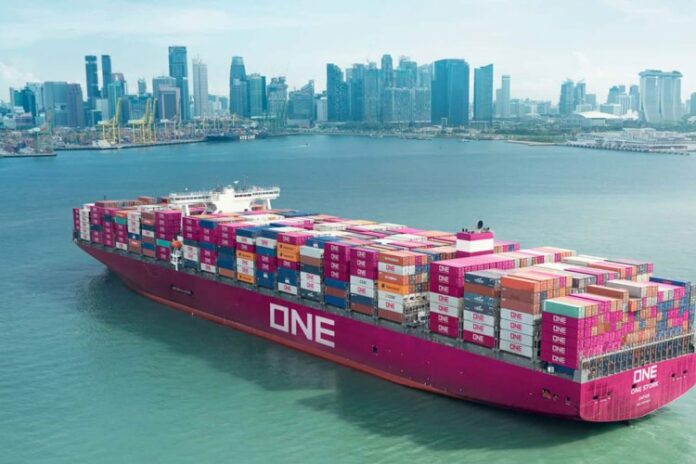
Ocean Network Express (“ONE”) has signed definitive agreements to acquire a 51% stake in each of TraPac LLC (“TraPac”) and Yusen Terminals LLC (“YTI”), currently held by Mitsui O.S.K. Lines, Ltd. and Nippon Yusen Kabushiki Kaisha respectively.

TraPac is a container terminal operator and vessel stevedore that provides container terminal services in Los Angeles and Oakland. YTI is a container terminal operator and vessel stevedore that provides container terminal services in Los Angeles. 

These acquisitions are part of the integration of the container shipping businesses from the parent companies into ONE. The recent disruptions to the supply chain due to Covid-19 have highlighted the importance container terminals play in keeping global trade flowing. 

The newly acquired container terminals will safeguard ONE’s access to terminal capacity in key and strategic gateways, support its growth ambitions and enhance its service offerings to customers.

The closing of these transactions is subject to the approval of the relevant authorities.

50Hertz awards contracts for grid connection of wind farm project in Baltic Sea

0

50Hertz awards platform contracts for grid connection of largest wind farm project in Baltic Sea

To accomplish this, essential preconditions were now established. 50Hertz has laid the foundations for the development of two substations by a Dutch-Belgian consortium and Skyborn has fulfilled the requirements for a grid connection.

The consortium consists of the companies HSM Offshore Energy, Smulders and Iv-Offshore & Energy. They won the tender for the development of the platforms and the connected services. Together, they will be responsible for the planning, engineering, procurement of components, construction, offshore installation and commissioning of the substations and of the foundations, the so-called jacket. The work is to be carried out on yards in the Netherlands and in Belgium. A few weeks ago, the joint venture was already awarded the development of an offshore substation for the Ostwind 3 project. The Ostwind 3 grid connection project will connect the Windanker wind farm to the north-east of Rügen island and deliver an output of 300 MW. 

Stefan Kapferer, CEO of 50Hertz:

“The grid connection for the Gennaker wind farm is one of our top projects for the next decade, next to the grid connection projects to the north-east of Rügen island and the joint German-Danish project Bornholm Energy Island. We aim to connect an offshore wind capacity of around five gigawatts to our grid in the waters between Germany and Denmark during this period. 50Hertz wants to tap into the large wind power potential of the Baltic Sea, not only independently, but also and increasingly with European partners such as the Danish system operator Energinet. This way, we can contribute to the greater energy independence of Germany as well as Europe.”

Berge Olsen adds:

“Offshore wind is an essential component to increase the share of renewable energies in the electricity supply to 80 percent by 2030. In this respect, the swift realisation of the Gennaker project is of elementary importance in order to achieve the climate targets in Germany and Europe,” said Achim Berge Olsen, CEO of Skyborn. “Securing the grid connection is an important milestone for the Gennaker project. This puts further planning on a solid foundation. We are looking forward to implementing this ambitious project together with a reliable partner like 50Hertz.”

With a total capacity of 927 MW, Gennaker will be the most powerful offshore wind farm in the German Baltic Sea to date. OWP Gennaker GmbH, a subsidiary of Skyborn, will realise the Gennaker wind farm around 15 kilometres north of the Fischland-Darß-Zingst peninsula. The project area is located in a priority area for offshore wind energy in the coastal sea of Mecklenburg-Western Pomerania. The Gennaker project has had a building permit since May 2019. Around the Baltic 1 wind farm, which has already been in existence for more than ten years, 103 high-performance offshore wind turbines from Siemens-Gamesa are to be grouped. 

50Hertz is responsible for the entire grid connection project called Grid Connection OST-6-1. The generated wind power will be collected on two offshore platforms and transported at the 220-kV extra-high-voltage level. Tree submarine cable systems will be installed to transport the electricity to the mainland. The cable route up to the new substation to be built in the Sanitz/Gnewitz/Dettmannsdorf/Marlow survey area will be around 90 kilometres in length, of which 50 kilometres as a submarine cable on the seabed. The Grid Connection OST-6-1 project is currently being prepared for the planning approval procedure at the Ministry of Economics, Infrastructure, Tourism and Labour of Mecklenburg-Western Pomerania. For the purposes of early public participation in the scope of the procedure, consultations were already held with municipalities over the course of the past few months and their feedback was collected. 

Awarded 38 million to greener maritime offshore wind operations

0

A competitive and green maritime value chain is needed to support offshore wind park operations. 

The Norwegian support scheme (The Green Platform Initiative) aims to accelerate the growth of green businesses in Norway. Today, Norwegian Minister of Trade, Industry and Fisheries, Jan Christian Vestre, launched the new project at a press conference in Oslo:

“We are carrying out the largest restructuring of the Norwegian economy ever. Everything will become greener. It is private companies that must lead the way in this transformation, with the public sector as a supporter,” says Vestre.

With offshore wind and zero-emission solutions in mind, Vard and its partners in the Ocean Charger project were a perfect fit. This project will develop a maritime value chain for offshore wind with offshore energy transfer.

With a strong consortium of industry and research partners, Vard will lead the way from research to testing, validation, and commercialization of new technological solutions for energy transfer to battery-powered ships offshore.

“We were thrilled to hear the news and glad to see that the importance of this project was recognized. The offshore wind industry is becoming increasingly important not only for the green energy transition but also for national value creation. With our leading team of experienced professionals, we will evaluate different solutions and business models supplying various offshore vessels with green energy. As this market is growing rapidly, we see a unique opportunity for Norway to be the leading provider,” says Håvard Vollset Lien, VP of Research & Innovation in the Vard Group.

In the coming years, a substantial new maritime infrastructure will be developed and built for the offshore wind industry in Norway. Based on the development for other segments, batteries have proven to be the most mature technology for zero or low-emission vessels. This technology constitutes the basis for developing the Ocean Charger project.

“Through this project, we will enable continuous zero-emission operations on the Norwegian continental shelf for the first time,” says Maritime CleanTech Head of Innovation, Øystein Huglen.

By connecting vessels to the power grid in the wind farm and charging batteries regularly, the operational availability of emission-free vessel operations will be secured. The aim is to power operations at the field without using any additional energy sources.

The project will kick off in 2023, and the work will be performed over three years. Vard Design will lead the work together with sister companies Seaonics and Vard Electro, partners Rem Offshore, Solstad Offshore, SINTEF Energi, SINTEF Ocean, DigiCat, Sustainable Energy, Equinor, Source Energie, Corvus Energy, Plug, Shoreline, Marin Energi Testsenter, University of Bergen, Norce and Maritime CleanTech.

The Njord field upgraded and ready for another 20 years

0

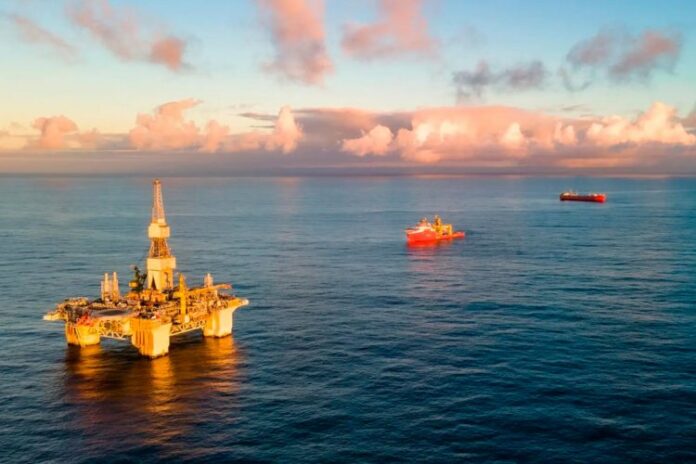
Production from the Njord field in the Norwegian Sea resumed at 16.30 on 27 December, following an upgrading project in which both the platform and the floating storage and offloading vessel (FSO) were brought ashore.

Both the platform and the FSO have undergone extensive upgrades, and the project has a Norwegian content of more than 90 percent. Aker Solutions has had the main responsibility for the platform engineering and upgrading. Brevik Engineering has carried out the engineering work for the FSO, which has been upgraded by Aibel.

“I am proud that we and our partners, Wintershall Dea and Neptune Energy, have now got this truly unique project across the finish line. This is the first time a platform and a FSO have been disconnected from the field, upgraded, and towed back, and we have now doubled the field’s life.It has been a big and challenging job, partly performed during a pandemic, and I want to thank everyone who has contributed. The Njord field will now deliver important volumes to the market for another two decades,” says Geir Tungesvik, Equinor’s executive vice president for Projects, Drilling & Procurement.

Coming on stream in 1997, the Njord installations were initially designed to remain in operation until 2013. However, there were large volumes left in the ground, in addition to discoveries nearby, such as Hyme which came into operation in 2013, and others that can be produced and exported via Njord.

The platform and FSO were brought ashore in 2016 after 19 years of production. In 2017 and 2018, upgrading contracts were awarded for the two installations. The Njord A platform was upgraded at Stord, where it was constructed in the 90s. The Njord Bravo FSO was inspected prior to upgrade and prepared for tow-out in Kristiansund, whereas the refurbishment was carried out in Haugesund.

“Our ambition is to produce about the same volume from Njord and Hyme as we have produced so far, more than 250 million barrels of oil equivalent,” says Kjetil Hove, Equinor’s executive vice president for Exploration & Production Norway.

10 new wells will be drilled at Njord from an upgraded drilling facility, new discoveries have been made at the outer edges of Njord, and more exploration will be carried out in the surrounding area.In addition, the platform and FSO have been prepared to receive production from two new subsea fields, Bauge and Fenja, with a total of 110 million barrels of recoverable resources.

“This is illustrative of our strategic work on the NCS to extend the fields’ productive life and tying back new discoveries to existing infrastructure, while reducing the climate footprint from the production,” says Hove.

According to plans the Njord field will in a few years receive power from shore via the Draugen platform in the Norwegian Sea and be partially electrified. This will reduce the annual CO2 emissions by about 130,000 tonnes.

Production from the Njord field was initially supposed to resume two years ago. However, the upgrading project has been more challenging than expected, and the project was hard hit by the Covid-19 pandemic. This has also put an upward pressure on costs. Capital expenditures total just over NOK 31 billion (2022), compared with the original NOK 17 billion in the plan for development and operation.However, the project is profitable with oil prices far lower than today.

Second LPG dual-fuel VLGC for Astomos named Lantana Planet

0

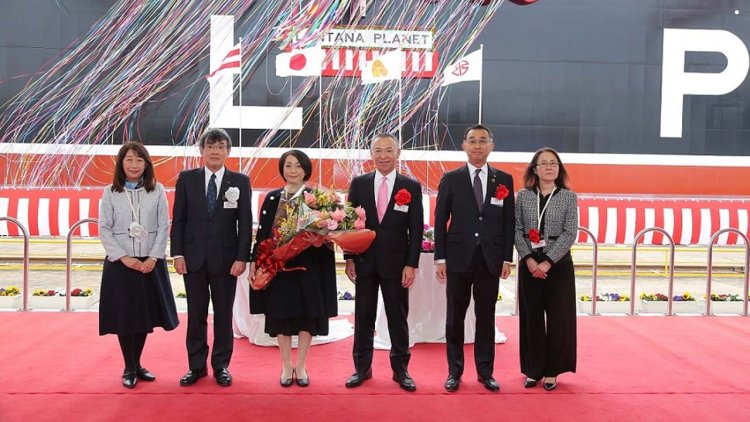
The naming ceremony took place at Kawasaki Heavy Industries’ (KHI) shipyard Sakaide Works.

At the ceremony, the ship was named “Lantana Planet” by Mitsuru Yamanaka, executive vice president of Astomos Energy Corporation, and the ceremonial rope holding the vessel in place was cut by his wife. NYK senior managing executive officer Akira Kono attended together with others from NYK.

This vessel is a liquefied petroleum gas (LPG) dual-fuel VLGC and a sister ship of Lupinas Planet, which was completed in September this year. When LPG is used as fuel, exhaust gas from the ordered VLGC will contain at least 85% less sulfur oxide (SOx) and 15% less carbon dioxide (CO2) compared to conventional VLGCs equipped with fuel-oil engines.

Outline of Vessel:

  • Length overall: 229.90 meters
  • Breadth: 37.20 meters
  • Depth: 21.90 meters
  • Summer draft: 11.60 meters
  • Tank capacity: approx. 86,500 cubic meters (includes the on-deck tank capacity of 2,500 cubic meters