-3 C
New York
Home Blog Page 350

VIDEO: Ukrainian border guards inspect vessels as part of the grain initiative

0

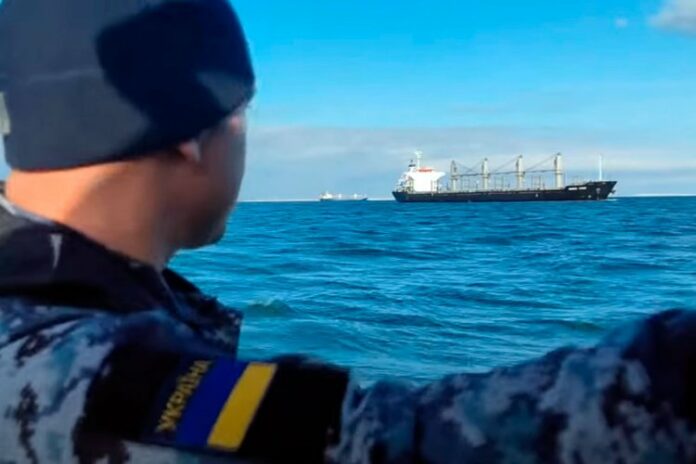
As part of the grain initiative, the Ukrainian Maritime Guard inspects vessels going to Odesa for loading and further transportation of Ukrainian agricultural products to countries in Africa, Asia and Europe.

Military personnel of the Maritime Guard inspect each vessel for weapons and ammunition, explosive devices and dangerous substances. At the same time, the compliance of crew members and ship documents are checked.

Since August 1, more than 15.5 million tons of Ukrainian food have already been exported from Ukrainian ports to 38 countries. In total, border guards have already inspected about 600 such vessels.

NOAA seeks to expand Seafood Import Monitoring Program

0

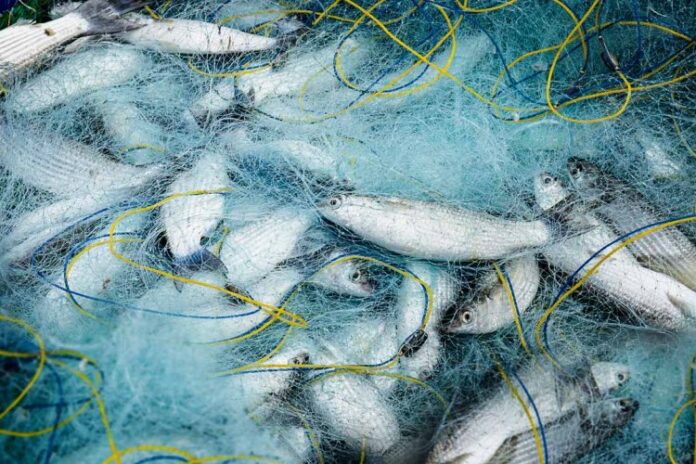
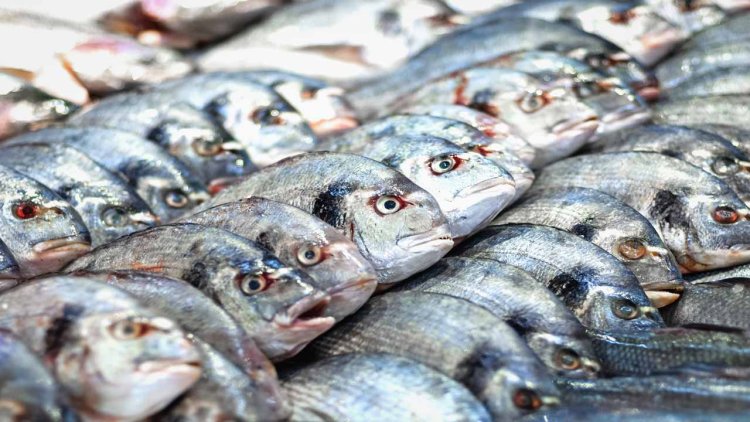
NOAA Fisheries has announced a proposed rule to expand the Seafood Import Monitoring Program (SIMP), a risk-based Program for targeted species of seafood imported into the U.S. Expanding SIMP would increase the number of species included in the Program from approximately 1,100 individual species to approximately 1,670 individual species.

SIMP currently establishes reporting and recordkeeping requirements for nearly half of all U.S. seafood imports to combat illegal, unreported and unregulated (IUU) fishing and misrepresented seafood from entering U.S. commerce. By providing a screening and deterrent tool for IUU fish and fish products, and misrepresented seafood products entering the U.S., SIMP strengthens our national economy, global food security and the sustainability of our shared ocean resources. 

“By proposing to expand the Seafood Import Monitoring Program to additional at-risk species, we aim to increase our ability to identify IUU fish and fish products and deter them from entering the U.S. market,” said Janet Coit, assistant administrator for NOAA Fisheries, acting assistant secretary of commerce for oceans and atmosphere, and deputy NOAA administrator. “The Program is one of several tools NOAA Fisheries utilizes to combat IUU fishing and ensure the U.S. remains a global leader in the effort to safeguard the sustainability of marine species worldwide.”

The rule proposes to expand the species currently subject to SIMP, including red snapper and tuna, to include all species in the snapper family and additional tunas, to minimize the risk of mislabeling and product substitution that is used to bypass SIMP requirements. In addition, the rule proposes to add cuttlefish and squid, eels, octopus, queen conch and Caribbean spiny lobster to the Program. The rule also proposes to make additional program modifications and improvements.

NOAA Fisheries uses a risk-based framework to target species that are most vulnerable to IUU fishing and seafood fraud. This risk-based approach allows for efficient use of government resources for screening and implementation, while minimizing industry burden and trade impact.

The agency welcomes feedback on the potential addition of these species and other elements in the proposed rule to clarify the responsibilities of International Fisheries Trade Permit holders, electronic recordkeeping requirements and provisions to accommodate small-scale fisheries. NOAA Fisheries also seeks feedback from stakeholders on program improvements, such as interest in a standardized form for compliance. 

The comment period for the proposed rule will close on March 28, 2023. NOAA Fisheries will consider all public comments before issuing a final rule. 

Newbuild LNG additions to the Hafnia fleet

0

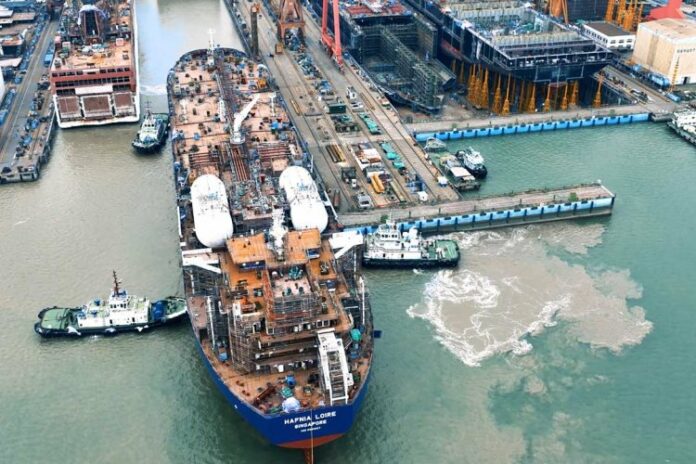
These vessels will be time chartered out to our long-standing customers TOTAL Energies and Equinor and are owned by a joint venture of Hafnia and CSSC Shipping. 

These new additions are currently under construction and the first of the vessels HAFNIA LANGUEDOC, will be delivered in January 2023, with HAFNIA LOIRE following in April.  Both vessels have recently been launched from Dry Dock, with Sea & Gas trials of HAFNIA LANGUEDOC taking place in January 2023.

In alignment with our sustainability values and ambitions in transitioning towards a greener future, these four LR2 tankers are equipped with Liquified Natural Gas (LNG) propulsion technology. LNG is widely regarded as a promising marine fuel helping the shipping industry move towards its goal of a 50% reduction in GHG emissions by 2050. 

LNG acts as a fuel that moves shipping towards its decarbonization goals in the interim, in anticipation of hydrogen and ammonia becoming commercially viable. Compared to ships powered by traditional fuel oil, LNG as a marine fuel typically results in 97% lower Sulphur oxide emissions, 97% lower particulate matter, 85% lower nitrogen oxide, and up to 20% lower overall GHG emissions.

The GHG emissions of vessels designed with the most efficient LNG propulsion technologies available will be in a range 5,000- 6,000 tons per year lower than conventional tankers. They will also be more efficient — meaning they exceed “Phase 3” Energy Efficiency Design Index (EEDI) requirements.

Built by Guangzhou Shipyard International (GSI), these dual-fuel vessels incorporate design traits we believe necessary for ships of the future. The high-pressure dual-fuel LNG engines incorporate a flexible design that not only ensures close to zero methane slip but also makes them adaptable to the zero-emission fuels of the future (such as ammonia or methanol). The vessels come equipped with a state-of-the art fuel gas supply system that has full redundancy on all supply systems and which can handle boil-off gas from the LNG tanks under any condition. The auxiliary engines, gensets and boilers will be able to run on multiple fuel types.

Takeover of all four vessels will take place during 2023 and 2024, marking the beginning of alternate fuel usage at Hafnia. 

“We are confident these vessels will pave the path for alternative fuel enabled vessels entering the Hafnia fleet in future”, states Ralph Juhl, EVP Technical.

The Ocean Cleanup team hit significant milestone in 2022

0

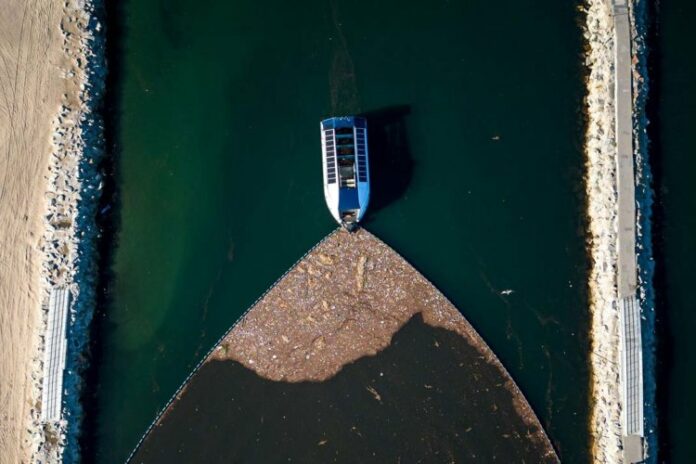
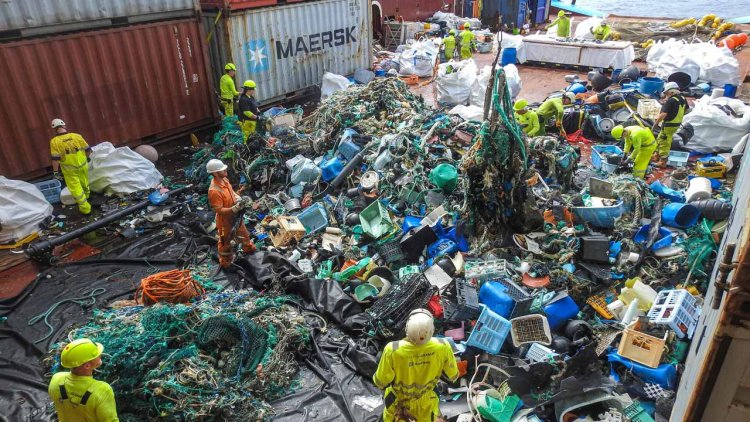
Here is a recap of what happened at The Ocean Cleanup in 2022.

The team has made substantial progress on its mission to rid the world’s oceans of plastic through Interceptor deployments, ocean system improvements, the transition towards System 03, and groundbreaking research.

Japanese MoD releases further details about its future BMD destroyers

0

On Dec. 23, Japan’s Ministry of Defense announced its fiscal year 2023 budget request, in which we may learn more about Japan’s future ballistic missile defense (BMD) destroyers, commonly known as ASEVs (Aegis system-equipped vessels).

The ASEV is a vessel that has been decided to be built as an asset to defend Japan from the threat of ballistic missile attacks, mainly by North Korea, as an alternative to the Aegis Ashore, which has been canceled its deployment in 2020.

In Japan, especially since 2016, the threat of ballistic missiles by North Korea has been widely recognized, and since then, Aegis destroyers of the Japan Maritime Self-Defense Force (JMSDF) have been deployed in the Sea of Japan at all times to be on the alert for ballistic missile launches by North Korea.

The document released by the MoD describes the need for two vessels to let the other AEGIS vessels focus on different missions, and stressed once again the utility to have ships with superior capacities than the existing Aegis destroyers – able to cope with current ballistic threats, but also to neutralize hypersonic glide vehicle (HGV).

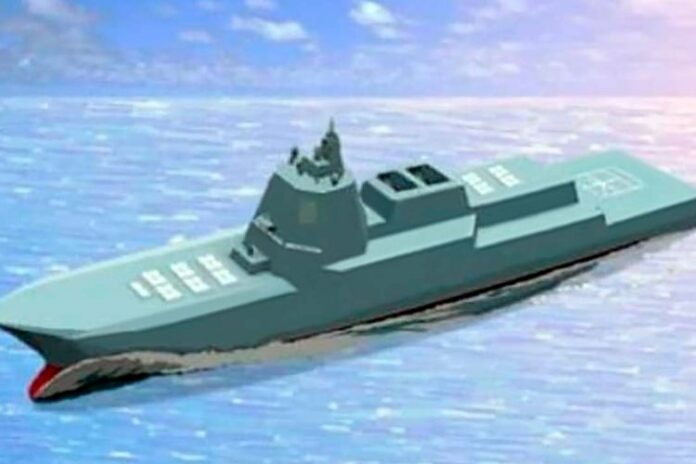
To do so, the vessels shall be equipped with SM-6 missiles from Raytheon, a ship-launched derivative of the Type 12 SSM, and other undisclosed capabilities. In addition, the extract about ASEV mentions the fact that the ships should be able to welcome future under-development missiles like the U.S. hypersonic missile interceptor. The picture released with the document – the first official one – confirms the ships should have not less than 64 VLS cells – 6×8 VLS on the front deck and 4×8 above the helicopter hangar – to host all those missiles.

Regarding the technical specifications of the ships, nothing is mentioned. According to local newspaper reports, initial details of the ASEV point towards a massive ship: 210 meters long and 40 meters wide, with a standard displacement of 20,000 tons and a crew of about 110 people. Crew comfort onboard will be a priority as all crew members will be provided with private cabins. In terms of length and displacement, it is equivalent to the Izumo class DDH (248 meters long, standard displacement 19,500 tons), the largest vessel in the JMSDF.

Last but not least, the document gives a target of commissionning for the two destroyers. Indeed, the MoD has the ambition to get them by FY2027, meaning between April 2027 and March 2028. This time is necessary in order to develop the J7.B Aegis Weapon System (AWS) system that will fit on those vessels. According to Lockheed Martin, J7.B is the integration of SPY-7 radar into J7 (BL9), the latest software currently installed by JMSDF’s Aegis ships. For the record, the J7.B system has been successfully tested in August 2022 by the Missile Defense Agency (MDA) in front of the JMSDF.

Source: Naval News

Sembcorp Marine delivers world’s second 8th-generation drillship

0

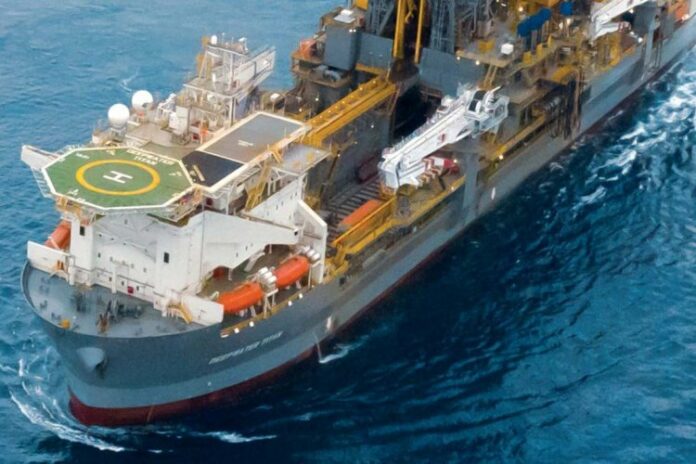
Sembcorp Marine Ltd has completed the successful delivery of the world’s second 8th-generation drillship, the Deepwater Titan, to Transocean’s subsidiary Triton Titan GmBH (“Transocean”).

Deepwater Titan is the second 8th-generation drillship constructed by Sembcorp Marine based on the Group’s Jurong Espadon 3T design. Set to redefine standards for offshore drilling, the dual-derrick drillship is the first-ever unit delivered with two 20,000-psi blowout preventers (BOPs), well-control, riser, and piping systems for high-pressure and high-temperature drilling and completion operations. The most advanced of its kind in the industry, and along with its sister rig the Deepwater Atlas, Deepwater Titan is also equipped with three-million-pound hook-load hoisting capacity and capabilities to drill up to 40,000 feet and operate in water depths of up to 12,000 feet.

The drillship is designed for enhanced safety, efficiency and sustainability, incorporating greener features for energy efficiency, fuel optimisation and reduced emissions consistent with the industry’s goal of contributing to a lower carbon future.

The landmark delivery of Deepwater Titan repeats the successful handover of the first newbuild 8th-generation drillship Deepwater Atlas delivered by Sembcorp Marine earlier this year and reaffirms the Group’s proven track record in providing nextgeneration turnkey offshore construction solutions for the oil and gas market.

Following the delivery, Deepwater Titan is scheduled for deployment on a five-year contract in the U.S. Gulf of Mexico. 

Sembcorp Marine Head of Rigs and Floaters Mr William Gu said:

“We are elated to mark yet another major milestone with the delivery of Sembcorp Marine’s second newbuild ultra-deepwater drillship, Deepwater Titan, to Transocean. The most advanced of their kind in the industry, both drillships – constructed based on the Group’s proprietary Jurong Espadon 3T design – represent the next-generation of ultra-deepwater assets with breakthrough capabilities, including a three-million-pound hook-load capacity, and greener features that set new benchmarks for the industry.”

Mr Wong Weng Sun, Sembcorp Marine President & CEO, said:

“The landmark delivery of the world’s second 8th-generation ultra-deepwater drillship, Deepwater Titan, and first with 20,000-psi BOPs, to Transocean attests to Sembcorp Marine’s demonstrated expertise in providing innovative and differentiated drillship solutions for the offshore industry. We are heartened that our close collaboration with Transocean has culminated in the successful completion of two game-changing drillships that are charting new frontiers and redefining standards for the future of offshore drilling.”


Equinor marks 5 years of operations at world’s first floating wind farm

0

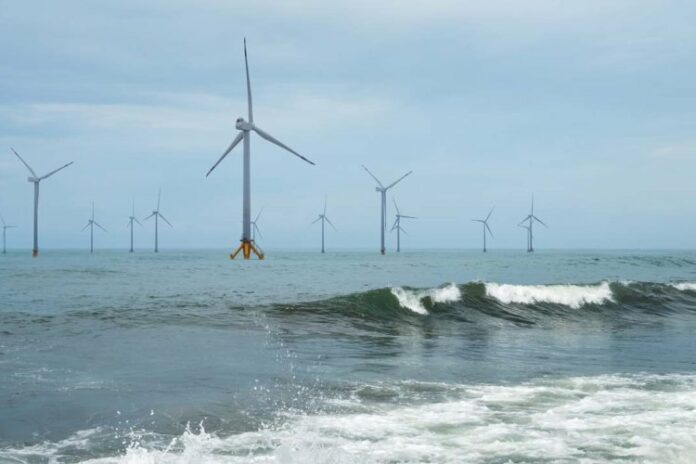
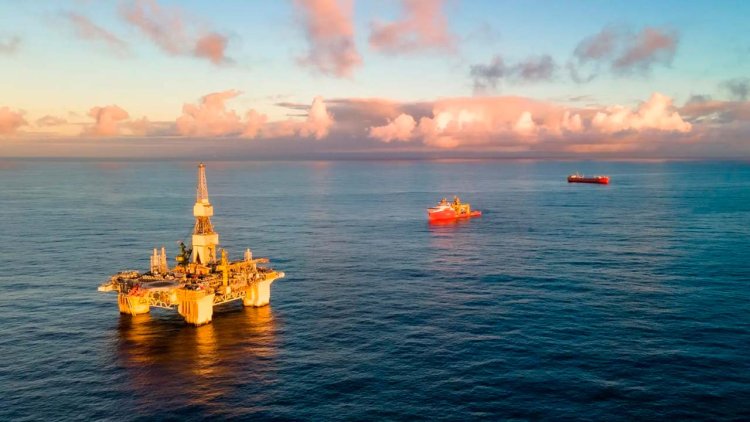
Hywind Scotland, located off the coast of Peterhead, Scotland, is the world’s first floating offshore wind farm and the world’s best-performing offshore wind farm, achieving a capacity factor of 54% over its five years of operations.

With a capacity of 30 MW generated by 5 turbines, Hywind Scotland utilises the Hywind floating spar-substructure concept. The wind farm generates enough electricity to power the equivalent of 34,000 UK homes.

Equinor is maturing further opportunities to develop floating offshore wind around the world, as pioneers of the emerging technology, and brings with it the experience gained from Hywind Scotland. Equinor’s next floating wind project, Hywind Tampen, delivered first power earlier this fall and when operational in 2023, Equinor will operate about half of the world’s total capacity of floating wind.

William Munn, Plant Manager of Hywind Scotland at Equinor, said:

“Operating the Hywind Scotland project for the past five years has informed Equinor of some of the unique challenges associated with a floating wind farm, and the rewards if we get it right. Because of its location and the harsh weather conditions it encounters, Hywind Scotland has exposure to higher wind speeds than we typically see on a fixed-bottom wind farm, but also has to withstand large waves, while continuing to produce power with wave heights of 10 metres. Due to the environment, unique operations and maintenance methods have been required, such as a high-performance crew transfer vessel (CTV) that can continue operations in higher-than-standard transfer conditions.”

Equinor’s proprietary floating wind turbine motion controller is in action at Hywind Scotland, contributing to world-leading capacity factor performance despite the added motion experienced by floating offshore wind substructures. To maintain the wind farm, Equinor has implemented a unique operations and maintenance (O&M) model, that involves upskilling onshore wind technicians to maintain turbines in an offshore, floating environment.
Steinar Berge, Head of Floating Wind at Equinor, said:

“Equinor is the world’s most experienced operator and developer of floating wind, and is taking lessons learned from Hywind Scotland further towards global opportunities. We are advancing plans to develop additional projects, including in South Korea, Australia, France, Spain, California, the UK’s Celtic Sea and Norway. Hywind Scotland provides Equinor with strong confidence in floating offshore wind technology and enables us to advance even-larger projects with a solid operational foundation, getting us closer to the ultimate aim of industrialising and commercialising floating wind.”

In addition to the operational improvements for floating offshore wind, Equinor has been advancing environmental initiatives at the Hywind Scotland project. Equinor is collaborating with Scottish Government Directorate, Marine Scotland, to better understand how fishers can safely operate around and within floating offshore wind farms. Further initiatives include the installation of an autonomous SailBuoy to map fish presence and biomass quantity with acoustic sensors, and testing a new method of analysing environmental DNA (eDNA) at Hywind Scotland.

Neptune, Ørsted and Goal7 explore powering energy hubs with offshore wind

0

Neptune Energy today announced it has signed a Memorandum of Understanding with Ørsted and Goal7 to explore powering new integrated energy hubs in the UK North Sea with offshore wind-generated electricity.

Integrated energy hubs have the potential to combine multiple energy systems, including existing oil and gas production assets, carbon storage and hydrogen production facilities. They could extend the life of producing fields and support the economic case for electrification with renewable energy, to keep carbon emissions low.

The agreement will see the companies examine the potential to supply renewable electricity from Ørsted’s Hornsea offshore windfarm projects to power future Neptune-operated hubs in the UK North Sea.

Goal7 will provide project management support and technical input.

Neptune Energy’s Director of New Energy, Pierre Girard, said:

“The development of integrated energy hubs is an important part of Neptune’s strategy to store more carbon than is emitted from our operations and the use of our sold products by 2030. 

“Neptune has submitted three applications under the recent Carbon Dioxide Appraisal and Storage Licensing Round, and securing the licences would enable us to develop future proposals for integrated energy hubs in the UK North Sea.

“In parallel, the agreement with Ørsted and Goal7 will support research into the potential use of wind-generated renewable electricity to power these hubs, which could comprise new and repurposed offshore assets and bring together hydrogen production and carbon injection facilities.” 

Duncan Clark, Ørsted’s Managing Director Offshore and Country Chair UK&I, said:

“The UK is a world leader in deploying offshore renewable energy and it is crucial that we use this clean technology as effectively as possible, finding new and alternative routes to market to ensure we are able to maximise the use of renewable power at the time it is produced. 

“We must continue taking action to limit the damaging effects of climate change. Supporting the decarbonisation of other industrial sectors and providing renewable energy to enable more sustainable carbon storage is an important consideration as the UK transitions towards a low-carbon economy.

“As we build out the largest offshore wind zone in the world with our Hornsea projects and demand for electricity continues to increase, optimising production of these huge offshore assets will bring even greater value to consumers and support the UK’s efforts to meet its 2050 net zero commitments.”

The North Sea Transition Authority is due to award storage licences early in 2023.

MacGregor to supply RoRo equipment to two Pure Car and Truck Carriers for K Line

0

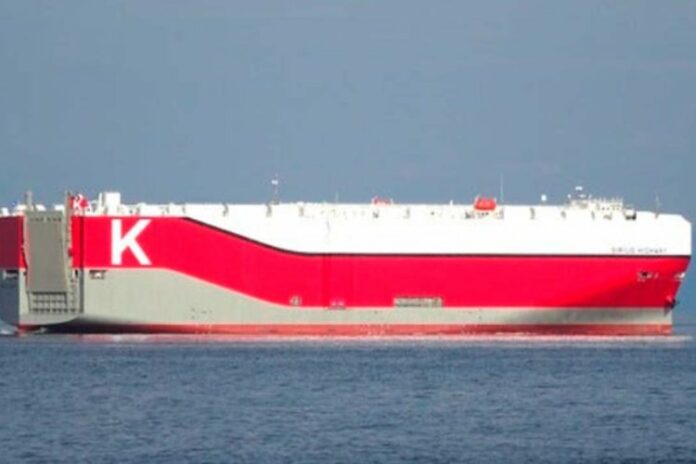
MacGregor, part of Cargotec, has secured a large order to supply RoRo equipment for two 6,900 CEU Pure Car and Truck Carriers PCTC to be built at Shin Kurushima Toyohashi Shipbuilding Co.,Ltd. for K Line (Kawasaki Kisen Kaisha, Ltd) in Japan.

The order was booked into Cargotec’s 2022 third quarter order intake. The first vessel is scheduled to be delivered to the owner in the first quarter of 2025 and the second in the second quarter of 2025.

MacGregor’s scope of supply consists of design, supply and installation assistance for a stern ramp, a side ramp, three sets of movable ramps, a ramp cover and a mobile deck lifter to each vessel.

“MacGregor has a long-lasting and good relationship with Shin Kurushima that we are very proud of. Our close cooperation will help smoothly advance the design work and eventually the on-time delivery of the equipment,” says Magnus Sjöberg, Senior Vice President, Merchant Solutions, MacGregor.

Vattenfall achieves climate smarter seabed inspection with uncrewed vessels

0

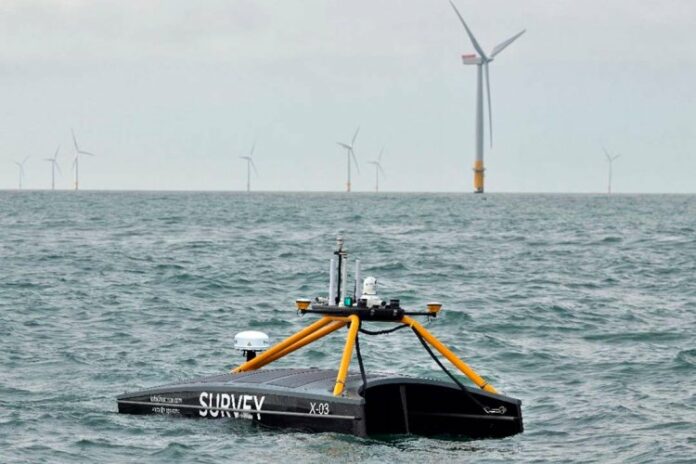
In the late summer and early autumn of 2022, Vattenfall successfully conducted large scale seabed surveys with uncrewed surface vessels. The surveys were conducted at several of Vattenfall’s offshore wind farms in Denmark, Sweden and the UK.

As a part of operating an offshore wind farm it is necessary to periodically survey the seabed around turbine foundations and substation jacket legs to monitor changes in cable burial depth and scour development. This knowledge is also important for repair and maintenance activities involving jack-up vessels, where legs require a stable seabed to ensure safe elevation out of the water.

Traditionally, seabed surveys are carried out using crewed vessels, which emit substantial amounts of carbon from the consumption of fuel.

Rasmus Juncher, Senior Lead Geophysicist at Vattenfall, says:

“When we issued the tender to select a contractor for seabed surveys across our Danish wind farms, we received an interesting proposal using uncrewed vessels. Having observed their deployment in small-scale trials elsewhere, we were curious to understand how successful their deployment would be on a larger scale. This technology consumes much less fuel than a traditional survey vessel, and because the vessel is controlled from an onshore operations centre instead of having a crew onboard, personnel aren’t exposed to the same challenges as working offshore, thereby improving safety and wellbeing.”

The uncrewed vessel is significantly smaller (4.5m total length) than crewed vessels, and typically also more modern which explains the big fuel saving.

Vattenfall aims to expand the use of uncrewed vessel in future operations. Rasmus Juncher says:

“This is the first step of many using uncrewed vessels, supporting the aims of a fossil free future. We want to pursue further opportunities to support other functionalities of the uncrewed vessels, for instance for visual inspections of our assets both above and below water and in-site investigations on a broader scale to support the wind farm design. The journey of autonomous vehicles in general have just begun and I believe that the possibilities are endless. I am proud that Vattenfall is part of the journey. This is only the very beginning.”

The service was provided by ocean data acquisition company XOCEAN, who has used uncrewed survey services since 2019.

James Ives, CEO, XOCEAN, says:

“Our uncrewed survey vessel platform offers a safe, reliable and low carbon solution for the collection of ocean data. We are delighted to be supporting Vattenfall through the provision of sustainable data to support their survey requirements across the development and operation of their offshore windfarms.”