-4.6 C
New York
Home Blog Page 34

McDermott awarded deepwater subsea contract by PTTEP in Malaysia

0

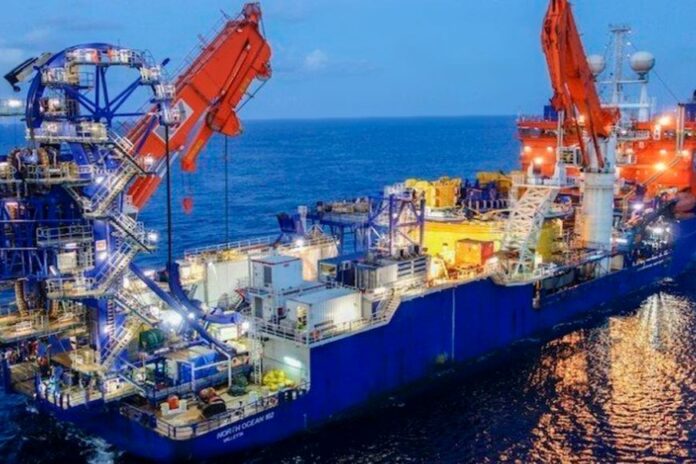
McDermott has been awarded a large offshore subsea contract by PTTEP Sabah Oil Limited (PTTEP) for the Block H gas field expansion project, located offshore Sabah, in East Malaysia covering the Alum, Bemban and Permai deepwater fields.

Under the scope of the contract, McDermott will deliver engineering, procurement, construction and installation (EPCI) services for a carbon steel pipeline, along with transportation and installation of key subsea umbilicals, risers and flowlines (SURF) components. The infrastructure is part of a broader system designed to support the delivery of additional feed gas to the Petronas Floating Liquefied Natural Gas Dua (PFLNG DUA) facility, which has been producing from Block H’s Rotan and Buluh fields since 2021.

“This award reflects PTTEP’s continued trust in McDermott’s expertise to deliver complex subsea infrastructure,” said Mahesh Swaminathan, McDermott’s Senior Vice President, Subsea and Floating Facilities. “Leveraging our proven subsea engineering and marine construction capabilities, we are well-positioned to build on our strong track record of successful project execution for PTTEP. The expansion of Block H represents a pivotal development in Malaysia’s energy landscape, and our work on this project further reinforces McDermott’s strategic presence, anchored by our Kuala Lumpur office – our hub for global deepwater project delivery.”

Engineering and project management will be led from McDermott’s Subsea and Floating Facilities team in Kuala Lumpur, while offshore installation will leverage the company’s versatile marine construction fleet.

Operated by PTTEP on behalf of partners Petronas Carigali and PT Pertamina Malaysia Exploration Production, the Block H development is a cornerstone of Malaysia’s deepwater gas strategy, with expansion expected to increase domestic gas supply, supporting long-term energy security and economic growth.
ClassNK issues AiP for ammonia fuelled LPG/NH₃ carrier

0

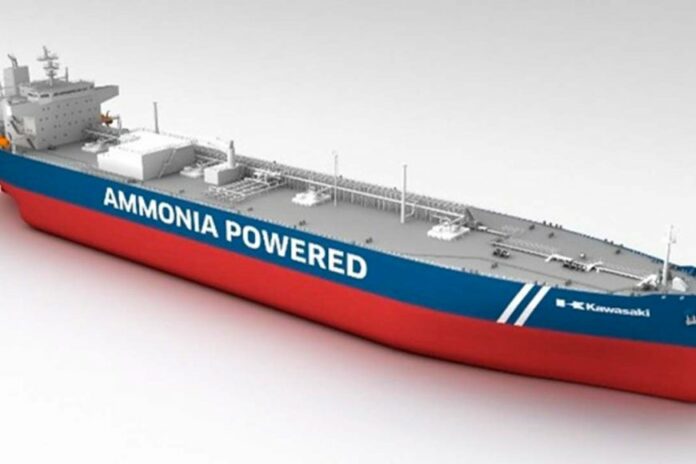
ClassNK has issued an approval in principle (AiP) for an ammonia fuelled LPG/NH₃ carrier, applied for jointly by Kawasaki Heavy Industries, Ltd. and MITSUI E&S Co., Ltd. The certification demonstrates its feasibility from regulatory and safety perspectives.

Ammonia, which does not emit CO₂ during combustion, is expected to see wider use as a zero-carbon fuel for ships. At present, various studies and development efforts are underway to bring ammonia fuelled ships into practical use.

In 2021, prior to the establishment of specific international standards for the use of ammonia as fuel for ships, ClassNK released the ‘Guidelines for Ships Using Alternative Fuels’ to support pioneering initiatives in this field. The guidelines stipulate requirements for installation, controls, safety devices, etc., aiming to minimize the risks to ships, seafarers, and the environment associated with the use of ammonia fuelled ships. Furthermore, in December 2024, the ‘Interim Guidelines for the Safety of Ships Using Ammonia as Fuel’, which ClassNK had submitted a proposal for safety requirements to the IMO through the Government of Japan, were approved at MSC 109.

ClassNK reviewed the design concept of the vessel based on ‘Part C-2: Guidelines for the Safety of Liquefied Gas Carriers Using Ammonia as Fuel (Edition 3.0.2)’ and ‘Part C-3: Additional Safety Measures for Engine Rooms (Edition 3.0.2)’ of the ‘Guidelines for Ships Using Alternative Fuels (Edition 3.0)’, and examined the risk assessment through HAZID. Upon confirming that the prescribed requirements had been met, ClassNK issued AiP.

Van Oord completes installation of 109 cables at the Sofia Offshore Wind Farm

0

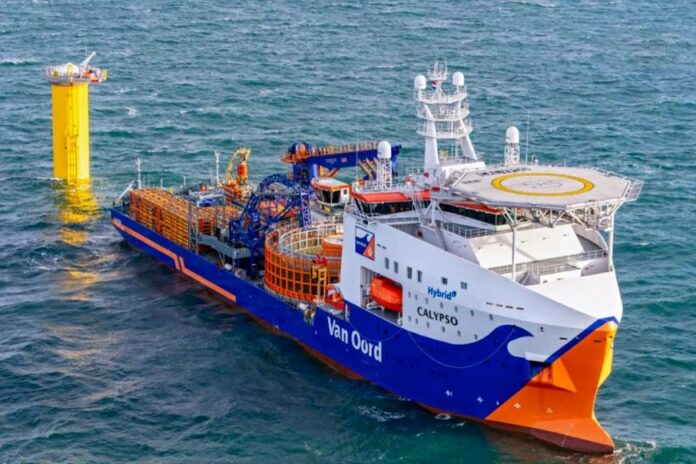
Van Oord has successfully completed the laying, burial, termination and testing of 109 array cables at the Sofia Offshore Wind Farm. 

The Sofia project marked the first operational deployment of cable-laying vessel Calypso. Purpose-built to install cables for offshore wind projects worldwide, Calypso features the latest sustainable technologies and delivered a strong performance throughout its debut. Upon completion of its activities on Sofia, Calypso has immediately commenced for its next assignment. Following the cable-laying operations, the state-of-the-art Dig-It trencher, deployed from the Subsea Viking, ensured precise and efficient burial of more than 360 kilometres of cables. The ultimate cable termination and testing works were executed from several walk-to-work vessels by our experienced tower teams.

Roeland Ris, Project Director at Van Oord, said:

‘Completing the installation of all 109 cables is a major achievement for the Sofia project team. It reflects dedication, expertise, and close collaboration between all parties involved. I am also proud of the outstanding performance and I would like to thank all the crew and the project teams onboard the Calypso, Subsea Viking and Dig-it, and the various walk-to-work and chartered vessels for all their hard work, perseverance, and support for achieving this milestone.’

The Sofia Offshore Wind Farm is located on Dogger Bank in the central North Sea, 195 kilometres from the North East coast of the UK. With a capacity of 1.4 GW, it will supply power to 1.2 million UK households. Van Oord was contracted for the engineering, procurement, construction and installation (EPCI) scope for the foundations and array cables. The wind farm is expected to be fully operational in 2026. 

BOURBON wins a 5-year contract with ExxonMobil and launches its new 34m Crewboat model

0

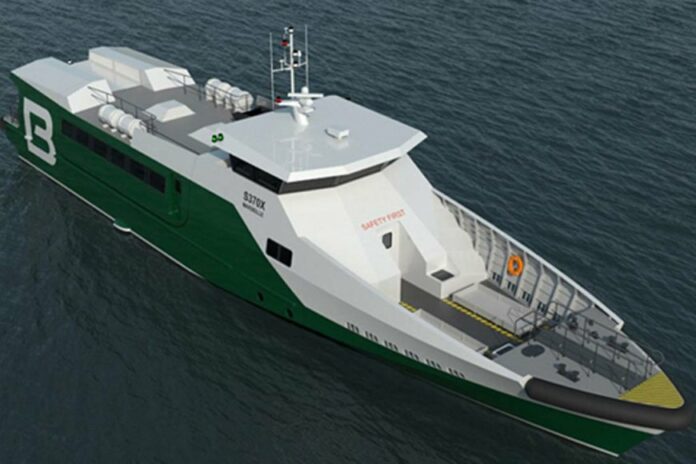
These new Crewboats have been tailor-made to meet the customer’s operational requirements: enhanced passenger transfer capacity, optimized comfort, energy efficiency and above all technical reliability, thanks to Bourbon Mobility’s in-depth experience of Angola’s operational constraints. 

These new units will replace the 32m crewliners currently in service, and embody a major evolution in terms of efficiency, reliability, design and on-board technologies. Combining performance and sobriety, they boast a cruising speed of up to 38 knots, a reduction in fuel consumption of over 10/15% compared with the previous generation, and an enhanced passenger experience to offer a premium standard on board. 

The vessels are equipped with: 

  • 60 passenger seats with enhanced comfort
  • 18 m2 of foredeck space, for small parcels
  • a redesigned navigation bridge, with improved visibility and enhanced ergonomics
  • a real-time energy performance monitoring system (EFMS) integrated right from the construction stage.

Designed by French naval engineering firm MAURIC, the vessels will be delivered to Angola in 2027. 

“This contract confirms the solidity of our partnership with ExxonMobil and the relevance of our customized offer. With this new vessel, we reaffirm our ability to innovate to support our customers in their operational and environmental requirements, while maintaining a reliable and sustainable technical solution” emphasizes Nicolas Elizon, Operations & new buildings Director of Bourbon Mobility. 

Deployed on Block 15, these new vessels will complete a Surfers fleet of five units. They symbolize BOURBON’s determination to establish itself as a benchmark partner for major international oil companies, combining technical reliability, safety and environmental performance.

Offshore Patrol Cutter options valued at US$314 million exercised by United States Coast Guard

0

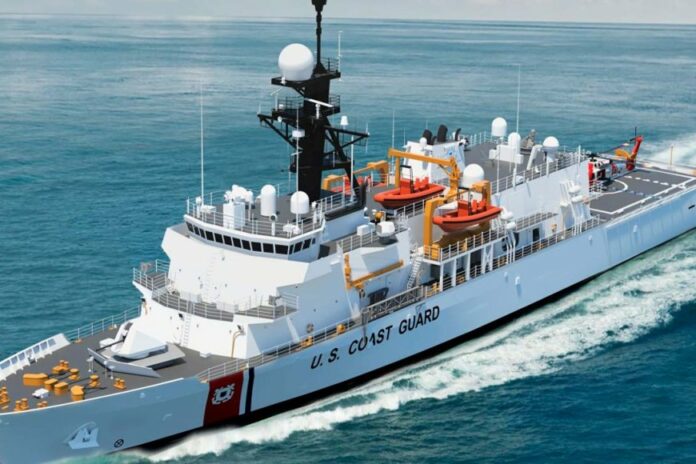
The contract options approve Austal to order long lead time materials (LLTM) for another three OPCs, Austal USA’s 4th, 5th, and 6th cutters. Funds have also been provided for logistic supply items for two OPCs.

The original OPC contract was awarded to Austal USA in June 2022 for detail design and construction of up to 11 OPCs, with a potential value of US$3.3 billion. To date, two of 11 OPCs in the contract have been awarded to Austal USA, as well as LLTM for a third.

“These early awards reflect the strong partnership that has quickly developed between the Coast Guard and Austal USA teams, and provide an important sign of intent for OPCs 3-6,” said Austal CEO Paddy Gregg.

Work on Austal USA’s first OPC, Pickering (WMSMS 919), is well underway with the keel laying planned for December. Construction began on Icarus (WMSMS 920) in early August.

The 110 metre OPCs will support US national security strategy by maintaining the nation’s economic, social, environmental and military security mission areas. The OPC will typically conduct its primary missions beyond 12 nautical miles from shore and will be employed anywhere US national interests require the Coast Guard’s unique blend of authorities and capabilities. OPC will provide the majority of the Coast Guard’s offshore presence conducting a variety of missions including law enforcement, drug and migrant interdiction, and search and rescue.

With a range of 10,200 nautical miles at 14 knots and a 60-day endurance period, each OPC will be capable of deploying independently or as part of task groups, serving as a mobile command and control platform for surge operations such as hurricane response, mass migration incidents and other events. 

The cutters will also support Arctic objectives by helping regulate and protect emerging commerce and energy exploration in Alaska.

Port of Alicante launches consultation on 1MW hydrogen plant

0

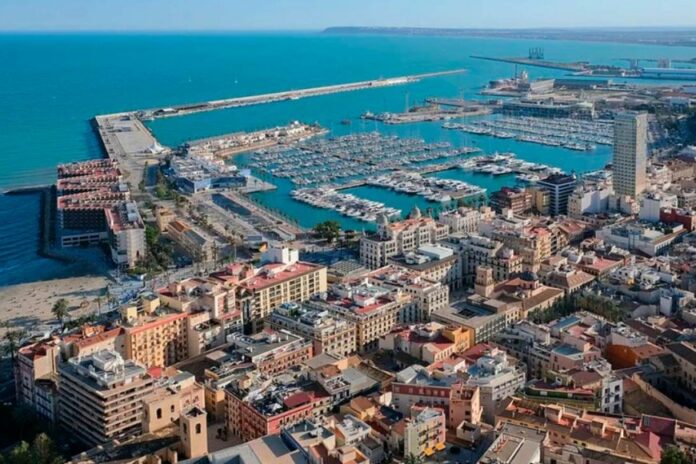
This initiative, framed in the PORTALI-H2 project, aims to advance in the decarbonization of the port environment and consolidate the enclosure as a strategic node within the energy transition in the European port system.

The call will remain open until September 30, 2025, during which time private companies interested in designing, building and operating this infrastructure under a concession formula are expected to participate.

The Port Authority of Alicante has opted for a public-private partnership approach, where private operators will be responsible for the investment, technology and operation of the plant. This structure seeks to attract capital, promote innovation and ensure real integration with the port’s logistics needs.

The project contemplates a minimum installed capacity of 1 MW and prioritizes the incorporation of renewable energies to supply at least 70% of the plant’s energy consumption. In addition, the hydrogen generated will be used in port activities, maritime and land transport and land transport, reducing dependence on fossil fuels.

Beyond its production capacity, PORTALI-H2 represents a commitment to technological integration and environmental sustainability. Collaboration with research centers and universities is foreseen to position the Port of Alicante as a living laboratory for clean energy, promoting the validation of emerging technologies in real environments.

This action is in line with the objectives of the European Green Pact and the Community’s “Fit for 55” program.Fit for 55“program, which set the goal of climate neutrality in the European Union by mid-century. With this consultation, the port is moving forward on its roadmap towards sustainable operations, positioning itself in line with the continent’s energy policies.

PORTALI-H2 is in addition to other actions already underway, such as the digitalization of processes, the incorporation of electric mobility, blue economy projects and the deployment of solar systems. solar and and mini-wind systems. These measures reaffirm the enclave’s commitment to a comprehensive innovation strategy.

Wind turbine installation vessel Norse Wind sets sail for sea trials

0

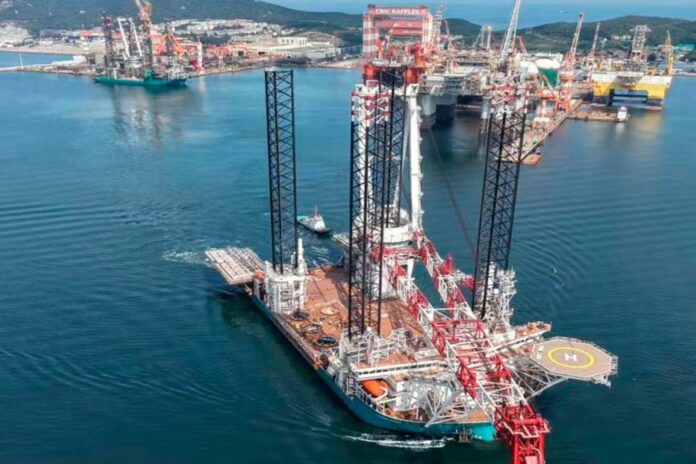
Thanks to the excellent collaboration between the shipyard and DEME’s onsite team, the vessel successfully departed from CIMC Raffles in Yantai, China, at the end of August to begin her sea trials.

These trials, taking place in the Yellow Sea, include speed trials, endurance tests, unmanned machinery trials and DP2 trials. Around twenty DEME colleagues are on board to support this critical phase.

Looking ahead, the main crane load test is scheduled to follow once the vessel returns to port. Other recent achievements include the successful completion of the full-height jacking trial, final welding of the tower grillage and blade rack substructure, and ongoing machining of the tower flanges.

The sea trials are proceeding exactly as scheduled, marking a significant step toward the vessel’s final delivery, which is planned for Q4 2025. We are extremely proud of the progress made and thank the entire DEME team for their dedication to ensuring a safe and timely delivery of this state-of-the-art wind turbine installation vessel.

Seawing: K LINE’s Innovative Wind Propulsion System for Sustainable Shipping

0

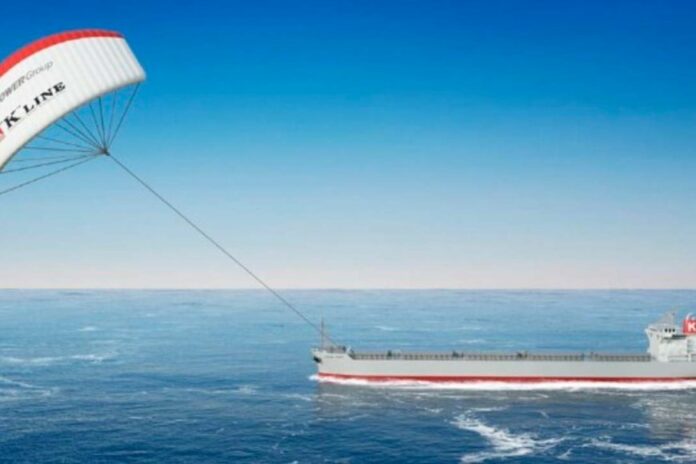
In phase one of the development of “Seawing”, OCEANICWING verified the tensile strength and performance of “Seawing” system using a 300 m2 kite at a land test site. OCEANICWING has confirmed the results of these tests have been good.

To move forward with the development and practical application of “Seawing”, OCEANICWING commenced phase two of its development in July 2025. In phase two of the development of “Seawing”, OCEANICWING plans to increase the size of the kite and verify the tensile strength, reliability, operability and safety of “Seawing” system at the land test site, looking ahead to the shipboard use of the system. Additionally, OCEANICWING will conduct offshore demonstration experiments on a large bulk carrier owned and operated by “K” LINE. The goal is to complete the tests within approximately two years and move toward the practical application of “Seawing”. It is expected that “Seawing” will reduce fuel consumption by more than 10%.

“Seawing” harnesses natural wind power and can be installed on any type of vessel, including existing vessels. It is expected that there will be synergy between “Seawing” and the efforts to transition away from the conventionally used heavy fuel oil to other fuels such as liquified natural gas (LNG), and that “Seawing” will increase performance in terms of the reduction of CO2 emissions. There are several wind-assisted propulsion systems (WAPS) that are under development, and “Seawing” is differentiated from the other WAPS by its ability to generate a comparatively large amount of thrust, which is achieved using high-altitude wind.

Takenori Igarashi, the President & CEO of “K” LINE, said, “Phase one of “Seawing” development process being implemented by OCEANICWING has been successfully completed. We will continue to develop the system so that it can be used on ships. We plan to develop this innovative energy saving device harnessing natural wind power into a great solution for achieving the decarbonization of the shipping industry.”

The “K” LINE Group will continue to strive to contribute to the sustainable development of society and the economy and continue to increase its corporate value based on “K” LINE Environmental Vision 2050, the Group’s long-term environment management vision as it moves toward 2050.

“K” LINE will maximize the use of wind, a renewable source of energy, in the propulsion of the vessels to contribute to the low-carbon initiatives of not only “K” LINE, but also “K” LINE’s customers and society as a whole.

Grounded fishing vessel spills diesel in Gulf of Alaska

0

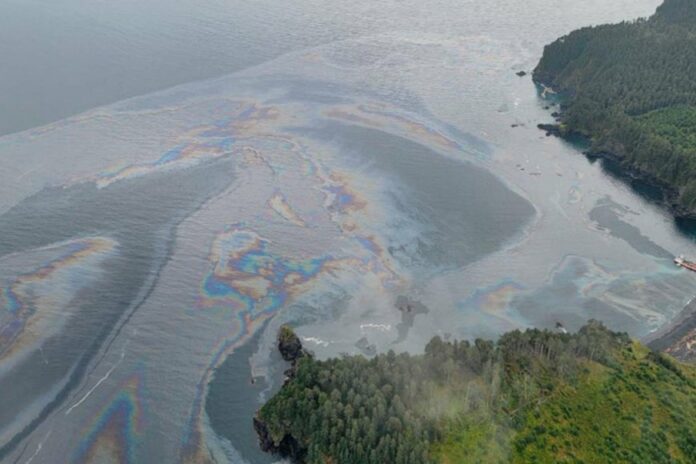
Limited sorbent boom was deployed at the scene, and protective boom was placed near a nearby hatchery as a precautionary measure following the Sea Ern grounding, which occurred on Monday, according to the Alaska Department of Environmental Conservation (DEC), which is providing oversight along with the U.S. Coast Guard.

DEC officials identified the source of the spill as a 12-foot by 1-foot gash in the vessel’s bow, which damaged two fuel tanks. The 120-foot Sea Ern has an estimated 16,290-gallon fuel capacity, with 12,790 gallons remaining on board. The remaining tanks and hull appear to be undamaged, and the valves are closed. An additional 300 gallons of other oils and lubricants are also on board.

The presence of a fuel sheen in the area on Monday led the Alaska Department of Fish and Game to close commercial salmon fishing in the Outer Kitol Bay and Izhut Bay sections of the Afognak District until further notice.

The responsible party for the U.S.-registered Sea Ern contacted the Alaska Chadux Network, which was en route from Kodiak to the spill site on Wednesday, said Anna Carey, environmental program manager for the DEC’s Central Alaska Region. Protecting the hatchery is a priority for responders.

Carey said no reports had been received of impacts to wildlife from the diesel spill.

The cause of the grounding is unknown, and further information about the Sea Ern and the fishery it was engaged in was not immediately available.

Diesel fuel does not readily break down and can linger in the environment, contaminating soil and groundwater. Such contamination can migrate, affecting areas far beyond the initial spill site and posing risks to sensitive ecosystems and potential drinking water sources.

Source: nationalfisherman

Celebrity Cruises enters into river cruising with two new ships

0

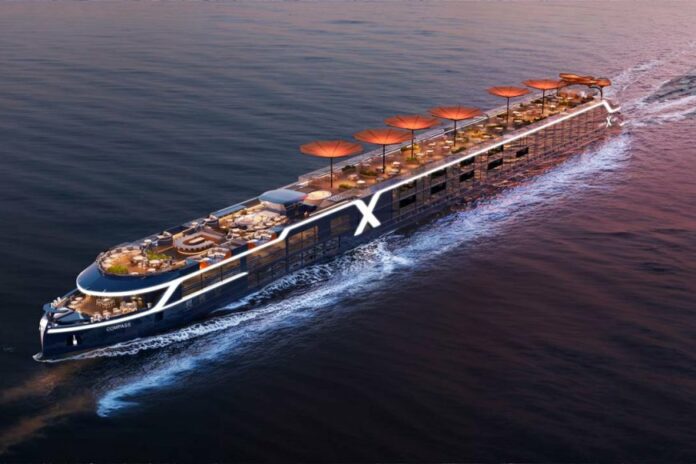
The vessels will be equipped with a hybrid propulsion system and technology to reduce noise and vibration. 

The company stated the new ships combine the design of its ocean-going vessels with a patent-pending design that it claimed offers more usable outdoor space than other river ships.

The open decks will feature transformative shade structures, a top-deck bar and grille, and an infinity-edge plunge pool. The ships will also be equipped with what the company described as the “first-ever” cantilevered dining pods which allow guests to dine while floating above the river.

The ships will have five stateroom categories, including suites, with king-sized beds in every room and veranda access. Celebrity also noted that guests will have a choice of eight restaurants and bars onboard.

The company said its inaugural season will feature 33 seven-night sailings, offering multiple ports per day and overnight stays.

“Celebrity River Cruises ships will be the most innovative on the river, with a patent-pending industry-leading design that offers more space to vacation while bringing guests even closer to destinations,” said Laura Hodges Bethge, president of Celebrity Cruises.

Source: bairdmaritime